The Atal Tunnel (2020), Sela Tunnel (2024) and Z-Morh Tunnel (2025) are already open, the Zojila Tunnel broke through in June 2026 for a February 2028 finish, and the Shinku La Tunnel is due in August 2028. Together they turn passes that close for months into all-weather roads, cutting hours of travel and taking riders out of avalanche zones. The cost is real too: shorter, flatter rides, and far more traffic reaching valleys that were protected mainly by being hard to reach.
- Atal Tunnel, 9.02 km: Manali side to Lahaul in 71 km and about 2 hours, against 116 km and 5 to 6 hours over Rohtang.
- Zojila, 13.15 km: a crossing of over 3 hours becomes about 15 minutes; target February 2028.
- Sela takes about 90 minutes off the climb to Tawang, open since March 2024.
- Tunnels move the bottleneck: Baralacha, Tanglang and Khardung still set Ladakh's season.
- The cost: faster ascents for your body, and more traffic into small, fragile valleys.
I am not neutral about this. I have ridden through a tunnel on the Teesta corridor in Sikkim, and the relief of dry, lit road after a wet landslide stretch is hard to argue with. But the passes themselves are why many of us started touring.
This essay sets out what each tunnel actually changes, with lengths, altitudes and time savings from official and press sources, and then argues both sides.
Which Himalayan tunnels matter to riders?
Seven tunnels reshape the main touring routes into Ladakh, Kashmir and Arunachal. The table lists the figures as published by the Border Roads Organisation (BRO), the ministries and the press reports cited at the end.
| Tunnel | Length | Altitude | Opened or target | What it bypasses | Effect |
|---|---|---|---|---|---|
| Zojila (NH 1) | 13.15 km | About 11,578 ft | Breakthrough Jun 2026; target Feb 2028 | Zoji La between Baltal and Minamarg | Crossing from over 3 hours to about 15 minutes |
| Chenani-Nashri (NH 44) | 9.28 km | About 1,200 m | Apr 2017 | Patnitop | Jammu-Srinagar 30 km and about 2 hours shorter |
| Atal (Manali-Leh) | 9.02 km | 3,000 to 3,100 m | Oct 2020 | Rohtang Pass | Manali side to Lahaul 71 km in about 2 hours, against 116 km and 5 to 6 hours |
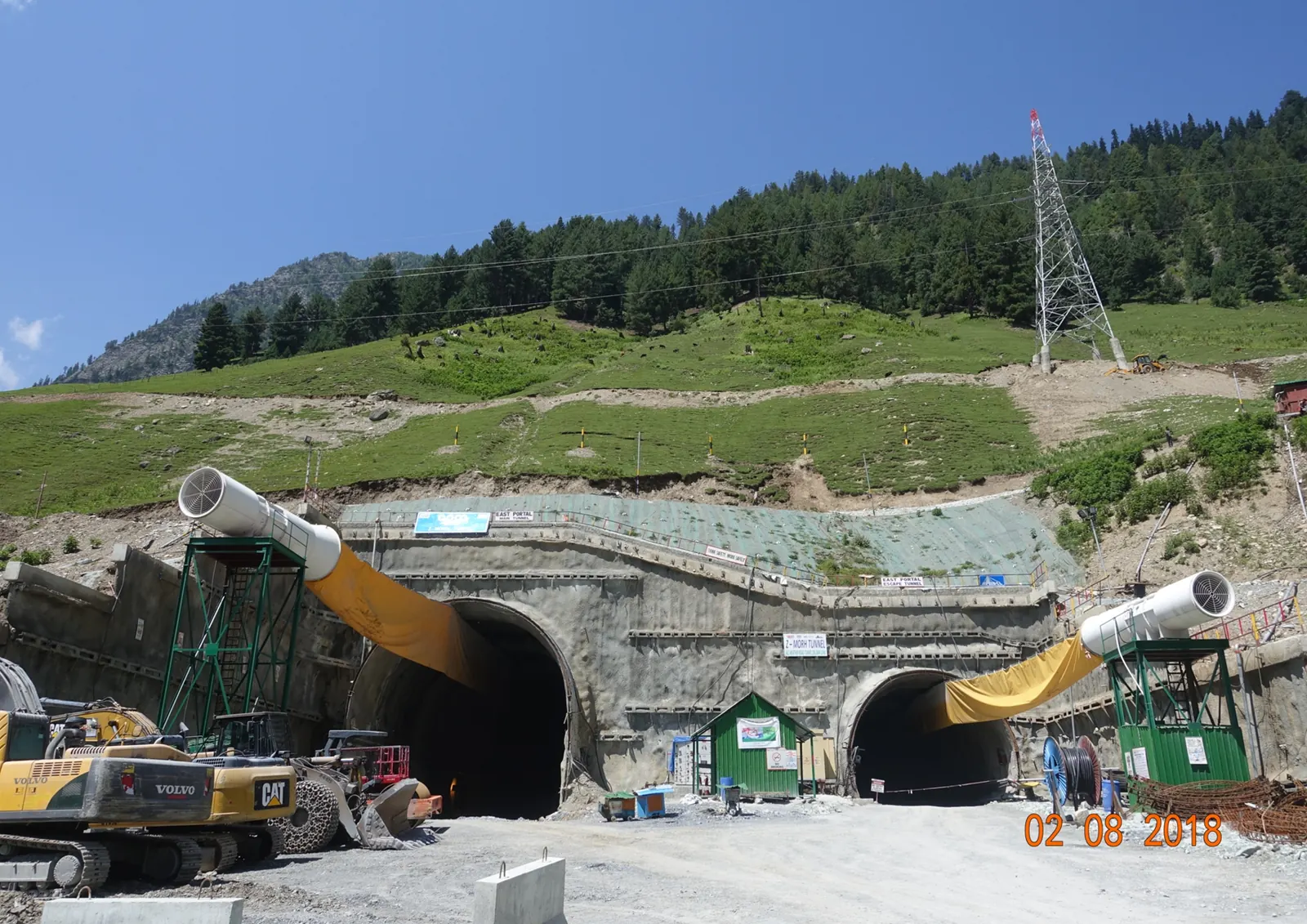
| Z-Morh or Sonamarg (NH 1) | 6.5 km | 2,637 m | Jan 2025 | Avalanche-prone zigzag before Sonamarg | All-weather access to Sonamarg |
| Shinku La (Darcha-Padum) | 4.1 km, twin tube | Pass at about 5,091 m | Target Aug 2028 | Shinku La into Zanskar | A third, all-weather road into Ladakh |
| Sela (Tawang) | 1,003 m and 1,595 m | Below the 13,700 ft Sela massif | Mar 2024 | Sela Pass | Tezpur-Tawang about 90 minutes faster |
| Shyok (DS-DBO road) | 920 m | Above 12,000 ft | Dec 2025 | Section of the Darbuk-Shyok-DBO road | Year-round access in eastern Ladakh |
See the data as a table
| Tunnel length (km) | |
|---|---|
| Zojila | 13.15 |
| Chenani-Nashri | 9.28 |
| Atal | 9.02 |
| Z-Morh | 6.5 |
| Shinku La | 4.1 |
| Sela (tunnel 2) | 1.595 |
| Shyok | 0.92 |
Source: News On AIR, The Tribune, Swarajya (Lok Sabha reply), BRO and Wikipedia project pages · Zojila and Shinku La are under construction (Nov 2026).
The numbers that matter to a rider are not the lengths but the hours:
- Zojila: the crossing goes from over three hours to about fifteen minutes.
- Atal: the Manali side of the Leh road gets about 45 km and three to four hours shorter.
The 45 km is calculated in this post as 116 km minus 71 km, the two route lengths given by Wikipedia: Atal Tunnel.
- Sela: about 90 minutes off the climb to Tawang.
These are not small changes to a route that already takes days.
Early on 12 November 2023, part of the under-construction Silkyara Bend-Barkot tunnel in Uttarkashi, Uttarakhand, a project under the Char Dham road programme, caved in and trapped 41 construction workers behind the debris. Contact was made a day later, but getting them out took far longer.
A heavy auger machine brought in to bore through the rubble broke down. A second one drilled about three-quarters of the way and broke down too. In the end six rat-hole miners from central India, working in teams of three, dug the last stretch by hand inside a pipe for more than 24 hours. On the evening of 28 November all 41 men came out, after what reports count as 16 or 17 days. Every Himalayan tunnel in this essay was bored through the same young, broken rock.
Al Jazeera: How rat miners rescued workers from Indian tunnel after 17 days (Nov 2023)What did the Atal Tunnel actually change?
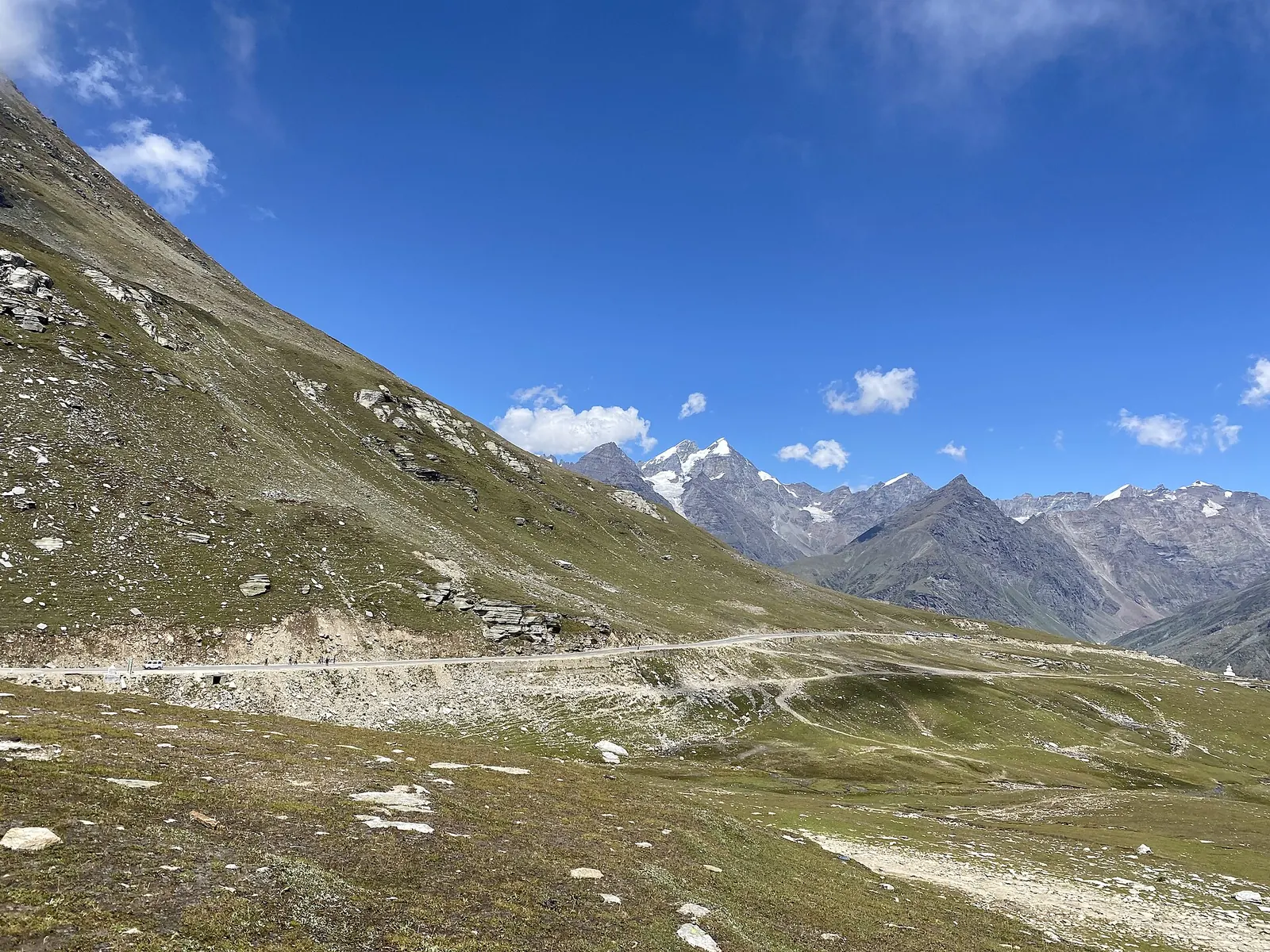
It made Lahaul a weekend destination. Before October 2020, reaching Keylong from Manali meant climbing Rohtang Pass, a road that closed for much of the year under snow.
The 9.02 km Atal Tunnel, built by BRO with an Afcons-Strabag joint venture at a cost of about ₹3,200 crore, runs at around 3,000 m and gives a 71 km, two-hour run to the Lahaul side instead of 116 km and five to six hours.
The bottleneck moves north

For touring, the effect cut both ways. The Manali-Leh highway still crosses several high passes beyond Lahaul, so the tunnel does not make Leh an all-year destination by itself. But it removed the first and most crowded hurdle.
A Tripoto thread from riders planning a late May or early June Ladakh trip shows the old problem well: one rider reached the Manali side in early June only to find Baralacha still closed, waited about two days, and turned back. Tunnels move the bottleneck rather than abolish it, until every pass on the route has one.
The history of the road the tunnel shortens is in my post on the Manali-Leh highway, and the organisation that built it gets its own story in the history of the Border Roads Organisation.

Why is the Zojila Tunnel such a big deal?
Because Zoji La is the single most closure-prone link between Kashmir and Ladakh, and the tunnel turns it into a fifteen-minute drive. The main tunnel runs between Baltal on the Kashmir side and Minamarg near Drass, and has:
- a 13.15 km main bore;
- about 17 km of approach roads;
- three vertical ventilation shafts and an escape tunnel.

All India Radio reported the final breakthrough on 9 June 2026. When it opens it is expected to be Asia's longest bi-directional road tunnel.
Cost and delay
It has not been quick or cheap. In a Lok Sabha reply in July 2025, the road transport minister put physical progress at 64%, spending at ₹3,934 crore against an estimated ₹6,809 crore, and moved the completion date from September 2026 to February 2028.
With Z-Morh already open since January 2025 at Sonamarg, Zojila is the last big piece that would give the Srinagar-Leh road all-weather access up to Drass.
For riders choosing between the two classic entries to Ladakh, this tilts the balance. I compare them in Ladakh via Manali or Srinagar, and the long story of the pass itself is in the Srinagar-Leh highway and Zoji La.
Do tunnels make Himalayan riding safer?
Mostly, yes, because they take traffic out of the places where snow and rock come down. The open roads over these passes run through avalanche paths, rockfall chutes and slopes that freeze and thaw daily. A tunnel removes that exposure for its length.
The authors mapped avalanche risk in the Chandra-Bhaga and Upper Beas basins, the Lahaul and Manali country around the Atal Tunnel. They compared four machine-learning models (random forest did best, at 88.73% accuracy and an AUC of 0.95) and simulated 1,484 possible avalanches. About 8% of the region is highly susceptible, concentrated in Lahaul and Spiti. With a 0.5 m snow release, about 161 buildings and 7 lakes are exposed; in a 3 m worst case, about 557 buildings and 9 lakes. Limit: a model study, validated against mapped events rather than a long observation record.
Read the paper (free)That paper is about buildings, not roads, but it makes the point that the valleys a tunnel opens up are themselves avalanche country. A tunnel protects you while you are inside it.
It also brings more people, more construction and more parked vehicles into places with a mapped hazard, which is the start of the case against.
What do riders lose when a pass goes underground?
Three things, and only one of them is romance.
- The ride itself. A 116 km climb with hairpins, snow walls and a summit becomes a 9 km lit tube. For people who tour to ride, not to arrive, that is a real loss.
- Acclimatisation by accident. Slow passes forced slow ascents. When a fast tunnel lets a car from the plains reach high valleys in a few hours, the body has less time to adjust to altitude.
- The filter. Difficulty limited numbers. Lahaul, Zanskar and the Tawang side of Sela were protected by seasons and bad roads. Tunnels remove that filter, and the valleys behind them have small populations, little sewage or waste capacity, and scarce water.
The road is faster than your red blood cells.Sapta, on what tunnels do to acclimatisation
The last point is not hypothetical. Ladakh's tourist numbers rose from 77,800 in 2010 to 2,35,698 in 2016 on the old seasonal roads. I look at what that boom has done to Leh's water and waste in are bikers loving Ladakh to death?

Who actually benefits from the tunnel era?
People who live there, first. A road that is open twelve months a year means school, hospital, markets and work in winter, not just a summer tourist season. Research from neighbouring Kinnaur shows how much road access shapes the tourism economy of a high valley.
The team mapped damaged stretches of road with a handheld GPS and surveyed 280 tourists by simple random sampling in Kinnaur, Himachal Pradesh. Poor condition of National Highway 22 emerged as the main barrier to tourism development, and the authors urge that BRO be properly resourced to build and maintain border roads. Limit: a single district and a modest sample, and it measures what tourists say rather than visitor numbers over time.
Read the paper (free)The military is the other big winner, which is why so much of this is BRO work. Sela secures the road to Tawang; Shyok, opened in December 2025 on the 255 km Darbuk-Shyok-Daulat Beg Oldie road, does the same for eastern Ladakh.
Riders benefit from roads built for logistics, and we should be honest that tourism is a side effect, not the purpose.
So is the tunnel era bad for road trips?
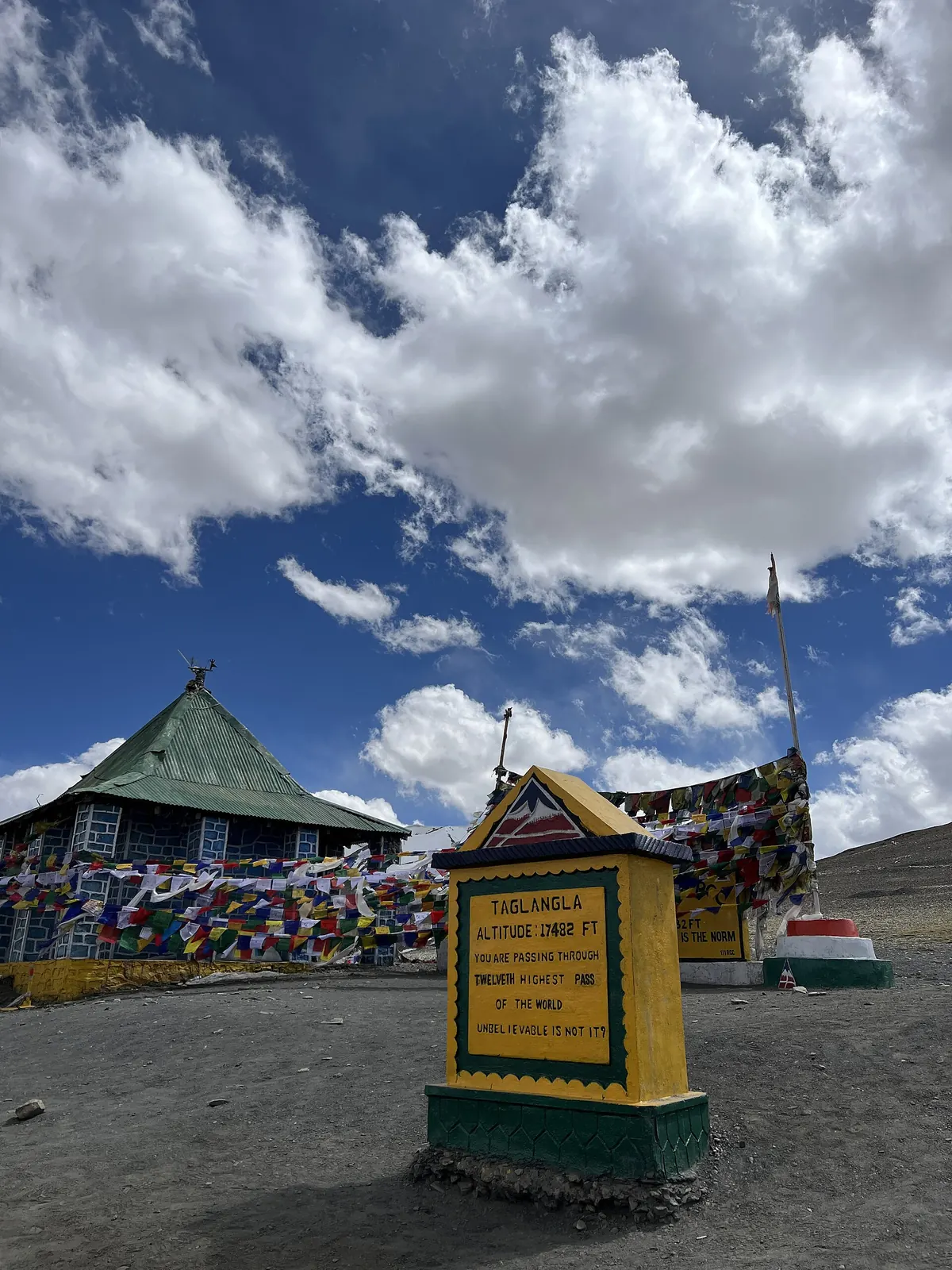
No, but it changes what a road trip is, and riders should change with it. My view, after weighing both sides:
- The safety and livelihood case wins. Fewer hours in avalanche paths and a winter lifeline for valley towns outweigh the loss of a few epic climbs.
- The old roads mostly stay. Tunnels bypass passes; they do not demolish them. The Rohtang road still exists for the summer months, and so will the Zoji La track. Riding over the top will become a choice rather than a necessity.
- The burden shifts to visitors. When access is easy, restraint has to come from us: slower ascents for altitude, fewer vehicles per group, staying longer in fewer places, and carrying our waste out.
- The planning changes. Season windows widen, but the remaining passes (Baralacha, Tanglang, Khardung) still set the dates. Check every pass on the route, not just the one with a tunnel.
The full ranked list of India's road tunnels, by length, is in the longest road tunnels in India. For the Arunachal side, my Tawang bike trip guide covers the Sela route and the permits. The wider touring world lives on the Yatri page.
What's new
- Zoji-La tunnel achieves final breakthrough News On AIR, Jun 2026
- Shyok tunnel in eastern Ladakh and an alternative road axis to Tawang inaugurated The Tribune, Dec 2025
- Zojila tunnel pushed to February 2028, 64% complete Swarajya, Aug 2025
Questions people ask
When will the Zojila Tunnel open?
The government's target is February 2028, according to a Lok Sabha reply in July 2025. The two ends of the 13.15 km main tunnel met in June 2026.
Does the Atal Tunnel mean Manali-Leh is open all year?
No. The Atal Tunnel bypasses Rohtang, but the Manali-Leh road still crosses high passes such as Baralacha La and Tanglang La, which close in winter. It makes Lahaul reachable all year, not Leh.
What is the Shinku La Tunnel and when will it be ready?
A 4.1 km twin-tube tunnel under Shinku La on the Darcha-Padum road into Zanskar, approved in February 2023 at ₹1,681 crore. The Prime Minister set off the first blast in July 2024, and the target is August 2028.
Can you ride a motorcycle through the Atal Tunnel?
Yes. Motorcycles use the Atal Tunnel like other vehicles. Its operating speed is 40 to 60 km/h, so ride steady with lights on and keep a clear gap.
Which is India's longest road tunnel?
Among open tunnels, the 9.28 km Chenani-Nashri tunnel on NH 44 and the 9.02 km Atal Tunnel are the longest. The 13.15 km Zojila Tunnel will take the top spot when it opens.
Sources
- News On AIR: Zoji-La tunnel achieves final breakthrough (2026)
- Swarajya: Zojila tunnel likely by February 2028, 64% done (Lok Sabha reply) (2025)
- The Tribune: Crucial twin-lane Sela tunnel connecting Tawang opens (2024)
- The Tribune: Tawang gets alternative road axis (Shyok tunnel) (2025)
- Wikipedia: Atal Tunnel (length, cost, route distances, with BRO and PIB references) (2026)
- Border Roads Organisation: Atal Tunnel project page (2020)
- Wikipedia: Sonamarg (Z-Morh) Tunnel (2026)
- Wikipedia: Chenani-Nashri (Dr. Syama Prasad Mookerjee) Tunnel (2026)
- Wikipedia: Shinku La and the Shinku La Tunnel (2026)
- Abhinav A., Sattar A.: Snow avalanche susceptibility, hazard, and exposure assessment in the Western Himalaya, Scientific Reports (2025)
- Jangra R. et al.: The role of transportation in developing the tourism sector at high altitude destination, Kinnaur (2023)
- District Statistical Handbook Leh 2016-17, Table 27.01: tourist arrivals (2018)
- Al Jazeera: How rat miners rescued workers from Indian tunnel after 17 days (2023; source for the Silkyara story)

Sapta (Saptarshi Sarkar) is a mechanical engineer turned marketer in Bengaluru and a solo touring rider. He writes the seven Saptaverse blogs. Work with him or read more of RoadHook Rides.