

Manthan How to calm your mind: the Gita, Chanakya and psychology

Hard questions, argued from every side.

Manthan means churning. This is Mindspace: philosophy, psychology and the questions people avoid.

I'm Sapta, and this is where I keep the hard reading. Every card opens with a question, then the idea, then the words themselves with the page they come from. Where I have a view I say so. Where I don't, the argument stays open.

Fair question. Do I live by any of this?

How I weigh a choice

If truth, fairness and feeling pull three ways, which one do you let lose?

My order is logic, then justice, then emotion. I state it plainly so you can disagree with it properly.

01LogicWhat is actually true here, and what follows from it?
02JusticeGiven the facts, what's fair to everyone it touches?
03EmotionHow will it land on the people involved, and how do I carry it well?
Emotion gets a vote. It doesn't get a veto.

Good and evil live in the same person.

I don't sort people into heroes and villains. The same person can be generous on Monday and petty on Tuesday, and so can I. The Manthan story says it too: devas and asuras pulled the same rope.

Morality depends on context.

A lie that spares a dying friend some pain is not the same act as a lie that hides a fraud. I'd rather think through the situation than apply one rule blindly and call it principle.

Laws are guardrails, not a conscience.

The law tells you where the edge of the road is. It doesn't tell you how to ride. Legal and right are separate questions, and staying inside the rail doesn't make a choice good.

The herd is not evidence.

Everyone doing something is a reason to look at it twice, not a reason to join in. I question conventions, including the ones I happen to like.

Competence over status.

I listen to the person who can do the thing, whatever their title. Craft earns respect. A designation only asks for it.

Capable people, more capable.

The best use of my time with a sharp person is to make them sharper, then get out of the way. A team that can't work without me isn't a team I built well.

And one line under all of it: Everything is. Full stop. The longer versions are in my field notes

Enough about my head. Whose argument do you want?

The thinkers

Whose answers are you living by without having read them?

The Indian texts come first, because those are the ones I have written about.

Pick a face to open it.

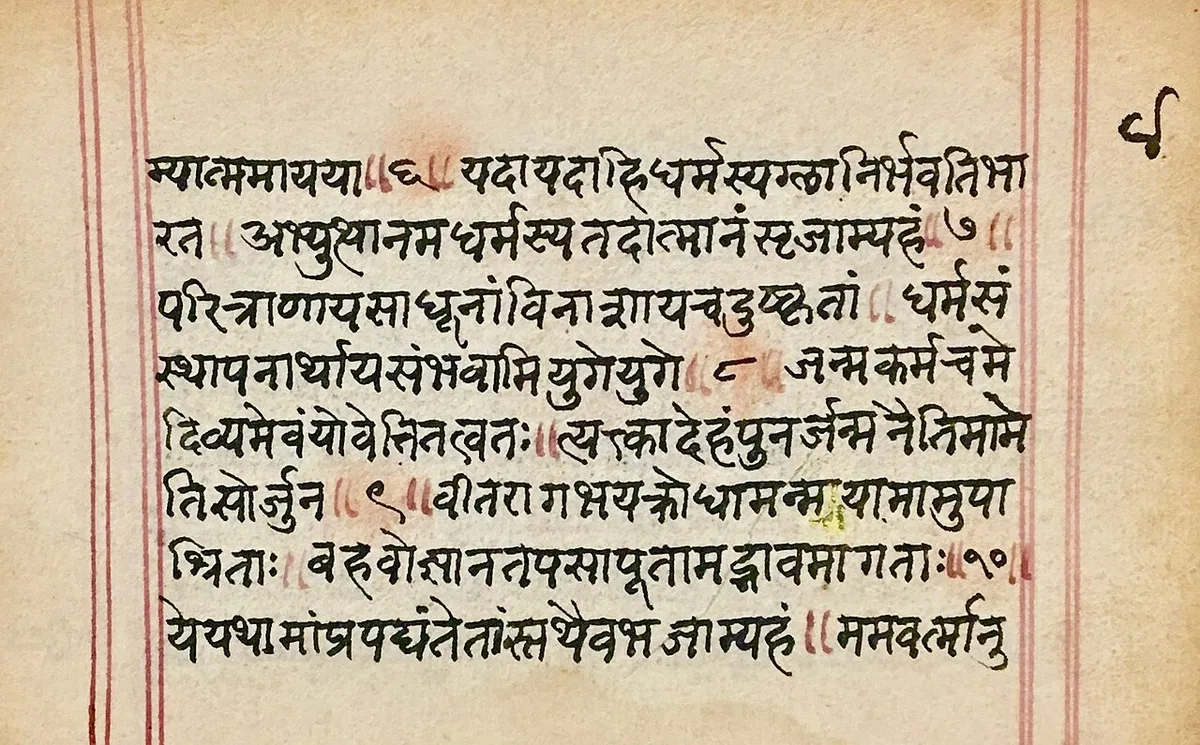
2nd to 1st c. BCEA handwritten page of the Bhagavad Gita: lines of black Devanagari script on cream paper with red rules down both margins01/16

The Bhagavad Gita

Verses
700
Usually dated
2nd or 1st century BCE
First book to read
Bhagavad Gita
Works listed
4
Topics argued
5
Sources linked
2
A handwritten Gita page in Sanskrit, chapter 4, verses 7 to 10. Ms Sarah Welch, CC BY-SA 4.0, via Wikimedia Commons.
Can you give everything to the work and still not need it to work out?
A dialogue between the prince Arjuna and Krishna, set inside the Mahabharata.

Do your duty and give up the claim on its results. The Gita calls this acting without attachment to the fruits of action, and it says so to a man who does not want to fight his own kin.

“Your business is with action alone; not by any means with fruit.”
Bhagavad Gita 2.47, trans. K. T. Telang, Sacred Books of the East vol. 8 (1882). Read it in place
What I take from it
“The Gita's idea of acting without attachment to the outcome is one I return to.”
From my post, Stoicism and the Gita
Read first: Bhagavad Gita
Works, topics and posts
Major works and parts
  • Chapter 2: the self and the first statement of acting without attachment
  • Chapter 3: karma yoga, work as duty
  • Chapter 11: Arjuna sees the cosmic form
  • Chapter 18: renunciation and the final teaching
Argues about
On the blog
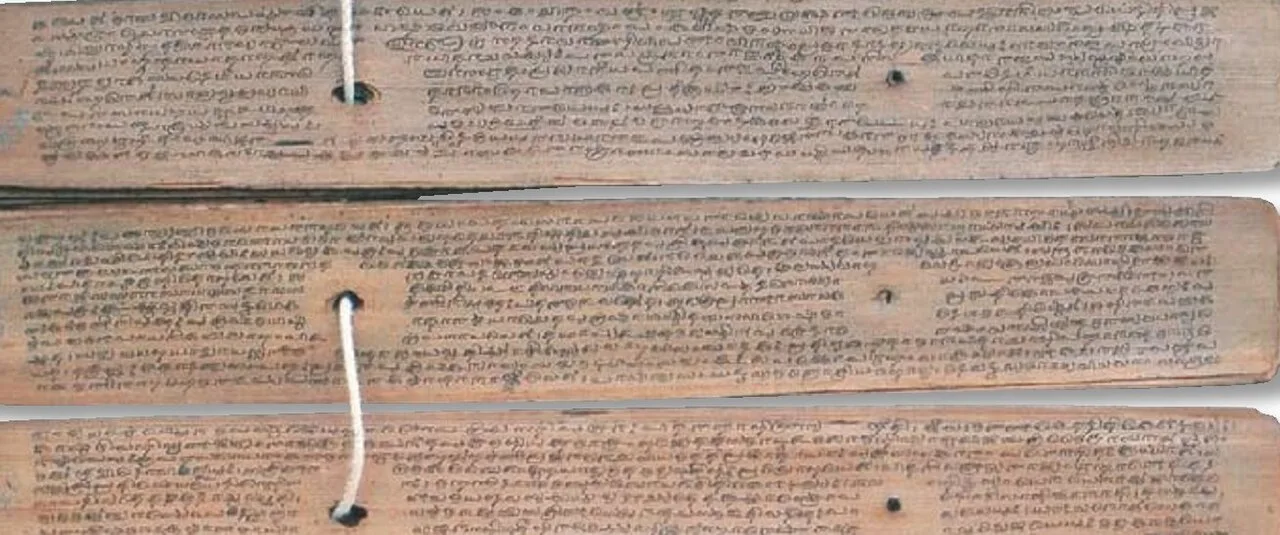
4th to 3rd c. BCEThree long palm leaves of an Arthashastra manuscript, closely written in Grantha script and strung on a cord02/16

Chanakya and the Arthashastra

Chanakya, by tradition
4th to 3rd century BCE
Text as we have it
1st to 3rd century CE
First book to read
Arthashastra
Works listed
3
Topics argued
4
Sources linked
3
Palm leaves of an Arthashastra manuscript in Grantha script, kept at the Oriental Research Institute, Mysuru. Unknown scribe, public domain, via Wikimedia Commons.
If you knew everyone would take a little, how would you design the system?
The Arthashastra is an ancient Sanskrit treatise on statecraft, economic policy and military strategy. Tradition credits it to Kautilya, identified with Chanakya; scholars now think it had several authors.

Assume that people act on interest, then build the checks. An official handling revenue will taste it like honey on the tongue, so every department is audited, and the king's own happiness is defined as the happiness of his subjects.

“In the happiness of his subjects lies his happiness; in their welfare his welfare.”
Arthashastra, Book 1, chapter 19, trans. R. Shamasastry (1915). Read it in place
Read first: Arthashastra
Works, topics and posts
Major works and parts
  • Book 1: training a king, testing ministers
  • Book 2: the departments and their accounts
  • Books 6 and 7: the circle of states and the six policies
Argues about
On the blog
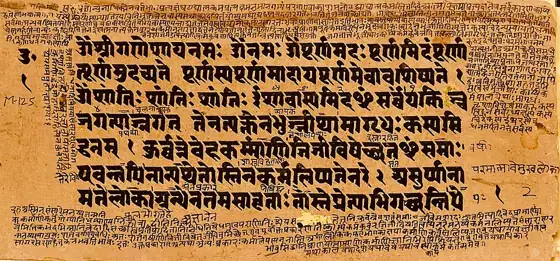
700 to 300 BCEA manuscript page of the Isha Upanishad: three lines of Devanagari script with red marks on aged paper03/16

The Upanishads

Composed
c. 700 to 300 BCE
First book to read
The Upanishads
Works listed
12
Topics argued
2
Sources linked
2
The Isha Upanishad, verses 1 to 3, in a Sanskrit manuscript. Ms Sarah Welch, CC BY-SA 4.0, via Wikimedia Commons.
What if the thing you are searching for is the one doing the searching?
Ancient texts from India, composed orally in Sanskrit.

They ask what the self, atman, really is, and tie it to brahman, the ultimate reality. If they are right, the person you take yourself to be is not the whole of you.

“It is the True. It is the Self, and thou, O Svetaketu, art it.”
Chandogya Upanishad 6.8.7, trans. F. Max Muller, Sacred Books of the East vol. 1 (1879). Read it in place
Read first: The Upanishads
Works, topics and posts
Major works and parts
  • Brihadaranyaka
  • Chandogya
  • Taittiriya
  • Aitareya
  • Kaushitaki
  • Kena
  • Katha
  • Isha
  • Shvetashvatara
  • Mundaka
  • Prashna
  • Mandukya
Argues about
On the blog
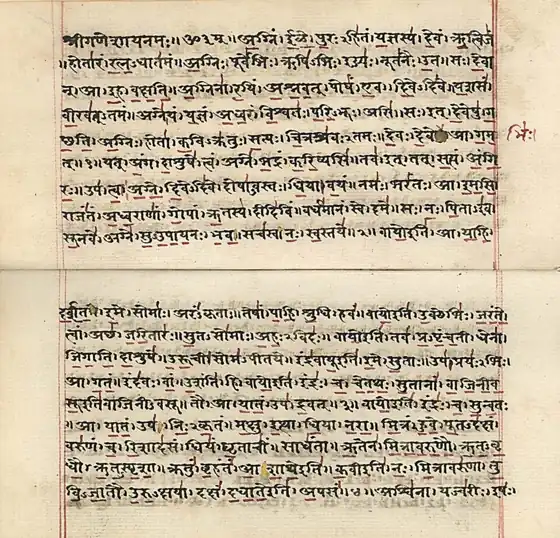
1500 to 1000 BCEA Rigveda manuscript page: dense black Devanagari script with red accent marks above and below the syllables04/16

The Vedas

Rigveda
c. 1500 to 1000 BCE
Hymns
1,028
First book to read
Hymns of the Rigveda
Works listed
4
Topics argued
1
Sources linked
2
A Rigveda manuscript in Devanagari, early 19th century. The red marks are the pitch accents. Unknown scribe, public domain, via Wikimedia Commons.
What does it mean when a creation hymn ends on "perhaps"?
Four collections: the Rigveda, the Yajurveda, the Samaveda and the Atharvaveda.

The oldest of them holds a creation hymn that ends in doubt. It asks where creation came from, says the gods came later, and closes by wondering whether even the highest overseer knows.

“…Who verily knows and who can here declare it, whence it was born and whence comes this creation?”
Rigveda 10.129.6, trans. Ralph T. H. Griffith (1896). Read it in place
Read first: Hymns of the Rigveda
Works, topics and posts
Major works and parts
  • Rigveda: 1,028 hymns in ten books
  • Samaveda: chants
  • Yajurveda: ritual formulas
  • Atharvaveda: charms, healing and speculation
Argues about
On the blog
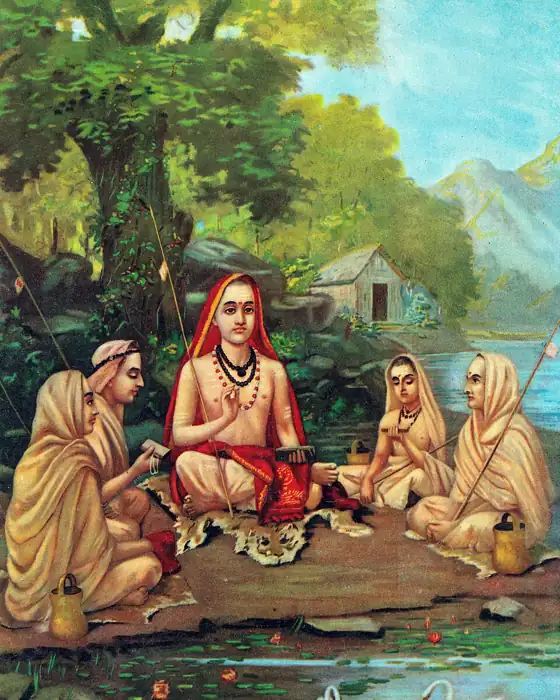
8th c. CEA painting of Shankara seated on the ground in ochre robes with four disciples around him, trees and hills behind05/16

Advaita and Shankara

Early dating
788 to 820 CE
Now often
c. 700 to 750 CE
First book to read
Brahma Sutra Bhashya
Works listed
5
Topics argued
1
Sources linked
3
Shankara with his disciples, painted by Raja Ravi Varma in 1904. An artist's imagining, made over a thousand years after him. Raja Ravi Varma, public domain, via Wikimedia Commons.
What if "me" is a case of mistaken identity?
Shankara wrote commentaries on the Upanishads, the Bhagavad Gita and the Brahma Sutra, the texts Advaita ("non-dual") Vedanta rests on.

Only Brahman is finally real, and the self is identical with it. The world of many things is a superimposition on Brahman, and knowledge of Brahman alone is the route to liberation.

“…the existence of Brahman is known on the ground of its being the Self of every one.”
Shankara, Brahma Sutra Bhashya 1.1.1, trans. George Thibaut, Sacred Books of the East vol. 34 (1890). Read it in place
What I take from it
“I present this as philosophy and history, without taking a side.”
From my post, Advaita vs Dvaita, explained
Read first: Brahma Sutra Bhashya
Works, topics and posts
Major works and parts
  • Brahma Sutra Bhashya
  • Commentaries on the principal Upanishads
  • Commentary on the Bhagavad Gita
  • Upadeshasahasri
  • Vivekachudamani: traditionally his, an attribution modern scholarship mostly rejects
Argues about
On the blog
Ancient India earthwaterfireair06/16

Charvaka, the sceptics

Own texts
lost
Fullest summary
14th century
First book to read
Sarva-Darsana-Samgraha
Works listed
3
Topics argued
5
Sources linked
2
My drawing: one eye, for perception as the only proof, over the four elements the school accepted. Drawn for this page.
If nobody has seen a soul, why plan a life around one?
An ancient Indian school of materialism, also called Lokayata. Its own texts are lost.

Perception is the only valid source of knowledge. So there is no karma, no rebirth and no afterlife, and the Vedas carry no authority. What we know of the school has been compiled from later, secondary literature.

“…While life is yours, live joyously; None can escape Death's searching eye…”
Madhava, Sarva-Darsana-Samgraha, chapter 1, trans. E. B. Cowell and A. E. Gough (1882). Read it in place
Read first: Sarva-Darsana-Samgraha
Works, topics and posts
Major works and parts
  • Brihaspati Sutra: the lost root text
  • Sarva-Darsana-Samgraha, chapter 1: the fullest surviving summary
  • Tattvopaplavasimha of Jayarashi: a sceptical text often linked to the school
Argues about
On the blog
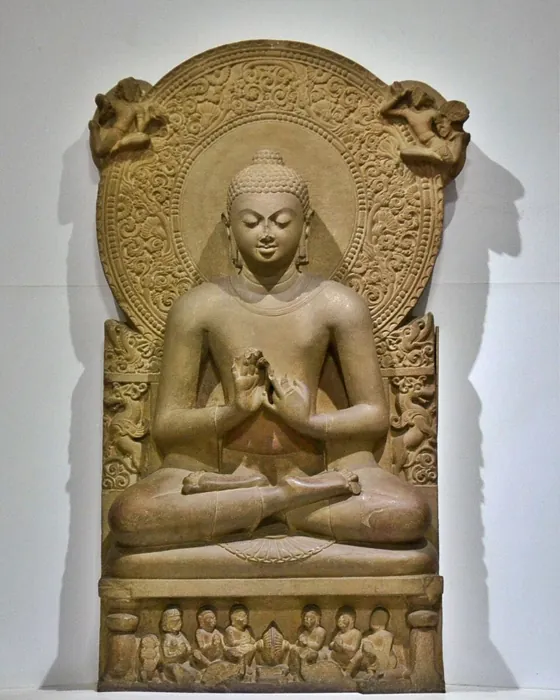
5th c. BCEA sandstone statue of the seated Buddha with hands in the teaching gesture and a carved halo behind the head07/16

The Buddha

Older dating
c. 560 to 480 BCE
Now often
died c. 405 BCE
First book to read
Dhammapada
Works listed
5
Topics argued
4
Sources linked
1
The Buddha with hands in the teaching gesture, a sandstone statue in Sarnath Museum. พระมหาเทวประภาส วชิรญาณเมธี, CC BY-SA 3.0, via Wikimedia Commons.
When you want something badly, who exactly is doing the wanting?
The founder of Buddhism. His teachings were not written down until several centuries after his death.

There is suffering, it has an origin, and it can cease. He traced it to desire and aversion coloured by ignorance, above all about the self, and he taught non-self: look for the owner of the wanting and you do not find one.

“From greed comes grief, from greed comes fear; he who is free from greed knows neither grief nor fear.”
Dhammapada, verse 216, trans. F. Max Muller, Sacred Books of the East vol. 10 (1881). Read it in place
Read first: Dhammapada
Works, topics and posts
Major works and parts
  • Dhammapada
  • Digha Nikaya: the long discourses
  • Majjhima Nikaya: the middle-length discourses
  • Samyutta Nikaya: the connected discourses
  • Anguttara Nikaya: the numbered discourses
Argues about
On the blog
Sources•SEP: Buddha
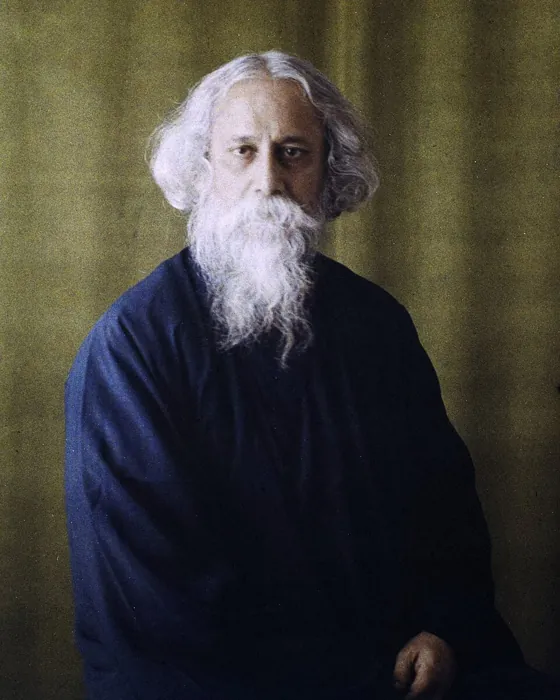
1861 to 1941An autochrome colour photograph of Rabindranath Tagore in a dark robe, with white hair and a long white beard08/16

Rabindranath Tagore

Lived
1861 to 1941
Nobel Prize
1913
First book to read
Gitanjali
Works listed
6
Topics argued
0
Sources linked
2
Tagore in 1926, an early colour photograph. Georges Chevalier, CC BY 4.0, via Wikimedia Commons.
Is a country free if the minds in it are still afraid?
Bengali poet, writer, composer and painter; the first non-European to win the Nobel Prize in Literature.

An ardent critic of nationalism who still denounced the British Raj and wanted independence. He was willing to rebuke Gandhi too. His prayer for his country asks first for a mind without fear.

“Where the mind is without fear and the head is held high; Where knowledge is free…”
Gitanjali, poem 35, Tagore's own English version (1912). Read it in place
Read first: Gitanjali
Works, topics and posts
Major works and parts
  • Gitanjali (1910; English 1912)
  • Gora (1910)
  • Sadhana (1913)
  • The Home and the World (1916)
  • Nationalism (1917)
  • The Religion of Man (1931)
On the blog
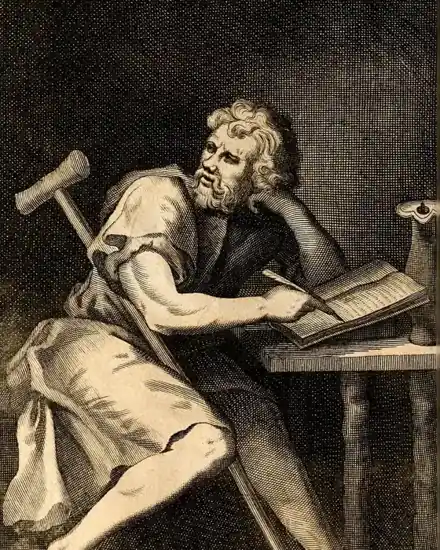
1st to 2nd c. CEAn engraving of Epictetus seated at a table writing, a crutch leaning beside him09/16

The Stoics

Epictetus
c. 50 to c. 135 CE
Marcus Aurelius
121 to 180 CE
First book to read
Enchiridion
Works listed
5
Topics argued
3
Sources linked
2
Epictetus, as imagined for the frontispiece of a 1715 Oxford edition of the Enchiridion. No portrait from life exists. William Sonmans and Michael Burghers, public domain, via Wikimedia Commons.
How much of what upsets you is the event, and how much is your verdict on it?
Epictetus spent part of his life as a slave; Marcus Aurelius was emperor of Rome.

Some things are in our power and some are not. Our opinions and desires are; body, property, reputation and office are not, and we are disturbed when we confuse the two lists.

“…Men are disturbed not by things, but by the views which they take of things.”
Epictetus, Enchiridion 5, trans. Thomas Wentworth Higginson (1865). Read it in place
What I take from it
“Set beside it, the Stoic version reads as the more analytical twin.”
From my post, Stoicism and the Gita
Read first: Enchiridion
Works, topics and posts
Major works and parts
  • Epictetus: Discourses
  • Epictetus: Enchiridion
  • Marcus Aurelius: Meditations
  • Seneca: Letters to Lucilius
  • Seneca: On the Shortness of Life
Argues about
On the blog
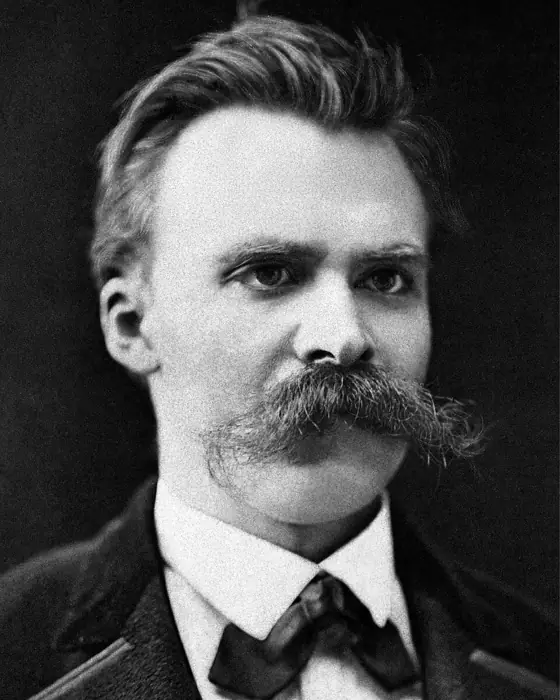
1844 to 1900A studio photograph of Friedrich Nietzsche facing the camera, with swept-back hair and a very heavy moustache10/16

Friedrich Nietzsche

Lived
1844 to 1900
First book to read
Beyond Good and Evil
Works listed
8
Topics argued
6
Sources linked
2
Nietzsche around 1875, in Basel. Friedrich Hermann Hartmann, public domain, via Wikimedia Commons.
If nobody handed down right and wrong, who wrote them, and why?
German philosopher and cultural critic. He collapsed in Turin in January 1889 and never recovered his mind.

He spoke of "the death of God" and foresaw the dissolution of traditional religion and metaphysics. He traced the moral values he inherited to ressentiment, and looked to a revaluation of values.

“He who fights with monsters should be careful lest he thereby become a monster.”
Beyond Good and Evil, aphorism 146, trans. Helen Zimmern (1906). Read it in place
Read first: Beyond Good and Evil
Works, topics and posts
Major works and parts
  • The Birth of Tragedy (1872)
  • Human, All Too Human (1878)
  • The Gay Science (1882)
  • Thus Spoke Zarathustra (1883 to 1885)
  • Beyond Good and Evil (1886)
  • On the Genealogy of Morality (1887)
  • Twilight of the Idols (1889)
  • Ecce Homo (written 1888)
Argues about
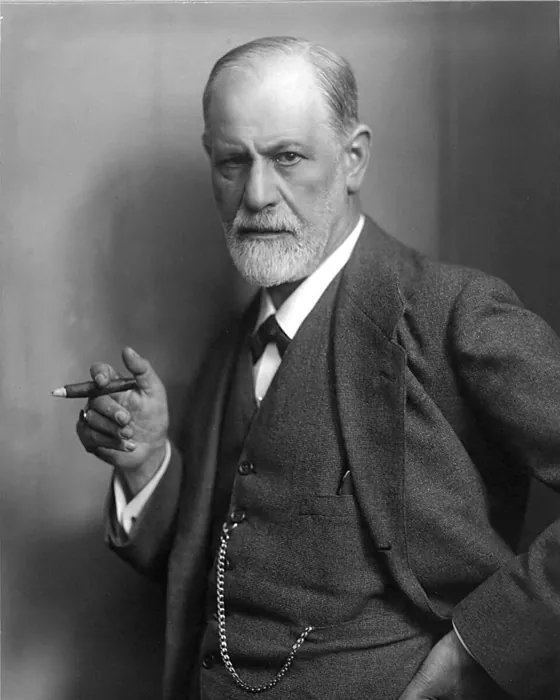
1856 to 1939A photograph of Sigmund Freud in a three-piece suit, grey beard, holding a cigar and looking at the camera11/16

Sigmund Freud

Lived
1856 to 1939
First book to read
The Interpretation of Dreams
Works listed
8
Topics argued
3
Sources linked
1
Freud around 1921, photographed by his son-in-law. Max Halberstadt, public domain, via Wikimedia Commons.
What if the reasons you give for what you do are not the real ones?
Austrian neurologist and the founder of psychoanalysis. His achievement is still much debated.

Much of mental life is unconscious. Wishes we cannot accept are repressed, and they come back in dreams and slips of the tongue. He read religion as the fulfilment of the oldest of those wishes.

“…they are illusions, fulfilments of the oldest, strongest and most insistent wishes of mankind…”
The Future of an Illusion, chapter 6, trans. W. D. Robson-Scott (1928). Read it in place
Read first: The Interpretation of Dreams
Works, topics and posts
Major works and parts
  • Studies on Hysteria, with Josef Breuer (1895)
  • The Interpretation of Dreams (1900)
  • The Psychopathology of Everyday Life (1901)
  • Three Essays on the Theory of Sexuality (1905)
  • Beyond the Pleasure Principle (1920)
  • The Ego and the Id (1923)
  • The Future of an Illusion (1927)
  • Civilization and Its Discontents (1930)
Argues about
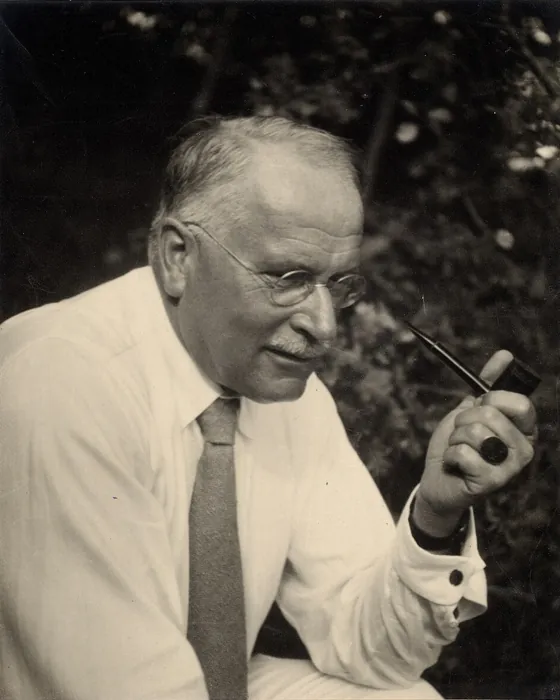
1875 to 1961A photograph of Carl Jung outdoors in a white shirt and tie, wearing glasses and holding a pipe12/16

Carl Jung

Lived
1875 to 1961
First book to read
Collected Papers on Analytical Psychology
Works listed
8
Topics argued
1
Sources linked
2
Jung around 1935. Unknown photographer, ETH Library Zurich, public domain, via Wikimedia Commons.
What if the people you cannot stand are showing you a part of yourself?
Swiss psychiatrist who founded analytical psychology after his break with Freud.

The shadow is our "other side": the part of the personality the ego has disowned and rejected. It does not stay put. It is projected outward, onto other people.

“…The unconscious is a source of danger when the individual is not at one with it.”
Collected Papers on Analytical Psychology, ed. Constance E. Long, 2nd edition (1917), chapter XIV, "The Psychology of the Unconscious Processes", section XI. Read it in place
Read first: Collected Papers on Analytical Psychology
Works, topics and posts
Major works and parts
  • Psychology of the Unconscious (1912)
  • Psychological Types (1921)
  • Modern Man in Search of a Soul (1933)
  • Psychology and Religion (1938)
  • Aion (1951)
  • Answer to Job (1952)
  • Memories, Dreams, Reflections (1962)
  • The Red Book (published 2009)
Argues about
On the blog
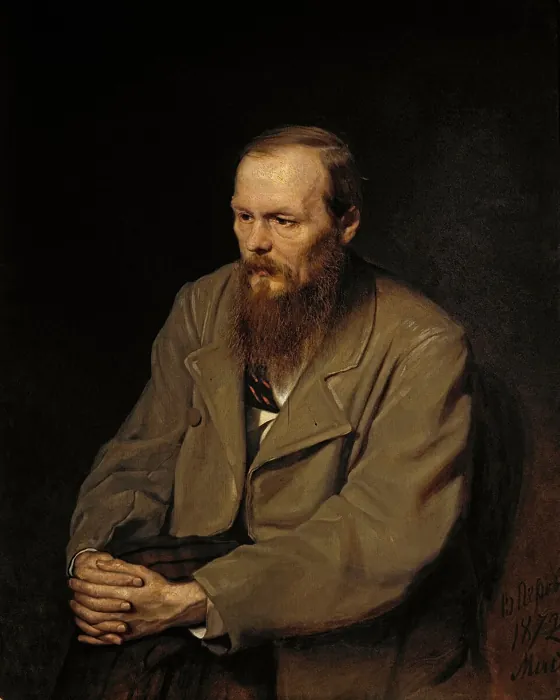
1821 to 1881An oil portrait of Fyodor Dostoevsky seated in a dark coat, hands clasped around one knee, looking away13/16

Fyodor Dostoevsky

Lived
1821 to 1881
First book to read
Notes from Underground
Works listed
6
Topics argued
3
Sources linked
2
Dostoevsky, painted from life by Vasily Perov in 1872. Vasily Perov, public domain, via Wikimedia Commons.
Would you still want freedom if it cost you every certainty?
Russian novelist. Sentenced to death in 1849, reprieved at the last moment, then four years in a Siberian prison camp.

He lets the other side speak at full strength. Ivan Karamazov rejects a God who allows children to suffer, and his Grand Inquisitor argues that people will give up freedom for bread and certainty.

“…the secret of man's being is not only to live but to have something to live for.”
The Brothers Karamazov, Book 5, chapter 5, the Grand Inquisitor speaking; trans. Constance Garnett (1912). Read it in place
Read first: Notes from Underground
Works, topics and posts
Major works and parts
  • The House of the Dead (1862)
  • Notes from Underground (1864)
  • Crime and Punishment (1866)
  • The Idiot (1869)
  • Demons (1872)
  • The Brothers Karamazov (1880)
Argues about
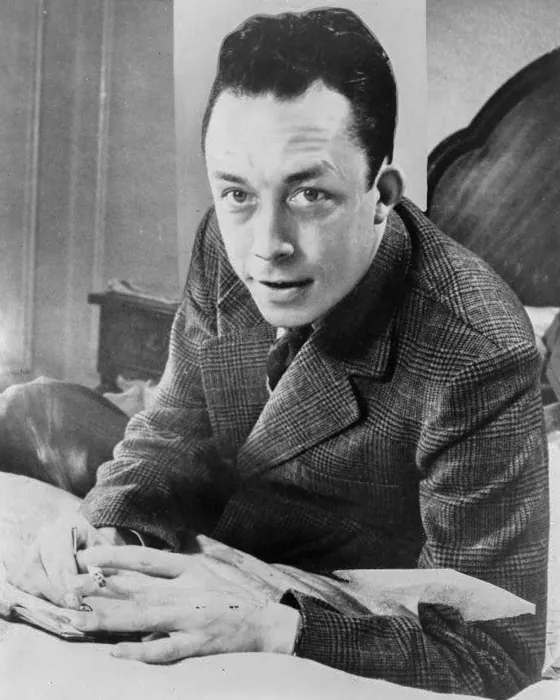
1913 to 1960A press photograph of Albert Camus in a tweed jacket, leaning forward on a desk with his hands clasped14/16

Albert Camus

Lived
1913 to 1960
Nobel Prize
1957
First book to read
The Myth of Sisyphus
Works listed
5
Topics argued
2
Sources linked
2
Camus in 1957, the year of his Nobel Prize. United Press International, public domain, via Wikimedia Commons.
If the world never answers, can you live well without an answer?
Journalist, novelist and philosopher, born in French Algeria.

The absurd is the divorce between our "wild longing for clarity" and the "unreasonable silence of the world". He rejects any hope of resolving that strain, and rejects despair along with it. What he puts in their place is revolt.

“One must imagine Sisyphus happy”
The Myth of Sisyphus (1942), trans. Justin O'Brien (1955), p. 123, as quoted in the Stanford Encyclopedia of Philosophy. Read it in place
Read first: The Myth of Sisyphus
Works, topics and posts
Major works and parts
  • The Stranger (1942)
  • The Myth of Sisyphus (1942)
  • The Plague (1947)
  • The Rebel (1951)
  • The Fall (1956)
Argues about
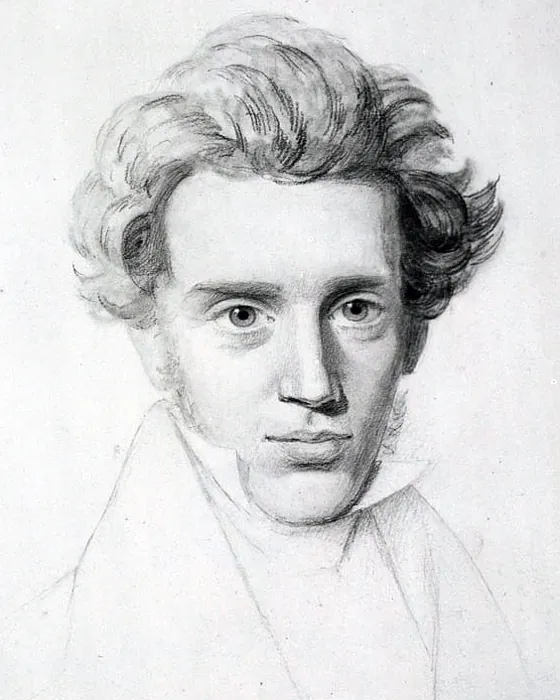
1813 to 1855A pencil sketch of the young Søren Kierkegaard with swept-up hair and a high collar, the shoulders left unfinished15/16

Søren Kierkegaard

Lived
1813 to 1855
First book to read
Fear and Trembling
Works listed
7
Topics argued
3
Sources linked
2
Kierkegaard around 1840, in an unfinished pencil sketch. Royal Library, Denmark, public domain, via Wikimedia Commons.
What do you do when the choice that matters most cannot be proved right?
Philosopher and religious writer, born in Copenhagen, who published much of his work under pseudonyms.

In Fear and Trembling, Abraham is told to sacrifice Isaac. Either faith can suspend the ethical, or Abraham is a murderer. Nothing outside the single individual can settle which.

“…the movement of faith must ever be made by virtue of the absurd…”
Fear and Trembling (1843), in Selections from the Writings of Kierkegaard, trans. L. M. Hollander (1923). Read it in place
Read first: Fear and Trembling
Works, topics and posts
Major works and parts
  • Either/Or (1843)
  • Fear and Trembling (1843)
  • Repetition (1843)
  • Philosophical Fragments (1844)
  • The Concept of Anxiety (1844)
  • Concluding Unscientific Postscript (1846)
  • The Sickness unto Death (1849)
Argues about
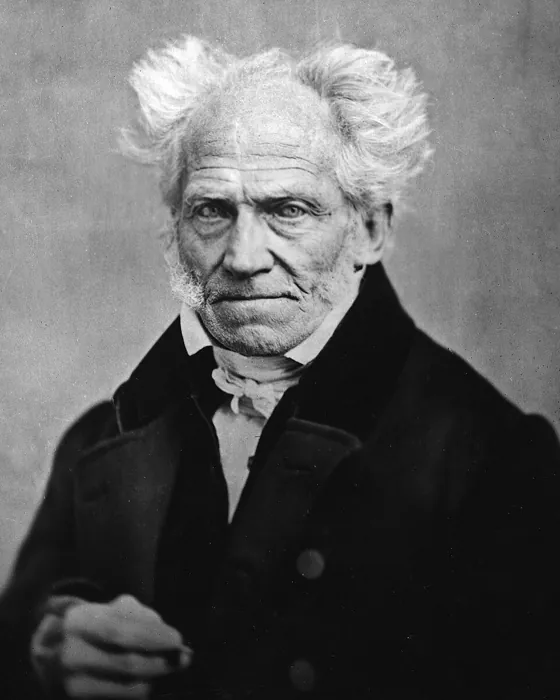
1788 to 1860A photograph of the elderly Arthur Schopenhauer with wild white side hair, looking sharply at the camera16/16

Arthur Schopenhauer

Lived
1788 to 1860
First book to read
Counsels and Maxims
Works listed
4
Topics argued
5
Sources linked
2
Schopenhauer in March 1859, a year before his death. Johann Schafer, public domain, via Wikimedia Commons.
Why does getting what you wanted never stay enough?
German philosopher who read the Upanishads and found his own views close to Buddhism.

The world in itself is will: an endless, blind striving with no end in view. Wanting brings frustration and suffering with it. He names three ways beyond it: aesthetic perception, moral awareness and asceticism.

“Thus its life swings like a pendulum backwards and forwards between pain and ennui.”
The World as Will and Idea, vol. 1, section 57, trans. R. B. Haldane and J. Kemp (1883). Read it in place
Read first: Counsels and Maxims
Works, topics and posts
Major works and parts
  • On the Fourfold Root of the Principle of Sufficient Reason (1813)
  • The World as Will and Representation (1818; second volume 1844)
  • On the Basis of Morality (1840)
  • Parerga and Paralipomena (1851)
Argues about

The hard topics

Which of these do you change the subject on?

No winner is declared unless I have said where I stand.

Pick a topic to open it.

Topic01/09

Death

Voices
7
Thinkers on this page
5
Sources linked
7
My verdict
stated
Would you live differently if you were sure nothing came after?
7 voices, each with the page it comes from.
EpicurusNothing to fear

“Death … is nothing to us, seeing that, when we are, death is not come, and, when death is come, we are not.” Fearing it spoils the only life there is.

The GitaThe self does not die

The self “…is not killed when the body is killed…”, and “…to one that is born, death is certain…”. So grief over what cannot be avoided is misplaced.

5 more voices
CharvakaNothing survives

“…When once this frame of ours they burn, How shall it e'er again return?”

The BuddhaRebirth without a self

He taught rebirth and karma, and also that there is no self. What carries on is a causal series of events, not a soul.

SchopenhauerThe person ends, the will does not

“What sleep is for the individual, death is for the will as thing in itself.”

CamusNo afterlife to hope for

He concludes that the soul is not immortal, and asks us to abandon all hope for an afterlife. What is left is this life, lived for itself.

HeideggerDeath and the authentic self

He sets an authentic or “ownmost” self against the anonymous “anyone-self”. One reading, Thomson's, is that death is something I must live through in order to become authentic.

Where I stand
“Life is a great comedy, with death as the punchline.”
From my field note

This is a page of ideas, not advice. If this subject is heavy for you right now, the Government of India runs Tele-MANAS, a free mental health line: dial 14416.

Put two of these side by side
Topic02/09

Meaning

Voices
8
Thinkers on this page
8
Sources linked
8
My verdict
none
If nobody assigned your life a purpose, is that a loss or a permission?
8 voices, each with the page it comes from.
DostoevskyWe cannot live without one

His Grand Inquisitor: “…the secret of man's being is not only to live but to have something to live for.”

NietzscheMake it

“…I teach you the Superman. Man is something that is to be surpassed.” And: “…Man is a rope stretched between the animal and the Superman…”.

6 more voices
CamusThere is none; live anyway

It is absurd, he holds, to keep seeking meaning in life when there is none, and absurd to hope for some continued existence after death.

KierkegaardChoose it, without proof

Not by reasoning from outside, but by a commitment only the single individual can make: “…the movement of faith must ever be made by virtue of the absurd…”.

SchopenhauerThere is no purpose in the striving

The will is an endless striving with no end in view. He looks beyond it through aesthetic perception, moral awareness and asceticism.

The GitaYour own work, done cleanly

“One's own duty, though defective, is better than another's duty well performed.”

The UpanishadsKnow what you are

A father tells his son what he is: “It is the True. It is the Self, and thou, O Svetaketu, art it.”

CharvakaEnjoy it

“The only end of man is enjoyment produced by sensual pleasures.”

No verdict here. I have not written one, so the argument stays open.

Put two of these side by side
Topic03/09

Power

Voices
5
Thinkers on this page
3
Sources linked
5
My verdict
stated
Do you dislike power, or only other people having it?
5 voices, each with the page it comes from.
NietzscheIt is what life is

“A living thing seeks above all to DISCHARGE its strength--life itself is WILL TO POWER; self-preservation is only one of the indirect and most frequent RESULTS thereof.”

ChanakyaA tool, kept under audit

It is “…impossible for a government servant not to eat up, at least, a bit of the king's revenue”, and the same book has a chapter on keeping up accounts in the office of accountants.

3 more voices
MachiavelliKeep it, by fear if needed

One should wish to be both, but “…it is much safer to be feared than loved, when, of the two, either must be dispensed with.”

HobbesEveryone wants it, so fence it

“…I put for a generall inclination of all mankind, a perpetuall and restlesse desire of Power after power, that ceaseth onely in Death.” Not from greed, he adds, but because nobody can secure what he has “without the acquisition of more”.

The StoicsThe only real power is inward

“Beyond our power are body, property, reputation, office…”. What is within it is “opinion, aim, desire, aversion”, and that is the power he tells us to care about.

Where I stand
“Competence over status. I listen to the person who can do the thing, whatever their title.”
From how I weigh a choice
Put two of these side by side
Topic04/09

Desire

Voices
7
Thinkers on this page
7
Sources linked
7
My verdict
none
Would you be happier wanting less, or would you only be less?
7 voices, each with the page it comes from.
The BuddhaThe root of suffering

“From greed comes grief, from greed comes fear; he who is free from greed knows neither grief nor fear.”

The GitaA chain that ends in ruin

Dwelling on objects breeds attachment, attachment breeds desire, and “from desire anger is produced”, then confusion, then loss of judgement.

5 more voices
SchopenhauerWant and suffer, get and be bored

“Thus its life swings like a pendulum backwards and forwards between pain and ennui.”

FreudBuried, not gone

A dream is the fulfilment of a wish, often in disguise; reading dreams is “…the via regia to a knowledge of the unconscious…”.

CharvakaThe point of living

Pleasure mixed with pain is still worth having. Of good rice: “…What man, seeking his true interest, would fling away because covered with husk and dust?”

ChanakyaFine, in its place

“Not violating righteousness and economy, he shall enjoy his desires.”

The StoicsAim it at what you control

“…He who fails of the object of his desires is disappointed…”, so keep desire to what is in your own power.

No verdict here. I have not written one, so the argument stays open.

Put two of these side by side
Topic05/09

Guilt

Voices
6
Thinkers on this page
6
Sources linked
6
My verdict
stated
Is guilt your conscience speaking, or a voice you swallowed long ago?
6 voices, each with the page it comes from.
NietzscheAn old debt, turned inward

“…the cardinal moral idea of 'ought' originates from the very material idea of 'owe'”. In German the same word, Schuld, means both debt and guilt.

FreudThe judge inside

The super-ego is the conscience: the standards of parents and society taken inside, where they judge the ego.

4 more voices
DostoevskyEveryone answers for everyone

Father Zosima to his monks: “…every one of us is undoubtedly responsible for all men and everything on earth…”.

KierkegaardA sign that you are free

Anxiety has its origins in freedom and shows how sin is possible. The cure, he says, is not to get rid of it.

JungThe shadow asking to be seen

The shadow is the side of ourselves we do not identify with, and we tend to project it onto others.

The GitaIt starts with a man undone

Arjuna sees his kinsmen across the field and says: “…my limbs droop down; my mouth is quite dried up…”. The rest of the book is the answer to him.

Where I stand
“Good and evil live in the same person. I don't sort people into heroes and villains.”
From how I weigh a choice
Put two of these side by side
Topic06/09

Religion and doubt

Voices
9
Thinkers on this page
7
Sources linked
9
My verdict
none
Is a faith that has never doubted a faith at all?
9 voices, each with the page it comes from.
The RigvedaDoubt is in the scripture

The creation hymn ends by saying of the highest overseer: “…he verily knows it, or perhaps he knows not”.

ShankaraScripture is the means of knowing

On his reading of the third sutra, scripture is “the means of right knowledge through which we understand the nature of Brahman”.

7 more voices
CharvakaOnly what can be seen

The fire rites, the three Vedas and the ascetic's ashes “…are but means of livelihood for those who have no manliness nor sense”.

KierkegaardFaith is not a conclusion

“…the movement of faith must ever be made by virtue of the absurd…”. Faith is a movement, not the end of an argument.

PascalBet on it

“Reason can decide nothing here.” So weigh the stakes: “If you gain, you gain all; if you lose, you lose nothing.”

DostoevskyBelief, with the case against it

Ivan Karamazov, on the suffering of children: “It's not God that I don't accept, Alyosha, only I most respectfully return Him the ticket.”

NietzscheThe belief has died

“God is dead! God remains dead! And we have killed him!” The words are given to a madman in the market-place.

FreudA wish, not a finding

Religious ideas are “…illusions, fulfilments of the oldest, strongest and most insistent wishes of mankind…”.

MarxA painkiller for real pain

Religion is “…the sigh of the oppressed creature … the opium of the people.” And: “The abolition of religion as the illusory happiness of the people is the demand for their real happiness.”

No verdict here. I have not written one, so the argument stays open.

Put two of these side by side
Topic07/09

Money

Voices
6
Thinkers on this page
3
Sources linked
6
My verdict
none
How much of what you call your character is your bank balance?
6 voices, each with the page it comes from.
ChanakyaThe root of the other aims

“Kautilya holds that wealth and wealth alone is important, inasmuch as charity and desire depend upon wealth for their realisation.”

The New TestamentLoving it is the root of evil

“…For the love of money is the root of all evil…”. The verse names the love of it, not money.

4 more voices
AristotleOnly ever a means

“The life of money-making is one undertaken under compulsion, and wealth is evidently not the good we are seeking; for it is merely useful and for the sake of something else.”

SchopenhauerThe one thing good for everything

“Money alone is absolutely good, because it is not only a concrete satisfaction of one need in particular; it is an abstract satisfaction of all.”

MarxIt rewrites who you are

“Money is the procurer between man's need and the object…”. And it rewrites character: “Money is the supreme good, therefore its possessor is good.”

CharvakaSpend it

“While life remains let a man live happily, let him feed on ghee even though he runs in debt.”

No verdict here. I have not written one, so the argument stays open.

Put two of these side by side
Topic08/09

Ambition

Voices
5
Thinkers on this page
5
Sources linked
5
My verdict
stated
Are you climbing towards something, or away from sitting still?
5 voices, each with the page it comes from.
The GitaStrive, without the claim

“Your business is with action alone; not by any means with fruit. Let not the fruit of action be your motive…”.

ChanakyaActivity is everything

“…The root of wealth is activity, and of evil its reverse. In the absence of activity acquisitions present and to come will perish…”.

3 more voices
NietzscheOvercome yourself

Man is “a rope over an abyss”, a crossing and not an end. What Zarathustra holds up as most contemptible is “the last man”.

The BuddhaThe only conquest is inward

“If one man conquer in battle a thousand times thousand men, and if another conquer himself, he is the greatest of conquerors.”

Marcus AureliusFame is a short story

“For all things soon pass away and become a mere tale, and complete oblivion soon buries them.”

Where I stand
“The Gita's idea of acting without attachment to the outcome is one I return to.”
From Stoicism and the Gita
Put two of these side by side
Topic09/09

Loneliness

Voices
6
Thinkers on this page
4
Sources linked
6
My verdict
stated
Can you tell being alone from being lonely, in yourself?
6 voices, each with the page it comes from.
The UpanishadsEven the first being felt it

Alone at the beginning, the Self feared, and then “…felt no delight. Therefore a man who is lonely feels no delight. He wished for a second.”

AristotleWe are built for company

“…Man is by nature a political animal.” And whoever cannot live in society, or has no need to, “…must be either a beast or a god…”.

4 more voices
SchopenhauerSolitude is freedom

“A man can be himself only so long as he is alone; and if he does not love solitude, he will not love freedom.”

NietzscheLeave the market-place

“Flee, my friend, into thy solitude!” For “…away from the market-place and from fame have ever dwelt the devisers of new values.”

The BuddhaBetter alone than badly accompanied

If you find no one your better or your equal, “…firmly keep to his solitary journey; there is no companionship with a fool”.

The researchIt is counted as a health risk

A 2015 meta-analytic review found the effect of social isolation on the risk of death, whether measured from outside or felt as loneliness, comparable with well-established risk factors.

Where I stand
“I think best in silence and need unstructured time alone.”
From Silence, solitude and thinking

This is a page of ideas, not advice. If this subject is heavy for you right now, the Government of India runs Tele-MANAS, a free mental health line: dial 14416.

Put two of these side by side

Two thinkers on one question

What happens when two minds that never met are asked the same thing?

Bias spotter

How sure are you that this decision is yours?

Switch on what is true of a decision in front of you. It marks nobody right or wrong; it shows where to look twice.

What is true of this decision?
More situations
Likely at work

Nothing switched on yet. Try “I have already paid for it”.

All 29 biases in the catalogue
Each card links the paper that named it•How well each effect has held up is in my post ranking them by evidence

Argument mapper

Can you state the best case against what you believe?

Type a claim, then the reasons for and against. The map stays in this browser; nothing is sent anywhere.

    The claim sits at the top. Support hangs on the left in blue, objections on the right in red.
    Still curious? Here's where it comes from.

    The shelf

    Which of these would argue back?

    Filter by subject and pull a spine. Each has the translation I checked and a free place to read it where one exists.

    Pick a spine to open it.

    Book01/28

    Bhagavad Gita

    Author
    Part of the Mahabharata
    Date
    c. 2nd to 1st century BCE
    Edition checked
    K. T. Telang, Sacred Books of the East vol. 8, 1882
    Subjects
    4
    What do you owe a duty you wish you did not have?
    Part of the Mahabharata

    A 700-verse dialogue between the prince Arjuna and his charioteer Krishna, on the eve of a war against his own kin.

    Read at sacred-texts.com
    Book10/28

    Meditations

    Author
    Marcus Aurelius
    Date
    while emperor, 161 to 180 CE
    Edition checked
    George Long, 1862
    Subjects
    3
    What does an emperor tell himself when nobody is listening?
    Marcus Aurelius

    A collection of personal writings by the Roman emperor Marcus Aurelius: his private notes to himself.

    Read at MIT Classics
    Book11/28

    Beyond Good and Evil

    Author
    Friedrich Nietzsche
    Date
    1886
    Edition checked
    Helen Zimmern, 1906
    Subjects
    3
    What if your morals are a taste you never chose?
    Friedrich Nietzsche

    Published in 1886. He accuses earlier philosophers of dogmatism and of taking moral assumptions for granted.

    Read at Project Gutenberg
    Book12/28

    Thus Spake Zarathustra

    Author
    Friedrich Nietzsche
    Date
    1883 to 1885
    Edition checked
    Thomas Common, 1909
    Subjects
    3
    What if "human" is a stage and not a destination?
    Friedrich Nietzsche

    A work of philosophical fiction published between 1883 and 1885. It carries the Übermensch, the death of God and the eternal recurrence.

    Read at Project Gutenberg
    Book13/28

    The Genealogy of Morals

    Author
    Friedrich Nietzsche
    Date
    1887
    Edition checked
    Horace B. Samuel, 1913
    Subjects
    2
    Who gains from your feeling guilty?
    Friedrich Nietzsche

    An 1887 book of three treatises tracing episodes in the evolution of moral concepts.

    Read at Project Gutenberg
    Book14/28

    The Interpretation of Dreams

    Author
    Sigmund Freud
    Date
    1899, dated 1900
    Edition checked
    A. A. Brill, third edition, 1913
    Subjects
    2
    What is your mind doing while you are not watching?
    Sigmund Freud

    Published in 1899. It introduces his theory of the unconscious with respect to dream interpretation.

    Read at Project Gutenberg
    Book15/28

    The Future of an Illusion

    Author
    Sigmund Freud
    Date
    1927
    Edition checked
    W. D. Robson-Scott, 1928
    Subjects
    1
    Do you believe it because it is true, or because you need it?
    Sigmund Freud

    A 1927 work in which he defines religion as an illusion.

    Read at the Internet Archive
    Book16/28

    Collected Papers on Analytical Psychology

    Author
    Carl Jung
    Date
    1916; second edition 1917
    Edition checked
    Edited by Constance E. Long, second edition, 1917
    Subjects
    3
    What is the part of you that you never chose to meet?
    Carl Jung

    Jung's early papers on analytical psychology in English, in the edition of Dr. Constance E. Long.

    Read at Project Gutenberg
    Book17/28

    Notes from Underground

    Author
    Fyodor Dostoevsky
    Date
    1864
    Edition checked
    Constance Garnett, 1918
    Subjects
    3
    Would you act against your own interest just to prove you could?
    Fyodor Dostoevsky

    An 1864 novella that presents itself as an excerpt from the memoirs of a bitter, isolated, unnamed narrator.

    Read at Project Gutenberg
    Book18/28

    Crime and Punishment

    Author
    Fyodor Dostoevsky
    Date
    1866
    Edition checked
    Constance Garnett, 1914
    Subjects
    2
    Can a good enough reason make a killing right?
    Fyodor Dostoevsky

    First published in 1866. Raskolnikov, a poor former student in St. Petersburg, plans to kill a pawnbroker.

    Read at Project Gutenberg
    Book19/28

    The Brothers Karamazov

    Author
    Fyodor Dostoevsky
    Date
    1880
    Edition checked
    Constance Garnett, 1912
    Subjects
    3
    If there is no God, is everything permitted?
    Fyodor Dostoevsky

    His last novel, serialised until November 1880. A philosophical novel on God, free will and morality.

    Read at Project Gutenberg
    Book20/28

    The Myth of Sisyphus

    Author
    Albert Camus
    Date
    1942
    Edition checked
    Justin O'Brien, 1955 (in copyright; no free edition)
    Subjects
    2
    Can a life be worth living with no hope attached?
    Albert Camus

    A 1942 essay that introduces his philosophy of the absurd. Its closing line is the one about imagining Sisyphus happy.

    About the book, SEP
    Book21/28

    The Stranger

    Author
    Albert Camus
    Date
    1942
    Edition checked
    Stuart Gilbert, 1946 (in copyright; no free edition)
    Subjects
    2
    What do we do with a man who will not pretend to feel?
    Albert Camus

    A 1942 novella. Meursault kills a man in French Algeria, not long after his mother's funeral.

    About the book, Wikipedia
    Book22/28

    Fear and Trembling

    Author
    Søren Kierkegaard
    Date
    1843
    Edition checked
    In Selections from the Writings of Kierkegaard, L. M. Hollander, 1923
    Subjects
    3
    What if obeying God meant doing wrong by everyone else?
    Søren Kierkegaard

    Published in 1843 under the pseudonym Johannes de silentio. It turns on Abraham's willingness to sacrifice Isaac.

    Read at Project Gutenberg
    Book23/28

    The World as Will and Idea

    Author
    Arthur Schopenhauer
    Date
    1818
    Edition checked
    R. B. Haldane and J. Kemp, 1883 to 1886
    Subjects
    3
    What if wanting, not failing, is where suffering comes from?
    Arthur Schopenhauer

    First published in late 1818. Its claim is that the world we know is representation, and that the thing-in-itself behind it is will.

    Read at Project Gutenberg
    Book24/28

    Counsels and Maxims

    Author
    Arthur Schopenhauer
    Date
    1851
    Edition checked
    T. Bailey Saunders, 1890
    Subjects
    3
    If happiness is off the table, how do you live well?
    Arthur Schopenhauer

    From Parerga and Paralipomena, his 1851 collection, which includes the Aphorisms on the Wisdom of Life.

    Read at Project Gutenberg
    Book25/28

    The Prince

    Author
    Niccolò Machiavelli
    Date
    1532
    Edition checked
    W. K. Marriott, 1908
    Subjects
    2
    Is it better to be good, or to seem good and survive?
    Niccolò Machiavelli

    A 16th-century political treatise, printed in 1532, five years after his death.

    Read at Project Gutenberg
    Book26/28

    Leviathan

    Author
    Thomas Hobbes
    Date
    1651
    Edition checked
    First edition text, 1651
    Subjects
    1
    How much freedom would you trade to feel safe?
    Thomas Hobbes

    Published in 1651. It argues for a social contract and for rule by an absolute sovereign.

    Read at Project Gutenberg
    Book27/28

    Pensées

    Author
    Blaise Pascal
    Date
    1670
    Edition checked
    W. F. Trotter
    Subjects
    2
    What would you bet on a question reason cannot settle?
    Blaise Pascal

    Fragments of a defence of the Christian religion, left unfinished. It contains the wager.

    Read at Project Gutenberg
    Book28/28

    Thinking, Fast and Slow

    Author
    Daniel Kahneman
    Date
    2011
    Edition checked
    Farrar, Straus and Giroux, 2011 (in copyright)
    Subjects
    2
    How often is your first answer only the easiest one?
    Daniel Kahneman

    A 2011 book on two modes of thought: System 1, fast and instinctive, and System 2, slower and more deliberate.

    Judgement•Money
    About the book, Wikipedia

    The long versions

    Want the whole argument, not the card?

    The calm gets tested elsewhere: on long rides on Yatri, with a bike that won't start on Yantra, in the noise of Bazaar, in the habits Kyun questions, behind the lens on Kala and at the table on Rasa.

    Read the blog