Yantra is Sanskrit for machine. This is Motoverse: motorcycles, mechanics and the physics of riding.Source: Wikipedia, Yantra
Motoverse is about the machine: building a bike for long tours, keeping it alive on the road and buying the right one.
I'm a mechanical engineer who has ridden 1,30,000 km, toured solo on a 2017 NS200 and now rides a KTM 390 Adventure X Plus. Here are the guides, calculators and checklists I use, with my own bikes as the worked examples.
The proof behind the advice. A BE in mechanical engineering (MVJ College of Engineering, 2017), hands-on work as a junior mechanical engineer at Apeiron Mobility, manufacturing battery packs and small scooter units, and two bikes I maintain myself.
A carburetted BS4 199.5 cc liquid-cooled single that I turned from a city naked into an upright luggage tourer. Several 800 to 1,000 km days, Gurudongmar in 2022 and Bengaluru to Sikkim and back in 2025.Source: Wikipedia, Bajaj Pulsar NS200 and Wikipedia, Bajaj Pulsar
24 modsEngine top end rebuiltClutch, disc, master cylinder replacedForks overhauled
The new long-distance bike, with the LC4c single of about 399 cc. Bought for about 80% touring and 20% adventure. Its ownership log is the diagnosis guide further down.Source: KTM India, 390 Adventure X
26.5 km/l at 100–120 km/hTPMS, GPS trackerBar risers, centre stand
Match tyre to road. Mostly tarmac, even broken tarmac: a road tyre grips better and lasts. Real dirt: a dual-sport pattern, accepting more noise and wear on the highway.
Check the load and speed rating on the sidewall against your loaded weight and cruising speed.
Read the detail
Set pressure cold, for the load. Use the manual's two-up or loaded figure when touring. Patch area is roughly load ÷ pressure, so low pressure grows the patch but makes the tyre flex and heat up on tarmac.Source: Continental, Tyre pressure and Wikipedia, Contact patch, which notes that load ÷ pressure is not exact
Carry a puncture kit and inflator that suit your tyres: plugs for tubeless, a tube and levers for tubed.
Suspension: set your sag first
Fancy shocks don't help if they sit in the wrong part of their stroke. Sag is how much the suspension compresses under the bike and rider. Get it right, loaded, before you touch any other setting.
33%Rider sag: 50 mm of 150 mm travel.
0%25%50%
In the window
How to measure: pick a fixed point on the frame above the rear axle. Lift the rear until the wheel hangs fully extended and measure axle to that point. Then sit on the bike in riding gear, feet on the pegs, with a friend steadying it, and measure again. The difference is rider sag.
Re-check with luggageA loaded tour can add 30 to 40 kg at the back. Wind in preload before you leave, not after the first speed breaker.
The parts shelf: what you can buy in India
Engine oils, air filters, chains, tyres, additives and the rest, each with where I found it. Pick a shelf, search it, open a row. Then check any oil against your bike and the weather you are riding into.
No prices: they change weekly. Rows without a source are left out.
Pre-tour inspection: a week before
Do this a week out, so there's time to get parts. Tick as you go; it remembers your progress in this browser. The trip side (permits, maps, weather) is in the Ride Atlas checklist.
The week before a tour, in order. Each step jumps to its checklist or example.
If a service, tyre or chain will fall due during the trip, do it before you leave and ride 200 to 300 km on it first. New parts and new work fail early if they're going to fail.Source: Wikipedia, Bathtub curve
After any workshop visit, check the three things I've found wrong more than once: chain tension and alignment, oil level, and loose fasteners.
Note the odometerWrite down the reading and what you did. It's the start of your own logbook.
Trip prep planner: your bike, your distance
Tell me the bike, the distance and how far you want to ride in a day. I work out fuel range and stops, a cruising speed, the oil to run, when to service, how often to lube the chain and which kind of tyre suits the roads.
Loading the library…
These planning figures are my own rules of thumb from my rides.
On a tour the chain is the part that needs you most, so here's the routine, a wear check, and the small kit that handles most roadside problems.
On tourLube every few hundred km and after rain. Salt air on the coast and dust inland both eat chains faster.Source: D.I.D Chain, Chain maintenance
Is it worn out?
Chains don't really stretch; the pins and bushes wear, which adds length. Measure pin centre to pin centre across a span of links, pulled taut.Source: Wikipedia, Roller chain
0.63%longer than new (317.5 mm). Compare with the wear limit in your service manual.
Pick your bike, tap where you sense the problem, and read the likely causes, a test you can do yourself and the fix. What other owners of your model have reported comes first, then the checks that apply to any bike.
Loading the library…
A generic bike, not a drawing of your model. Tap the area where you sense the problem. An orange number means owners of your bike have reported something there.
Not in the list? Build a question to ask
Describe it here. I turn it into a complete question with your bike and the area filled in, ready to paste into an AI assistant or a forum post.
Owner reports are reports, not proof of a defect in every bike. Each one links to where it was described. General checks are standard workshop practice; anything on brakes, steering or fuel leaks is a stop-and-fix item.
My own logbook: worked cases from the KTM and the NS200
The method is simple: write down the symptom exactly, list the likely causes, test the cheapest guess first. These are real cases from my KTM and NS200, filtered by where they ended up.
Diagnose it: start at the top. Built from the cases below. Each answer opens the worked example.
Back to the methodWrite the symptom down exactly, list the likely causes, test the cheapest guess first.
A buzz at certain revs
FIXED
SYMPTOMKTM: a buzz from the headlight between 4,500 and 5,500 rpm, gone above and below.
LIKELY CAUSESomething loose resonating. At 4,500 to 5,500 rpm the crank turns 75 to 92 times a second; a loose part with a natural frequency in that range sings along.Source: OpenStax University Physics, 15.6 Forced oscillations
TEST AND FIXPress on suspects at that rpm until the buzz stops. Tightening the headlight hardware fixed it.
SYMPTOMKTM: after the first service at about 930 km, the level sat above the max mark.
LIKELY CAUSEOverfilled. Too much oil gets churned by the crank, raises crankcase pressure and can push oil out through the breather.Source: JEGS, What happens if you overfill engine oil
TEST AND FIXCheck on level ground, warm, as the manual says. I drained about 200 ml until it sat inside the marks.
If your bike goes flat in the mountains and you blame the fuel, check the air first. My carburetted NS200 at times couldn't pass about 40 km/h near 5,000 m. Nothing was broken. Drag the altitude to see why.
Thin air, less bang. A naturally aspirated engine fills each cylinder with whatever the atmosphere gives it. Less dense air means less oxygen per stroke, so power falls roughly in step with density: about a third less around 4,000 m.Source: Wikipedia, Density altitude and Engineering ToolBox, U.S. Standard Atmosphere
Read the detail
A carburettor makes it worse. It meters fuel off the pressure drop in its venturi, so as density falls it delivers about the same fuel to lighter air. The mixture goes rich, roughly with the square root of the density change. Rich mixtures burn slowly and soot up plugs.Source: US Patent 4,095,568, Altitude compensating apparatus and NGK Spark Plugs, Spark plug basics
What to do: on a carb bike, expect less power, use lower gears, keep the plug and air filter fresh, and ask a mechanic about jetting if you'll spend days up high. On fuel injection, the system trims fuel to the air, but there's still less air to burn.Source: Wikipedia, MAP sensor
Plan the ride around itShorter days and more fuel up high. The rider side is in Ride Atlas: altitude.
Spec sheet reader: what to check before you buy
Brochures list numbers without telling you which ones matter for the way you ride. Tap any line of this example sheet to see what it means and what to ask. Then convert the power units, because brochures mix them.
Example 400 ADV: an invented bike. These numbers describe no real motorcycle.
Every row on the left hides a question you should ask before you buy.
AskWhat does this number change on my kind of ride?
kW, PS, hp converter
18.4 kW25.0 PS · 24.7 hp · 18.39 kW
1 kW = 1.35962 PS; 1 hp ≈ 0.7457 kW. So 1 PS is about 0.986 hp, a 1.4% gap marketing loves to round its way.Source: Wikipedia, Horsepower
From the sheet to the saddle. Which brochure lines decide which feeling on a loaded tour. Tap a line for its tool.
Dyno charts: read the whole curve
Every review flashes one of these for two seconds. The peak number matters less than where the torque lives. Pick an engine character, then drag across the chart.
RPM–
TORQUE–
POWER–
Illustrative curves, not any real bike. Power is calculated from the torque line with kW = Nm × rpm ÷ 9549.Source: Wikipedia, Torque
The blue line is torque, the amber line is power. Power is torque × rpm, so the power curve keeps climbing after torque has peaked, until torque falls off faster than rpm rises.
Read the detail
Look at the shape, not the peak. A flat, fat torque line means the bike pulls in any gear without downshifting. A line that only wakes up near the top means constant gear changes on a loaded climb.
Find where you'll ride. On a loaded tour most time is spent mid-range. The area under the curve there matters more than the peak.
Dyno numbers are measured at the wheelA chassis dyno reads after the gearbox and chain, so it shows less than the brochure's crank figure.Source: Wikipedia, Dynamometer
Power-to-weight and torque: will it pull, loaded?
Two calculators for comparing bikes honestly: power per kilo with you and your luggage aboard, and the torque-to-power relation behind every brochure number.
Power-to-weight
0.098PS per kg. Each PS hauls 10.2 kg.
Add 30 to 40 kg of luggage and watch it fall. That's the slog on a loaded ghat climb. Pack light before you buy power.
9,549 is 60,000 ÷ 2π. Same torque at twice the rpm is twice the power, and the gearbox multiplies torque on the way to the tyre.Source: Wikipedia, Torque
Gearing: one tooth changes everything
Swapping a sprocket is the cheapest performance mod there is, and it always costs something. For a loaded tourer the question is usually: more pull on climbs, or calmer revs on the highway?
120 km/hFinal drive 2.93 : 1 · overall 7.91 : 1 · tyre circumference 1,962 mm. One more rear tooth: +2.4% more wheel torque, that much less speed at the same rpm.
14T/41T is what my NS200 runs, on a 140/70-17 rear. Primary and gear ratios are example inputs; check your manual.
Final drive = rear teeth ÷ front teeth. Multiply by the primary ratio and the gear ratio for the overall reduction between crank and rear wheel.
One tooth at the front moves things far more than one at the back, because it's a bigger share of a smaller number. Try 14 to 15 at the front versus 41 to 42 at the back.
What goes in the tank changes how far you go and, sometimes, how the engine runs. Here's what's known, what's marketing, and a range calculator built on real numbers.
332 kmbefore you should be at a pump. Full tank: 390 km.
Use your worst real mileage, not your best. Speed, load, climbs and headwind all move it.
Older carburetted bikes: the government says testing found no serious compatibility problems, though some older vehicles may need specific upkeep, like rubber parts. Watch for hard starting or a weeping fuel line and get it checked.Source: PIB, Response to concerns on 20% blending of ethanol in petrol, 12 August 2025
Testing a fuel claim yourself: alternate brands tank by tank, ride the same route at the same time, and log fuel used and vibration. My own Shell vs XP95 "smoother" feeling is still unproven, which is why I'd test it this way.
Three things that change how you ride a loaded bike: where the weight goes when you brake, why one bike steers lighter than another, and how a bike actually turns.
Press the right grip forward and the front wheel steers briefly left. The tyres run out from under the bike, it falls into a lean to the right, and then it turns right. Above walking pace, a firm press on the inside grip is the fastest way to change direction, which is what gets you round a tightening hairpin.Source: Wikipedia, Countersteering
Most touring money goes on things that look good in a photo. Spend in this order instead: what keeps you safe and comfortable for ten hours, then what carries your stuff, then everything else. My NS200's mods are the worked examples; each card links to the part in my kit.
The build on one bike. Every mod on my NS200, where it sits and why it's there. Orange is safety, amber is comfort, light blue carries, red sees and protects. Tap one for the part.
1Tyres, brakes, suspension. Fresh tyres rated for your load, firm brakes, and suspension set for the weight you'll actually carry. Set the suspension
2Ergonomics. Bars, pegs and a screen that let you ride all day without wrist or neck pain. Fit the bike to you
3Luggage and mounting. Racks and stays first, bags second. Mount it right
4Lighting and protection. Aux lights for fog and night, a crash guard for the inevitable drop. Lights that help
5Electrics and navigation. A fused charging point and a mount that won't let go. Navigation, in Ride Atlas
6Engine mods last. On a tourer they rarely change your day. Reliability does. Read the whole curve
Where the weight goes changes how the bike steers and brakes. Where the light goes decides whether you see the pothole. Both are easy to get right and expensive to get wrong.
Luggage and mounting
Heavy low and forward. Tools and spares low in the saddlebags; light, bulky things like the sleeping layer on top.
Stays before soft bags. Saddle stays keep bags out of the rear wheel, chain and hot exhaust. A bag that sags into a tyre ends the trip.
Pain on a long ride is a setup problem before it's a toughness problem. Find which of these hurts after two hours, and fix that one first.
WRISTS, SHOULDERSReach to the barsToo far forward loads your wrists. Risers or a taller bar bring the grips back; I run about 1 inch of risers on the KTM and a Dominar bar setup on the NS200. Check cables and hoses still reach at full lock.My bar conversion
After risers, check cables and hoses still reach at full lock, both ways.
KNEES, HIPSSeat-to-peg distanceTight knees cramp on long days. A taller seat or lower pegs open the angle, at the cost of reach to the ground.My footpegs
The trade: more knee room, less reach to the ground.
NECK, ARMSWindscreen heightA screen that throws air at your helmet causes buffeting. Mine buffets at 120 to 125 km/h. Try height and angle before buying a bigger one.Source: Adventure Bike Rider, Givi Airflow screenMy windscreen
Try height and angle before you buy a bigger screen.
More from Yantra
LEGSStanding positionOn broken roads you'll stand. Bars should reach your hands without hunching; wide pegs stop your boots aching.Wider pegs
Bars should reach your hands without a hunch when you stand.
HANDSLever span and angleSet levers so your wrist stays straight when you're seated. Adjustable levers help small hands.Controls, on the inspection
The setting is right when your wrist stays straight, seated.
INDIAN ROADSSuspension and brakes take the beatingBroken tarmac and unmarked speed breakers punish the rear shock most when loaded. The stock NS200 shock wasn't enough for luggage; the fork needed an overhaul too.Set your sag
WHAT FAILEDWear parts, on scheduleTop end, clutch plates, front disc and master cylinder, chain and sprockets. None stranded me because I replaced them as they wore.What went, and when
WHAT FAILEDWorkshop workOn the new KTM: oil above max after a service, and a chain too tight or misaligned. Check every job before you ride away.Check every job
More from Yantra
WHAT FAILEDThings that vibrate looseA headlight buzzing at 4,500 to 5,500 rpm, a suspected loose battery terminal, and a phone that shook out of its holder on tour.The buzz, diagnosed
MOUNTAINSCarburettors don't like altitudeNear 5,000 m my carb NS200 crawled at about 40 km/h. Fuel injection is the bigger reason I'd pick an FI bike for the Himalaya.Carb vs injection
WHAT TO PACKKit that earns its placePuncture kit and inflator, chain lube, cable ties, fuses, the tool sizes the stock kit lacks, and a TPMS if your bike takes one.The roadside kit
Six things riders say, checked against physics
People say:Never use the front brakeThe physics:
Under hard braking, weight transfers onto the front tyre, so it can carry most of the braking force. Squeeze it progressively, upright.
The lube that matters is inside the rollers and at the seals. Wipe off the excess outside: it only flings off when the chain turns, and a dirty chain catches sand.
The bike is half the story: the journeys and the road craft live on Yatri, the trucks you overtake on Kyun, road food on Rasa, the photos on Kala, the long-day head on Manthan, and the fuel money on Bazaar.
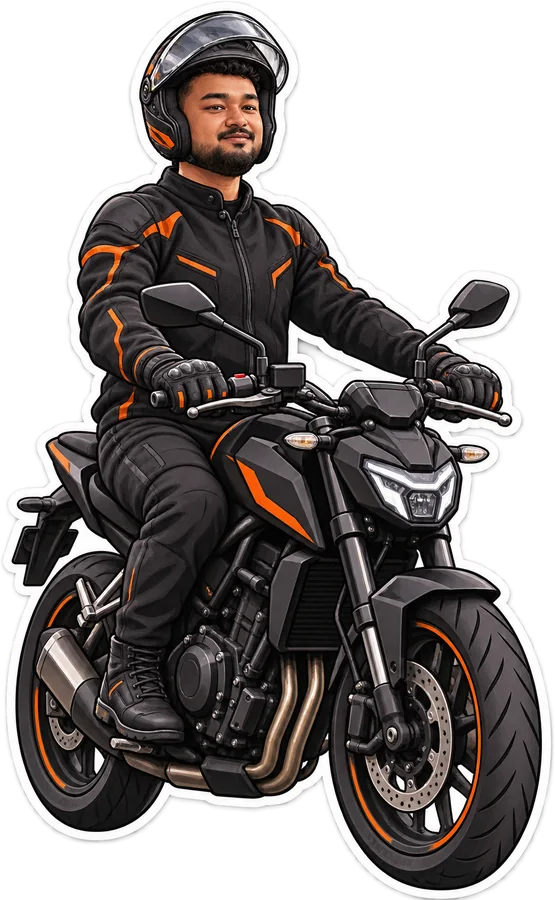
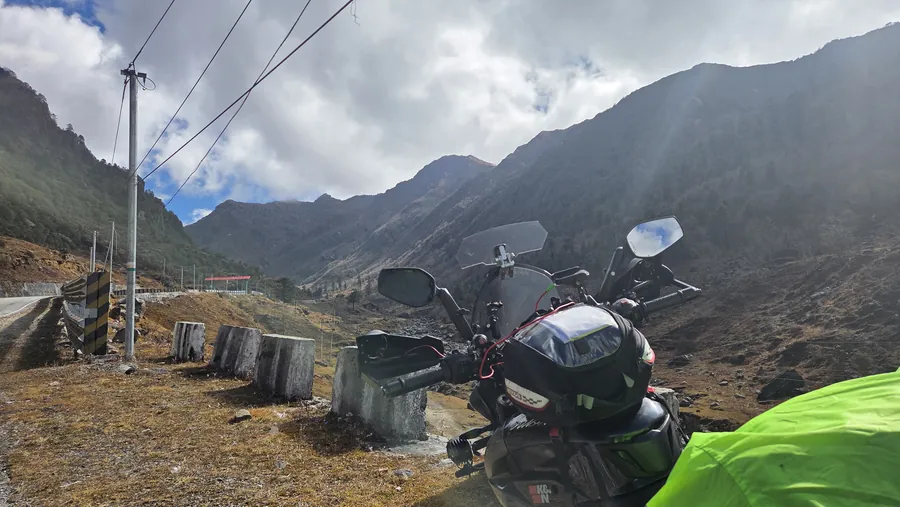 Both bikes, in the kit →
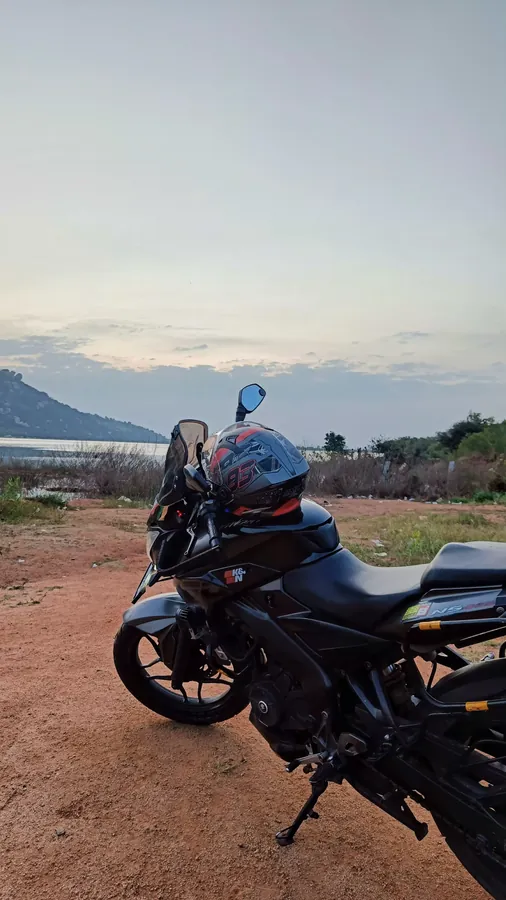



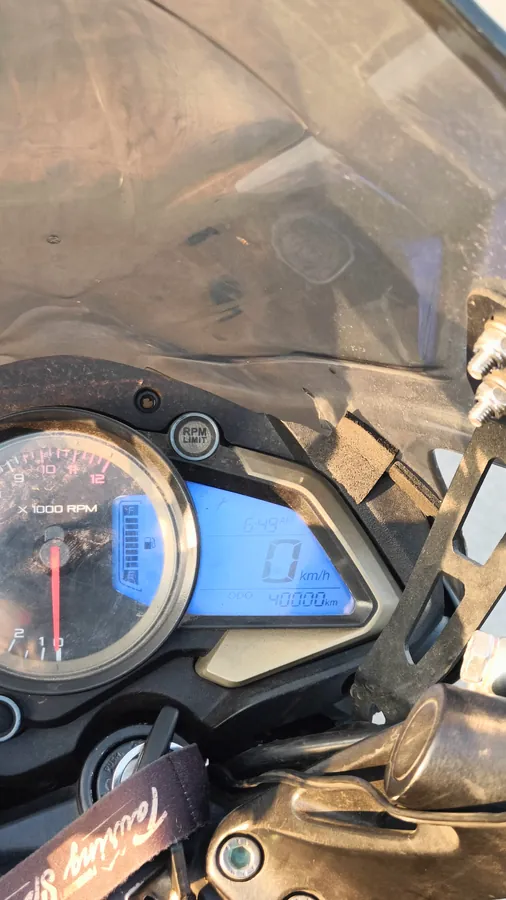 My NS200: nine years and around 70,000 km
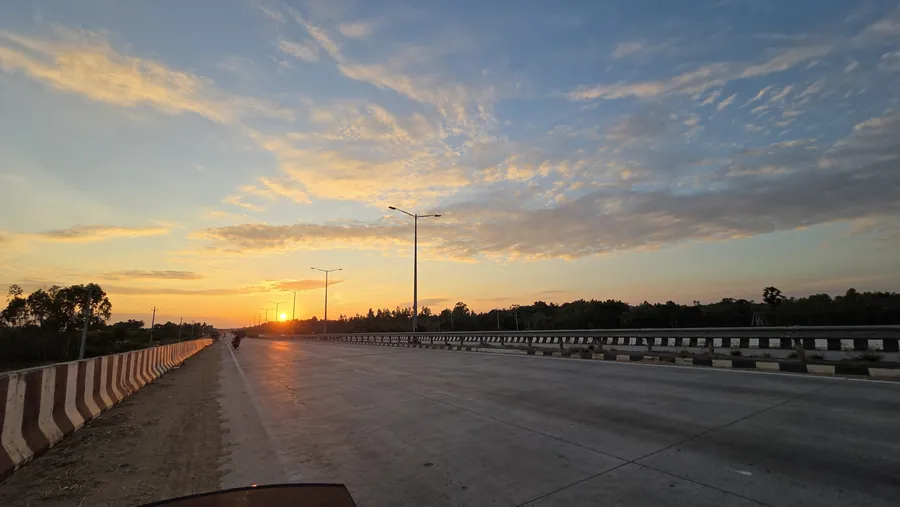 Shell or XP95: real, or me?