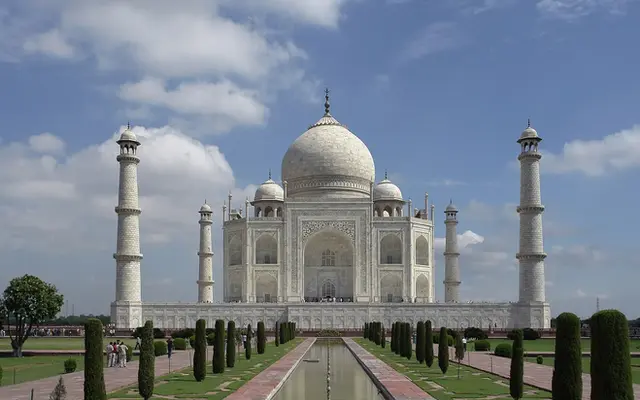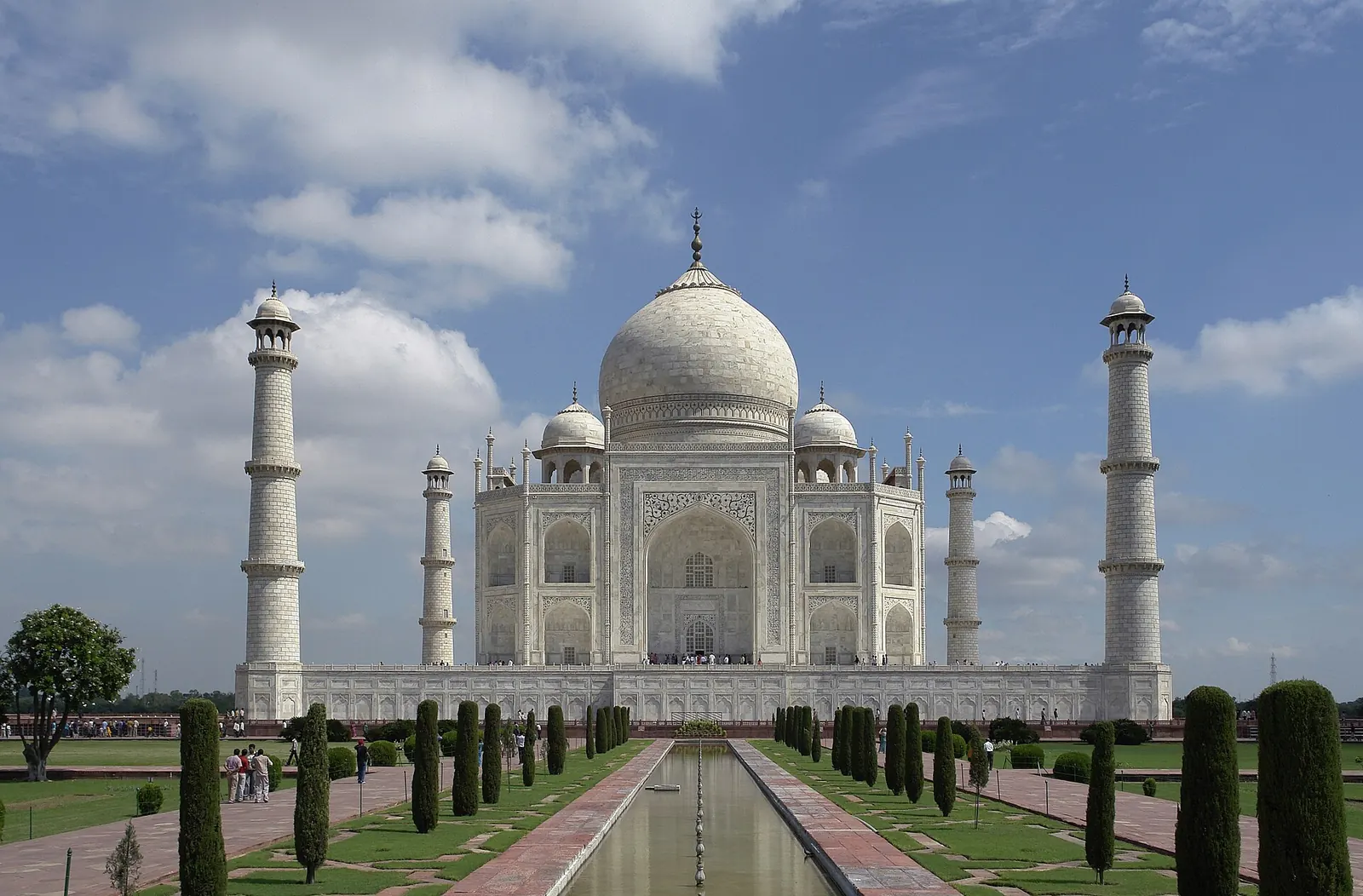
At the Taj Mahal a foreign tourist pays Rs 1,100, a citizen of a SAARC or BIMSTEC country pays Rs 540, and an Indian pays Rs 50, with Rs 200 extra for anyone entering the main mausoleum. The gap is official policy: the Archaeological Survey of India (ASI) sets one fee for Indian and neighbouring-country citizens and a higher one for everyone else, and the Agra Development Authority adds a Rs 500 toll on foreign tickets. The government's argument is that Indian taxpayers already fund the monuments and that Indian incomes are far lower; critics say it treats visitors as wallets.
- Taj Mahal: Rs 1,100 foreigner, Rs 540 SAARC/BIMSTEC, Rs 50 Indian; the foreign fare is 22 times the Indian one.
- The foreign fare includes a Rs 500 Agra Development Authority toll; the rest goes to the ASI.
- In 2016 the ASI raised World Heritage fees from Rs 10 to Rs 30 for Indians and Rs 250 to Rs 500 for most foreigners.
- The Taj earned Rs 297 crore from tickets in five years to 2023-24, the most of any ASI monument.
- Children under 15 enter free, and OCI cardholders are entitled to the Indian fare.
If you are a visitor, the first thing to know is that this is not a tout's trick. The fares are printed on the official site and at the counter. If you are Indian and have wondered why the foreign queue is shorter, the answer is also in the fare table.
How much is the Taj Mahal ticket for foreigners in 2026?
The official Taj Mahal site lists the fares below, inclusive of ASI and ADA fees. The Taj is closed on Fridays.
| Monument (Agra) | Indian | SAARC / BIMSTEC | Foreigner | Foreigner ÷ Indian |
|---|---|---|---|---|
| Taj Mahal | Rs 50 | Rs 540 | Rs 1,100 | 22x |
| Agra Fort | Rs 50 | Rs 90 | Rs 650 | 13x |
| Fatehpur Sikri | Rs 50 | Rs 50 | Rs 610 | 12.2x |
| Akbar's Tomb, Sikandra | Rs 30 | Rs 30 | Rs 310 | 10.3x |
| Itimad-ud-Daulah | Rs 30 | Rs 30 | Rs 310 | 10.3x |
| Mehtab Bagh | Rs 25 | Rs 25 | Rs 300 | 12x |
- Mausoleum: Rs 200 extra for everyone who goes inside the main tomb.
- Online discount: Rs 5 off per Indian ticket and Rs 50 off per foreign ticket.
- Children: no fee below 15, Indian or foreign.
- Same-day combo: foreigners holding a Taj ticket pay slightly less at other Agra monuments that day (Rs 600 at Agra Fort instead of Rs 650).
See the data as a table
| Indian (Rs) | SAARC / BIMSTEC (Rs) | Foreigner (Rs) | |
|---|---|---|---|
| Taj Mahal | 50 | 540 | 1100 |
| Agra Fort | 50 | 90 | 650 |
| Fatehpur Sikri | 50 | 50 | 610 |
| Akbar’s Tomb | 30 | 30 | 310 |
| Itimad-ud-Daulah | 30 | 30 | 310 |
| Mehtab Bagh | 25 | 25 | 300 |
Source: Taj Mahal official website (Government of Uttar Pradesh and ASI), weekday fares · Excludes the optional Rs 200 mausoleum ticket. Taj closed on Fridays.
Notice the odd one out: at the Taj, SAARC and BIMSTEC citizens pay Rs 540, nearly half the foreign fare, while at the other Agra monuments they pay the Indian price or close to it. The reason is the city toll, explained below.
Why do foreigners pay more than Indians at Indian monuments?
Because the government prices entry by who already pays for the monument. Indians fund the ASI through taxes, so their ticket is set low to keep heritage open to a population where most people have modest incomes; foreigners pay closer to what the government thinks the visit is worth to them.
- Taxpayer subsidy: conservation, staff and security are paid from the Ministry of Culture budget, which Indians fund.
- Ability to pay: a Rs 1,100 ticket is a small share of an international trip, while Rs 50 is set for a domestic family day out.
- Regional diplomacy: the SAARC and BIMSTEC concession (Bangladesh, Bhutan, Myanmar, Nepal, Sri Lanka, Thailand and others) treats neighbours closer to citizens.
- Crowd control at the Taj: a higher price also funds Agra's tourist infrastructure through the ADA toll.
When the ASI doubled foreign fees in 2016, the Ministry of Culture said the new rates were "at par with entry fee at monuments abroad". That is the official logic in one line: the foreign price is benchmarked to global heritage sites, the Indian price to Indian wallets.
On 1 April 2016 the Ministry of Culture raised entry fees at 116 ASI monuments, the first rise since 2000. For Indian, SAARC and BIMSTEC citizens, World Heritage sites went from Rs 10 to Rs 30 and other monuments from Rs 5 to Rs 15. For everyone else, World Heritage fees doubled from Rs 250 to Rs 500. The ministry also promised separate queues and extras such as bottled water and Wi-Fi for high-value ticket holders. Two years later, in August 2018, the Taj's foreign fare rose again from Rs 1,000 to Rs 1,100, including the Rs 500 Agra toll, and the Indian fare went to Rs 50. A visitor told ANI at the time that repeated hikes were putting tourists off.
Business Standard (IANS): Government hikes entry fee to historical monuments, 1 April 2016Where does the Rs 1,100 actually go?
About half of a foreign Taj ticket is not an ASI fee at all. The 2018 notification described the Rs 1,100 as including Rs 500 toll tax collected by the Agra Development Authority (ADA), a city body that spends on the area around the monuments.
That toll is why a Nepali or Sri Lankan visitor pays Rs 540 at the Taj but only Rs 50 at Fatehpur Sikri: the ASI portion of their fare is close to the Indian one, and the ADA toll is what lifts it.
How much do monuments earn from these tickets?
The Taj Mahal is the ASI's biggest earner by a wide margin. In a written Rajya Sabha reply in April 2025, Culture Minister Gajendra Singh Shekhawat said it brought in Rs 297 crore in ticket sales over the five financial years 2019-20 to 2023-24 and topped the list every year.
In 2023-24 the next two were Delhi's Qutub Minar (Rs 23.8 crore) and Red Fort (Rs 18.08 crore). That concentration matters to the dual-pricing debate: the Taj's foreign tickets help fund a network of thousands of protected sites, most of which earn little.
The minister gave year-wise revenue from entry tickets for ASI monuments in tabular form. The Taj Mahal ranked first in all five years with Rs 297 crore in total; Qutub Minar (Rs 23.8 crore) and Red Fort (Rs 18.08 crore) were second and third in 2023-24, and in the pandemic year 2020-21 Mamallapuram and Konark took second and third. The limit: the reply as reported does not split revenue by Indian and foreign tickets, so it cannot show how much of the Rs 297 crore comes from foreigners.
Read the report (free)The fee revision, effective 1 April 2016 after public consultation with travel associations and the tourism ministry, tripled the Indian World Heritage fee (Rs 10 to Rs 30) and doubled the foreign one (Rs 250 to Rs 500). Other monuments went from Rs 5 to Rs 15 and Rs 100 to Rs 200. Its stated rationale was parity with fees at monuments abroad and new revenue. The limit: the statement gives no costing of what the monuments cost to run, so the fairness of the ratio rests on a benchmark, not an audit.
Read the report (free)Is dual pricing fair? The case for and against
Economists call this third-degree price discrimination (dual pricing in tourism): one product, different prices for groups that can be told apart (here, by passport). It is common at heritage sites in many countries, and it divides opinion.
| Argument for | Argument against |
|---|---|
| Indians already pay through taxes for upkeep | Foreign visitors also pay GST, hotel taxes and visa fees |
| Low Indian fares keep heritage open to all incomes | Price by nationality, not income, so a poor backpacker pays more than a rich Indian |
| Foreign fares fund the wider ASI network | The ASI fee is the smaller part; the city toll is the larger one at the Taj |
| Benchmarked to global heritage fees (2016) | Creates resentment and a sense of being "milked" |
Dual pricing charges by passport as a stand-in for income. That is its logic and its flaw.Sapta, on the fare table above
Do NRIs and OCI holders pay the Indian price?
NRIs are Indian citizens, so they pay the Indian fare on showing an Indian passport. OCI cardholders are foreign citizens, but the Ministry of External Affairs lists parity with Indian nationals for entry fees at national monuments, historical sites, museums and national parks among OCI privileges.
Will the fees change again?
Possibly. On 8 September 2026 the ASI published a draft amendment to the Second Schedule of the Ancient Monuments and Archaeological Sites and Remains Rules, 1959, listing 30 Category A and 136 Category B ticketed monuments. The Taj group, Agra Fort, Fatehpur Sikri, Red Fort, Qutub and Hampi are in Category A.
The draft as reported did not include new fee amounts, and objections were invited for 45 days. Until the final notification is published, the fares above are the ones you will pay. Always check the official site before you go.
What should a foreign visitor do about it?
- Buy only from the official counter or website. Anyone selling "skip the line" or "Indian price" tickets outside is not authorised.
- Know the real fare. Rs 1,100 plus Rs 200 for the mausoleum. A guide quoting more for "the ticket" is padding it; at Fatehpur Sikri in December 2025, fake guides charged a Mumbai family Rs 300 a head for a Rs 50 ticket.
- Plan around Friday. The Taj is closed; other Agra monuments are open and slightly cheaper for foreigners if you hold a same-day Taj ticket.
- Report cheating. Call the tourist helpline 1363 or the police on 112.
More on what visitors meet in India: why fake guides hound you at monuments, the fake "government tourist office" in Delhi, the Agra gem scam and India's emergency numbers. If you are touring the country on two wheels, the solo touring safety plan covers the road side.
What's new
- Centre proposes a revised list of ticketed ASI monuments: 30 in Category A, 136 in Category B UNI, Sept 2026
- Taj Mahal earned Rs 297 crore from tickets in five years, tops ASI list Times of India, Apr 2025
- Fake guides at Fatehpur Sikri overcharge a family for tickets; two arrested Free Press Journal, Dec 2025
Questions people ask
Why is the Taj Mahal ticket more expensive for foreigners?
Because the ASI charges foreigners a higher fee benchmarked to global heritage sites, and the Agra Development Authority adds a Rs 500 toll to foreign tickets. Indians pay Rs 50 since their taxes already fund the monument.
Do NRIs and OCI holders pay the Indian price?
NRIs hold Indian passports, so yes. OCI cardholders are entitled to the Indian fare at national monuments under the OCI privileges; carry the OCI card to the counter.
Is the Rs 200 mausoleum ticket compulsory?
No. It is optional and applies equally to Indians and foreigners who want to enter the main tomb chamber.
Is dual pricing legal?
Yes. Fees for ASI monuments are set under the Ancient Monuments and Archaeological Sites and Remains Rules, 1959, which the government amends by notification, as in the September 2026 draft.
Do children pay?
No. Entry is free below 15 years of age for both Indian and foreign visitors.
Sources
- Taj Mahal official website: entry fee and Agra monument fare table (accessed Nov 2026)
- Business Standard (IANS): Government hikes entry fee to historical monuments (2016)
- Business Standard (ANI): Now visitors will have to pay more to visit Taj Mahal (2018)
- Times of India: Taj Mahal brings in Rs 297 crore in 5 years (2025)
- UNI: Centre proposes revised list of ticketed ASI monuments (2026)
- Wikipedia: Overseas Citizenship of India (privileges, citing the MEA OCI page)
- Wikipedia: Price discrimination (third-degree and tourist pricing)
- Wikipedia: Taj Mahal (visitor numbers and three-tier pricing)
- Free Press Journal: Mumbai tourist exposes fake guides at Fatehpur Sikri (2025)
- Business Standard (IANS): Tourism ministry launches 1363 infoline in 12 languages (2016)

Sapta (Saptarshi Sarkar) is a mechanical engineer turned marketer in Bengaluru and a solo touring rider. He writes the seven Saptaverse blogs. Work with him or read more of Whyblog.