Roads and trucks
3 of the 18 explainersStart here
Kyun means why. This is Why India: the everyday India questions nobody explains.
For the curious, for travellers and for anyone new to India: short, sourced answers to the questions everyday India throws at you. Trucks, cows, petrol, chai, weddings, the head wobble and the clock. History and research, not WhatsApp forwards.
Karnataka · Andhra Pradesh · Telangana · Odisha · West Bengal · Sikkim · Kerala · Tamil Nadu
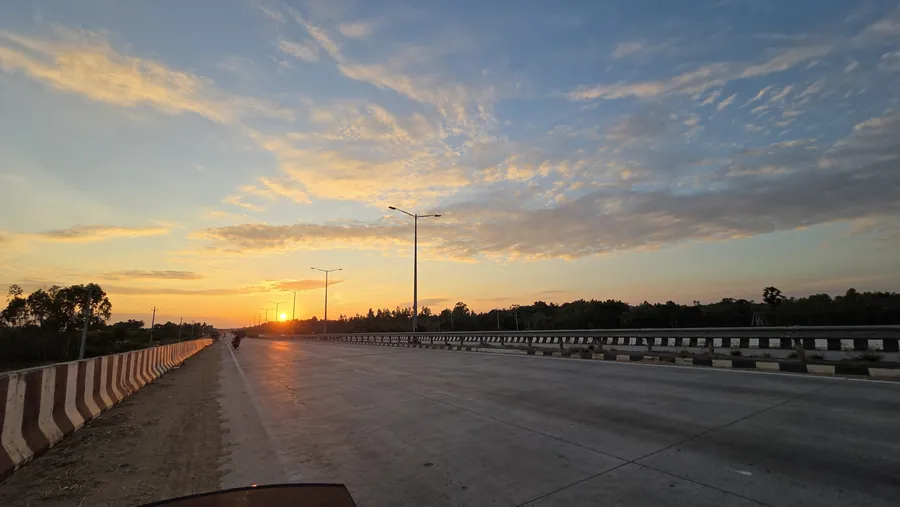
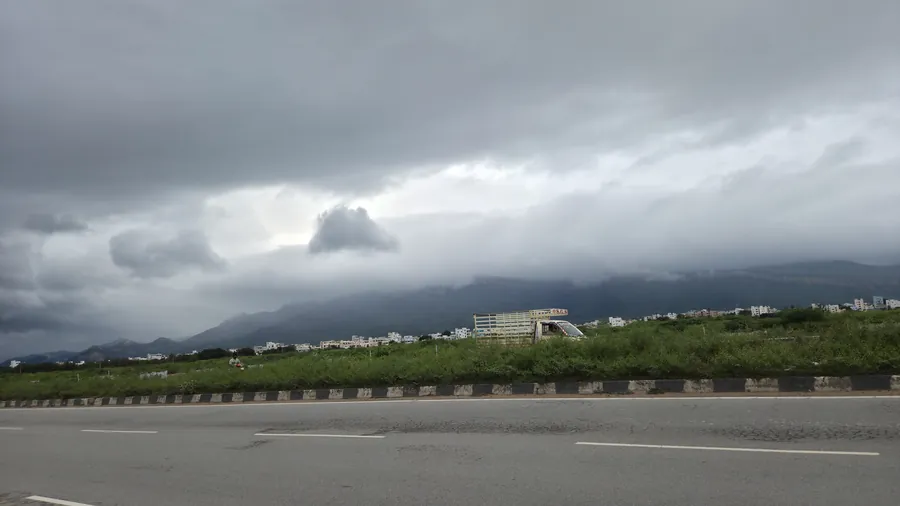
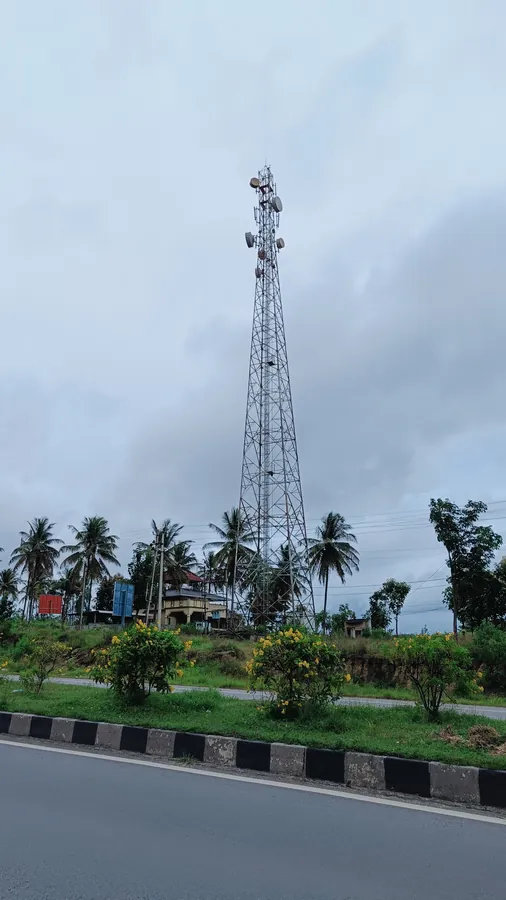
Thousands of kilometres behind trucks, past cows, between fuel pumps and at chai stops teach you to notice what India does differently, and that most people who live here have never asked why. I'm a mechanical engineer by training, so I don't stop at the folk answer.
Every answer on this page starts with the history, then the science, then the sources. Where an origin is contested I say so, and where I couldn't find evidence I leave the claim out.
Eighteen questions, five groups. Here is the map.
See the five topicsPick the group your question belongs to. Every explainer answers one real question, says where the origin is contested, and lists its sources at the end.
Short on time? Pull the lever for a random question.
Or skip the lever and ride along. I'll take the questions in the order the road asks them.
Start with roads and trucks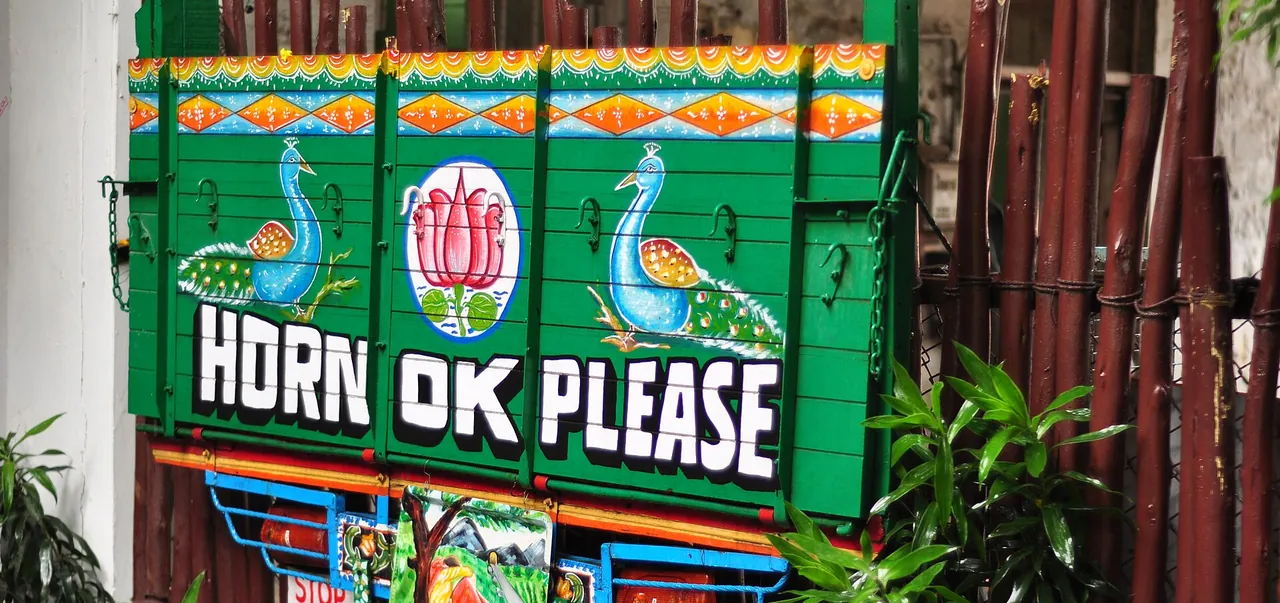
You've read it a thousand times on a truck's tailgate and never got a straight answer. That's because there isn't one. Nobody has a document that says who painted it first, so every explanation you've heard is a theory.
Origin contested. Tap a theory.What isn't contested: the phrase asks you to honk before you overtake, so a driver with poor mirrors on a narrow road knows you're there. In 2015 Maharashtra's transport department moved to ban the words on vehicles, arguing they encouraged needless honking. Trucks kept painting it anyway.
The tailgate is a small newspaper. Tap a phrase to flip it.
The slogan is only the start of what's painted on that truck.
Next: why trucks look like wedding cakesIf you've ever been stuck behind a truck on a highway, you've had time to study its back like a museum wall. Why would an owner pay for all that paint?
The truck is a home. Long-haul drivers live in the cab for weeks at a stretch. Decorating it is what people do to homes everywhere.
It's protection. Eyes, the black demon face and the lemon-and-chillies all belong to the same idea: nazar, the evil eye of envy. A beautiful, expensive truck attracts it, so it carries its own guards.
It's a business card. Bright, distinct trucks get remembered, and a well-turned-out vehicle says the owner is doing well.
It's a craft. Truck painters work in roadside workshops, and regional styles are easy to tell apart once you look. The same tradition runs strong across the border in Pakistan too.
Every painted element has a job: a road instruction, a guard against envy, a blessing or a way to be seen. Hover or tap a label.
Swipe the diagram sideways to see every label.Overtake the truck and the next surprise is standing in your lane.
Next: why our roads have cowsI ride solo across India, and a cow on a highway at night is one of the most dangerous things I meet. So why are they there?
Reverence and law. The cow is sacred to many Hindus. Article 48 of the Constitution directs the state to work towards prohibiting cow slaughter, and most states ban it in some form.
Economics. When a cow stops giving milk, feeding it costs money and selling it for slaughter is often illegal or frowned upon. Some owners simply let it go. Shelters (gaushalas) can't take them all.
Urban dairies. Many city cows aren't strays at all. They're let out to graze during the day and walk home in the evening.
People also say cows sit on roads because the tarmac is warm and has fewer flies. It sounds plausible. I haven't seen it studied.
Dark cattle on dark roads are nearly invisible. Dusk and night are when I drop speed most.
If a calf is on one side and the mother on the other, one of them will cross.
A cow that's been still for ten minutes can turn into your lane without warning.
Animals tend to move forward, so passing behind gives you more margin.
The road shapes the machines too. Look at a bike's back wheel.
Next topic: fuel and bikesRiders love to unbolt them. Most of us never ask why they're there in the first place.
In India the pillion is often sitting side-saddle, in a saree, dupatta or long scarf. Loose fabric drifts towards the rear wheel, and a wheel can drag cloth, and the person wearing it, off the bike in an instant.
So the law asks for it. Rule 123 of the Central Motor Vehicles Rules, 1989 requires motorcycles to be sold with a device covering at least half the width of the rear wheel, along with grab handles and pillion footrests.
It's one of those quiet, very Indian pieces of engineering: designed for how people actually ride here, not how a brochure imagines it.
That's the outside of the bike. The next why is in the tank.
Next: why E20 worries carburettor bikesIf you own an older carburetted bike, you've probably felt it or read about it: since pumps moved to E20, the bike feels a bit flat and the km/l has slipped. I own one, a 2017 carburetted BS4 Pulsar NS200 with around 70,000 km on it, so this one is personal.
What E20 is. Petrol blended with 20% ethanol by volume. It's now what most Indian pumps sell as regular petrol.
Less energy per litre. Ethanol carries only about two-thirds of petrol's energy per litre, so on paper a litre of E20 holds roughly 6–7% less energy than pure petrol. Real engines don't lose all of that; the government's position is that vehicles built for E20 lose only a little, and older ones somewhat more. How much more is still argued about.
The carburettor problem. Ethanol already carries oxygen, so it burns best with less air per kilogram of fuel: about 9:1 against roughly 14.7:1 for petrol. A fuel-injected bike with an oxygen sensor can notice the leaner exhaust and add fuel, within limits. A carburettor can't. Its jets are fixed brass, set for the fuel of the day it was tuned, so on E20 it simply runs leaner. Lean can mean flat spots, a harder cold start and a hotter engine. Re-jetting or adjusting the air-fuel screw is the fix people discuss; mine sits at about 2.8 turns.
The rubber question. Ethanol can swell or harden some older rubber and attack some metals. The government has said that on some older, BS-III era petrol vehicles, certain rubber parts and gaskets may need replacing after roughly 20,000–30,000 km on E20. Whether a given BS4 bike is affected depends on what its parts are made of, and owners rarely know that.
Water. Ethanol attracts moisture. A bike that sits for weeks with E20 in the float bowl is more of a worry than one that's ridden every day.
Hedged: the size of the real-world mileage loss on old bikes isn't settled. I'll update this when better data exists.A simplified model: petrol about 32 MJ per litre, ethanol about 21, ideal ratios 14.7 and 9.0, mixed by mass. Real engines, fuels and carbs vary. Treat it as a direction, not a forecast.
Each step causes the next. The first three are chemistry; the last two depend on your engine, so they are where the argument is.
Swipe the diagram sideways to follow the chain.Same petrol, different pump, and riders swear it feels different.
Next: why fuel feels different by pump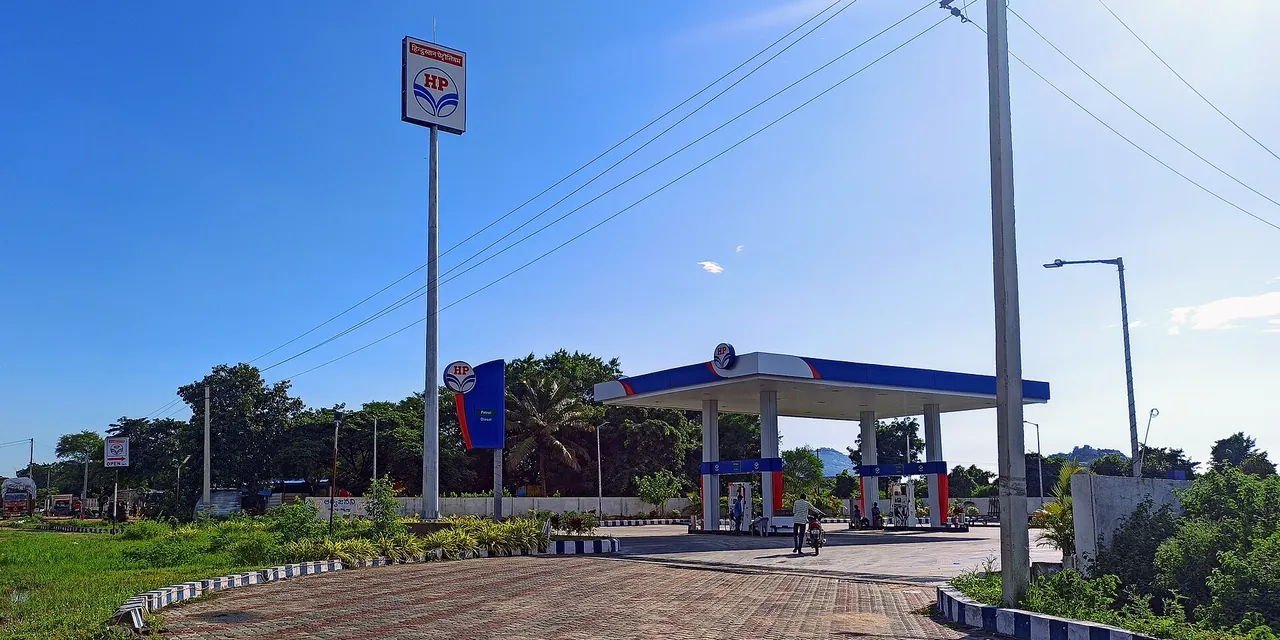
Every rider has a favourite pump and a story about the bike "pulling better" on it. I have one too. My KTM 390 Adventure felt noticeably smoother after I switched from IndianOil XP95 to Shell V-Power. Here's the honest part: I don't know if that's real.
What could be real. Brands add their own detergent and additive packages, and those differ. Octane matters if an engine is pulling timing back to avoid knock. The ethanol share in a premium grade may differ from regular petrol. A station with old stock or water in its underground tank can sell genuinely worse fuel.
What could be me. I expected the fancier fuel to feel better, and expectation is a powerful tuner. The weather, my load, the road and my own mood changed between those tanks too. Differences of a few percent are very hard to feel through the seat.
The scale problem. On the Mulbagal run I got 26.5 km/l at 100–120 km/h. Ridden hard, the same bike does about 22–24. My right wrist moves economy by roughly 10–17%, far more than most fuel differences could. Any test that doesn't control for riding is measuring the rider.
Status: unresolved. Myth vs physics, still on the bench.Tick what your test controls for. Most "this pump is better" stories tick one box.
Five minutes in the parking lot, before you ride off.
Same brand, same bike, two outlets, two very different jobs. If you've felt that, you're not imagining it. My KTM's first service, at about 930 km, came back with the oil above the max mark. I drained about 200 ml myself. After a later service the chain felt too tight or out of line, and I had to investigate it.
Why it happens. My reading, not a study: dealer workshops are separate businesses, so the brand's standards are only as good as each outlet's people. Technicians are often paid and judged on throughput, and a full day of bikes rewards speed over the last check. Training and experience vary a lot between workshops. And small jobs like an oil level depend on method: a bike on its side stand, or checked straight after running, reads differently.
Why the small stuff matters. Too much oil can be churned by the crank, raise pressure inside the engine and push oil where it shouldn't go. A chain that's too tight at rest gets tighter when the suspension compresses, loading the sprockets and bearings. Neither is dramatic on day one. Both cost money later.
Loose hardware is the other usual suspect. My KTM's headlight buzzed between 4,500 and 5,500 rpm, and tightening its hardware fixed it. Check what you can, and go back with specifics, not a vague complaint. My bikes and kit are on the gear page.
When you can't fully trust the workshop, you start doing your own sums.
Next: why riders do gear mathsThe calculator's starting numbers: a ₹25,000 piece, ridden 80 days a year. Each extra year you keep wearing it cuts what a day in the saddle costs.
Walk into any riders' WhatsApp group and ask about a jacket. Someone will post the imported one, someone will post the Indian one at a third of the price, and the argument runs for a week. It's not stinginess. It's a reasonable calculation that most buyers abroad never have to make.
Price against the bike. In India a premium imported helmet or jacket can cost a real share of what the motorcycle did. That changes the question from "which is best?" to "which is good enough, and where does the extra rupee go furthest?"
Built for whose weather? A lot of imported gear is designed for cool, dry roads. Indian riding means heat, humidity and a monsoon. Ventilation and rain handling matter as much as the badge.
After the sale. Local sizes, spares, warranty and someone to talk to when a zip fails are worth money too.
What actually protects you. Certification beats country of origin. For helmets in India, BIS certification is required by law, and ECE 22.06 is a widely respected standard. For jackets and trousers, look for EN 17092 ratings, and EN 1621 on the armour. My own kit is mostly Indian (Rynox, ViaTerra, Cramster) with a KYT helmet and a Cardo intercom. Not everything is perfect: the Rynox waterproof socks underwhelmed me in the wet, and my helmet feels slightly loose, with buffeting at 120–125 km/h. Fit beats brand, in both directions.
No product is "the best". Fit, certification and your riding decide.The sticker price lies. Spread it over how much you'll actually use it.
Run it twice, once for each option. A dearer piece you'll wear for years can cost less per ride than a cheap one you'll replace. A piece that's too hot to wear costs infinity per ride. My full kit list →
Time to get off the bike. Every Indian road leads to a chai stop.
Next topic: food and chaiYou order chai and get a glass you could hide in your fist. Is the tea stall cheating you? No. The size is the system.
India wasn't always a tea country. The British grew tea in Assam from the 1830s, mostly for export. Indians drinking it every day came later, helped along by tea-industry campaigns in the early 20th century that handed out tea at stations and factories. Indians then made it their own with milk, sugar and spices.
Small means cheap. A small serving keeps the price low enough for anyone, several times a day. Mumbai's cutting is literally half a glass.
Small means fast. Hot chai in a small glass cools quickly enough to finish on a short break. The thick glass is cheap, survives being dropped and washes in seconds.
The kulhad is the original disposable. An unglazed clay cup, used once, broken, back to earth. In 2004, Railway Minister Lalu Prasad Yadav pushed kulhads at railway stations in place of plastic.
Glass sizes vary by stall, so set your own. Tap the kulhad to smash it.
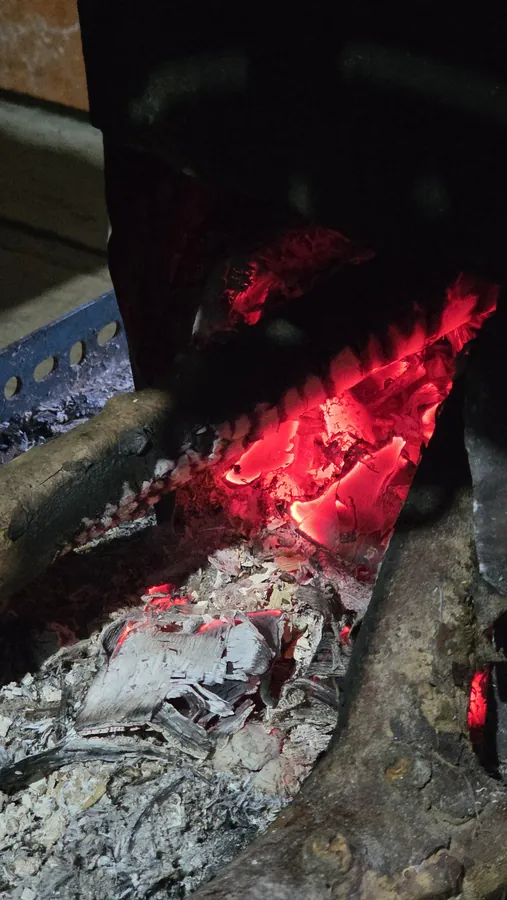
The stove in a tea shack at altitude in Sikkim.
The glass is small. The meal that follows comes without cutlery.
Next: why we eat with our handsAbroad, someone will eventually ask you about it, usually with a fork in their hand. Here's the honest answer.
The food asks for it. Rice mixed into dal and gravy, rotis torn to scoop sabzi, dosa pulled apart: much Indian food is built for fingers. The flatbread is the spoon.
It isn't only Indian. Eating with the right hand is normal across much of South Asia, the Middle East and Africa. Cutlery at the Indian table spread mostly with European habits and city life.
Your fingers are a thermometer. You feel how hot the rice is before it reaches your mouth.
Why the right hand? The left is traditionally kept for washing, so the right one feeds you.
There are claims that eating by hand helps digestion. I haven't found good evidence either way, so I'm not repeating them.
Eating lunch is one thing. Getting it to an office desk is another.
Next: why the dabbawalas just workYour food delivery app has GPS, a map and a call centre, and it still gets orders wrong. Mumbai's dabbawalas carry home-cooked lunches from homes to offices with painted codes, bicycles and the suburban train.
Since 1890. The service is usually traced to Mahadeo Havaji Bachche. Commonly cited figures put it at around 5,000 dabbawalas and about two lakh tiffins a day. Many come from the Warkari tradition around Pune's Maval region.
The secret is simplicity. One tiffin passes through several hands, sorted at stations like mail. Each person knows one leg of the route. The code on the lid holds everything needed.
About that "Six Sigma" claim: it comes from a 2002 Forbes article and has been repeated everywhere since. It wasn't a formal Six Sigma certification. The system is impressive without the label.
Nobody carries a tiffin the whole way. Each person knows one leg, and the code on the lid tells the next one where it goes.
Swipe the diagram sideways to follow the tiffin.Follow a dabba home and there's something hanging over the door.
Next topic: homes and customsSeven chillies and one lemon on a thread, at shop doors, on bumpers, on new bikes. It's called nimbu-mirchi, and it's another guard against nazar.
The folk story: Alakshmi, the goddess of misfortune and the sister of Lakshmi, loves sour and spicy things. She stops at the door, eats her fill and leaves without coming in. It's a story, and a good one.
The "science" you'll get on WhatsApp: that the citrus and capsaicin repel insects or clean the air. I haven't found a study showing a single string does anything of the kind. Treat it as tradition, not pest control.
Saturday is changing day in many homes and shops, when the old string is thrown out and a fresh one goes up.
Lemons at the door are one folk habit. Improvising is another.
Next: why jugaad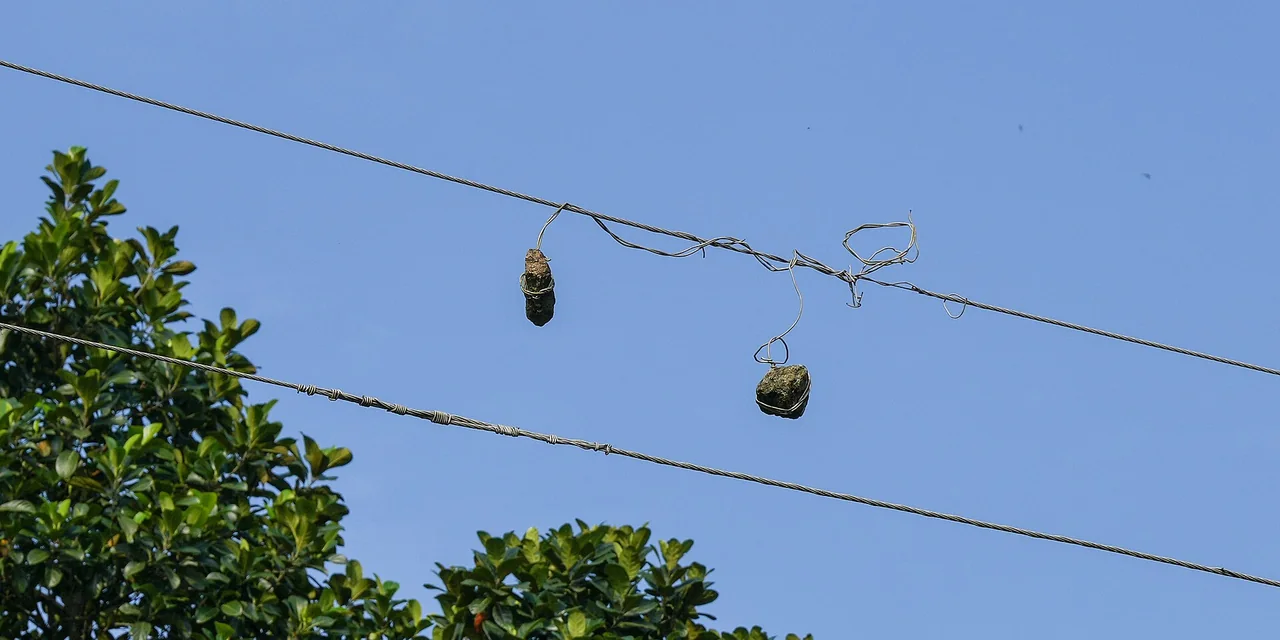
When the part isn't available, the money isn't there and the deadline is today, you improvise. Jugaad is the Hindi word for that fix. In parts of rural north India it's also the name of a vehicle: a cart built around a diesel engine of the kind used for irrigation pumps.
Scarcity breeds it. When things are expensive and repair is cheap, you make things work longer and in new ways. The idea got a business-school life in the 2012 book Jugaad Innovation by Navi Radjou, Jaideep Prabhu and Simi Ahuja. As an engineer, I love it and I worry about it, both at once.
Fixing instead of throwing away. Doing more with less. Making a solution fit the people who'll use it, at a price they can pay. A lot of real frugal engineering starts here.
A wire twisted where a fuse should be. Overloaded vehicles. "Chalta hai" that skips safety because nothing has gone wrong yet. A quick fix that becomes permanent is how accidents happen.
Step inside, ask a question, and the answer comes as a movement.
Next: why the head wobbleIf you grew up with it, you read it without thinking. If you didn't, it can feel like a riddle. A side-to-side tilt of the head, loose at the neck, that can mean "yes", "okay", "I'm listening" or "sure, sure".
It's not a nod gone wrong. It does a different job. A nod answers a yes-or-no question. The wobble keeps a conversation flowing, the way "hmm" or "achha" does.
Context does the work. Speed, a smile, raised eyebrows and the words around it change the meaning. It's common across India and especially strong in the South.
Where did it come from? Nobody knows. I haven't found a solid study tracing its origin, and I'm suspicious of anyone who claims one.
That wobble does its heaviest work in the market.
Next: why we bargainIf you hate haggling, you're in good company. But fixed price tags are the newer idea, not bargaining.
Price tags are recent. For most of history, most markets everywhere ran on negotiation. Fixed prices spread through Western shops in the 1800s, with Quaker traders and big department stores often credited.
It solves an information problem. In a market of small sellers without a printed price list, haggling is how buyer and seller find the real price.
It's a relationship. Come back to the same stall and the "last price" gets better. The banter is part of the deal.
Today malls and apps have fixed prices, and street markets still haggle. Try the stall. The walk-away move is a classic for a reason.
Bargaining is small money. The big money goes somewhere louder.
Next: why weddings are enormous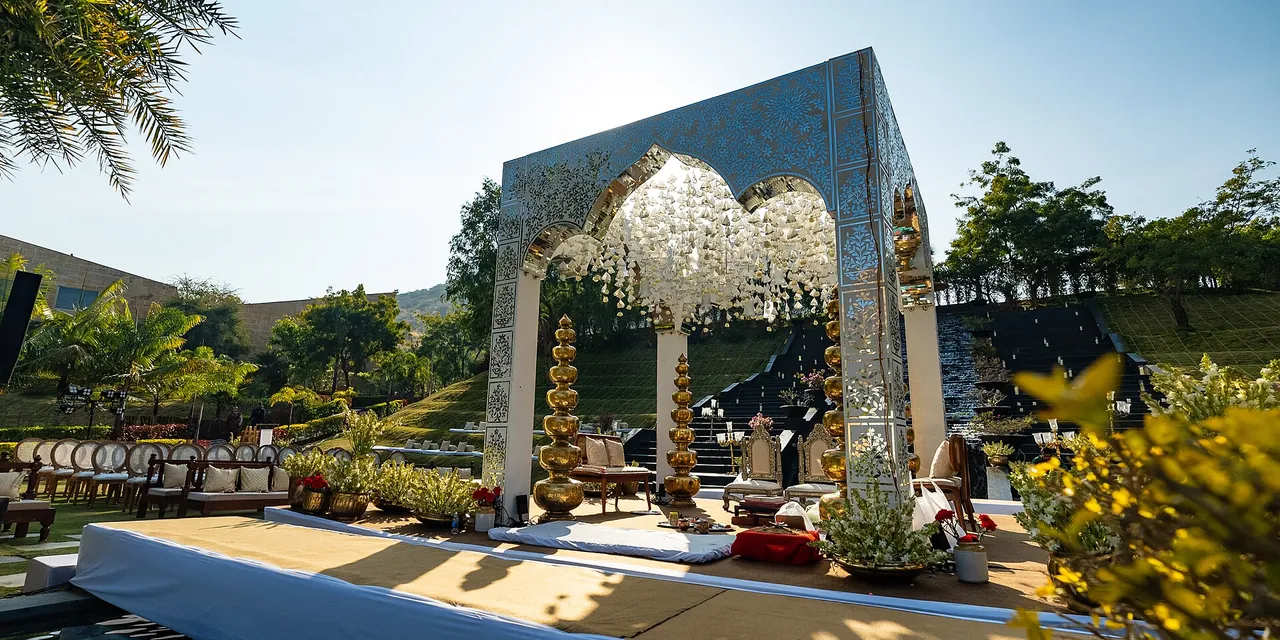
You get an invite from someone you met twice. Why are you invited? Because you're on someone's list, and that list has a logic.
Two families marry, not two people. Every relative on both sides, and every family they're close to, has a claim to be there.
It's a ledger of reciprocity. They came to your cousin's wedding, so they come to yours. Leaving someone out reads as an insult that can last years.
It's a public statement of a family's standing, which is why costs escalate. The dark side is dowry, which has been illegal since the Dowry Prohibition Act of 1961 and still hasn't disappeared.
Why ₹501 and not ₹500? The extra rupee in a shagun envelope is usually explained as making the gift a beginning rather than a round, finished number.
A toy, not a survey. It assumes the other family brings a similar crowd and cousins bring partners and kids.
And when it isn't a wedding filling the street, it's a match.
Next topic: time and cricketA colonial sport became the closest thing India has to a shared religion. How?
It arrived early and stayed. The first recorded cricket in India was played by British sailors at Cambay in 1721. The Calcutta Cricket Club followed in 1792. Bombay's Parsis formed their own clubs from the 1840s, and Indians soon played to beat the rulers at their own game. Ramachandra Guha's A Corner of a Foreign Field tells this history well.
Big moments, at the right time. India's first Test was at Lord's in 1932. The 1983 World Cup win under Kapil Dev landed just as television was spreading across the country, and satellite TV in the 1990s turned cricketers into stars. The IPL in 2008 turned it into a business.
It needs almost nothing. A tennis ball, a plank, a wall for stumps, and any lane is a ground. The rules bend to fit the space.
Gali cricket rule generator
Every lane has its own rule book. These are the ones you'll hear most.
A whole country watching one ball, on one clock. So why one clock?
Next: why India runs on one clockIf you've woken up in the Northeast at 4:30 with the sun already up, you've felt this. India is wide. Mainland India spans roughly 68°E to 97°E, close to 30 degrees of longitude. The sun takes four minutes to cross each degree, so the gap is almost two hours.
Why the odd half hour? IST is set to the 82.5°E meridian, which passes close to Mirzapur in Uttar Pradesh. 82.5 divided by 15 degrees an hour gives 5.5 hours ahead of UTC. A middle line for a wide country.
It wasn't always one clock. Under British rule, Bombay and Calcutta kept their own local times. Calcutta Time was dropped in 1948 and Bombay Time held on until 1955.
The debate is alive. Assam's tea gardens have long kept an informal "tea garden time" an hour ahead. Scientists at CSIR-National Physical Laboratory, which keeps India's time, have proposed two zones. One clock keeps railways, banks and broadcasts simple, so it hasn't changed.
This uses mean solar time and ignores the small seasonal wobble of the sun.
The sun moves 1° of longitude every 4 minutes. India's clock is pinned to 82.5°E, so the west runs about an hour behind the sun's clock and the east about an hour ahead.
Swipe the diagram sideways to see both edges.If you'd like to check my answers, start here.
Stories and readingMost of these questions found me on a bike. The machine is on Yantra, the rides on Yatri, the food on Rasa, how India looks on Kala, how it thinks on Manthan, and how it buys on Bazaar.
A WhatsApp forward has no author. These do. Good starting points if a Kyun on this page made you curious.
Something you've always wondered about everyday India? Subscribe to my notes and reply to any letter with your question, or reach me through the work page. The best ones become stories here.