Ladakh overtourism is real, and it is mostly a domestic boom: official Leh figures show arrivals rising from 8,068 in 2002 to 2,35,698 in 2016, with Indians going from about 2,959 to 1,97,693 while foreign visitors stayed near 30,000 to 38,000. Leh town had about 30,870 residents at the 2011 census. Bikers are a visible part of that wave, but the pressure points are water, waste and unplanned building, and riders can reduce their share of all three.
- 527 to 2,35,698: Ladakh's tourists in 1974 against Leh's official count in 2016, about a 450-fold rise.
- 84% Indian by 2016: the boom is domestic, while foreign arrivals stayed near 30,000 to 38,000.
- About 7.6 visitors per resident of Leh town in 2016, packed into five or six months.
- 30 to about 650 hotels and guest houses in Leh between 1974 and 2015.
- Water ranks first among environmental risks in a 2023 vulnerability study of Ladakh.
Every summer the photos look the same: a line of rented motorcycles at Khardung La, a traffic jam on the Pangong road, a full car park at the lake. It is easy to blame riders, and it is easy for riders to wave the problem away. Neither is useful. This essay uses the district's own arrival tables, a 2023 vulnerability study and a 2020 water study to show what has actually changed, and then argues what a rider can do about it.
How fast has tourism in Ladakh grown?
Ladakh's tourist arrivals grew about 450-fold between 1974 and 2016. The Leh district administration records 527 visitors in 1974, the year the region opened to tourists. The District Statistical Handbook for 2016-17 gives the official series from 2002, which is what the chart shows.
See the data as a table
| Indian | Foreign | |
|---|---|---|
| 2002 | 2959 | 5109 |
| 2003 | 13031 | 15362 |
| 2004 | 13483 | 21608 |
| 2005 | 13444 | 24536 |
| 2006 | 17707 | 26114 |
| 2007 | 22007 | 28178 |
| 2008 | 39023 | 35311 |
| 2009 | 48517 | 30570 |
| 2010 | 55685 | 22115 |
| 2011 | 142829 | 36662 |
| 2012 | 140460 | 38510 |
| 2013 | 107412 | 31883 |
| 2014 | 121996 | 59305 |
| 2015 | 116887 | 29614 |
| 2016 | 197693 | 38005 |
Source: Tourism Department Leh, District Statistical Handbook Leh 2016-17, Table 27.01
Three things jump out of the curve:
- Until 2008, foreigners outnumbered Indians. Ladakh was a backpacker and trekker destination.
- Then domestic arrivals took off, from 55,685 in 2010 to 1,42,829 in 2011, and never looked back.
- The foreign line is almost flat: 38,005 foreign visitors in 2016 is not very different from 28,178 in 2007.
The boom is an Indian one, built on cheaper flights, better roads and a generation that saw Pangong on a screen and wanted to ride there.
A 2023 study by M. Shafi Bhat and colleagues gives the growth rate: about 19.3% a year compounded between 2010 and 2018, with roughly 22.6 lakh arrivals across those nine years. Later official counts are not in the 2016-17 handbook, but the trend line gives no reason to think the curve has flattened since.
| Year | Indian | Foreign | Total | Indian share |
|---|---|---|---|---|
| 2002 | 2,959 | 5,109 | 8,068 | 37% |
| 2007 | 22,007 | 28,178 | 50,185 | 44% |
| 2010 | 55,685 | 22,115 | 77,800 | 72% |
| 2011 | 1,42,829 | 36,662 | 1,79,491 | 80% |
| 2014 | 1,21,996 | 59,305 | 1,81,301 | 67% |
| 2016 | 1,97,693 | 38,005 | 2,35,698 | 84% |

Is Ladakh too crowded for its size?
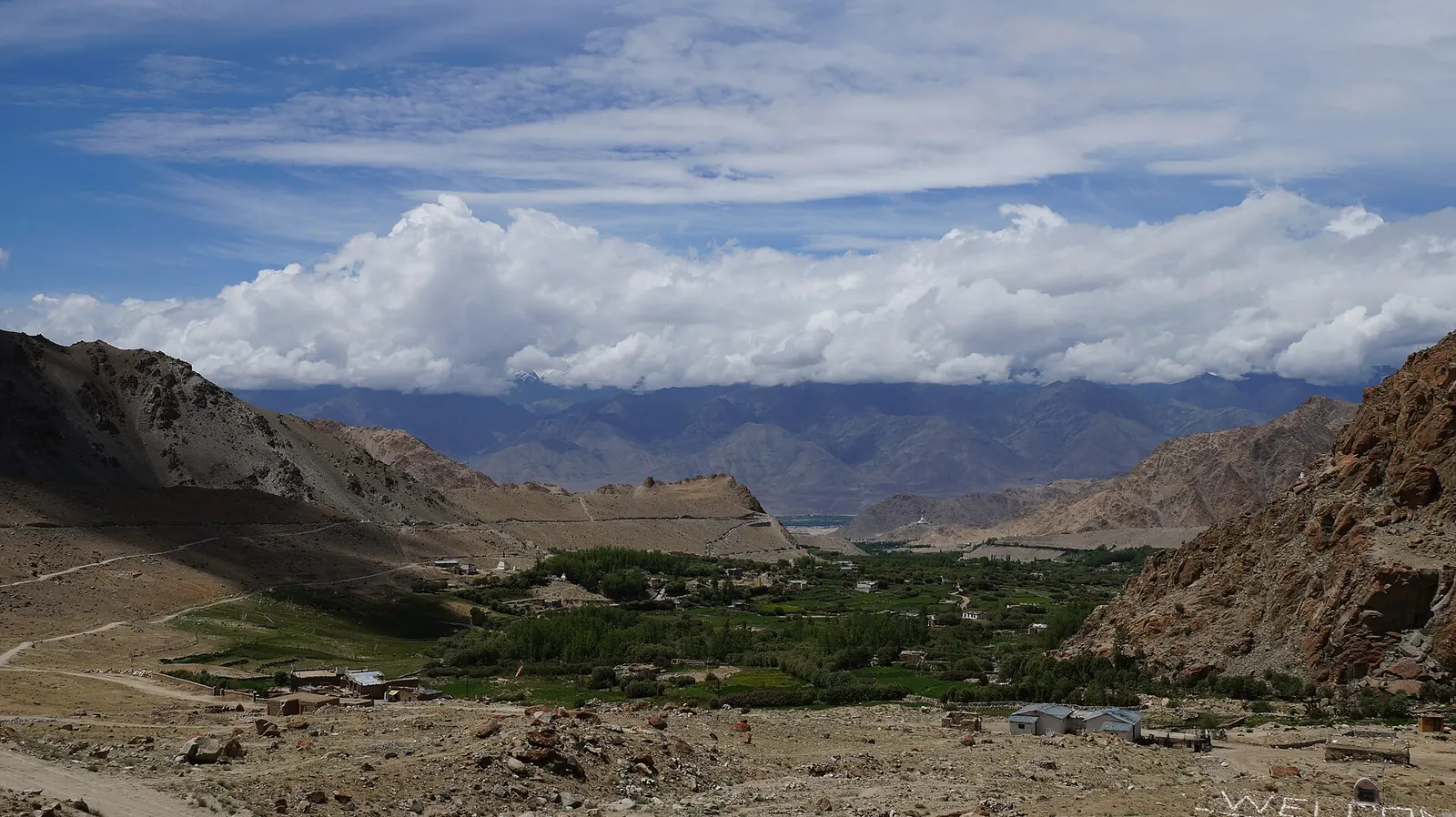
Measured against the town that absorbs most visitors, yes. Leh town had 30,870 residents in the 2011 census. In 2016 it received 2,35,698 tourists, about 7.6 visitors for every resident, nearly all of them packed into a season of five or six months.
The infrastructure that serves those visitors grew in step. Citing earlier fieldwork by Dame and colleagues, the 2023 study reports about 30 hotels and guest houses in Leh in 1974, about 191 in 2005 and about 650 by 2015.
The problem is not the number alone. It is the number in a cold desert at 3,500 m, where rainfall is scant, the growing season is short, and water comes from glacier and snow melt that is itself changing.
In the third week of June 2026, the Leh Wildlife Division logged four vehicles going where vehicles should not. On 17 June a Toyota Fortuner was driven off-road near Nurboo La in the Changthang Cold Desert Wildlife Sanctuary, reportedly chasing a Tibetan gazelle; it was traced to a homestay in Hanle the next day. On 20 June a Mahindra Thar was driven through a stream inside the Karakoram (Nubra-Shayok) sanctuary.
On 21 June a Hyundai Creta went off-road near Lukung on Pangong's shore, and on 23 June another Thar was driven into Pangong Lake itself near Merak, for stunts. On 26 June the Wildlife Department fined each of the four owners ₹50,000 under the Wildlife (Protection) Act, ₹2 lakh in all, the first penalty of its kind in Ladakh. None of the four was a motorcycle. The lesson for riders is the same: the ground beside the road is not part of the route.
UT Ladakh administration: penalty on four tourists for illegal off-roading in protected areas (Jun 2026)The authors studied two sites in each district (Leh town and Nubra in Leh; Kargil town and Drass in Kargil), interviewing officials, guest-house owners and residents, and weighting risks with the Analytic Hierarchy Process. Climate change carried the highest weight (0.36), then socio-cultural (0.29) and environmental (0.16) vulnerability. Within the environmental group, water resources ranked highest (0.34). They link tourism growth to unplanned construction, falling groundwater, cultural dilution and land-use change. Limit: an expert-weighting method, not measured water or waste data, and the sample size is not reported.
Read the paper (free)What does tourism do to Leh's water?
It changes who controls it and who gets it. Leh's water system was traditionally community-managed. A growing town and a tourism economy have pushed it toward a centralised, piped supply, while the 2023 study above links tourism growth to falling groundwater.
The team combined 312 household questionnaires, 96 semi-structured interviews and a participatory photography workshop in Leh. They found that as the town's economy moved from farming to tourism, demand on scarce water rose, and a community-managed system began giving way to a centralised, technocratic one for supply and sanitation. Some residents gained reliable supply; others faced falling quality and less water. Limit: a qualitative and survey study of one town, without metered consumption data.
Read the paper (free)For a visitor, the uncomfortable fact is that a hot shower in a Leh guest house in August comes from the same limited supply that farmers and households depend on.
Shower like it is a desert. Because it is.
One guest-house owner quoted in the 2023 study described collecting around 3,000 plastic bottles a day in Nubra during the season. That is one person's estimate, not a measurement, but anyone who has seen the bins at a popular viewpoint will not find it far-fetched.

Are bikers the problem?
Bikers are part of the problem, not the cause of it. Nobody publishes a count of motorcycles entering Ladakh, so any claim that riders are the main driver is a guess.
What the data does show is that the boom is overwhelmingly domestic, and the domestic Ladakh trip has become strongly associated with motorcycles, from rented bikes in Leh and Manali to group rides from Delhi and Chandigarh. Riders are highly visible on the passes and at the lakes because that is where the route goes.
There are motorcycle-specific impacts worth naming:
- Convoys at the same time. Groups leave Leh at the same hour for the same pass, which creates the queues at Khardung La and Chang La.
- Short, fast loops. Leh-Nubra-Pangong-Leh in three or four days maximises distance and minimises nights in each village, which spreads waste but not income.
- Off-road damage. Riding off the track at lakes and meadows scars ground that recovers very slowly in a cold desert. In protected areas it is also an offence under the Wildlife (Protection) Act, as the June 2026 fines showed.
- Altitude shortcuts. Fast arrivals mean more altitude sickness, and more people needing the limited medical care available.
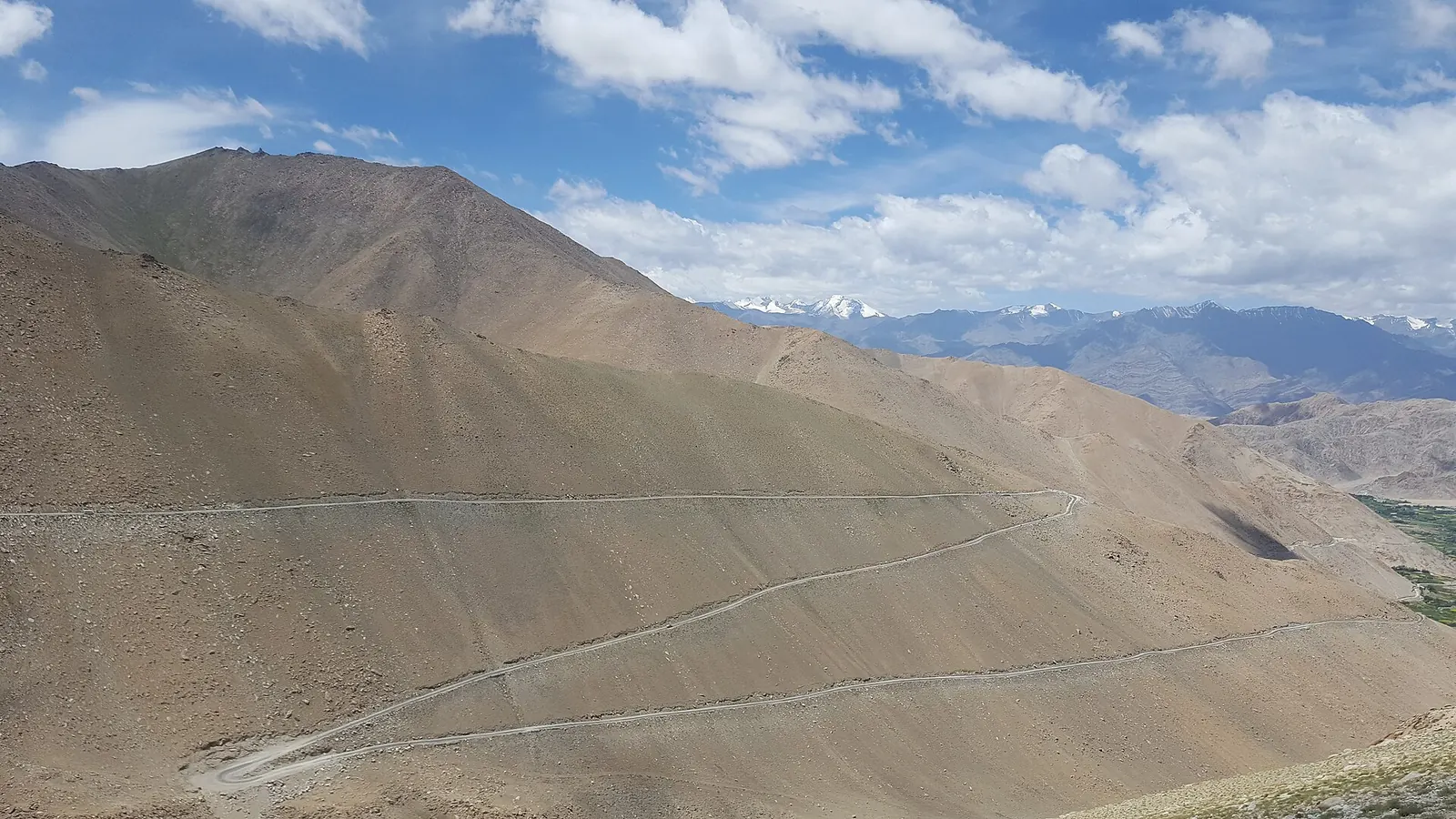
Where riders have an edge
Riders also have advantages over many visitors, if they choose to use them. A motorcycle burns less fuel per person than a large SUV, a rider can stop in small villages that coaches skip, and a self-planned trip can be as slow as you like.
What changed after the Inner Line Permit was dropped?
Access became easier. The Inner Line Permit requirement for Indian visitors to the protected parts of Leh district was abolished in 2014, reimposed in 2017 and removed again in 2021, while foreign nationals still need a Protected Area Permit. Several roads above 14,000 ft have also been opened to tourists without an ILP. Every one of these steps lowered the barrier for a quick trip. The history of the permit system itself is in my post on the history of the Inner Line Permit.
The road network is adding to the pull. The Zojila Tunnel broke through in June 2026 and is due in February 2028, and the Shinku La Tunnel into Zanskar is due in August 2028. Both will make Ladakh reachable for more of the year, which I discuss in tunnels are rewriting Himalayan road trips.

What can responsible riders actually change?
More than it seems, because riders choose their timing, route and pace. Here is what I would do, ranked by how much it eases the strain the studies describe.
- Acclimatise properly. The Ladakh Tourism Department asks every arrival in Leh to rest for at least 48 hours and then climb no more than 500 m a day. That one rule protects you and the local hospital. My acclimatisation plan for a Ladakh ride turns it into a day-by-day schedule.
- Avoid the peak weeks. Long weekends and school holidays bunch arrivals. Shifting even a week toward the edges of the season thins the queues, though early and late season bring their own weather risks.
- Stay longer in fewer places. Two nights in Nubra and two at a quieter lake village spread income better than one night everywhere.
- Carry a filter bottle and your waste. Refill rather than buy plastic, and bring wrappers back to Leh, where there is at least some collection.
- Ride the road, not the ground. No riding on lakeshores, meadows or off-track slopes.
- Shower like it is a desert. Because it is.
- Leave at odd hours. Starting before or after the group rush clears the pass queue for everyone.
Is the answer to ride somewhere else?
Partly. The Tripoto post behind this article's question argued for Sikkim instead, and many riders are already shifting to the Northeast. That spreads the load, but it also risks repeating Ladakh's curve in valleys with even less infrastructure.
I make that case in why the Northeast is India's next motorcycle frontier. The better answer is to go to Ladakh less often, for longer, and lighter. If you are planning a first trip, the Leh-Ladakh bike trip guide and the cost breakdown are built around that slower pace. More on the touring world at the Yatri page.
What's new
- Zojila tunnel breakthrough brings all-weather access to Ladakh closer News On AIR, Jun 2026
- Shyok tunnel opens on the road to Daulat Beg Oldie in eastern Ladakh The Tribune, Dec 2025
- Ladakh Tourism Department travel advisory: 48 hours of rest on arrival Ladakh Tourism, 2026
Questions people ask
How many tourists visit Ladakh every year?
Leh's official count was 2,35,698 in 2016, of whom 1,97,693 were Indian. A 2023 study puts total arrivals between 2010 and 2018 at about 22.6 lakh, growing at roughly 19% a year.
Is Ladakh becoming too crowded?
In peak season, yes, at the main passes and lakes and in Leh town. The town has about 31,000 residents and received about 7.6 tourists per resident in 2016, mostly between June and September.
Do Indians need a permit for Ladakh now?
Indian citizens no longer need an Inner Line Permit for the protected areas of Leh district; the requirement was removed in 2021. Foreign nationals still need a Protected Area Permit.
What is the best time to visit Ladakh to avoid crowds?
Avoid long weekends and school holidays, and aim for the edges of the riding season rather than its middle. Check pass openings and weather before you commit, as early and late season bring snow and closures.
How can I travel responsibly in Ladakh on a bike?
Acclimatise for 48 hours in Leh, climb no more than 500 m a day after that, refill water instead of buying bottles, carry your waste out, stay on the road surface, and spend more nights in fewer villages.
Sources
- District Statistical Handbook Leh 2016-17, Tourism Department Leh, Table 27.01 (2018)
- Leh district administration: Tourism (527 tourists in 1974) (2026)
- Bhat M.S. et al.: Disaster-development interface and its impact on emerging vulnerability scenario in Ladakh, Journal of Environmental Studies and Sciences (2023)
- Müller J., Dame J., Nüsser M.: Urban Mountain Waterscapes, Leh, Water (2020)
- Dame J. et al.: Urbanisation and socio-ecological challenges in high mountain towns, Leh, Landscape and Urban Planning 189 (2019)
- Wikipedia: Leh (2011 census population, with Census of India reference) (2026)
- Ladakh Tourism Department: Advisory for tourists (2026)
- Wikipedia: Inner Line Permit (Ladakh changes 2014, 2017, 2021) (2026)
- Wikipedia: Tourism in Ladakh (permits and tourist roads) (2026)
- News On AIR: Zoji-La tunnel achieves final breakthrough (2026)
- UT Ladakh administration: penalty on four tourists for illegal off-roading in protected areas (2026)

Sapta (Saptarshi Sarkar) is a mechanical engineer turned marketer in Bengaluru and a solo touring rider. He writes the seven Saptaverse blogs. Work with him or read more of RoadHook Rides.