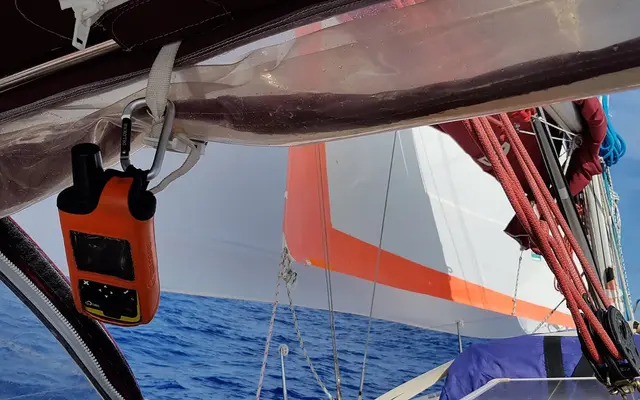
The best food for long bike rides is a light breakfast before you start, small meals at stops every 2 to 3 hours instead of one heavy thali, water at every halt whether or not you feel thirsty, and simple snacks such as bananas, roasted chana, dates and chikki in the tank bag. Eat hot, freshly cooked food at busy dhabas, skip raw salads and cut fruit you did not cut, and weigh yourself before and after a hot day: losing more than about 1% of body weight means you drank too little, a level at which one driving study saw errors double.
- 2,110–2,710 kcal is ICMR-NIN's 2020 bracket for a 65 kg Indian man on a sedentary-to-moderate day: a riding day needs no big surplus.
- Small meals every 2–3 hours beat one heavy thali, the classic recipe for afternoon drowsiness.
- 1.1% body-mass loss roughly doubled minor errors in a 2-hour driving simulator (Watson et al., 2015).
- ~105 minutes in full gear at 35°C predicts moderate hyperthermia (de Rome et al., 2015), so stop in shade before that.
- Hot, cooked-to-order food at a busy dhaba is the safe bet; raw salad, cut fruit, ice and lukewarm gravy are the risks.
This is a method, not a diary. It turns three kinds of evidence into a plan you can use on any highway:
- ICMR-NIN's 2020 energy requirements for Indian adults;
- lab studies of what heat and mild dehydration do to riders and drivers;
- WHO's food-safety rules for eating away from home.
Where the evidence runs out, I say so and give a rule of thumb.
How much should you eat on a long riding day?
On a long riding day most riders need roughly their normal daily energy, not a large surplus. Riding a motorcycle is mostly seated work with constant small muscle effort; ICMR-NIN's 2020 requirements put a 65 kg Indian man at 2,110 kcal on a sedentary day and 2,710 kcal on a moderately active one, which is a sensible bracket for a touring day.
| ICMR-NIN 2020 | kcal per kg per day | Daily total (reference weight) |
|---|---|---|
| Man, sedentary (65 kg) | 32 | 2,110 kcal |
| Man, moderate work (65 kg) | 42 | 2,710 kcal |
| Man, heavy work (65 kg) | 53 | 3,470 kcal |
| Woman, sedentary (55 kg) | 30 | 1,660 kcal |
| Woman, moderate work (55 kg) | 39 | 2,130 kcal |
| Woman, heavy work (55 kg) | 49 | 2,720 kcal |
Scale it to your own weight
The 2020 figures are 3 to 8 kcal per kg lower than the 2010 ones because NIN found Indian basal metabolic rates and activity costs lower than the FAO equations assumed. Scale them to your own weight: an 80 kg rider on a moderate day needs about 80 × 42 ≈ 3,360 kcal.
- Toward the heavy row: cold, altitude and heavy off-road work.
- Near sedentary: a smooth expressway day.
- Protein: NIN's RDA is 0.83 g per kg, so the same 80 kg rider needs about 66 g, which dal, curd, eggs or paneer at two meals will cover.
Timing matters more than the total
The bigger risk on a riding day is not too few calories but the wrong timing. A large, fatty lunch followed by an afternoon in the saddle is the classic recipe for drowsiness, while skipping meals leaves you irritable and slow by evening.
Spread the same energy across four or five small eats.
What should you eat before and during the ride?
Before the ride, eat a normal, familiar breakfast with some protein and slow carbohydrate an hour before leaving; during the ride, eat small amounts at each stop rather than a single large meal. The point is steady blood sugar and an empty-feeling stomach that does not make you sleepy.
- Breakfast you know. Poha, upma, idli, eggs and toast, or paratha with curd. A long day is not the day to test a new dish.
- First stop, 2 to 2.5 hours in. A banana or a handful of roasted chana with water. Walk around for five minutes.
- Mid-morning stop. Chai is fine, and a glass of salted nimbu pani or ORS if it is hot.
- Light lunch. Roti or rice, dal, a dry sabzi and curd, about two-thirds of your usual portion. Skip the deep-fried extras.
- Afternoon stop. Dates or chikki for quick sugar, plus water. The afternoon slump is real, so this stop matters most.
- Dinner after parking. The day's big meal, with protein and vegetables, once you are no longer riding.
In 2017, Srinivas Gokulnath, an Army doctor, became the first Indian to complete the Race Across America, about 3,000 miles of cycling in which riders must cover at least 250 miles a day and the clock never stops. Early on he was in the top 10. Then, between Time Station 5 and Time Station 9, he "succumbed to dehydration" and fell to 27th.
The fix was not more effort but bookkeeping. "I have to take 8,000 calories and we would jot down every little detail," he told Scroll; that, he said, was when the team started working on nutrition and hydration. After that he found he was gaining and getting faster, and he finished in 11 days, 18 hours and 45 minutes. A motorcycle burns far less of its rider, but the lesson carries: fuel and water are planned and logged, not left to appetite.
Scroll (The Field): How does one cycle 3,000 miles in 12 days? (2017)My own long-ride plans use short food stops about 250 km apart, which on Indian highways usually lands near the 2 to 3 hour mark. On fast expressways that interval means more distance; on ghat roads, less. Plan stops by the clock, then pick the nearest good place. For stop spacing tied to fuel, see RoadHook Rides' fuel range planning and how many kilometres a day.

How much water should you drink when riding in heat?
Drink enough to keep your body weight within about 1% of the morning figure; in Indian summer heat in full gear that usually means drinking at every stop and carrying water between them. Thirst lags behind need when wind dries your skin and the sweat evaporates before you notice it.
What the lab studies found
Two lab studies explain why this matters for riders. In 2015, a Loughborough University team had 11 men drive a monotonous 120-minute simulator course twice: once fully hydrated and once after drinking a quarter of the usual fluid, which left them just 1.1% lighter. Minor driving errors rose from an average of 47 to 101.
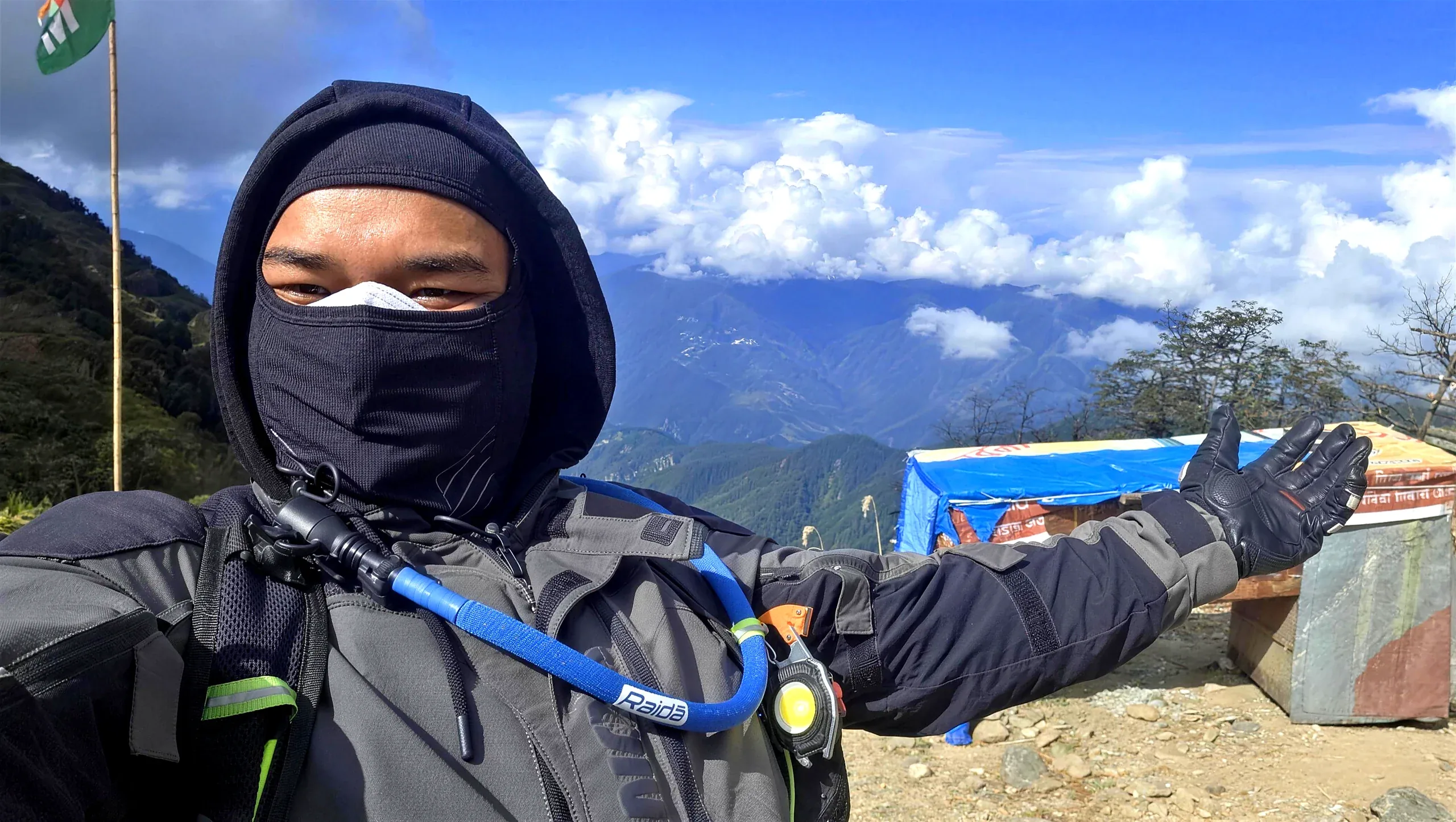
The same year, Liz de Rome and colleagues in Australia ran simulated urban rides in a heat chamber with a 30 km/h headwind and radiant sun. At 35°C in full protective gear, core temperature climbed about 0.02°C a minute, predicting moderate hyperthermia (above 38.5°C) in roughly 105 minutes and profound hyperthermia (above 40°C) within 3 hours.
Losing just 1.1% of body weight to sweat took minor driving errors from 47 to 101 in two hours.Watson et al., Physiology and Behavior, 2015
Eleven healthy men aged about 22 did a 120-minute simulated drive on two mornings in a crossover design: once drinking fluid at guideline levels, once drinking 25% of that. Fluid restriction cost 1.1 ± 0.7% of body mass against −0.1% when hydrated. Minor driving incidents averaged 47 ± 44 hydrated and 101 ± 84 dehydrated (effect size 0.81, P = 0.006), an impairment the authors compare with a blood alcohol level near 0.08%. Limit: 11 young men, car simulator not motorcycle, and partial funding from the European Hydration Institute.
Read the paper (free repository copy)Twelve men did simulated urban rides of three 30-minute stages at 25, 30 and 35°C, with radiant heat overhead and a 30 km/h headwind, in full protective gear or in light clothing. At 25°C, full gear raised steady heart rate by 12 beats a minute and mean skin temperature by 2°C. At 35°C, core temperature rose at 0.02°C per minute, predicting moderate hyperthermia in about 105 minutes and profound hyperthermia within 180. The authors call for summer gear that sheds heat better without losing protection. Limit: a conference abstract, low-speed urban simulation, and cognitive effects untested.
Read the abstract (free)Use this to check what you just read. Weigh yourself in the same clothes before and after a riding stint, note what you drank, and the tool estimates your sweat rate and how close you came to the 1% line.
Did you drink enough on that stint?
Water or salt?
Plain water is enough for most days. On very hot days with heavy sweating, add salt back with nimbu pani, buttermilk or an ORS sachet, because sweat carries sodium.
RoadHook Rides' riding in a heatwave covers gear and timing; for altitude days, appetite and fluid needs change again, as covered in altitude sickness on a motorcycle tour.
How do you pick a safe dhaba on the highway?
Pick a dhaba that is busy, cooks to order in front of you and serves food steaming hot; skip anything that has sat at room temperature, raw salad, cut fruit and ice of unknown origin. A riders' thread on xBhp reached the same rule the hard way: there is no database of good dhabas, so follow the long-distance trucks, which stop where food is simple and turnover is high.
WHO's five keys, applied to a dhaba
WHO's food-safety fact sheet, updated in June 2026, puts the global toll at 866 million illnesses and 1.52 million deaths a year from contaminated food. WHO boils safe handling down to five keys:
- keep clean;
- separate raw and cooked;
- cook thoroughly;
- keep food at safe temperatures;
- use safe water and raw materials.
On a highway, the third and fourth do most of the work. A tandoori roti or a dal that comes off a flame at a rolling boil is about as safe as roadside food gets. A gravy ladled lukewarm from a pot that has been standing since morning is the risk.
| Usually safe | Higher risk | Why |
|---|---|---|
| Rotis and parathas off the tawa | Pre-made rotis kept in a cloth | Heat kills bacteria; standing lets them grow |
| Dal or sabzi served boiling | Lukewarm gravies from a big pot | Time at warm temperatures lets bacteria multiply |
| Freshly made omelette | Boiled eggs of unknown age | Cooking to order |
| Chai, boiled | Lassi or chaas from an open vessel | Boiling vs unpasteurised, uncovered dairy |
| Whole fruit you peel | Cut fruit, raw salad, chutney | Washing water and handling |
| Sealed bottled water | Jug water, ice | Unknown source |
Enforcement is uneven, which is why your own eye matters. In August 2026 food-safety officers in Gandhinagar inspected eight highway eateries and served improvement notices on five for sanitation and hygiene, destroying about 23 kg of food. The longer answer to whether dhaba food is safe is in is dhaba food safe on the highway.

What snacks should you carry in a tank bag?
Carry snacks that survive heat and vibration, need no washing, and pack energy into little weight: roasted chana, dates, chikki, bananas, nuts, glucose biscuits and an ORS sachet or two. Avoid chocolate in summer and anything that crumbles into dust on a corrugated road.
The tank-bag shortlist
| Snack | Why it works | Watch out for |
|---|---|---|
| Roasted chana | Protein and fibre, will not spoil | Salt; read the pack |
| Dates | Fast sugar, no packaging needed | Sticky in heat; keep in a box |
| Chikki (gur and peanut) | Dense energy, cheap everywhere | Melts in hot tank bags |
| Bananas | Carbohydrate plus potassium | Bruise easily; eat within a day |
| Mixed nuts | High energy per gram | Easy to overeat; fat slows digestion |
| ORS sachet | Replaces salt and water fast | Mix with safe water only |
Packaged snacks vary hugely in sugar and salt, and the label tells you how much; how to read an FSSAI food label shows how to read the panel in a few seconds. Caffeine helps alertness but is not a substitute for rest; how much is in a cutting chai compared with a filter coffee is in caffeine in Indian drinks, ranked.


What's new
- WHO updates its food safety figures: 866 million ill and 1.52 million deaths a year WHO, Jun 2026
- FSSAI seizes 3,280 tonnes of non-compliant food and suspends 1,100 licences in its festive drive News On AIR, Nov 2026
- Five highway dhabas near Gandhinagar get hygiene notices DeshGujarat, Aug 2026
Questions people ask
Is it better to eat a big meal or small meals on a long ride?
Small meals. A heavy lunch followed by hours of steady riding invites drowsiness, while small, regular eats keep energy steady. Save the big meal for after you park.
Should I drink energy drinks to stay alert?
Not as a plan. They add sugar and caffeine but do nothing for fatigue that needs sleep, and they do not replace water. A chai at a stop, plus a proper rest when tired, works better.
How do I know if I am dehydrated while riding?
Weigh yourself before and after, and use the calculator above; dark yellow urine and a headache are later signs. Wind hides sweat, so do not wait for thirst.
Is it safe to eat at dhabas?
Generally, if you choose busy places and eat food cooked to order and served hot. Avoid raw salads, cut fruit, ice and lukewarm gravies, and drink sealed water.
What should I eat at high altitude?
Appetite often drops at altitude, so eat little and often, favour carbohydrate-rich food you like, and keep drinking. Altitude illness is a medical issue; read the altitude guide linked above and descend if symptoms worsen.
Sources
- ICMR-NIN: Brief note on Nutrient Requirements for Indians 2020 (2020; energy per kg and protein RDA)
- Watson P. et al.: Mild hypohydration increases the frequency of driver errors, Physiology and Behavior (2015)
- de Rome L. et al.: Can motorcycle riding in Australia really be that thermally stressful? Extreme Physiology and Medicine 4(Suppl 1) (2015)
- WHO: Food safety fact sheet (Jun 2026)
- WHO: Five keys to safer food
- xBhp: Enquiry about dhabas (forum thread)
- DeshGujarat: Five highway dhabas in Gandhinagar get notices (Aug 2026)
- News On AIR: FSSAI festive drive (Nov 2026)
- Sapta: Bengaluru to Kolkata by bike, about 2,000 km on NH16 in 2 days (Nov 2025 ride log; 250 km stop spacing)
- Scroll (The Field): How does one cycle 3,000 miles in 12 days? (2017; Srinivas Gokulnath, Race Across America; source for the story)

Sapta (Saptarshi Sarkar) is a mechanical engineer turned marketer in Bengaluru and a solo touring rider. He writes the seven Saptaverse blogs. Work with him or read more of Foodblog.