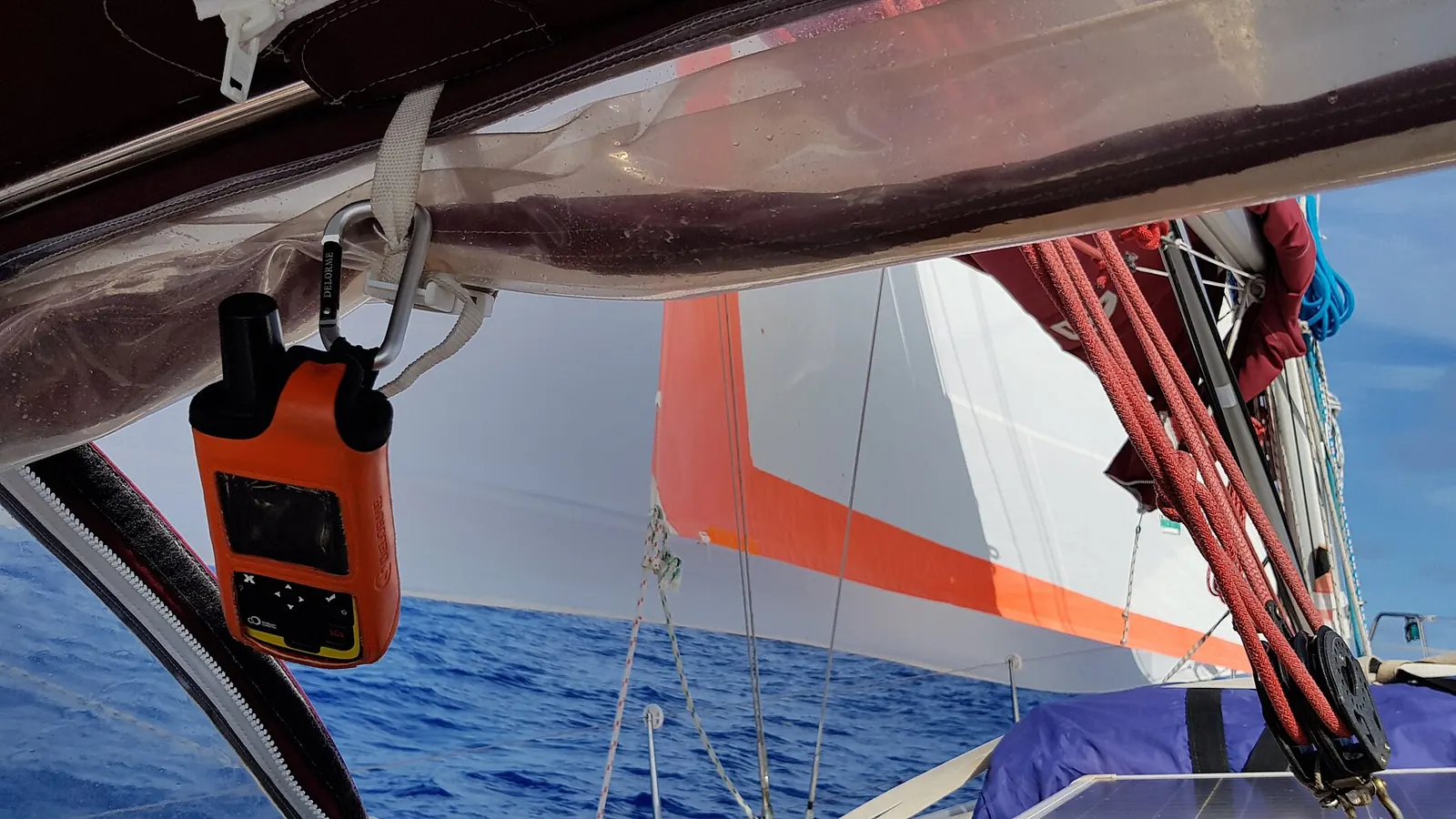
A Garmin inReach can get you arrested in India because it is not just a GPS: it transmits messages through the Iridium satellite network, and Indian law has required a government licence to possess any radio transmitter since the Indian Wireless Telegraphy Act, 1933. That Act allowed up to 3 years in jail for an unlicensed transmitter, and its replacement, the Telecommunications Act, 2023, still says you need central government authorisation to "possess radio equipment". Between December 2024 and January 2025 at least five foreign travellers were detained or booked at Goa, Delhi and Dehradun airports over satellite devices.
- Transmitter, not receiver: a GPS only listens to satellites; an inReach also talks to them, and that is what needs a licence.
- 5+ foreigners were detained or booked over satellite devices at Indian airports in December 2024 and January 2025.
- Up to 3 years in jail was the 1933 Act's penalty for an unlicensed wireless transmitter (Section 6(1A)).
- Section 3(1)(c) of the Telecommunications Act, 2023 still requires authorisation to possess radio equipment.
- Even in transit: the UK government warns that the rule applies to passengers only changing planes in India.
- Safest choice: leave it at home, or get written Department of Telecommunications (DoT) permission before you fly.
Most people who get caught are not smugglers. They are hikers, trail runners and wedding guests who packed the same orange gadget they carry on every trip, and who think of it as a fancy GPS. Indian airport security sees a satellite transmitter.
This is general information, not legal advice. If you have been detained or booked, get a local lawyer and contact your embassy.
Why is a Garmin inReach treated differently from a GPS?
An ordinary GPS is a receiver. It listens to timing signals from navigation satellites and works out where you are. It sends nothing back. Every smartphone in India has one, and nobody needs a licence for it.
An inReach is a two-way satellite radio. It uses GPS to find you, then transmits short text messages, tracking points and SOS alerts to the Iridium constellation in low Earth orbit. Iridium relays them to a ground station outside India. That makes it, legally, the same class of thing as a satellite phone, just with a keyboard instead of a handset.
The forum reply that best explains the confusion came from a user on Garmin's own inReach board: the issue in India is satellite communication, not GPS. India wants every radio link that leaves the country to pass through a licensed operator it can supervise.
What happened to the travellers who were caught?
At least five cases were reported between early December 2024 and January 2025, all found at airport security screening, several before domestic flights. The pattern is consistent: X-ray, questioning, a police station, a case file, and weeks of uncertainty even when nobody is jailed.
In early December 2024, Tina Lewis, a Canadian trail runner living in Colorado and the 2012 winner of the Leadville 100 Mile, went through security at Goa's Dabolim airport on her way to Kochi. Her carry-on held a Garmin inReach Mini. She was held at a police station for most of a day, until about 2 am, and was about to be taken for a medical examination before jail when a lawyer, found through a friend, arrived. She got bail, but her passport took six days to come back, she spent several full days in court, paid thousands in fines and legal fees, and forfeited the device. iRunFar published her account on 16 December 2024, and the warnings to hikers began.
iRunFar: Trail runner Tina Lewis arrested in India (16 Dec 2024)The other documented cases:
- Goa, around 9 December 2024: a Czech national was booked for carrying a Garmin Edge 540, a cycling GPS, according to a Deccan Herald report cited by iRunFar.
- Dehradun, around 10 December 2024: an American was arrested with an actual satellite phone, per a Hindustan Times report cited by iRunFar.
- Delhi, 21 December 2024: a 25-year-old US software engineer in India for a wedding had an inReach Mini 2 found in his hand baggage. An FIR was registered on 22 December under the Telecommunications Act, 2023. In January 2025 the Delhi High Court let him leave India within his visa period, on condition he joins the investigation when called.
- Delhi, weeks before mid-January 2025: a Scottish mountain leader was questioned for the rest of the day after placing her device in the scanning tray before a domestic flight, then released with a court date.
- Delhi, date not given: a British traveller in transit to Bhutan posted on Garmin's forum that two inReach units led to about seven hours at the airport, a police station visit and a magistrate's hearing. By the poster's account, the case was later dismissed with no fine.

| Date | Airport | Device | Law reported | Outcome |
|---|---|---|---|---|
| Early Dec 2024 | Goa (Dabolim) | Garmin inReach Mini | Wireless Telegraphy Act 1933 | Bail; passport back after 6 days; device forfeited |
| ~9 Dec 2024 | Goa | Garmin Edge 540 (cycling GPS) | Not stated in our sources | Booked |
| ~10 Dec 2024 | Dehradun | Satellite phone | Not stated in our sources | Arrested |
| 21 Dec 2024 | Delhi (IGI) | Garmin inReach Mini 2 | Telecommunications Act 2023 | FIR; Delhi HC allowed exit, Jan 2025 |
| Dec 2024 to Jan 2025 | Delhi (IGI) | Satellite messenger | Not stated | Released; court date |
Note the cycling GPS. A plain Garmin Edge does not transmit to satellites, yet it was still booked. The UK government's travel advice now warns that the rule may also cover handheld or cycling GPS units, so the practical risk is wider than the strict engineering line.
What does Indian law actually say about satellite devices?
Two laws matter: the colonial-era Indian Wireless Telegraphy Act, 1933, and the Telecommunications Act, 2023 (Act No. 44 of 2023), which repeals it. Reports of the 2024 cases cite both.
The 1933 Act
- Section 3: no one may possess wireless telegraphy apparatus except under a licence issued under the Act.
- Section 6(1): possessing a non-transmitting wireless set without a licence: fine up to ₹100 (₹250 for a repeat).
- Section 6(1A): possessing a wireless transmitter without a licence: imprisonment up to three years, a fine up to ₹1,000, or both.
- Section 6(2): a court may presume you possess an apparatus that is in your ostensible charge, such as your bag.
The 2023 Act
- Section 3(1)(c): anyone intending to possess radio equipment must obtain authorisation from the central government. Section 3(3) lets the government exempt classes of equipment, and Section 3(4) keeps old exemptions alive.
- Third Schedule, item 1(a): possessing radio equipment without authorisation or exemption is a civil contravention: up to ₹50,000 for a first offence and up to ₹2 lakh for each later one.
- Section 42(3): criminal offences, up to 3 years and ₹50 lakh, cover narrower cases, such as unauthorised radio equipment that holds more than a set number of SIMs, or kit using tampered identifiers.
- Section 42(7): every offence under Section 42 is cognizable and non-bailable.
- Section 60: repeals the Indian Telegraph Act, 1885 and the Indian Wireless Telegraphy Act, 1933.
On paper, then, the new Act treats a tourist's inReach more like a heavy civil fine than a jail offence. In practice, the Delhi FIR in December 2024 was registered under the 2023 Act anyway, and police at the airport decide what happens to you that night. Plan for the police-station version, not the textbook one.
See the data as a table
| Maximum penalty (₹) | |
|---|---|
| 1933 Act s.6(1): receiver | 100 |
| 1933 Act s.6(1A): transmitter | 1000 |
| 2023 Act: civil, first offence | 50000 |
| 2023 Act: civil, each later offence | 200000 |
| 2023 Act s.42(3): criminal cases | 5000000 |
Source: Indian Wireless Telegraphy Act 1933 (s.6, via Indian Kanoon); Telecommunications Act 2023 (Gazette of India, Third Schedule and s.42) · The 1933 Act also allowed up to 3 years in jail for a transmitter; s.42(3) allows up to 3 years. The civil penalties carry no jail term.
Why is India so strict about satellite phones?
Because satellite links bypass the Indian telecom network, and with it lawful interception and location tracing. Three reasons sit behind the rule.
- Security after 26/11. During the Mumbai attacks of 26 to 29 November 2008, which killed 175 people including nine attackers, the gunmen used a satellite phone and mobile phones to talk to each other and to handlers in Pakistan, who gave them tactical advice in real time.
- Sovereign control of radio. The 2023 Act's own statement of objects says the country's security depends on the safety of its telecom networks. A foreign satellite network with its ground station abroad sits outside that control.
- Sensitive frontiers. The terrain where hikers most want a satellite messenger, the high Himalaya, overlaps with Inner Line and Protected Area zones near the China and Pakistan borders, where foreigners already need permits.
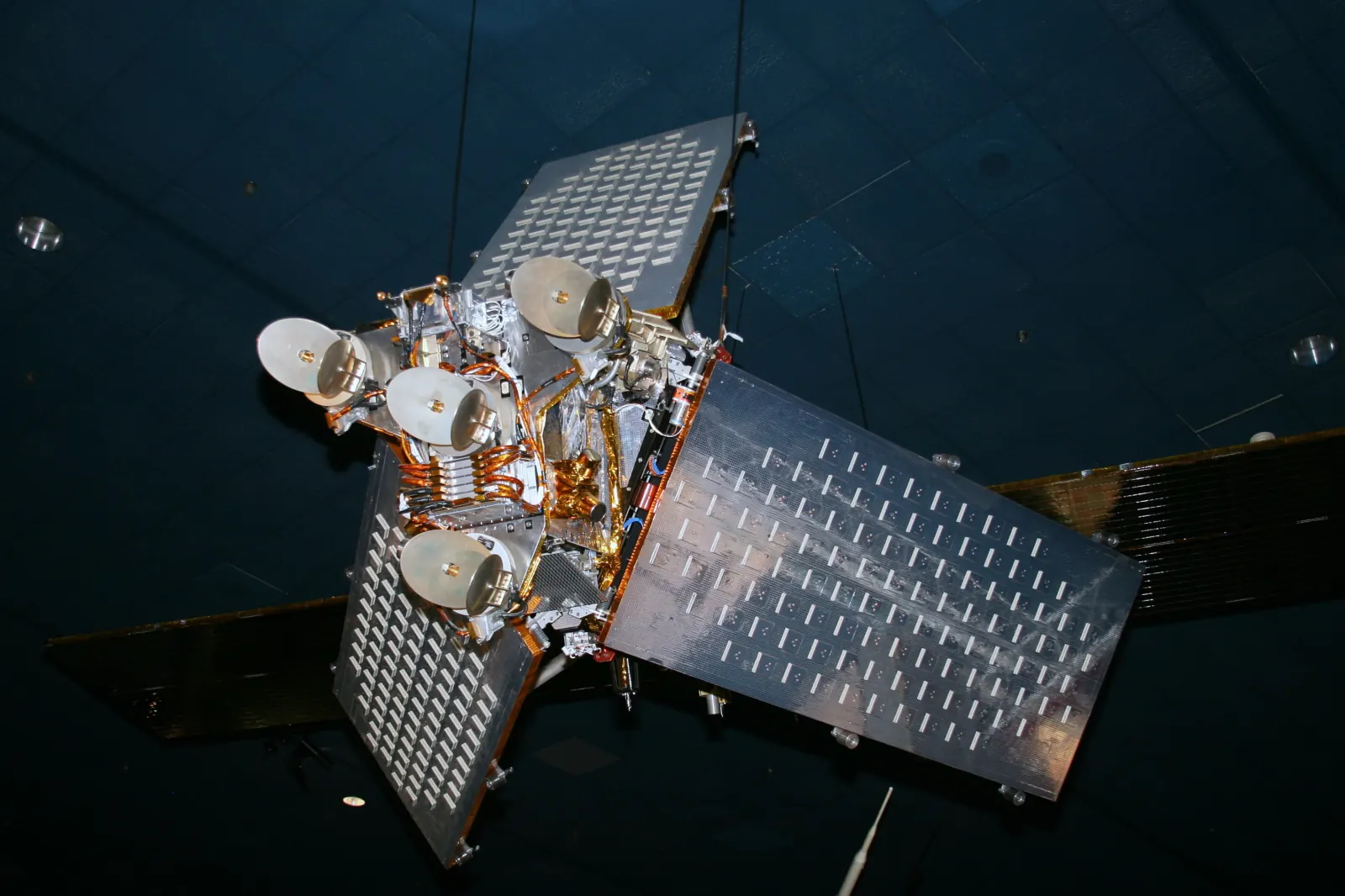
Five researchers reverse-engineered Iridium's SIM-based authentication and recorded a month of uplink and downlink traffic with software-defined radios. They report that the secret key can be pulled from the SIM (allowing cloning), that nearly all signalling and radio protocols in use are unencrypted, and that modestly equipped attackers can inject false messages or jam service locally. The network serves over 2.5 million active subscribers. It shows why a state sees an unsupervised satellite link as both a security gap and a privacy risk. Limit: a preprint, not yet peer reviewed.
Read the paper (free)Is a Garmin watch, bike computer or phone GPS also illegal?
A receive-only GPS is not a transmitter, and every phone has one. But the Goa cycling-GPS case shows that officers on the ground do not always draw that line, and the UK advice explicitly names handheld and cycling GPS units as possible problems.
| Device | Transmits to satellite? | Documented trouble in India? | Risk |
|---|---|---|---|
| Garmin inReach / inReach Mini | Yes (Iridium) | Yes: Goa and Delhi, Dec 2024 | High |
| Satellite phone (Iridium, Thuraya, Inmarsat) | Yes | Yes: Dehradun, Dec 2024 | High |
| Garmin Edge cycling GPS | No | Yes: Goa, Dec 2024 (booked) | Medium |
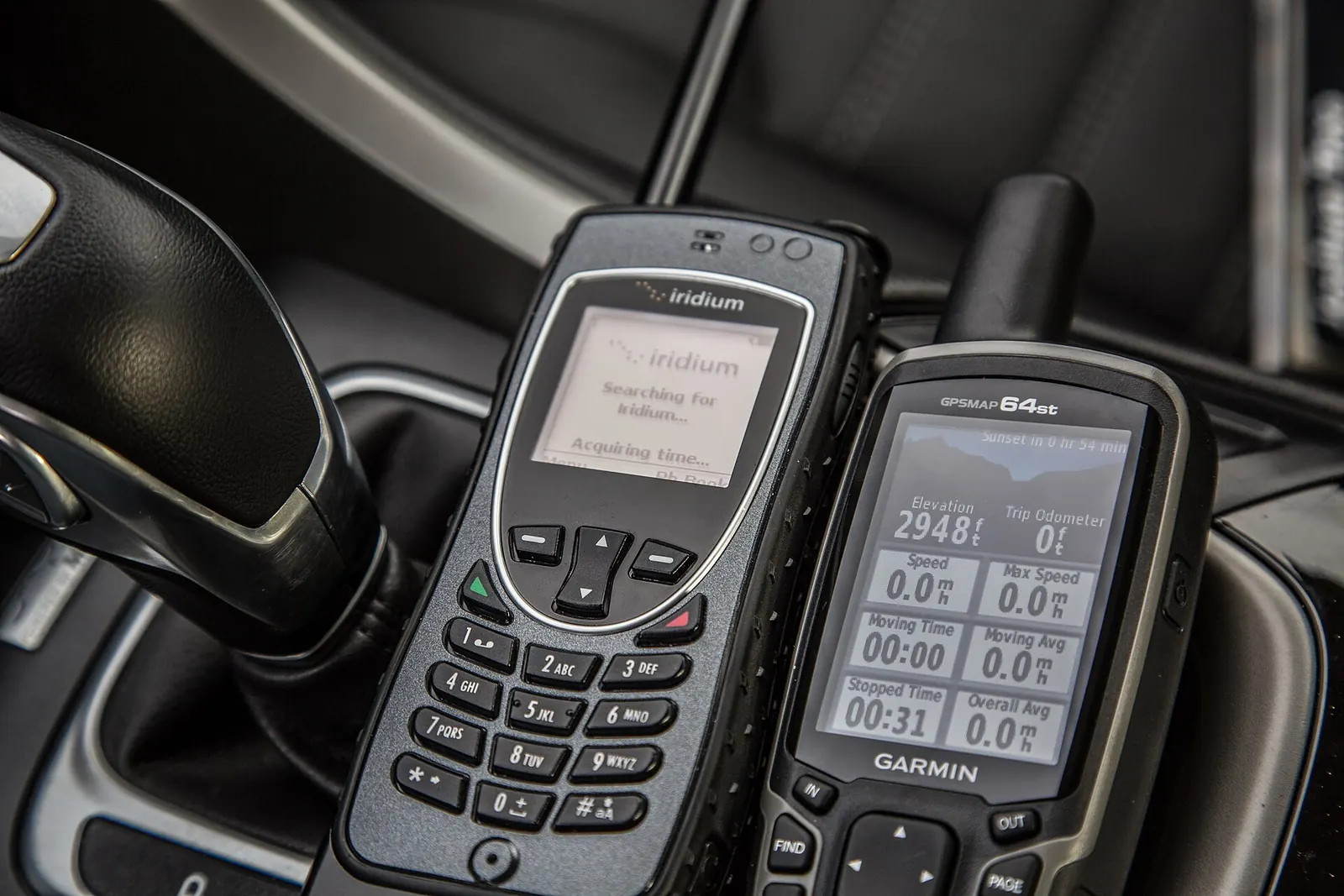
| Handheld GPS (e.g. GPSMAP) | Model-dependent | Named in UK advice | Medium |
| Smartphone GPS | No (location only) | None found | Low |
How do you carry one legally, or what if you already have one?
The legal route is prior written permission from India's Department of Telecommunications, which both the UK government and expedition operators point to. iRunFar's January 2025 reporting describes the licence process for expeditions as long and complex. For a tourist, the honest answer is: if you do not have the paper before you fly, do not bring the device.
- Before you pack. Check your device: if it can send a message or SOS by satellite, it is radio equipment in Indian law. Leave it at home or apply to DoT well before travel.
- If you land with one. Do not use it, do not switch it on, and do not carry it through a domestic security check. Ask your embassy or consulate for advice on surrendering or shipping it out.
- If security finds it. Stay calm, say what it is and why you have it, and ask to contact your embassy. Show purchase and trip records if you have them; the Delhi engineer's case file included his receipt and earlier trip use.
- If an FIR is registered. Get a local criminal lawyer. Expect your passport to be held until bail. A High Court petition can win permission to leave, as the January 2025 Delhi order shows.
- For emergencies on a trek. Use India's single emergency number 112, the tourist helpline 1363, and register your stay. The UK advice notes that hotels must log foreign guests on the online C-form, so someone knows where you are.
What does losing satellite messaging cost a trekker?
The trade-off is real. In remote mountains, a satellite messenger is often the only way to call for help, and rescue time decides outcomes.
A questionnaire study of 366 trekkers from 36 countries on the Everest Base Camp route. 40.5% reported at least one medical incident, 53% said no medical care was available on their trip, and 50.5% had no plan for emergency repatriation. The authors note that evacuation can take up to 24 hours and weather can delay it for days. Limit: it is a Nepal sample and did not measure what devices trekkers carried, but it shows how much a fast alert matters in the Himalaya.
Read the paper (free)Satellite devices are one of several rules that surprise visitors. Others include drone rules under Digital Sky, photographing defence sites and the new visa overstay penalties of the 2025 Act. If you ride rather than hike, our Sikkim permits guide covers the border-zone paperwork, and the wider Kyun Bharat series explains other everyday rules.
What's new
- Runners and hikers formally warned not to bring an inReach or other satellite device to India iRunFar, Jan 2025
- Delhi High Court lets US engineer booked over an inReach Mini 2 leave India The Tribune, Jan 2025
- Researchers find most Iridium radio traffic travels unencrypted arXiv, Mar 2026
- UK travel advice for India keeps its satellite-device warning, updated October 2026 GOV.UK, Oct 2026
Questions people ask
Can I bring a Garmin inReach to India?
Not without prior authorisation from the Department of Telecommunications. Section 3(1)(c) of the Telecommunications Act, 2023 requires authorisation to possess radio equipment, and travellers carrying inReach units without it were detained in Goa and Delhi in December 2024 and January 2025.
Are satellite phones legal in India?
Only with a licence or authorisation. The 1933 Wireless Telegraphy Act punished an unlicensed transmitter with up to 3 years in jail, and the 2023 Act that replaces it keeps the authorisation rule. An American carrying a satellite phone was arrested at Dehradun airport in December 2024.
Is it okay if the device is switched off?
No. Both laws regulate possession, not use. The cases on record began with devices found in bags at the X-ray, not with transmissions.
Is my Garmin watch or bike computer a problem?
A receive-only GPS is not a transmitter, so the legal risk is much lower. But a Czech traveller was booked in Goa over a Garmin Edge 540 in December 2024, and UK advice warns that handheld and cycling GPS units may be covered, so carry purchase records and expect questions.
What should I do if I am already in India with one?
Do not use it or take it through another security check. Contact your embassy for advice on shipping or surrendering it, and if you are stopped, ask for the embassy and a lawyer. In an emergency in India, dial 112; the tourist helpline is 1363.
Sources
- Gazette of India: The Telecommunications Act, 2023 (No. 44 of 2023) (2023), sections 3, 42, 60 and Third Schedule
- Indian Kanoon: Section 6, Indian Wireless Telegraphy Act, 1933 (penalties)
- Indian Kanoon: Section 3, Indian Wireless Telegraphy Act, 1933 (licence requirement)
- iRunFar: Trail runner Tina Lewis arrested in India (Dec 2024)
- iRunFar (from ExplorersWeb): Do not bring an inReach or other satellite device to India (Jan 2025)
- The Tribune: In trouble over hiking gadget, US man allowed to leave India (Jan 2025)
- Garmin Forums: Travelling to India BEWARE (user account, 2025)
- GOV.UK: India travel advice, safety and security (updated Oct 2026)
- PRS Legislative Research: The Telecommunications Bill, 2023 (2023)
- Wikipedia: 2008 Mumbai attacks (satellite phone use, casualty figures)
- Jedermann et al.: Systematic Security Analysis of the Iridium Satellite Radio Link (arXiv, 2026)
- Cerfontaine et al.: Companion Rescue and Risk Management of Trekkers on the Everest Trek (IJERPH, 2022)

Sapta (Saptarshi Sarkar) is a mechanical engineer turned marketer in Bengaluru and a solo touring rider. He writes the seven Saptaverse blogs. Work with him or read more of Whyblog.