Riding a bike in heat is safe only while your body can shed heat faster than the air, the engine and your gear add it. Above about 35°C in full protective gear, lab work shows core temperature climbing steadily, with moderate hyperthermia (above 38.5°C) predicted in about 105 minutes. In an Indian heatwave, ride from first light to late morning, rest through the 12 to 4 pm block, drink on a schedule, and treat a heat index above 40°C as a stop sign rather than a challenge.
- About 35°C is skin temperature: above it, moving air heats a rider instead of cooling him.
- 105 minutes to moderate hyperthermia at 35°C in full gear, in the de Rome lab trials.
- 1.1% body-mass loss from mild dehydration doubled driving errors (101 against 47).
- 45°C actual maximum is an IMD heatwave in the plains, whatever the normal.
- Heat index above 40°C: park in shade and wait; full gear in sun is worse than the index says.
- Split day: ride first light to about 11:30, rest until 4 pm, avoid the 6 to 9 pm crash peak.
Most touring advice in India is about cold, altitude and rain. Yet the months when many riders have leave, April to June, are the months when the north and central plains bake.
On 24 May 2026, IMD put parts of Uttar Pradesh and Madhya Pradesh on a red heatwave alert after Brahmpuri in Vidarbha hit 47.2°C and several other stations read 45 to 47°C.
This post explains what heat does to a rider inside a jacket and helmet, how to read the numbers IMD and the heat index give you, and how to build a riding day around them.
Why does riding gear make heat so dangerous?
Your body loses heat in two ways:
- Dry heat loss: convection and radiation, which needs skin warmer than air;
- Evaporation of sweat.
Riding gear attacks both. A textile or leather jacket with armour, a full-face helmet, gloves and boots cover more than 90% of your skin, so air cannot reach the sweat.
Once air temperature passes skin temperature (about 35°C), convection starts adding heat instead of removing it. At that point evaporation is the only cooling you have left, and the jacket is blocking it.
The bike and the road add more
The engine adds to the load. A liquid-cooled single dumps radiator air onto your shins, and in slow traffic a 200 to 400 cc engine idles at full operating temperature with no ram air. The asphalt radiates too: a dark road in direct sun runs far hotter than the air above it.
Moving air at 60 to 80 km/h helps only while the air is cooler than your skin. At 42°C, a vented jacket at speed behaves like a convection oven.
Twelve men did 90-minute trials in a climate chamber with an overhead radiant heat source and a 30 km/h headwind, working lightly (30 W) to mimic riding. At 25°C, full protective gear did not change core (ear-canal) temperature but raised steady-state heart rate by 12 beats a minute. At 35°C, core temperature rose about 0.02°C a minute, which projects to moderate hyperthermia (above 38.5°C) in about 105 minutes and profound hyperthermia (above 40°C) in about 180 minutes. At 30°C the projection for profound hyperthermia was about 10 hours. The limit: humidity was modest (vapour pressure 2.25 kPa at 35°C), the sample was small, and the bike was simulated, so a humid Indian coast could be worse.
Read the paper (free)In late 2014, in a climate chamber on the University of Wollongong campus in Australia, a team led by Dr Julie Brown of Neuroscience Research Australia, with Dr Liz de Rome and thermal physiologist Nigel Taylor, set out to answer a question riders argue about every summer. First, six experienced instructors from a Honda rider-training school in Melbourne rode rural and urban courses while the team measured their oxygen use, to learn how hard riding really is. Then 12 adults aged 21 to 61 did 48 trials: 90 minutes pedalling an ergometer at that same light effort, in boots, gloves and helmets, under radiant heaters standing in for the sun and a large fan for wind. Full gear was tested at 25, 30 and 35°C. The reason for the work was a survey finding: riders were three times less likely to wear protective clothing in hot weather. As de Rome put it, "Heat is a disincentive to usage".
University of Wollongong: Motorcycle protective clothing, if it is too hot to wear, is it too hot to ride?The full journal version of the same study (de Rome et al., Ergonomics, 2016) concluded that summer motorcycle clothing needs much better heat dissipation without giving up impact protection.
The bigger danger for riders comes earlier than heat stroke: a hot, dehydrated rider makes worse decisions, as the next two studies show.
What counts as a heatwave in India?
IMD declares a heatwave in the plains when a station's maximum reaches at least 40°C and is 4.5 to 6.4°C above its normal, or when the actual maximum reaches 45°C whatever the normal.
A severe heatwave is a departure above 6.4°C or an actual maximum of 47°C or more. The criteria must hold at two or more stations in a meteorological sub-division for two consecutive days.
| IMD category | Plains | Hills | Coastal stations |
|---|---|---|---|
| Minimum maximum temperature to consider | 40°C | 30°C | 37°C |
| Heatwave (by departure) | +4.5 to +6.4°C above normal | +4.5 to +6.4°C above normal | +4.5°C or more, with actual max 37°C or more |
| Severe heatwave (by departure) | more than +6.4°C | more than +6.4°C | not separately defined |
| Heatwave (by actual max) | 45°C or more | n/a | n/a |
| Severe heatwave (by actual max) | 47°C or more | n/a | n/a |
| Warm night | Max stays 40°C or more and the minimum is 4.5 to 6.4°C above normal (very warm night: more than 6.4°C) | ||
Two lines in that table matter more to riders than the headline:
- The warm-night rule. When the minimum stays high, your body never recovers overnight, so day two starts with a heat debt.
- The coastal rule. On the Konkan or the Andhra coast, a "mere" 37°C qualifies because humidity is doing the damage that raw temperature does inland.
How hot do Indian touring regions get in April to June?
Across the four touring hubs below, the mean daily maximum in May sits between 38.8°C (Hyderabad) and 43.1°C (Nagpur), according to IMD's 1991 to 2020 normals. Those are averages; heatwave days add 4.5°C or more on top.
See the data as a table
| Jaisalmer (°C) | Nagpur (°C) | New Delhi (Safdarjung) (°C) | Hyderabad (°C) | |
|---|---|---|---|---|
| March | 33.4 | 36.4 | 29.9 | 35.2 |
| April | 38.9 | 40.6 | 36.5 | 37.6 |
| May | 42.1 | 43.1 | 39.9 | 38.8 |
| June | 41.1 | 38.1 | 39.0 | 34.4 |
Source: India Meteorological Department normals 1991-2020, as tabulated in Wikipedia climate tables · Nagpur and Hyderabad cool in June when the monsoon arrives; Jaisalmer and Delhi stay hot into June.
Look at the shape, not just the peak:
- The Deccan (Nagpur, Hyderabad) peaks in May and breaks in June with the monsoon.
- The Thar and the Delhi plains hold above 39°C through June.
- Records are higher still: Jaisalmer's table lists 49.2°C for June and Nagpur's 47.9°C for May.
If your route crosses Rajasthan or Vidarbha in May, plan on at least a few hours each day above skin temperature.
What is the heat index and when should a rider stop?
The heat index is the temperature your body "feels" when humidity slows sweat evaporation. The US National Weather Service computes it with a regression on air temperature and relative humidity, accurate to about ±1.3°F, and grades risk in four bands:
| NWS band | Heat index |
|---|---|
| Caution | 26.7 to 32.2°C |
| Extreme caution | 32.2 to 39.4°C |
| Danger | 39.4 to 51.7°C |
| Extreme danger | above 51.7°C |
It assumes shade and light clothing. Full riding gear in sun is worse than the index says, so read it as a floor. Use this to check what you just read with your own numbers:
Heat index for your ride
Some worked values from the same formula show why the coast can be worse than the desert:
- Dry Jaisalmer at 42°C and 30% humidity gives a heat index of about 47°C.
- Muggy Visakhapatnam at 36°C and 70% gives about 54°C, past the extreme-danger line, at an air temperature six degrees lower.
- Inland at 40°C and 40% humidity, you get about 48°C.
All three are in the danger band or beyond.
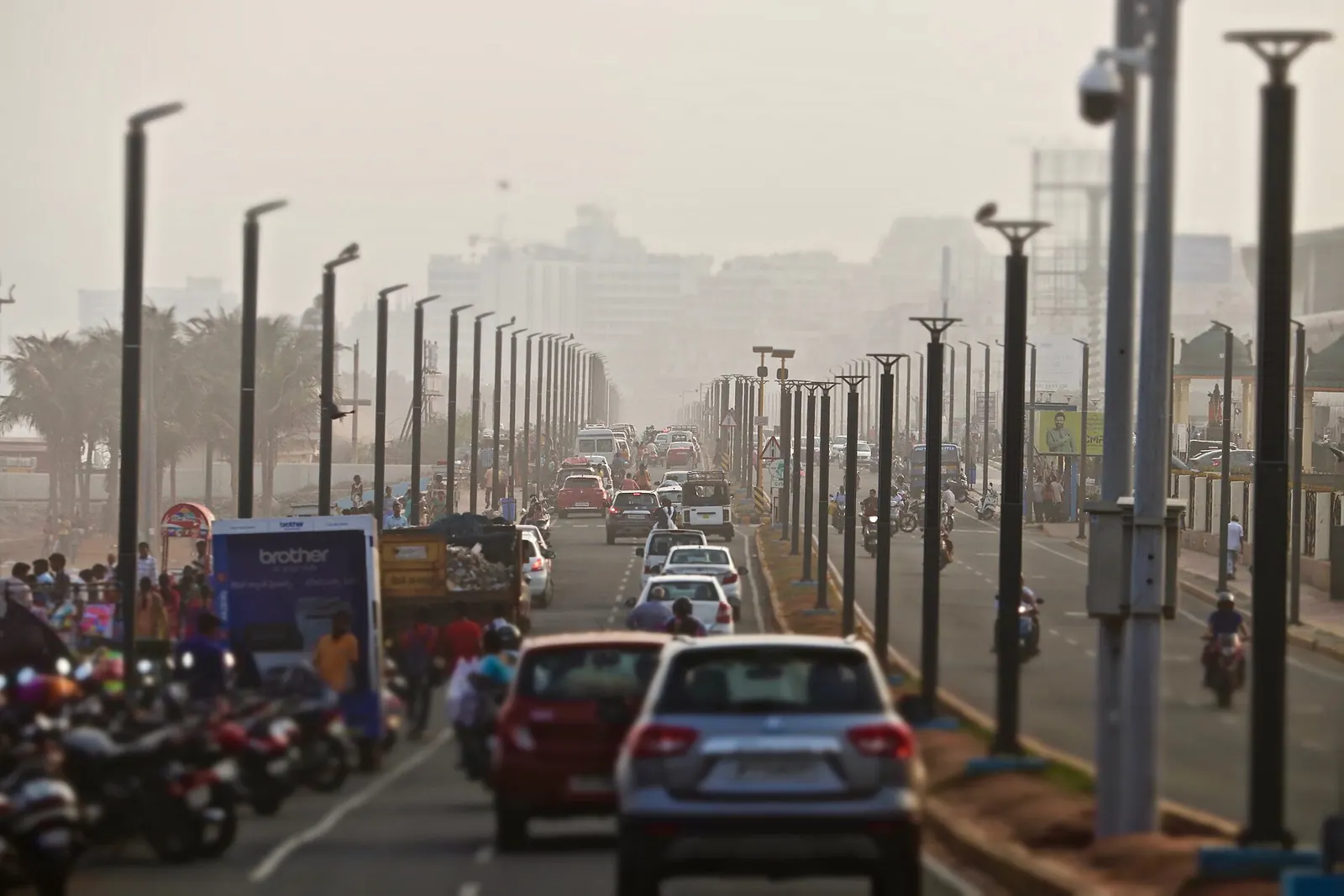
Once the index passes 40°C, the bike goes under a tree or a dhaba roof, and you wait.Sapta

How much water do you need, and does mild dehydration matter?
Mild dehydration matters more than most riders think: losing just 1.1% of body mass doubled minor driving errors in a two-hour simulator study.
Sweat rates in heat vary from person to person, so the practical answer is to drink on a clock and check yourself by body weight and urine colour, not by thirst.
Eleven healthy men (mean age 22) did a 120-minute simulated drive twice in a crossover design: once after drinking the guideline fluid volume, once after drinking a quarter of it. Fluid restriction cut body mass by 1.1% (against 0.1% when hydrated). Errors such as lane drifting and late braking rose in both trials, but the restricted trial logged 101 errors against 47 (P = 0.006). The authors say the size of the drop was similar to what other studies report at about 0.08% blood alcohol. Limits: a small all-male sample, a car simulator in a cool lab, and part-funding from the European Hydration Institute.
Read the paper (free)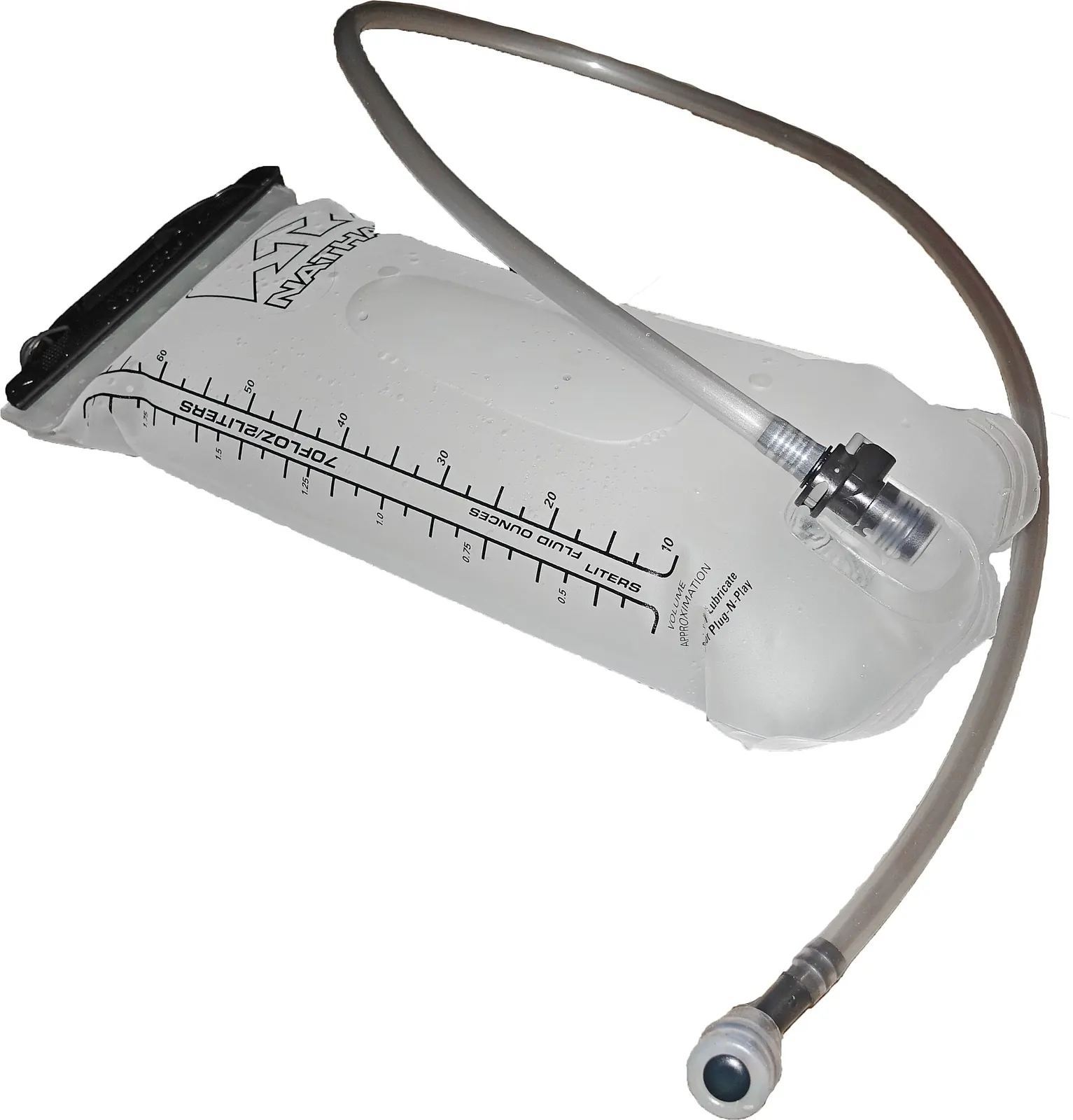
- Before the ride: drink about half a litre with breakfast, so you start the day topped up.
- On the bike: sip from a hydration pack every 15 to 20 minutes instead of gulping at stops. A two-litre bladder in a tank bag or backpack lets you drink without stopping.
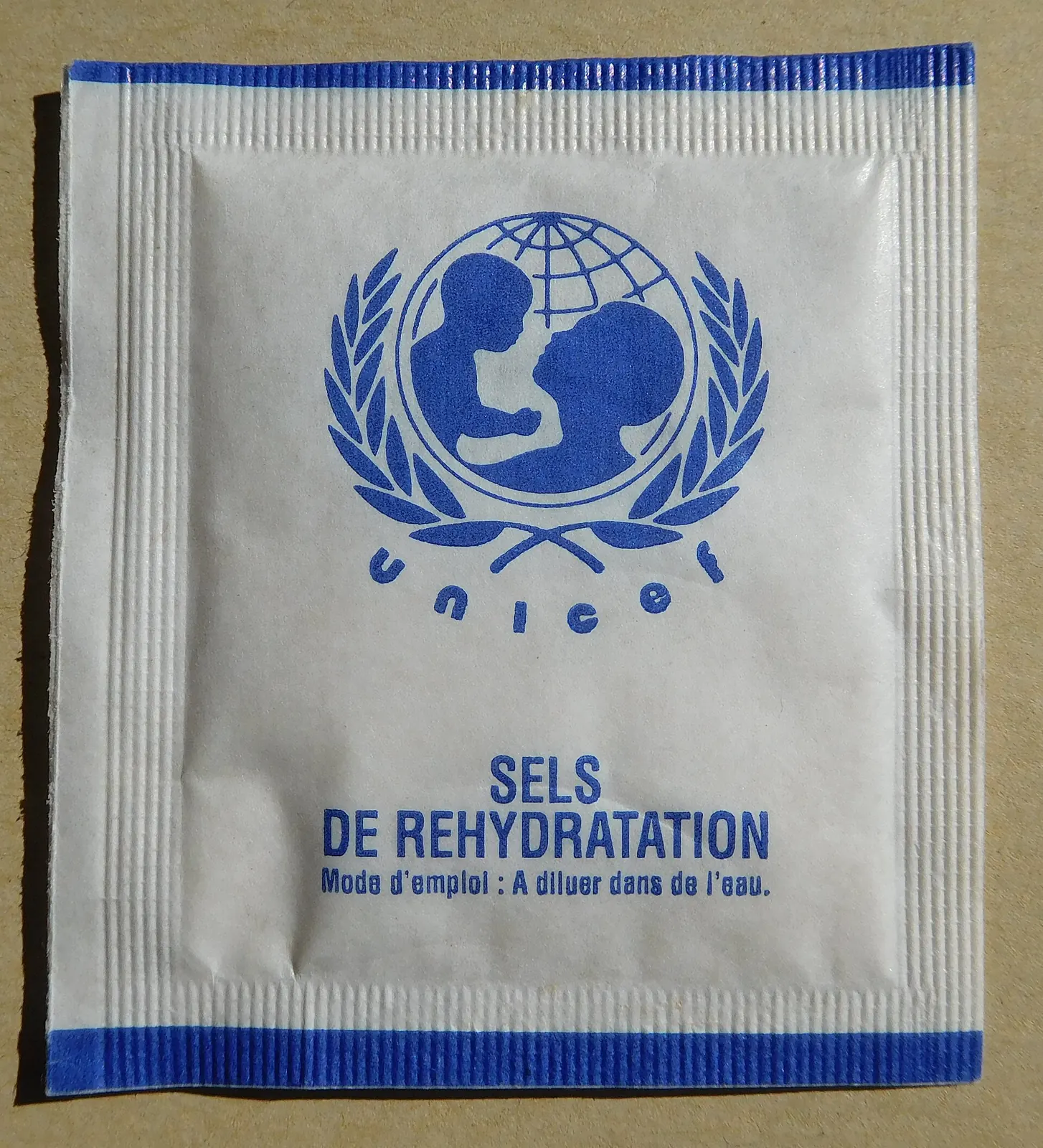
- Add salt: plain water alone over a long sweaty day dilutes blood sodium. Use ORS sachets or electrolyte tablets in every second bottle, and eat salty food (namkeen, buttermilk with salt) at stops.
- Check the output: pale straw urine is fine; dark yellow, or no need to pee for three hours, means you are behind.
Does heat really raise crash risk?
Yes, measurably. A twelve-year Spanish dataset found crash risk rose 2.9% on heatwave days and 7.7% for crashes involving driver errors, distraction or fatigue. The effect is small per trip, but it lands on top of everything else that goes wrong on a hot afternoon.
The team linked 118,489 injury crashes in the warm months of 2000 to 2011 (about 64 a day) to temperature data from 66 weather stations, adjusting for rain, weekday, month, year and holidays. On heatwave days, crash risk rose 2.9% (95% CI 0.7 to 5.1%). For crashes tied to driver performance, such as distraction, error, fatigue or sleepiness, it rose 7.7%, and each 1°C rise in maximum temperature added 1.1%. The limit: Catalonia is cooler than the Indian plains and the data are mostly car crashes, so the Indian effect could differ in either direction.
Read the paper (free)Indian data adds a timing twist. NCRB counted 95,984 of 4,64,029 road accidents in 2023 (20.7%) between 6 pm and 9 pm, the most of any three-hour block, and another 17.3% between 3 pm and 6 pm, and 15% between noon and 3 pm.
So the cool evening hours you would like to ride are also the busiest crash hours. The answer is to ride hard in the morning, not in the evening.
What riding schedule works in an Indian heatwave?
The schedule that works is a split day: start at first light, ride until about 11 am, sit out the heat, then add a short session from 4 pm and stop before full dark. On a 600 km day in May, that means most of the distance done before noon.
| Block | Typical air temp in a May heatwave | What to do |
|---|---|---|
| 5:00 to 8:00 | 28 to 33°C | Ride. Longest stint of the day, best air, light traffic. |
| 8:00 to 11:30 | 33 to 40°C | Ride with 15-minute stops every 90 minutes. Drink and soak your neck scarf. |
| 11:30 to 16:00 | 40 to 47°C | Stop. Lunch, shade, nap. This is when de Rome's 105-minute clock runs fastest. |
| 16:00 to 18:30 | 38 to 42°C | Short final stint to the night stop, ideally on a highway, not through towns. |
| After 18:30 | 32 to 36°C | Avoid. Peak crash window (6 to 9 pm holds 20.7% of accidents). |
The temperature bands are illustrative for a plains station on a heatwave day; check the IMD forecast for your route.
I plan fuel and rest stops about 250 km apart on long days, and in heat that spacing is too wide. Cut it to 120 to 150 km, which at highway pace is the 90-minute stint the lab data supports. My guide on how many km a day is realistic walks through the arithmetic, and the Iron Butt planning post covers stop cadence on very long days.

What gear works best in 40°C heat?
Mesh or heavily vented textile gear with CE armour is the best compromise: it keeps impact protection while letting moving air reach your skin. Do not ride in a T-shirt.
Heat discomfort is the main reason riders shed gear, and the de Rome team's survey work found riders far less likely to wear protective gear in hot weather, which is exactly when a fall on hot tarmac also burns.
- Jacket: mesh panels on chest, arms and back, with armour at shoulders, elbows and back. Close the vents when air goes above about 38°C and switch to evaporative cooling.
- Evaporative cooling: a wet cooling vest, a soaked neck tube or a wet cotton base layer under mesh. In dry Rajasthan air, evaporation works well and you re-wet every stop. In humid coastal air it barely works.
- Helmet: a light colour reflects sun; open all vents; a soaked thin balaclava helps for 30 to 40 minutes.
- Boots and gloves: keep them. Summer gloves with perforated palms are fine.
- Sun: sunscreen on any gap at the wrists and neck; UV is the reason forearms burn under mesh.
My touring packing list has the hot-weather kit separated out, and the gear page shows what I ride in.
How do you plan a summer ride across Rajasthan or the Deccan?
Plan around IMD's colour-coded warnings for your districts, not the national headline.
In the May 2026 spell, IMD ran a two-day red alert (very high risk of heatstroke) for parts of Uttar Pradesh and Madhya Pradesh and a five-day orange alert across much of the northwest and centre. A red alert on tomorrow's route means split the day or rest.
- Check the 5-day district warnings each evening for tomorrow's route.
- Set the start time so you finish 60% of the distance by 11 am.
- Mark the noon stop in advance: a town with a cool restaurant, a highway hotel or a temple with shade.
- Stage water: carry 3 litres between stops in desert stretches where pumps can be 80 km apart.
- Watch the engine: in stop-go traffic at 45°C, liquid-cooled bikes run the fan constantly. Kill the engine at long signals.
- Plan a recovery night with air conditioning if IMD forecasts warm nights, so day two does not start with a heat debt.
If your trip is flexible, the cheapest fix is the calendar. The monsoon breaks the Deccan heat in June; my post on monsoon onset dates for riders shows when each region cools. And the Yatri world page lists routes better saved for October to March.
What's new
- IMD issues severe heatwave warning for north and central India India TV, May 2026
- IMD plans percentile-based heat alerts as 2026 runs hot Business Today, May 2026
- Severe heatwave grips central and northwest India All India Radio News, May 2026
Questions people ask
Is it safe to ride a motorcycle at 45°C?
It is risky for more than an hour or two in full gear. Lab data project moderate hyperthermia in about 105 minutes at 35°C with a 30 km/h headwind, and 45°C is far worse because air is hotter than your skin. Ride early, stop through midday, and keep stints to about 90 minutes.
Should I open my jacket vents or close them in extreme heat?
Open them while the air is cooler than your skin, roughly below 35 to 37°C. Above that, moving air heats you, so close the vents and rely on a wet cooling vest or soaked base layer, re-wetting at every stop.
How much water should I drink on a hot ride?
There is no single number because sweat rates vary widely. Sip every 15 to 20 minutes, add electrolytes to every second bottle, and check that you still need to pee every two to three hours. Weighing yourself before and after a ride shows your own loss.
Is riding at night better in summer?
Cooler, yes; safer, no. NCRB's 2023 data put 20.7% of road accidents in the 6 to 9 pm window, and sleep research shows crash risk rises sharply between 2 and 5 am. Dawn starts beat night rides.
Sources
- de Rome L et al.: Can motorcycle riding in Australia really be that thermally stressful? Extreme Physiology & Medicine (2015)
- de Rome L et al.: Thermal and cardiovascular strain imposed by motorcycle protective clothing under Australian summer conditions, Ergonomics (2016)
- University of Wollongong: Motorcycle protective clothing, if it is too hot to wear, is it too hot to ride? (2014)
- Watson P et al.: Mild hypohydration increases the frequency of driver errors, Physiology & Behavior (2015)
- Basagaña X et al.: High ambient temperatures and risk of motor vehicle crashes in Catalonia, Environmental Health Perspectives (2015)
- India Meteorological Department: Heat wave and warm night criteria (FAQ)
- US National Weather Service: Heat Index equation and risk categories
- Jaisalmer climate table, IMD normals 1991-2020
- Nagpur climate table, 1991-2020 normals
- New Delhi (Safdarjung) climate table, IMD normals 1991-2020
- Hyderabad climate table, 1991-2020 normals
- Millennium Post: NCRB 2023 road accident data by time of day (2025)
- India TV: IMD severe heatwave warning (May 2026)

Sapta (Saptarshi Sarkar) is a mechanical engineer turned marketer in Bengaluru and a solo touring rider. He writes the seven Saptaverse blogs. Work with him or read more of RoadHook Rides.