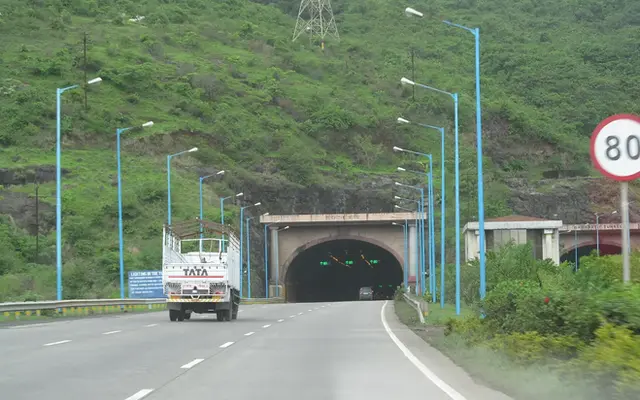
Dhaba food is usually safe on a highway ride when it is cooked to order, served steaming hot and comes from a busy kitchen; the real risks are untreated water, ice, raw salads and chutneys, and food that has sat warm for hours. Inspections back this up: Karnataka's April 2026 checks fined highway dhabas near Bengaluru about ₹1.45 lakh for hygiene lapses, and a Delhi study found E. coli in 61% of roadside drinking-water samples. Choose the dish and the water, not just the dhaba.
- Heat is the safe step: food cooked to order and served steaming is low risk almost anywhere.
- 61% of Delhi roadside drinking-water samples carried E. coli, and 100% had coliforms.
- 41 dhabas near Bengaluru were inspected in April 2026 and fined about ₹1.45 lakh in total.
- 68.8% of Pune street vendors failed FSSAI's own 100-point checklist; only 14% washed ingredients in potable water.
- 5 smileys on an FSSAI hygiene certificate means 81 to 100% on an audit; no certificate is normal and tells you nothing.
Riders ask this constantly. On xBhp, a member once asked whether anyone kept a database of good dhabas across India; the answer was that there are thousands per state, and one reply's practical advice was to stop where long-haul trucks stop.
That is a decent proxy for turnover, but it doesn't tell you what to order. This post uses inspection data, FSSAI's own rating system and two Indian field studies to build a checklist you can run in the minute it takes to park.
How risky is dhaba food, really?
The risk is real but concentrated: freshly cooked, boiling-hot food is low risk almost anywhere, while water, raw garnishes and anything held at room temperature carry most of it.
Heat kills most food-poisoning bacteria; what heat cannot fix is contamination added after cooking, by hands, wash water, cut onions, chutney or ice.
In April 2026, Karnataka's health department inspected 41 dhabas on the highways out of Bengaluru, including eight on the Nelamangala-Tumakuru road, nine on the Nelamangala-Kunigal stretch and eight on the Tumakuru-Chitradurga highway.
They bagged 16 samples for the lab and handed out about ₹1.45 lakh in fines for breaking food quality and hygiene norms, ₹85,000 of it on the Kunigal stretch alone. If the lab results showed more, the report said, stricter penalties and legal action could follow. The report named no dhaba and listed no single violation, which is itself the lesson: lapses are common enough to fine a whole highway, and invisible from the parking lot.
Curly Tales: Bengaluru highway dhabas fined over hygiene issues, 13 April 2026 (citing The New Indian Express)| Stretch (April 2026) | Dhabas inspected | Samples | Fines |
|---|---|---|---|
| Nelamangala-Tumakuru road | 8 | 4 | about ₹30,000 |
| Nelamangala-Kunigal stretch | 9 | 4 | ₹85,000 |
| Tumakuru-Chitradurga highway | 8 | not stated | ₹30,000 |
| All stretches | 41 | 16 | about ₹1.45 lakh |
Regular inspections of this kind check kitchen cleanliness, ingredient quality, storage and hygiene. Read the drive as a signal of how often basics slip, not as a verdict on any particular dhaba.

What do studies of Indian food vendors find?
They find the same pattern: handwashing, clean water and storage fail far more often than cooking itself. The most recent Indian study scored street vendors in Pune on FSSAI's own Clean Street Food Hub checklist.
Researchers observed and interviewed 170 street food vendors in an urban health centre's area of Pune between May and December 2025, scoring each on FSSAI's 100-point Clean Street Food Hub checklist. 68.8% were non-compliant, 13.5% needed improvement, 17.6% were satisfactory and none were exemplary. Only 32.9% had adequate handwashing facilities or lidded bins, 17% monitored frying-oil quality, 14% washed ingredients in potable water, 29.4% avoided smoking, chewing or spitting while handling food, and 21.8% had any food safety training. Limits: one city, street vendors rather than highway dhabas, and a cross-sectional design; some sex-difference results are reported inconsistently.
Read the paper (free)See the data as a table
| Vendors meeting the item (%) | |
|---|---|
| Adequate handwashing facility | 32.9 |
| Lidded waste bin | 32.9 |
| No smoking, chewing or spitting while cooking | 29.4 |
| Any food safety training | 21.8 |
| Monitor frying oil quality | 17 |
| Wash ingredients in potable water | 14 |
Source: Deshmukh et al., BMC Public Health 2026 (170 vendors, Pune, 2025) · Street vendors, not highway dhabas, but the failure points are the ones a rider can see.
Read that chart as a list of things to look for. Hand-washing, water for washing vegetables and old frying oil are invisible in the food itself, but visible at the counter:
- Is there a basin with soap?
- Does the oil look black and smell acrid?
- Are cut onions sitting uncovered?
Is the water at a dhaba safe to drink?
Assume not, unless it comes sealed. Water is the single most consistent failure in Indian studies of roadside food, and on a ride you drink far more than you eat. A Delhi study tested water sold by roadside vendors across all four zones of the city.
The team collected 36 drinking-water samples from roadside vendors, nine from each zone of Delhi, in sterile bottles kept at 1 to 4°C, and tested them for total coliforms by the most-probable-number method and for specific pathogens. Every sample contained coliforms, from 14 to more than 1,600 per 100 ml, outside both Indian standards and WHO guidelines in the authors' assessment. E. coli, the marker of faecal contamination, was found in 22 samples (61%), Pseudomonas aeruginosa in 19 (53%), Salmonella in 9 (25%) and Staphylococcus aureus in 5 (14%). Limits: a small sample from one city a decade ago, and vendor water rather than water served at dhabas.
Read the paper (free)See the data as a table
| Samples positive (% of samples) | |
|---|---|
| Any coliforms | 100 |
| E. coli | 61 |
| P. aeruginosa | 53 |
| Salmonella | 25 |
| S. aureus | 14 |
Packaged water is regulated more tightly than it used to be. FSSAI has classified packaged drinking water and mineral water as high-risk foods, which means annual risk-based inspections, inspection before a licence is granted and yearly third-party audits for central licensees; the separate BIS certification requirement was dropped in October 2024.
For riders that means:
- buy sealed bottles with an FSSAI licence number;
- check the cap seal;
- skip ice;
- treat a jug of "filter water" on the table as unknown.
Where to carry and how much to drink on a long day is in what to eat on long motorcycle rides in India.
What do FSSAI registration and hygiene ratings tell you?
An FSSAI number tells you the dhaba is on the regulator's books; a hygiene rating tells you someone actually audited the kitchen. Every food business must register or hold a licence and display the number.
| Tier | Annual turnover before | From 1 April 2026 |
|---|---|---|
| Basic registration | up to ₹12 lakh | up to ₹1.5 crore |
| State licence | ₹12 lakh to ₹20 crore | ₹1.5 crore to ₹50 crore |
| Central licence | above ₹20 crore | above ₹50 crore |
Most small dhabas fall under basic registration, the lightest tier.
The Hygiene Rating Scheme is the stronger signal. It covers food service businesses including hotels, restaurants and dhabas, which are audited against a checklist by an FSSAI-approved agency or a food safety officer. The score becomes a rating of one to five smileys, valid for two years.
| Smileys | Category | Checklist score |
|---|---|---|
| 5 | Excellent | 81 to 100% |
| 4 | Very good | 61 to 80% |
| 3 | Good | 41 to 60% |
| 2 | Needs improvement | 21 to 40% |
| 1 | Urgent improvement | 20% or below |
FSSAI's guidance sets out who can be rated (food service establishments such as hotels, restaurants, cafeterias and dhabas, plus sweet and meat shops), how a checklist score is converted to a percentage and then to one to five smileys, and that ratings last two years with spot audits allowed on complaint. A business that scores low can be re-audited only after three months, and only businesses rated 3, 4 or 5 display the certificate. It also expects one trained Food Safety Supervisor per 25 food handlers. Limit: the scheme is voluntary, so a highway dhaba with no certificate tells you nothing either way.
Read the guidance (free)So a displayed 4 or 5 smiley certificate is meaningful; its absence is normal. How to read the FSSAI number on packaged food you buy at the same stop is in how to read an FSSAI food label.

How do you choose a safe dhaba in the minute you have?
Look for turnover, heat and clean water, in that order. These are the signs you can check from the parking area and the counter.
- Busy, with trucks or buses parked. High turnover means food doesn't sit. This is the xBhp advice, and it is the strongest single proxy.
- Cooking in view. A working tandoor, a tawa or a kadai on the flame means food is made to order.
- Order what is cooked now. Tandoor roti, dal fry or tadka, egg bhurji, freshly fried pakoras, tea boiled in front of you. If you order from a big pot, ask for it reheated until it bubbles.
- Skip the raw extras when unsure. Raw onion rings, chutneys, raita and cut salad are washed in whatever water the kitchen has.
- Sealed water only. Check the cap seal and the FSSAI number; refuse ice.
- Wash or sanitise your own hands. Your gloves and handlebar grips have been everywhere; this one is in your control.
- Look at the oil. Very dark, foamy oil that smells acrid has been reused too long; the Pune study found only 17% of vendors monitored it.
How does your stop score?
Use this to check what you just read. Score each sign from 0 (no) to 1 (yes); the tool weights them and converts the result into FSSAI's one-to-five band, as a rough guide.
Quick dhaba check
At the defaults, a busy dhaba with a live tandoor and sealed water but no soap and uncovered chutney scores 75%, a 4. That fits the advice: eat the hot food, skip the chutney, use your own sanitiser.
With these example inputs (the calculator's defaults), calculated in this post from my own checklist weights (20 + 25 + 20 + 10 = 75%), banded on the 1 to 5 scale of the FSSAI Hygiene Rating Scheme guidance (61 to 80% = 4).

Is dhaba food worse than restaurant or packaged food?
Not necessarily. A small dhaba cooking roti and dal to order can be safer than a large restaurant reheating trays from a buffet.
Packaged snacks have their own adulteration problems: FSSAI's 2024 spice checks found 474 of 4,054 samples failing standards, a reminder that a sealed pack is not automatically clean.
The difference is that at a dhaba you can see the risk points.
The economics of fast, high-turnover Indian kitchens, which are why most roadside food is cooked fresh in the first place, are in how the Bengaluru darshini model works, and spice adulteration tests are in spice adulteration in India and how to test it. Route planning for the rides themselves lives on Yatri, the ride atlas.
What's new
- Karnataka inspects 41 highway dhabas near Bengaluru and fines them about ₹1.45 lakh Curly Tales, Apr 2026
- FSSAI raises the basic-registration ceiling to ₹1.5 crore from April 2026 S.S. Rana & Co., May 2026
- Two-thirds of Pune street vendors fail FSSAI's hygiene checklist BMC Public Health, Aug 2026
Questions people ask
Is it safe to eat at dhabas on highways?
Usually, if you pick busy places and order food cooked to order and served hot. Most problems come from water, ice, raw sides and food held for hours, not from freshly cooked dal and roti.
Should I drink tea at a dhaba?
Tea boiled in front of you is one of the safer things on the menu, because the water and milk are boiled. The cup's wash water is the remaining risk.
Is dhaba water safe to drink?
Treat it as unknown. In a Delhi study, all 36 roadside water samples had coliforms and 61% had E. coli. Buy sealed bottles and skip ice.
Do dhabas need an FSSAI licence?
Every food business needs FSSAI registration or a licence and must display its number. Small dhabas usually hold basic registration, which since April 2026 covers turnover up to ₹1.5 crore.
What does a hygiene rating smiley mean?
It is FSSAI's audited hygiene score: five smileys means 81 to 100% on the checklist, one means 20% or below. Ratings last two years and are voluntary.
More from the Taste Lab on Rasa.
Sources
- Curly Tales: Bengaluru highway dhabas fined over hygiene issues, citing The New Indian Express (2026; source for 41 dhabas, 16 samples, ₹1.45 lakh)
- Deshmukh et al.: Factors associated with compliance among urban street food vendors with the FSSAI checklist, BMC Public Health 26:2615 (2026)
- Chauhan, Goyal, Varma, Jindal: Microbiological evaluation of drinking water sold by roadside vendors of Delhi, Applied Water Science (2015)
- FSSAI: Guidance Document, Hygiene Rating Scheme (source for smiley bands, two-year validity, scope)
- S.S. Rana & Co.: FSSAI raises turnover limits for food business registration and licensing (2026)
- IASGyan: Packaged drinking water classified as high-risk food (2024)
- Free Press Journal: 474 spice samples failed the FSSAI quality test (2024)
- xBhp: Enquiry about dhabas (forum thread) (accessed 2026)

Sapta (Saptarshi Sarkar) is a mechanical engineer turned marketer in Bengaluru and a solo touring rider. He writes the seven Saptaverse blogs. Work with him or read more of Foodblog.