
Altitude sickness on a Ladakh bike trip comes from falling air pressure: at Leh (about 11,483 ft, 3,500 m) each breath carries roughly 65% of the oxygen it does at sea level, and at the 16,404 ft (5,000 m) passes it is closer to half. Acute mountain sickness (headache plus nausea, poor sleep or fatigue) is common and usually passes in 12 to 48 hours if you stop climbing. Confusion, a stumbling walk, or breathlessness at rest are signs of HACE or HAPE, and the treatment for both is to descend at once.
- 65%: the oxygen pressure at Leh compared with sea level; the big passes sit below 50%.
- 1,640 ft (500 m) a night is the most your sleeping altitude should rise above 9,843 ft (3,000 m) (CDC, WMS).
- AMS is common and passes in 12 to 48 hours if you stop climbing; HAPE and HACE kill.
- 4.5 times steeper: AMS risk rises that much faster with altitude after flying in than after a road ascent.
- 984 ft (300 m) of descent usually eases AMS; for HAPE or HACE, keep going down.
Riders are a special case. A motorcycle lets you gain 6,562 ft (2,000 m) of sleeping altitude in a day, you work harder than a passenger in a car, you are cold for hours, and you drink less because stopping is a chore.
This post walks through the physics, the three illnesses, the ascent rules that the CDC and the Wilderness Medical Society (WMS) publish, and how to turn them into a riding plan. It is not medical advice; carry it to your doctor along with your route.
Why does thin air make you sick above 9,843 ft (3,000 m)?
The air at altitude is still 20.9% oxygen; there is simply less air. Barometric pressure falls roughly exponentially with height, so the partial pressure of oxygen, which is what pushes oxygen from your lungs into your blood, falls with it.
The CDC Yellow Book puts inspired oxygen at about 10,007 ft (3,050 m) at 69% of the sea-level value, and notes that a sudden arrival at that height drops arterial oxygen saturation (SpO2) to about 88 to 91%.
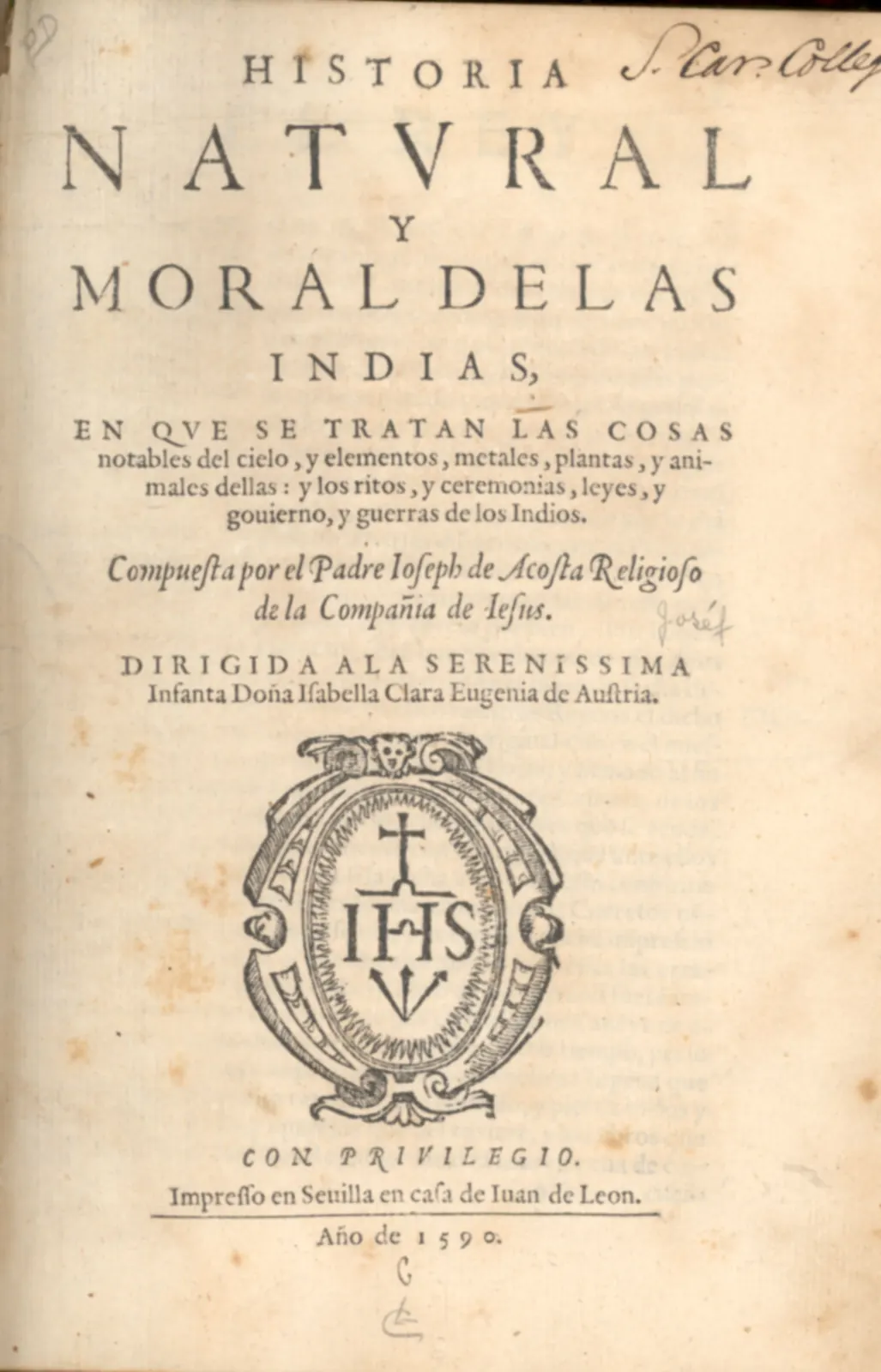
In about 1570, the Jesuit José de Acosta crossed the Andes from Lima with fourteen or fifteen companions by the pass of Pariacaca, over 14,000 ft (about 4,300 m). He had taken advice from people who knew the road. Even so, as he wrote in his Natural and Moral History of the Indies (1590), a sudden, strange pang struck him so hard that he nearly fell from his mule.
Retching followed: first food, then phlegm, then yellow and green bile, and finally blood. He felt he might bring up his soul too, and wrote that he would surely have died had it gone on. Some of his companions asked for confession, thinking they were dying. It lasted three or four hours, until the party came down to a lower height. Acosta blamed the air, which he judged too thin and delicate for human breathing. He was close: the air up there has the same share of oxygen, but far less pressure behind it.
José de Acosta: The Natural & Moral History of the Indies, Book III ch. 9 (Hakluyt Society edition, vol. 1)How the body adjusts
The body answers in stages:
- Within minutes: you breathe faster and your heart rate climbs.
- Over 3 to 5 days: the kidneys dump bicarbonate so the blood can tolerate that faster breathing, red-cell production starts, and sleep slowly settles.
Altitude illness is what happens when you climb faster than that adjustment can keep up. The CDC says people can adapt to moderate hypoxia up to about 17,060 ft (5,200 m), but only if they give the acute phase those first few days.
See the data as a table
| Oxygen pressure (%) | |
|---|---|
| Bengaluru (3,018 ft, 920 m) | 89.6 |
| Manali (6,726 ft, 2,050 m) | 78.0 |
| Leh (11,483 ft, 3,500 m) | 64.9 |
| Kaza (12,467 ft, 3,800 m) | 62.4 |
| Baba Mandir, Sikkim (about 13,123 ft, 4,000 m) | 60.8 |
| Gurudongmar Lake (~16,896 ft, 5,150 m) | 52.3 |
| Khardung La, signposted (18,380 ft, 5,602 m) | 49.2 |
| Umling La (19,022 ft, 5,798 m) | 47.9 |
| Mig La (19,400 ft, 5,913 m) | 47.1 |
Source: Computed from the International Standard Atmosphere pressure formula; checked against the CDC Yellow Book figure of 69% at 10,007 ft (3,050 m) · Real pressure varies a few percent with weather and season; it runs lower in winter. Heights are signposted or commonly cited values.
Two numbers from that chart matter for planning:
- Leh sits near the 65% line, which is why Ladakh Tourism asks every arrival to rest 48 hours before going higher.
- Every famous pass sits below 50%: Khardung La, Tanglang La, Umling La, the new Mig La. You are not meant to sleep there, and you are not built to linger.
Use this to check what you just read. Enter any altitude on your route to see how much air you are working with.
How much air is there at your altitude?

What is the difference between AMS, HAPE and HACE?
AMS is the common, self-limiting illness; HACE and HAPE are the rare, lethal ones, and they can arrive with or without AMS first. The table below follows the CDC Yellow Book (2026 edition, by Peter Hackett and David Shlim) and the WMS 2024 guideline.
| Illness | What it feels like | When it shows | What to do |
|---|---|---|---|
| AMS (acute mountain sickness) | Headache plus at least one of: loss of appetite, nausea or vomiting, dizziness, fatigue | 2 to 12 hours after arrival, often after the first night | Stop climbing. Rest, fluids, paracetamol or ibuprofen. Descend 984 ft (300 m) or more if it worsens |
| HACE (cerebral oedema) | Confusion, drowsiness, ataxia (cannot walk heel to toe in a line), behaviour change | Usually after AMS; rare below 14,108 ft (4,300 m) | Descend immediately with an escort. Oxygen and dexamethasone if available. Coma can follow within 24 hours |
| HAPE (pulmonary oedema) | Breathless out of proportion to effort, then at rest; dry cough, later pink frothy sputum; SpO2 of 50 to 70% is common | Usually in the first days at altitude; can worsen over 1 to 2 days | Descend at once, keep warm, oxygen. Exertion makes it worse, so do not ride it out |
One more rule from the CDC is worth memorising: symptoms that start after three days at a stable altitude are probably not AMS. Look for something else, such as dehydration, an infection or carbon monoxide from a heater in a closed room.
Why are riders more exposed than people who fly into Leh?
Flying in is the fastest ascent of all, and the data show it. A 2023 review in the Journal of Travel Medicine by Johannes Burtscher, Peter Hackett and colleagues pooled 12 studies of 11,021 people and found AMS risk rose about 4.5 times faster with altitude after air travel than after slower ascent on foot or by road.
So the road is better than the plane, in principle.
How riders throw away the road's advantage
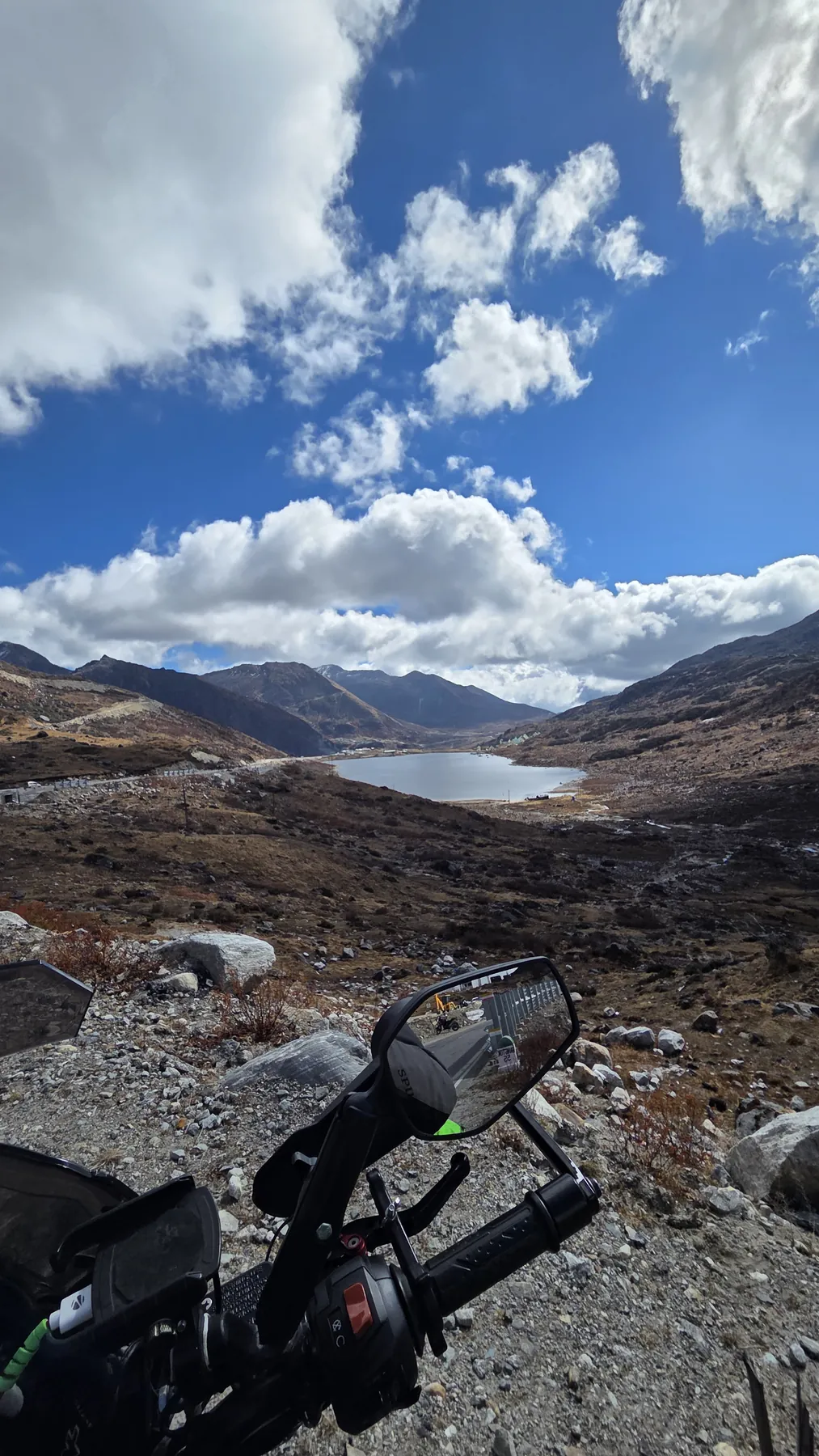
The trouble is how riders use the road. A motorcycle makes it easy to cover Manali to Sarchu or Srinagar to Leh in one push, and the guideline counts sleeping altitude, not the number of days on the road. Riding also adds four things that a car passenger avoids:
- Exertion. Holding a loaded bike on broken surface, pushing it through water crossings and picking it up after a fall are hard work at 50% oxygen.
- Cold. Wind at 40 km/h on a 5 °C morning feels several degrees colder, and a cold, shivering rider burns energy and makes poorer decisions. The wind chill calculator shows how fast it adds up.
- Dehydration. Dry air and fast breathing pull water out of you, and riders avoid drinking to avoid stops.
- Ego and schedule. A group with a fixed leave window keeps going when one rider has a headache.
The authors pooled 12 observational studies covering 11,021 unacclimatised adults who ascended within one to three days to 19 destinations between 7,218 and 14,957 ft (2,200 and 4,559 m). AMS incidence rose linearly with altitude in both groups, but the slope after air travel was 0.094 against 0.021 for slower foot, car or mixed ascents, about 4.5 times steeper. In the air-travel data, incidence climbed from about 39% at 10,991 ft (3,350 m) to 84% at 12,270 ft (3,740 m). Placebo arms of drug trials agreed, with 70 to 100% AMS after very rapid ascents. The limit: the studies used different AMS definitions, and individual factors such as fitness, sleep and illness were not controlled.
Read the paper (free)How common is altitude sickness in Leh, really?
It depends heavily on whether you have been high before. CDC figures put AMS at about 25% among people sleeping above 8,038 ft (2,450 m) in Colorado, and close to 50% when people fly straight to above 11,155 ft (3,400 m). Indian data from Leh show how much previous exposure protects.
Leh has no big study of ordinary tourists that I could open, so the nearest match is Lhasa, a city at 12,001 ft (3,658 m) that tourists reach by plane, train or road. Gonggalanzi and colleagues (Archives of Public Health, 2016) surveyed 2,203 tourists in 7 hotels within about 3 days of arrival: 36.7% had AMS. It hit 42.6% of those who flew in against 35.9% of those who came any other way, and 26.8% of people who had been at altitude in the previous 3 months against 43.2% of those who had not.
So what moves your odds? Speed, mostly. In the Burtscher review, AMS rose about 11.5% for every 328 ft (100 m) gained after a flight, and only about 2.1% per 328 ft (100 m) on slower foot or road ascents.
The same review notes that symptoms typically peak 18 to 22 hours after arrival and settle by about 48 hours, which is the window the Ladakh advisory covers with its 48 hours of rest.
My estimate, not a measured figure: a first-timer who climbs slowly and rests 2 days in Leh can hope to land near the low rates of the Leh study, where everyone rested on arrival; one who rushes the climb and works hard on day one should expect fly-in numbers, or worse. None of this replaces a doctor: consult one before the trip, especially with any heart or lung condition.
A pilot study of 1,228 healthy Indian male lowlanders aged 18 to 45 who flew into Leh (11,483 ft, 3,500 m), tracked for five days with the 2018 Revised Lake Louise Questionnaire. Overall AMS was 4.4%, but it was 10.5% in first-time arrivals against 2.6% in people who had been inducted before, an odds ratio of 4.5. Headache affected 6.4% overall. The rates are low because everyone had enforced bed rest on arrival and was advised to take ibuprofen, and the sample was young, fit men, so a tourist group riding hard will do worse.
Read the paper (free)Read together, the two papers say three things:
- Rest on arrival works.
- A previous trip helps a lot (10.5% against 2.6% in the Leh study).
- Speed of ascent is the variable you control.
That is consistent with what the WMS guideline says about sleeping altitude being more important than the highest point you touch during the day.

How fast can you safely climb on a bike?
Above 9,843 ft (3,000 m), raise the altitude you sleep at by no more than 1,640 ft (500 m) a night, and add a rest day for every 3,281 ft (1,000 m). That is the CDC and WMS rule, and the Ladakh Tourism advisory repeats it. Day rides higher are fine as long as you come back down to sleep.
| Risk factor | Low | Medium | High |
|---|---|---|---|
| Past altitude illness | None, or mild AMS | Moderate to severe AMS | Any HAPE or HACE |
| Sleeping altitude on night 1 | Below 9,022 ft (2,750 m) | 9,022 to 11,155 ft (2,750 to 3,400 m) | Above 11,155 ft (3,400 m) |
| Daily rise above 9,843 ft (3,000 m) | 1,640 ft (500 m) or less | More than 1,640 ft (500 m), with extra rest days | More than 1,640 ft (500 m), no rest days |
The table is adapted from CDC Yellow Book Table 3.5.1, which assumes you start below 3,937 ft (1,200 m). Bengaluru at about 3,018 ft (920 m) qualifies; a rider who has spent a week in Manali at 6,726 ft (2,050 m) starts with an advantage.
The two classic routes against the rule
- Via Srinagar, the climb is gradual: Sonamarg near 8,858 ft (2,700 m), Kargil near 8,858 ft (2,700 m), then Leh.
- Via Manali, the classic camp at Sarchu is around 14,108 ft (4,300 m), a jump of over 6,562 ft (2,000 m) from Manali in one day, which breaks the rule badly.
That single fact is the strongest argument in the Manali versus Srinagar question, and it is why I would build any Ladakh plan around a Srinagar entry and a Manali exit. The day-by-day version is in the Ladakh acclimatisation plan.

Should riders take Diamox?

Acetazolamide (Diamox) speeds acclimatisation and is the only drug in the WMS guideline that does; dexamethasone prevents symptoms but does not help you adapt. It is a prescription drug, it causes tingling fingers and more urination, and it is a sulfonamide, so allergies matter.
Talk to a doctor before the trip, not at the pharmacy in Leh.
Why the doses differ
The doses differ between sources, which is another reason to ask a doctor:
- CDC Yellow Book, prevention: 125 mg every 12 hours, starting the day before ascent (250 mg twice daily above 100 kg body weight).
- CDC Yellow Book, treatment: 250 mg twice daily.
- Ladakh Tourism advisory: 250 mg twice daily, starting two days before arrival.
The lower dose works for most people with fewer side effects.
What does a rider's altitude checklist look like?
- Plan sleeping heights, not distances. Write the altitude of every night stop next to the route. No night more than 1,640 ft (500 m) above the last once you cross 9,843 ft (3,000 m).
- Rest 48 hours in Leh if you arrive fast, as the Ladakh Tourism advisory asks of every arrival.
- Drink 3 to 4 litres a day (the Ladakh advisory figure) and carry a hydration bladder so drinking does not need a stop.
- Keep the pass stops short. Photos at Khardung La, then go. The time above 16,404 ft (5,000 m) is what hurts.
- Agree the turn-back rule before the trip: any rider with ataxia, confusion or breathlessness at rest goes down, the group waits, and nobody argues.
- Know where oxygen is. SNM Hospital in Leh has it, some hotels carry concentrators, and Army and ITBP posts along the highways may help in an emergency.
Photos at Khardung La, then go. The time above 16,404 ft (5,000 m) is what hurts.
For the passes themselves and their heights, see the highest motorable passes list, and for the full route plan, the Leh Ladakh bike trip guide.

What's new
- BRO's Project Himank opens Mig La at 19,400 ft (5,913 m), now the world's highest motorable road, above Umling La Autocar India, Oct 2025
- CDC publishes the 2026 Yellow Book chapter on high-altitude travel, with updated acetazolamide dosing and risk table CDC, Apr 2025
- Ladakh Tourism keeps its 48-hour acclimatisation advisory and oxygen points list for the 2026 season Ladakh Tourism, 2026
The Mig La story, including what a road at about 19,400 ft (5,900 m) does to a rider, is in the Mig La post. The rest of the Ride Atlas lives on the Yatri page.
Questions people ask
Can I avoid altitude sickness by eating more carbs?
Some riders on forums swear by a high-carbohydrate diet, but neither the CDC chapter nor the WMS guideline lists diet as a prevention measure. Eat normally, keep eating (loss of appetite is itself an AMS symptom), and rely on slow ascent.
Is it safe to ride Khardung La on my first day in Leh?
No. Khardung La is signposted at 18,380 ft (5,602 m), about 6,890 ft (2,100 m) above Leh. The Ladakh advisory asks for 48 hours of complete rest in Leh before going higher, and Khardung La is usually done on day three or later as a day trip that returns to Leh.
Does fitness protect me from AMS?
No. Fitness does not predict who gets AMS, and the Burtscher review found younger people were affected more often. Fit riders sometimes fare worse because they push harder on day one.
My carburetted bike also struggles at altitude. Is that the same problem?
It is the same physics. A carburettor meters fuel by volume, so in thin air the mixture runs rich and power drops. My carburetted Pulsar NS200 at times could not go faster than about 40 km/h on the 2022 Gurudongmar ride. Fuel-injected bikes compensate with a pressure sensor; your body compensates over days.
How far down do I need to go if someone is ill?
The CDC says AMS usually improves after a descent of at least 984 ft (300 m). The Ladakh advisory recommends 1,640 to 3,281 ft (500 to 1,000 m) in an emergency. For HACE or HAPE, go down until symptoms clearly improve, and do not let the patient ride.
Sources
- CDC Yellow Book 2026: High-Altitude Travel and Altitude Illness (Hackett and Shlim) (2025)
- Luks AM et al., Wilderness Medical Society Clinical Practice Guidelines for the Prevention, Diagnosis, and Treatment of Acute Altitude Illness: 2024 Update, Wilderness & Environmental Medicine (2024)
- Burtscher J et al., Flying to high-altitude destinations: Is the risk of acute mountain sickness greater? Journal of Travel Medicine (2023)
- Unnikrishnan A et al., Does Lake Louise questionnaire interpret high-altitude headache as AMS? Indian Journal of Medical Research (2024)
- Ladakh Tourism Department: Travel advisory and AMS guidance (2026)
- Autocar India: Mig La pass at 19,400 ft becomes world's highest motorable road (2025)
- Team-BHP: Leh travelogue with altitude sickness and Diamox FAQ
- Sapta: Gurudongmar by bike (the carburetted NS200 at altitude) (2022)
- José de Acosta: The Natural & Moral History of the Indies, vol. 1, Hakluyt Society edition (1590; English 1604) (source for the story: the Pariacaca crossing, Book III ch. 9)

Sapta (Saptarshi Sarkar) is a mechanical engineer turned marketer in Bengaluru and a solo touring rider. He writes the seven Saptaverse blogs. Work with him or read more of RoadHook Rides.


