
Solo bike trip safety in India is mostly crash safety, because two-wheeler riders made up 44.8% of India's 1,72,890 road deaths in 2023, and most of those deaths were on rural roads and highways. A good solo plan has four parts: someone who always knows where you are (live tracking plus a shared route), fixed check-in times with a clear rule for when they raise the alarm, a hard cut-off so you are off the road before dark, and kit that makes you visible and survivable. Everything else, from route choice to stop spacing, hangs off those four.
- 44.8% of India's 1,72,890 road deaths in 2023 were two-wheeler users; 68.4% of all deaths were in rural areas.
- Two tracking layers: phone live location plus a tracker or tag on the bike, because the phone can fall, die or go down with you.
- A check-in needs a rule: fixed times, a grace period, and a written escalation that ends with a call to 112.
- 6 to 9 pm is India's worst three-hour block for crashes (20.7%, NCRB 2023); be off the road before dark.
- 42% and 37%: lower death risk with a helmet, lower injury-crash risk with reflective or fluorescent clothing.
When riders ask on forums whether a solo trip is "safe", the replies usually talk about people and places: is the region friendly, will someone help. That matters, but the data says the bigger risk is the road itself.
This post takes a systems view for riders past their first trip: where Indian road deaths actually happen, what a tracking and check-in protocol should look like, how to handle zones with no network, and which simple gear choices have measured effects. I use my own planning habits from solo trips since 2017 as the worked example.
Where do touring riders actually die on Indian roads?
They die mostly outside cities and on the faster roads. Of India's 1,72,890 road deaths in 2023, 68.4% were in rural areas, and national highways alone accounted for 36.5%, according to MoRTH's Road Accidents in India 2023 report, released in August 2025.
National and state highways together are about 4.9% of the road network but carried 59.3% of deaths (ThePrint, citing MoRTH data).
See the data as a table
| Share of 1,72,890 deaths (%) | |
|---|---|
| National highways | 36.5 |
| State highways | 22.8 |
| Other roads | 40.7 |
Source: MoRTH, Road Accidents in India 2023, via PTI/The Week · National and state highways are about 4.9% of the road network (ThePrint, citing MoRTH data).
| Measure (India, 2023) | Value | What it means for a solo tourer |
|---|---|---|
| Total road deaths | 1,72,890 | About 20 deaths an hour |
| Two-wheeler users' share of deaths | 44.8% (MoRTH); 45.8% in NCRB's count | You are in the most exposed group on any road |
| Rural share of deaths | 68.4% | Crashes happen where help is far away |
| Deaths on national highways | 63,112 (36.5%) | Your fastest road is also your riskiest |
| Deaths linked to over-speeding | 68.1% | Speed is the factor you control most |
| Accidents between 6 and 9 pm (NCRB) | 20.7%, the highest three-hour block | Dusk is the worst time to still be riding |
For the full picture of two-wheeler deaths, read my post on what India's road-death data means for touring riders. The headline for this post is simpler: a solo safety plan should be built around a crash on a rural highway in the evening, with nobody else there.

What should a solo rider's tracking set-up look like?
Use two independent ways for someone to find you: a live location share from your phone, and a separate tracker or tag on the bike that does not depend on your phone staying mounted and charged. Then send your contact the planned route and night stops, so they have something to compare against.
On 19 July 2026 a 42-year-old rider from Hyderabad was riding solo from Padum, in Ladakh's Zanskar valley, towards Lahaul. That day he texted his wife that he was on his way from Padum to Lahaul. When she called that afternoon, his phone was switched off. The family heard of an accident the next day.
Searchers found his broken motorcycle in a stream below the Darcha–Shinku La road, and with it his helmet, his phone and his travel bag. The State Disaster Response Force, police, local volunteers and drone operators worked the riverbanks; on 1 August the Lahaul-Spiti police said no trace of him had been found and the search was continuing.
Siasat Daily: On Himachal trip, Hyderabad biker goes missing after accident (1 August 2026)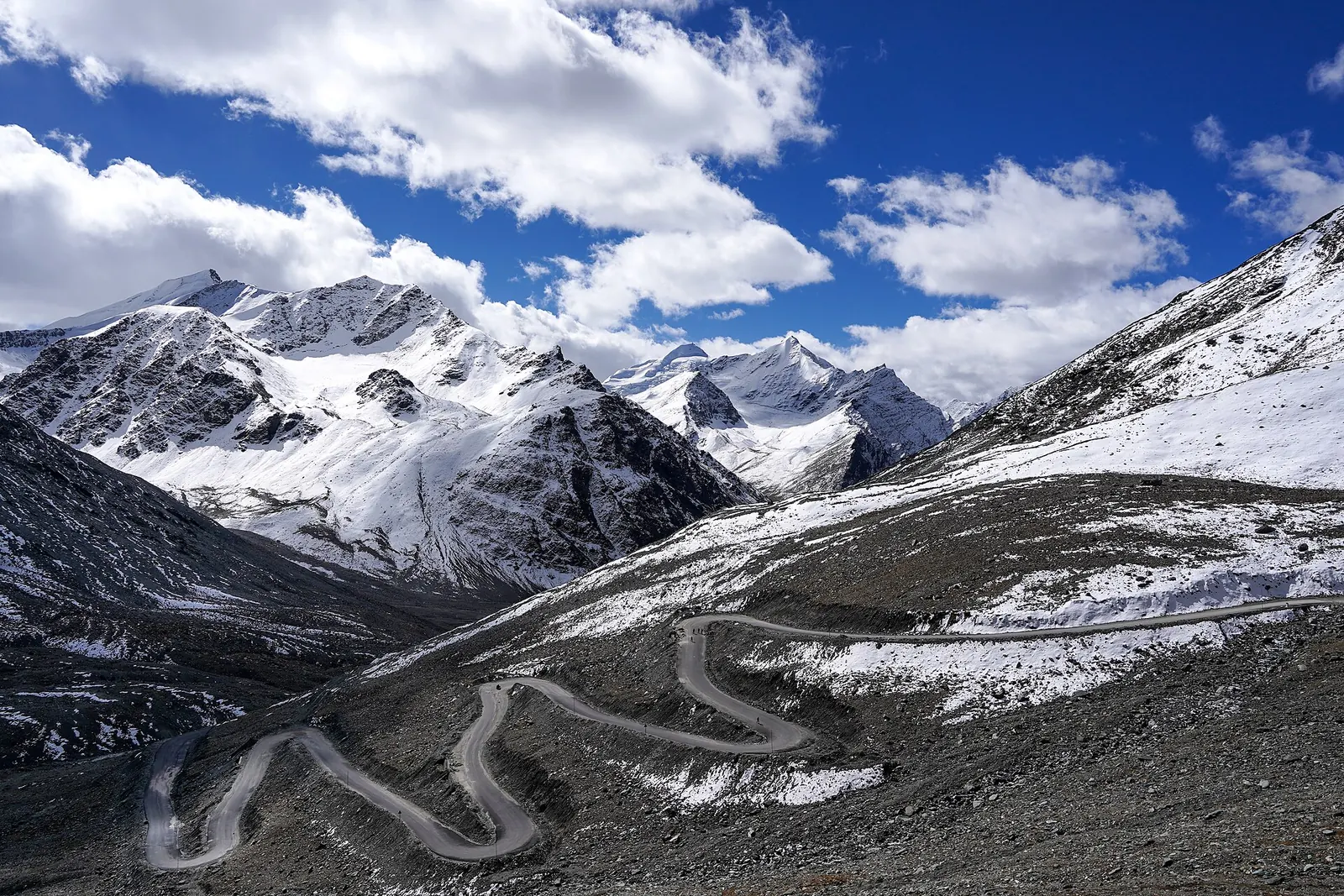
Two things in that account shape this plan. The text naming his route was what his family had to go on. And the phone, the only tracker many solo riders carry, ended up in the same stream as the bike.
I have had a small version of the same scare. On the Sikkim ride in November 2025, my phone fell off its holder near Kalyani on 19 November. I found it, and the moment is in the video, but for those minutes the phone was gone. A phone is a single point of failure: it can fall, overheat, lose signal or run flat.
On the KTM 390 Adventure X Plus I also run an Onelap LocoShield GPS tracker and a Samsung SmartTag2. I fitted them for security, but they are also a second way to find the bike that does not depend on the phone.
| Layer | What it does | Fails when |
|---|---|---|
| Phone live location (shared with one or two people) | Real-time position on a map | Phone falls, dies, overheats or loses network |
| Hardwired GPS tracker on the bike (SIM-based) | Bike position and movement history from the bike's battery | No mobile network; but it reports the last known point once back in coverage |
| Bluetooth item tag | Locates the bike or bag via nearby phones | Remote areas with few phones around |
| Written route and night stops shared before the day | Gives your contact a plan to compare against | Never, as long as you update it when plans change |
How should check-ins and escalation work?
Check in at fixed points, not "when I get a chance", and agree in advance on exactly what your contact does if a check-in is missed.
A missed check-in without a rule just creates worry. A missed check-in with a rule creates action.
- Morning message: today's route, planned stops, night stop and expected arrival time.
- Stop check-ins: a short message at each planned stop. I stop roughly every 250 km on long days, so that is three or four messages on a 1,000 km day.
- Arrival message: on reaching the night stop, with the hotel or homestay name.
- Grace period: agree on one, for example 90 minutes after an expected check-in in network areas, longer in known no-network zones.
- Escalation, step one: your contact checks the tracker's last position and calls your phone.
- Escalation, step two: if there is no answer and the tracker shows no movement, they call the night-stop hotel and then 112 with your last known location and route.
- Dead-zone note: before a known no-network stretch, send "entering no-network zone, expect me at X by Y". The grace period runs from Y.
What do you do where there is no mobile network?
Where there is no network, the plan shifts from live tracking to time-boxing: tell someone when you are entering the dead zone and when you expect to come out, ride it in daylight with plenty of fuel, and register at police or army check-posts where they exist. High passes in Ladakh and North Sikkim, and long stretches between towns, often have no usable signal.
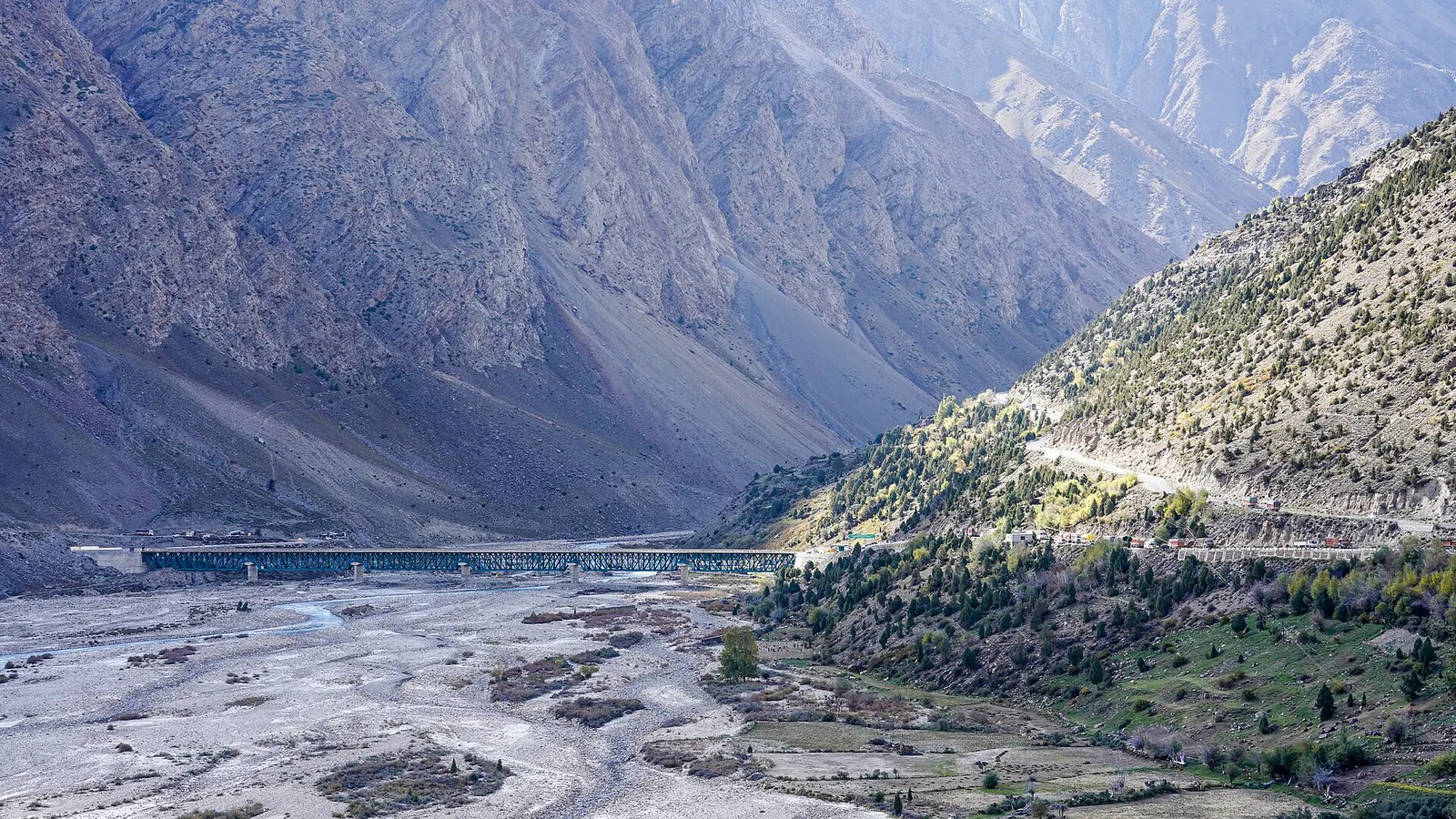
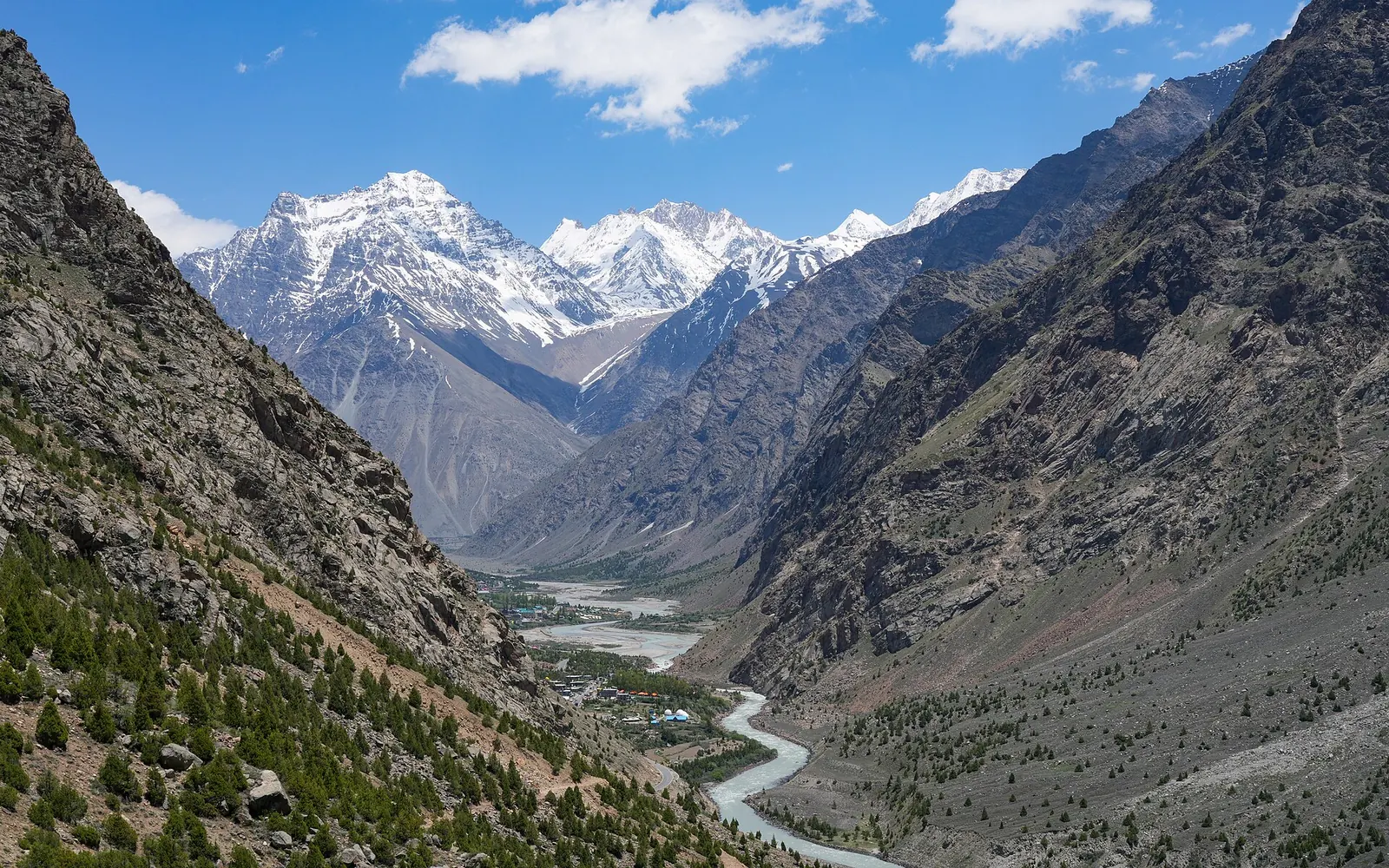
- Download offline maps for the whole region before you leave the last town with data.
- Fuel up before every dead zone and carry margin. My fuel range planning guide shows how I model it, with reliable pumps as the anchor points.
- Carry basic medical and tyre-repair kit, warm layers and water, because help may be hours away.
- Use check-posts: where travellers register, such as Darcha on the Manali-Leh road, the record of when you passed is itself a safety net.
- Know the evacuation points: the Ladakh advisory notes that remote areas such as Zanskar and Changthang have minimal medical facilities, with most care concentrated in Leh.
Satellite messengers fill this gap in many countries. Before you rely on one in India, check that the specific device is permitted here; for most Indian routes, check-posts, time-boxing and daylight riding are the practical answer.

Why should a solo rider stop before dark?
Because the evening is when crashes peak and night is when sleepiness peaks. NCRB counted 20.7% of 2023 road accidents between 6 and 9 pm, the highest three-hour block, and a New Zealand case-control study found injury-crash risk 5.6 times higher between 2 and 5 am. A solo rider who crashes after dark also lies unseen for longer.
My own rule is to manage daylight rather than distance: plan the day so the last stint ends with light to spare, and stay out of city centres at the end of the day, when traffic is worst. Use the calculator to check whether a day fits.
Will you arrive before dark?
Which gear choices have measured safety effects?
Two have strong evidence: a helmet cuts the risk of death in a crash by about 42% and of head injury by about 69%, and being conspicuous (reflective or fluorescent clothing, a white helmet, headlight on) was linked to 24 to 37% lower injury-crash risk.
The review screened the literature to April 2007 and included 61 observational studies of riders who had crashed. Results were consistent despite varied methods. From the four higher-quality studies, helmets reduced the risk of death by 42% (odds ratio 0.58, 95% CI 0.50 to 0.68); from six higher-quality studies, they reduced head injury by 69% (OR 0.31, 95% CI 0.25 to 0.38). There was not enough evidence to compare helmet types or to judge effects on neck injury. The limit: all observational data, so some confounding remains, but the effect is large and consistent.
Read the review (free)In Auckland between 1993 and 1996, 463 riders hospitalised or killed in crashes were compared with 1,233 riders recruited at random roadside sites. After adjustment, any reflective or fluorescent clothing was linked to a 37% lower risk of crash injury (OR 0.63), a white helmet to 24% lower risk than a black one (OR 0.76), and daytime headlight use to 27% lower risk (OR 0.73). Notably, 63% of crashes happened in daylight and 72% in fine weather. The limit: a case-control design in one city, so the estimates assume no hidden confounding, and Indian traffic mixes differ.
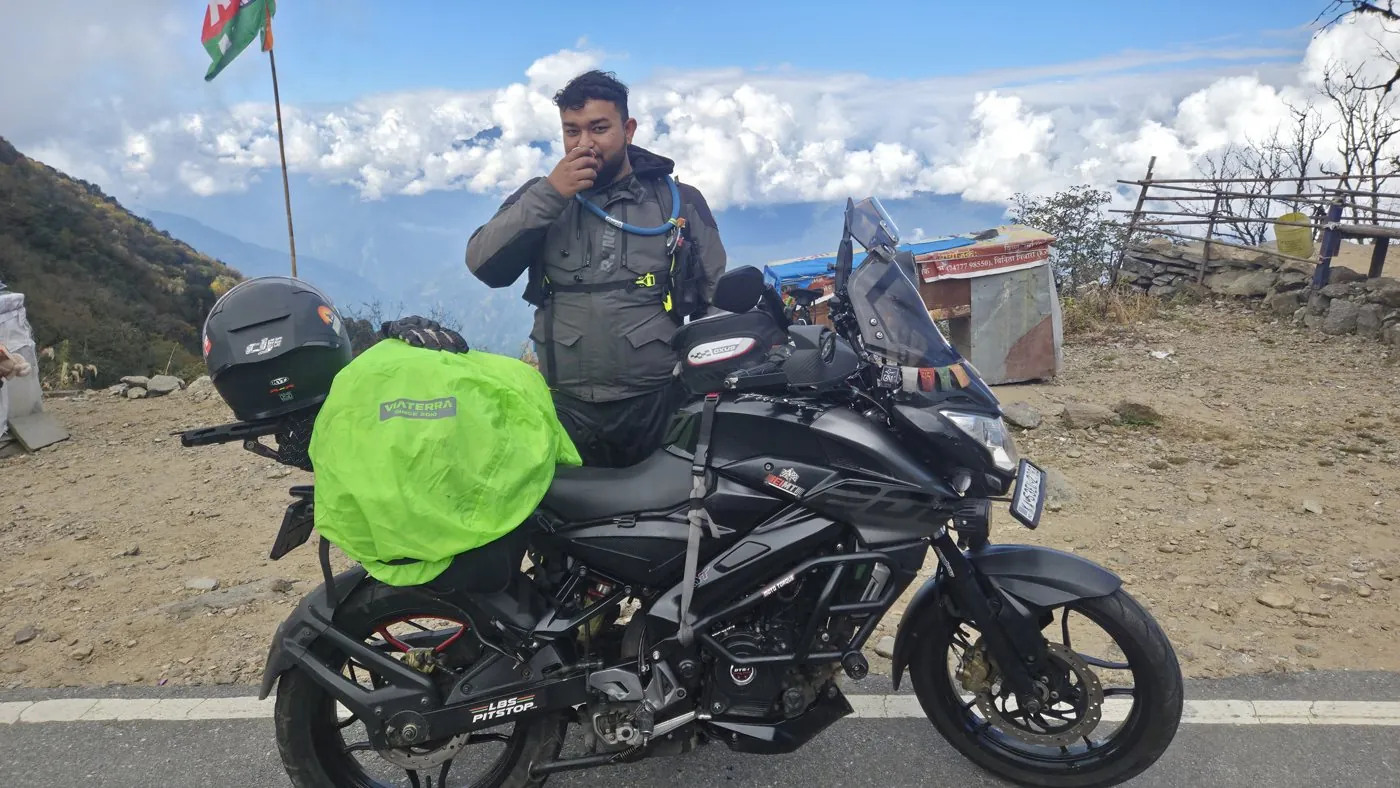
Read the paper (free)- Helmet: a well-fitting full-face helmet, ideally light-coloured. A loose helmet is a problem in itself; check fit before a long trip.
- Visibility: a reflective vest or reflective panels, especially for dawn and dusk stints. It is the cheapest safety upgrade in this list.
- Lights: headlight on, and auxiliary lights if your bike supports them. My NS200 runs Maddog auxiliary lights on a switch.
- Armour: jacket, trousers, gloves and boots with impact protection, worn every day, including hot ones.
- Medical ID: blood group and an emergency contact on a card in your jacket and on the phone's lock screen.
The gear page lists everything I ride with, and my touring packing list includes the first-aid and repair kit.
How do you plan the route itself for solo safety?
Plan the route around predictability: reliable fuel, regular stops, bypasses around cities and night stops booked or at least identified in advance. These are the habits I use on solo trips: stops roughly every 250 km on highway days, staying out of city centres, and treating reliable fuel stations as fixed waypoints.
| Habit | Why it reduces solo risk |
|---|---|
| Stops about every 250 km (less in heat or hills) | Breaks fatigue before it builds; each stop is a natural check-in point |
| Bypass city centres | Fewer turning conflicts and less stop-go traffic when tired |
| Fuel at known, reliable pumps | No forced detours into unknown towns low on fuel at dusk |
| Short food stops | Keeps the day inside daylight; heavy meals feed the afternoon dip |
| Night stop chosen before the day | Your contact knows exactly where you should be |
Long days need extra care alone; my guide to planning 1,000 km+ days covers fatigue in depth. If you are planning the Northeast solo, start with my solo Northeast route notes, and if you would rather share the risk, group riding formation explains how groups manage it.
What's new
- MoRTH report: 1.72 lakh deaths in 4.80 lakh road accidents in 2023; two-wheelers 44.8% of deaths The Week (PTI), Aug 2025
- NCRB 2023: 6 to 9 pm is the peak window for road accidents; two-wheelers 45.8% of deaths Millennium Post, Oct 2025
- Ladakh advisory: medical care concentrated in Leh, minimal facilities in Zanskar and Changthang Ladakh Tourism Department, 2026
Questions people ask
Is it safe to do a solo bike trip in India?
For most routes, yes, if you plan for the real risk, which is a crash far from help. Share your route, use live tracking with a backup, check in at fixed times, stop before dark and wear full gear. The reply on the Tripoto thread linked above gives the same core advice: tell someone your itinerary and avoid riding at night.
What documents should I carry on a solo ride?
Carry your driving licence, the bike's registration certificate, valid insurance and a pollution certificate, plus any permits your region needs. Keep digital copies on your phone, synced in case the phone is lost.
How often should a solo rider check in?
At the start of the day, at each planned stop and on arrival, with a pre-agreed grace period and escalation rule. Before any no-network stretch, send the time you expect to be back in coverage.
Should a solo rider ride at night to cover distance?
No. NCRB data put the most accidents in the 6 to 9 pm block, sleep research shows risk rising sharply between 2 and 5 am, and alone you have no one to raise the alarm quickly.
Sources
- The Week (PTI): 1.72 lakh people died in 4.80 lakh road accidents in 2023, MoRTH report (2025)
- ThePrint: 20 lives lost in road accidents every hour in 2023 (2024)
- Millennium Post: NCRB 2023 road accident data (2025)
- Siasat Daily: On Himachal trip, Hyderabad biker goes missing after accident (2026)
- Liu BC et al.: Helmets for preventing injury in motorcycle riders, Cochrane Database of Systematic Reviews (2008)
- Wells S et al.: Motorcycle rider conspicuity and crash related injury, BMJ (2004)
- Connor J et al.: Driver sleepiness and risk of serious injury to car occupants, BMJ (2002)
- Ladakh Tourism Department: Advisory
- Leh-Manali Highway: Darcha registration post
- Tripoto forum: Solo bike trip to Chopta and Tungnath, is it safe?

Sapta (Saptarshi Sarkar) is a mechanical engineer turned marketer in Bengaluru and a solo touring rider. He writes the seven Saptaverse blogs. Work with him or read more of RoadHook Rides.


