Most Indian marriages are still arranged by families. In the India Human Development Survey (IHDS-2, 2011-12), only 5% of married women said they chose their husband themselves, 55% said their family chose with their input, and 40% said the family chose alone. A 2016 CSDS youth survey found 84% of married Indians aged 15-34 had an arranged marriage. What has changed is not who arranges, but how much say the bride and groom now get.
- 5% of married women chose their husband themselves; 95% had a family-made match (IHDS-2, 2011-12).
- 65% first met their husband at or around the wedding; only 6% had known him since childhood.
- 31% to 63%: for women married in the 2000s, parents alone chose in 31% of cases and the couple and parents chose jointly in 63% (Allendorf and Pandian, 2016).
- 84% of married Indians aged 15-34 had an arranged marriage (CSDS-KAS youth survey, 2016).
- 91% to 54%: the share of Jeevansathi users setting caste as a strict filter, 2016 to 2025.
"Arranged" in India rarely means a forced match between strangers today. It usually means the family runs the search: biodata, horoscope, caste and income checks, a meeting or two, and then a yes or no from the couple. The family is the gatekeeper; the couple increasingly holds a veto.
What percentage of marriages in India are arranged?
About 95% of marriages involve the family choosing the spouse, with or without the bride's input. The cleanest national figure comes from IHDS-2, a survey of over 40,000 households run by NCAER and the University of Maryland, which asked ever-married women aged 15-49 who selected their husband.
On 10 February 1978, Sudha Kulkarni, an engineer, married N. R. Narayana Murthy, three years before he co-founded Infosys. It was a self-chosen match in an era when, by the IHDS figures, about 97 in 100 brides had a family-made one. They kept it small: a ceremony at Murthy's mother's house in Bangalore, a reception in Hubli, and a total cost of about ₹800, split equally between the two of them.
Instead of formal invitations, they sent a short announcement card to a few friends. Some extended family members were offended at being left out. Even a couple who chose each other found that an Indian wedding is treated as the family's event, not only the couple's, which is the whole logic of the arranged system in one detail.
Scroll: excerpt from Chitra Banerjee Divakaruni, An Uncommon Love (Jan 2024)The IHDS research brief by sociologist Sonalde Desai splits marriages three ways:
- Family alone: 40%. Parents or elders picked the husband and the bride was not consulted in any meaningful way.
- Family with the bride's input: 55%. The family shortlisted and the bride had a say, often a veto.
- Bride herself: 5%. What most people call a love marriage.
The same brief found that 95% of marriages took place within caste, and that more than 95% of couples lived in an extended family after marriage, 70% of them for ten years or more. Those two facts explain most of what follows.
Do Indians still have arranged marriages, or is it changing?
They do, and the change is real but slow. Sociologists Keera Allendorf and Roshan Pandian used IHDS data on 46,010 women to compare marriages by decade, and found that the share chosen by parents alone fell from about half in the 1970s to under a third in the 2000s.
See the data as a table
| Parents alone (%) | Woman and parents jointly (%) | Woman herself (%) | |
|---|---|---|---|
| Married in the 1970s | 49.6 | 47.4 | 3.0 |
| Married in the 2000s | 31.0 | 62.6 | 6.4 |
Source: Allendorf and Pandian, Population and Development Review (2016), from IHDS 2004-05 and 2011-12 · Ever-married women aged 15-49, first marriages from 1970 onward.
Read the chart carefully. The growth is almost entirely in the joint category, from 47.4% to 62.6%. Self-chosen marriages roughly doubled, but only from 3% to 6.4%. The authors' own conclusion is that arranged marriage is "shifting, rather than declining".
How long do couples know each other before the wedding?
Not long. In IHDS-2, 65% of women first met their husband at or around the wedding, 15% had known him for less than a month, and only 6% had known him since childhood. Allendorf and Pandian found that meeting only on the wedding day fell from 73.5% (1970s) to 63.9% (2000s), while meeting less than a month before rose from 4.9% to 14.2%.
The authors pooled both IHDS waves (2004-05 and 2011-12): 46,010 ever-married women aged 15-49, reporting on first marriages from 1970 to 2012. They tracked who chose the spouse, how well the couple knew each other, cousin marriage and caste. Parent-only choice fell from 49.6% to 31.0%, joint choice rose from 47.4% to 62.6%, and self-choice rose from 3.0% to 6.4%.
Among self-chosen marriages, 17% were inter-caste, against under 5% where parents were involved. Limit: only women were asked, so men's role is unseen; "knowing" a spouse is self-defined; and region is measured at survey time, not at marriage.
Read the paper (free)Does education or city life change it?
Both help, but neither breaks the pattern. In the IHDS brief, even among women with a college degree, only 9% chose their husband themselves; what education changes is the share consulted, not the share initiating.
| Bride's education | Family alone | Family with bride's input | Bride herself |
|---|---|---|---|
| None | 56% | 41% | 3% |
| Class 1-4 | 38% | 57% | 5% |
| Class 5-9 | 35% | 59% | 6% |
| Class 10-11 | 23% | 71% | 6% |
| Class 12 and some college | 19% | 74% | 7% |
| College degree | 14% | 77% | 9% |
Education does change contact before the wedding. Among women with no schooling, 79% had no contact with their future husband before marriage and 14% had met him. Among graduates, 30% had no contact and 48% had met him. Overall, 63% had no contact, 9% had only seen a photograph, 5% had exchanged calls or emails, and 24% had met.
Metro or village?
Cities loosen parental control, but only partly. Allendorf and Pandian found parent-only choice fell from 53% to 36% in rural areas between the 1970s and 2000s, from 44% to 20% in smaller towns, and from 26% to 14% in metros.
See the data as a table
| 1970s marriages (%) | 2000s marriages (%) | |
|---|---|---|
| Rural | 53 | 36 |
| Other urban | 44 | 20 |
| Metro | 26 | 14 |
Source: Allendorf and Pandian (2016), IHDS data · Place is where the woman lived at survey time, not at marriage.
Regions differ even more than city and village. In the Northeast, self-choice rose from 15% to 34% and meeting first on the wedding day fell from 59% to 24%. In the South, joint choice passed 80%. The North and Centre stayed the most parent-led.
Why do families still arrange marriages?
Because in India a marriage joins two households, two property lines and two caste networks, not just two people. Three forces keep the family in charge.
1. Caste is reproduced through marriage
Caste survives by endogamy, marrying within the group. A love match is the main way caste lines get crossed, so a family that cares about caste has a direct reason to control the search. My post on why only about 5% of marriages cross caste has the state-by-state numbers, and caste filters on matrimonial sites shows how the search tools build it in.
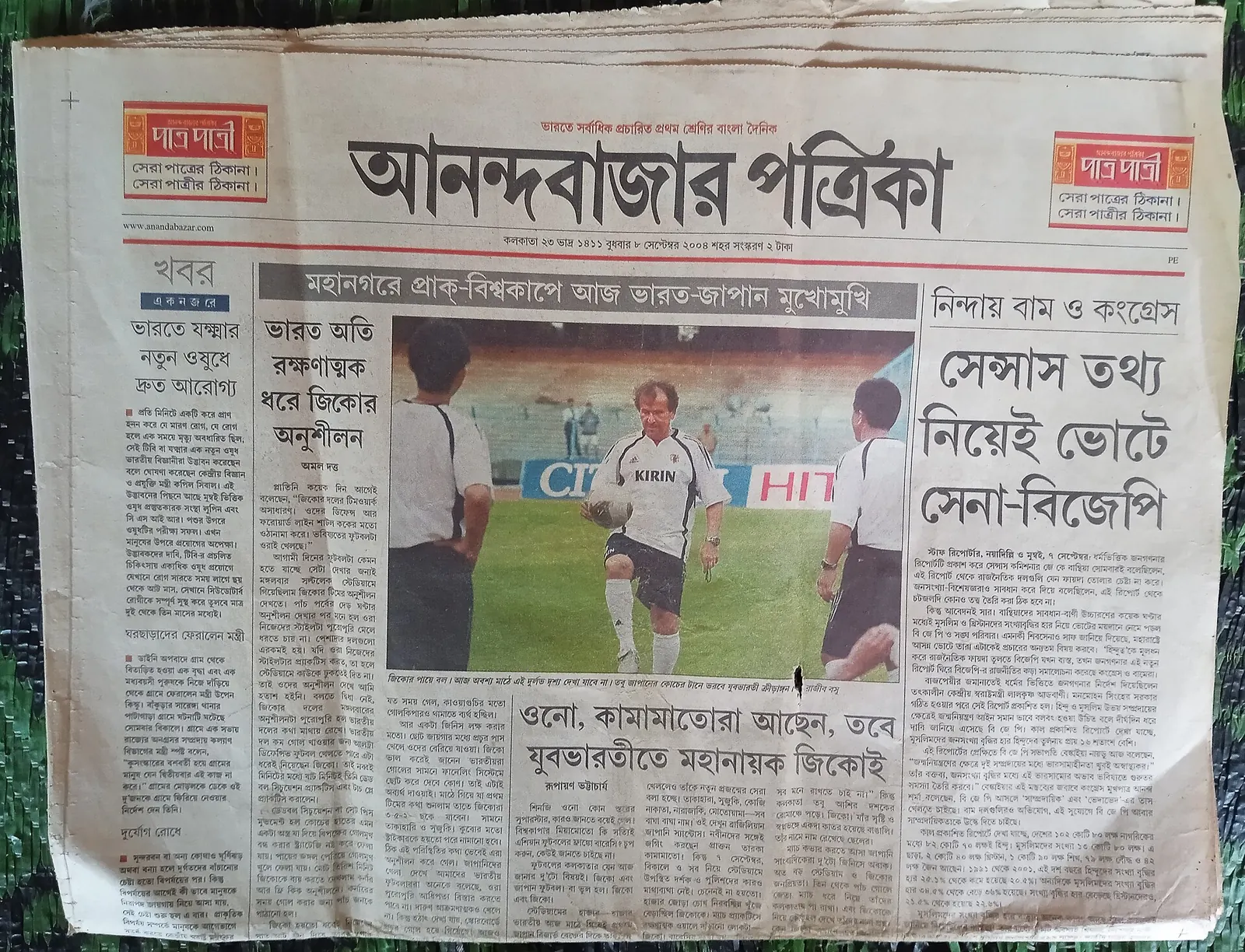
The authors interviewed a random sample of 783 families who had placed matrimonial ads in the Kolkata edition of Anandabazar Patrika (circulation about 1.2 million), mostly parents advertising for a son or daughter; 85% of the prospective brides and grooms were graduates. They recorded every response, how families ranked them and who married whom.
In one specification, a bride's parents would give up the gap between no education and a master's degree in the groom to avoid marrying outside caste. Yet when the authors simulated matches with caste ignored, people ended up with spouses very similar on everything else. Caste preference is strong but costs families little, which is why it persists. Limit: one city's educated, ad-placing middle class.
Read the paper (free)2. The bride moves into the groom's household
The IHDS brief links family control directly to living arrangements: more than 95% of couples live in an extended family after marriage. If a woman will live for a decade with her in-laws, both sides see the match as a household decision. Read more in why Indians live with their parents after marriage.
3. Marriage is an alliance with money attached
Weddings move property, gifts and status between families; see dowry in 95% of marriages and the economics of the big Indian wedding.
Why do different surveys give such different numbers?
Because they ask different people different questions. A national household survey of all married women gives about 5% self-chosen; an app's user survey or a wedding-planning site's customer poll can give "arranged" shares below half.
| Source | Who was asked | Finding |
|---|---|---|
| IHDS-2 (2011-12) | Ever-married women 15-49, national sample | 5% chose husband themselves |
| Allendorf and Pandian (2016) | 46,010 women, marriages 1970-2012 | 6.4% self-chosen in the 2000s |
| CSDS-KAS Youth Survey (2016) | 6,122 people aged 15-34, 19 states | 84% of married youth: arranged |
| Lokniti-CSDS for The Quint (2019) | 5,000 first-time women voters | 50% inclined to arranged, 13% to love marriage |
| WeddingWire India (2023) | Its engaged or recently married users | Arranged fell from 68% (2020) to 44% (2023) |
| Jeevansathi (2026 report) | 30,000+ active app users | 32% search without parental involvement |
The platform numbers describe urban, online, wedding-shopping couples, not India: an early signal of where the middle class is heading, not a national rate.
Can you say no in an arranged marriage?
Legally, yes, always. In practice, it depends on the family. Indian law treats marriage as a choice between two consenting adults, and the courts have said so repeatedly.
- Age: the minimum age is 21 for men and 18 for women; a marriage below that is a child marriage under the Prohibition of Child Marriage Act, 2006. See child marriage in India.
- Consent: under the Hindu Marriage Act, 1955 (section 12), a marriage where consent was obtained by force or fraud can be annulled.
- Coercion is a crime: kidnapping or abducting a woman to compel her to marry is an offence under section 87 of the Bharatiya Nyaya Sanhita, 2023 (formerly IPC section 366), punishable with up to 10 years in prison.
- Adults choose: in the Hadiya case (Shafin Jahan v. Asokan K.M.), the Supreme Court in March 2018 set aside a Kerala High Court order annulling an adult woman's marriage, holding that an adult may make her own decision about whom to marry.
- Outside religion or caste: couples can marry under the Special Marriage Act, 1954, which needs no religious ceremony.
Reed ran 48 in-depth interviews in the Delhi metro area in 2018-19 with recently married or engaged people, unmarried young adults and parents. She found that the roka, the North Indian ceremony that seals an arranged match, now often starts a courtship: phone and social media contact, dates, meeting friends, and sometimes a broken engagement.
Couples already in love also use a roka to get family sign-off and present their marriage as arranged. Limit: a small, urban, mostly upper-caste, college-educated sample; it shows how the system bends, not how common the bending is.
Read the paper (free)What does an arranged marriage actually look like in 2026?
It looks like a family-run search with a couple's veto, and often a short courtship after the yes. Reed calls this hybrid; Indians often call it "love-cum-arranged". A typical sequence:
- Biodata. Parents draw up a profile with education, job, height, family, caste and often a horoscope, and post it on a matrimony site or share it through relatives.
- Filtering. Families shortlist by caste, community, income and location; horoscopes are matched in many Hindu families (see mangal dosha and kundli matching).
- The meeting. Families meet, then the couple talks, often alone for the first time.
- The veto. Either side can say no. In IHDS-2, 55% of women said they had input; graduates had more.
- Roka or engagement. The match is announced; contact is now usually allowed.
- The wedding. Planned by both families, usually within months. Jeevansathi's 2026 report found 78% of users wanted to marry within six months of finding a match.

What is changing fastest?
- Caste filters are loosening on apps: strict caste preference fell from 91% to 54% of Jeevansathi users between 2016 and 2025, and to 49% in metros.
- Parents remain wanted: 69% of users (75% of women) said parental involvement makes the search easier.
- Attitudes run ahead of behaviour: in the CSDS-KAS survey, approval of inter-caste marriage rose from about 30% (2007) to over 50% (2016), yet only 4% of married youth had one.
India did not swap arranged marriage for love marriage. It added the couple's consent to a search the family still runs.
For a visitor, the practical reading: when an Indian colleague says their marriage was arranged, it most likely means their parents found the match and they agreed to it. More everyday India questions live on the Kyun page.
What's new
- Jeevansathi report: strict caste preference falls from 91% to 54% of users ThePrint, Feb 2026
- Telangana caste survey: only about 5.6% of households report an inter-caste marriage Open, Apr 2026
- Telugu newspaper survey: 83.4% of parents say they would not accept an inter-caste marriage The Week, Jul 2026
Questions people ask
What percentage of marriages in India are arranged?
About 95% involve a family-chosen spouse. In IHDS-2 (2011-12), 40% of women said the family chose alone, 55% said the family chose with their input, and 5% chose themselves. A 2016 CSDS survey found 84% of married 15-34 year olds had an arranged marriage.
Do Indians still have arranged marriages in 2026?
Yes. No national survey newer than IHDS-2 asks who chose, but later sources agree: parents remain central and couples have more say. Even on Jeevansathi in 2025, only 32% searched without parental involvement.
Can you say no in an arranged marriage in India?
Yes. Marriage requires the free consent of two adults, a forced marriage can be annulled, and coercing a woman into marriage is a crime under BNS section 87. Socially, how easy refusal is depends on the family; help is on 112 and 181.
Are arranged marriages more successful than love marriages?
India's low divorce rate is often quoted as proof, but it mostly reflects stigma, women's financial dependence and the difficulty of leaving, not happier marriages. The data is weak; see why India's divorce rate is so low.
Can a foreigner have an arranged marriage with an Indian?
Yes, if both families agree. Most such marriages are registered under the Special Marriage Act, 1954, which has its own notice period; see how a foreigner marries an Indian.
Sources
- Sonalde Desai, NCAER and University of Maryland: IHDS Research Brief No. 2 on marriage (2016; who chose, acquaintance, education, co-residence)
- Allendorf and Pandian: The Decline of Arranged Marriage? Marital Change and Continuity in India (Population and Development Review, 2016)
- Banerjee, Duflo, Ghatak and Lafortune: Marry for What? Caste and Mate Selection in Modern India (NBER, 2009; AEJ Micro, 2013)
- Megan N. Reed: Roka Engagements and the Hybridization of Arranged and "Love" Marriage in Urban India (Journal of Marriage and Family, 2025)
- India Human Development Survey, University of Maryland and NCAER
- Goan Observer: CSDS-KAS youth survey 2016 findings (2017; 84% arranged, sample of 6,122)
- The Quint: Lokniti-CSDS survey of first-time women voters (2019)
- Outlook Business: WeddingWire India survey on arranged marriages (2023)
- ThePrint: Jeevansathi Modern Matchmaking Report (2026)
- Open: Telangana caste survey finds inter-caste marriage remains rare (2026)
- The Week: Caste the most important factor in marriage for Telugus (2026)
- Scroll: excerpt from An Uncommon Love by Chitra Banerjee Divakaruni (2024)
- Wikipedia: Hadiya case (Shafin Jahan v. Asokan K.M.), with cited court reports

Sapta (Saptarshi Sarkar) is a mechanical engineer turned marketer in Bengaluru and a solo touring rider. He writes the seven Saptaverse blogs. Work with him or read more of Whyblog.