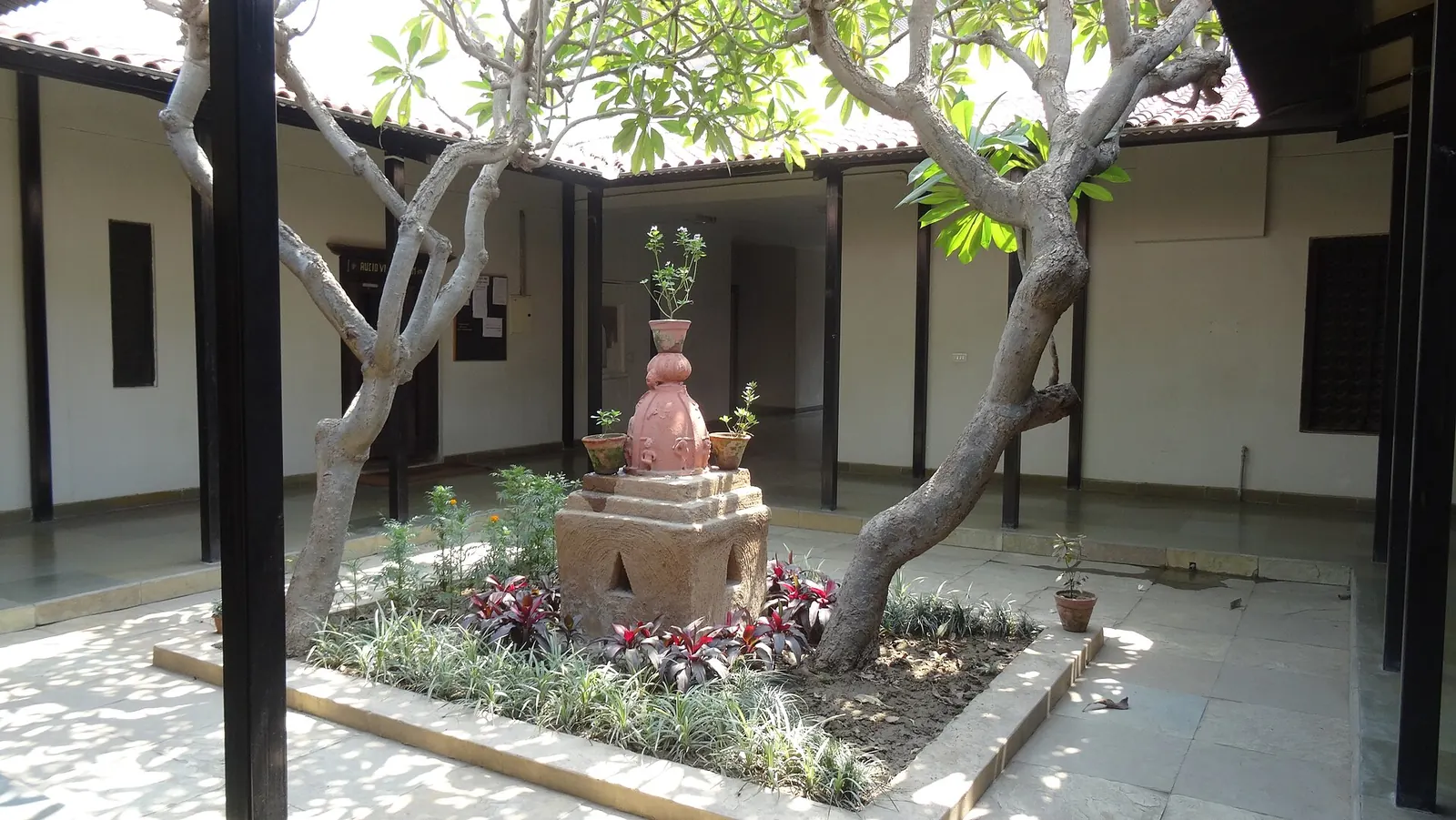
Indians live with their parents because, for most families, the household is the pension plan, the property portfolio and the childcare system at once. Pew Research Center found that 54% of Indians live in extended-family households, against 11% in North America, and that about seven in ten Indians over 60 do. Only 7.7% of Indians over 60 receive a retirement pension, land and buildings hold about 90% of household wealth, and custom keeps sons in the parental home while daughters move to their husband's family at marriage.
- The average Indian lives in a household of 5.8 people, against 4.9 worldwide and 3.1 in Europe (Pew, 2019).
- 54% of Indians live in extended families; about 70% of Indians over 60 do, against 6% in the US.
- 68.2% of Indians aged 60+ live with their children; only 5.7% live alone (LASI 2017-18).
- Co-resident sons are 46 points more likely to own the parental property than sons living separately nearby.
- Households are shrinking: NFHS mean size fell from 4.6 to 4.4 between 2015-16 and 2019-21.
For a visitor, the first surprise in an Indian office is how many colleagues in their thirties go home to their parents. For an Indian moving abroad, the surprise runs the other way: an 18-year-old is expected to leave, and grandparents live alone or in care homes.
Neither is "right". They are answers to different economic problems. This post uses one dataset to compare India with China, Europe and North America, then explains the money, the law and the customs behind the numbers.
How common is it for Indians to live with their parents?
It is the majority experience. Pew's 2019 study of census and survey data from 130 countries found that 54% of Indians live in extended-family households, meaning a household with relatives beyond parents and their minor children.
| Region or country | Average household size (per person) | Living in extended families |
|---|---|---|
| Sub-Saharan Africa | 6.9 | not given |
| Middle East and North Africa | 6.2 | not given |
| India | 5.8 | 54% |
| Asia-Pacific | 5.0 | not given |
| World | 4.9 | not given |
| Latin America and Caribbean | 4.6 | not given |
| China | 3.8 | 44% |
| North America | 3.3 | 11% |
| Europe | 3.1 | not given |
Source: Pew Research Center, Religion and Living Arrangements Around the World (2019), household patterns by region.
See the data as a table
| People per household (people) | |
|---|---|
| Sub-Saharan Africa | 6.9 |
| Middle East-North Africa | 6.2 |
| India | 5.8 |
| Asia-Pacific | 5.0 |
| World | 4.9 |
| Latin America | 4.6 |
| China | 3.8 |
| North America | 3.3 |
| Europe | 3.1 |
Source: Pew Research Center (2019) · Measured from the person’s point of view, not the household’s.
Why Pew says 5.8 when NFHS says 4.4
Both are right. NFHS-5 counts households: the mean household size in 2019-21 was 4.4. Pew counts people: it asks how big a household the average person lives in, and big households contain more people, so they weigh more.
NFHS-5 also splits households by structure: 58.2% are nuclear (a couple or single parent with unmarried children) and 41.8% are not. Only 4.8% of Indian households have one member; 4.0% have nine or more.
Why don't Indian kids move out at 18?
Because nothing pushes them out and a lot pulls them in. The reasons are economic first and cultural second.
The economic reasons
- No pension for most parents. LASI found that only 7.7% of Indians aged 60+ receive a retirement pension. Adult children, usually sons, are the old-age income.
- Wealth is the house. Land and buildings make up nearly 90% of Indian household assets, the IIT Bombay study below notes. Staying in the house is how that wealth is held and passed on.
- Few secure jobs. In PLFS 2023-24, youth unemployment (15-29) was 10.2%, and 58% of salaried employees had no written contract. Leaving home on an insecure income is a gamble.
- Care is done at home. LASI data, as cited in the IIT Bombay study below, show that more than 90% of caregiving comes from people living in the same household.
The cultural reasons

- Patrilocal marriage. A bride traditionally moves into her husband's family home. So sons stay, daughters leave, and a "separate home" after marriage can read as a rejection of his parents.
- Filial duty. Supporting parents is treated as a moral, and in some cases legal, obligation (see the law section below).
- Moving out is not a milestone. In India, adulthood is marked by a job and marriage, not by a lease.
On 6 October 2016, two judges of the Supreme Court of India, Anil R. Dave and L. Nageswara Rao, decided Narendra v. K. Meena, a divorce appeal. Among the husband's complaints was that his wife kept pressing him to leave his parents and set up a separate home, to gain control of his income. The family court had granted a divorce; the High Court overturned it. The Supreme Court restored the divorce. It held that, in Indian custom, a son is expected to maintain his parents, that a wife normally becomes part of her husband's family, and that her persistent demand to separate him from them, without a justifiable reason, formed part of the mental cruelty in the case. Whatever one thinks of the reasoning, it shows how deeply "living with his parents" is built into the Indian idea of marriage.
Indian Kanoon: Narendra vs K. Meena, Supreme Court of India, 6 October 2016Is it normal for Indians to live with their parents after marriage?
For sons, yes. For daughters, it means living with her husband's parents. The IIT Bombay study of LASI families shows how gendered the pattern is.
- Daughters made up 46% of the adult children in the sample but only 20% of those living with their parents.
- Among children living outside the parents' city or village, three in four were daughters.
Who cares for India's elderly?
Their children, at home. LASI Wave 1 (2017-18), the largest ageing survey India has run, gives the living arrangements of people aged 60 and above.
See the data as a table
| With spouse and children (%) | With children and others (%) | With spouse and/or others (%) | Living alone (%) | With others only (%) | |
|---|---|---|---|---|---|
| Indians aged 60+ | 40.6 | 27.6 | 20.3 | 5.7 | 5.7 |
Source: IIPS and MoHFW: LASI Wave 1 Factsheet, Elderly in India
| Aged 60+ (LASI 2017-18) | Men | Women | Rural | Urban |
|---|---|---|---|---|
| Living alone | 2.6% | 9.0% | 6.6% | 4.4% |
| With spouse and children | 53.2% | 26.0% | 39.0% | 39.2% |
| With children and others | 13.8% | 42.7% | 26.8% | 33.7% |
Older women are more than three times as likely as men to live alone. Pew's 2020 comparison shows how different this is from the West: 27% of Americans over 60 live alone, against 16% worldwide.
The law reinforces the family role. The Maintenance and Welfare of Parents and Senior Citizens Act, 2007 lets parents claim maintenance from their children; the details are in the law on elderly parents and children.
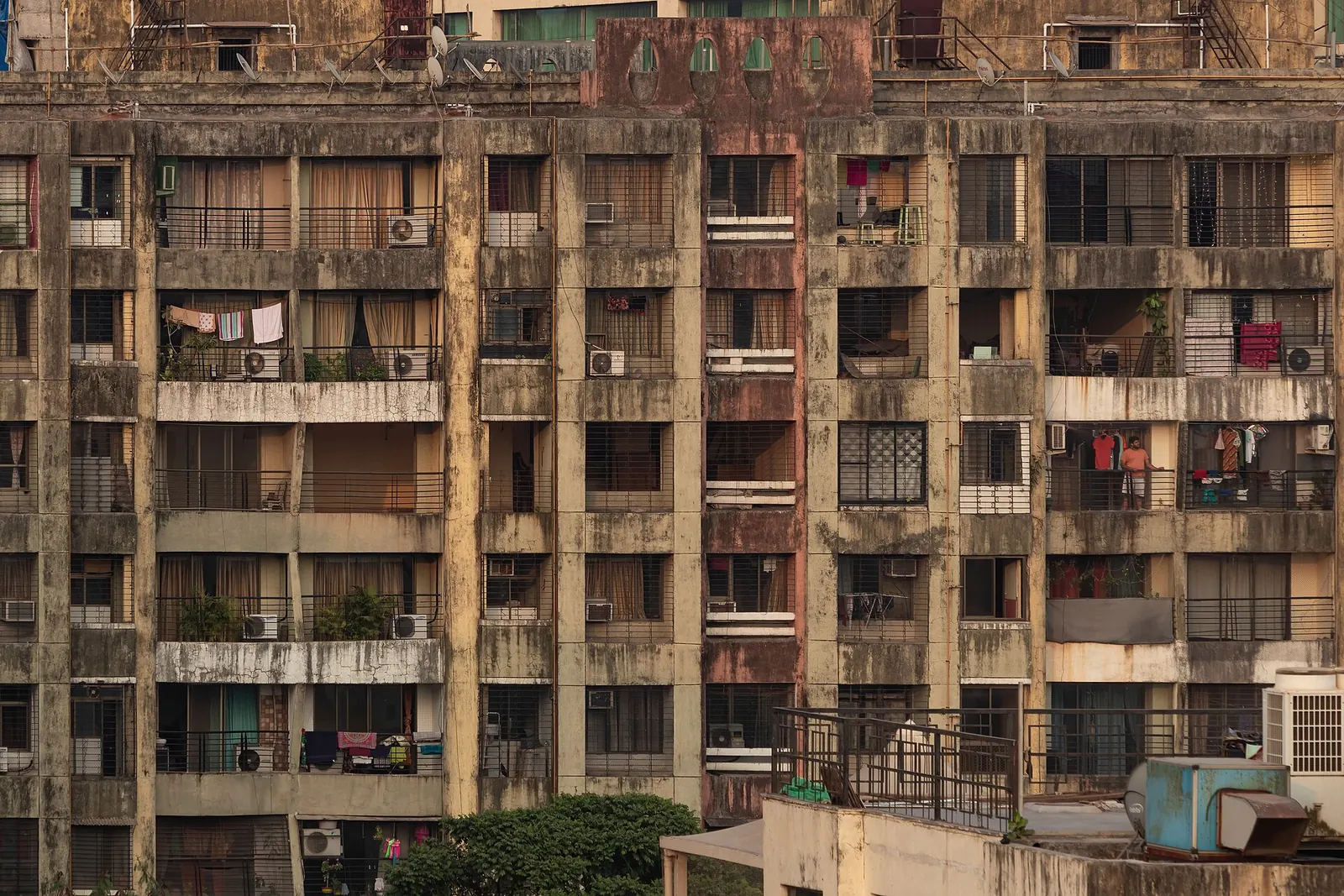
What does the research say about why families stay together?
Two views compete. One says Indian families co-reside out of norms of filial duty. The other says it is also an exchange: care for property. New evidence supports both.
Uses LASI data on 33,198 household heads and 1,05,094 adult children, comparing siblings within the same family with a fixed-effects logit model. Co-resident children were far more likely to be named owners of the parental home or land: 57.9% against 36.3% for all children. Children living separately in the same town were about 30 percentage points less likely to own, and among sons alone the gap was 46 points. Caregiving explained only part of it. The limit: ownership could partly reflect the child's own money, which the authors test but cannot fully rule out.
Read the paper (free)Pools censuses and surveys since 2010 (DHS, MICS, IPUMS and others) from 130 countries covering 91% of the world's people. India's average household per person is 5.8 and 54% of Indians live in extended families; Hindus are the only major religious group where a majority does. The 2020 analysis puts about seven in ten Indians over 60 in extended families, against 38% worldwide and 6% in the US. The limit: data years differ by country, and "extended family" lumps very different households together.
Read the report (free)A nationally representative survey of adults 45+ and their spouses, harmonised with the US Health and Retirement Study. Among those 60+, 68.2% live with children, 5.7% live alone and only 7.7% receive a retirement pension; just 18.2% have health insurance. The limit: a 2017-18 snapshot; later waves will show how fast this is changing.
Read the factsheet (free)Is the joint family disappearing?
Slowly shrinking, not disappearing. NFHS mean household size fell from 4.6 to 4.4 between 2015-16 and 2019-21, and urban households are more often nuclear (61.3%) than rural ones (56.7%).
Three forces push towards smaller homes: migration for work, fewer children per family (see why Indian families have fewer children), and more women in paid work (women and work in India). Three forces hold the old pattern: the pension gap, property held as one house, and marriage customs (arranged marriage by the numbers).
When the state does not pay for old age, the family does, and the family that pays lives under one roof.My reading of LASI and Pew data
A "nuclear" household in India is also often next door to the parents. The new pattern is less a break than a stretch: the same family across two flats, one city or one WhatsApp group. For how this connects to work choices, read why Indians want government jobs; for social pressure, log kya kahenge. More questions live on the Kyun page.
What's new
- IIT Bombay study links living with parents to owning the family property Frontiers in Sociology, Aug 2026
- NFHS-6 (2023-24) fact sheets for India and states released; household tables to follow in the full report IIPS, May 2026
- LASI study: older adults whose children migrate within India report more discrimination in urban areas BMC Public Health, Oct 2025
Questions people ask
Is it normal for Indians to live with their parents after marriage?
Yes, especially for men. Custom is patrilocal: the wife joins the husband's family home. In LASI data daughters are 46% of adult children but only 20% of those living with their parents.
Why don't Indian kids move out at 18?
Because the family home is also the pension, the main asset and the care system. Only 7.7% of Indians over 60 get a retirement pension, and land and buildings are about 90% of household wealth.
What is a joint family in India?
A household where more than one generation of a family, often brothers and their wives and children with the parents, live and share resources. Pew counts 54% of Indians in such extended households.
Is the Indian joint family dying out?
It is shrinking slowly. Mean household size fell from 4.6 to 4.4 between 2015-16 and 2019-21, and 58.2% of households are nuclear, but most older Indians still live with their children.
Do Indians care for elderly parents at home?
Mostly yes. 68.2% of Indians aged 60+ live with their children and only 5.7% live alone (LASI 2017-18), and more than 90% of caregiving comes from members of the same household.
Sources
- Pew Research Center: Household patterns by region (2019)
- Pew Research Center: Religion and Living Arrangements Around the World, overview and method (2019)
- Pew Research Center: Older people are more likely to live alone in the U.S. than elsewhere in the world (2020)
- IIPS and ICF: NFHS-5 India Report, Table 2.14, household composition (2022)
- IIPS and MoHFW: LASI Wave 1 Factsheet, Elderly in India (2021)
- Baxi, Gaurav and Ananthakumar: Living arrangements and property ownership among families in India, Frontiers in Sociology (2026)
- Supreme Court of India: Narendra vs K. Meena, Civil Appeal 3253 of 2008 (2016)
- MoSPI: PLFS Annual Report 2023-24 (2024)
- Chinnakkannu et al.: Adult children migration and perceived discrimination among Indian older adults, BMC Public Health (2025)
- IIPS: NFHS-6 release details (2026)

Sapta (Saptarshi Sarkar) is a mechanical engineer turned marketer in Bengaluru and a solo touring rider. He writes the seven Saptaverse blogs. Work with him or read more of Whyblog.