
One Man Caravan is Robert Edison Fulton Jr.'s 1937 book about riding a Douglas flat-twin motorcycle from London to Tokyo and home to New York in 1932–33, and about six months of it were spent in India, Kashmir, the North-West Frontier and Afghanistan. In his own telling he found British India's trunk roads the best of his trip, slept in dak bungalows every 30 to 40 miles, was forbidden to ride the Khyber, and covered the 2,000 miles from Bombay to Calcutta in 90 hours of riding. It is one of the earliest first-hand accounts of touring India by motorcycle.
- 1932-33: Fulton rode a Douglas flat twin London to Tokyo, then home to New York, in about 18 months.
- 6 months of it were in India, Kashmir, the North-West Frontier and Afghanistan.
- Every 30 to 40 miles there was a dak bungalow, the 1930s answer to a highway hotel.
- 90 riding hours for 2,000 miles from Bombay to Calcutta, about 36 km/h on average.
- 20 yards: the bike had to be carried, not ridden, over the last stretch into Afghanistan.
Fulton is better known in the United States as an inventor: he built the Airphibian flying car and the Skyhook system that let aircraft snatch people off the ground.
But at 23 he was a bluffing architecture student who said at a London dinner party that he would ride home the long way, and found the owner of a motorcycle company at the table.
What follows is the India leg, told from a 1939 printing of his book held by the Digital Library of India, with the places, distances and road conditions he recorded.
Who was Robert Fulton Jr., and what did he ride?
Robert Edison Fulton Jr. (1909–2004) was a New York-born architecture student, named after his father's friend Thomas Edison, who set out in 1932 on a Douglas motorcycle supplied by the Bristol maker after that dinner-party boast.
The bike is usually identified as a 1932 Douglas H32 Mastif, a 750 cc side-valve flat twin of about 20 hp; one Indian magazine account calls it a 1930 Douglas T6 of 600 cc. Fulton kept it for the rest of his life and rebuilt it.
The Douglas factory fitted extras for the trip:
- a second fuel tank (his book says the saddle tank carried four extra imperial gallons);
- a windshield and a leather map pocket;
- tool boxes, one of which held a motion-picture camera.
The Vintagent puts the total fuel at about 7 gallons, enough for some 350 miles, and the loaded weight at about 750 lb. He also started with far too much luggage, including a dinner jacket for embassy evenings, and shed it on the way.
| Item | What the sources say |
|---|---|
| Motorcycle | Douglas H32 Mastif, 750 cc side-valve flat twin, ~20 hp (Wikipedia, The Vintagent); Open magazine says a 600 cc 1930 Douglas T6 |
| Fuel and range | About 7 gallons, ~350 miles (The Vintagent); VOA gives ~560 km range |
| Film | About 40,000 ft of 35 mm cinema film |
| Total distance | Book: "the 40,000-mile trip"; VOA: over 40,000 km through 22 countries; Wikipedia: about 25,000 miles |
| Time | About 18 months; home in New York on Christmas Eve 1933 |
The distance problem is worth naming. Fulton's own book refers to a 40,000-mile trip, the Voice of America profile says more than 40,000 km, and Wikipedia says about 25,000 miles.
How did Fulton reach India in 1933?
He reached India by sea, because the land route through Persia was closed by winter snow.
Fulton had planned to ride across the Persian plateau, through Shiraz, Persepolis, Tehran and Meshed. Instead a long illness in Baghdad left him weak, and the passes were shut until spring. Too weak to ride 300 miles of desert to Basra, he put the bike on the train, a run he expected to take ten hours that took twenty-four, partly because the train stopped whenever a passenger wanted to pray. At Basra he booked a coastal tramp steamer, the Vestra, and the motorcycle was hoisted aboard and stowed on deck under a tarpaulin. His fellow passengers were 700 Afghan pilgrims heading home from Karbala and Najaf, men who had walked from the Hindu Kush to the sea for the journey. Fulton spent the voyage down the Gulf lying in the sun to get his strength back, and at each sunrise an Arab sailor sang from the prow.
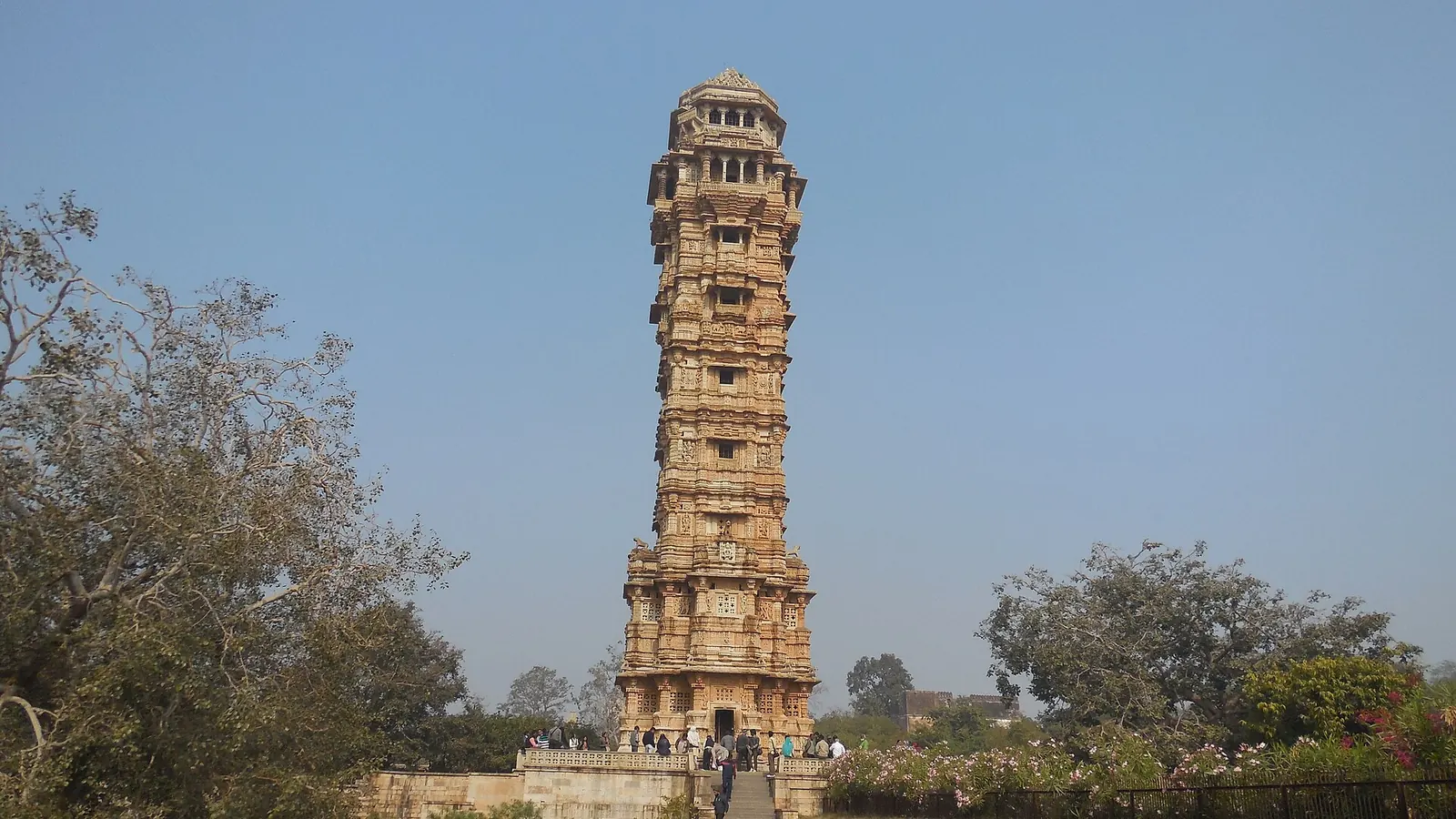
Robert E. Fulton Jr.: One Man Caravan (1939 edition), Digital Library of India scanIn India, he noticed at once, nobody looked twice at his machine. Turks, Syrians and Arabs had stared; Indians called it a fut-fut gharry and went back to their bullock carts, camel carts, tongas and palanquins, every one of which he found more unusual than a motorcycle.
What were Indian roads like for a motorcyclist in 1933?
By Fulton's account, India's trunk roads were the best he rode anywhere on the trip: well graded, surfaced and well maintained, signposted with milestones and warning signs but no speed limits. He believed the British had built them to move food during famines.
| Road | What Fulton found |
|---|---|
| Trunk roads | Graded, surfaced, maintained; milestones and warning signs; no speed limits |
| Side roads | Streams crossed on paved fords he called "Irish bridges" |
| Railway trestles | Easier than the road in places; he rode four, bumping over the sleepers |
Off the trunk roads it was different. In places he found it easier to ride narrow-gauge railway trestles, bumping over the sleepers with his feet sliding along the rails.
Dak bungalows and punkahs
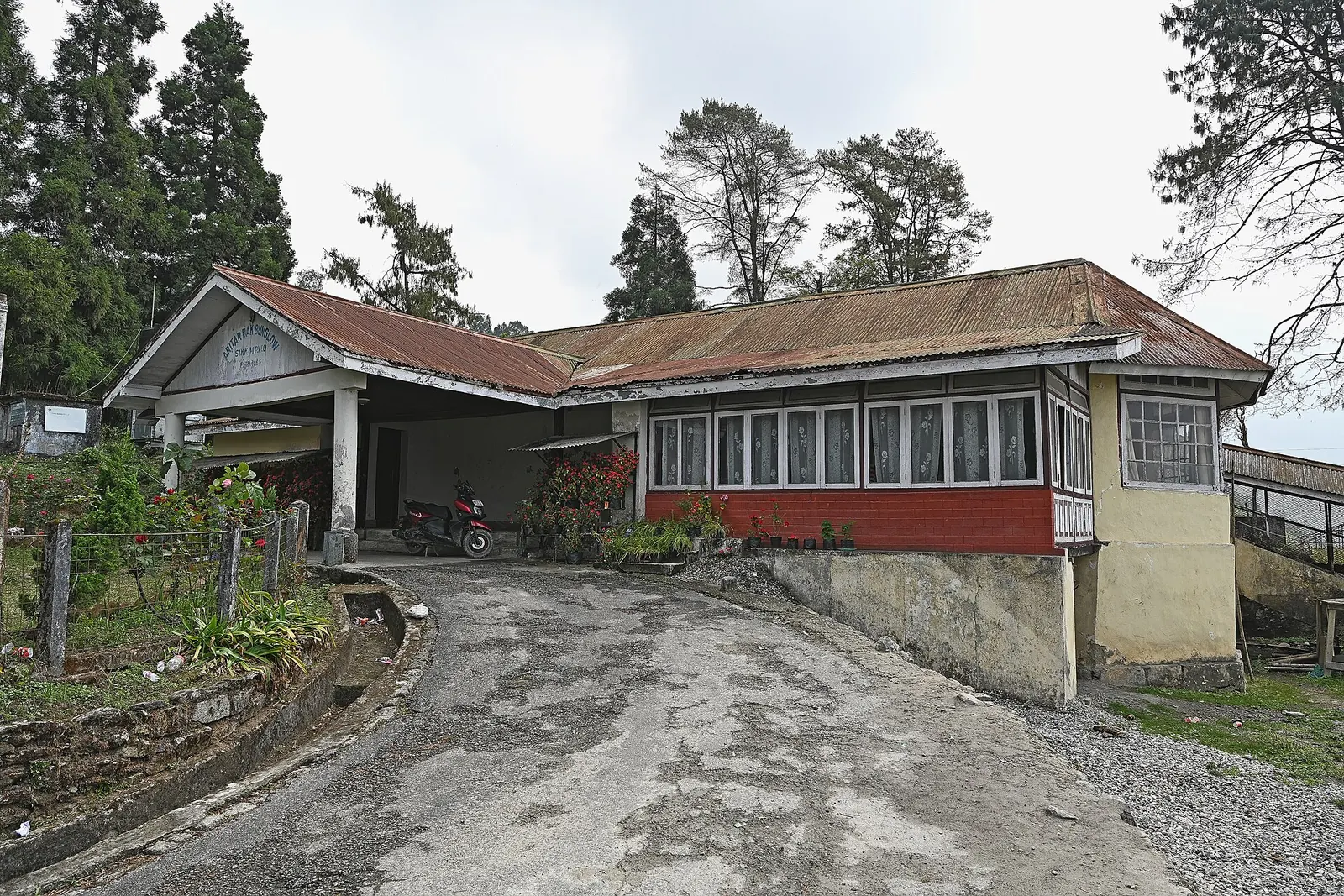
The infrastructure for travellers was the dak bungalow, an old mail post-house, which he says stood every 30 or 40 miles on highways and byways.
He describes water carriers (bhistis) competing to fill his tub for half an anna a goatskin, and the "air-conditioning": a punkah-wallah pulling a cloth fan by string while servants soaked straw screens. He was amused, and also clear that the traveller paid for every part of it.

6,372 miles to London, then a crash
Near Lahore he photographed a sign of the Automobile Association of Northern India that pointed right for Gujranwala and Rawalpindi, left for Multan, and gave the distance to London as 6,372 miles (One Man Caravan, 1939). Moments later a car swung round the bend from Gujranwala and knocked him flat.
His leg was spared; the bike lost only a carburettor dust filter, and he claimed the knock to the rear fork cancelled out a bent front fork from Turkey and made it ride straight again.
The trunk road is fast, the side road is slow, borders take hours, and you carry your own spares and patience.Sapta, on Fulton's lessons
See the data as a table
| Distance (miles) | |
|---|---|
| Bombay to Calcutta | 2000 |
| Rawalpindi to Srinagar | 250 |
| Lahore to Burewala, one afternoon | 200 |
| Peshawar to the Afghan frontier, Khyber | 30 |
Source: Robert E. Fulton Jr., One Man Caravan (Travel Book Club edition, 1939), Digital Library of India scan · Distances as Fulton gives them in the text, in miles. Rawalpindi to Srinagar was a full two days; Bombay to Calcutta took 90 riding hours.
The primary source for this story. Fulton's chapters on India cover his arrival by tramp steamer from Basra, Rajputana (Chitor and a stay at Udaipur), the trunk roads and dak bungalows, Delhi, Lahore, the Murree road to Srinagar, the Sind desert road to Multan, the Kohat Pass, Peshawar, the Khyber and Afghanistan, and the run from Bombay to Calcutta. He states figures plainly: 250 miles and two days from Rawalpindi to Srinagar, 30 miles through the Khyber, 2,000 miles Bombay to Calcutta in 90 riding hours, six months in the region. The limits: it is a travel book written for an American audience in the 1930s, with that era's colonial attitudes, and some numbers (like the 40,000-mile total) are not explained.
Read the book (free scan)What did Fulton find on the road to Kashmir?
He called the road from Rawalpindi to Srinagar one of the finest mountain highways in the world: it climbs over the Murree hills from the plains, drops, and climbs again to the Valley of Kashmir, which he gives as about 5,000 ft, in 250 miles that took him two full days.
He describes it clinging to cliff faces above torrents, with landslides and avalanches common in rain, and the State of Kashmir keeping thousands of labourers ready to rebuild it, paid for by a road toll.
He went to Kashmir almost by accident, turning off at Rawalpindi to follow an RAF officer he had met in Delhi who was going skiing, and found him at Baramulla.
The ride back to the plains was in rain and hail he describes as marble-sized, heavy enough to break windscreens; his sun helmet doubled as a hail helmet.
Then, tired of the heat of the plains, he rode from Lahore along what he calls the London road towards Multan, through the Sind desert, 200 miles in an afternoon, and on to the North-West Frontier.

Was Fulton really stopped from riding the Khyber Pass?
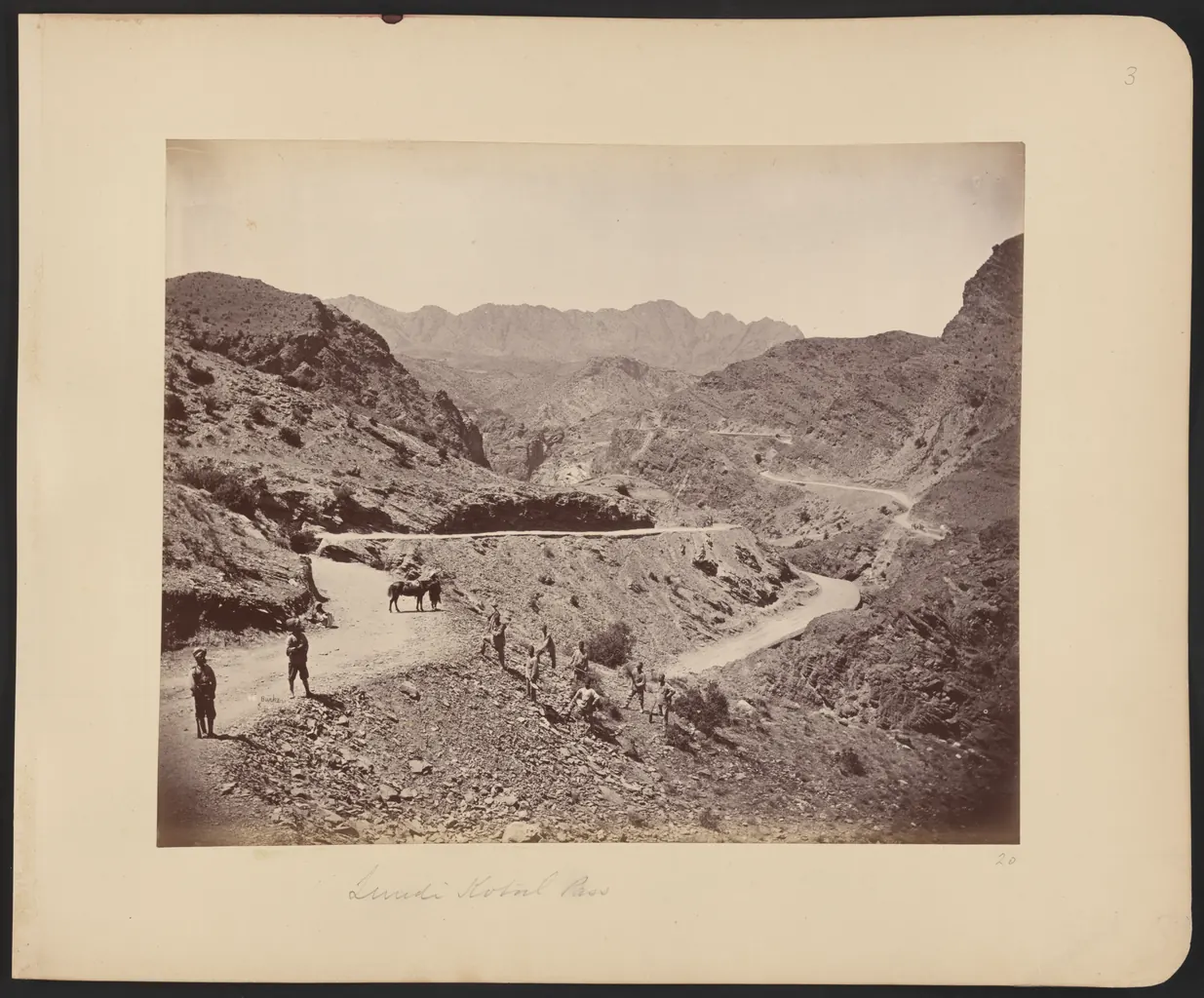
Yes, by his own account, though only after he had ridden it. He covered about 30 miles from Peshawar through the Khyber to the Afghan frontier post.
There a Pathan official in British service told him that motorcycling was forbidden in the Khyber District, a rule the official linked to an earlier case involving an Indian motorcyclist and a blood-money settlement.
After an hour of telephone calls to officials, the ruling was that he could cross, but the machine had to be lifted off the ground and carried over the last 20 yards into Afghanistan.
Afghanistan and back
He rode on to Kabul, Ghazni and Kandahar, sleeping one night in a hole beside the bike in the hills outside Kandahar.
He crossed back into British Baluchistan after four hours of formalities and four attempts to fix a flat tyre in front of a watching village. He had refreshment only of green tea and eggs for days.
From there he sailed overnight to Bombay, because, he says, it was the only place in British India where his film could be developed properly.
How fast could you cross India by motorcycle in 1933?
Fulton says he rode the 2,000 miles from Bombay to Calcutta in 90 driving hours, an average of about 22 mph (36 km/h), on a road he describes as perfectly signed, well repaired and comparable to America's U.S. Route 1.
At Calcutta, he notes wryly, the Grand Trunk Road simply ran out at the water's edge. He had $130 left, shipping agents refused to sell steerage to a white man, and one agent finally got him and the bike deck passage to Sumatra on a freighter sailing on 13 July, with water buffalo in the hold.
That average is worth comparing with today. Use this to check what you just read: plug your own numbers into the calculator below. a modern rider on National Highways covers the distance far faster, and the calculator shows how many days his 90 riding hours would take at your own daily limit. The guide to how many km a day you can ride has the modern numbers.
Average speed: Fulton vs you
How have India's roads changed since Fulton's ride?
When India became independent in 1947 its whole road network was only about 1,70,000 km, according to figures cited by Harvard historian Aditya Balasubramanian; by 2025 the National Highways alone measured 1,46,560 km.
The roads Fulton praised were the trunk routes; most of the country moved on iron-tyred bullock carts, which road engineers of the 1930s and 1940s called the biggest obstacle to better road surfaces.
A historian's survey of how motor roads came to India. It notes that railways from the 1850s led governments to neglect roads; that imported motor vehicles arrived in real numbers only in the early 1920s; that the Jayakar Committee of 1928 recommended an overhaul of road transport and the Central Road Fund of 1929 put petrol tax money into road building; and that by 1947 the network was still only about 1,70,000 km. Fulton rode in 1933, right after that reform, which may explain why he found the trunk roads so good. The limit: it is a short essay drawing on secondary sources, not a dataset.
Read the essay (free)See the data as a table
| 2014 (km) | 2025 (km) | |
|---|---|---|
| All National Highways | 91287 | 146560 |
| 4-lane and wider | 18371 | 43512 |
| Access-controlled expressways | 93 | 3052 |
The old Grand Trunk Road itself survives as a set of national highways, and the history of the Grand Trunk Road traces it from Sher Shah Suri to today. The longest national highways post covers the modern numbering.
Why does One Man Caravan still matter to Indian riders?
Because it is a record, by a rider, of what touring India was like before almost any of today's riders' infrastructure existed:
- no fuel stations to speak of outside towns;
- bungalows instead of hotels;
- permits negotiated in person;
- film developed only in one city.
Fulton's lessons are the same ones riders relearn: the trunk road is fast, the side road is slow, borders take hours, and you carry your own spares and patience.
It also matters as part of a lineage. Forty years later the British journalist Ted Simon rode a Triumph through India on his way round the world; read Ted Simon's India chapter for how the roads had changed by 1976. And if you are planning your own long Indian ride, the solo touring safety plan is the modern version of Fulton's tool box. For more of India's roads, see the Yatri ride atlas.
What's new
- India's National Highway network crosses 1.46 lakh km IANS, Dec 2025
- Highways built at about 34 km a day in 2025; NH network over 1,46,572 km in FY 2025-26 Hindusthan Samachar, Jun 2026
- One Man Caravan (1939 edition) available as a free scan from the Digital Library of India Internet Archive, ongoing
Questions people ask
Who was the first person to ride a motorcycle around the world?
Fulton himself declined the title. In One Man Caravan he writes that there were no official records to prove his was the first such trip and that others may have done it before him. He is one of the earliest documented solo riders, not a certified first.
What motorcycle did Robert Fulton ride in One Man Caravan?
A Douglas flat twin, usually identified as a 1932 H32 Mastif of 750 cc. One Indian account calls it a 600 cc 1930 Douglas T6. He kept and restored it.
Which parts of India did Fulton ride through?
Rajputana (including Chitor and Udaipur), Central India, Delhi, the Punjab (Lahore, Rawalpindi), Kashmir (Srinagar and Baramulla), Sind, the North-West Frontier (Peshawar and the Khyber), and the route from Bombay to Calcutta. Several of these places are now in Pakistan.
Is there a film of One Man Caravan?
Yes. Fulton shot about 40,000 ft of film and in 1983 released a 90-minute film made from it with his sons; he later presented it as Twice Upon a Caravan.
Sources
- Robert E. Fulton Jr.: One Man Caravan, Travel Book Club edition, Digital Library of India scan (1939)
- Aditya Balasubramanian, Harvard Center for History and Economics: Roads and Road Transport in India (2023)
- Wikipedia: Robert Edison Fulton Jr.
- Voice of America: Robert Edison Fulton rode around the world on a motorcycle (2009)
- The Vintagent: Fulton's One Man Caravan
- Rishad Saam Mehta, Open magazine: Vroom with a View (2011)
- IANS: India's highway network crosses 1.46 lakh km (2025)
- Hindusthan Samachar: India's highway network surpasses 146,000 km (2026)

Sapta (Saptarshi Sarkar) is a mechanical engineer turned marketer in Bengaluru and a solo touring rider. He writes the seven Saptaverse blogs. Work with him or read more of RoadHook Rides.


