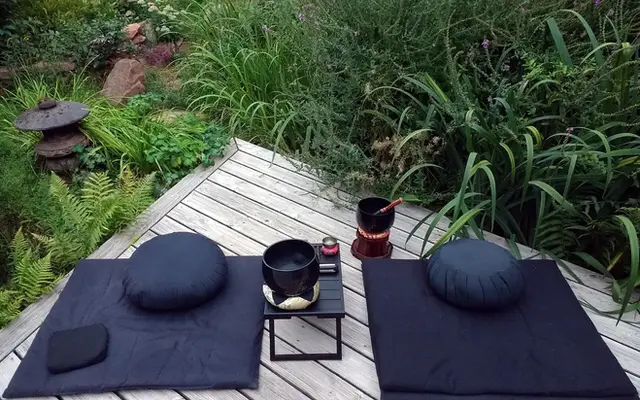
Ranked by the number of randomised controlled trials in the largest meta-analysis of each, the best-evidenced types of meditation are mindfulness programmes such as MBSR and MBCT (136 trials, 11,605 people), then Transcendental Meditation (27 trials), other mantra meditation (24) and loving-kindness (22 studies). Body scan alone (14 trials), yoga nidra (many small, low-quality studies) and Vipassana (7 studies, no meta-analysis) have the thinnest evidence.
- 136 RCTs with 11,605 adults put mindfulness programmes (MBSR, MBCT) far ahead.
- HR 0.69: MBCT cuts depressive relapse by about a third over 60 weeks.
- Mantra and TM show small to moderate effects, but no trial was at low risk of bias.
- Yoga nidra's large effects are probably inflated; Vipassana has only 7 studies.
- 8.3% of participants across 83 studies reported an adverse event.
The criterion matters, so here it is in full:
- What I counted: the randomised trials pooled in the largest published meta-analysis for each technique on mental-health outcomes (anxiety, depression, stress), with the pooled effect size beside it.
- What I flagged: where reviewers rated most of the trials at high risk of bias, because a hundred weak trials can mislead more than ten good ones.
- What it is not: the ranking measures how sure we can be that a technique works, not which technique is best for you.
For scale, Sedlmeier's 2012 meta-analysis of 163 studies across all kinds of meditation found an average effect of r = .28, roughly a medium effect.
Which type of meditation has the most scientific evidence?
Mindfulness-based programmes have by far the most evidence: Galante and colleagues pooled 136 randomised trials with 11,605 adults in 2021, more than all the other techniques on this list combined. The chart shows the size of the largest review for each technique.
See the data as a table
| Studies in largest review (studies) | |
|---|---|
| Mindfulness programmes (MBSR, MBCT) | 136 |
| Yoga nidra (mixed designs) | 73 |
| Transcendental Meditation | 27 |
| Other mantra meditation | 24 |
| Loving-kindness and compassion | 22 |
| Body scan alone | 14 |
| Vipassana | 7 |
Source: Galante 2021 (PLoS Med), Ghai 2026 (Ann NY Acad Sci), Álvarez-Pérez 2022 (IJERPH), Galante 2014 (JCCP), Gan 2022 (Appl Psychol Health Well-Being), Chiesa 2010 (JACM) · Mindfulness, mantra and body scan counts are randomised trials. Yoga nidra's 73 include uncontrolled studies, so it ranks lower than its bar suggests. Vipassana's 7 were not meta-analysed.
| Rank | Technique | Largest review | Trials | Main pooled effect | Quality flag |
|---|---|---|---|---|---|
| 1 | Mindfulness programmes (MBSR, MBCT) | Galante 2021; Kuyken 2016 | 136 RCTs; 9 IPD trials | Anxiety SMD -0.56; relapse HR 0.69 | Heterogeneous; not better than other active programmes |
| 2 | Transcendental Meditation | Álvarez-Pérez 2022 (TM subset) | 27 | Trait anxiety d -0.62 vs usual care (Orme-Johnson 2014, 16 RCTs) | Many trials by TM-affiliated authors |
| 3 | Other mantra meditation (incl. japa-style) | Álvarez-Pérez 2022 | 24 | All mantra: anxiety g -0.46, depression -0.33 | No trial at low risk of bias |
| 4 | Loving-kindness and compassion | Galante 2014 | 22 | Depression g -0.61 vs passive controls | Small trials |
| 5 | Body scan alone | Gan 2022 | 14 | Mindfulness g 0.27; little else | Low quality |
| 6 | Yoga nidra | Ghai 2026 | 73 studies, mixed designs | Stress g -0.80 vs active controls | Effects likely inflated |
| 7 | Vipassana | Chiesa 2010 | 7 studies | None pooled | Mostly low quality |
1. Mindfulness programmes (MBSR and MBCT)
Mindfulness-based stress reduction (MBSR) and mindfulness-based cognitive therapy (MBCT) are eight-week group courses that train attention to breath, body and thoughts, and they are the best-tested meditation in the world.
The test that mattered most to people already on pills was run from the University of Exeter and led by Willem Kuyken. His team recruited 424 adults with recurrent major depression, all taking maintenance antidepressants, from 95 general practices across the South West of England. Half, 212 people, stayed on their medication for two years.
The other 212 came off their antidepressants slowly, with support, and took MBCT: eight group sessions of 2¼ hours, daily home practice, and four optional follow-up sessions over the next year. Assessors checked everyone at regular intervals for a new episode of major depression. When the results came out in The Lancet in 2015, 44% of the MBCT group and 47% of the medication group had relapsed within two years. MBCT did not beat the pills; it roughly matched them. The tapering was planned and supported, so never stop an antidepressant without your doctor.
King's College London: Mindfulness therapy could offer alternative to antidepressants for preventing depression relapse (on Kuyken et al., The Lancet, 2015)In nonclinical adults, Galante's 2021 meta-analysis in PLoS Medicine found that compared with doing nothing, they:
- reduced anxiety (SMD -0.56, 8 trials);
- reduced depression (-0.53, 14 trials);
- reduced psychological distress (-0.45, 27 trials);
- raised well-being (0.33).
Two findings that keep it honest
Against other active programmes such as exercise or relaxation classes, mindfulness was not clearly better. And Goyal's 2014 review for JAMA Internal Medicine, which pooled 47 trials with 3,515 people, found smaller effects: anxiety 0.38 at eight weeks and 0.22 at three to six months, depression 0.30 and 0.23, and pain 0.33.
MBCT and relapse
MBCT has the strongest clinical result of any technique here. Kuyken's 2016 individual-patient meta-analysis of 9 trials (1,258 patients with recurrent depression) found that MBCT cut the risk of relapse over 60 weeks by about a third compared with usual care (hazard ratio 0.69), and still beat other active treatments (HR 0.79).
- 136 RCTs, 11,605 adults (Galante 2021)
- MBCT relapse HR 0.69 (Kuyken 2016)
- Format: 8 weekly sessions
The team pooled 136 randomised trials with 11,605 adults in workplaces, universities and communities. Against no intervention, mindfulness reduced anxiety (SMD -0.56), depression (-0.53) and distress (-0.45) and improved well-being (0.33). Against nonspecific active controls it beat them only for depression (-0.46, 6 trials), and against specific active controls such as exercise it showed no superiority. Limit: high heterogeneity, so the average effect will not hold in every setting.
Read the paper (free)
2. Transcendental Meditation
Transcendental Meditation (TM) is a branded technique of silently repeating a mantra, taught through its own organisation, and it is the most trialled single mantra method: 27 of the 51 trials in a 2022 meta-analysis of mantra meditation were TM.
A 2014 meta-analysis of 16 TM trials (1,295 people) by Orme-Johnson and Barnes found reductions in trait anxiety of d = -0.62 against usual care and -0.50 against active controls, largest in people who started very anxious.
TM also has a blood-pressure literature: Bai's 2015 meta-analysis of 12 trials (996 people) found falls of 4.26 mmHg systolic and 2.33 diastolic.
- 27 RCTs (TM subset of Álvarez-Pérez 2022)
- Anxiety d -0.62 vs usual care (16 RCTs)
- Systolic BP -4.26 mmHg (12 RCTs)
3. Other mantra meditation, including japa
Mantra meditation in general, repeating a word or phrase to anchor attention, has solid but low-quality evidence: Álvarez-Pérez's 2022 meta-analysis pooled 51 randomised trials (27 TM, 24 other mantra methods such as Benson's relaxation response) and found small to moderate improvements in anxiety (g = -0.46), depression (-0.33), stress (-0.45) and post-traumatic symptoms (-0.59).
None of the 52 study reports was rated at low risk of bias.
Japa, the Indian practice of repeating a name or mantra, falls in this family, but the review does not name japa trials specifically, so its evidence is inferred from close cousins. A 2026 meta-analysis in Pain Research and Management found mantra meditation helped mood and mental quality of life in chronic pain (7 studies, 374 people) but not pain itself.
- 24 non-TM RCTs; 51 mantra RCTs in total
- Anxiety g -0.46; depression g -0.33
- 0 trials at low risk of bias
The authors pooled 51 randomised trials of mantra meditation (27 Transcendental Meditation, 24 other mantra methods) against controls. Effects were small to moderate: anxiety g = -0.46, depression -0.33, stress -0.45, post-traumatic symptoms -0.59, mental quality of life +0.32. Limit: none of the 52 reports was at low risk of bias, mostly because instructors and participants could not be blinded, and few trials enrolled people with diagnosed psychiatric illness.
Read the paper (free)4. Loving-kindness and compassion meditation
Loving-kindness meditation (metta) trains goodwill toward oneself and others by repeating phrases of well-wishing, and Galante's 2014 meta-analysis of 22 studies found it reduced depression (g = -0.61) and raised mindfulness (0.63), compassion (0.61) and self-compassion (0.45) against passive controls.
Against progressive muscle relaxation, an active control, it still improved positive emotions (g = 0.42).
The newest data favours it for mood. A meta-analysis of 79 studies with 26,434 participants, presented by Edinburgh researchers at the Association for Psychological Science convention in May 2026, found that brief mindfulness inductions give small but significant boosts to positive emotion, with larger effects for mixed approaches such as loving-kindness.
- 22 studies (Galante 2014)
- Depression g -0.61; positive emotion g 0.42 vs relaxation
5. Body scan
The body scan, moving attention slowly from toes to head, is a core MBSR exercise, but on its own it has surprisingly weak evidence: Gan and colleagues' 2022 meta-analysis of 14 randomised trials found only a small rise in mindfulness against passive controls (g = 0.27) and concluded that a standalone body scan did not improve health outcomes meaningfully. Study quality was low.
The benefit of eight-week mindfulness courses seems to come from the whole package (group, teacher, daily practice, several methods) rather than from one exercise pulled out of it.
- 14 RCTs (Gan 2022)
- Mindfulness g 0.27; no clear health effect
6. Yoga nidra
Yoga nidra is a guided practice done lying down, which moves attention around the body and through images toward a state between waking and sleep, and it has many studies but weak ones.
Ghai's 2026 meta-analysis in the Annals of the New York Academy of Sciences pooled 73 studies (5,201 people) and reported large reductions in stress (g = -0.80 against active comparators), anxiety and depression, but warned that low methodological quality means the effects are probably inflated.
When you look only at randomised trials, the numbers shrink. A 2026 meta-analysis on sleep found 5 usable studies, and the pooled improvement in sleep quality across randomised trials (SMD -1.04, n = 181) was not statistically significant. A 2024 review for hypertension had 5 randomised and 3 non-randomised trials.
- 73 studies, mixed designs (Ghai 2026)
- Sleep RCTs: n = 181, not significant
- Indian-origin, widely taught in India

7. Vipassana
Vipassana, the insight meditation taught in S. N. Goenka's free 10-day residential courses, ranks last on evidence, not on worth: a 2010 systematic review by Chiesa found only 7 studies, mostly of low quality, and no meta-analysis has pooled Vipassana trials on mental-health outcomes since.
Much of the published work is EEG research on long-term practitioners, such as Cahn's studies of gamma activity, which describes the brain during practice rather than testing benefits against a control group.
The 10-day format makes randomised trials hard: you cannot easily blind or randomise people into ten days of silence. That is a reason for humility, not a verdict. If you are weighing a course, read is a 10-day Vipassana course worth it first.
- 7 studies (Chiesa 2010)
- No pooled effect size
- Course format: 10 days, residential
Can meditation be harmful?
Meditation can have side effects: Farias and colleagues' 2020 review of 83 studies with 6,703 participants found a pooled adverse-event rate of 8.3%, with anxiety (reported in 33% of studies that found events) and depression (27%) most common.
| Study design | Adverse-event rate |
|---|---|
| Experimental trials | 3.7% |
| Observational studies | 33.2% |
| All 83 studies, pooled | 8.3% |
The gap suggests trials undercount problems or that intensive retreats carry more risk.
Rather than pooling summary numbers, the authors pooled raw data from 1,258 patients (75% women) in 9 randomised trials of MBCT for recurrent depression. Over 60 weeks, MBCT lowered the risk of relapse compared with non-MBCT treatment (HR 0.69) and compared with other active treatments (HR 0.79). Patients with worse residual symptoms gained most. Limit: these were people in remission with recurrent depression, not people in a current episode.
Read the paper (free)Does meditation change the brain?
Imaging studies do find differences in experienced meditators, especially in the default mode network that runs mind-wandering, but most are small and cross-sectional, so they cannot separate cause from who chooses to meditate. The evidence on this is covered in detail in does meditation change the brain and the default mode network. For a sceptical look at why effects keep shrinking as trials improve, read mindfulness hype vs evidence.
Which meditation should a beginner start with?
On evidence alone, a structured eight-week mindfulness course (MBSR, or MBCT if you have had depression before) is the safest bet, because it has the most trials and a defined format. Mantra meditation is a close second and fits many Indian households that already know japa. The practical steps, including how long to sit and what to do when the mind wanders, are in how to start meditating. More on Indian thought about the mind is on the Manthan world page.
What's new
- Meta-analysis of 79 studies: brief mindfulness gives small, real gains in positive emotion APS Annual Convention, May 2026
- Yoga nidra meta-analysis of 73 studies finds large but probably inflated effects on stress Annals of the New York Academy of Sciences, 2026
- Eight-week mindfulness RCT with 264 students: one more mindful day cuts rumination and lifts well-being for up to four days PsyPost on a study in Mindfulness, Jul 2026
Questions people ask
Is meditation better than therapy or medication?
Not on current evidence. Mindfulness programmes beat doing nothing but were not clearly better than other active programmes such as exercise in Galante's 2021 meta-analysis. MBCT is the exception for relapse prevention in recurrent depression, where it beat both usual care and other active treatments in Kuyken's pooled data. Decisions about medication belong with your doctor.
Is Transcendental Meditation better than other mantra meditation?
The 2022 mantra meta-analysis grouped TM and other mantra methods and found small to moderate effects for both; it did not show that TM gives a clearly bigger benefit. TM simply has more trials, many run by researchers linked to the TM organisation.
How long do I need to meditate to see benefits?
Most trials in these meta-analyses used programmes of about eight weeks, often with 20 to 45 minutes of daily practice, so that is the dose with evidence behind it. Brief inductions of a few minutes produce small short-term mood effects, according to the 2026 APS meta-analysis.
Is Vipassana scientifically proven?
Not in the sense of randomised trials. A 2010 systematic review found 7 studies, mostly low quality, and EEG studies of experienced practitioners describe brain activity rather than prove benefit. The absence of trials is partly practical, since a 10-day silent course is hard to randomise.
Sources
- Galante J et al.: Mindfulness-based programmes for mental health promotion in adults in nonclinical settings, PLoS Medicine (2021)
- Kuyken W et al.: Effectiveness and cost-effectiveness of MBCT compared with maintenance antidepressant treatment (PREVENT), The Lancet, as reported by King's College London (source for the trial story) (2015)
- NIHR Evidence: Mindfulness therapy may provide an alternative to continuing antidepressants in preventing recurrence of depression (2015)
- Goyal M et al.: Meditation programs for psychological stress and well-being, JAMA Internal Medicine (2014)
- Kuyken W et al.: Efficacy of MBCT in prevention of depressive relapse, JAMA Psychiatry (2016)
- Álvarez-Pérez Y et al.: Effectiveness of mantra-based meditation on mental health, IJERPH (2022)
- Orme-Johnson DW, Barnes VA: Effects of the Transcendental Meditation technique on trait anxiety, JACM (2014)
- Bai Z et al.: Investigating the effect of Transcendental Meditation on blood pressure, Journal of Human Hypertension (2015)
- Canter PH, Ernst E: Insufficient evidence to conclude whether or not TM decreases blood pressure, Journal of Hypertension (2004)
- Galante J et al.: Effect of kindness-based meditation on health and well-being, J Consulting and Clinical Psychology (2014)
- Gan R et al.: The effects of body scan meditation, Applied Psychology: Health and Well-Being (2022)
- Ghai S et al.: Effects of yoga nidra on stress, anxiety and depression, Annals of the NY Academy of Sciences (2026)
- Singh S et al.: Effect of yoga nidra in sleep disturbances and insomnia, Sleep and Breathing (2026)
- Chiesa A: Vipassana meditation: systematic review of current evidence, JACM (2010)
- Farias M et al.: Adverse events in meditation practices and meditation-based therapies, Acta Psychiatrica Scandinavica (2020)
- Sedlmeier P et al.: The psychological effects of meditation: a meta-analysis, Psychological Bulletin (2012)
- He Y et al.: Effects of a brief mindfulness induction on positive emotion, APS 2026 poster (2026)

Sapta (Saptarshi Sarkar) is a mechanical engineer turned marketer in Bengaluru and a solo touring rider. He writes the seven Saptaverse blogs. Work with him or read more of Mindblog.