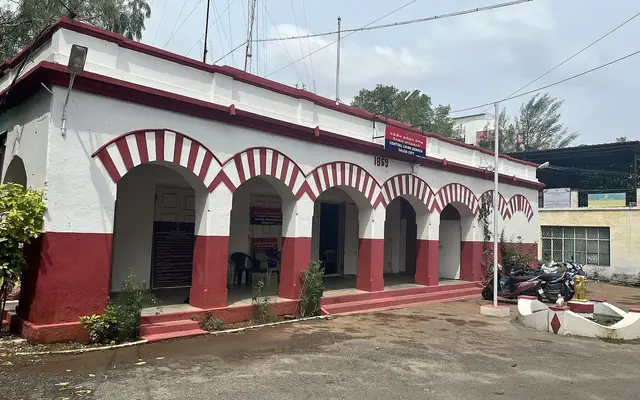
"Digital arrest" is a scam, not a legal procedure: no Indian law lets the police, CBI, ED, customs or any court arrest, question or hold you over a phone or video call, and no agency asks you to transfer money to "clear your name". Criminals pose as officers, accuse you of a crime, keep you on camera for hours or days, and pressure you into paying. If you get such a call, hang up, call 1930 or file at cybercrime.gov.in, and tell your bank at once.
- There is no such thing as digital arrest in Indian law; a real arrest happens in person, with reasons given.
- Reported losses rose from ₹91 crore in 2022 to ₹1,935 crore in 2024, a 21-fold jump in two years.
- Digital arrest made up about 8% of the ₹19,813 crore Indians reported losing to cyber fraud in 2025.
- The script has three stages: authority, fear, isolation. Breaking any one of them breaks the scam.
- Call 1930 within the first hour; banks and police can freeze money only before it is layered away.
- Since October 2026, the Supreme Court has said banks must repay victims where their own due diligence failed.
The Minister of State for Home Affairs told the Rajya Sabha in March 2025 that reported digital arrest losses were ₹91.14 crore in 2022, ₹339 crore in 2023 and ₹1,935.51 crore in 2024. In just January and February 2025 another 17,718 cases and ₹210.21 crore were reported. Those are only the cases people reported, so the true figure is higher.
The scam works because it turns respect for the law into the weapon. This post covers the law, the script, the psychology and the response, for Indians and for visitors or NRIs who get the same calls.
Is digital arrest real in India?
No. Digital arrest has no legal basis: the Bharatiya Nagarik Suraksha Sanhita (BNSS), which replaced the Code of Criminal Procedure on 1 July 2024, describes arrest as a physical act in which the officer tells the person the full particulars of the offence, and the arrested person is medically examined after arrest. None of that can happen through a phone screen.
Prime Minister Narendra Modi said the same in his Mann Ki Baat broadcast in October 2024: no genuine agency makes inquiries over phone or video calls. He gave a three-step rule that is still the best summary: stop, think, take action.
- Stop: stay calm and share nothing under pressure.
- Think: real agencies do not question people by video call or ask for payment.
- Take action: report on 1930 or cybercrime.gov.in, tell your family and keep the evidence.
Between 7 and 14 November 2025, a 71-year-old man in Hyderabad was told by callers posing as CBI officers that his Aadhaar had been used to open a Canara Bank account in Mumbai linked to crime. They moved him to continuous video "surveillance", showed him forged Delhi Crime Branch FIRs and images of ATM cards, and threatened arrest and harm to his family. Over about a week he transferred ₹1,92,50,070 into several mule accounts without telling his relatives. Police later arrested three men who supplied or held the accounts and linked them to five cases across India, while the alleged mastermind remained at large.
The Logical Indian: 71-year-old Hyderabad man loses ₹1.92 crore in digital arrest scam (Dec 2025)
How does a digital arrest scam work, step by step?

A digital arrest scam is a scripted performance in three acts: establish authority, build fear, then extract money while keeping the victim isolated. A 2026 paper in Frontiers in Psychology calls these stages initiation, manipulation and compliance. The props change, but the order almost never does.
- The hook. A call, often from a courier, telecom or "TRAI" desk, says a parcel in your name held drugs, fake passports or cash, or that your Aadhaar or SIM was used in a crime.
- The transfer. You are "connected" to a police, CBI, ED, NCB or customs officer, now on WhatsApp or Skype video. You may see a uniform, a logo, a police-station backdrop and a forged FIR or warrant.
- The accusation. They name a serious charge: money laundering, drug trafficking, a terror-funding case. Your name is "in the chargesheet".
- The isolation. You are told the case is secret, that you must stay on camera, that telling family will lead to their arrest too. This can last hours or days.
- The "verification". To prove innocence you must move your savings, FD or loan money to a "government", "RBI" or "escrow" account for checking, with a promise of a refund.
- The laundering. The money is split through mule accounts in small chunks and withdrawn in cash or converted to crypto within hours.
How much money has digital arrest cost India?
Reported digital arrest losses grew 21-fold between 2022 and 2024, from ₹91.14 crore to ₹1,935.51 crore, according to the Home Ministry's reply in the Rajya Sabha in March 2025. Cases grew more slowly than losses, which means each case got more expensive as gangs learned to target people with savings.
See the data as a table
| Losses (₹ crore) | |
|---|---|
| 2022 | 91.14 |
| 2023 | 339 |
| 2024 | 1935.51 |
Source: MHA reply in the Rajya Sabha, March 2025, reported by Inc42 · Reported cases only. January and February 2025 alone added another 210.21 crore, left off this line because it covers two months.
| Period | Cases reported | Losses reported | Average per case |
|---|---|---|---|
| 2022 | 39,925 | ₹91.14 crore | about ₹22,800 |
| 2023 | 60,676 | ₹339 crore | about ₹55,900 |
| 2024 | not given in the reply | ₹1,935.51 crore | not computable |
| Jan-Feb 2025 | 17,718 | ₹210.21 crore | about ₹1.19 lakh |
The averages are my division of the government's figures; a few crore-sized losses sit behind them.
Where digital arrest sits among all cyber fraud
Indians reported ₹22,845.7 crore in cyber-fraud losses in 2024 and about ₹19,813 crore in 2025, from 21.77 lakh complaints, according to I4C data. Investment scams took most of it. Digital arrest was about 8% of 2025 losses, which by my arithmetic is roughly ₹1,585 crore, so it stayed close to its 2024 peak even after two years of national warnings.
See the data as a table
| Investment schemes (%) | Digital arrest (%) | Credit card fraud (%) | Sextortion (%) | E-commerce fraud (%) | App or malware (%) | |
|---|---|---|---|---|---|---|
| Share of 2025 losses | 77 | 8 | 7 | 4 | 3 | 1 |
Why do educated, careful people fall for it?
People fall for digital arrest because the scam attacks obedience to authority under fear, not ignorance. Victims include an industrialist and retired professionals; what they share is a habit of cooperating with officials and a fear of public shame.
A conceptual paper from psychologists at CHRIST University and the Central University of Haryana. It defines digital arrest as authority impersonation over live calls and proposes the three-stage model used above. It draws on Milgram's obedience studies to explain why uniforms, legal jargon and staged settings work without any physical presence, and on Technology Threat Avoidance Theory to explain why fear of arrest overrides the urge to verify. Limit: it reports no new data, and its case table relies on press reports, so treat the model as a useful map rather than a measured finding.
Read the paper (free)Used 35,069 respondents aged 16 and over from the 2019/20 Crime Survey for England and Wales. People aged 75 and over were less likely to report any cybercrime, but when they were targeted they had 4.25 times the odds of losing money and about twice the odds of repeat victimisation. The authors suggest lower awareness of scams and reporting routes. Limit: it is UK data, but it matches the Indian pattern of fewer, larger losses among older victims.
Read the paper (free)The scam does not need you to be foolish. It needs you to be frightened, polite and alone for long enough.
How can you tell a real police call from a fake one?
A real police or agency contact is slow, written and in person; a fake one is urgent, secret and on video. The table sets the two side by side.
| What the caller does | What real agencies do |
|---|---|
| Questions you on WhatsApp or Skype video | Send a written notice to appear, or come in person |
| Says you are under "digital arrest" | Arrest only in person, giving the grounds of arrest |
| Orders you to tell no one | Never stop you from calling a lawyer or family |
| Asks you to move money to a "safe" or "RBI" account | Freeze accounts through banks by court or legal order, never ask you to transfer |
| Shows an FIR, warrant or Supreme Court order on screen | Let you verify through the station, your state police site or a lawyer |
| Threatens your family's arrest | Have no power to arrest relatives for your alleged offence |
What should you do if you get a digital arrest call or have already paid?
Disconnect, then report within the hour: call 1930, tell your bank, and file at cybercrime.gov.in, in that order.
- End the call. Install nothing they send; share no OTPs or screens.
- Tell one person. Isolation is what makes the scam work.
- Call 1930. The national cyber fraud helpline feeds the Citizen Financial Cyber Fraud Reporting and Management System, which alerts the receiving banks to hold the money.
- Call your bank. Ask them to block further debits, UPI and net banking, and to note the time of your report.
- File at cybercrime.gov.in. Add screenshots, numbers, account details, video-call IDs and transaction references. Note the acknowledgement number.
- File an FIR, anywhere. Section 173 of the BNSS lets you file a Zero FIR at any police station, or give information electronically; the station must transfer it to the one with jurisdiction.
- Visitors and NRIs: the tourist helpline 1363 and the emergency number 112 also work, and your embassy or consulate can help with local reporting.
Which laws apply
- Cheating by personation: BNS section 319 (old IPC 419); cheating is BNS 318 (old IPC 420).
- Extortion: BNS section 308 (old IPC 383 and 384).
- Personating a public servant: BNS section 204 (old IPC 170).
- Identity theft and cheating by personation using a computer: IT Act sections 66C and 66D, the sections Telangana police used in the Hyderabad case.
This is general information, not legal advice. For a specific case, speak to a lawyer or your local cyber police station.
Who runs these scams, and why is India such a big target?
Digital arrest is an industry: call centres abroad, mule-account suppliers at home, and SIM pipelines between them. I4C data reported by IANS in January 2026 say about 45% of complaints were linked to Cambodia, Myanmar and Laos, where scam compounds use trafficked workers.
- The callers: In December 2025 the Indian embassy in Phnom Penh, working with I4C, rescued 81 Indians from a compound in Bavet, Cambodia, where workers described confinement and threats. An FATF report in November 2026 cited an estimate of about 120,000 people forced to run online scams in Myanmar alone.
- The mules: In the ₹7 crore digital arrest of Ludhiana industrialist S.P. Oswal, the Enforcement Directorate says money passed through company accounts and then mule accounts in ₹2 to 5 lakh pieces, withdrawn in cash. A forwarding app let associates in Nepal read OTPs.
- The target: Instant UPI and IMPS transfers settle in seconds, and many retirees keep their savings in fixed deposits that can be broken online. That combination makes one successful call very lucrative.
More: India's cyber-fraud losses in numbers and the fake-job route into scam compounds.
What are the courts and the government doing about it?
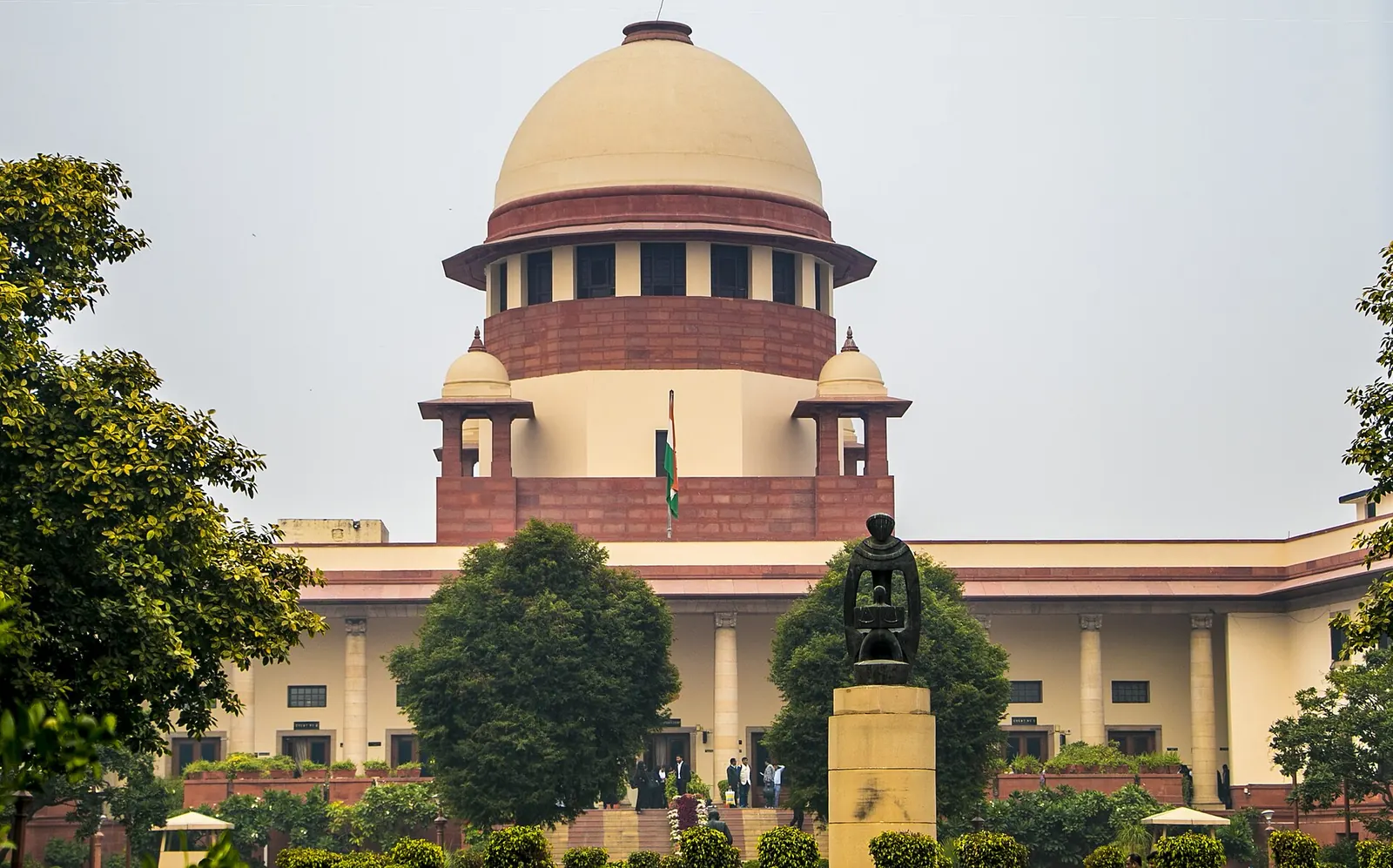
The response has moved from awareness to liability. The Supreme Court took up the issue on its own in a case titled In Re: Victims of Digital Arrest Related to Forged Documents, and its orders now reach banks and messaging platforms.
- Blocking: I4C blocked 83,668 WhatsApp accounts and 3,962 Skype IDs used for digital arrest. By July 2025 more than 9.4 lakh SIM cards and 2.6 lakh IMEI numbers had been blocked on police reports.
- CBI probe: On 1 December 2025 the Supreme Court ordered the CBI to investigate digital arrest scams nationally and asked states that had withheld consent to give it.
- Bank liability: In late October 2026 a bench led by Chief Justice Surya Kant said RBI's framework must make banks compensate victims, at not less than the amount lost, where fraud resulted from a bank's failure of due diligence.
- Platforms: On 10 November 2026 the court ordered WhatsApp and other intermediaries to set out their prevention measures and share them with I4C. Counsel for WhatsApp said it had acted against 9,400 accounts.

The same tools serve other emotions: greed in the fake stock-app scam, shame in sextortion calls. For payments, see the UPI fraud safety guide; more on the Kyun page.
What's new
- Supreme Court orders WhatsApp and other platforms to list their anti-scam measures The Tribune, Nov 2026
- Banks must repay digital fraud victims where their due diligence failed, says Supreme Court The Tribune, Oct 2026
- Himachal DGP warns there is no such thing as digital arrest The Tribune, Oct 2026
- I4C data: cyber-fraud losses about ₹19,813 crore in 2025, digital arrest 8% IANS, Jan 2026
Questions people ask
Is digital arrest real in India?
No. Indian law has no procedure called digital arrest. Arrest under the BNSS is a physical act with the grounds told to the person, and no agency questions people over video calls or asks them to transfer money. Anyone who says you are under digital arrest is committing a crime.
What should I do if someone says a parcel in my name has drugs?
Hang up. Check any real parcel only through the courier's own app or website, never through the caller's link or number. Real customs or narcotics cases begin with written notices and in-person procedure. If the caller has your personal details, report the number on 1930 or cybercrime.gov.in.
Can I get my money back after a digital arrest scam?
Sometimes, if you report fast: money still in the first layers of accounts can be frozen after a 1930 complaint. Since October 2026 the Supreme Court has also said banks must compensate victims where their own due diligence failed.
Are foreigners and NRIs targeted too?
Yes. Callers pose as Indian customs, immigration or police and threaten visa or passport trouble. The same rules apply: no Indian agency demands money on a call. Visitors can call 1363 (tourist helpline), 112 or 1930, and should tell their embassy.
Sources
- Inc42: Indians lost ₹1,935 crore to digital arrest scams in 2024, MHA reply in the Rajya Sabha (March 2025; source for case and loss figures and blocking data)
- Scroll: Indians lost ₹22,845 crore to cyber fraud in 2024, Lok Sabha reply (July 2025)
- IANS: Indians lose over ₹52,976 crore to cyber frauds over six years, I4C data (January 2026)
- BrokersView: Indians lost over ₹198 billion to financial fraud in 2025, I4C and NCRP data (January 2026)
- Robert SJ et al.: Digital arrest in the cyber age, Frontiers in Psychology (2026)
- Havers B et al.: Cybercrime victimisation among older adults, PLOS ONE (2024)
- The Logical Indian: Hyderabad man loses ₹1.92 crore in digital arrest scam (December 2025)
- Business Today: PM Modi warns of digital arrest scam (October 2024)
- Wikipedia: Bharatiya Nagarik Suraksha Sanhita, on Zero FIR (section 173) and arrest safeguards
- Bar and Bench: Supreme Court orders CBI probe into digital arrest scams (December 2025)
- The Tribune: Banks must repay digital fraud victims if due diligence fails (October 2026)
- The Tribune: SC orders WhatsApp, others to list measures to prevent digital arrests (November 2026)
- The Tribune: ED arrests Kolkata man in SP Oswal's ₹7 crore digital arrest case (October 2026)
- The Week: 81 Indians rescued from Bavet scam hub in Cambodia (December 2025)
- The Tribune / ANI: FATF report calls for global action to disrupt scam compounds (November 2026)
- Incredible India: Emergency numbers, including tourist helpline 1363

Sapta (Saptarshi Sarkar) is a mechanical engineer turned marketer in Bengaluru and a solo touring rider. He writes the seven Saptaverse blogs. Work with him or read more of Whyblog.