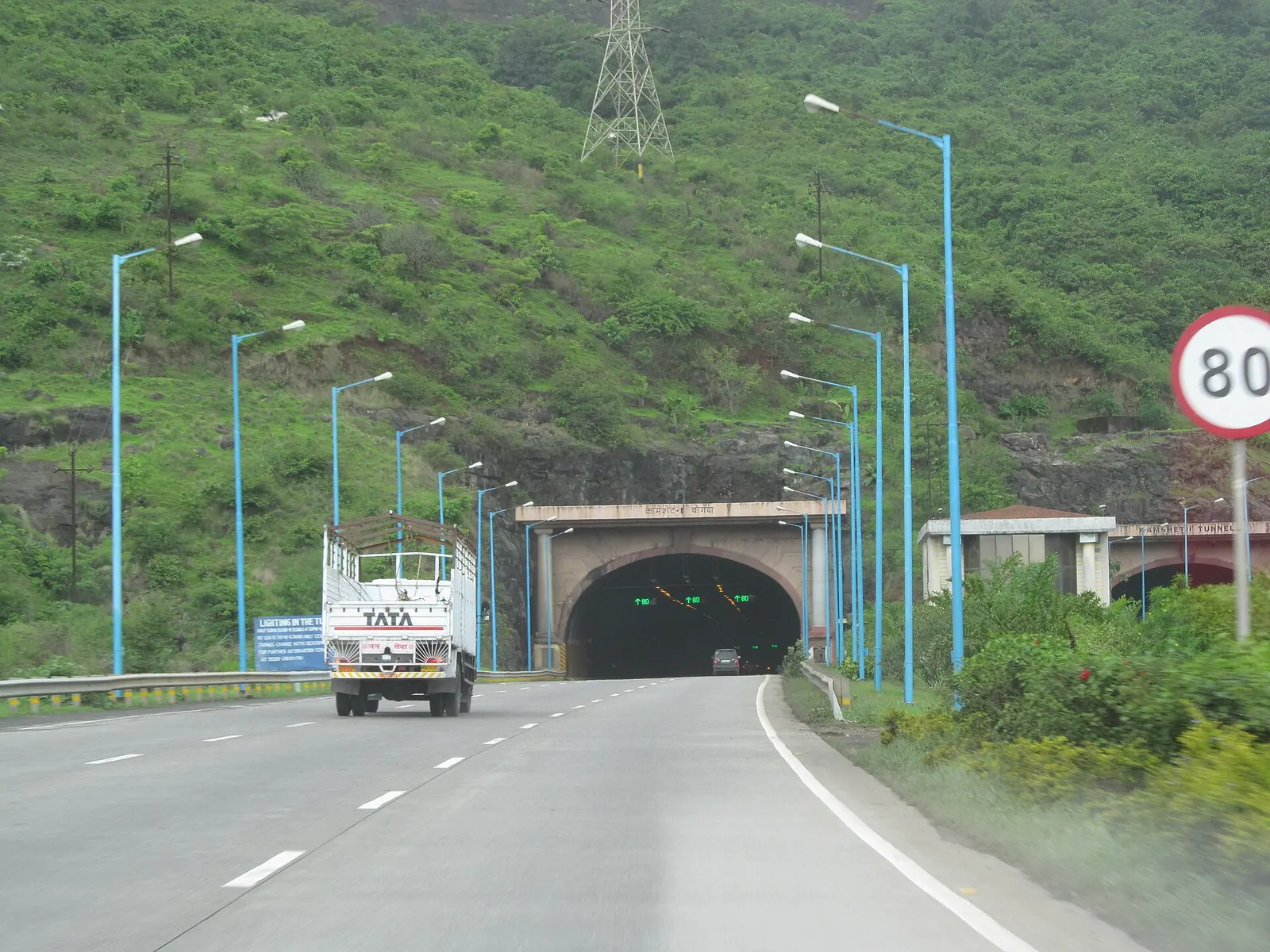
Bikes are not allowed on most Indian expressways because the National Highways Authority of India (NHAI) bars them by gazette notification under Section 35 of the Control of National Highways (Land and Traffic) Act, 2002, citing the speed gap between two-wheelers and fast cars. The Delhi High Court refused to lift the ban in 2023 and again in 2024. Yet the government's own 2018 speed-limit notice sets an 80 km/h limit for motorcycles on expressways "if permitted", which shows the law always imagined a way in.
- Section 35 of the 2002 highways Act is the legal tool: bans come corridor by corridor, by gazette.
- 80 km/h is the motorcycle expressway limit in the 2018 notice, "if permitted to ply".
- 2023 and 2024: the Delhi High Court twice called it a policy question and left the ban alone.
- 147 to 50: Bengaluru-Mysuru deaths, January to August, 2023 against 2024, after the ban and stricter enforcement.
- Japan 125 cc, Philippines 400 cc: countries that allow bikes draw the line by capability.
- 70,000 challans in Gurugram in seven months of 2026 show riders ignore the rule at scale.
For a touring rider this is not an abstract debate. India is building access-controlled corridors faster than ever, and each one that opens without a motorcycle lane pushes riders onto older highways and service roads, where trucks, tractors, pedestrians and crossing traffic all mix.
This post traces the legal basis, weighs the safety case on both sides, compares how other countries handle it, and ends with what a fair rule could look like.
Are motorcycles legally allowed on expressways in India?
Not on the expressways that have been notified as closed to them, which now covers nearly every new access-controlled corridor. There is no single national ban.
Instead, each restriction comes from a gazette notification for a specific road, issued under Section 35 of the Control of National Highways (Land and Traffic) Act, 2002, which lets the government restrict a highway or part of one for certain classes of vehicles.
The key notifications that riders keep running into are these.
| Corridor or rule | Notification | What it bars | Stated reason |
|---|---|---|---|
| Speed limits, all roads | S.O. 1522(E), 6 Apr 2018, under Section 112 of the Motor Vehicles Act | Nothing; sets motorcycles at 80 km/h on expressways "if permitted to ply" | National speed limits by vehicle class |
| Expressways around Delhi (Eastern Peripheral, Delhi-Meerut) | GSR 571(E), 14 Jun 2018, and NHAI notice of 15 Jan 2021 | Two- and three-wheelers and other slow vehicles | "Developed as a high speed corridor" (NHAI RTI reply, May 2023) |
| Delhi-Mumbai Expressway, Delhi-Dausa-Lalsot section (246 km) | NHAI gazette, February 2023 | Two-wheelers, three-wheelers, non-motorised vehicles, tractors | High-speed traffic "may pose risk" to slower vehicles |
| Bengaluru-Mysuru Expressway (118 km) | Gazette of 12 Jul 2023, in force 1 Aug 2023 | Two-wheelers, three-wheelers, non-motorised vehicles, tractors, multi-axle hydraulic trailers, quadricycles | Speed gap between fast and slow vehicles after crashes since opening in Mar 2023 |
| NH 48 (Km 14.3 to 42) and Dwarka Expressway, Gurugram | NHAI order, Jan 2024 | Two- and three-wheelers, tractors, non-motorised vehicles on access-controlled sections | Road safety on elevated and access-controlled stretches |
Two points stand out:
- Corridor by corridor. A rider has to check each new road; there is no master list.
- Always the same reason. Not that motorcycles are dangerous to others, but that fast cars are dangerous to slow vehicles.
The 118 km Bengaluru-Mysuru Expressway, a ₹8,480 crore six-laning of NH 275, opened in March 2023 to a run of crashes. In July, Karnataka's traffic chief, ADGP Alok Kumar, inspected the road, reviewed its enforcement cameras and said much of the safety work was still pending. On 12 July NHAI signed a Section 35 notification barring motorcycles, scooters, autos, tractors and quadricycles from 1 August, citing the speed gap between fast and slow traffic. Riders were sent to the service roads. A year later Kumar posted the result on X: 147 deaths from January to August 2023 against 50 in the same months of 2024. He credited speed enforcement, CCTV, special drives and the two-wheeler ban together, so the data cannot say how much the ban alone did.
Asianet Newsable: Bengaluru-Mysuru Expressway sees significant drop in accident deaths in 2024See the data as a table
| Expressway with access control (km/h) | 4-lane divided highway (km/h) | Other roads (km/h) | |
|---|---|---|---|
| Cars (M1) | 120 | 100 | 70 |
| Buses (M2, M3) | 100 | 90 | 60 |
| Goods vehicles (N) | 80 | 80 | 60 |
| Motorcycles | 80 | 80 | 60 |
| Quadricycles | 60 | 50 |
Source: MoRTH notification S.O. 1522(E), 6 April 2018 · The motorcycle expressway limit carries the footnote: if permitted to ply on Expressway. Quadricycles have no expressway limit.
What did the courts say about two-wheelers on expressways?
The Delhi High Court has twice declined to interfere, and in both cases it treated the question as policy, not law.
2023: enforce the ban
In Yuvraj Francis v. Union of India (October 2023), a bench of Chief Justice Satish Chandra Sharma and Justice Sanjeev Narula heard a petition complaining that slow vehicles kept entering the Delhi-Gurugram Expressway.
The court directed the traffic police to enforce the existing prohibitions rigorously, linked safe transit to the right to life, and said dedicated lanes for slow vehicles were for the government to decide.
2024: no exception for riders
In Gautam Kumar Laha v. NHAI (6 November 2024), a bench of Chief Justice Manmohan and Justice Tushar Rao Gedela heard the opposite plea: allow two-wheelers on highways and expressways, and quash the 2018 and 2021 notifications. A companion petition by a rider asked for guidelines rather than a blanket ban.
The court followed Yuvraj Francis and closed the challenge. It did leave one door open: the petitioners had argued that a ₹20,000 penalty on two-wheelers exceeded the ₹500 maximum under Section 177 of the Motor Vehicles Act, and the court sent that question to NHAI for a decision within four weeks.
| Case | Who asked for what | Outcome |
|---|---|---|
| Yuvraj Francis (Oct 2023) | Keep slow vehicles off the Delhi-Gurugram Expressway | Enforce the bans; lanes are a policy call |
| Gautam Kumar Laha (Nov 2024) | Let two-wheelers on; quash the notifications | Plea closed; penalty question sent to NHAI |
So the legal position in late 2026 is settled in practice. The ban stands unless the government changes it, and courts will not change it for you.
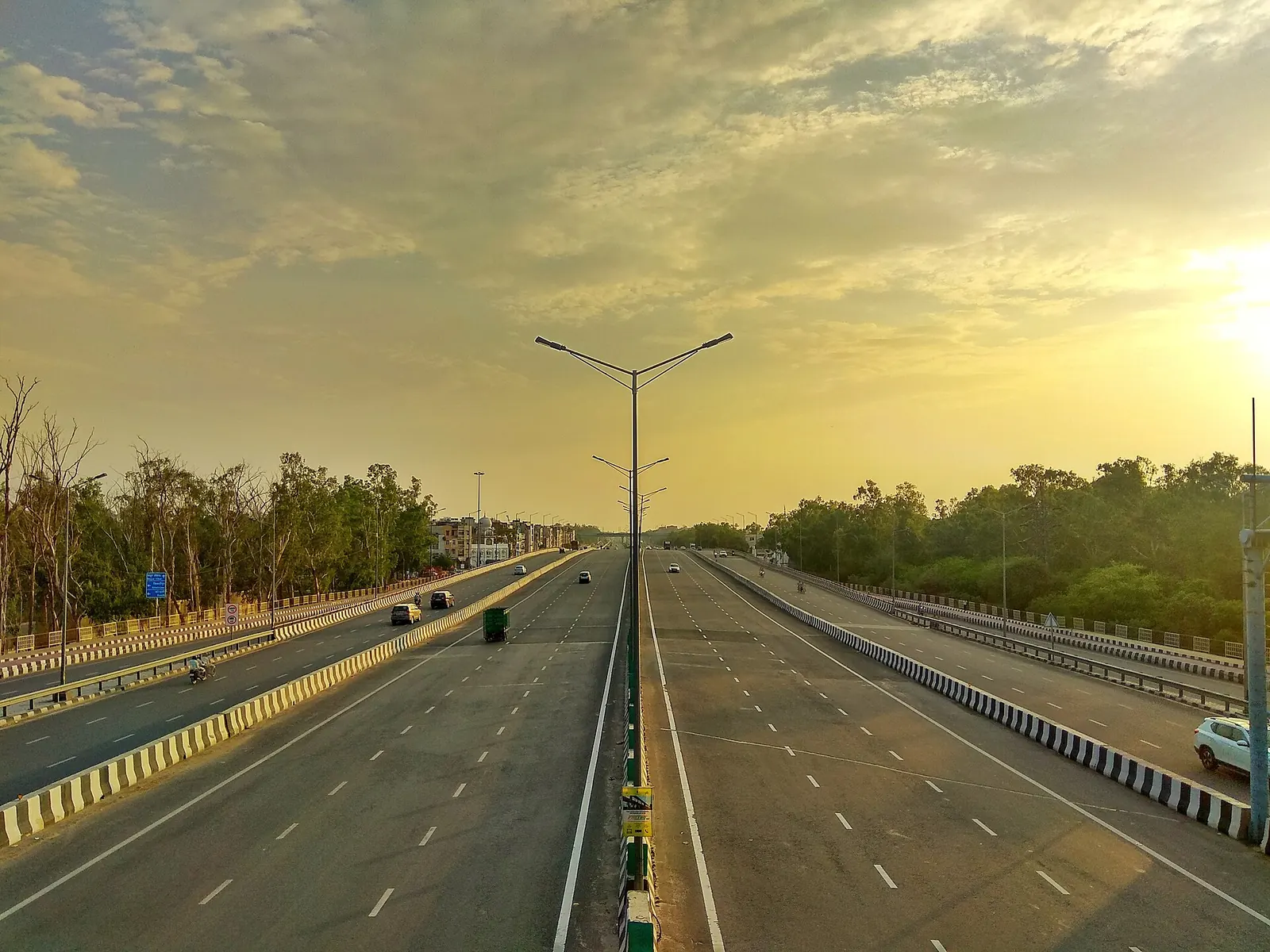
Why does India ban bikes when most countries allow them?
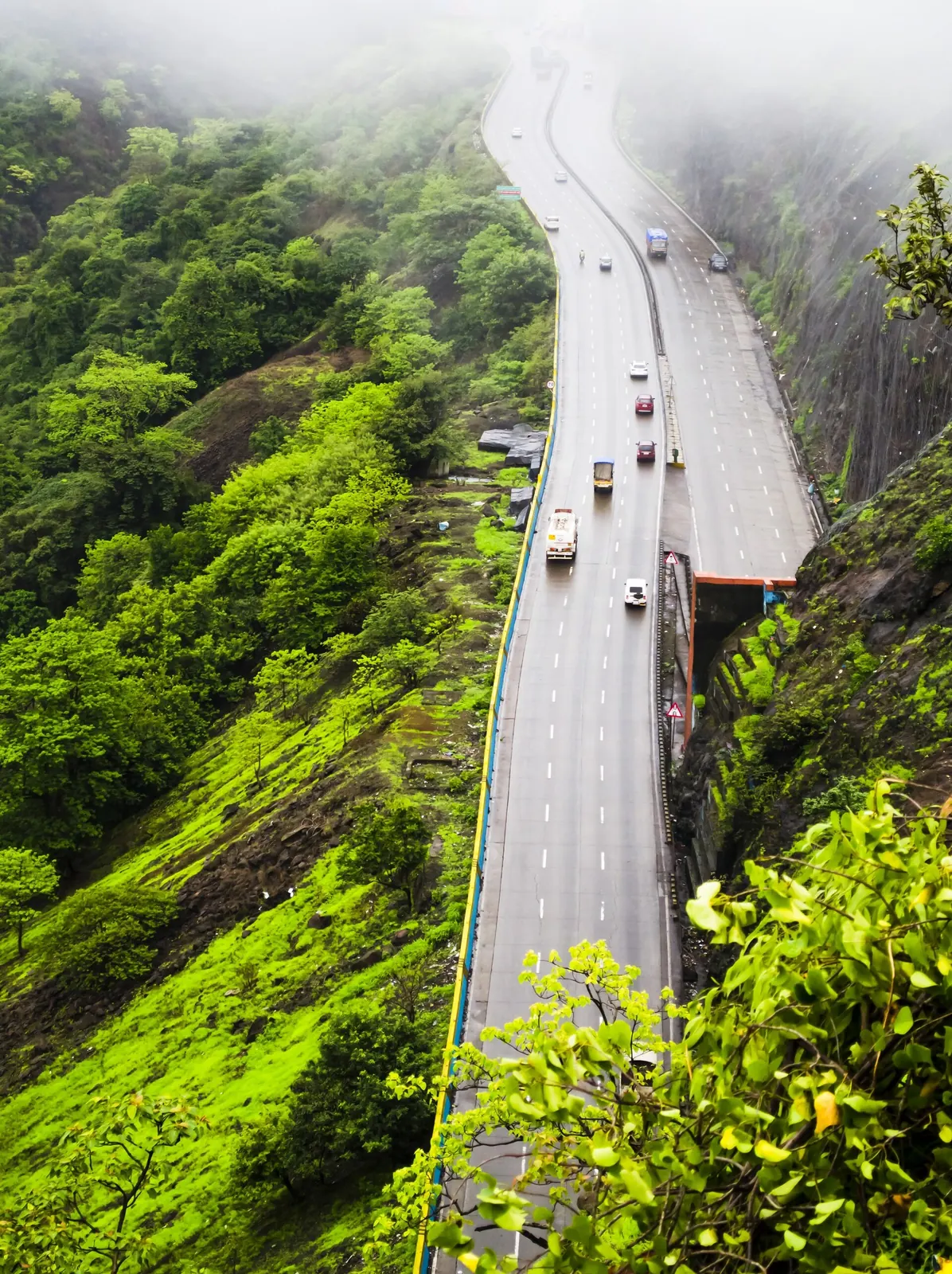
Because India's two-wheeler fleet looks more like Southeast Asia's than Europe's. Most countries that let motorcycles onto motorways set a floor based on engine size or top speed, which filters out mopeds and small scooters.
Countries where small motorcycles dominate traffic, such as Thailand, Vietnam and Indonesia, tend to ban them outright.
| Country | Motorcycles on motorways? | Condition |
|---|---|---|
| United Kingdom, United States, Australia, Malaysia | Yes | Above about 50 cc |
| Germany | Yes | Must be capable of more than 60 km/h |
| Switzerland | Yes | Above 51 cc and a top speed over 80 km/h |
| Italy | Yes | Above 149 cc |
| Japan | Yes | Above 125 cc |
| Philippines | Partly | Banned from 1968; above 400 cc allowed since 2001 |
| Taiwan | Partly | Freeways closed; some lower-speed expressways open to 550 cc from 2007 and 250 cc from 2012 |
| China | Varies | National rule needs a top speed above 70 km/h; many provinces ban them |
| South Korea, Thailand, Vietnam | No | Banned (Korea since 1972, Thailand since 1979) |
| Indonesia | No | Banned except roads with dedicated motorcycle lanes |
| India | No, on notified corridors | Corridor-by-corridor gazette bans |
The pattern is telling. Rich countries regulate by capability; countries with a scooter-heavy fleet regulate by category.
India sits firmly in the second group, even though it now sells a growing number of 300 to 1,300 cc motorcycles that can sit at the 80 km/h limit all day.
Are expressways actually dangerous for motorcycles?
The honest answer is that India has no published data on motorcycles on expressways, because they are not supposed to be there. What we do know points both ways:
- Powered two-wheelers are about 20 times riskier than cars per distance travelled, an OECD estimate quoted by the European Commission.
- India's national highways already carried 36.6% of all road deaths in 2024, with two-wheeler users making up 46.2% of the total, as I set out in India's two-wheeler death toll.
A review of European research on mopeds and motorcycles. It repeats the OECD/ITF estimate that powered two-wheelers are about 20 times riskier than cars, notes that EU Regulation 168/2013 made ABS or combined braking mandatory on motorcycles from 2013, and lists the road features that hurt riders most: surface defects, water and oil, poor alignment, roadside obstacles and barriers, and interaction with larger vehicles. Limit: European data and traffic; it does not isolate motorway crash rates for motorcycles.
Read the report (free)What the expressway removes, and what it doesn't
Look at that list of hazards and then picture an Indian expressway: a divided carriageway with no crossing traffic, no pedestrians in theory, a consistent surface and long sight lines. Most of the hazards that kill riders on ordinary highways are designed out.
The one that is left is the one NHAI cites, the speed gap. A car at 120 km/h closing on a motorcycle at 80 km/h has a 40 km/h difference; the same car closing on a 100 cc commuter bike doing 50 km/h has 70 km/h. That second case is the real fear, and it is a fair one.
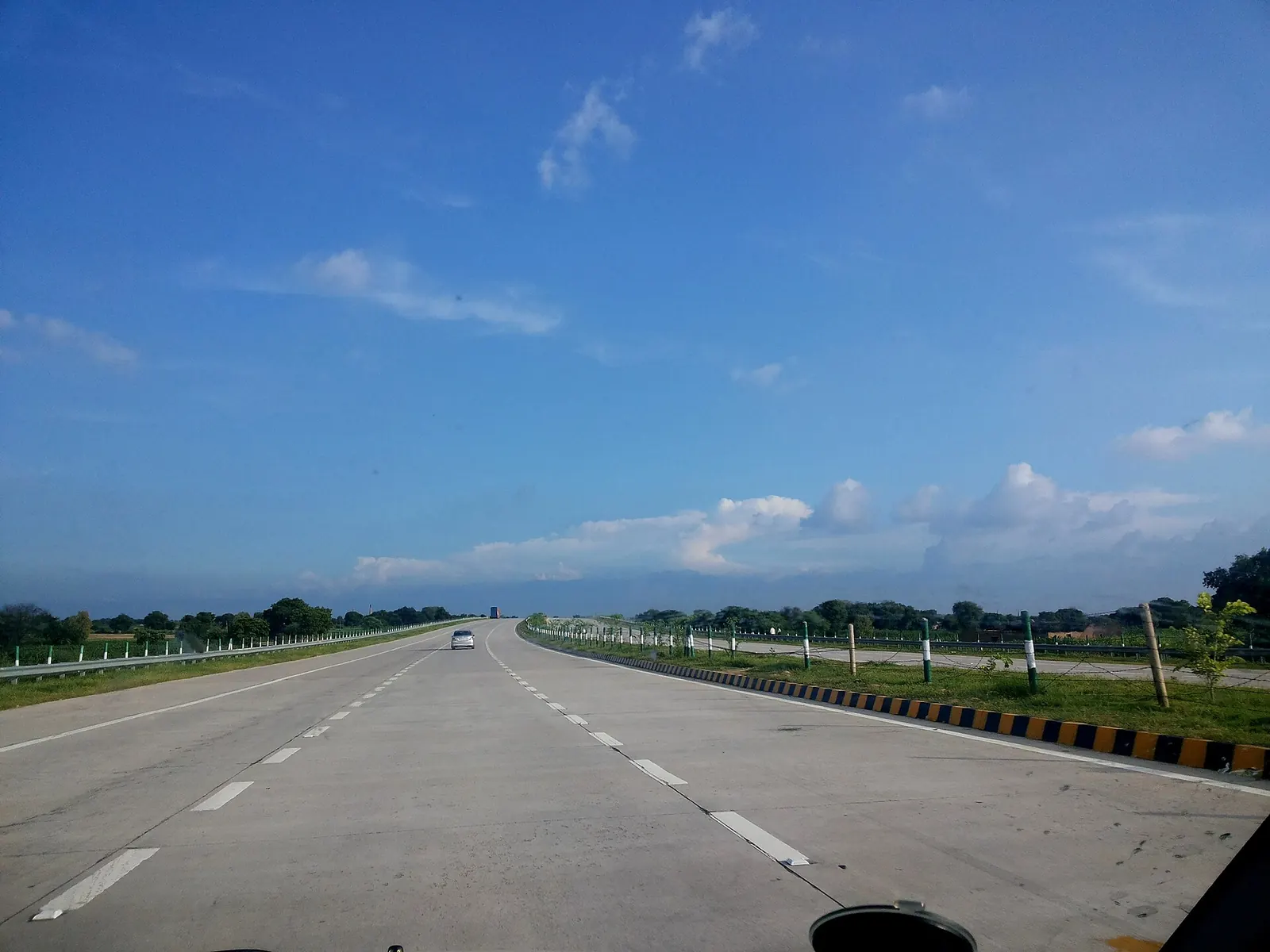
Does separating motorcycles from cars work?
Yes, where it has been tried properly. Malaysia built what is often described as the world's first exclusive motorcycle path, a roughly 30 km (per direction) lane beside Federal Highway Route 2 in Selangor, in the early 1970s under a World Bank project.
The authors recorded riders on video at six sites along Malaysia's motorcycle paths and measured more than 16,000 machines. They report earlier findings that the exclusive path cut motorcycle crashes on the route by about 39% a year, and they set design numbers: a rider and bike take about 0.8 m of width and need 1.3 m of operating width, and a path must be wider than 1.7 m for riders to pass safely. 99% of the machines were 150 cc or smaller. Limit: the 39% figure comes from earlier studies the paper cites, and the design data reflect a small-bike fleet.
Read the paper (free)The lesson for India is not that every expressway needs a motorcycle lane. It is that segregation by speed works, and that the choice is not limited to "all bikes in" or "all bikes out".

What is the case for letting touring motorcycles in?
The strongest argument is about where the risk goes when you ban something. Riders do not stop travelling between Delhi and Jaipur or Bengaluru and Mysuru; they take the old highway or the service road.
Those roads have the hazards the European report lists, plus crossing traffic, villages, animals and slow tractors.
A capable touring motorcycle may be safer on the expressway it is barred from than on the road it is forced onto.Sapta
- The law already anticipated it. The 2018 speed-limit notice has a motorcycle column for expressways. The footnote "if permitted" is an admission that some motorcycles could be.
- Capability has changed. On my KTM 390 Adventure, a run to Mulbagal and back held 100 to 120 km/h at 26.5 km/l. Bikes like that sit comfortably at the 80 km/h motorcycle limit, the same figure the notification sets for trucks, with ABS and margin to spare.
- Other countries draw the line by capability. Japan uses 125 cc, the Philippines 400 cc, Switzerland a top speed of 80 km/h.
- Enforcement is already failing. Gurugram traffic police issued about 70,000 no-entry challans between January and July 2026 around NH 48 and the Dwarka Expressway, where two- and three-wheelers are among the barred vehicles. A rule that riders ignore at that scale is not producing the safety it promises.
And the case for keeping the ban?
The counter-arguments are serious, and the courts found them convincing.
- Speed differential. Even a capable motorcycle limited to 80 km/h will be overtaken constantly by cars at 120 km/h. Every overtake is a conflict.
- Enforcing a displacement threshold is hard. A camera can tell a motorcycle from a car. It cannot easily tell a 160 cc commuter from a 400 cc tourer at night.
- No tolling system. Motorcycles would need their own toll and access-control process on these corridors, which does not exist today.
- Breakdown risk. A stalled motorcycle on a 120 km/h carriageway with no shoulder is harder to protect than a stalled car.
- The fleet reality. India had about 26.3 crore registered two-wheelers in 2022, and most are small commuters. A rule written around big touring bikes still has to be policed across that whole fleet.
What would a fair rule look like?
A rule that matches the risk, not the vehicle's shape. If I were drafting it, I would borrow from Japan and the Philippines and keep the 2018 speed limits as the anchor.
- Set a capability floor. Permit motorcycles that can sustain the 80 km/h expressway limit with margin, using a power or displacement threshold written into the registration certificate.
- Require ABS and a full-face helmet. Both are already the direction of national policy: MoRTH proposed ABS on every new two-wheeler in 2025.
- Keep them left. Confine motorcycles to the leftmost lane, as trucks often are, so the speed gap is with goods vehicles at 80 km/h rather than cars at 120.
- Toll them. Issue a FASTag class for permitted motorcycles. Paying for the road is a fair price for using it.
- Pilot first. Open one corridor, publish crash data every quarter, and expand only if the numbers hold.
None of this is on the table today. In late 2026 the conversation exists only in rider petitions and forum threads, and the courts have said it is the government's call.
How should touring riders plan routes around access-controlled corridors?
Treat every new expressway on the map as a wall until you confirm otherwise.
The mileage planning in how many km a day on a motorcycle assumes these slower roads. For the bigger picture of which highways carry long-distance riders, see India's longest national highways and national highway length by state. The bikes and kit I tour on are on the gear page.
What's new
- NHAI installs no-entry signs after 70,000 challans in Gurugram Construction World, Sep 2026
- No two-wheelers on the main carriageway of Delhi's UER-II, says minister PTI via The Week, Aug 2025
- Draft rule proposes ABS on every new two-wheeler Autocar India, Jun 2025
- Delhi High Court rejects plea to allow two-wheelers on expressways Bar and Bench, Nov 2024
Questions people ask
Are bikes allowed on the Mumbai-Pune Expressway?
No. Two-wheelers, three-wheelers, tractors, bicycles and pedestrians are not permitted on the 94.5 km Mumbai-Pune Expressway, which fully opened in 2002. Riders use the old Mumbai-Pune highway instead.
Can I ride a 400 cc or bigger bike on an Indian expressway?
Not on a corridor notified as closed to two-wheelers. The bans do not distinguish by engine size, and the Delhi High Court refused in 2024 to order an exception.
What is the speed limit for motorcycles on Indian highways?
Under S.O. 1522(E) of April 2018, motorcycles are limited to 80 km/h on four-lane divided highways and to 60 km/h on other roads and within municipal limits. The 80 km/h expressway figure applies only where motorcycles are permitted.
Why are two-wheelers banned on the Bengaluru-Mysuru Expressway?
NHAI notified the ban in July 2023, effective 1 August 2023, after a string of crashes on the new 118 km road, citing the speed difference between fast traffic and slow vehicles such as two- and three-wheelers.
What is the fine for riding a two-wheeler on a banned expressway?
It varies by corridor and state. Petitioners told the Delhi High Court in 2024 that a ₹20,000 penalty was being imposed, and argued the Motor Vehicles Act caps it at ₹500; the court asked NHAI to decide that representation.
Sources
- MoRTH: Notification S.O. 1522(E), maximum speed limits, 6 April 2018 (2018)
- Delhi High Court: Gautam Kumar Laha vs NHAI, W.P.(C) 15392/2024, order of 6 November 2024 (2024)
- Bar and Bench: Delhi High Court rejects plea to allow two-wheelers on National Highways, Expressways (2024)
- LiveLaw: Delhi High Court on prohibitions on slow-moving vehicles on expressways (Yuvraj Francis v. Union of India) (2023)
- The Newsmen: NHAI prohibits slow-moving vehicles including two-wheelers on Delhi-Mumbai Expressway (2023)
- Telangana Today: NHAI bans two-wheelers, autos on Bengaluru-Mysuru expressway from Aug 1 (2023)
- Construction World: NHAI installs no-entry signs after 70,000 challans in Gurugram (2026)
- European Commission: Road Safety Thematic Report, Powered Two-Wheelers (2024)
- Hussain H. et al.: Key components of a motorcycle-traffic system, IATSS Research 29(1) (2005)
- Wikipedia: Regulation of motorcycle access on freeways (country rules, with official references) (2026)
- The Policy Edge: MoRTH Road Accidents in India 2024 (2026)
- PTI via The Week: No movement of two-wheelers on UER-II main carriageway (2025)
- Wikipedia: Mumbai-Pune Expressway (vehicle restrictions, length, opening) (2026)
- Asianet Newsable: Bengaluru-Mysuru Expressway sees significant drop in accident deaths in 2024 (ADGP Alok Kumar's figures) (2024)
- The News Minute: Why 9 bike riders die every hour (registered two-wheelers) (2025)

Sapta (Saptarshi Sarkar) is a mechanical engineer turned marketer in Bengaluru and a solo touring rider. He writes the seven Saptaverse blogs. Work with him or read more of RoadHook Rides.


