
Rifleman Jaswant Singh Rawat of the 4th Battalion, the Garhwal Rifles, was killed at Nuranang, below Sela Pass on the Tawang road, on 17 November 1962 and awarded the Maha Vir Chakra after his death. The documented core is a short, deadly raid on a Chinese machine gun with two comrades, Lance Naik Trilok Singh Negi and Rifleman Gopal Singh Gusain. The famous parts of the Jaswant Singh Rawat Sela story, a 72-hour solo stand and two Monpa girls named Sela and Nura, are local folklore, and the battalion's own former commanding officer calls the girls' story a myth.
- 17 November 1962: the documented raid at Nuranang, below Sela, by three riflemen of 4 Garhwal Rifles.
- Three men, not one: Trilok Singh Negi, Jaswant Singh Rawat and Gopal Singh Gusain went for the Chinese gun.
- Maha Vir Chakra to Rawat after his death; Vir Chakras to Negi and Gusain. That is the record.
- 72 hours alone and the girls Sela and Nura are legend: a former CO of the battalion calls it a myth.
- About 11 km below the pass on the Tawang side: Jaswant Garh, which you pass whether you take the pass or the Sela Tunnel.
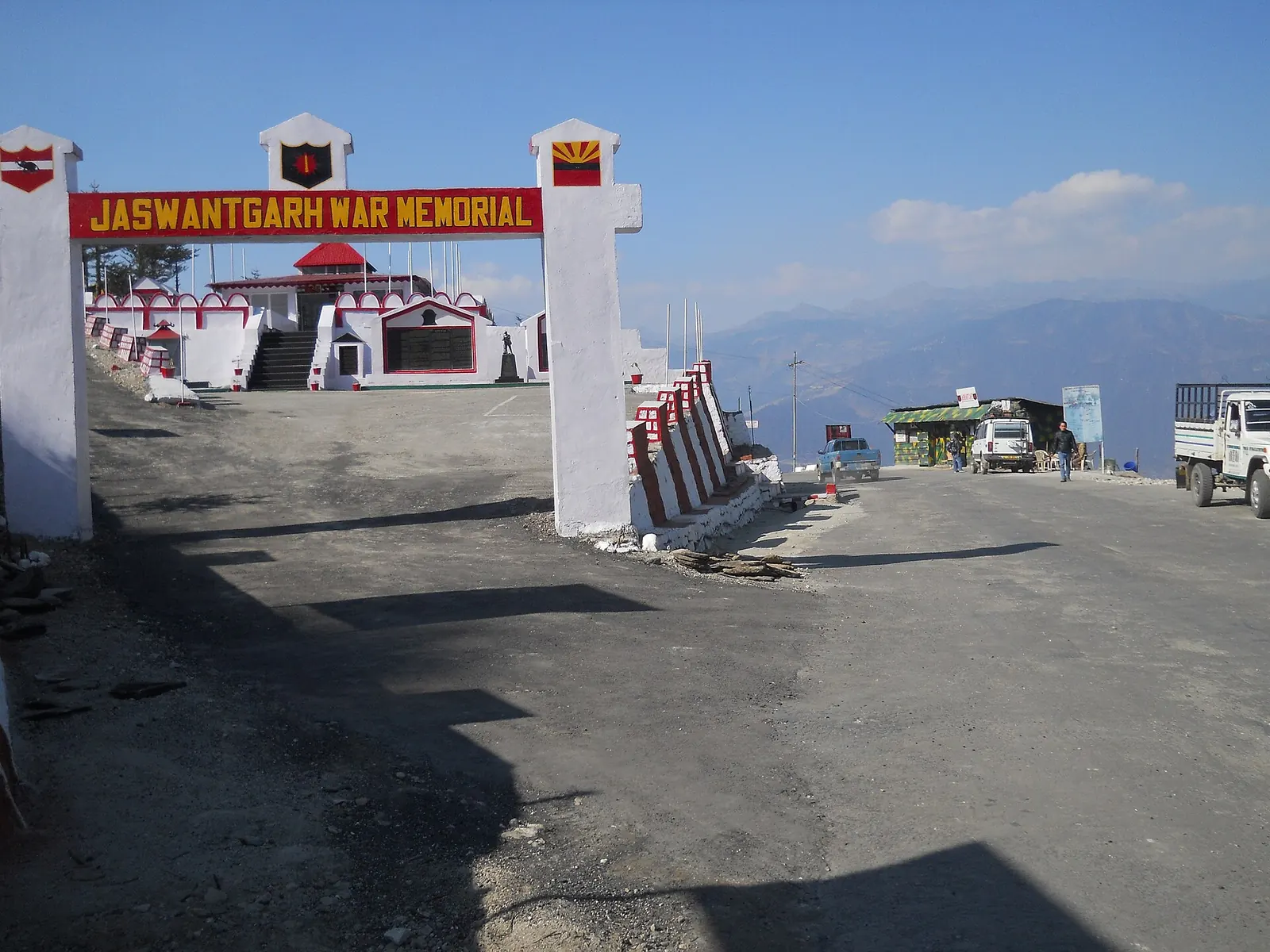
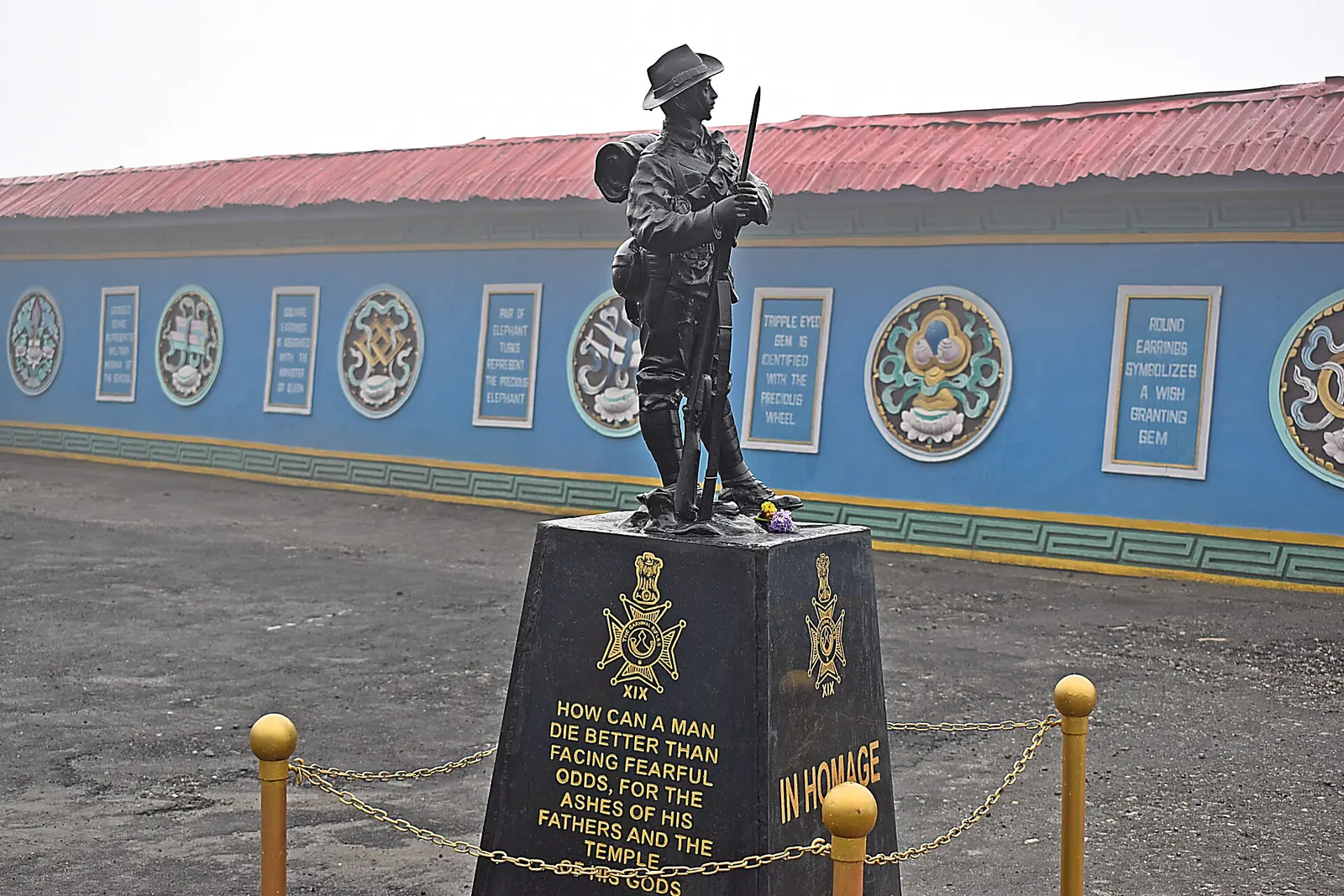
Anyone who rides to Tawang passes the Jaswant Garh War Memorial, a few kilometres down from Sela on the Tawang side. Soldiers there tell visitors that "Baba Jaswant" is still on duty, that his bed is made and his uniform pressed.
That tradition is real; it is what the army does for him. The story behind it is better than the legend, because it is about three men, not one, and about a battalion that won the only battle honour any Indian unit earned in the 1962 war.
What happened at Nuranang on 17 November 1962?
The record: a covering position below Sela

At Nuranang, a covering position between Sela and Jang, 4 Garhwal Rifles held off a series of Chinese attacks on 17 November 1962, and during one of them three volunteers crawled out and silenced a Chinese machine gun that had come within about 30 m of the Indian bunkers. The battalion had been told to delay the Chinese advance on the main defences at Sela. Its Alfa Company, under Second Lieutenant S N Tandon, held the forward position at what is now the memorial.
Accounts agree on the shape of the fight. Lieutenant General Syed Ata Hasnain, who later commanded the same battalion, writes in Swarajya that Alfa Company faced five heavy attacks from the night of 16/17 November, all beaten back, and that one Chinese probe used soldiers dressed as Monpa women.
Group Captain M Panging Pao, writing in The Arunachal Times in 2019, describes three waves repulsed with light machine guns before the Chinese brought up a medium machine gun (MMG) for the fourth attack. That gun is the centre of the Jaswant Singh story.
On 17 November 1962, Alfa Company had already thrown back three waves at Nuranang when the Chinese set up a medium machine gun within about 30 metres of its bunkers. Three men volunteered: Lance Naik Trilok Singh Negi and Riflemen Jaswant Singh Rawat and Gopal Singh Gusain. In Pao's account they crawled to within about 15 yards. Trilok gave covering fire while the other two threw grenades, and Jaswant leapt into the post and took the gun.
Trilok was hit. Jaswant was shot in the head as he neared the Indian trench, still holding the weapon, and the wounded Gopal dragged it in. The action lasted about 15 minutes. Hasnain, whose father raised the battalion in 1959, records it a little differently: the two killed the crew with khukris, Jaswant fell to a burst while dragging the gun back, and Gopal brought it home. Neither account has a 72-hour stand in it.
M Panging Pao, The Arunachal Times: Heroes of 1962 war in Arunachal, Battle of NuranangWho silenced the Chinese machine gun, and who survived?
Three men went for the gun: Lance Naik Trilok Singh Negi, Rifleman Jaswant Singh Rawat and Rifleman Gopal Singh Gusain, and the gun was captured and brought back. Who carried it and who died on the way back differs between accounts, which is normal for a 15-minute close fight.
What is consistent is that Jaswant Singh and Trilok Singh were killed, Gopal Singh survived, and the gun was taken. Even the weapon's name varies: Pao calls it a medium machine gun, Hasnain a heavy one.
| Detail | Arunachal Times (Pao, 2019) | Swarajya (Lt Gen Hasnain) | Wikipedia summary |
|---|---|---|---|
| Distance crawled | Within about 15 yards of the MMG | Not given | Within grenade range |
| Who seized the gun | Jaswant Singh, then Gopal dragged it in | Gopal Singh recovered it | Rawat brought it back |
| Killed in the raid | Trilok Singh hit (fate not stated); Jaswant shot in the head near the trench | Jaswant and Trilok | Gusain and Negi (conflicts with the others) |
| Awards | MVC to Jaswant; Vir Chakra to Trilok and Gopal | Same | Posthumous MVC to Rawat |
The weight of evidence is with the first two columns. Gopal Singh Gusain received the Vir Chakra and, by both detailed accounts, came back alive; the Wikipedia summary, which says Gusain and Negi died and Rawat returned wounded, conflicts with both and with its own later note that "the exact details of his death are unclear". Hasnain's account has particular weight because it draws on the regiment's historical record.
See the data as a table
| Awards | |
|---|---|
| Maha Vir Chakra | 2 |
| Vir Chakra | 7 |
| Sena Medal | 6 |
Source: Lt Gen Syed Ata Hasnain, Swarajya, on the historical record of The Garhwal Rifles · The two MVCs went to the commanding officer, Lt Col B M Bhattacharjee, and Rifleman Jaswant Singh Rawat (posthumous).
What happened to 4 Garhwal Rifles after Nuranang?
After holding Nuranang with light losses, the battalion was ordered to withdraw on 18–19 November amid confusion at higher headquarters, and it suffered most of its casualties on the retreat, not in the battle.
Hasnain records the total killed in the battle and its aftermath as 3 officers, 4 junior commissioned officers, 147 other ranks and 7 non-combatant tradesmen, many of them from exposure in the winter mountains. The commanding officer, Lieutenant Colonel B M Bhattacharjee, and several officers, including Tandon, were taken prisoner.
Why the battle honour matters
The battle honour "Nuranang", colloquially Jaswantgarh, is described by both Hasnain and Pao as the only battle honour won by an Indian unit in the eastern theatre in 1962. That is the documented reason the place matters: in a war remembered for collapse, one battalion held its ground on the day, and one rifleman's raid is the act everyone remembers.
Are Sela and Nura real, or a legend?
Sela and Nura are part of the local legend, not of the military record. The Arunachal Times article says locals "created a myth" around them, and Hasnain uses the same word.
"The only truth lies in the historical record."Lt Gen Syed Ata Hasnain, Swarajya
The legend, as it is told
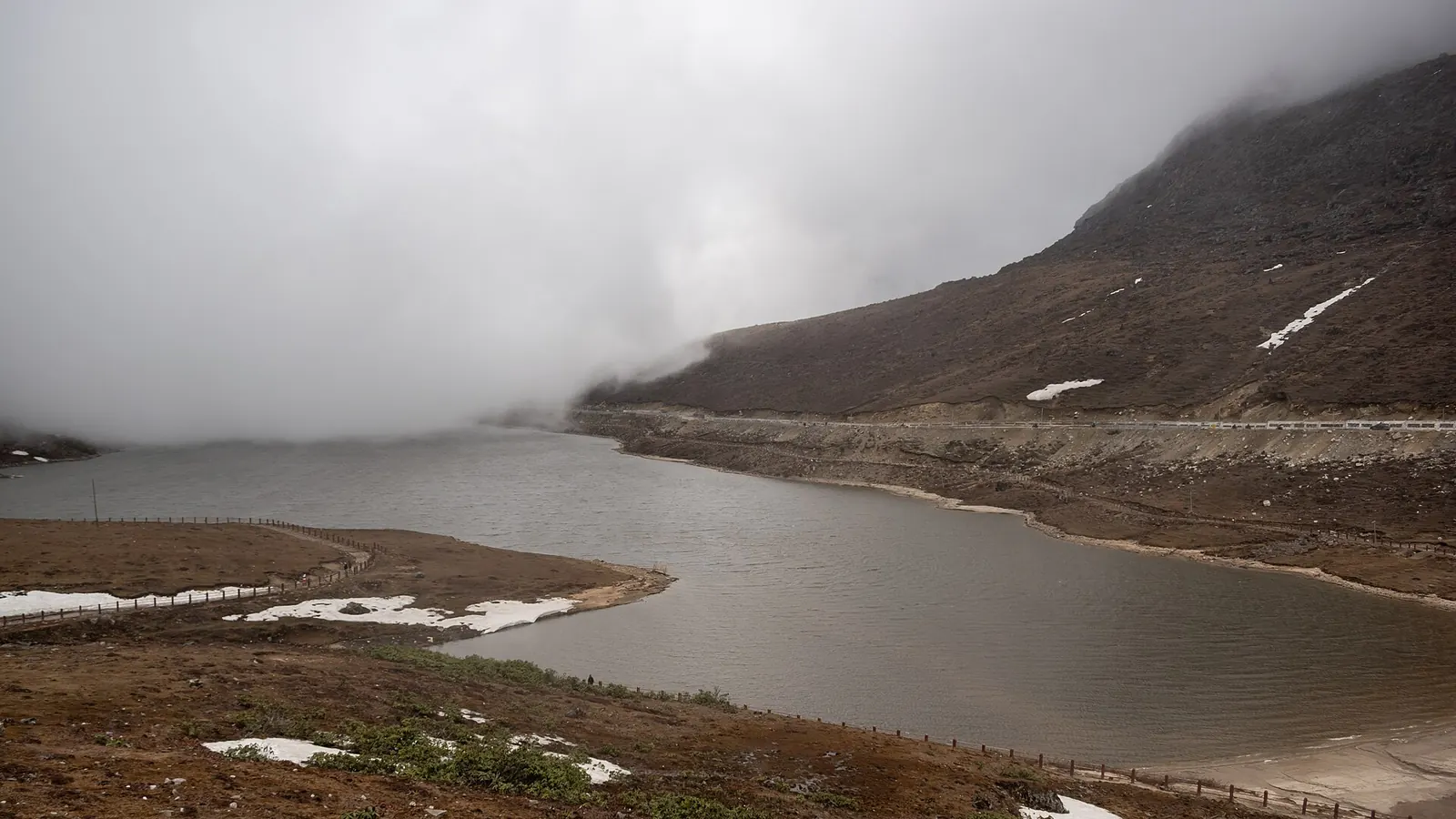
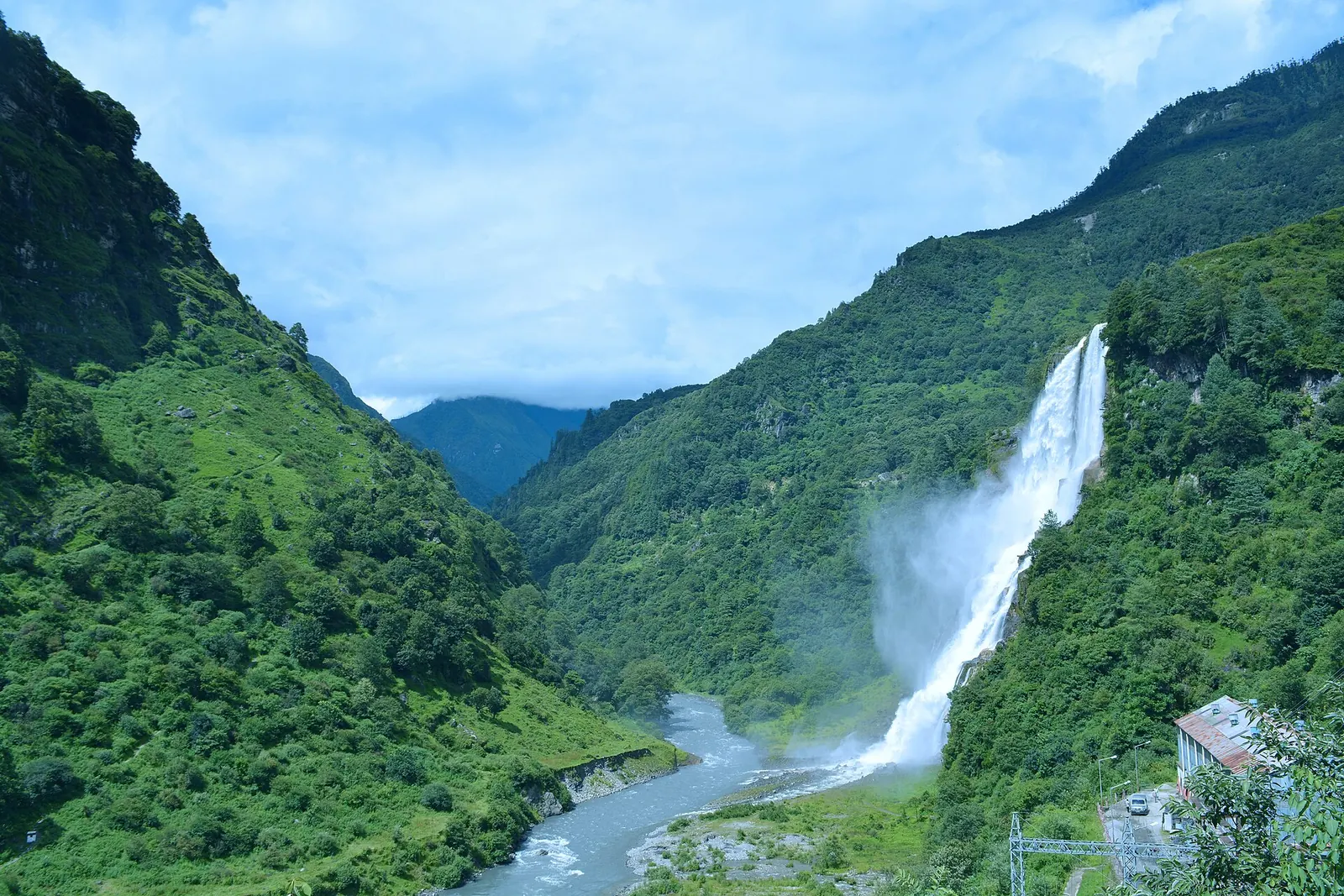
In the popular version, two Monpa girls brought Rawat food and ammunition while he alone fought on for 72 hours from several posts, until a local supplier told the Chinese he was by himself. Sela was killed and Nura captured, and the pass and the falls were named after them. The Wikipedia articles on Rawat and on Sela Pass repeat this version, citing popular sources.
Why the legend does not fit the record
There are good reasons for caution:
- The battalion fought as a unit, with officers and companies named in the record, so a three-day one-man defence does not fit.
- The dates are tight: the documented sequence is a battle on 17 November and a withdrawal on the 18th and 19th.
- The capture and beheading appear only as "local folklore" in the Arunachal Times account.
- The girls are called a myth by both detailed accounts, one of them by a former commanding officer of the battalion.
None of this makes the legend worthless. It shows how the Monpa people of the area and the army together turned a real death into a place-story.
The names on the map (Sela Pass, Sela Lake, Nuranang Falls) are now part of the landscape whatever their origin.
| Claim | Status |
|---|---|
| Rawat, Negi and Gusain raided a Chinese MMG at Nuranang on 17 Nov 1962 | Record (regimental history, several accounts) |
| Rawat awarded the Maha Vir Chakra after his death | Record |
| 4 Garhwal Rifles awarded the battle honour Nuranang | Record |
| He held out alone for 72 hours | Legend; conflicts with the documented battle and withdrawal |
| Monpa girls Sela and Nura fought beside him | Legend, called a myth by Lt Gen Hasnain |
| He was captured and beheaded | Folklore, per the Arunachal Times account |
| Army keeps his room and uniform as if he were on duty | Current army tradition at Jaswant Garh |
Where is Jaswant Garh, and how does the Sela Tunnel change the ride?
The Jaswant Garh War Memorial is on NH 13 on the Tawang side of Sela, about 52 km south-east of Tawang according to Wikipedia, and Hasnain puts it about 11 km from the pass on the descent.
Since March 2024 most traffic goes through the Sela Tunnel, about 400 m below the pass, but the memorial lies north of the tunnel on the road to Tawang, so riders still pass it either way.
Pass or tunnel?
The tunnel was built by the Border Roads Organisation for about ₹825 crore. Official figures give two tubes of about 1,003 m and 1,595 m at around 13,000 ft; Wikipedia gives slightly different lengths (980 m and 1,555 m), probably for the bores alone.

The Tribune reported it saves almost 90 minutes between Tezpur and Tawang. The old road over the 4,170 m pass, with Sela Lake beside it at 4,160 m, is still there for anyone who wants to ride it, though it can close after heavy snow.
| Old road over Sela Pass | Sela Tunnel | |
|---|---|---|
| Height | 4,170 m at the top | Around 13,000 ft, about 400 m lower |
| Winter | Can close after heavy snow | Built for year-round movement |
| Time saved | None | Almost 90 minutes, Tezpur to Tawang |
| Jaswant Garh | On the way, on the Tawang side | Also on the way: the memorial is north of the tunnel |
The government's account of the project: two tunnels of about 1,003 m and 1,595 m at about 13,000 ft on the Tezpur–Tawang road (Balipara–Chariduar–Tawang), built by the BRO at about ₹825 crore and dedicated on 9 March 2024. The Tribune's report adds that the foundation stone was laid on 9 February 2019 and that work took five years. The stated aim is year-round movement for troops and supplies across a pass that snow used to close. The limit: government releases describe intent and cost, not traffic data, so how many vehicles now skip the pass is not public.
Read the report (free)Why does altitude still matter on this road?
At Sela the air pressure is about 60% of sea level by the standard atmosphere model, and the 1962 fighting showed how cold and thin air can kill as surely as bullets. Modern army data back this up. Riders coming up from the Assam plains gain more than 4,000 m in a couple of riding days, which is fast by acclimatisation standards; the guide to altitude sickness on rides explains the warning signs.
Army doctors reviewed all 838 cases of high-altitude pulmonary edema among 1,41,790 soldiers inducted to Ladakh between 2016 and 2019 (5.91 per 1,000). Young men under 25 had the highest rate, 68% of cases began within six days, and the highest incidence came during the first acclimatisation stage at 2,700–3,600 m. The paper is a reminder that the danger zone starts well below a 4,170 m pass like Sela. Its limit: it studies Ladakh and acclimatised troops, not riders crossing Arunachal in a day.
Read the paper (free)What should a rider know before stopping at Jaswant Garh?

Jaswant Garh is an army-run memorial, so treat it accordingly:
- Dress and behave as you would at a shrine.
- Ask before photographing; this is a military area.
- Expect soldiers to share the story, including the legend. Enjoy it, and keep the record in mind.
The army holds Nuranang Day every 17 November. In 2024 the Gajraj Corps marked it with a wreath-laying, a new memorial gallery with artefacts and a re-enactment, and honoured Rawat's family. Arriving that week means crowds but also the best chance to hear the regimental version.
Plan the Tawang ride around permits and weather rather than the memorial. Arunachal's permit rules are covered in the Tawang ILP guide, and Northeast India as a touring frontier covers the wider region. For other high lakes you can ride to, see the highest lakes by road.
Rawat's story was also filmed: 72 Hours: Martyr Who Never Died (2019), directed by Avinash Dhyani, follows the legend version. Enjoy it as a film, not as a record. For more Himalayan riding, see the Yatri ride atlas.
What's new
- Sela Tunnel and BRO border roads in a review of border infrastructure All India Radio News, Oct 2026
- Army marks Nuranang Day at Jaswant Garh with a new memorial gallery Northeast Now, Nov 2024
- Twin-lane Sela Tunnel to Tawang opens, saving about 90 minutes The Tribune, Mar 2024
Questions people ask
Is the story of Jaswant Singh Rawat true?
The core is true: he took part in a raid on a Chinese machine gun at Nuranang on 17 November 1962, was killed, and received the Maha Vir Chakra after his death. The 72-hour solo stand and the help of two girls, Sela and Nura, are folklore.
Is Sela Pass named after a girl?
That is the popular explanation, linked to the Jaswant Singh legend, but it is a local story rather than a documented naming. The pass, lake and tunnel all carry the name today.
Can you still ride over Sela Pass after the tunnel opened?
Yes. The tunnel runs about 400 m below the pass, and the old road over the 4,170 m top remains, though it can close after heavy snow. Many riders take the pass one way and the tunnel the other.
Where exactly is the Jaswant Garh memorial?
On NH 13 on the Tawang side of Sela, north of the tunnel, roughly 52 km from Tawang. You pass it whether you use the tunnel or the pass.
Sources
- Syed Ata Hasnain, Swarajya: Epic battles, revisiting Jaswantgarh and Rezang La (2019)
- M Panging Pao, The Arunachal Times: Heroes of 1962 war in Arunachal, Battle of Nuranang (2019)
- Wikipedia: Jaswant Singh Rawat
- Wikipedia: Sela Pass
- The Tribune: Crucial twin-lane Sela tunnel connecting Tawang opens (2024)
- All India Radio News: Strengthening border infrastructure for national security (2026)
- Northeast Now: Indian Army commemorates Nuranang Day in Arunachal (2024)
- Adhya S et al.: Clinico-epidemiological profile of high altitude pulmonary edema (2021)
- NASA Glenn Research Center: Earth Atmosphere Model

Sapta (Saptarshi Sarkar) is a mechanical engineer turned marketer in Bengaluru and a solo touring rider. He writes the seven Saptaverse blogs. Work with him or read more of RoadHook Rides.


