Yes, GEO (generative engine optimisation, also sold as AEO) works, but only the parts that were already good SEO. The tested levers are three: rank in the classic results the AI engine retrieves from, write answer-first pages packed with numbers, quotes and cited sources, and get your brand mentioned on third-party sites the engines trust. Tricks sold as standalone GEO, such as schema-only fixes or keyword stuffing, have no evidence behind them, and keyword stuffing measurably hurt visibility in the one controlled study we have.
- +41%: adding quotations from authorities lifted AI-answer visibility most in the KDD 2024 GEO study.
- −9%: keyword stuffing lowered visibility in the same test.
- 69–92% of AI search citations in tested verticals went to earned media, not brand sites.
- 39.8% fewer organic clicks when Google showed an AI Overview, in a 2026 field experiment.
- Schema-only and llms.txt fixes have no controlled evidence behind them yet.
The question comes from a June 2026 r/SEO thread asking who had actually got results from AEO and GEO. I read every surviving reply. Nobody posted a controlled test.
What they did post was a pattern. The people reporting wins had transparent prices, cost tables, digital PR or placements on review blogs that the AI engines already cited. The people reporting nothing had bought schema audits. That pattern lines up with the research, so this post sorts the claims into tested and untested, with the numbers.
Does GEO actually work, according to the research?
The best controlled evidence is the KDD 2024 paper that coined the term, and it found content edits can raise a source's visibility in AI answers by about 40%.
How the GEO-bench test worked
Pranjal Aggarwal, Karthik Narasimhan, Ameet Deshpande and colleagues built GEO-bench, a set of 10,000 queries drawn from nine datasets, and rewrote candidate web sources nine different ways before feeding them to a generative engine.
They then measured how many words of the final answer came from each source, weighted by where it appeared. They call this position-adjusted word count, or PAWC.
Which edits won
The ranking of tactics is the useful part:
- Quotations from relevant authorities lifted PAWC from 19.5 to 27.8, roughly 41 to 43% depending on whether you use the paper's text or its table.
- Statistics lifted it by about 33%.
- Citing sources lifted it by about 28%; writing more fluently helped about as much.
- Keyword stuffing, the oldest trick in SEO, cut visibility by about 9%.
See the data as a table
| Change in position-adjusted word count (%) | |
|---|---|
| Quotation addition | 42.6 |
| Statistics addition | 32.8 |
| Fluency optimisation | 28.7 |
| Cite sources | 27.7 |
| Technical terms | 18.5 |
| Easy to understand | 13.8 |
| Authoritative tone | 11.8 |
| Unique words | 6.2 |
| Keyword stuffing | -8.7 |
Source: Aggarwal et al., GEO: Generative Engine Optimization, KDD 2024, Table 1 · Relative change versus the unedited source (baseline PAWC 19.5). The paper rounds the top result to 41%.
Two details that matter more than the headline
- Gains were uneven by rank. When a source sat fifth in the search results, citing sources raised its visibility by 115%, quotations by about 100% and statistics by about 98%. When a source already sat first, the same edits lowered its share by 21 to 30%, because the engine now had better material from everyone else.
- Lab gains shrink in production. On the live Perplexity test (a 200-query subset), quotation addition gained about 22% in word share, and the paper reports up to 9% for citing sources and statistics, smaller than on the benchmark.
GEO is a tool for challengers, not a moat for leaders.
The authors built GEO-bench (10,000 queries from nine sources, split 8,000/1,000/1,000) and tested nine rewriting methods on sources fed to a generative engine. Quotation addition, statistics addition and citing sources raised visibility by roughly 28 to 43%, while keyword stuffing lowered it by about 9%. Lower-ranked sources gained the most, up to 115% at rank five. The limit: the engine worked from a fixed set of retrieved sources, so the study measures what happens after retrieval, not how to get retrieved in the first place.
Read the paper (free)In late February 2025, the US edtech company Chegg sued Google and Alphabet in the US District Court for the District of Columbia. It was among the first lawsuits aimed squarely at AI Overviews. Chegg said its non-subscriber traffic had fallen 49% in January 2025, against an 8% decline it had reported for the second quarter of 2024.
The complaint, filed by the law firm Susman Godfrey, argued three things: that Google makes publishers supply content for AI answers as the price of appearing in search, that it uses its search monopoly to do so, and that it profits from Chegg's work without paying. Chegg's CEO, Nathan Schultz, announced the suit alongside a strategic review with Goldman Sachs. Google's spokesperson replied that Search sends billions of clicks to sites every day.
For marketers, the case put a number on a fear: when the answer appears on the results page, the click may never come.
Search Engine Roundtable: Google sued over AI Overviews for hurting traffic and revenue (Feb 2025)
What did people in the r/SEO thread say actually worked?
The replies that reported real outcomes all described something a buyer could check, not a markup trick:
- Transparent prices. A local service business said customers started arriving after hearing about it from Google's AI and ChatGPT, and credited one change: publishing prices on its site and Facebook page. It took about three months on a one-year-old domain.
- Cost tables. A turf installer became a cited cost source in its region by publishing human-edited cost tables.
- Digital PR. An agency owner said links and coverage from major domains did the most, with schema "helping but not standalone".
The energy drink move
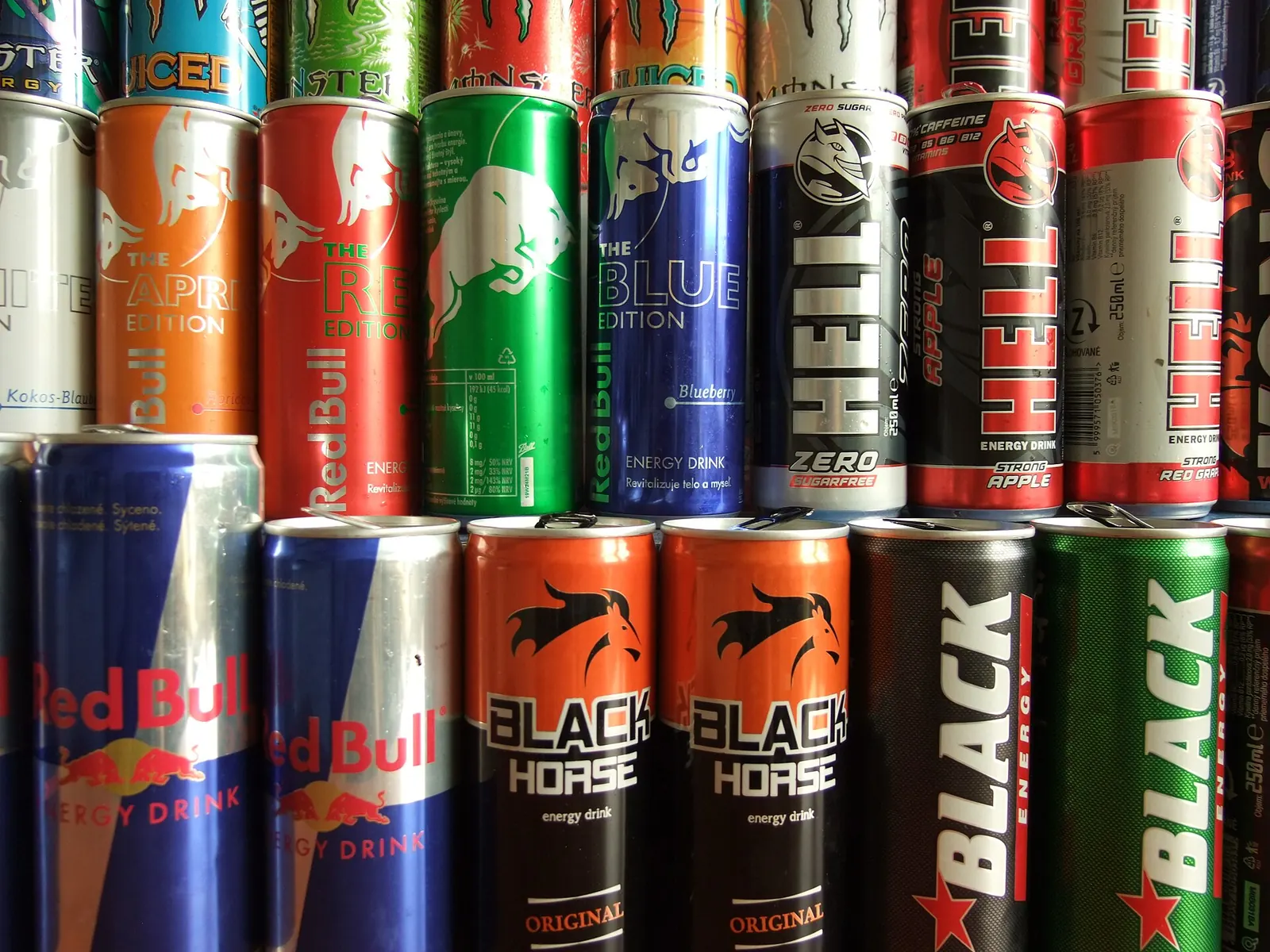
The most practical reply came from someone working on an energy drink brand. They listed the review blogs that Google's AI Overviews kept citing for their category, then pitched those blogs for a featured placement.
AI Overview presence followed within days. That is the whole earned-media argument in one move, and the research below explains why it works.
Why do AI engines cite other people's pages over your own?
AI search engines lean heavily on earned media, meaning independent reviews, publishers and comparison sites, rather than brand-owned pages. A University of Toronto team (Mahe Chen, Nick Koudas and colleagues, September 2025) ran 1,000 consumer ranking prompts across ten product categories in the US and Canada, and classified every cited domain as brand, social or earned.
| Vertical and market | Google: earned share | AI search: earned share | AI search: social share |
|---|---|---|---|
| Automotive, USA | 45.1% | 81.9% | 0% |
| Automotive, Canada | 40.6% | 69.1% | 0% |
| Consumer electronics, Canada | 54.1% | 77.6% | 0.3% |
| Software products, USA | 45.4% | 72.7% | Negligible |
| Software products, Canada | 31.8% | 74.2% | 0% |
Two things stand out:
- Social nearly vanished. Social content, which made up 10 to 23% of Google's results in these tests, almost disappeared from the AI answers.
- Google rank is not enough. The AI engines' citations overlapped with Google's top ten by only 20 to 50% for most product categories, so ranking first on Google does not guarantee a mention.
The authors' advice was to build machine-readable comparison content (tables, pros and cons, explicit value claims) and to invest in coverage on authoritative third-party domains.
The team compared Google with ChatGPT, Claude, Gemini and Perplexity on 1,000 ranking prompts in ten categories, plus language and paraphrase tests (100 base queries in five languages and seven rewordings). AI engines cited earned media 69 to 92% of the time in the tested verticals, against 32 to 54% for Google, and almost never cited social platforms. ChatGPT switched source ecosystems almost completely between languages. The limit: it is a preprint, the main vertical test used one AI engine (GPT), and source labels were assigned by the authors.
Read the paper (free)Do brand mentions matter more than backlinks for AI visibility?
In the largest correlation study so far, brand mentions tracked AI visibility far more closely than backlinks or domain authority did. Ahrefs checked 75,000 brands (domains rated DR 40+ with a top keyword of at least 800 monthly searches) against millions of AI responses, and published the results in December 2025.
See the data as a table
| Spearman correlation | |
|---|---|
| Branded web mentions | 0.709 |
| Branded anchors | 0.628 |
| Branded search volume | 0.466 |
| Domain Rating | 0.285 |
Source: Ahrefs: Top brand visibility factors in ChatGPT, AI Mode and AI Overviews (75k brands), Dec 2025 · Correlation, not causation. YouTube mentions correlated at about 0.737 across platforms combined.
YouTube mentions came out highest at about 0.74 across platforms, branded web mentions at 0.66 to 0.71, and Domain Rating only 0.27 to 0.33. Pages on the site barely mattered (about 0.19).
Ahrefs itself warns these are correlations: famous brands get both mentions and AI citations, so a startup buying a hundred guest posts will not borrow that effect. Read it as a description of who wins, not a recipe.
Which GEO tactics are tested and which are just sales talk?
Sorting the thread and the vendor claims against the evidence gives a short tested list and a long untested one. Here is the split, with the strongest source for each line.
| Tactic | Evidence | Verdict | Source |
|---|---|---|---|
| Rank in classic search for the query and its sub-questions | AI engines retrieve before they write; Google's overlap with AI citations is 20-50% in most tested categories | Tested, necessary but not enough | Chen et al. 2025 |
| Add statistics, quotes and cited sources to the page | +28% to +43% word share on GEO-bench, smaller on Perplexity | Tested | Aggarwal et al. 2024 |
| Answer-first, scannable pages with tables | Engines favour justification content; Pew found 88% of AI summaries cite 3+ sources and run a median 67 words | Tested indirectly | Chen et al. 2025; Pew 2025 |
| Earned coverage on sites the engine already cites | 69-92% of AI citations were earned media | Tested | Chen et al. 2025 |
| Brand mentions, including on YouTube | Correlation 0.66-0.74 with AI visibility | Strong correlation, cause unproven | Ahrefs 2025 |
| Schema markup alone | No controlled study shows citation gains from markup by itself | Untested | None found |
| llms.txt files | No major engine has said it uses them for ranking or citation | Untested | None found |
| Keyword stuffing | -9% word share | Harmful | Aggarwal et al. 2024 |
How much traffic do AI answers actually send?
Very little so far, and AI summaries on Google reduce clicks to everyone. Ahrefs' March 2025 study of about 35,000 websites found AI chatbots sent 0.1% of referral traffic, while Google search alone sent roughly 345 times more than ChatGPT, Perplexity and Gemini combined.
What Pew saw in real browsing
The bigger effect is on Google itself. Pew Research tracked 900 US adults' real browsing in March 2025: 18% of their 68,879 Google searches showed an AI summary.
- People clicked a regular result on 8% of visits with a summary, against 15% without one.
- They clicked a link inside the summary on just 1% of visits.
- Question-style searches triggered summaries 60% of the time, against 8% for one- or two-word searches.
So the informational queries content marketers fight over are exactly the ones being answered on the page.
See the data as a table
| Page had an AI summary (%) | No AI summary (%) | |
|---|---|---|
| Clicked a regular result | 8 | 15 |
| Ended the browsing session | 26 | 16 |
Source: Pew Research Center, July 2025 (900 US adults, 68,879 searches)
The ISB and Carnegie Mellon experiment
A 2026 randomised field experiment by Saharsh Agarwal of the Indian School of Business and Ananya Sen of Carnegie Mellon confirms the direction with stronger design. They gave 1,065 Chrome users an extension that hid AI Overviews for a random group.
Where an Overview appeared, outbound organic clicks fell 39.8% and zero-click searches rose 34.5%, with no measurable gain in user satisfaction. So the point of GEO is not traffic. It is being the name the answer recommends when the buyer never clicks.
Use this to check what you just read: estimate how many of your monthly Google clicks sit on question-style searches that now carry an AI Overview.
Organic clicks at risk from AI Overviews
Pew analysed the browsing data of 900 US adults from its KnowledgePanel Digital panel during March 2025, covering 68,879 Google searches. AI summaries appeared on 18% of searches, cited three or more sources 88% of the time, and halved the click rate on regular results (8% against 15%). Wikipedia, YouTube and Reddit together made up 15% of summary sources, and .gov sites 6%. The limit: US adults only, one month, and Google keeps changing the product.
Read the report (free)
What should an Indian brand do about GEO in 2026?
Run GEO as an earned-media and content-quality programme on top of SEO, and measure it by citations and branded demand, not by AI referral clicks. Here is the order I would work in, cheapest and best-evidenced first.
- Fix retrieval. Make sure the pages that answer your buyers' questions rank in Google and Bing for the main query and the sub-questions an engine fans out into. If you are on page three, nothing else on this list matters yet. The history of Google's updates shows why the boring basics keep winning.
- Rewrite your top 20 money pages answer-first. Put the direct answer in the first two sentences, then add your own numbers (prices, timelines, test results), a quote from a named expert and links to the sources you used. That is the GEO-bench recipe, and it also converts better for humans.
- Publish what competitors hide. Prices, cost breakdowns and comparison tables were the common thread in the r/SEO wins. Indian B2B and education sites that hide fees behind a lead form give the engine nothing to quote.
- Map the domains the engines cite, then earn a place there. Run your buyer questions through ChatGPT, Perplexity, Gemini and Google AI Mode, list the cited publishers, review sites and YouTube channels, and pitch them. My ranking of the most-cited domains is a starting list.
- Measure citations, not clicks. Track a fixed set of 30 to 50 prompts monthly, record whether you are named, cited or absent, and watch branded search volume in Search Console. Bing Webmaster Tools now shows Copilot citations for free.
For the mechanics of how engines pick sources, read how AI Overviews and ChatGPT choose sources, and for a page-level checklist, how to get cited by ChatGPT and Perplexity. I build these programmes for brands; the record is on my work page.
What's new
- ISB and Carnegie Mellon field experiment finds AI Overviews cut organic clicks by 39.8% PPC Land, Jul 2026
- Bing Webmaster Tools launches a free AI Performance report that counts Copilot citations Koozai, Feb 2026
- Ahrefs study of 75,000 brands finds YouTube and web mentions track AI visibility most closely Ahrefs, Dec 2025
Questions people ask
Is GEO different from SEO?
Mostly no. The engines retrieve from search indexes first, so ranking is still the entry ticket. The genuinely new parts are a heavier weight on independent third-party sources and a preference for quotable, number-dense passages.
How long does GEO take to show results?
Replies in the r/SEO thread reported anything from days (after landing on an already-cited review blog) to three or four months (for new pages on young domains). Content edits on pages that already rank show up fastest, because the engine re-reads them on the next retrieval.
Does schema markup help you get cited by ChatGPT?
No published controlled study shows that schema by itself raises AI citations. It helps search engines parse product and FAQ data, which can help retrieval, so keep it, but practitioners in the thread described it as supporting rather than decisive.
How do I check whether AI engines mention my brand?
Keep a fixed list of buyer prompts, run them monthly in ChatGPT, Perplexity, Gemini and Google AI Mode, and log mentions and cited URLs. Bing Webmaster Tools reports Copilot citations for verified sites at no cost, and paid tools from Ahrefs, Semrush and others automate the prompt tracking.
Can a small brand beat big brands in AI answers?
Sometimes. The GEO-bench results showed the largest gains for sources ranked fifth rather than first, and the Toronto team found a measurable big-brand bias that niche brands counter with specific, comparison-ready content and coverage on specialist sites.
Sources
- Aggarwal et al.: GEO: Generative Engine Optimization, KDD 2024 (2024)
- Chen, Wang, Chen and Koudas: Generative Engine Optimization: How to Dominate AI Search, arXiv (2025)
- Pew Research Center: Google users are less likely to click on links when an AI summary appears (2025)
- Ahrefs: Top brand visibility factors in ChatGPT, AI Mode and AI Overviews (75k brands) (2025)
- Ahrefs: AI traffic research, 35,000 websites (2025)
- PPC Land: Researchers find Google AI Overviews cut publisher clicks 39.8% (Agarwal and Sen) (2026)
- Koozai: Bing Webmaster Tools launches AI Performance reporting (2026)
- Reddit r/SEO: Who has already got amazing results with AEO/GEO? (2026)
- Search Engine Roundtable: Google sued over AI Overviews for hurting traffic and revenue (Chegg) (Feb 2025, source for the story)
- Engadget: Chegg sues Google over AI Overviews (Feb 2025)

Sapta (Saptarshi Sarkar) is a mechanical engineer turned marketer in Bengaluru and a solo touring rider. He writes the seven Saptaverse blogs. Work with him or read more of Marketblog.