
The road with the most hairpin bends in India is the ghat road up the Kolli Hills in Namakkal district, Tamil Nadu, with 70 numbered hairpins, the highest count in South India according to Tamil Nadu Tourism. Next come the Manjur ghat in the Nilgiris (47 below Manjoor), the Valparai ghat from Monkey Falls (40) and the Kalhatty ghat to Ooty (36). The best known Himalayan set, the Gata Loops on the Manali–Leh highway, has 21.
- 70: Kolli Hills in Namakkal has the most numbered hairpins in India's south, per Tamil Nadu Tourism.
- Seven of eleven roads on the list are in Tamil Nadu, where hills rise abruptly from the plains.
- 21: the Gata Loops are the highest hairpin sequence on a major Indian highway, from about 4,190 m.
- IRC:52-2019 wants a 14 m inner radius, a 2.5% gradient and 60 m between hairpins; old ghats break all three.
- The descent is the dangerous half: come down in the gear you climbed in.
The criterion here is the count of hairpin bends, meaning bends that reverse the direction of travel, as numbered on the road or stated by the state tourism department, the district or the road's survey record. Where sources disagree, I give the range and rank by the official figure.
I have not ranked by danger, because no Indian agency publishes crash rates per ghat road.
Tamil Nadu dominates the list for a reason. Its hill stations rise abruptly from plains at 200 to 300 m, so the Eastern and Western Ghats there force a climb of 1,000 m or more in a short horizontal distance. The engineers' answer was to stack hairpins on a single face of the hill, which the current road code now discourages.
See the data as a table
| Hairpin bends (bends) | |
|---|---|
| Kolli Hills (TN) | 70 |
| Manjur ghat (TN) | 47 |
| Valparai (TN) | 40 |
| Kalhatty ghat (TN) | 36 |
| Zuluk zigzag (Sikkim) | 32 |
| Dhimbam ghat (TN) | 27 |
| Gata Loops (Ladakh) | 21 |
| Yercaud (TN) | 20 |
| Yelagiri (TN) | 14 |
| Coonoor ghat (TN) | 14 |
| Thamarassery (Kerala) | 9 |
Source: Tamil Nadu Tourism (Kolli Hills); Wikipedia: Nilgiri Ghat Roads, Ghat Roads, Valparai, Leh–Manali Highway, Thamarassery Churam; Sikkim Darjeeling Tourism (Zuluk) · Zuluk: 32 hairpins (Sikkim Darjeeling Tourism).
Which Indian roads have the most hairpin bends?
Seven of the eleven roads below are in Tamil Nadu, one is in Kerala and three are in the Himalaya. The table gives the count, the length where a source states it and the top altitude.
In January 2022, the Norwegian diplomat and former politician Erik Solheim posted an aerial photograph of a mountain road in Tamil Nadu. It was the Kolli Hills road in Namakkal district, which he called one of India's most daring mountain roads, with 70 continuous hairpin bends.
Anand Mahindra, chairman of Mahindra & Mahindra, shared it and wrote: "Erik you keep showing me how little I know about my own country!" He added that he wanted to find out who built the road, and would then trust only his Thar to take him up it. The post drew more than 13,000 likes. One reply came from a driver who said he had taken a 2015 Thar up the road and found the climb effortless, having already driven up the steeper Kalhatti ghat to Ooty.
The Tribune: Anand Mahindra is in awe of an incredible road in Tamil Nadu (9 January 2022)| Rank | Road | State | Hairpins | Ghat length | Top altitude |
|---|---|---|---|---|---|
| 1 | Kolli Hills ghat (Karavalli side) | Tamil Nadu | 70 | Reported inconsistently | about 1,300 m (gain over 1,400 m per TN Tourism) |
| 2 | Manjur ghat (to Geddai) | Tamil Nadu | 47 | Not stated | Bottom at Geddai 575 m |
| 3 | Valparai ghat (Monkey Falls) | Tamil Nadu | 40 | Monkey Falls to Valparai 38 km | 1,059 to 1,193 m |
| 4 | Kalhatty (Sigur) ghat, MDR 700 | Tamil Nadu | 36 | Saves about 30 km vs Gudalur route | Ooty plateau |
| 5 | Zuluk zigzag to Thambi viewpoint | Sikkim | 32 | Not stated | 11,200 ft at Thambi |
| 6 | Dhimbam ghat, NH 948 | Tamil Nadu | 27 | 14 km | Not stated |
| 7 | Gata Loops, NH3 | Ladakh | 21 | Climb of about 500 m | from 4,190 m toward Nakee La (4,739 m) |
| 8 | Yercaud ghat | Tamil Nadu | 20 | 25 km | Not stated |
| 9 | Yelagiri ghat | Tamil Nadu | 14 | 15 km | Not stated |
| 10 | Coonoor ghat, NH 181 | Tamil Nadu | 14 | Not stated | Not stated |
| 11 | Thamarassery churam, NH 766 | Kerala | 9 | 14 km (Adivaram to Lakkidi) | 800 to 1,000 m |
1. Kolli Hills: 70 hairpins
The Kolli Hills ghat road climbs from the Karavalli side to the plateau of the Kolli range in Namakkal district, and Tamil Nadu Tourism describes its 70 hairpin bends as the most in South India. The tourism department puts the elevation gain at more than 1,400 m, and the plateau sits at about 1,300 m. Each bend is numbered, so you always know how many are left.
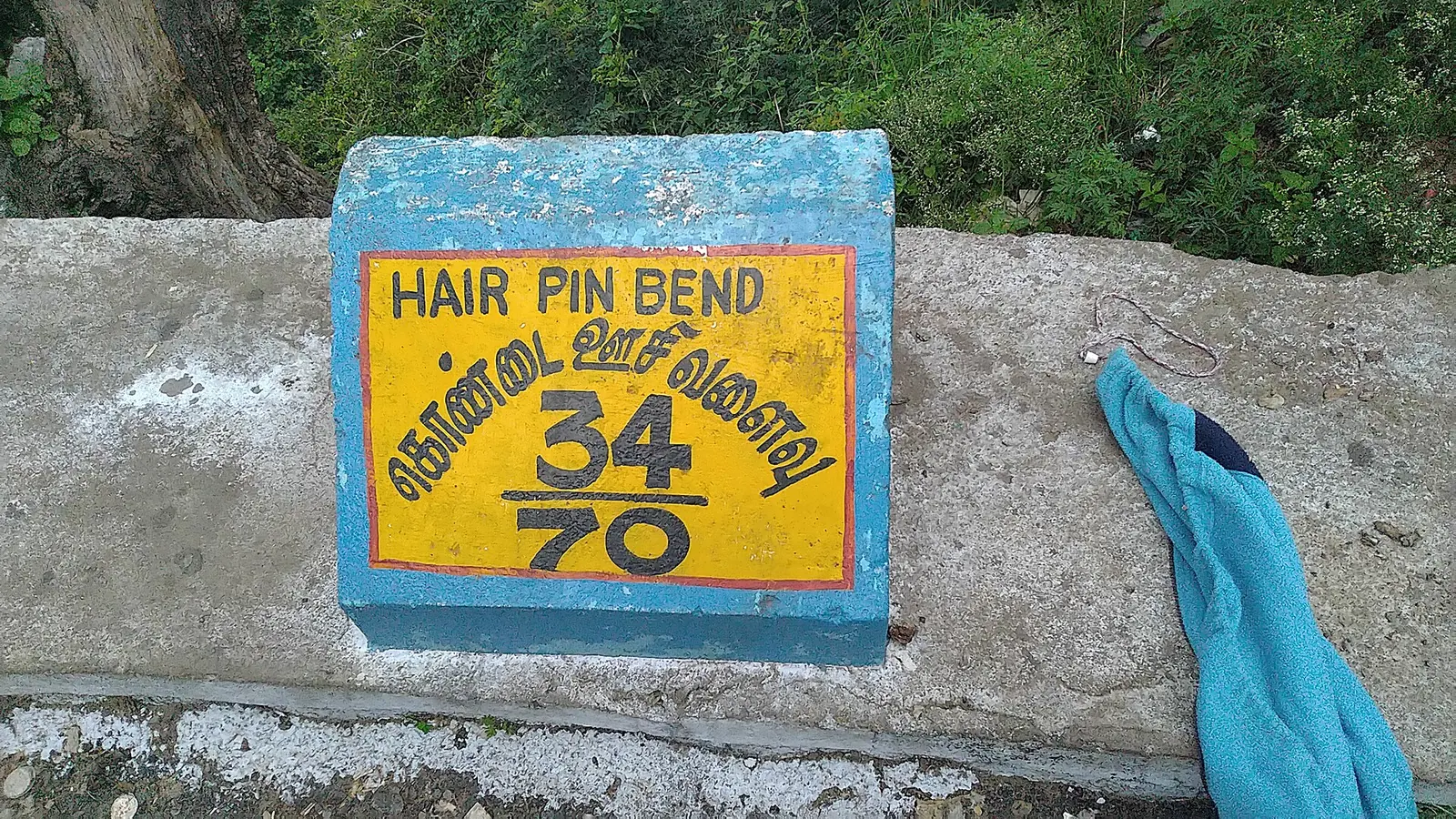
Published figures do not agree on the road's length, which is why I have left it blank in the table; a Wikipedia list gives 24 km with 72 bends, while the state's own page simply says 70. For a rider, the count matters more than the kilometres.
Seventy direction reversals means seventy slow-in, fast-out exits, which tests clutch control and front-brake technique more than any Himalayan pass.
- District: Namakkal, Tamil Nadu
- Hairpins: 70 (TN Tourism)
- Plateau: about 1,300 m
2. Manjur ghat: 47 hairpins
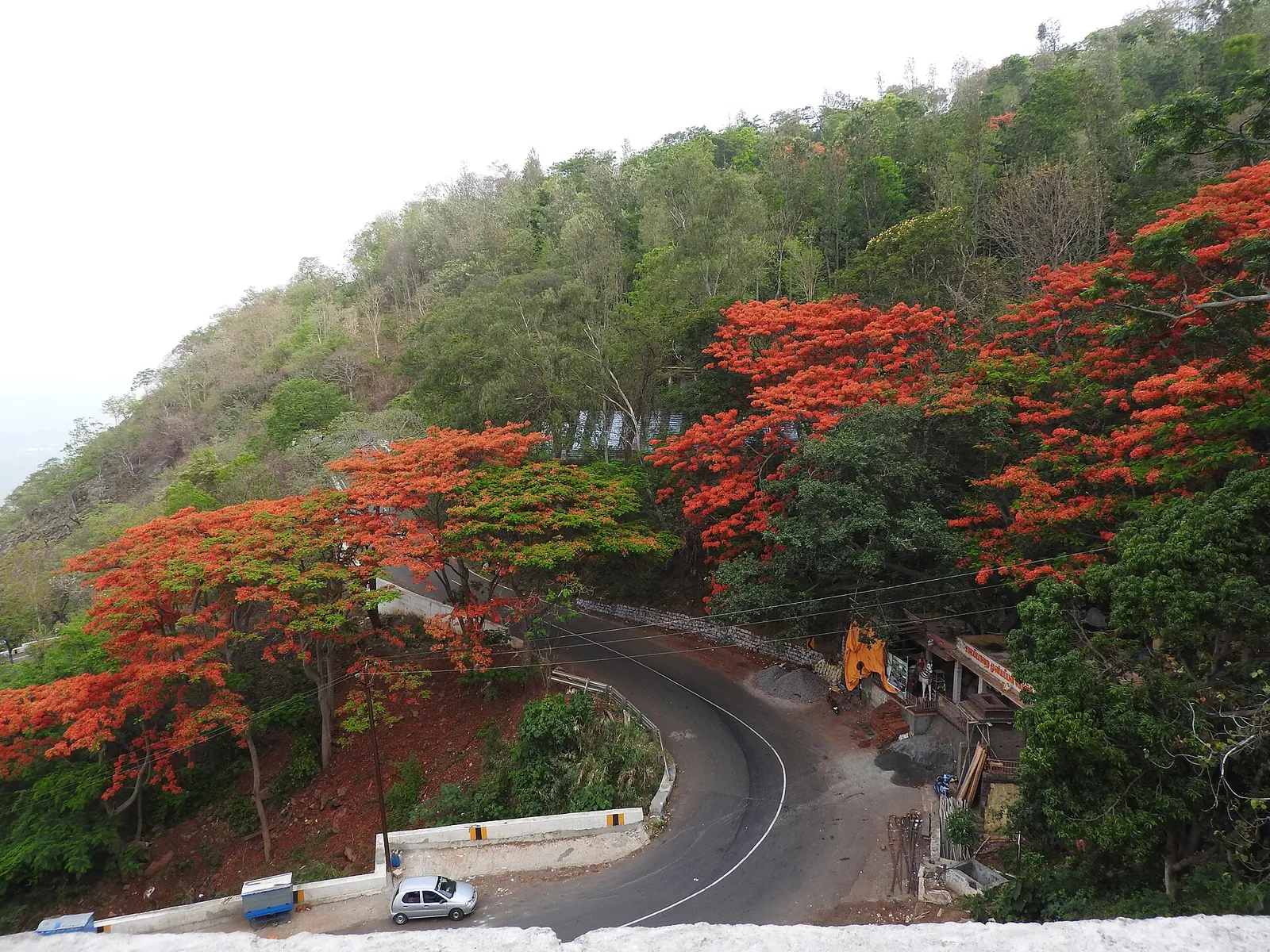
The Manjur (Manjoor) ghat descends from the Nilgiris toward Geddai, which sits at 575 m, and the road record counts 47 hairpin bends below Manjoor. It is one of five Nilgiri ghat roads and the least travelled by tourists, which makes it quieter but also more remote if something goes wrong. The count comes from a less well-sourced record than Kolli or Valparai, so treat it as indicative.
3. Valparai: 40 hairpins
The Valparai ghat climbs from the foothills at Monkey Falls through 40 hairpin bends to the tea plantations of the Anamalai hills, with Valparai town at 1,059 to 1,193 m depending on the source. Monkey Falls is 38 km from Valparai, and the 14th hairpin overlooks the Aliyar reservoir.

This road shows why the descent is the dangerous half. In April 2026 a vehicle carrying tourists from Malappuram lost control on the Valparai–Pollachi descent, broke through the safety wall and fell, killing nine people; reports pointed to brake overheating (the full account is in the story above). The advice that followed is the standard ghat rule: come down in the gear you went up in, and let engine braking do the work.
4. Kalhatty (Sigur) ghat: 36 hairpins
The Kalhatty ghat (MDR 700) runs from Masinagudi up to the Ooty plateau with 36 hairpin bends. It saves about 30 km over the Gudalur route, but it is much steeper, generally limited to short-wheelbase vehicles and closed overnight.
It is also the most regulated road on this list. A High Court order first banned tourist traffic, then relaxed the ban to a quota of 200 tourist vehicles a day; in September 2026 forest staff reported the quota was usually used up by about 11 am, with later vehicles turned back at the Mavanahalla checkpoint.
5. Zuluk zigzag: 32 hairpins
The zigzag road above Zuluk in East Sikkim climbs through 32 hairpin bends (Sikkim Darjeeling Tourism) from Zuluk at about 9,500 ft (Wikipedia gives 9,400 ft) to the Thambi viewpoint at about 11,200 ft (Dangerous Roads). It is the best known section of the old Kalimpong–Tibet trade route via Jelep La.
I rode the descent from Zuluk (about 2,750 m) toward Cooch Behar (about 46 m) on the Sikkim Diaries ride in November 2025, a drop told in the Zuluk to the plains descent. The history of the road itself is in the Old Silk Route story.
6. Dhimbam ghat: 27 hairpins
The Dhimbam ghat carries NH 948 between Sathyamangalam and the Mysuru side through 27 hairpin bends over about 14 km, inside the Sathyamangalam Tiger Reserve. Unlike the hill-station ghats, this is an interstate truck route, so you share the bends with heavily loaded lorries that occupy the full width at every hairpin.
7. Gata Loops: 21 hairpins
The Gata Loops are 21 hairpin bends on the Manali–Leh highway that start at about 4,190 m beyond Sarchu and climb roughly 500 m toward Nakee La (4,739 m). They are the highest hairpin sequence on any major Indian highway, and the thin air turns a modest climb into hard work for both rider and engine.

8 to 11. Yercaud, Yelagiri, Coonoor and Thamarassery
- Yercaud ghat, Salem district: 20 hairpins over 25 km.
- Yelagiri, near Vaniyambadi: 14 hairpins over 15 km, starting at Ponneri village.
- Coonoor ghat, NH 181: 14 numbered hairpins on the classic Mettupalayam–Ooty climb.
- Thamarassery churam, NH 766, between Kozhikode and Wayanad: nine hairpins over about 14 km from Adivaram to Lakkidi.
Thamarassery shows what it costs to fix an old ghat. Widening of the 6th, 7th and 8th hairpins began in December 2025 under a ₹37 crore contract, and in July 2026 a crack about 5 m long opened at the 8th bend beside the new retaining wall during the monsoon.
What does the road code say a hairpin bend should be?
India's hill road standard, IRC:52-2019, says hairpins should be avoided where possible and, where unavoidable, built to a 20 km/h design speed, a 14 m minimum inner radius and a gradient no steeper than 1 in 40 (2.5%). Most of the old Tamil Nadu ghats predate these rules, which is why they feel tighter and steeper than a modern hill highway.
The code sets the numbers for a hairpin: minimum design speed 20 km/h, minimum roadway width at the apex of 11.5 m for a double-lane national or state highway (9 m single lane, 7.5 m for district roads), a 14 m minimum inner radius, a 15 m transition, a maximum gradient of 2.5% and a minimum of 0.5% for drainage, and 10% superelevation. Successive hairpins must be at least 60 m apart, and a series of hairpins on the same face of a hill "shall be avoided". It also notes that widening a hairpin later is hard and costly because it means cutting into the hillside. The limit: it governs new design, and old ghat roads were built long before it.
Read the standard (free)The 60 m spacing rule is the one to remember. On Kolli or Valparai, many hairpins are much closer than that, so you are often setting up the next bend before you have finished the last one. The engineering side of this is covered in detail in how ghat roads and hairpin bends are designed.
Are hairpins where riders crash?
Curves are where motorcyclists are most likely to be badly hurt, and the risk rises when the rider hits something fixed beside the road. India does not publish crash data by curve type, so the clearest evidence comes from elsewhere.
The authors modelled 8,815 motorcycle crashes on curved road segments in Texas from 2017 to 2022 with mixed logit models, year by year. Collisions with fixed objects and cloudy weather consistently raised the chance of a fatal outcome, daylight lowered it, and roads without a median and with marked lanes also showed higher fatality likelihood. The limit: it is US data, where riders wear different gear and roads are wider, so apply the direction of the findings rather than the exact numbers to Indian ghats.
Read the paper (free)On an Indian ghat, the fixed object is the parapet, the rock face or the drain. That is why lane position matters more than lean angle: stay in your half, look through the bend to the exit and never cut the inside of a blind hairpin, where a bus may be using the whole road.
On an Indian ghat, the fixed object is the parapet, the rock face or the drain.
How should you ride a road with 40 or 70 hairpins?
Ride it in a low gear with your eyes on the exit, and treat the descent as the harder half. A few rules cover most of it.
- Climb in first or second. Keep the engine in its torque band so you can hold a steady throttle through the bend instead of slipping the clutch.
- Descend in the same gear. Engine braking keeps brake temperatures down. On a 40-bend descent, continuous braking is how pads fade.
- Brake upright, before the bend. Finish braking while the bike is straight, then turn. Trail braking on loose gravel at a hairpin apex is how riders go down.
- Take the outside line on blind left-handers. You see further, and you stay away from the inside where trucks and buses cut across.
- Count down. Numbered hairpins (Kolli, Valparai) let you pace yourself and take a break halfway.
Use this to check what you just read:
Average gradient and bend density of a ghat road
Plug in the numbers for a road you know. If the average gap comes out below 60 m, the road is tighter than the modern code allows. If you ride these roads often, it also pays to read up on when the monsoon arrives, because wet hairpins with moss on the inside are a different road. My bikes and gear are on the Yantra page.
What's new
- Kalhatty ghat: 200-vehicle daily tourist quota fills by 11 am Onmanorama, Sep 2026
- Crack opens at the 8th hairpin on the Thamarassery ghat Onmanorama, Jul 2026
- Nine killed on the Valparai descent; brake overheating suspected Onmanorama, Apr 2026
- ₹37 crore widening of three Thamarassery hairpins begins Onmanorama, Dec 2025
Questions people ask
Which road in India has the most hairpin bends?
The Kolli Hills ghat road in Namakkal district, Tamil Nadu, with 70 numbered hairpins according to Tamil Nadu Tourism.
How many hairpin bends are there on the Ooty road?
It depends on the road. The Kalhatty ghat from Masinagudi has 36, the Coonoor ghat from Mettupalayam has 14 numbered hairpins and the Kotagiri ghat has 4.
Can I ride the Kalhatty ghat on a motorcycle?
Access for tourist vehicles has been restricted by court order to a daily quota of 200, which usually runs out by late morning. Check the Nilgiris district advisory before planning a Bengaluru–Ooty ride via Masinagudi.
What is the minimum radius of a hairpin bend in India?
IRC:52-2019 sets a 14 m minimum inner radius, a 20 km/h design speed, a maximum gradient of 2.5% through the bend and at least 60 m between successive hairpins.
How many loops are there in the Gata Loops?
Twenty-one hairpin bends, starting at about 4,190 m on the Manali–Leh highway and climbing toward Nakee La.
Sources
- Tamil Nadu Tourism: Explore the surreal Kolli Hills (accessed 2026)
- Wikipedia: Kolli Hills (accessed 2026)
- Wikipedia: Nilgiri Ghat Roads (accessed 2026)
- Wikipedia: Valparai (accessed 2026)
- Wikipedia: Ghat Roads (accessed 2026)
- Wikipedia: Leh–Manali Highway (Gata Loops) (accessed 2026)
- Wikipedia: Thamarassery Churam (accessed 2026)
- Sikkim Darjeeling Tourism: Zuluk (accessed 2026)
- Indian Roads Congress: IRC:52-2019, geometric design of hill roads (2019)
- Jafari et al.: Motorcyclist injury severity on curved road segments, Scientific Reports (2025)
- Onmanorama: Valparai tragedy and safety advice (15 April 2026 crash) (2026)
- Onmanorama: Masinagudi–Kalhatty travel restrictions (2026)
- Onmanorama: Cracks on Thamarassery ghat (2026)
- Onmanorama: Thamarassery ghat road widening (2025)
- The Tribune: Anand Mahindra is in awe of an incredible road in Tamil Nadu (Jan 2022; Kolli Hills photo; source for the story)

Sapta (Saptarshi Sarkar) is a mechanical engineer turned marketer in Bengaluru and a solo touring rider. He writes the seven Saptaverse blogs. Work with him or read more of RoadHook Rides.


