
Meditation clearly changes how the brain works while you practise, and long-term meditators do have measurably different brains. But the popular claim that an 8-week course grows grey matter has not survived a proper test: in 2022 a combined trial of 218 beginners, with both a waitlist and an active control group, found no structural change from mindfulness-based stress reduction (MBSR). The honest answer is yes for function, probably for long practice, and not shown for short courses.
- 35 and 33 people: the sizes of the two Harvard-linked studies behind the "meditation grows grey matter" headline.
- 218 beginners in the 2022 Wisconsin trial showed no structural change from 8 weeks of MBSR.
- Active control: a matched non-meditation course raised self-reported mindfulness about as much as MBSR.
- 9 months of ReSource training did change cortical thickness, and the change tracked behavioural gains.
- Function before structure: amygdala reactivity and connectivity shift within weeks; anatomy is unproven.
The question comes up again and again on r/Meditation, usually under a reposted 2015 Washington Post interview with Sara Lazar of Massachusetts General Hospital, headlined "Harvard neuroscientist: Meditation not only reduces stress, here's how it changes your brain".
The interview rests on two of her group's studies, from 2005 and 2011. Both were real, peer-reviewed and important. Both were also small.
Here is what each one measured, what the bigger trial found when it tried to repeat them, and how I would weigh the whole record if I were deciding whether to sit for 20 minutes a day.
What did the Harvard studies actually find?
Lazar's 2005 paper compared experienced meditators with non-meditators at one point in time; Hölzel's 2011 paper scanned beginners before and after an 8-week course. They are different designs, and they answer different questions.
Sara Lazar did not set out to study meditation. As a graduate student in molecular biology she had knee and back pain, and a physical therapist told her she needed to stretch. She went to a yoga class hoping, at most, to get back into shape for a marathon, and she was sceptical of the health claims she heard there.
Three or four weeks in, she noticed she felt calmer and less reactive, and she put it down to the practice. That was enough to change her career. After her PhD she took a postdoctoral position studying whether meditation and yoga could change the brain, which led to the 2005 cortical-thickness study and, through her group, to the 2011 MBSR study. Her honest starting point, a sceptic who felt a change, is a good frame for everything below.
AAAS: Meditation improves cognition, studies show (Oct 2017)Lazar 2005: thicker cortex in meditators
In the 2005 study, published in NeuroReport, Lazar's team used MRI to measure cortical thickness in 20 practitioners of Insight (vipassana-style) meditation, who sat for about 40 minutes a day on average, and 15 controls with no meditation experience. The groups were matched on sex, age and education.

Average thickness across the whole cortex did not differ. Two regions did:
- the right anterior insula, which tracks signals from inside the body;
- a patch of prefrontal cortex roughly matching Brodmann areas 9 and 10.
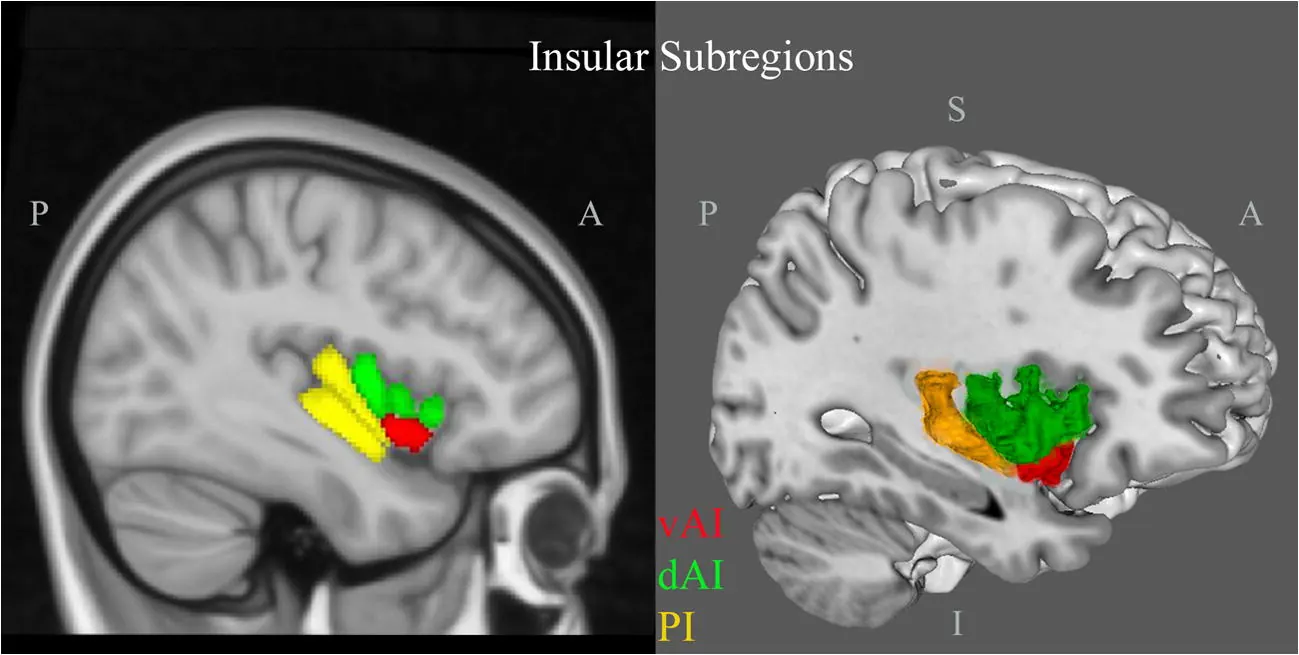
The prefrontal difference was largest in the older participants, which led the authors to suggest meditation might slow age-related thinning. Thickness in one visual region also correlated with an index of meditation experience.
The limit is built into the design. A cross-sectional study cannot tell you whether meditation thickened those areas, or whether people with thicker insulas are more drawn to sitting still for years. The authors said as much and called for longitudinal work.
Hölzel 2011: the "eight weeks" study

The 2011 study, led by Britta Hölzel in Psychiatry Research: Neuroimaging, was that longitudinal work. Sixteen healthy, meditation-naive adults were scanned before and after an 8-week MBSR course and compared with 17 people on a waiting list.
Using voxel-based morphometry, the team reported increased grey-matter concentration in the left hippocampus (a region they had picked in advance), and in whole-brain analyses in the posterior cingulate cortex, the temporo-parietal junction and the cerebellum. This is the paper behind the "eight weeks changes your brain" headline.

What did the 2022 Wisconsin trial find?
Tammi Kral, Richard Davidson and colleagues at the University of Wisconsin–Madison found no evidence that MBSR changed brain structure, compared with either a waitlist or an active control course. Their paper in Science Advances pooled two three-arm randomised controlled trials into one dataset.
All 218 participants were meditation-naive and had structural MRI scans before and after the intervention period. They were randomly assigned to one of three arms:
- waitlist (70 people);
- 8-week MBSR (75 people);
- the Health Enhancement Program (73 people), a validated course matched to MBSR on time, teacher attention, group contact and home practice, but with music therapy, nutrition and exercise instead of meditation.
The team measured three things: grey-matter volume, grey-matter density and cortical thickness. They looked across the whole brain, and they also looked specifically at the regions earlier MBSR studies had reported, including the hippocampus, amygdala, posterior cingulate and temporo-parietal junction.
Changes appeared in every arm
No group difference appeared at either level. Within-group changes did turn up, but in every arm, including the waitlist, whose members showed thicker precuneus and parietal cortex at the second scan.
That is a useful warning: if you only scan a meditation group and look for any increase, you will find one, because MRI measures drift between sessions.
The course still worked as a course
Participants in the same samples showed reduced amygdala reactivity to emotional images and changed functional connectivity in earlier papers, and their self-reported mindfulness rose. But the active control group's mindfulness scores rose too, and the two did not differ significantly.
Engagement was not the problem either: MBSR participants logged between 2 and 85 hours of home practice, a mean of 32 hours, compared with a mean of 23 hours (range 7 to 42) in the earlier MBSR study.
218 meditation-naive adults were randomised to waitlist (70), 8-week MBSR (75) or a matched active control (73) and scanned before and after. No change in grey-matter volume, density or cortical thickness was attributable to MBSR, either brain-wide or in regions taken from earlier studies. One exploratory finding: more home practice predicted a larger drop in right amygdala volume relative to the active control, with no change below about 27 hours of total practice. Limit: it tests 8 weeks in beginners, not years of practice.
Read the paper (free)So were Lazar and Hölzel wrong?
Not wrong, but underpowered. Their findings were reasonable first signals that a bigger, better-controlled study failed to reproduce, which is how most early neuroimaging results end up.
Three features separate the 2011 and 2022 designs:
- Sample size: 33 versus 218 people, roughly a sevenfold difference. Structural MRI effects in healthy adults over two months are tiny, so small samples produce false positives and inflated estimates.
- The control condition: a waitlist controls for the passage of time, but not for the experience of joining a weekly group, getting expert attention and doing daily homework. Only an active control separates meditation from everything else that comes with a course.
- The analysis: Kral's team tested the specific regions earlier studies had flagged, which is the fairest test of a replication.
The meta-analysis says the same
This fits a wider pattern. In 2014 Kieran Fox and colleagues meta-analysed 21 morphometric studies covering about 300 meditators. They found eight regions that were consistently different, including frontopolar cortex, insula, hippocampus and the anterior and mid cingulate, and a pooled effect size of d = 0.46.
They also wrote that publication bias and methodological limits were "strong concerns". Most of the studies were cross-sectional comparisons of experienced meditators with non-meditators, the same design as Lazar 2005.
| Study | Design | People | Practice | Structural finding |
|---|---|---|---|---|
| Lazar et al. 2005, NeuroReport | Cross-sectional | 20 meditators, 15 controls | Years of Insight practice, about 40 min a day | Thicker right anterior insula and prefrontal cortex (BA 9/10) |
| Hölzel et al. 2011, Psychiatry Res Neuroimaging | Pre-post, waitlist control | 16 MBSR, 17 waitlist | 8-week MBSR | Higher grey-matter concentration in hippocampus, PCC, TPJ, cerebellum |
| Fox et al. 2014, Neurosci Biobehav Rev | Meta-analysis | 21 studies, about 300 meditators | Mostly long-term practitioners | 8 regions consistently different; d = 0.46; publication bias flagged |
| Valk et al. 2017, Science Advances | Longitudinal, active comparison modules | Large sample, adults 20 to 55 | 9-month ReSource training, daily exercises | Module-specific cortical thickness changes that tracked behavioural gains |
| Kral et al. 2022, Science Advances | Two pooled RCTs, active and waitlist controls | 218 beginners | 8-week MBSR, mean 32 h home practice | No MBSR-specific change in volume, density or thickness |
See the data as a table
| Meditation group (people) | Control group(s) (people) | |
|---|---|---|
| Lazar 2005 | 20 | 15 |
| Hölzel 2011 | 16 | 17 |
| Kral 2022 | 75 | 143 |
Source: Lazar et al. 2005; Hölzel et al. 2011; Kral et al. 2022 · Kral 2022 control total combines the waitlist (70) and the active Health Enhancement Program (73).
Do longer programmes or long-term practice change structure?
Possibly, and this is where the honest "maybe" sits. Kral's own paper points to a well-powered study of a programme about 50% longer than MBSR that did find cortical thickness changes against two active controls.
That study is the ReSource Project, led by Tania Singer's group at the Max Planck Institute in Leipzig and published by Sofie Valk and colleagues in 2017. Adults aged 20 to 55 trained for nine months in three-month modules. Because each module was compared against the others, not just against doing nothing, the design partly answers the active-control problem.
| Module (3 months) | What it trained | Where cortex changed |
|---|---|---|
| Presence | Present-moment attention and interoception | Mainly prefrontal regions |
| Affect | Socio-affective skills such as compassion | Fronto-insular cortex |
| Perspective | Socio-cognitive skills such as perspective-taking | Inferior frontal and lateral temporal cortex |
Crucially, each person's structural change tracked their improvement on the matching behavioural test.
A 2024 follow-up in eLife on 332 adults from the same project found that the compassion-based module increased volume in hippocampal subfields CA1 to CA3, compared with the perspective module and a waitlist, and that these changes correlated with lower cortisol output. That is a mechanism worth watching: chronic stress hormones are known to affect the hippocampus.
Longitudinal MRI across a 9-month programme of daily mental exercises and weekly group sessions, with three training modules compared against each other. Each module produced its own pattern of cortical thickness change, and the change in each person correlated with their gain on the matching behavioural measure (attention, compassion or perspective-taking). Limit: the participants were volunteers for an intensive programme, and the training mixes meditation with other exercises, so it is not a test of a single technique.
Read the paper (free)
For long-term meditators, the evidence is still mostly cross-sectional. The differences Fox's meta-analysis found are consistent across labs, but a self-selected group that has meditated for a decade differs from controls in diet, sleep, alcohol use, education and personality too.
Until someone follows beginners for years with an active control, "meditation built this brain" stays a plausible hypothesis, not a finding.The bottom line on long-term practice
How much practice would it take?
Nobody knows a threshold for structural change, but the 2022 trial offers one data point: for the right amygdala, people below about 27 hours of total MBSR practice showed no change, and the lower bound of the confidence interval was 20 hours. Spread over a course, the authors put that at roughly 22 minutes a day.
Treat that as exploratory. It came from a practice-by-group interaction that did not hold up consistently in their sensitivity analyses. Still, it is a useful benchmark when you read the claim "just 10 minutes a day rewires your brain". Use the calculator to see where your own practice sits against the two MBSR samples.
Your practice hours against the MBSR studies
What does change for sure?
Brain function changes during and after meditation in ways that replicate better than structure does. Functional findings measure activity and connectivity, which shift faster than tissue and are closer to what practice actually trains.
The same Wisconsin samples that showed no structural change did show functional effects:
- in one sample, MBSR reduced amygdala reactivity to emotional pictures and increased amygdala-to-ventromedial-prefrontal connectivity;
- in the other, it increased resting connectivity between the posterior cingulate and dorsolateral prefrontal cortex.
Other functional signatures
Experienced meditators show relatively lower activity in the default mode network's hubs during practice, which I cover in the default mode network explainer. Long-term practitioners also show distinctive EEG patterns; the best-known example is the high-amplitude gamma activity reported in Tibetan monks, which I go through in the monks' brain gamma study.
Behavioural and clinical effects are a separate question again. A trial can show no brain change and still show less stress, and vice versa.
Kral's finding that the active control raised self-reported mindfulness as much as MBSR suggests some of the benefit comes from features any good course shares: routine, a group, a teacher, and time set aside. That does not make meditation useless. It makes it one good option among several, which is the argument of mindfulness: hype and evidence.
What should a beginner take from this?
Meditate for what it measurably does to attention, stress and mood in trials, not for a brain scan you will never see. The structural claims are the weakest part of the case, and you do not need them.
- Ignore "rewires your brain in 8 weeks". The largest controlled test of that exact claim found no MBSR-specific structural change.
- Expect function before structure. Changes in reactivity and connectivity appeared in the same trial that found no anatomical change.
- Dose may matter. The longer ReSource training and the exploratory amygdala result both point to more practice, not less. If you want a format, see meditation techniques ranked by evidence.
- Intensive retreats are a different exposure. Ten-hour days carry their own risks and benefits, which I weigh in is a 10-day Vipassana course worth it.
16 meditation-naive adults scanned before and after 8 weeks of MBSR, compared with 17 waitlist controls. Voxel-based morphometry showed increased grey-matter concentration in the left hippocampus (a pre-chosen region) and, brain-wide, in the posterior cingulate, temporo-parietal junction and cerebellum. Limit: 33 people in total and a waitlist that does not control for the experience of a group course; the 2022 replication with 218 people did not reproduce it.
Read the paper (free)MRI of 20 Insight meditators (about 40 minutes a day) and 15 matched controls. Whole-cortex thickness did not differ, but the right anterior insula and prefrontal areas BA 9/10 were thicker in meditators, most of all among older participants. Limit: a one-time comparison of self-selected groups, so it cannot show that meditation caused the difference.
Read the paper (free)What's new
- IISc's EEG study of 30 long-term Rajyoga meditators (10,000+ hours each) finds stronger gamma oscillations than in 30 matched non-meditators Indian Institute of Science (Imaging Neuroscience), 2026
- A 7-day retreat study of 20 attendees reports brain and blood changes; small, uncontrolled, and co-authored by the retreat's organiser ScienceDaily, Apr 2026
- ReSource follow-up: compassion training linked to larger hippocampal CA1-3 volume and lower cortisol in 332 adults eLife, 2024
Questions people ask
Does meditation increase grey matter?
Small early studies said yes after 8 weeks; the largest controlled trial, 218 beginners in 2022, found no grey-matter change from MBSR compared with an active or waitlist control. Long-term meditators do differ from non-meditators, but those studies cannot show cause.
Can meditation shrink the amygdala?
A 2010 study from Lazar's group followed 26 stressed adults through MBSR and found that people whose perceived stress fell most also showed the largest drop in right basolateral amygdala grey-matter density; there was no control group. In the 2022 trial there was no group-level amygdala change, only an exploratory link between more home practice (above roughly 27 hours) and a drop in right amygdala volume.
How long does it take for meditation to change the brain?
Functional changes, such as lower amygdala reactivity, appear within weeks in trials. Structural change has only been shown convincingly in longer programmes, such as the 9-month ReSource training.
Is Sara Lazar's research discredited?
No. It was careful work that its authors described as preliminary, and it shaped a whole field. Larger studies have since failed to reproduce the 8-week structural result, which narrows what it can claim.
Sources
- Kral TRA et al. Absence of structural brain changes from mindfulness-based stress reduction: Two combined randomized controlled trials. Science Advances 8(20) (2022)
- Lazar SW et al. Meditation experience is associated with increased cortical thickness. NeuroReport 16(17):1893-1897 (2005)
- Hölzel BK et al. Mindfulness practice leads to increases in regional brain gray matter density. Psychiatry Research: Neuroimaging 191(1):36-43 (2011)
- Fox KCR et al. Is meditation associated with altered brain structure? A systematic review and meta-analysis of morphometric neuroimaging in meditation practitioners. Neuroscience and Biobehavioral Reviews 43:48-73 (2014)
- Valk SL et al. Structural plasticity of the social brain: Differential change after socio-affective and cognitive mental training. Science Advances 3(10) (2017)
- Valk SL et al. Differential increase of hippocampal subfield volume after socio-affective mental training relates to reductions in diurnal cortisol. eLife (2024)
- Hölzel BK et al. Stress reduction correlates with structural changes in the amygdala. Social Cognitive and Affective Neuroscience 5(1):11-17 (2010)
- British Psychological Society Research Digest: How meditation alters the brain (2005)
- Harvard Medical School: Harvard neuroscientist: Meditation not only reduces stress, here's how it changes your brain (Washington Post repost) (2015)
- AAAS: Meditation improves cognition, studies show (on how Sara Lazar came to meditation research) (2017)
- Indian Institute of Science: Meditation strengthens gamma oscillations in the brain (2026)
- ScienceDaily: 7-day meditation retreat study (2026)

Sapta (Saptarshi Sarkar) is a mechanical engineer turned marketer in Bengaluru and a solo touring rider. He writes the seven Saptaverse blogs. Work with him or read more of Mindblog.


