India's National Crime Records Bureau (NCRB) recorded 14,488 student suicides in 2024, 8.5% of all suicides in the country and 79.6% more than the 8,068 recorded in 2014. Maharashtra (1,909), Uttar Pradesh (1,585), Madhya Pradesh (1,447) and Tamil Nadu (1,287) recorded the most. The rise is real, but the data cannot yet say whether an individual student's risk has gone up, and exam failure is a smaller recorded cause than most coverage assumes: 9.6% of suicides among under-18s in 2024, behind family problems at 27.7%.
- 14,488 student suicides in 2024, up from 8,068 in 2014 (NCRB).
- Students rose from 6.1% to 8.5% of all suicides in ten years, while the overall rate dipped from 12.3 to 12.2 per lakh.
- Per lakh population, Tamil Nadu (1.67) and Madhya Pradesh (1.65) are higher than Maharashtra; Uttar Pradesh (0.67) is well below the national 1.04.
- Family problems (27.7%) outrank exam failure (9.6%) among recorded causes for under-18s.
- In July 2025 the Supreme Court issued 15 binding guidelines for schools, colleges and coaching centres.
This post follows the World Health Organization's guidance for reporting on suicide: it covers numbers, causes and prevention, and it does not describe methods or individual deaths. It is written for parents, teachers, students and anyone trying to make sense of the annual headlines.
How many students die by suicide in India every year?
NCRB's Accidental Deaths and Suicides in India (ADSI) report counted 14,488 student suicides in 2024, released in May 2026. That is about 40 a day, and up 4.3% from 13,892 in 2023. The count has risen in every year of the past decade except 2022, when it fell by 45.
The steepest single jump came between 2019 and 2020, the first pandemic year, when the count rose by 2,191 (21.2%). It has not returned to the pre-pandemic level since.
See the data as a table
| Student suicides | |
|---|---|
| 2014 | 8068 |
| 2015 | 8934 |
| 2016 | 9478 |
| 2017 | 9905 |
| 2018 | 10159 |
| 2019 | 10335 |
| 2020 | 12526 |
| 2021 | 13089 |
| 2022 | 13044 |
| 2023 | 13892 |
| 2024 | 14488 |
Source: NCRB ADSI reports, compiled by Careers360 (May 2026) · Police-recorded deaths where the person was a student at the time. Counts, not rates.
Is the rise in student suicides real?
The rise in the count is real; whether it means each student now faces more risk is unknown. Public health researchers at the Public Health Foundation of India point out that NCRB gives the numerator, deaths of people classed as students, but there is no matching denominator of everyone enrolled in school, college and coaching in the same year.
Without that denominator, a rising count can come from four things at once:
- more young people;
- more of them staying in education for longer;
- better classification by police;
- or genuinely higher risk.
The authors note that population growth and educational expansion alone push the count up, so some of the increase is likely to be arithmetic. None of that makes a single death less of a loss.
Two facts suggest students are at least a growing share of the problem. Students made up 6.1% of all suicides in 2014, 7.6% in 2022, 8.1% in 2023 and 8.5% in 2024. Over the same final year, India's overall suicide rate dipped slightly, from 12.3 to 12.2 per lakh population.
A commentary by researchers at PHFI and AIIMS New Delhi that re-analyses NCRB's 2024 tables. Student suicides rose 4.3% from 2023 to 2024 while the national rate fell from 12.3 to 12.2 per lakh. Because NCRB publishes causes by age but not by occupation, the authors used age groups as a proxy: among under-18s, exam failure accounted for 9.6% of suicides, behind family problems (27.7%), love affairs (14.9%) and illness (12%); among 18-29-year-olds it was 1.6%. They argue that treating all student suicides as "exam stress" narrows prevention too much. The limit: the age proxy includes non-students.
Read the paper (free)Which state has the most student suicides?
By count, Maharashtra: 1,909 student suicides in 2024, 13.2% of the national total. Uttar Pradesh (1,585), Madhya Pradesh (1,447) and Tamil Nadu (1,287) follow. The same four led in 2023, when Maharashtra recorded 2,046.
Counts mostly track population, so I divided each state's 2024 count by its projected population on 1 March 2024 from the government's Technical Group on Population Projections. This is deaths per lakh of all residents, not per lakh students, so read it as a rough comparison.
| State | Student suicides 2024 | Share of India | Population 2024 (lakh) | Per lakh population |
|---|---|---|---|---|
| Tamil Nadu | 1,287 | 8.9% | 770.9 | 1.67 |
| Madhya Pradesh | 1,447 | 10.0% | 876.1 | 1.65 |
| Maharashtra | 1,909 | 13.2% | 1,273.6 | 1.50 |
| Uttar Pradesh | 1,585 | 10.9% | 2,380.8 | 0.67 |
| India | 14,488 | 100% | 13,986.0 | 1.04 |
See the data as a table
| Per lakh population (per lakh) | |
|---|---|
| Tamil Nadu | 1.67 |
| Madhya Pradesh | 1.65 |
| Maharashtra | 1.5 |
| India | 1.04 |
| Uttar Pradesh | 0.67 |
Source: NCRB ADSI 2024 counts (via Careers360) divided by Technical Group population projections for 1 March 2024 (my calculation) · Per lakh of all residents, not of students. Other states were not reported in the source.
Uttar Pradesh's low rate is the clearest example. A state with about 11 crore more people than Maharashtra records fewer student suicides; better mental health is one possible explanation, and less complete recording is another. The data alone cannot tell them apart.
Is exam pressure the main reason students die by suicide?
It is one reason, and a smaller one in the records than in the headlines. NCRB tied 1,071 suicides among under-18s in 2024 to failure in examination, about 9.6% of that age group's suicides. Family problems accounted for 27.7%, love affairs 14.9% and illness 12%. Among 18-29-year-olds, exam failure was 1.6% of suicides and family problems 33.2%.
Two cautions apply. Police record one main cause per death, which flattens what are usually several stresses at once. And "family problems" can include conflict over marks, career choice or marriage, so academic pressure can sit inside other categories.
Where exams do matter, timing is a signal. A study of news reports on suicides linked to the NEET medical entrance exam found that, in 2018 and 2019, 55% of such deaths happened in the month results were declared, and 65% of the students were young women. That points to result day, not exam day, as a period when families and schools should be most watchful.
The authors searched online news reports from January 2018 to September 2020 and found 32 student suicides linked to NEET, the entrance test that about 16 lakh students took in 2020 for roughly 1 lakh medical and dental seats. Academic difficulty was the most commonly cited factor (65%), and 55% of the 2018-19 deaths fell in the month results came out. Tamil Nadu accounted for 46% of reports. The limit: news reports capture only a fraction of cases and depend on what journalists choose to cover.
Read the paper (free)What has India done to prevent student suicides?
India published a National Suicide Prevention Strategy in 2022, which set out school-level life-skills training, teacher capacity building and curbs on substance use. In 2025 the Supreme Court turned student mental health into a legal duty for institutions.
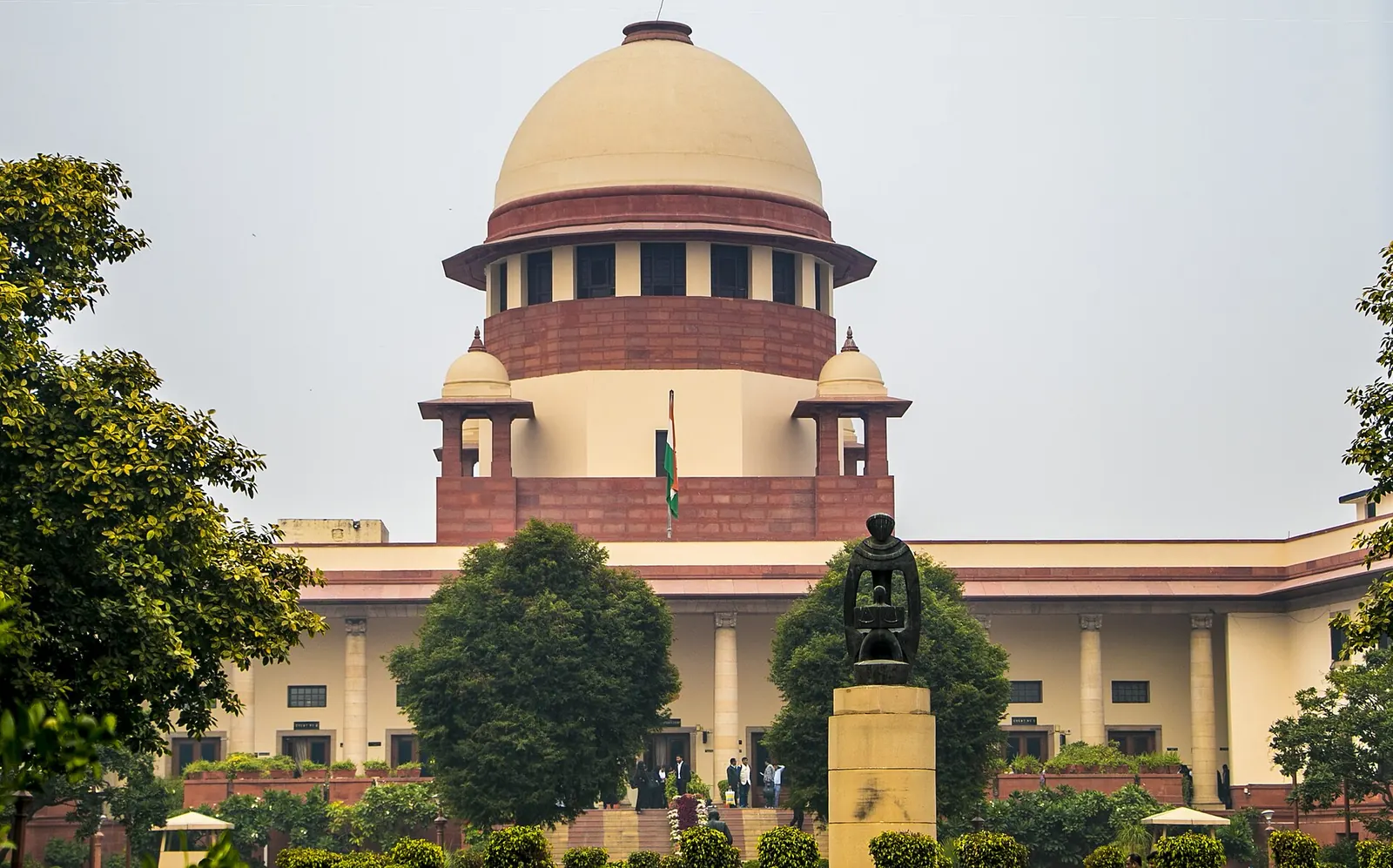
On 25 July 2025, a Supreme Court bench of Justices Vikram Nath and Sandeep Mehta delivered its judgment in Sukdeb Saha v. State of Andhra Pradesh and laid down fifteen binding guidelines to prevent student suicides. They apply to schools, colleges, universities and coaching centres. Institutions must adopt a mental health policy, appoint qualified counsellors, train teaching and non-teaching staff to spot distress and refer students, set up referral and grievance pathways, and keep records. The court also ordered the Union government to file an affidavit showing how states and union territories would comply. Two mental health experts from NIMHANS and Chennai, writing in The Lancet Regional Health, called it a landmark, then warned that India does not yet know how many institutions have trained counsellors at all.
Mehrotra and Vijayakumar: Strengthening student mental health support systems in India, The Lancet Regional Health Southeast Asia (2025)A comment by Seema Mehrotra of NIMHANS, Bengaluru, and Lakshmi Vijayakumar of VHS Hospital, Chennai. They welcome the court's demands for qualified counsellors, staff training and documentation, and list the gaps: the All-India Survey on Higher Education records only whether institutions have counsellors, not their training, workload or use. They propose public-private delivery models for affordable services, periodic national student feedback and funded implementation research. The limit: it is expert opinion, not an evaluation of outcomes.
Read the paper (free)Money is the constraint. A 2024 letter in the Indian Journal of Psychological Medicine noted that only 1.41% of the 2023-24 health budget went to mental health care. Courts can order counsellors; budgets decide whether they exist.
What can parents, teachers and students actually do?
Prevention research and the new guidelines point to the same short list. None of it needs a specialist to start.
- Ask calmly and listen. A direct, unhurried question about how someone is really coping, followed by listening without lectures, gives them permission to talk.
- Watch result days, not just exam days. The NEET study found more deaths in the month results came out. Plan the conversation before the result, whatever it is.
- Separate the person from the marks. Say it out loud: a score is not a verdict on a life, and there is more than one route to a career.
- Connect to help early. Tele-MANAS (14416) is free. Under the 2025 guidelines, schools, colleges and coaching centres must have a counsellor and a referral process; ask who it is.
- Look beyond academics. The records point to family conflict, relationships and illness as often as exams. A student doing well can still be in distress.
The most useful thing an adult can do on result day is to make it clear, before the marks arrive, that nothing on the marksheet changes how much the student is loved.
Much of this pressure has a social engine, explored in log kya kahenge and India's government job obsession. The coaching-town side is in Kota's coaching factory, and why so few people seek help is in mental health stigma in India. For the law, see whether attempted suicide is still a crime. For the psychology of exam stress itself, read the Mindblog post on exam stress and student suicides.
What's new
- NCRB ADSI 2024: student suicides reach 14,488, up nearly 80% in ten years Careers360, May 2026
- Researchers warn that exam stress explains only part of the rise in student suicides The Lancet Regional Health Southeast Asia, Jul 2026
- Mental health experts assess the Supreme Court's 15 guidelines on student suicide The Lancet Regional Health Southeast Asia, Nov 2025
- NCRB ADSI 2023 records 13,892 student suicides, then a ten-year high Careers360, Sep 2025
Questions people ask
How many students die by suicide in India every year?
NCRB recorded 14,488 in 2024, 13,892 in 2023 and 13,044 in 2022. Students were 8.5% of all suicides in 2024. These are police-recorded deaths, so the true number is likely higher.
Which state has the most student suicides?
Maharashtra by count (1,909 in 2024), followed by Uttar Pradesh, Madhya Pradesh and Tamil Nadu. Adjusted for population, Tamil Nadu and Madhya Pradesh are higher than Maharashtra, and Uttar Pradesh is well below the national average.
Why are student suicides increasing in India?
The count has risen about 80% since 2014, but part of that may reflect more students and better recording, because NCRB does not publish a student denominator. Recorded causes are spread across family problems, relationships, illness and exam failure. Researchers say better data, such as psychological autopsy studies and institution-level reporting, is needed to know which drivers matter most.
Where can a student in India get help?
Call Tele-MANAS on 14416 for free counselling, or 112 in an emergency. Under the Supreme Court's 2025 guidelines, schools, colleges and coaching centres must provide access to counsellors and a referral process.
Sources
- Careers360: Student suicide NCRB report 2026, 80% rise in 10 years (2026, NCRB ADSI 2014-2024 series and 2024 state counts)
- Careers360: NCRB report 2023, over 13,800 student suicides (2025, 2023 state counts and share)
- Dandona R, Kumar G A, Sagar R: Beyond the numbers, The Lancet Regional Health Southeast Asia (2026, causes by age and the denominator problem)
- Mehrotra S, Vijayakumar L: Strengthening student mental health support systems in India, The Lancet Regional Health Southeast Asia (2025, Supreme Court guidelines)
- Kar S K et al.: Student suicide linked to NEET examination in India, Indian Journal of Psychological Medicine (2020)
- Kar S K, Menon V, Cherian A V et al.: NCRB 2023 Indian suicide data, Indian Journal of Psychiatry (2026, student share 7.6% in 2022 and 8.1% in 2023)
- Shoib S, Kar S K et al.: Student suicide prevention in India, Indian Journal of Psychological Medicine (2024, National Suicide Prevention Strategy and the 1.41% budget share)
- National Commission on Population: Report of the Technical Group on Population Projections 2011-2036 (2019, state populations for 1 March 2024)
- Ministry of Health and Family Welfare: Tele-MANAS (national mental health helpline, 14416)

Sapta (Saptarshi Sarkar) is a mechanical engineer turned marketer in Bengaluru and a solo touring rider. He writes the seven Saptaverse blogs. Work with him or read more of Whyblog.