India's National Crime Records Bureau recorded 14,488 student deaths by suicide in 2024, up from 8,068 in 2014, and students now make up 8.5% of all suicides recorded in the country, against 6.1% a decade earlier. Research links student distress to many interacting factors, including academic pressure, family expectations, mental illness and isolation, so exam results are rarely the whole story. Help is available: Tele-MANAS, the government's free national tele-mental health service, answers around the clock, and its official page is telemanas.mohfw.gov.in.
- 14,488 student deaths by suicide were recorded by NCRB in 2024, up from 8,068 in 2014.
- 8.5% of all recorded suicides in India were students in 2024, against 6.1% a decade earlier.
- One in three college students in a 9-state survey reported moderate to severe depressive symptoms.
- 38.1% of students who had suicidal thoughts told someone, most often a friend, which is why peers matter.
- 15 binding guidelines from the Supreme Court (July 2025) now require counsellors, staff training and visible helplines.
- Tele-MANAS is free, confidential and open 24 hours; see a doctor if distress lasts.
This post follows the World Health Organization's guidance for reporting on suicide. It uses the data to understand a public health problem, it does not describe how anyone died, and it ends with practical routes to support.
The numbers are grim, but the most important finding in the research is a hopeful one: distress is common, it is treatable, and most students who struggle do get through it, especially when someone notices and they are connected to care.
How many students in India die by suicide each year?
NCRB's Accidental Deaths and Suicides in India (ADSI) report counted 14,488 students in 2024, the latest year published, in data released in May 2026. That is 4.3% more than the 13,892 recorded in 2023, and close to 80% more than in 2014.
Over the same decade, students rose from 6.1% to 8.5% of all suicides recorded in India, according to Careers360's analysis of the NCRB tables.
See the data as a table
| Students | |
|---|---|
| 2014 | 8068 |
| 2015 | 8934 |
| 2016 | 9478 |
| 2017 | 9905 |
| 2018 | 10159 |
| 2019 | 10335 |
| 2020 | 12526 |
| 2021 | 13089 |
| 2022 | 13044 |
| 2023 | 13892 |
| 2024 | 14488 |
Source: NCRB Accidental Deaths and Suicides in India, compiled by Careers360 (May 2026) · Police-recorded deaths; NCRB counts anyone whose occupation was recorded as student, from school to higher education. An earlier Careers360 table gives 8,032 for 2014.
Three phases in the decade
- 2014 to 2019: a steady climb, from 8,068 to 10,335.
- 2020: the sharpest jump, from 10,335 to 12,526, the first year of pandemic school closures.
- 2021 to 2024: a plateau at around 13,000 for two years (13,089 and 13,044), then a climb again to 14,488 (Careers360, 2026).
Total suicides in India were broadly flat over 2022 and 2023 at about 1.71 lakh, according to the Centre for Mental Health Law and Policy (CMHLP), which means the student share is rising faster than the overall figure.
| Measure | 2014 | 2023 | 2024 |
|---|---|---|---|
| Student deaths by suicide | 8,068 | 13,892 | 14,488 |
| Share of all suicides in India | 6.1% | 8.1% | 8.5% |
| All suicides in India | not used here | 1,71,418 | not yet verified |
| National suicide rate (per lakh people) | not used here | 12.3 | not yet verified |
Sources: Careers360 compilations of NCRB data (2025 and 2026) and CMHLP's analysis of ADSI 2023. Cells marked "not yet verified" are left blank on purpose rather than filled from secondary reports.
In 2024 a grieving father took an appeal to the Supreme Court. His 17-year-old child, a NEET aspirant attending coaching, had died, and the Andhra Pradesh High Court had refused his request to move the investigation to the CBI. The appeal was about one investigation. The judgment became about every student in India.
On 25 July 2025, Justices Vikram Nath and Sandeep Mehta sent the case to the CBI, and Justice Mehta, writing for the bench, went further. He held that mental health is part of the right to life under Article 21. The Court cited NCRB figures showing student suicides had risen from 5,425 in 2001 to 13,044 in 2022, found no unified, enforceable framework protecting students, and laid down 15 binding guidelines for schools, colleges and coaching centres, to hold until Parliament or regulators act.
Supreme Court Observer: Sukdeb Saha v State of Andhra Pradesh, mental health integral component of right to lifeWhich states record the most student suicides?
In 2024, Maharashtra recorded the most (1,909, or 13.2% of the national student total), followed by Uttar Pradesh (1,585), Madhya Pradesh (1,447) and Tamil Nadu (1,287), according to Careers360's reading of the NCRB report.
India's states differ sharply in their overall suicide rates as well: in 2023 Kerala, Telangana and Chhattisgarh had the highest general rates, at 30.6, 27.7 and 26.0 per lakh, according to CMHLP. Our post on mental health prevalence by Indian state shows how uneven the underlying burden is.
| State (2024) | Student suicides recorded | Share of India's total |
|---|---|---|
| Maharashtra | 1,909 | 13.2% |
| Uttar Pradesh | 1,585 | 10.9% |
| Madhya Pradesh | 1,447 | 10.0% |
| Tamil Nadu | 1,287 | 8.9% |

Is exam failure the main cause?
Exam failure is one recorded cause among many, and the data understate how complex each death is. NCRB records one main cause per case, taken from police paperwork, and most suicides involve several pressures at once.
For 2024, the NCRB report listed failure in examination as the main cause for 1,071 students under 18, according to Careers360. Across all ages and occupations in 2023, family problems and illness accounted for nearly half of recorded suicides, CMHLP notes.
What students themselves report
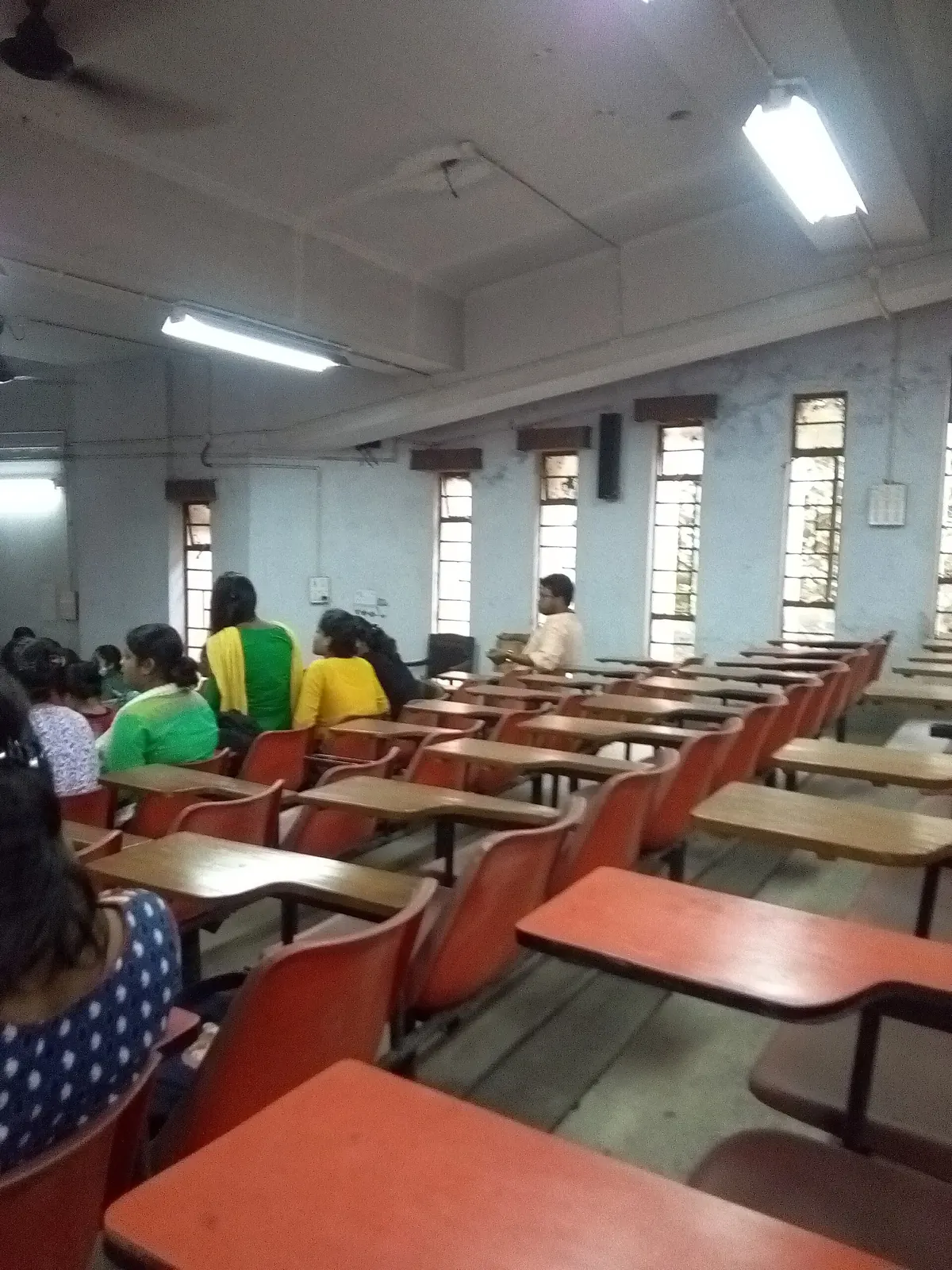
Research with students themselves gives a fuller picture. The largest recent Indian survey, led by NIMHANS researchers, asked 8,542 college students across nine states about their mental health:
- about a third reported moderate to severe depressive symptoms;
- nearly a quarter reported moderate to severe anxiety;
- 12.4% reported suicidal thoughts in the past year.
These are not rare experiences confined to a few students in crisis; they are common enough that every classroom will have someone carrying them.
A questionnaire survey of 8,542 students aged 18 and over, from 30 universities in 15 cities across nine states, more than 4,800 of them women. Using the PHQ-9 and GAD-7 scales, 33.6% reported moderate to severe depressive symptoms and 23.2% moderate to severe anxiety. Lifetime suicidal thoughts were reported by 18.8% and past-year thoughts by 12.4%. Of students who had had such thoughts, 38.1% had told someone, most often a friend. The limit: a self-report survey of college students, so it does not cover school students or coaching-centre aspirants, and it measures symptoms rather than diagnoses.
Read the paperThat last finding matters for prevention. When students do disclose, they mostly tell friends, not teachers, counsellors or parents.
When students do disclose, they mostly tell a friend. Prevention has to start with the people they already trust.From the 2024 nine-state college survey
That is why programmes that teach peers and staff to recognise distress and connect students to help are a core part of every serious prevention framework.
What does research say about coaching hubs like Kota?
Coaching hubs concentrate risk factors:
- adolescents living away from home for the first time;
- long study days;
- constant ranking;
- families that may have borrowed to pay fees.
A 2025 analysis in Cureus reviewed 80 documented suicides among JEE and NEET aspirants and found cases clustered in Rajasthan and rose after 2022. Because it relies on police and news records, it can describe patterns but not causes, and the authors call for region-specific mental health support rather than drawing firm conclusions.
A three-tier model from Kota
A December 2025 paper in the Indian Journal of Psychiatry by Ashok Seervi and Indraja Sharma, psychiatrists in Jodhpur and Udaipur, draws lessons from Kota. It notes that student deaths continued despite greater awareness and policy action, and proposes a three-tier model:
- universal support for every student;
- early identification of those at higher risk;
- a ready crisis response.
It also separates minimum from ideal components so that smaller centres can adopt it.
The study modelled suicide deaths for every Indian state from 1990 to 2016 within the Global Burden of Disease framework, estimating 2,30,314 deaths in 2016. Suicide was the leading cause of death for Indians aged 15 to 39, an age band that covers nearly every student in higher education, and that band accounted for 71.2% of women's and 57.7% of men's suicide deaths. Women aged 15 to 29 had among the highest rates. The limit: GBD figures are modelled estimates with wide uncertainty ranges, and the data stop in 2016, but they show how central suicide prevention is to the health of young Indians.
Read the paper (free)What have courts and governments changed since 2024?
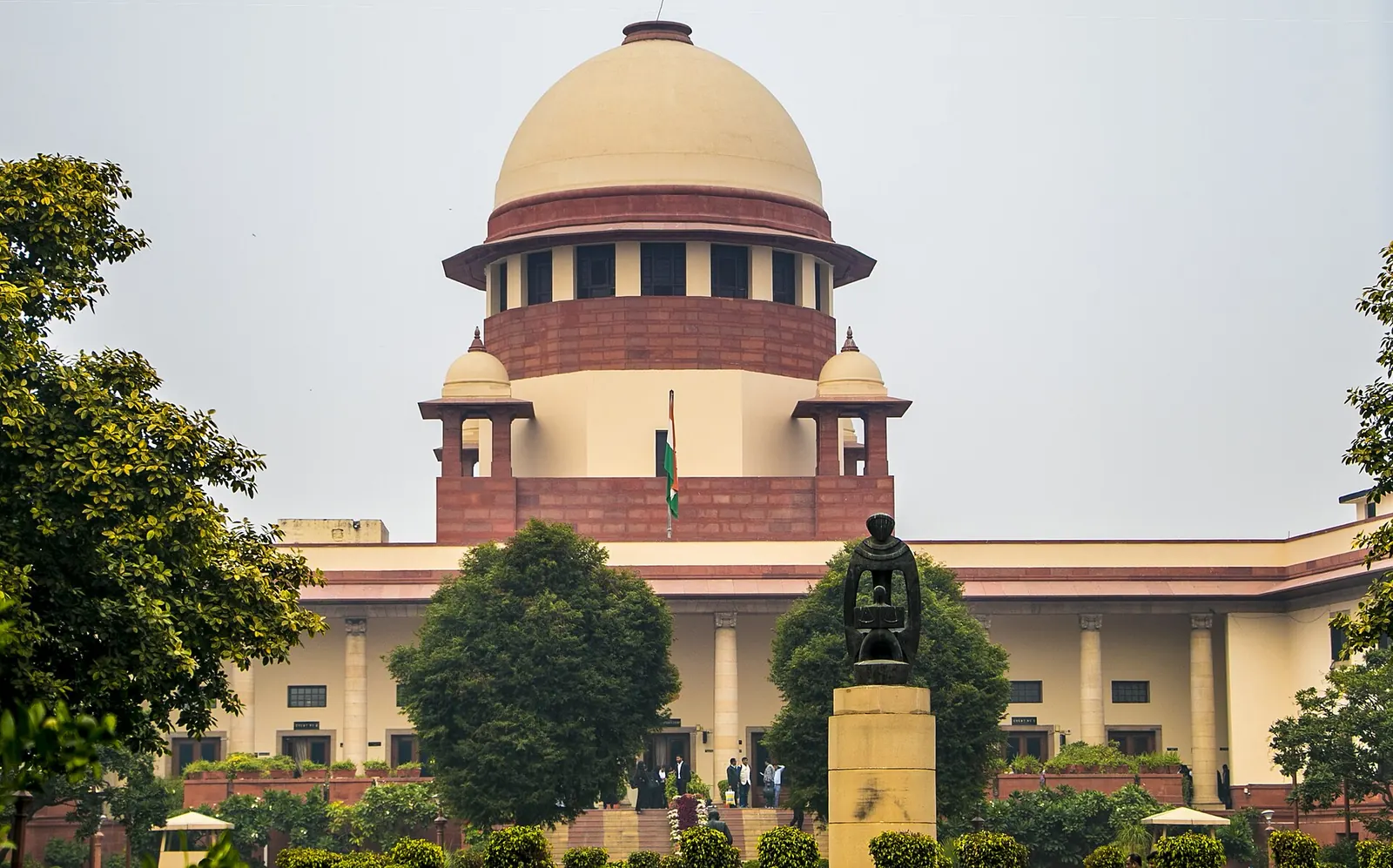
The biggest change is that student mental health is now governed by binding Supreme Court guidelines. In Sukdeb Saha v. State of Andhra Pradesh, decided on 25 July 2025, the Court issued 15 guidelines covering schools, colleges, coaching institutes and training centres, to apply until Parliament or regulators legislate.
A national task force on student suicides in higher education had already been set up on 24 March 2025, chaired by former Supreme Court judge S. Ravindra Bhat.
| Date | Measure | What it requires |
|---|---|---|
| 2024 | Union Ministry of Education guidelines for coaching centres | Registration, infrastructure, mental health support; reported to bar enrolling children under 16 |
| 24 Mar 2025 | National Task Force on student suicides in higher education | Study causes, review rules on ragging, discrimination and support, recommend fixes |
| 25 Jul 2025 | Supreme Court guidelines (Sukdeb Saha) | Mental health policy in every institution; a trained counsellor where there are over 100 students; no segregating students by marks or public shaming; helplines such as Tele-MANAS displayed in hostels, classrooms and websites; staff training twice a year |
| 3 Sep 2025 | Rajasthan Coaching Centres (Control and Regulation) Bill passed | Registration, a counselling system as a condition of registration, no misleading advertising, limits on daily class hours; assent on 23 Sep 2025 |
| 15 Jan 2026 | Supreme Court order (Amit Kumar v. Union of India) | NCRB to separate school and higher-education students; colleges to report deaths and file annual reports with regulators; round-the-clock medical help for residential campuses; vacant posts and pending scholarships cleared within four months |
Fixing the data
The January 2026 order fixes a data problem this post runs into: NCRB's "student" category lumps a Class 9 pupil with a PhD scholar. Once the categories are separated, the next ADSI reports should show where the risk is concentrated.
CMHLP has also pointed out that NCRB data arrive late, with the 2023 report released only in September 2025, which slows any response. Our history of mental health care in India traces how long it took the system to reach this point.
What helps a student who is struggling?
What helps most is being noticed, being listened to without judgement, and being connected to care. The Supreme Court's guidelines and the prevention frameworks above share the same core: trained people nearby, a clear route to professional support, and an environment that does not rank and shame.
- Notice changes. Pulling away from friends, changes in sleep or appetite, or talk of hopelessness are reasons to check in gently.
- Ask and listen. Ask how they are really doing, and listen more than you advise. A calm, direct conversation shows them it is safe to talk.
- Take the pressure off results. Families can say clearly that their love does not depend on a rank. The Supreme Court asked institutions to work with parents on exactly this.
- Connect to care. Encourage contact with a counsellor, doctor or Tele-MANAS, and offer to help make the first call. Our guide to finding affordable therapy in India lists low-cost options.
- Look after the basics. Sleep, food and breaks are not luxuries during exam season. Evidence-based study methods, such as those in our study techniques ranked by evidence, can also reduce the panic of last-minute cramming.
Tele-MANAS had answered 47,75,644 calls through 53 cells across all 36 states and union territories by October 2026, four years after its launch on 10 October 2022, according to the Union Health Ministry figures reported by Digital Health News. Under the 2025 guidelines, schools and colleges must display it where students will see it.
If you are a student reading this in the middle of exam season: a rank is one number on one day. You are much more than that, and support is there if you need it. If the stress, low mood or sleeplessness does not lift, see a doctor. More writing on the mind lives in Manthan.
What's new
- NCRB data for 2024: student suicides at 14,488, 8.5% of the national total Careers360, May 2026
- Supreme Court orders colleges to report student deaths and NCRB to split student data Verdictum, Jan 2026
- Tele-MANAS crosses 47.75 lakh calls across 53 cells Digital Health News, Oct 2026
- Psychiatrists propose a three-tier prevention framework for coaching centres, drawing on Kota Indian Journal of Psychiatry, Dec 2025
Questions people ask
Are student suicides in India increasing?
Yes, in police-recorded data. NCRB counted 8,068 student deaths in 2014 and 14,488 in 2024, and the student share of all suicides rose from 6.1% to 8.5%. The rise has held across a decade of data.
Why are so many students under so much pressure?
Studies point to several factors working together: intense competition for limited seats, family expectations, financial strain, isolation in hostels and coaching hubs, and untreated depression or anxiety. A large 2024 survey found a third of college students reporting moderate to severe depressive symptoms, so distress is widespread and often goes unnoticed.
Where can a student in India get free mental health support?
Tele-MANAS, the national tele-mental health service of the Union Health Ministry, offers free, confidential counselling 24 hours a day in many languages; see the official Tele-MANAS page. Many colleges must now have a trained counsellor under the 2025 Supreme Court guidelines, and government hospitals run psychiatry outpatient clinics.
Is therapy in India expensive?
Private therapy can be, but there are low-cost routes: Tele-MANAS, district mental health programme clinics, government medical colleges and university counselling centres. The r/indiatherapy community's guide suggests first deciding what kind of help you need, which narrows the search.
Sources
- Careers360: Number of student suicides rises 80% in 10 years, 8.5% of total, NCRB report (2026)
- Careers360: Over 13,800 student suicide deaths in 2023, NCRB report (2025)
- Centre for Mental Health Law and Policy: Takeaways from the NCRB data on suicide for 2023 (2025)
- Cherian et al.: Mental health and suicidality among college students across nine states, Indian Journal of Psychological Medicine (2024)
- India State-Level Disease Burden Initiative: Gender differentials and state variations in suicide deaths in India, Lancet Public Health (2018)
- Gupta et al.: Suicide trends among IIT JEE and NEET aspirants, Cureus (2025)
- Seervi and Sharma: Psychiatric interventions and suicide prevention in India's coaching centers, Indian Journal of Psychiatry (2025)
- Supreme Court Observer: Sukdeb Saha v State of Andhra Pradesh, judgment summary (2025)
- CMHLP: A landmark ruling for student mental health in India (Sukdeb Saha guidelines) (2025)
- Verdictum: Amit Kumar v. Union of India, 2026 INSC 62 (2026)
- PRS Legislative Research: The Rajasthan Coaching Centres (Control and Regulation) Bill, 2025
- The Logical Indian: NCRB reports 14,488 student deaths in 2024 (2026)
- Digital Health News: Tele-MANAS reaches 47.75 lakh calls (2026)
- World Health Organization: Preventing suicide, a resource for media professionals, update 2023
- Ministry of Health and Family Welfare: Tele-MANAS official page

Sapta (Saptarshi Sarkar) is a mechanical engineer turned marketer in Bengaluru and a solo touring rider. He writes the seven Saptaverse blogs. Work with him or read more of Mindblog.