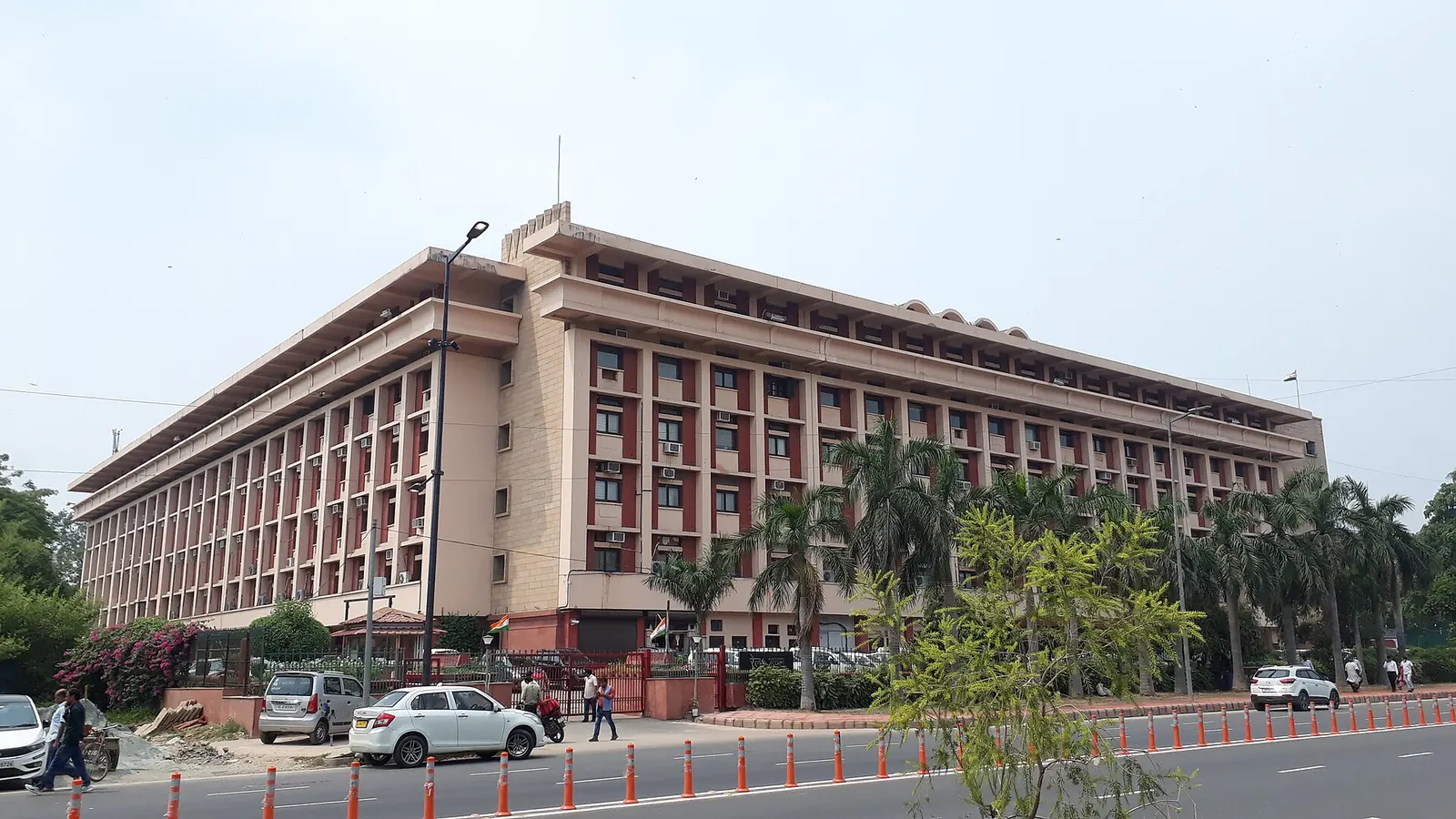
Indians want government jobs because the rest of the labour market offers so little security: in 2023-24, 58% of regular salaried employees had no written job contract and 53.4% had no social security benefit at all (PLFS). A government post comes with tenure, a pay scale that research finds well above private pay for similar workers, and a pension in a country where only 7.7% of people over 60 receive one. That is why over 1.08 crore people applied for 32,438 railway Group D posts in 2025, about 333 per seat.
- 1.08 crore applications for 32,438 railway Group D posts (CEN 08/2024): about 333 per seat.
- Only 21.7% of Indian workers hold a regular salaried job, and 58% of those have no written contract (PLFS 2023-24).
- Public pay ran 62-102% above formal private pay for comparable workers in World Bank estimates.
- Just 7.7% of Indians aged 60+ receive a retirement pension (LASI 2017-18).
- The cost is real: a Tamil Nadu hiring freeze left exam-chasing cohorts with lower employment a decade later.
To an outsider, the queues look irrational. Engineers and postgraduates apply for posts that need a Class 10 pass. Young men spend three, five, seven years in coaching towns. Parents treat a sarkari naukri (government job) as the finish line of a child's life.
Read the labour data and the behaviour makes sense. This post covers:
- how many people apply, and for what;
- what the private alternative actually offers;
- the pay, security and pension gap in numbers;
- what all this costs the people who don't get selected.
How many people apply for government jobs in India?
The Railway Recruitment Boards (RRBs) give the clearest numbers. For CEN 08/2024, 32,438 Level 1 posts such as Track Maintainer Grade-IV and Assistant Pointsman, the RRBs received over 1.08 crore applications, the Free Press Journal reported in April 2025.
Every one of the 16 RRB zones the paper listed drew lakhs. Mumbai led with 15.59 lakh, followed by Chandigarh (11.60 lakh) and Chennai (11.13 lakh).
See the data as a table
| Applications (lakh) | |
|---|---|
| Mumbai | 15.59 |
| Chandigarh | 11.6 |
| Chennai | 11.13 |
| Guwahati | 10.73 |
| Secunderabad | 9.61 |
| Prayagraj | 8.62 |
| Kolkata | 7.94 |
| Ahmedabad | 6.39 |
| Bhopal | 4.51 |
| Bilaspur | 4.33 |
| Gorakhpur | 3.62 |
| Ajmer | 3.59 |
| Patna | 3.34 |
| Bengaluru | 2.75 |
| Bhubaneswar | 2.66 |
| Ranchi | 1.81 |
Source: Free Press Journal, 28 April 2025 · Zone-wise counts as reported; rounded to two decimals.
In early 2018 Indian Railways advertised two big recruitments together: 62,907 Group D posts and 26,502 Assistant Loco Pilot and Technician posts, 89,409 jobs in all. When the application window closed, the Railway Recruitment Boards put out an official notice describing what had happened as an "unprecedented response": about 2.37 crore applications. That works out to about 265 applications for every post, each one a fee, a form and a hope. Seven years later, the next big Group D call drew 333 per post.
Careers360: 2.37 crore applications received for 89,409 RRB ALP and Group D posts (June 2018)Civil services: the top of the pyramid
At the other end, the Union Public Service Commission's Civil Services Examination drew 11,35,697 registrations in 2022, and 5,73,735 candidates actually sat the preliminary exam. Kunal Mangal's study of these exams puts the acceptance rate below 0.1%.
| Recruitment | Posts | Applications | Per post |
|---|---|---|---|
| RRB Group D + ALP/Technician (2018) | 89,409 | about 2.37 crore | 265 |
| RRB Group D, CEN 08/2024 (2025) | 32,438 | over 1.08 crore | 333 |
| UPSC Civil Services Prelims (2022) | not fixed by the exam | 11.36 lakh registered, 5.74 lakh sat | acceptance under 0.1% |
Per-post figures are my arithmetic from the reported totals. One person may apply to several zones or exams, so applicants are fewer than applications.
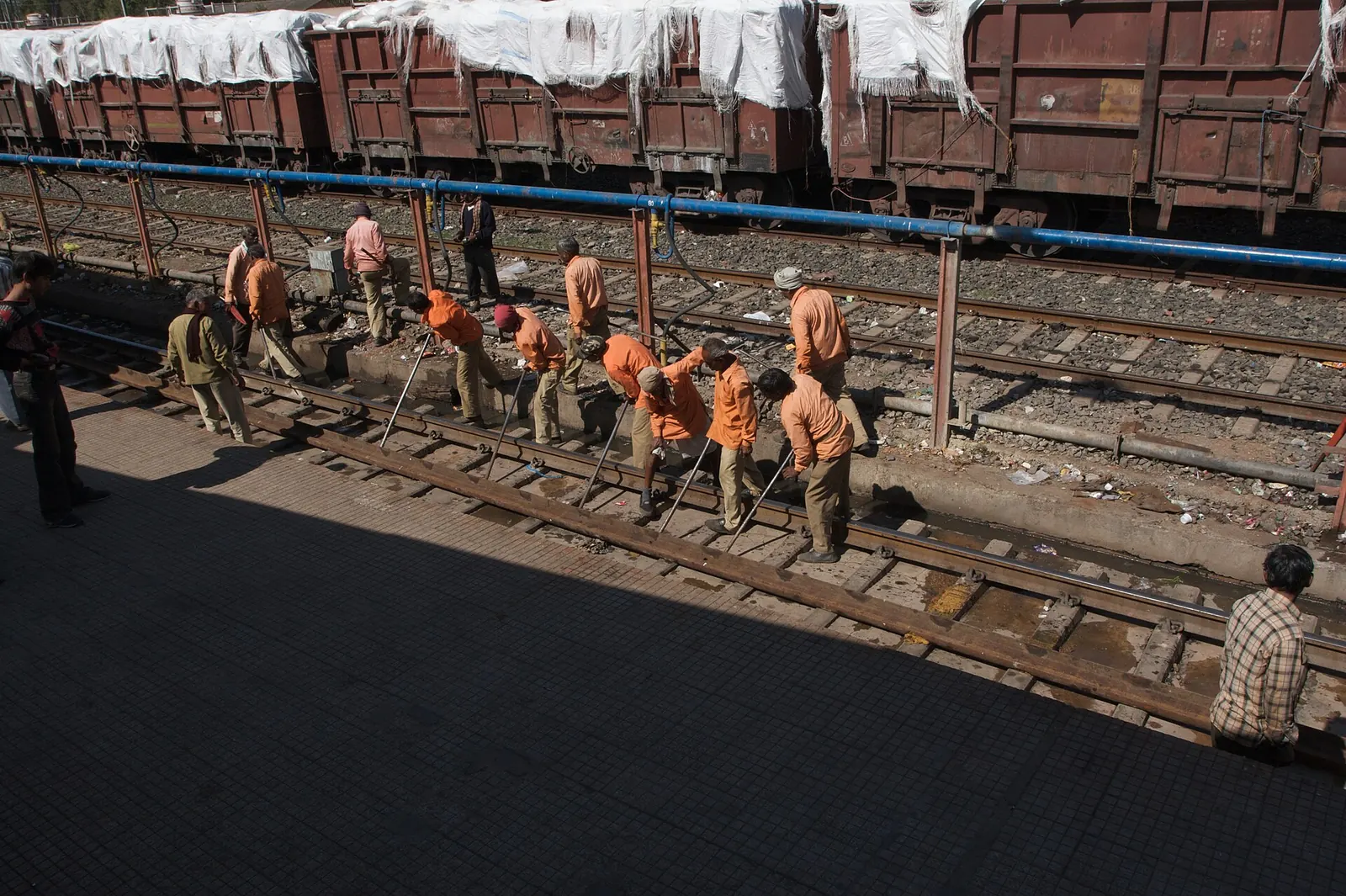
Why is a government job so important in India?
Because it is one of the very few jobs in India that come with a contract, a pension and protection from arbitrary firing. The Periodic Labour Force Survey (PLFS 2023-24) shows how rare those are.
Most work is not a job in the Western sense
Of all Indian workers in 2023-24, 58.4% were self-employed, 19.8% were casual labourers and only 21.7% had a regular wage or salaried job. Data for India's analysis of the same surveys finds about 90% of employment informal in 2024, barely down from 94% in 2005.
Even salaried jobs are often insecure
| Regular salaried employees, non-farm (PLFS) | 2021-22 | 2022-23 | 2023-24 |
|---|---|---|---|
| No written job contract | 62.0% | 58.6% | 58.0% |
| Not eligible for paid leave | 49.2% | 46.8% | 47.3% |
| No social security benefit | 53.0% | 53.9% | 53.4% |
Source: MoSPI, PLFS Annual Report 2023-24, Statement 9 (rural + urban, persons).
See the data as a table
| No written job contract (%) | No social security benefit (%) | Not eligible for paid leave (%) | |
|---|---|---|---|
| 2021-22 | 62.0 | 53.0 | 49.2 |
| 2022-23 | 58.6 | 53.9 | 46.8 |
| 2023-24 | 58.0 | 53.4 | 47.3 |
Source: MoSPI, PLFS Annual Report 2023-24, Statement 9 · Rural and urban, persons. More than half of salaried staff still lack a written contract.
The pay gap
A World Bank study using national employment surveys found that public-sector workers in India earned 62% to 102% more than comparable formal private-sector workers, and 164% to 259% more than informal casual workers, in 1993-94 and 1999-2000. The premium was largest for the low-skilled, women and rural workers, exactly the people who apply for Group D posts.
Later Pay Commissions kept government pay on a fixed scale with regular revisions. In October 2025 the Union Cabinet approved the terms of reference of the 8th Central Pay Commission, whose recommendations would normally take effect from 1 January 2026.
The pension gap
The Longitudinal Ageing Study in India (LASI, 2017-18) found that only 7.7% of Indians aged 60 and above receive a retirement pension, and only 8.6% of those who ever worked were covered by a work-related pension scheme. For everyone else, old age is funded by savings, land or children. That is one reason the government job and the joint family are two halves of the same safety net.
In a labour market where most jobs carry no contract and no pension, the sarkari naukri is not a lack of ambition. It is insurance.My reading of PLFS 2023-24 and LASI Wave 1
Why do Indian parents want a sarkari naukri for their children?
Parents are pricing risk over a lifetime, not a starting salary. For a family without a pension, a child's permanent job is the household's old-age plan.
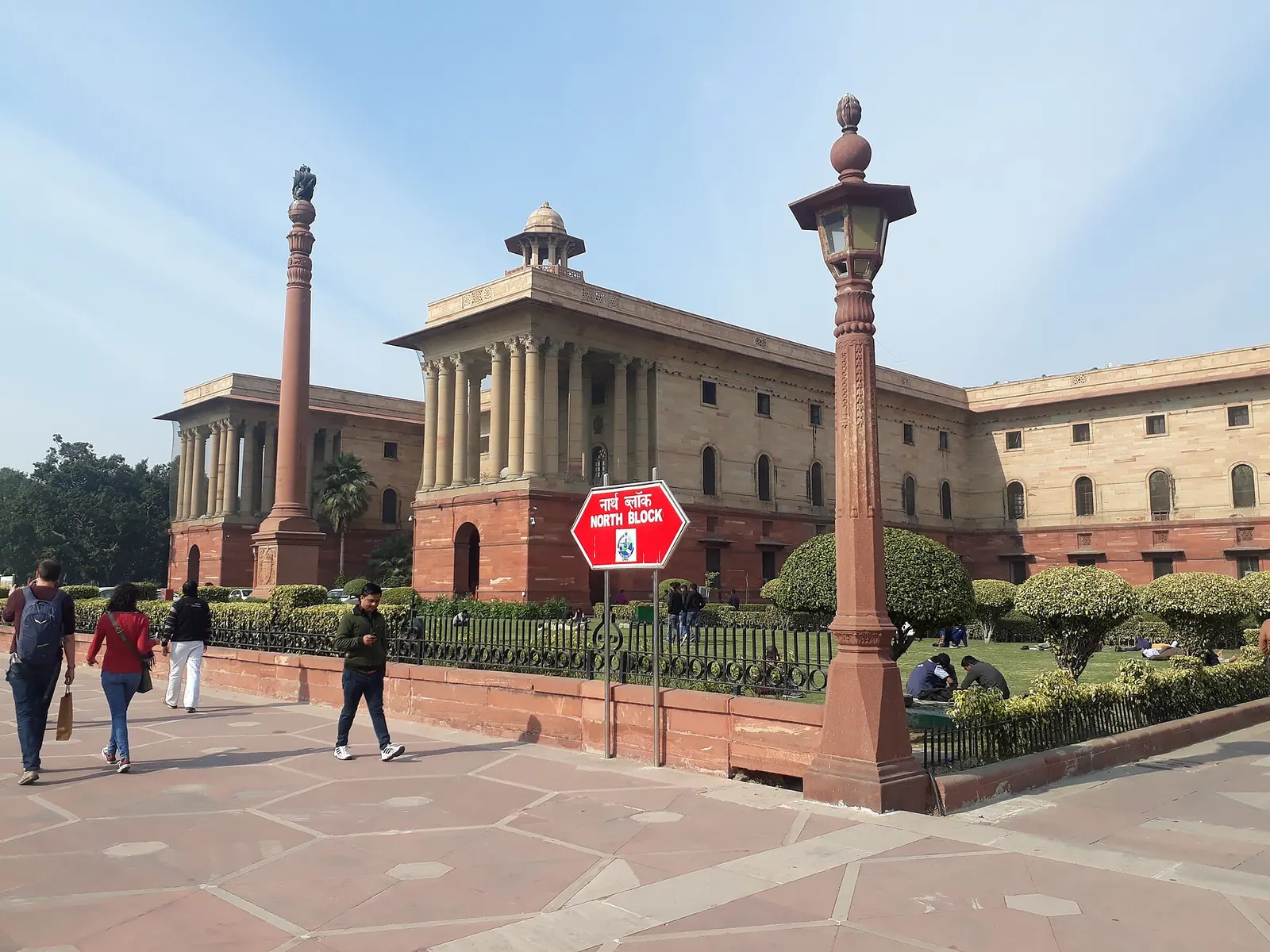
- Tenure: a permanent post with written service rules, while most private salaried staff have no written contract at all.
- Predictability: pay rises on a published scale, revised by Pay Commissions, rather than by a manager's mood or a company's quarter.
- Pension: rare outside government, as the LASI numbers show.
- Status: in a society where what people will say matters, a government post is a status everyone recognises.
- Few good private jobs: PLFS 2023-24 put unemployment at 10.2% for ages 15-29 and 7.1% for those with secondary education or more, against 3.2% overall.
The education-unemployment gap is the cruel part. The more a young person studies, the more likely they are to be unemployed, because they are waiting for a job that matches the degree. For engineers, see why India produces so many engineers and too few jobs.
What does the exam race cost the people who don't get in?
A lot, and it shows up years later. Research from Tamil Nadu finds that long exam preparation takes young people out of work and leaves lasting scars when they fail.

Uses a partial hiring freeze in Tamil Nadu's public sector between 2001 and 2006, which made the remaining recruitments even more competitive, and tracks male college graduates. Candidates responded by spending less time in jobs, most likely to study more. A decade after the freeze ended, the affected cohorts had lower employment, formed their own households later and showed lower earning capacity, while older family members delayed retirement to support them. The limit: one state and men only; the free working-paper version reports that civil service exams regularly draw over 5 lakh applicants with acceptance below 0.1%.
Read the paper (abstract free)Uses NSS Employment and Unemployment surveys from 1993-94 and 1999-2000 and three different econometric methods to correct for who chooses which sector. Public workers earned 62-102% more than formal private workers and 164-259% more than informal casual workers, among the largest gaps found anywhere. The premium was higher for women, rural and low-skilled workers and grew over the decade. The limit: the data are 25 years old and predate the IT boom.
Read the paper (free)India's official labour survey, July 2023 to June 2024. Statement 9 shows 58.0% of non-farm regular salaried employees with no written contract, 47.3% without paid leave and 53.4% without any social security benefit. Statement 6 shows only 21.7% of all workers in regular salaried jobs; Statement 16 puts youth (15-29) unemployment at 10.2%. The limit: "usual status" unemployment counts anyone who worked even briefly as employed.
Read the report (free)Count your own cost
Use this to check what preparing for a government exam costs in money, before the emotional cost. The odds line is naive: a well-prepared candidate's real chance is higher, and an unprepared one's lower.
The cost of chasing a government job
Is the craze changing?
Not much yet. Application counts for railway posts stayed in the crores between 2018 and 2025, and the share of salaried workers without contracts fell only four points between 2021-22 and 2023-24. What would change it is simple to state and hard to do: more private jobs with contracts, paid leave and pensions.
- For visitors and employers: understand that an Indian employee's family may still be urging them to sit government exams. A written contract, provident fund and health cover are worth more to them than a slightly higher salary.
- For aspirants: set a deadline. Mangal's evidence says the damage comes from the years, not the attempt.
- For parents: the private alternative is improving in formal sectors. Compare a specific offer's contract and benefits, not "private" in general.
Related reading: why most Indian jobs have no contract, why so many Indians are self-employed and why Indian students go abroad. For the mental side of exam culture, the Mindspace blog covers exam stress in India. More on the Kyun page.
What's new
- Cabinet approves terms of reference of the 8th Central Pay Commission, with a report due within 18 months PIB, Oct 2025
- Railway Group D recruitment crosses 1.08 crore applications for 32,438 posts Free Press Journal, Apr 2025
- How big is India's informal sector? About 90% of jobs, barely changed in 20 years Data For India, May 2026
Questions people ask
Why is a government job so important in India?
Because it offers what most Indian jobs do not: a contract, tenure, a published pay scale and a pension. In 2023-24, 58% of regular salaried employees had no written contract and only 21.7% of all workers had a salaried job at all.
How many people applied for railway jobs?
Over 1.08 crore applications came in for 32,438 Group D posts under CEN 08/2024, reported in April 2025. In 2018 about 2.37 crore applied for 89,409 Group D, ALP and Technician posts.
Why do Indian parents want a sarkari naukri?
For security across a lifetime. Only 7.7% of Indians over 60 receive a retirement pension (LASI 2017-18), so a child's permanent government job is often the family's old-age plan as well as a source of status.
Do government employees really earn more than private ones?
For low and middle-skilled jobs, yes. World Bank estimates found a public premium of 62-102% over formal private pay in India, highest for low-skilled workers; at the top, private pay can be higher.
Is preparing for government exams worth it?
It depends on your odds and your deadline. With over 300 applications per railway post, most candidates fail, and research from Tamil Nadu shows years of preparation can lower employment and earnings a decade later.
Sources
- Free Press Journal: RRB Group D 2025, over 1.08 crore applications, zone-wise figures (28 April 2025)
- Careers360: 2.37 crore applications for 89,409 RRB ALP and Group D posts (June 2018)
- Wikipedia: Civil Services Examination, citing PIB for 2022 registrations and attendance
- MoSPI: Periodic Labour Force Survey Annual Report 2023-24 (2024)
- Data For India: informal sector sizing (May 2026)
- Glinskaya and Lokshin: Wage Differentials Between the Public and Private Sector in India, World Bank (2005)
- Mangal: The long-run costs of highly competitive exams for government jobs, Journal of Development Economics (2024)
- IIPS and MoHFW: LASI Wave 1 Factsheet, Elderly in India (2021)
- PIB: Cabinet approves Terms of Reference of 8th Central Pay Commission (28 October 2025)

Sapta (Saptarshi Sarkar) is a mechanical engineer turned marketer in Bengaluru and a solo touring rider. He writes the seven Saptaverse blogs. Work with him or read more of Whyblog.