Yes, untouchability is still practised in India. In the second India Human Development Survey (IHDS-2, 2011-12), 27% of 42,152 households told interviewers that someone in the family practises it, or that they would object to a Scheduled Caste person entering their kitchen or touching their utensils. The share was 30% in villages and 20% in cities, and because people were admitting it face to face, the real figure is probably higher.
- 27% of Indian households admitted untouchability in IHDS-2 (2011-12), the first national survey to ask directly.
- 52% of Brahmin households said yes, against 33% of OBC and 24% of other forward-caste households.
- 49% in the central plains (Rajasthan, Madhya Pradesh, Chhattisgarh) versus 13% in the west.
- 33% to 23%: from the poorest to the richest fifth of households, the practice falls by only 10 points.
- 1 to 6 months in jail plus a ₹100 to ₹500 fine is the first-offence penalty under the Protection of Civil Rights Act, 1955.
Untouchability is the belief that people born into certain castes are ritually polluting, so that their touch, food, water or presence must be kept away. The Constitution's Article 17 abolished it and made its practice "in any form" an offence. That was 1950. The question this post answers is simple: did abolition end it?
The best evidence says no. It comes from a nationally representative survey that asked the people who might practise it.
Is untouchability still practised in India today?
Yes, by about one household in four, on the last national count. The India Human Development Survey, run by the National Council of Applied Economic Research (NCAER) and the University of Maryland, interviewed 42,152 households across 33 states and union territories in 2011-12. Its second round added questions on untouchability for the first time, and Amit Thorat and Omkar Joshi analysed the answers in the Economic and Political Weekly in January 2020.
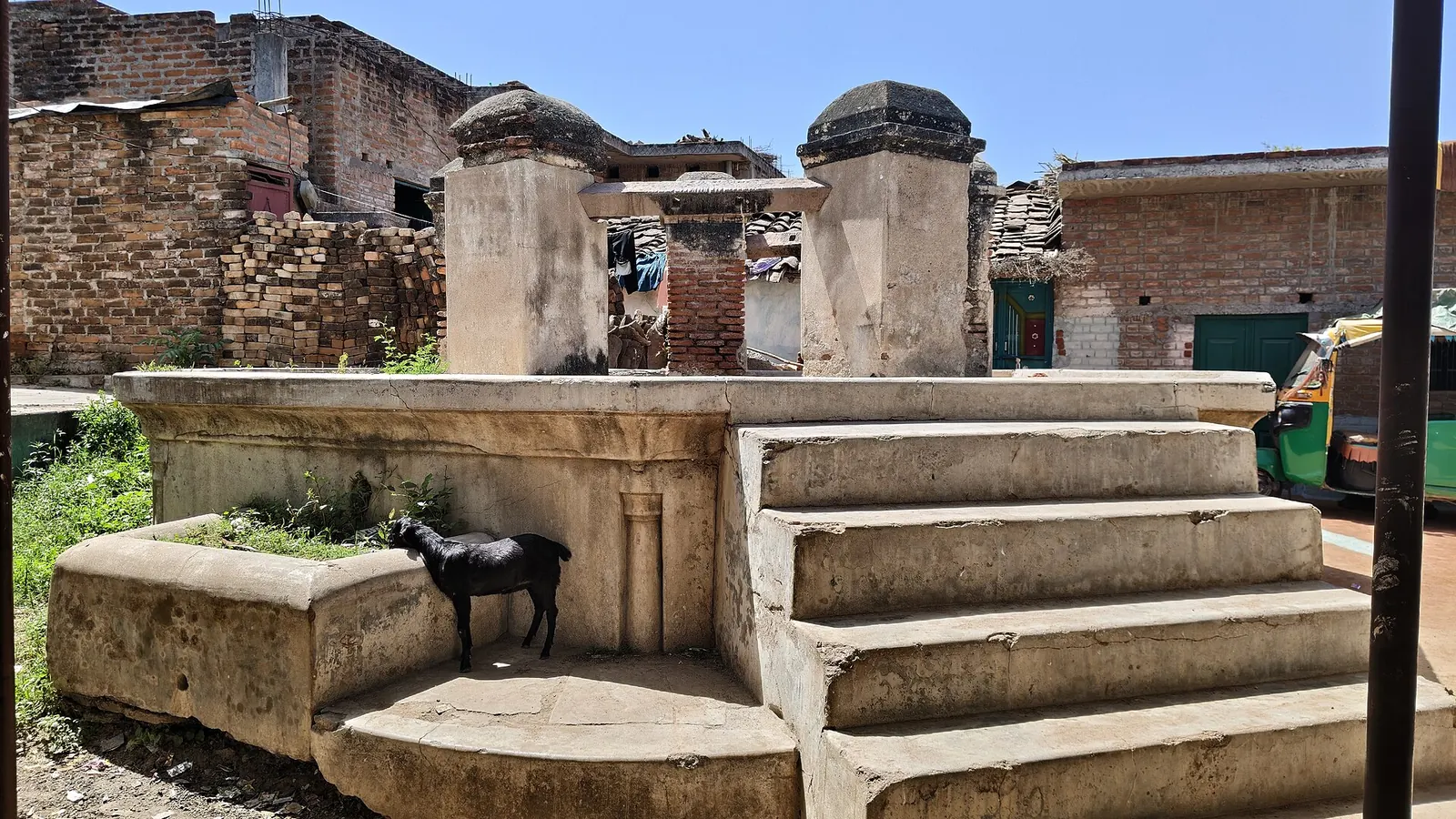
On 20 March 1927, B. R. Ambedkar walked to the Chavdar tank in Mahad, in today's Raigad district of Maharashtra, and drank its water. Thousands of people from castes then called untouchable followed him. The Bombay Legislative Council had resolved in August 1923 that such communities could use public water sources, and Mahad's municipality had agreed in January 1924, but nobody had dared to enforce it.
After the satyagraha, upper-caste residents declared the tank polluted and "purified" it, emptying 108 pots of cow dung and cow urine into it while priests chanted. A lawsuit claimed the tank was private. Only in December 1937 did the Bombay High Court rule that the excluded castes had the right to its water. 20 March is still marked as Social Empowerment Day.
Wikipedia: Mahad Satyagraha (with PIB and published histories cited)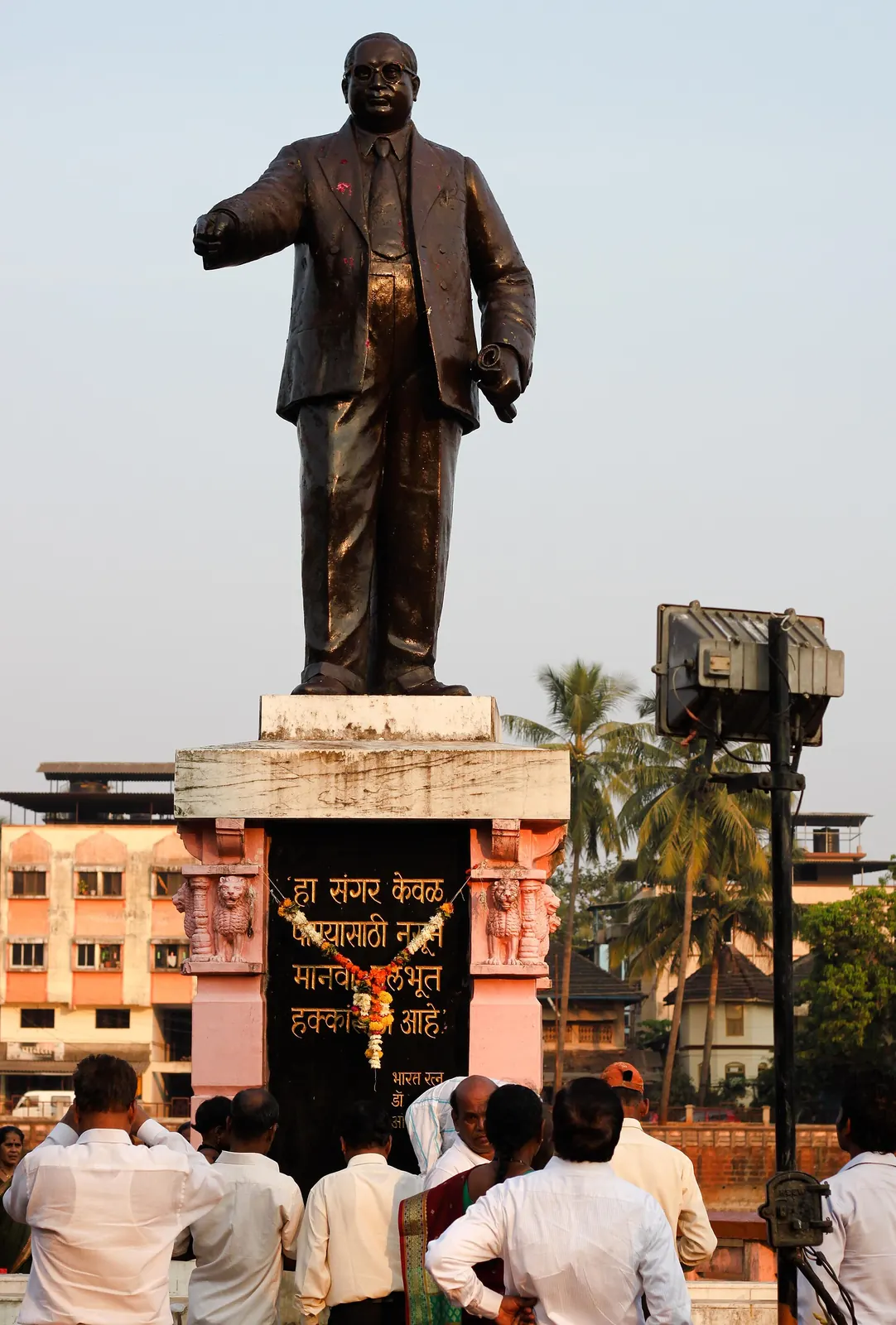
How did the survey ask people about untouchability?
It asked two yes-or-no questions of the main respondent in each household, face to face. A household counted as practising untouchability if it said yes to either one.
- Question 1. Do some members of your household practise untouchability?
- Question 2 (only if the answer was no). Would there be a problem if someone from a Scheduled Caste entered your kitchen or shared your utensils?
- The count. Yes to either question means the household is counted. Nationally, 21% said yes to the first, and 8.5% said yes to the second.
The second question matters. Plenty of people would never use the word untouchability about themselves, yet would not want a Dalit neighbour handling their cooking pots. The survey counted both.
| Social group | Yes to Q1 (practise it) | Yes to Q2 (kitchen or utensils) | Counted overall |
|---|---|---|---|
| Brahmins | 44% | 15% | 52% |
| Other forward castes | 18% | 7% | 24% |
| OBCs | 26% | 11% | 33% |
| Scheduled Tribes | 17% | 7% | 22% |
| Scheduled Castes | 11% | 5% | 15% |
| All India | 21% | 8.5% | 27% |
Q2 was asked only of households that said no to Q1, so the columns do not simply add up. The overall shares come from the paper's Figure 2. One small warning: the paper's text swaps the SC and ST figures (it says 22% of SCs and 15% of STs), but its own chart and both tables give SC 15% and ST 22%, which is what I use.
Which castes and religions admit to untouchability most?
Brahmin households admitted it most, at 52%, and the pattern below them does not follow the textbook caste ladder. OBC households (33%) admitted it more often than other forward castes such as Kshatriyas and Vaishyas (24%).
See the data as a table
| Share of households (%) | |
|---|---|
| Brahmin | 52 |
| OBC | 33 |
| Other forward castes | 24 |
| Scheduled Tribes | 22 |
| Scheduled Castes | 15 |
| Others | 13 |
Source: Thorat and Joshi, Economic and Political Weekly, 2020 (IHDS-2 data) · Yes to either survey question. Others = households naming no group.
Why OBCs report more than forward castes
Thorat and Joshi offer two readings. One is Sanskritisation, M. N. Srinivas's term for middle castes adopting upper-caste rituals to climb the hierarchy, purity rules included. The other is competition for land and resources between OBCs and Dalits, which the authors link to rising violence against SCs.
Why some Dalit and Adivasi households said yes
That 15% of SC households said yes looks odd until you split it. Only 5% of SC households said they would object to an SC person in the kitchen. The authors suggest some of the rest are answering as people made to observe the rules (avoiding certain wells or temples), while some higher sub-castes within the SCs do discriminate against lower ones, such as sanitation workers.
Religion
- Jains: 35%, the highest share, but from only 107 households, so treat it as a rough signal.
- Hindus: 30%.
- Sikhs: 23%, despite a faith founded against caste; Punjab has the highest SC share of any state.
- Muslims: 18%.
- Christians: 5%, and Buddhists about 1%.
In the regression that holds caste, place and income constant, Muslim and Christian households had 58% and 56% lower odds than Hindus. The religion numbers say caste behaviour travels across faiths in India; they do not say any community is uniquely guilty.
Where in India is it most common?
It is most common in the north and centre, and least common in the west, east and south. The study grouped states into seven regions.
See the data as a table
| Share of households (%) | |
|---|---|
| Central plains | 49 |
| North | 40 |
| Hills | 38 |
| North-central | 21 |
| South | 17 |
| East | 16 |
| West | 13 |
Source: Thorat and Joshi, Economic and Political Weekly, 2020 · Central plains: Rajasthan, MP, Chhattisgarh. North: Punjab, Haryana, Delhi, Chandigarh. Hills: J&K, HP, Uttarakhand. North-central: UP, Bihar, Jharkhand. West: Maharashtra, Gujarat, Goa, Daman and Diu, Dadra and Nagar Haveli. East includes West Bengal, Odisha, Assam and the north-east.
Two cautions. First, a low score can mean less practice or less willingness to admit it; the paper cannot separate the two. Second, a regional average hides big differences between villages.
Untouchability did not die in the cities, it got quieter: 20% of urban households still said yes. IHDS-2 figures, Thorat and Joshi 2020
Do education and money make it go away?
They help less than most people assume. Across all households, the share drops from 30% where no adult can read to 24% where an adult is a graduate, a gap of just 6 points.
| Household | Share practising |
|---|---|
| Poorest fifth by income | 33% |
| Second fifth | 29% |
| Middle fifth | 26% |
| Fourth fifth | 24% |
| Richest fifth | 23% |
| No literate adult | 30% |
| Adult with class 10 or 11 | 25% |
| Adult graduate or diploma holder | 24% |
- Education works best where the practice is highest. Among Brahmins and OBCs, the drop from no education to graduate level was 15 and 16 points.
- But it rises again at the top. Across most groups, households with a graduate reported slightly more untouchability than those with secondary schooling. The authors compare this with US findings that education does not erase racial hierarchy.
- Cities matter more than degrees. In the regression, urban households had 24% lower odds than rural ones; relative to SC households, Brahmins had 6.5 times the odds.
- Networks surprised the authors. They expected households with many friends outside their own caste to practise it less. The raw data showed the opposite.
Why is the real figure probably higher than 27%?
Because the survey measured confession, not behaviour. A respondent had to say, to a stranger with a clipboard, that their family does something the Constitution calls a crime.
Reasons to read it as a floor
- Social desirability. People under-report behaviour they know is frowned on; the authors flag this themselves.
- One respondent per household. A younger member who does not practise it may answer for elders who do.
- Narrow questions. The survey asked about the kitchen and utensils, not temples, wells, burial grounds, seating, renting a room or marriage.
What other evidence shows
Separate data point the same way. A Pew Research Center survey of 29,999 adults (2019-20) found that 64% of Indians call it very important to stop women in their community marrying into another caste. In Delhi's rental market, audit studies using identical fake tenants found landlords refusing Dalit applicants far more often than upper-caste ones; I cover that in why landlords turn away Muslims, Dalits and meat-eaters.
What does untouchability look like in daily life?
Mostly it looks like separation around food, water and worship, not open violence. The Protection of Civil Rights Act, 1955 lists the forms Parliament had to outlaw one by one, which is itself a map of the practice.
- Utensils: separate cups or plates kept for certain workers or guests, including in eateries and dharmshalas.
- Water: being stopped from using a well, tank, tap or river ghat that others use.
- Worship: being kept out of a public temple or barred from its rituals.
- Homes: being blocked from building, buying or living in a house in any locality.
- Death: separate cremation or burial grounds.
- Work: being held to "polluting" jobs; the same paper notes that sanitation and manual scavenging still fall heavily on Dalit sub-castes (see manual scavenging and sewer deaths).
A visitor will rarely see any of this announced. You may notice a domestic worker served tea in a different cup, or a worker who cleans the bathroom but never enters the kitchen. That is the everyday edge of what the survey measured.
What does the law say, and what can a victim do?
The law is clear and the penalties are mild. Article 17 abolishes untouchability. The Protection of Civil Rights Act, 1955 (renamed from the Untouchability (Offences) Act in 1976) punishes enforcing any disability on the ground of untouchability.
| Law | What it covers | Penalty, first offence |
|---|---|---|
| Article 17, Constitution | Abolishes untouchability in any form | Enforced through the Acts below |
| Protection of Civil Rights Act, s.3 | Barring entry or worship at a public place of worship, sacred tank or river | 1 to 6 months' jail and ₹100 to ₹500 fine |
| Protection of Civil Rights Act, s.4 | Shops, restaurants, utensils, water, roads, cremation grounds, housing, jobs | 1 to 6 months' jail and ₹100 to ₹500 fine |
| Protection of Civil Rights Act, s.5 | Refusing admission to a public hospital, school or hostel | 1 to 6 months' jail and ₹100 to ₹500 fine |
| SC and ST (Prevention of Atrocities) Act, 1989 | Harsher offences against SC and ST members, including social boycott and humiliation | Heavier, with special courts |
- Report it. Call 112 in an emergency, or go to the nearest police station. Police must register a cognisable offence; if the incident happened elsewhere, ask for a Zero FIR.
- Name the right law. If the victim is SC or ST, the complaint should cite the Atrocities Act as well as the 1955 Act.
- Keep evidence. Note names, dates, witnesses, and any photos or messages.
- Escalate. If police refuse, write to the Superintendent of Police and the district magistrate; the state's duty under section 15A of the 1955 Act includes legal aid and special courts.
For the numbers on reported caste crimes, and why reported cases undercount what happens, see caste atrocities in NCRB data.
Will the 2027 Census give newer numbers?
Not on untouchability. Census 2027 records every person's caste for the first time since 1931, but it asks who you are, not how you treat others. A fresh measure of the practice itself would need a new IHDS round or a similar survey. The 2011-12 figure is still the latest national one. More on that count in why India is counting caste again, and the wider Kyun Bharat series lives on the Kyun page.
Uses IHDS-2, a nationally representative survey of 42,152 households (2011-12), to profile who admits untouchability, with a logistic regression for caste, religion, place, education, income and social networks. Finds 27% overall (30% rural, 20% urban), 52% among Brahmins, 49% in the central plains, and 24% lower odds in cities. Limit: self-reported, one respondent per household, and a single survey round, so the results are associations, not causes.
Read the paper (free)Face-to-face survey of 29,999 adults in 2019-20. 64% said it is very important to stop women in their community from marrying into another caste (62% for men), and about 70% said most or all of their close friends share their caste. Only 20% saw a lot of discrimination against Scheduled Castes, and 82% said they had not faced caste discrimination in the past year. Limit: attitudes, not behaviour, and perceptions of discrimination are not measures of it.
Read the report (free)What's new
- Caste notified as one of 40 Census 2027 questions, asked open-ended ThePrint, Aug 2026
- Supreme Court asks the Centre how caste answers in the census will be verified ThePrint, Oct 2026
- Why India's first caste count since 1931 is controversial Al Jazeera, Apr 2026
Questions people ask
Is untouchability still practised in India?
Yes. In IHDS-2 (2011-12), 27% of households admitted that a member practises it or that they would object to an SC person in their kitchen or sharing utensils. It was 30% in rural and 20% in urban India.
Why do some Indian families not let people of certain castes into the kitchen?
Because of the ritual idea of purity and pollution: the kitchen and cooking vessels are treated as the purest part of the home, and people of castes once labelled untouchable are believed to defile them. It is a belief about birth, not hygiene, and enforcing it in public places is a crime.
Which caste practises untouchability the most?
In IHDS-2, Brahmin households reported it most (52%), then OBCs (33%) and other forward castes (24%). These are self-reports from one survey round, and many individual families in every group do not practise it.
What is the punishment for practising untouchability?
Under the Protection of Civil Rights Act, 1955, a first offence carries 1 to 6 months in jail and a ₹100 to ₹500 fine, with more for repeat offences. Acts against SC or ST members can also fall under the much stricter Atrocities Act of 1989.
Is there newer data than 2011-12?
Not a national measure of the practice itself. Pew's 2019-20 survey measured related attitudes on marriage and neighbours, and Census 2027 will count caste, but neither asks whether households practise untouchability.
Sources
- Thorat and Joshi: The Continuing Practice of Untouchability in India, Economic and Political Weekly 55(2) (2020; source for all IHDS-2 shares, tables and regression results)
- University of Maryland: free copy of the Thorat and Joshi paper (2020)
- India Human Development Survey: survey design and sample (NCAER and University of Maryland)
- Pew Research Center: Attitudes about caste (2021; source for marriage, friendship and discrimination attitudes)
- Protection of Civil Rights Act, 1955 (bare Act) (source for sections 3, 4, 5, 7 and 15A and penalties)
- Wikipedia: Mahad Satyagraha (source for the 1927 story and dates)
- Datta and Pathania: For whom does the phone (not) ring? UNU-WIDER Working Paper 2016/55 (2016; context on housing discrimination)
- ThePrint: Census 2027 question on caste among 40 notified (2026)
- ThePrint: Supreme Court plea on caste verification for Census 2027 (2026)
- Al Jazeera: History's biggest census and why it is controversial (2026)

Sapta (Saptarshi Sarkar) is a mechanical engineer turned marketer in Bengaluru and a solo touring rider. He writes the seven Saptaverse blogs. Work with him or read more of Whyblog.