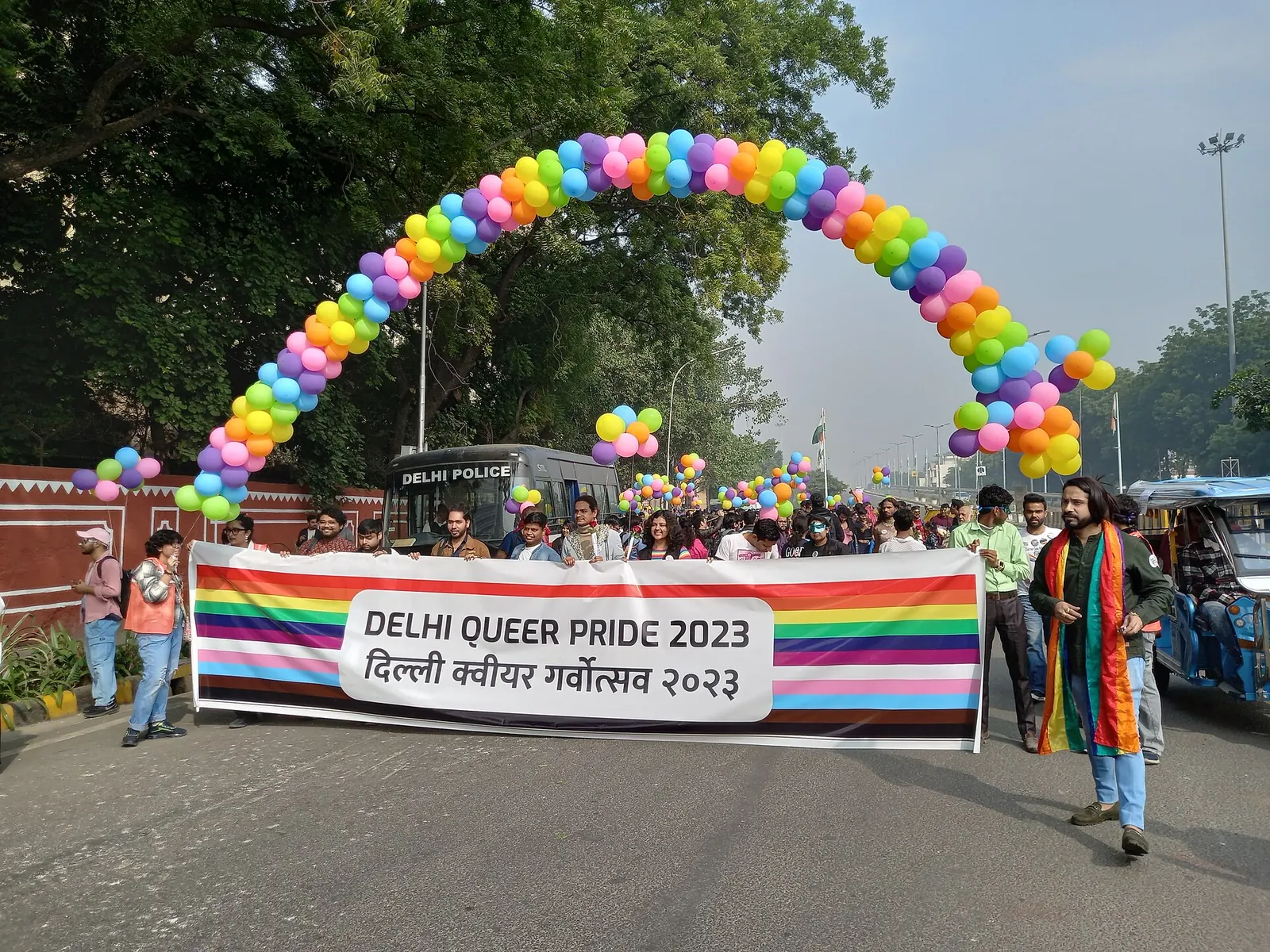
Gay sex was a crime in India because of Section 377 of the Indian Penal Code, a colonial clause drafted by Thomas Babington Macaulay's law commission in 1837 and enacted in 1860, which punished "carnal intercourse against the order of nature" with up to life imprisonment. On 6 September 2018, in Navtej Singh Johar v. Union of India, a five-judge Supreme Court bench unanimously read it down so that it no longer covers consenting adults in private. When the Bharatiya Nyaya Sanhita replaced the IPC on 1 July 2024, Section 377 was dropped altogether.
- 1837: Macaulay's Indian Law Commission submits the draft penal code; it becomes the IPC in 1860.
- 158 years of criminalisation, from 1860 to the Navtej judgment of 6 Sept 2018.
- 1,279 people in 2014 and 1,491 in 2015 were arrested under Section 377 (NCRB, cited in Navtej).
- Public acceptance rose from 15% to 37% between the 2013-14 and 2019 Pew surveys, still below the 34-country median of 52%.
- Gay sex is legal, but same-sex marriage is not: the Supreme Court left that to Parliament in Supriyo (2023).
The usual line is that the law was "Victorian morality". That is true as far as it goes, but the full story has three acts: a British drafting choice, a 15-year Indian court battle, and a 2024 rewrite of the criminal code that solved one problem and opened another. For a visitor, the short version is that a same-sex couple breaks no law in India today, but has none of the legal protections of marriage.
What was Section 377?
Section 377 was the IPC's "unnatural offences" clause. It punished anyone who "voluntarily has carnal intercourse against the order of nature with any man, woman or animal" with imprisonment for life, or up to ten years, plus a fine. An explanation added that penetration alone was enough to complete the offence.
Notice what the text did not say. It never mentioned homosexuality, and it applied to "any man, woman or animal". In practice, though, it was the legal tool used against gay and bisexual men and transgender people, because it criminalised the sex they had. The Navtej bench quoted NCRB data showing 1,279 arrests in 2014 and 1,491 in 2015 under the section.
Where did Section 377 come from?
From London, via a law commission in Calcutta. The Navtej judgment traces the line: Parliament set up the Indian Law Commission during East India Company rule, and in 1833 Thomas Babington Macaulay was appointed to chair it. The commission submitted its draft penal code of 488 clauses on 14 October 1837, which was revised for two decades and enacted as the Indian Penal Code in 1860.
The model was English law, which then treated sodomy as a capital crime. The judgment notes that the last two men executed for it in Britain were hanged on 27 November 1835, two years before Macaulay's draft. India got a milder penalty, but the same idea.
How did Indian courts strike it down?
It took two rounds. The Delhi High Court went first in Naz Foundation v. Government of NCT of Delhi on 2 July 2009, holding the section unconstitutional as applied to consensual adult sex. On 11 December 2013, a two-judge Supreme Court bench reversed it in Suresh Kumar Koushal v. Naz Foundation, saying any change was for Parliament.
The turn came from a different case. In K.S. Puttaswamy v. Union of India (2017), a nine-judge bench on the right to privacy said, through Justice D.Y. Chandrachud, that sexual orientation is an essential part of the rights the Constitution guarantees, which do not depend on majority approval. On 8 January 2018, a three-judge bench hearing a fresh 2016 petition led by Navtej Singh Johar and others sent the question to a larger bench.
On 6 September 2018, five judges of the Supreme Court, Chief Justice Dipak Misra with Justices R.F. Nariman, A.M. Khanwilkar, D.Y. Chandrachud and Indu Malhotra, delivered four separate opinions that all reached the same end. Section 377 was read down to exclude consensual sex between adults in private, whether of the same sex or not. It would still cover non-consensual acts against adults, all such acts against minors, and bestiality. Koushal was overruled. The Union government had not defended the law for consenting adults and left it to the court's wisdom. Justice Malhotra's opinion closed with a line that became the day's headline: "History owes an apology to the members of this community".
Supreme Court: Navtej Singh Johar v. Union of India, W.P. (Crl.) 76 of 2016, via Indian Kanoon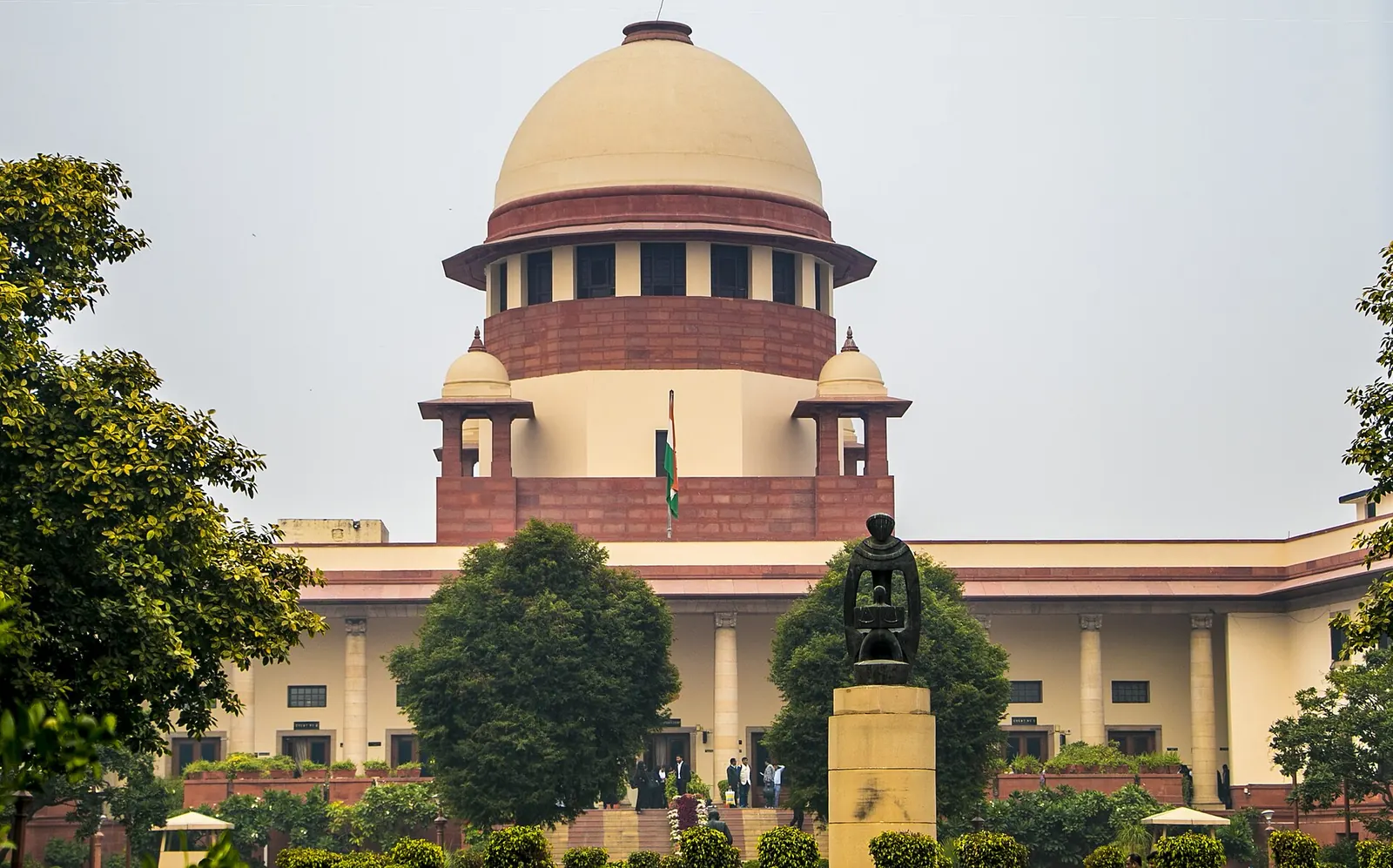
| Case | Court and date | What it decided |
|---|---|---|
| Naz Foundation v. NCT of Delhi | Delhi High Court, 2 July 2009 | s.377 unconstitutional for consensual adult sex |
| Suresh Kumar Koushal v. Naz Foundation | Supreme Court (2 judges), 11 Dec 2013 | Reversed Naz; change left to Parliament |
| K.S. Puttaswamy v. Union of India | Supreme Court (9 judges), 2017 | Privacy is a fundamental right; orientation is part of it |
| Navtej Singh Johar v. Union of India | Supreme Court (5 judges), 6 Sept 2018 | Read down s.377; Koushal overruled |
| Supriyo v. Union of India | Supreme Court (5 judges), 17 Oct 2023 | No fundamental right to marry; recognition left to Parliament |
What was the court's reasoning?
The bench built its decision on constitutional morality over social morality. Majority disapproval, it said, cannot justify taking away the rights in Part III of the Constitution. The petitioners argued, and the opinions largely accepted, that the section violated:
- Article 14 (equality), because the "order of nature" test was vague and fell hardest on one group;
- Article 15 (no discrimination on grounds of sex), read to include sexual orientation;
- Article 19(1)(a) (expression), since people could not openly express identity;
- Article 21 (life, dignity and privacy), drawing on Puttaswamy and the NALSA judgment on gender identity.
The court also relied on medical consensus, quoting the American Psychological Association's 1994 position that homosexuality is neither a mental illness nor moral depravity.
The law did not move because society did. It moved first, and the polls followed at a distance.Sapta, reading the Pew trend against the Navtej date
Is being gay legal in India now?
Yes. Since 2018, consensual sex between adults of the same sex in private is not an offence, and since 1 July 2024 the section itself no longer exists. PRS Legislative Research, analysing the BNS, notes that it "omits S. 377 of IPC", which also removes rape of men and bestiality as offences. That is the unfinished part of the story: the old section, whatever its history, was the only provision that covered forced penetrative sex against an adult man.
What remains illegal applies to everyone equally. Public obscenity rules (BNS 296) do not change with the couple's genders, and sexual acts with anyone under 18 are crimes under POCSO. I cover the first in the PDA and obscenity law.
Do Indians accept homosexuality now?
More than before, but still a minority. Pew Research Center asked nationally representative samples whether homosexuality "should be accepted by society". In India the share saying yes rose from 15% in the 2013-14 survey to 37% in 2019, a 22-point jump that tied with South Africa for the largest change Pew recorded between those rounds.
See the data as a table
| Should be accepted (%) | |
|---|---|
| Sweden | 94 |
| Australia | 81 |
| Philippines | 73 |
| United States | 72 |
| Japan | 68 |
| South Africa | 54 |
| Israel | 47 |
| South Korea | 44 |
| India | 37 |
| Kenya | 14 |
| Indonesia | 9 |
| Nigeria | 7 |
Source: Pew Research Center, The Global Divide on Homosexuality Persists (June 2020) · 34-country median: 52%. India surveyed face to face.
Two things to read from this:
- India sits well below the global median of 52% but far above its region's lowest, such as Indonesia at 9%.
- The gap between law and opinion is real: courts have moved faster than families.
That gap is why many queer Indians still face pressure to marry, which links to the wider story of how marriages are arranged in India and of violence against couples who choose for themselves.
Pew surveyed 38,426 people in 34 countries between 13 May and 2 October 2019, face to face in India, asking whether homosexuality should be accepted or discouraged by society. The 34-country median was 52% accept and 38% discourage. India rose from 15% to 37% acceptance since its first nationally representative round in December 2013 to January 2014. Younger and more educated respondents were more accepting in most countries. The limit: a single yes-or-no attitude question cannot capture how people treat a gay colleague or relative, and face-to-face interviews may push answers towards what feels socially safe.
Read the report (free)The authors surveyed 380 MBBS students and interns at one medical college in Thiruvananthapuram in September and October 2023, using the 18-item LGBT Development of Clinical Skills Scale. Attitudes were mostly positive (94% of women and 79% of men), but 87% scored low on clinical preparedness and 59% low on basic knowledge. Five years after Navtej, future doctors in India's most literate state were willing but untrained. The limit: one college, self-reported answers, and no measure of behaviour with real patients.
Read the paper (free)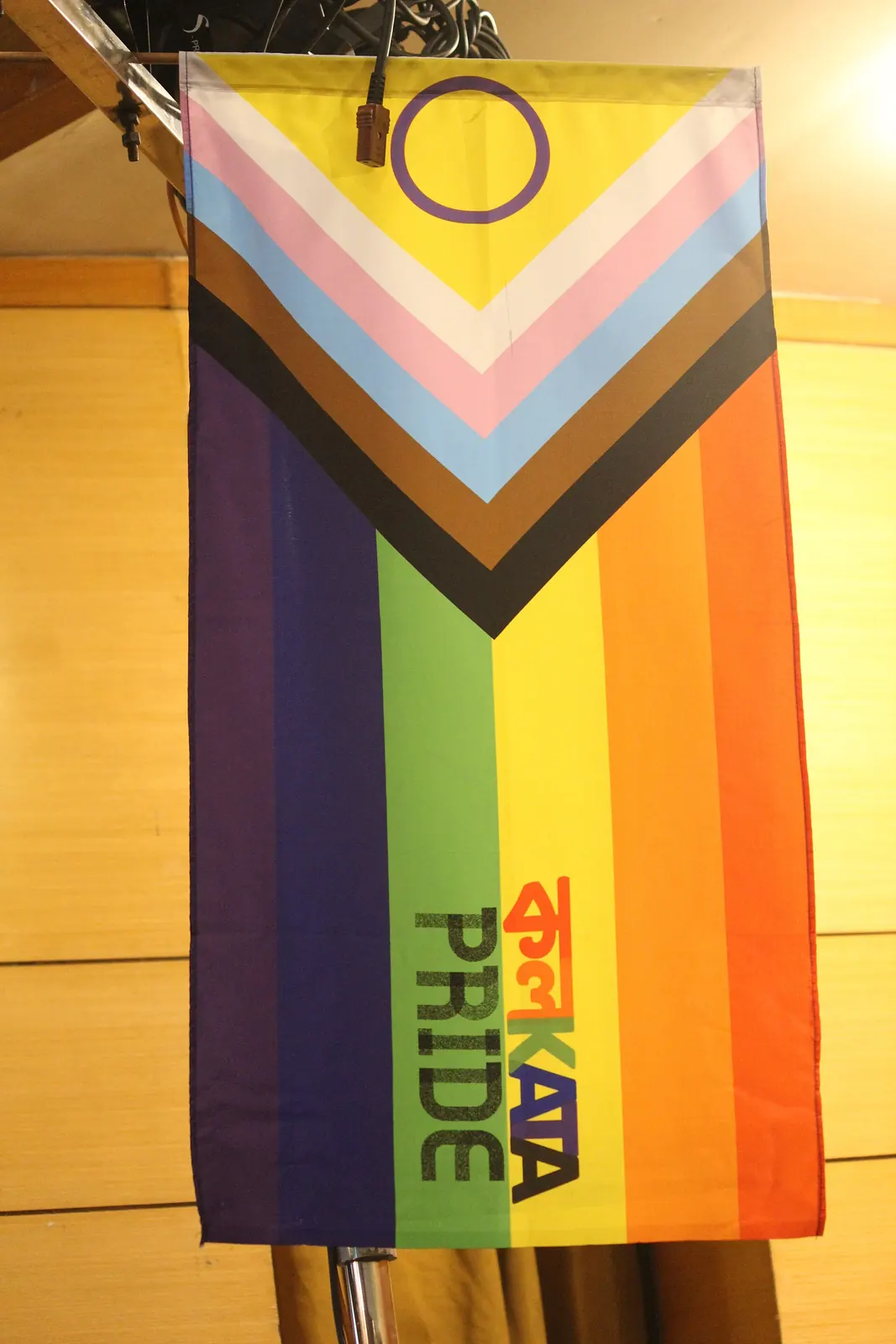
Is same-sex marriage legal in India?
No. On 17 October 2023, in Supriyo v. Union of India, a five-judge bench led by Chief Justice D.Y. Chandrachud unanimously held that there is no fundamental right to marry and that recognising same-sex marriage is for Parliament. The court dismissed review petitions on 9 January 2025. No law has been passed since.
In practice, that means a same-sex couple, Indian or foreign, has no route to register a marriage under Indian marriage law and none of its default rights over inheritance, adoption or medical decisions. More detail is in the Supriyo ruling explained and the wider LGBTQ rights guide.
Which countries still have Section 377?
Several former British colonies kept the same clause. Wikipedia's summary of the section lists it still in force in Pakistan, Bangladesh and Myanmar, in Malaysia as Section 377A and in Sri Lanka as Section 365. India's path, read down by courts and then deleted in a new code, is one of the few that ended in full removal.
| Country | Colonial-era clause | Status |
|---|---|---|
| India | IPC s.377 | Read down 2018; omitted from BNS 2024 |
| Pakistan | PPC s.377 | In force |
| Bangladesh | Penal Code s.377 | In force |
| Myanmar | Penal Code s.377 | In force |
| Sri Lanka | Penal Code s.365 | In force |
| Malaysia | Penal Code s.377A | In force |
Source: Wikipedia, Section 377 (status as summarised there; check current law before relying on it). This is general information, not legal advice.
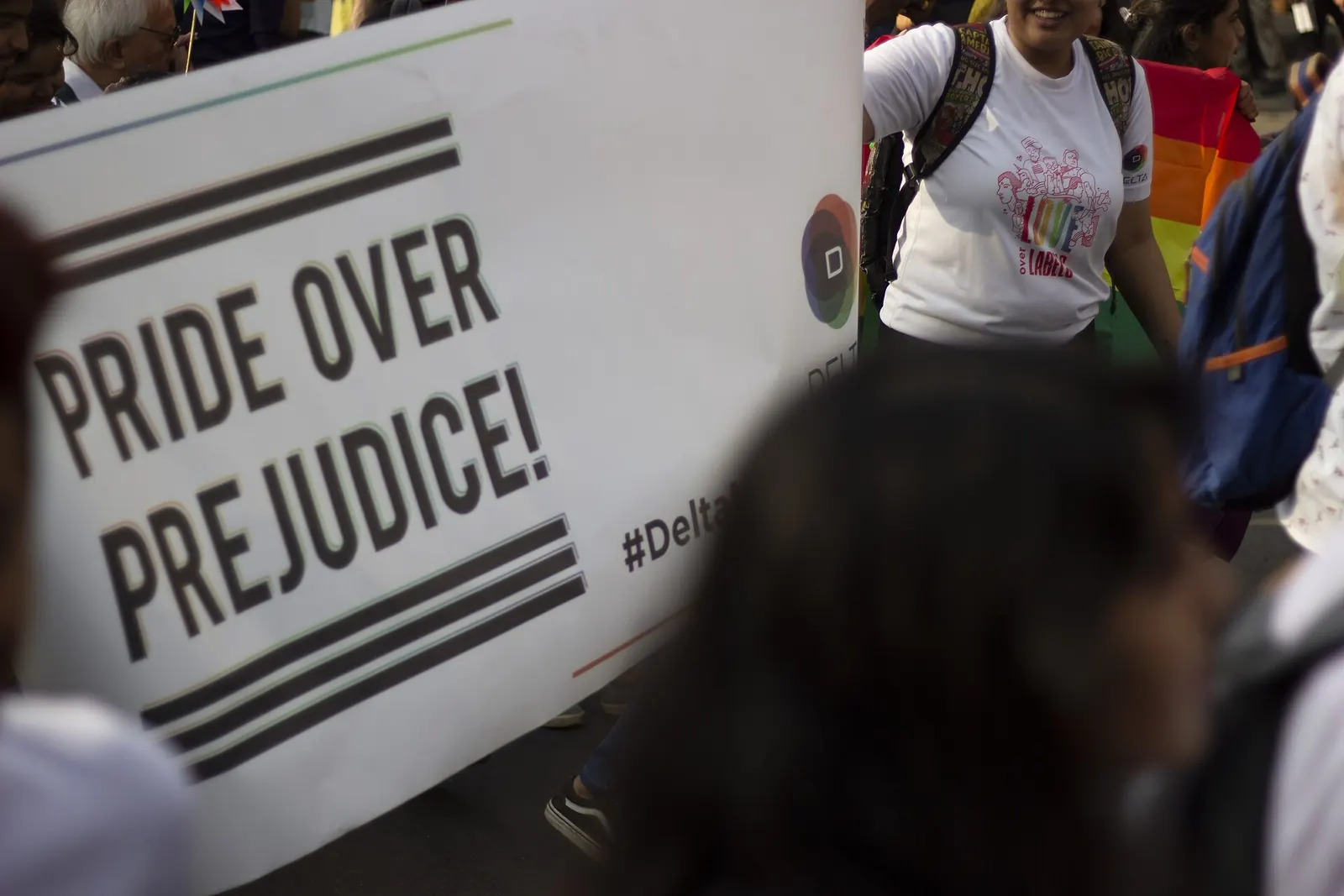
What's new
- Kolkata Pride and LGBTQ+ rights amid legislative silence LiveLaw, May 2026
- What India can learn from the global backlash against LGBTQ+ rights LiveLaw, Aug 2026
- Same-sex marriage: review petition dismissed, still a pending wish LiveLaw, Feb 2025
- Study: Kerala medical students positive on LGBT patients but untrained Industrial Psychiatry Journal, 2026
Questions people ask
Is being gay legal in India?
Yes. Consensual sex between adults of the same sex has not been a crime since Navtej Singh Johar (6 September 2018), and Section 377 was removed from the criminal code when the BNS took effect on 1 July 2024.
What was Section 377?
The "unnatural offences" clause of the 1860 Indian Penal Code, punishing carnal intercourse against the order of nature with up to life imprisonment. It was used mainly against gay and bisexual men and transgender people.
Does Section 377 still apply to anything?
Not any more. After Navtej it survived only for non-consensual acts against adults, acts against minors and bestiality. The BNS, in force since 1 July 2024, has no equivalent, so acts against minors fall under POCSO, while PRS notes that rape of men and bestiality are no longer specific offences.
Can same-sex couples marry or adopt in India?
They cannot marry under Indian law. The Supreme Court held in Supriyo (2023) that only Parliament can create that right, and dismissed review petitions in January 2025.
Sources
- Supreme Court: Navtej Singh Johar v. Union of India (2018), via Indian Kanoon (text of s.377, Macaulay history, NCRB arrests, operative order, Malhotra J's quote)
- Supreme Court of India: Navtej judgment PDF (2018)
- Wikipedia: Section 377 (Naz and Koushal dates; countries where it remains)
- PRS Legislative Research: The Bharatiya Nyaya Sanhita, 2023 (omission of s.377 and its effect)
- Wikipedia: Supriyo v. Union of India (date and bench)
- LiveLaw: Same-sex marriage, still a pending wish in 2025? (review dismissed 9 Jan 2025)
- Pew Research Center: The Global Divide on Homosexuality Persists (2020)
- Industrial Psychiatry Journal: Awareness and attitude of undergraduate medical students to LGBT community (2026)
- LiveLaw: Kolkata Pride and constitutional crossroads (2026)

Sapta (Saptarshi Sarkar) is a mechanical engineer turned marketer in Bengaluru and a solo touring rider. He writes the seven Saptaverse blogs. Work with him or read more of Whyblog.