India's official crime data recorded 38 honour killings in 2023 and just 18 in 2022, according to the National Crime Records Bureau (NCRB). Those numbers are widely treated as a gross undercount: there is no separate offence of honour killing, so most cases are filed as ordinary murder, the motive is often never written down, and the people who would normally press the case are the victim's own family. One Tamil Nadu NGO alone documented 195 honour killings in that state over five years.
- 38 honour killings were recorded nationally in 2023, and 18 in 2022 (NCRB).
- 192 in 2015, 18 in 2022: the swings track how police record motive, not how often families kill.
- No separate offence: cases are booked as murder under BNS section 103 (IPC 302 before July 2024).
- 27 March 2018: the Supreme Court's Shakti Vahini ruling ordered district special cells, a 24-hour helpline, safe houses and six-month trials.
- 1 state, Rajasthan, has passed its own law against interfering in marriages in the name of honour (2019).
An honour killing is a murder by relatives or community members of someone, usually a young woman or a couple, for a relationship or marriage the family thinks has shamed it. In India the trigger is most often marriage across caste or religion, and sometimes inside a clan (gotra) or village that local custom forbids.
The question here is narrower and more useful than "how evil is this?": why does a crime that makes national headlines several times a year produce a national total smaller than a single district's murder count?
How many honour killings happen in India every year?
Nobody knows, and that is the honest answer. What we have is the number of murders where police recorded "honour killing" as the motive, which NCRB publishes in its annual Crime in India report.

In 2007, Manoj, 23, and Babli, 19, of Karora village in Haryana's Kaithal district, married against the wishes of her family and the local khap, a caste council, because they shared a gotra. The couple went to a court in Kaithal to record statements and were given a police escort. On the way back they were pulled off a bus on the highway. Their bodies were later found in a canal.
The prosecution was driven by Manoj's mother, Chanderpati, not the police. On 30 March 2010, a Karnal sessions court sentenced five of Babli's relatives to death, the first such sentence for an honour killing in Haryana, and ordered action against six policemen from the escort. In 2011 the High Court commuted the death sentences to life and acquitted two accused.
The Tribune: 5 get death for honour killing (2010)Notice what the case needed to reach a verdict: a mother willing to prosecute her own village, a witness who saw the abduction, and national media attention. Most cases have none of these.
See the data as a table
| Recorded honour killings (cases) | |
|---|---|
| 2014 | 28 |
| 2015 | 192 |
| 2016 | 68 |
| 2017 | |
| 2018 | |
| 2019 | 24 |
| 2020 | 25 |
| 2021 | 33 |
| 2022 | 18 |
| 2023 | 38 |
Source: NCRB figures as cited in Shakti Vahini v Union of India (2014-16), Vidhi Centre for Legal Policy (2020-22), Wikipedia/NCRB (2019) and ThePrint (2023) · 2017 and 2018 not separately verified; the Home Ministry figure of about 145 for 2017-19 implies roughly 121 across those two years. Other reports give 251 for 2015 and 18 for 2014, depending on the table used.
| Year | Recorded honour killings | Where the figure comes from |
|---|---|---|
| 2014 | 28 | NCRB, cited by the Supreme Court in 2018 |
| 2015 | 192 | NCRB, cited by the Supreme Court in 2018 |
| 2016 | 68 | NCRB, cited by the Supreme Court in 2018 |
| 2017 to 2019 | about 145 in all | Home Ministry, cited by Vidhi (2025) |
| 2020 | 25 | NCRB, via Vidhi (2025) |
| 2021 | 33 | NCRB, via Vidhi (2025) |
| 2022 | 18 | NCRB, via Vidhi (2025) |
| 2023 | 38 | NCRB, via ThePrint (2025) |
For scale, NCRB recorded 27,721 murders in India in 2023. Honour killings were about 0.14% of them on paper.
Why does the official count miss most honour killings?
Because the system is built to count murders, not motives, and honour killings are the one kind of murder where the victim's family is usually on the side of the accused. Five mechanisms stack up.
- No separate crime. There is no offence called honour killing in the BNS or the old IPC. The Law Commission's 242nd report (2012) decided against adding one, calling the murder law adequate.
- Motive is optional data. NCRB's honour category depends on the investigating officer recording that motive. If the FIR just says murder, the case disappears into the 27,721.
- The complainant is the accused. In most murders the victim's family files and pursues the case. In an honour killing, the victim's parents or brothers are often the suspects.
- Witnesses back out. Villages close ranks. In the Manoj and Babli trial, the contractor who reported the abduction later turned hostile.
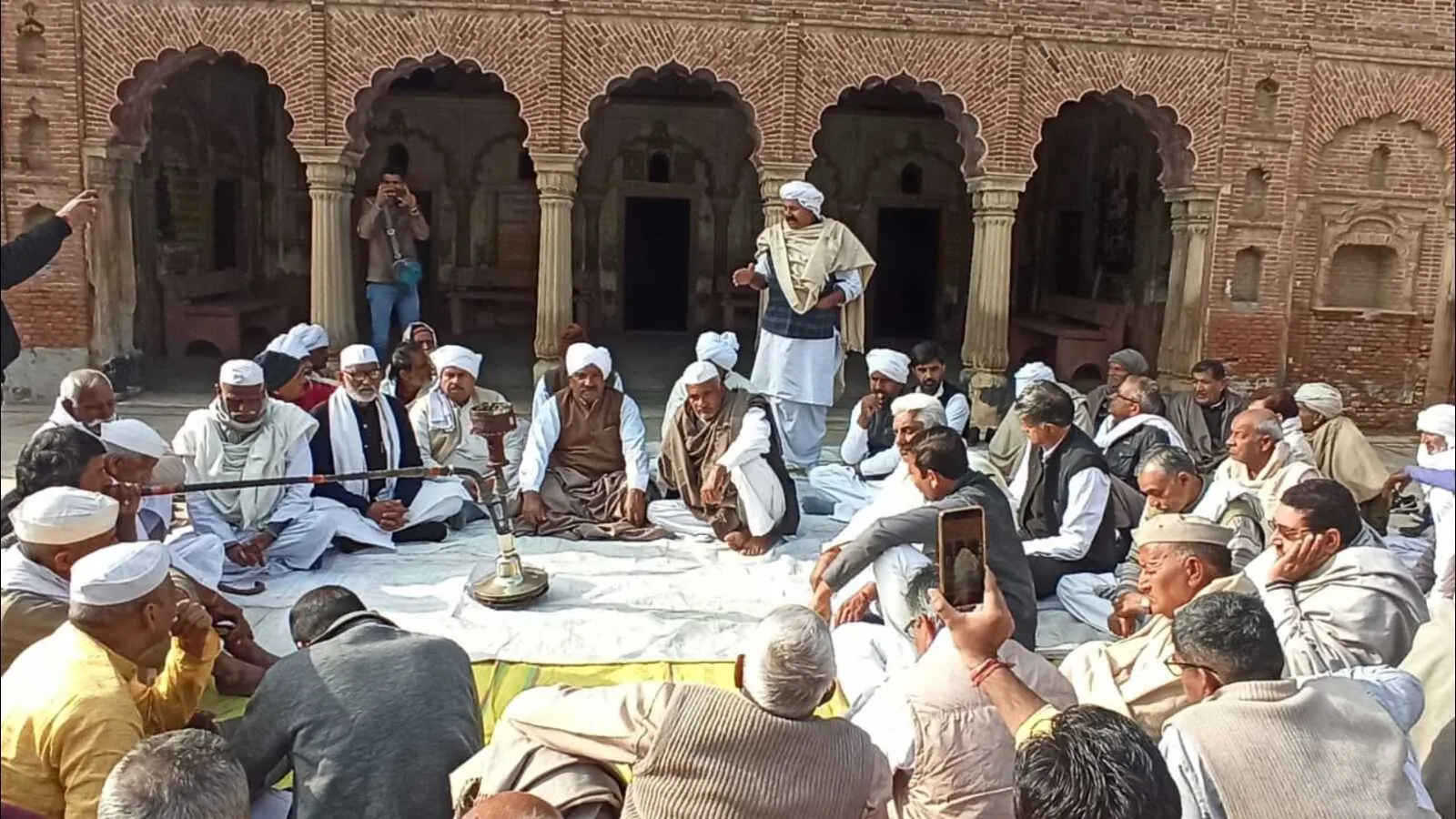
- Local pressure on police. In Haryana, Rohtak khaps were in late 2025 demanding bans on same-village and same-gotra marriages, which tells you how openly the norms are defended.
The best proof of the gap is outside counting. The NGO Evidence documented 195 honour killings in Tamil Nadu alone over five years, a state whose official yearly figures are tiny next to that.
Which states record the most honour killings?
On 2023 data, Jharkhand recorded the most (9), followed by Haryana (6), then Punjab and Madhya Pradesh (5 each) and Uttar Pradesh (4). Seven states, including Maharashtra, Bihar, Chhattisgarh and Karnataka, made up about 58% of the 38 cases.
| State | 2020 | 2021 | 2022 | 2023 |
|---|---|---|---|---|
| Jharkhand | 4 | 8 | 4 | 9 |
| Haryana | 4 | 4 | 0 | 6 |
| Punjab | n/a | n/a | n/a | 5 |
| Madhya Pradesh | n/a | n/a | n/a | 5 |
| Uttar Pradesh | n/a | n/a | n/a | 4 |
Haryana recording zero in 2022 is the clearest sign of a counting problem: it is the state most associated with khap-ordered killings, and ThePrint reported a killing there as recently as November 2025. Jharkhand's top spot also surprised its own police chief, who told ThePrint such killings "cannot happen" in tribal communities, while a local activist pointed to rising class divides inside communities.
Why do families kill over who their children marry?
Because in most of India, marriage is still a family decision and caste is still the boundary of that decision. The data on ordinary marriages explains the extreme ones.
- 95% of marriages take place within caste, according to the India Human Development Survey (2011-12). See why only about 5% of marriages cross caste lines.
- 5% of women said they chose their husband themselves; 40% said their family chose alone, and 55% said the family chose with their input.
- 64% of Indians told Pew (2019-20) it is very important to stop women in their community marrying into another caste; 62% said so for men.
- Women carry the "honour". The question is asked more often about daughters, and daughters are more often the ones killed.
Not every case is about caste. In Kahni village near Rohtak, a 23-year-old woman named Sapna was shot dead in November 2025, allegedly by her brother, three years after marrying a man of her own caste from her own village; the panchayat had ordered the couple out. Same-village marriage was the offence. In 2025, the killing of a Dalit software engineer from Tirunelveli, allegedly by his partner's brother, pushed Tamil Nadu's CPI(M) and BJP to open their party offices for inter-caste weddings.
The crime is murder; the motive is control over who a woman may marry. The pattern behind the cases above
For the related question of interfaith couples, see why families oppose interfaith marriage, and for street-level policing of couples, moral policing of couples.
Is there a law against honour killing in India?
There is no national law that names it, but every act involved is already a crime. Since 1 July 2024, offences are charged under the Bharatiya Nyaya Sanhita (BNS); earlier ones stay under the IPC.
| What happens | BNS 2023 | Old IPC |
|---|---|---|
| Murder | s.103(1): death or life imprisonment | s.302 |
| Murder by a group of 5+ on grounds of caste, community, belief and similar | s.103(2): death or life imprisonment for each member | No equivalent |
| Kidnapping a woman to force her marriage | s.87 | s.366 |
| Unlawful assembly (for example, a khap gathering to punish a couple) | s.189 | s.141 and 143 |
| Criminal conspiracy | s.61 | s.120B |
| Destroying evidence, such as hiding a body | s.238 | s.201 |
BNS 103(2) is the closest India now has to a caste-motivated murder offence, but it applies only when five or more people act together. A father and two sons fall outside it.
The state law and the bill that never passed
- Law Commission, 242nd report (2012): drafted a bill against unlawful caste-council interference in marriages. It was never enacted.
- Rajasthan (2019): passed a bill making it an offence to gather to stop a marriage or to harass a couple, with death or life imprisonment where the interference ends in death. It applies only in Rajasthan.
- Tamil Nadu (2025): parties across the spectrum demanded a separate law after the Tirunelveli killing; ThePrint reported none had been enacted by August 2025.
What did the Supreme Court order in Shakti Vahini?
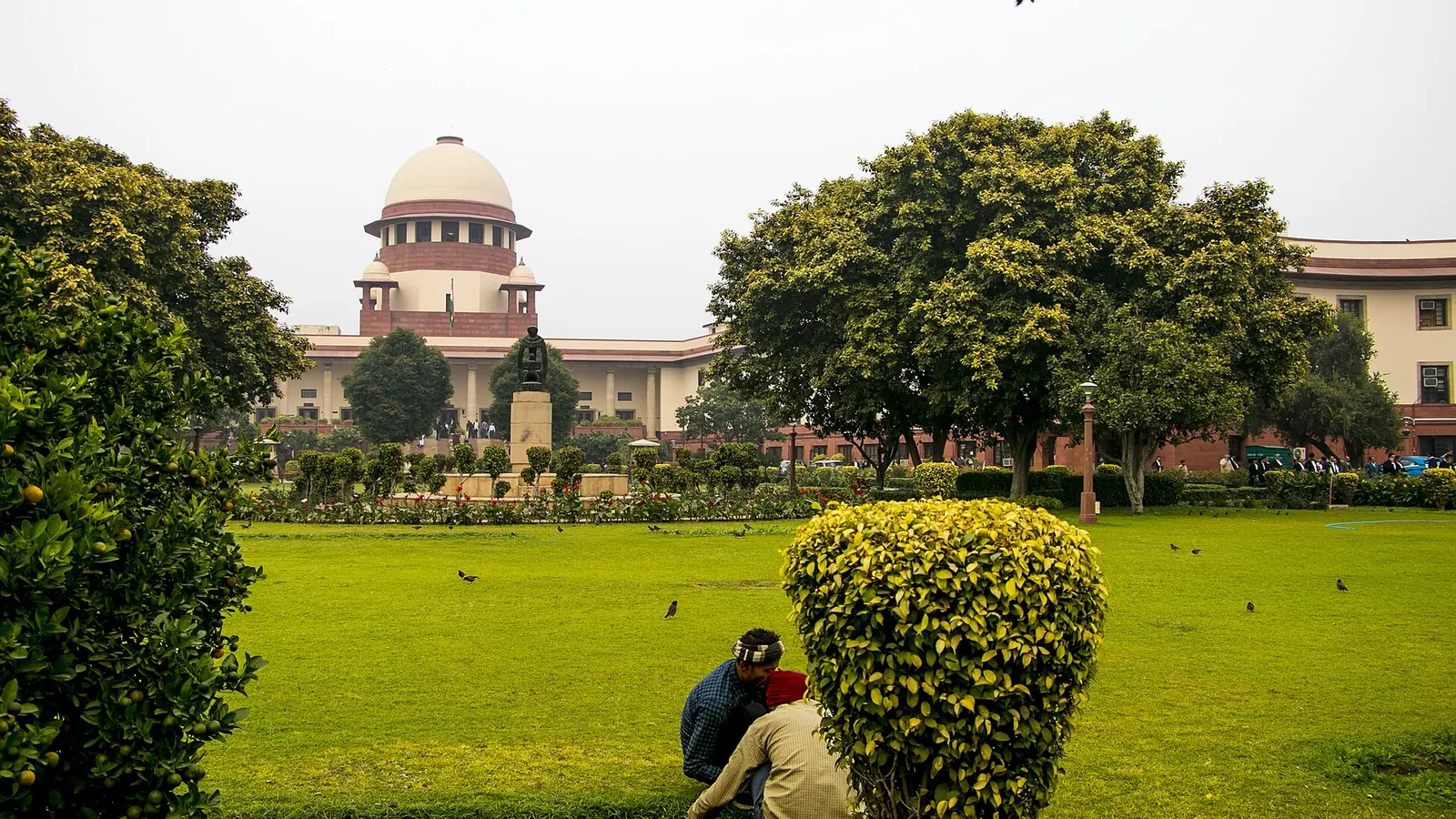
On 27 March 2018, a bench of Chief Justice Dipak Misra and Justices A. M. Khanwilkar and D. Y. Chandrachud held that two consenting adults need no family or community consent to marry, that khap councils have no authority over such marriages, and that the state must protect couples. It then issued binding directions.
- Map the risk: states must identify districts and villages with honour killings or khap gatherings in recent years.
- Stop the gathering: a DSP must warn khap members that a meeting against a couple is unlawful, attend and video-record it if it goes ahead, and seek prohibitory orders.
- Register FIRs at once when a couple is threatened.
- Special cell in every district, with the SP and district welfare officers, running a 24-hour helpline.
- Safe houses at district headquarters, for a nominal charge, for one month at a time and up to one year.
- Fast trials: designated courts, day-to-day hearings, ideally finished within six months.
- Punish negligent officials: failure to follow the directions is misconduct.
The ruling also asked Parliament to pass a specific law. Seven years on, it has not, and the quality of special cells and safe houses varies widely by state.

What can a threatened couple actually do?
Act early, in writing, and in the right order. The Shakti Vahini directions give couples concrete rights that police are obliged to honour.
- If in danger now, call 112. Women can also call 181 or 1091.
- Go to the district special cell or the SP's office, not only the local police station, and ask for protection under the Shakti Vahini directions.
- Ask for a safe house if you cannot go home. The district magistrate and SP supervise them.
- File a written complaint naming who threatened you, with screenshots, call records and witnesses; ask for an FIR, or a Zero FIR if you are in another district.
- Register the marriage under police protection if you wish; the court allows this. Interfaith couples usually use the Special Marriage Act, covered in marrying under the Special Marriage Act.
- Go to the High Court for a protection order if police do nothing; failing to act is misconduct under the 2018 ruling.
A public-interest petition by an anti-trafficking NGO. The court reviewed NCRB data (288 honour killings in 2014-16, including 192 in 2015) and the Law Commission's 242nd report, held that adult marriage needs no community consent, and issued preventive, remedial and punitive directions: risk mapping, district special cells with 24-hour helplines, safe houses for up to a year, immediate FIRs, six-month trials and departmental action against negligent officers. Limit: compliance depends on states, and the court's call for a dedicated law is unanswered.
Read the judgment (free)Based on interviews with 35,145 ever-married women aged 15 to 49 in IHDS-I (2004-05) and IHDS-II (2011-12). Only 5% chose their husband themselves; 65% first met him at or around the wedding; 95% married within caste; and more than 95% of couples lived with the extended family after marriage. Limit: women report on decisions often made years earlier, and the brief is descriptive.
Read the brief (free)Survey of 29,999 adults in 2019-20. 64% said it is very important to stop women in their community marrying into another caste, and 62% said so for men; in the central region, at least eight in ten held this view for men, against about 35% in the south. Limit: attitudes, not acts, but they show how widely the norm behind honour violence is shared.
Read the report (free)What's new
- Rohtak woman shot dead after a same-village marriage; khaps push for bans ThePrint, Nov 2025
- Jharkhand overtakes Haryana in NCRB honour killing count ThePrint, Oct 2025
- Tamil Nadu parties open offices for inter-caste weddings, demand a law ThePrint, Aug 2025
- Why India still has no honour-killing law Vidhi Centre for Legal Policy, Aug 2025
Questions people ask
How many honour killings happen in India every year?
Officially a few dozen: NCRB recorded 25 in 2020, 33 in 2021, 18 in 2022 and 38 in 2023. The real number is unknown and certainly higher, since one Tamil Nadu NGO documented 195 in that state alone over five years.
Is there a law against honour killing in India?
There is no national offence named honour killing. Cases are charged as murder (BNS 103, formerly IPC 302) along with conspiracy, kidnapping or intimidation, and Rajasthan has its own 2019 law against interfering in marriages.
Which state has the most honour killings?
In 2023 NCRB data, Jharkhand recorded the most (9), followed by Haryana (6). Because the figures depend on police recording the motive, rankings say as much about recording as about crime.
What is the Shakti Vahini judgment?
A 2018 Supreme Court ruling that khap councils cannot interfere in the marriage of consenting adults. It ordered district special cells with 24-hour helplines, safe houses, immediate FIRs and fast-track trials.
Can khap panchayats legally stop a marriage?
No. They have no legal authority over marriage, and a gathering called to punish a couple can be an unlawful assembly under BNS 189, with organisers liable for conspiracy or abetment.
Sources
- Supreme Court of India: Shakti Vahini v Union of India (2018; source for directions and NCRB 2014-16 figures)
- Vidhi Centre for Legal Policy: In the Name of Honour (2025; source for NCRB 2020-22, the 145 figure, Evidence's 195 and Rajasthan law)
- ThePrint: Jharkhand is the honour killing capital of India now (2025; source for 2023 state data and the 27,721 murders)
- ThePrint: Brother shot Sapna in her sleep (2025)
- ThePrint: TN parties open offices for inter-caste couples (2025)
- The Tribune: 5 get death for honour killing (2010; source for the Manoj-Babli verdict)
- Wikipedia: Manoj-Babli honour killing case (case timeline and 2011 appeal)
- Wikipedia: Honour killing in India (2019 NCRB figure and the 251 count for 2015)
- Bharatiya Nyaya Sanhita, 2023 (bare Act) (sections 61, 87, 103, 189, 238)
- IHDS Research Brief No. 2: Marriage is a family affair (2016)
- Pew Research Center: Attitudes about caste (2021)

Sapta (Saptarshi Sarkar) is a mechanical engineer turned marketer in Bengaluru and a solo touring rider. He writes the seven Saptaverse blogs. Work with him or read more of Whyblog.