
If you hold your bladder on a 10-hour ride, it will almost certainly not burst: a healthy bladder triggers a strong urge at about 300 to 400 ml and you will stop long before damage. The real costs are an extreme urge that measurably dulls attention and working memory, the habit of drinking less to avoid stops, which roughly doubled urinary infection risk in one study, and a full bladder that is more vulnerable in a crash. Plan a toilet stop every 2 to 3 hours, at fuel stops, and keep drinking.
- 300–400 ml in the bladder triggers the strong reflex urge.
- About 6 hours to that urge at average urine output; 3 hours if you drink well on a hot day.
- Extreme urge hurts attention and working memory as much as conditions known to raise accident risk.
- 2.2 times the urinary infection risk for people who drink less to avoid toilets.
- 351 cases: all the spontaneous bladder ruptures a 2023 review could find in the literature.
Long-distance riders hold it for understandable reasons:
- stops cost time, and gear takes a while to undo;
- highway toilets can be grim;
- on mountain stretches there may be nothing for a long way.
This what-if follows a litre and a half of urine through a riding day, works out when the urge arrives, and looks at what the research says about attention, infection and injury.
How long can you hold your bladder on a ride?
At an average urine output of about 1.4 litres a day, or roughly 58 ml an hour, an empty bladder reaches the 300 to 400 ml range that triggers a strong reflex urge in about 5 to 7 hours. Drink more, as you should on a hot ride, and it comes much sooner.
Calculated in this post as 300 to 400 ml divided by 58 ml an hour (1.4 litres over 24 hours), from the average urine production, around 1.4 litres a day (Wikipedia: Urine) and the 300 to 400 ml reflex volume (Wikipedia: Urination).
On 5 May 1961, Alan Shepard was strapped into Freedom 7 for what was meant to be America's first crewed spaceflight, a hop of about 15 minutes. Because the flight was so short, nobody had built a way for him to urinate in his suit.
Then the launch kept slipping. Shepard spent about four hours on the pad and some eight hours in his spacesuit in all. In the end he had no choice: he urinated in the suit, and the urine shorted the electronic medical sensors taped to his body. Within a year, engineers had a urine collection device ready for the next Mercury flights. A ride planned around the destination had forgotten the delay.
ScienceDaily (American Physiological Society): Where do astronauts go when they need to go? On Hollins, Forgotten hardware: how to urinate in a spacesuit (2013)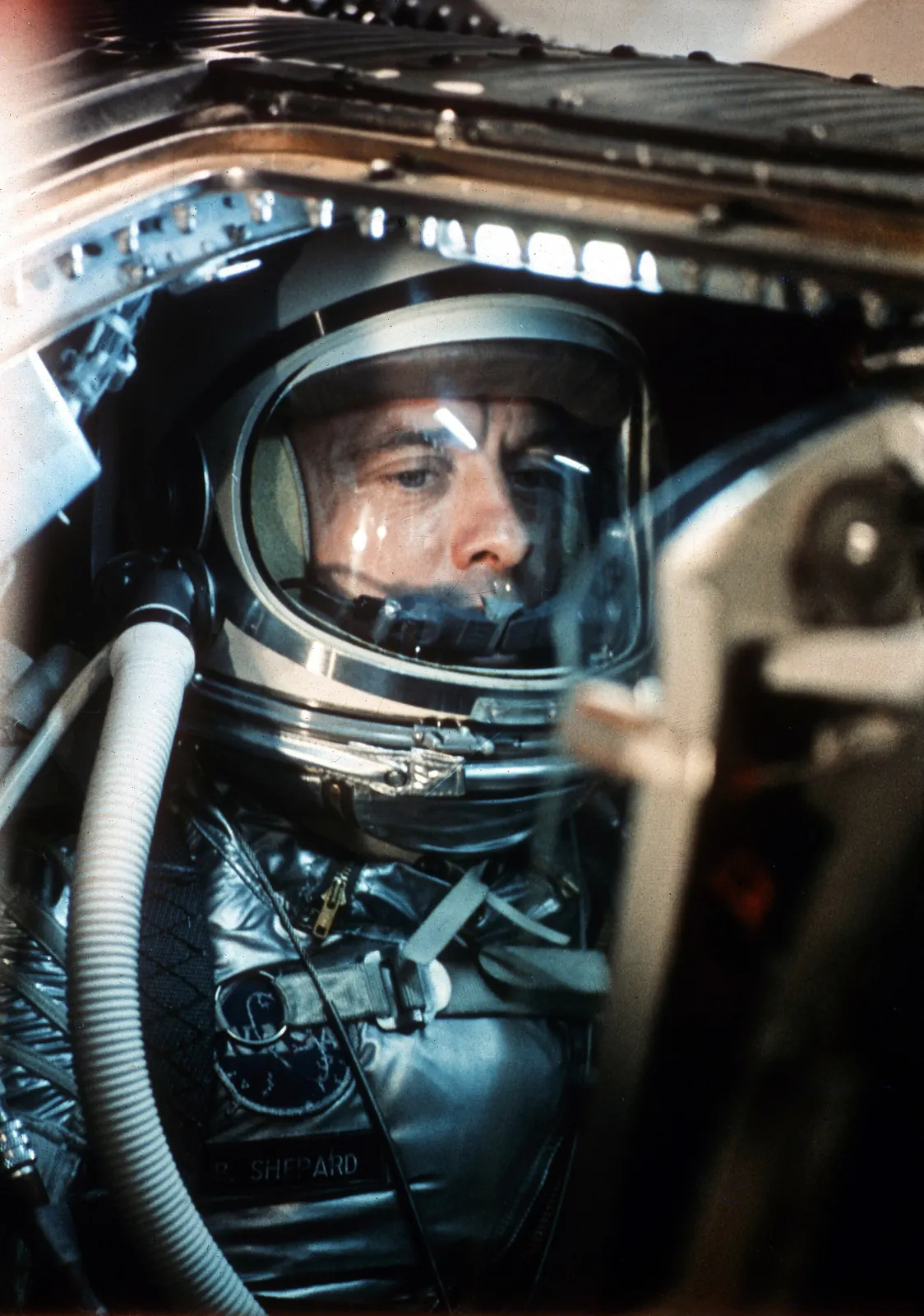
The working
The working is simple division. Volume to reach the urge, divided by the rate your kidneys produce urine, gives the time:
Take 350 ml as the middle of the reflex range.
- Average, 58 ml/h: 350 ÷ 58 = 6.0 hours.
Calculated in this post from the average urine production, around 1.4 litres a day (Wikipedia: Urine) and the middle (350 ml) of the 300 to 400 ml reflex volume (Wikipedia: Urination).
- Top of the normal range, 2.6 litres a day or about 108 ml/h: 350 ÷ 108 = 3.2 hours.
- Bottom of the range, 0.6 litres a day or 25 ml/h: 14 hours. But a body making that little urine is already short of water, which is its own problem on a bike.
Calculated in this post from the low end of the normal range, 0.6 litres a day (Wikipedia: Urine) and the middle (350 ml) of the 300 to 400 ml reflex volume (Wikipedia: Urination).
So a "10-hour hold" is only possible if you are under-drinking. A rider who drinks properly through a hot day will feel a strong urge every 3 to 4 hours, which matches the advice of Indian urologists quoted by The Week in 2025 to empty the bladder every 3 to 4 hours.
When will the urge hit on your ride?
See the data as a table
| Hours to urge (h) | |
|---|---|
| 0.6 l/day (low end of normal) | 14.0 |
| 1.0 l/day | 8.4 |
| 1.4 l/day (average) | 6.0 |
| 2.0 l/day | 4.2 |
| 2.6 l/day (high end of normal) | 3.2 |
Source: Computed from the 0.6 to 2.6 l/day normal urine range and the 300 to 400 ml reflex volume (Wikipedia: Urine; Urination) · Time = 350 ml divided by hourly output. A steady rate is a simplification.
Can your bladder actually burst from holding it?
A healthy, conscious person cannot realistically burst their bladder by holding it on a ride: the urge becomes painful and overrides willpower long before the wall fails. Spontaneous bladder rupture is so rare that a 2023 systematic review in BJU International could find only 351 reported patients in the entire medical literature.
That review, by Reddy and colleagues, also shows who those patients were:
- Pelvic radiation (13%) and alcohol intoxication (11%) were the most common associated factors.
- The dome, the top of the bladder, was the most frequent site of the tear (55%), and 89% of ruptures were intraperitoneal, spilling into the abdomen (Reddy et al., 2023).
- Overall mortality was 15%, and where the diagnosis was made before any intervention it was misdiagnosed in 64% of cases.
Alcohol matters because it does two things at once: it drives urine production up and dulls the sensation of a full bladder. The lesson for riders is not "you will burst". It is that drinking and riding stack yet another hazard on the obvious ones.
What does an extreme urge do to your riding?
An extreme urge to urinate measurably degrades attention and working memory, to a degree the researchers judged comparable to conditions known to raise accident risk. That is the bigger, everyday hazard of holding it.
Eight healthy young adults drank 250 ml of water every 15 minutes until they could no longer hold on, and took standard cognitive tests every hour. As the urge and discomfort grew, performance fell; at an "extreme" urge, the effect on attention and working memory was large (Cohen's d above 0.8). Scores returned to normal after urinating. The authors judged the decline to be as large as, or larger than, that seen in conditions known to raise accident risk. Limits: only eight people, and a lab task rather than driving.
Read the abstractA 2019 follow-up from the University of Alberta tested 18 volunteers and found a smaller but significant slowing of simple reaction time while they had a strong desire to void, similar in kind to doing a distracting mental task at the same time. Reaction time is the number that matters on a highway. At 80 km/h you cover 22 metres every second, so a delay of even a tenth of a second adds more than 2 metres before your hand reaches the brake.
Riders know the feeling: once the urge builds, you start scanning for a place to stop rather than scanning the road. That is diverted attention, and it compounds with the hunger, heat and fatigue covered in the other what-ifs in this series.

Does holding it, or drinking less, cause urinary infections?
Habitually delaying urination is linked to urinary tract infections, and drinking less to avoid the toilet is linked even more strongly. The two habits usually travel together on a ride.
A questionnaire-based cross-sectional study of 816 women hostel residents in India, with urine cultures from 50 women chosen at random. Self-reported UTI prevalence among participants without other risk factors was 27.5% (95% CI 24.4 to 30.7). Habitual delay in urinating was associated with UTI, and the most common reason for holding was the poor state of public toilets. The bacteria cultured were resistant to several common antibiotics. Limits: self-reported infections and a cross-sectional design, so it shows association, not cause.
Read the paper (free)An older US survey of 791 schoolteachers, by Nygaard and Linder in 1997, separated the two habits. How often the teachers urinated at work was not linked to infection.
But women who deliberately drank less than they wanted, to avoid the toilet, had 2.21 times the risk of a urinary infection (95% CI 1.45 to 3.38), after adjusting for other factors. Half the teachers admitted to doing it. A rider who stops drinking at 10 am so as not to stop again before Visakhapatnam is running the same experiment, with sweat loss on top.
The danger is not the full bladder. It is the bottle of water you skip so you will not need to stop.
| What you do | What it risks | Strength of evidence |
|---|---|---|
| Hold an extreme urge for an hour or more | Slower reactions, poorer attention and working memory | Small lab studies (8 and 18 people), consistent direction |
| Habitually delay urination | Urinary tract infection | Cross-sectional, 816 Indian women; association only |
| Drink less to avoid stops | 2.2 times UTI risk; more driving errors from dehydration | Survey of 791 teachers; simulator study of 11 men |
| Ride with a very full bladder | Bladder rupture in a crash or sharp blow | Trauma case reports and reviews |
| Drink alcohol, then hold it | Spontaneous rupture (rare) | Systematic review of 351 cases; alcohol in 11% |
Why is a full bladder worse in a crash?
A full bladder rises out of the protection of the pelvis and its wall stretches thin, so a blow to the lower belly or a violent deceleration can split it. Trauma surgeons describe isolated bladder ruptures in exactly that situation: an overdistended bladder that is compressed or suddenly decelerated.
A 2025 case report and literature review in the International Journal of Surgery Case Reports puts the numbers in context. Urinary tract injuries occur in 10 to 15% of blunt or penetrating abdominal trauma, and bladder injury occurs in about 15% of pelvic fractures.
Intraperitoneal rupture, where urine leaks into the abdomen, needs surgical repair and is easy to miss because the symptoms are vague. For a motorcyclist, whose belly can meet a tank, handlebar or the road, an empty bladder is one small thing in your favour if the worst happens.
Where can you actually stop on Indian highways?
National highways are slowly getting planned toilet stops: the government's wayside amenity programme aims for facilities every 40 to 60 km, with public toilets mandatory at each, but in early 2025 only about 90 to 94 were operating. In a February 2025 Lok Sabha reply reported by PTI, the ministry said 455 sites had been awarded and 90 were operational; by April 2025 IANS reported 501 awarded and 94 operating, with more than 700 planned by 2028-29.
Toll plazas are the more reliable option today. Since 2015, NHAI has been building separate men's and women's toilet blocks at or near toll plazas under the Swachh Bharat Mission, and more than 1,300 blocks are listed for cleanliness monitoring on the NHAI One app, with penalties for contractors who let them slip.
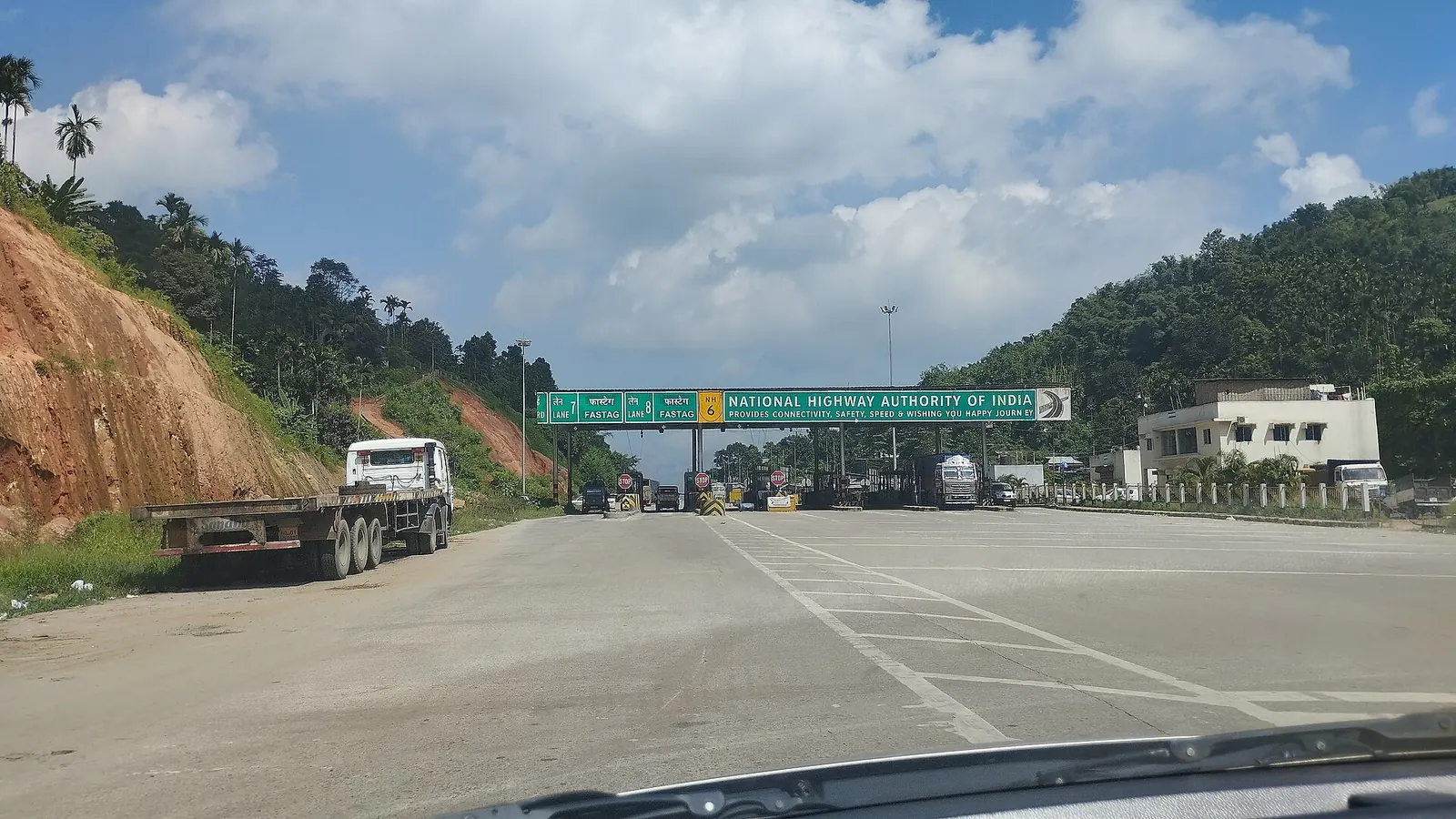

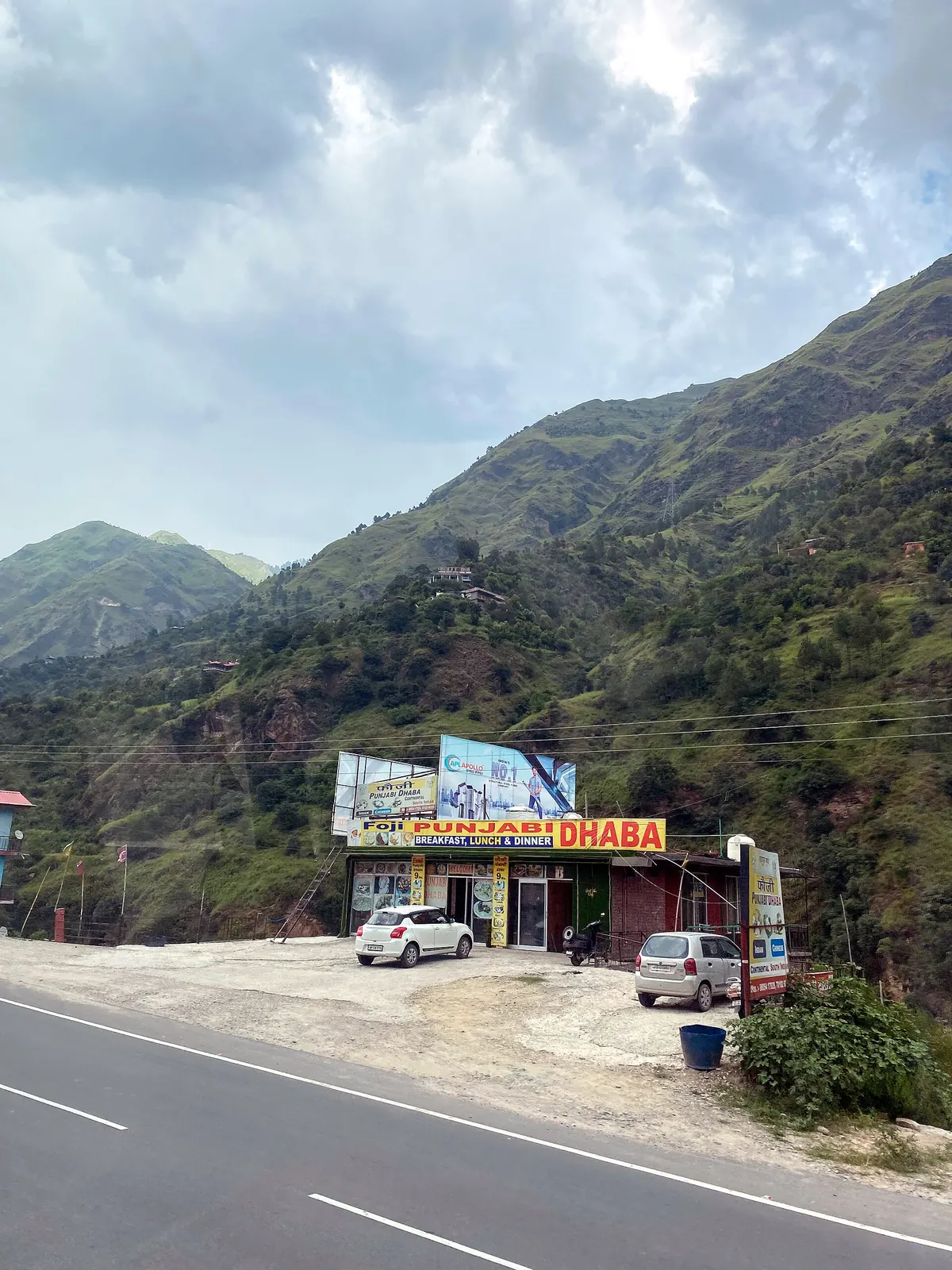
On a four-lane highway, that means a toilet roughly as often as a toll booth. On mountain roads, it means planning around dhabas, fuel pumps and camps, and accepting a quiet roadside stop where nothing else exists.
How should you plan toilet stops on a long ride?
Build toilet stops into the same rhythm as fuel and food: every 2 to 3 hours, and never skip water to stretch the gap. A useful rider's test, repeated on touring forums, is that you should need to pee at every fuel stop; if you do not, you are not drinking enough.

- Empty your bladder before you suit up. It sounds obvious, but the clock starts at your last stop, not your last drink.
- Pair stops. Fuel, toilet, water and a snack in one 15-minute halt is faster than three separate ones.
- Know your next toilet. On national highways, note toll plazas and wayside amenities. On mountain routes, note dhabas and camps on the map before you leave.
- Keep drinking. Sip at every stop and in between if you carry a hydration pack. Pale urine is the target.
- Go easy on tea, coffee and alcohol-free "energy" drinks. Caffeine adds to urine output and can shorten the gap between stops.
- Dress for quick stops. Riding trousers with a front zip and a jacket you can open quickly make a 5-minute halt possible.
- Stop when the urge becomes strong. Treat a strong urge like a fuel light: the reserve is there, but you are now riding with divided attention.
What's new
- Urologists explain the health effects of delaying urination, including UTIs and bladder weakening The Week, Jul 2025
- Government says wayside amenities with toilets will come every 40-60 km on highways; 90 operational ThePrint (PTI), Feb 2025
- Centre plans 700 wayside amenities along national highways by FY 2028-29 IANS, Apr 2025
For the gear that makes short stops quicker, see the touring packing list and Sapta's gear page. For stop spacing on big days, read how a 1,000 km day is planned, and for hydration in the heat, riding in a heatwave. The previous what-if covered riding all day without food.
What if next?
- What if you ride 24 hours without sleep? The drunk-driving comparison is real, and the microsleeps come without warning.
- What if you ride to 5,000 m in one day from sea level? Up there each breath carries about half the oxygen it does at sea level, and the body has only hours to cope.
- What if you run out of fuel on Manali-Leh? There is a 320 km stretch with no official pump, and a mouthful of petrol is a medical emergency.
Questions people ask
Is it bad to hold your pee for 5 hours?
Occasionally, for a healthy adult, it is unlikely to cause harm. Doing it as a habit is associated with urinary infections, and the strong urge in the later hours affects attention. Urologists generally advise emptying the bladder every 3 to 4 hours or when there is a comfortable urge.
Why do I need to pee more when riding in the cold?
Many riders report it, especially on cold mornings and in the mountains. Cold narrows blood vessels in the skin, which shifts blood towards the core, and the body responds partly by making more urine. Plan more frequent stops in cold weather rather than drinking less.
Can holding urine damage your kidneys?
Occasional holding in a healthy person does not. Long-term retention, usually from a blockage such as an enlarged prostate, can let urine back up and harm the kidneys over time. If you often struggle to empty your bladder, see a doctor.
What should I do if I suddenly cannot pass urine on a trip?
Not being able to pass urine with a painful, swollen lower belly is acute urinary retention and needs a hospital, where a catheter can drain it. It is more common in older men, after alcohol, and with some cold and allergy medicines. Do not keep riding to "wait it out".
Sources
- ScienceDaily (American Physiological Society): Where do astronauts go when they need to go? On Hollins, Forgotten hardware, Advances in Physiology Education (2013; source for the Freedom 7 story)
- Lewis MS et al.: The effect of acute increase in urge to void on cognitive function in healthy adults, Neurourology and Urodynamics (2011)
- Gibson W et al.: Is the strong desire to void a source of diverted attention in healthy adult volunteers? Neurourology and Urodynamics (2019)
- Jagtap S et al.: Holding urine as a behavioral risk factor for UTI in women, BMC Infectious Diseases (2022)
- Nygaard I, Linder M: Thirst at work, an occupational hazard? International Urogynecology Journal (1997)
- Reddy D et al.: Spontaneous (idiopathic) rupture of the urinary bladder: a systematic review, BJU International (2023)
- Mucunguzi D et al.: Delayed presentation of intraperitoneal bladder perforation after blunt abdominal injury, International Journal of Surgery Case Reports (2025)
- Wikipedia: Urination (reflex volume and voiding frequency)
- Wikipedia: Urine (normal daily volume)
- The Week: Is it safe to hold it in? Experts explain the health outcomes of delaying urination (2025)
- ThePrint (PTI): Toilet facilities along highways, wayside amenities every 40-60 km (2025)
- IANS: Centre plans 700 wayside amenities by FY 2028-29 (2025)

Sapta (Saptarshi Sarkar) is a mechanical engineer turned marketer in Bengaluru and a solo touring rider. He writes the seven Saptaverse blogs. Work with him or read more of RoadHook Rides.


