
Premium petrol for a bike is worth it only if the owner's manual asks for 95 RON or the engine is tuned or very high-compression, and even then the gap has nearly closed. In Autocar India's ASTM D2699 lab test, regular E20 petrol measured 98.2 RON and IndianOil XP95 measured 98.8 RON, and since 1 April 2026 every litre of regular petrol must meet at least 95 RON by law. A commuter at 9.5:1 or 10:1 compression gets no extra power from extra octane, so the ₹7 a litre you pay for premium mostly buys a detergent package.
- Regular E20 tested at 98.2 RON and XP95 at 98.8 RON in Autocar India's ASTM D2699 lab test.
- Since 1 April 2026, all petrol sold in India must be at least 95 RON.
- Octane measures knock resistance, not energy: a 98 RON litre carries no more energy than a 91.
- A 9.5:1 Classic 350 asks for 91 RON; the 12.59:1 KTM 390 Duke asks for 95.
- Premium costs about ₹7 a litre more, roughly ₹2,800 a year at 12,000 km and 30 km/l.
- Verdict: myth for almost every Indian bike; a fact only for tuned or high-compression engines on doubtful fuel.
The question comes up on every Indian forum. A Dominar 400 owner on xBhp asked whether Xtra Premium was safe because his manual specified 93 octane and pumps did not stock it; years earlier a new FZ-S owner asked whether normal petrol could hurt his bike at all.
Both questions were reasonable in the E5 and E10 era, when regular petrol sat around 91 RON. They need a fresh answer now that ethanol has rewritten what comes out of the regular nozzle.
My KTM 390 Adventure X Plus arrived on 21 August 2026 with KTM's LC3 single of about 399 cc. After I switched from IndianOil XP95 to Shell V-Power, the engine felt noticeably smoother. On an early-November run from Bengaluru to Mulbagal and back, about 100–110 km each way, it returned 26.5 km/l on V-Power at 100–120 km/h with bursts of 140. Ridden aggressively, the bike does about 22–24 km/l.
I still can't say whether the smoothness is real or perception, and that doubt is the right place to start. A fuel's effect is exactly the kind of thing a rider feels long before anyone has measured it. So this post measures it: what octane is, what the pumps actually deliver, and what my own engine asks for.
Sapta: Shell V-Power vs XP95 on a KTM 390 Adventure X PlusWhat does octane actually measure?
An octane number measures how hard it is to make a fuel self-ignite under compression, not how much energy it holds. In a spark-ignition engine the spark should start one flame that sweeps the chamber.
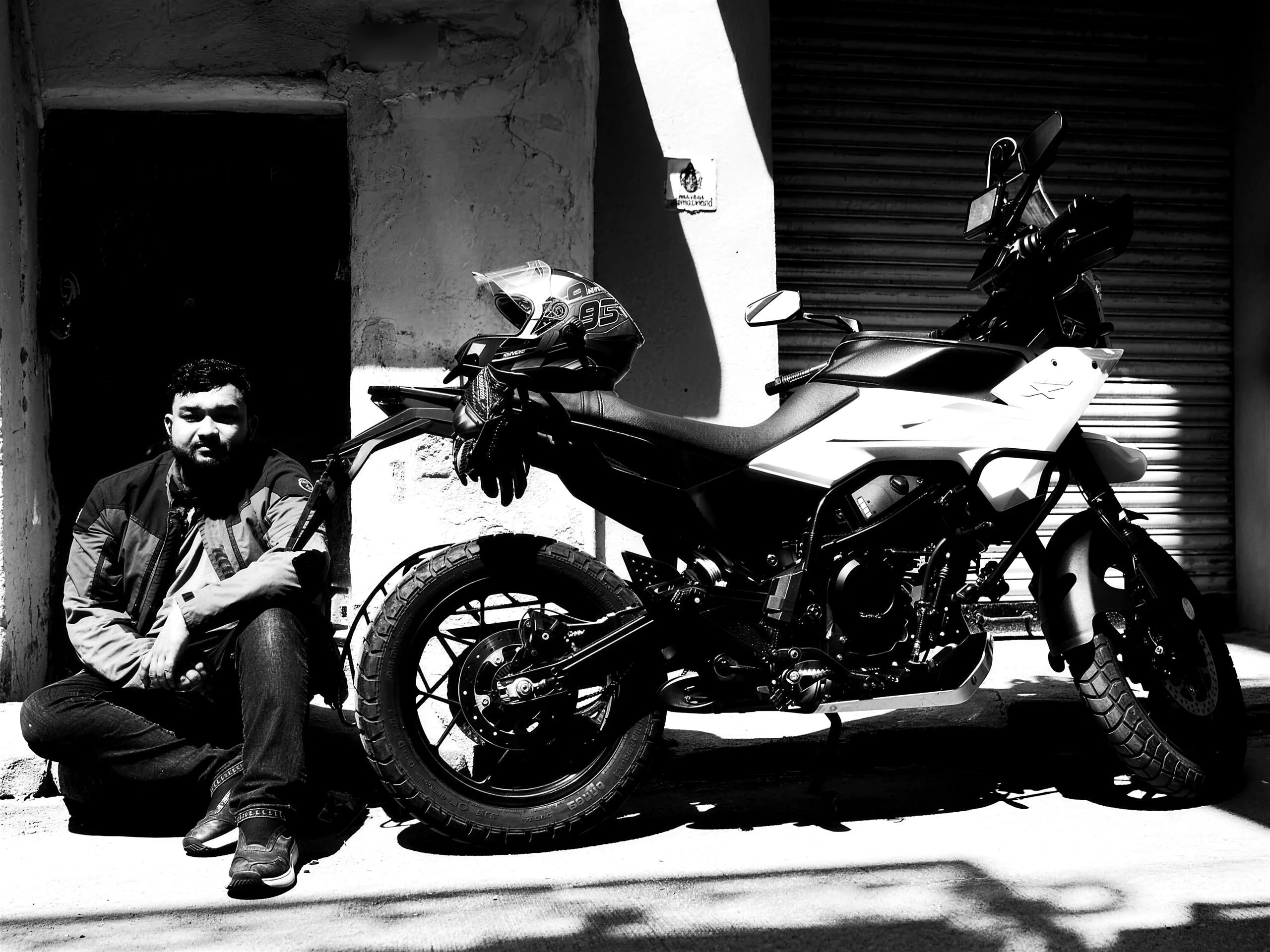
If the unburnt mixture ahead of that flame gets hot and compressed enough, it auto-ignites on its own, and the two pressure fronts collide. That is knock, heard as a metallic pinging, and sustained knock hammers pistons, ring lands and bearings.
How RON is measured
Research Octane Number (RON) is measured under ASTM D2699 in a single-cylinder Cooperative Fuel Research (CFR) engine whose compression ratio can be changed while it runs. The lab raises compression until the test fuel knocks, then matches it against reference blends of iso-octane and n-heptane.
A fuel rated 95 RON resists knock like a 95:5 blend of those two. Nothing in that test measures calorific value. A litre of 98 RON fuel does not carry more energy than a litre of 91 RON fuel, and with ethanol in it, it usually carries less.
The engine variable that decides how much octane you need is the compression ratio, the swept plus clearance volume divided by the clearance volume. Higher compression squeezes the mixture harder, which raises thermal efficiency and also raises end-gas temperature, so knock arrives sooner. Hot weather, a lean mixture, carbon deposits, heavy load at low rpm and aggressive ignition timing all push the same way.

Why did regular petrol suddenly reach 98 RON?
Regular petrol jumped in octane because ethanol itself is roughly 108 RON, and 20% of it lifts a 91-92 RON base fuel by about six points. Autocar India bought regular E20 and XP95 in Mumbai and had both tested under ASTM D2699 in September 2025: 98.2 RON for regular and 98.8 RON for XP95.
A month later the same team tested private-retailer fuel:
- Shell regular: 97.3 RON, 16.68% ethanol;
- Shell V-Power: 97.0 RON, 15.08% ethanol;
- Jio-bp: two grades at 97.4 and 98.5 RON.
Ethanol's octane effect is stronger than a straight average suggests. Wang and colleagues at the University of Birmingham, reviewing ethanol blends in 2017, showed that blending octane is non-linear and that ethanol's high heat of vaporisation cools the intake charge, which suppresses knock further. The cost is energy: ethanol's lower heating value is about a third below petrol's. The US Department of Energy's fuel data puts a gallon of E100 at 67% of the energy of a gallon of gasoline equivalent.
The government then locked in the floor. A Ministry of Petroleum and Natural Gas order, reported by Autocar Professional on 26 February 2026, requires oil companies across all states and Union territories to sell E20 petrol with a minimum RON of 95 from 1 April 2026. Oil companies certify 95 because the actual blend varies from batch to batch; the lab numbers show real fuel usually lands higher.
See the data as a table
| RON (RON) | |
|---|---|
| XP95 (IndianOil, Mumbai) | 98.8 |
| Regular E20 (Mumbai) | 98.2 |
| Jio-bp E20 | 98.5 |
| Jio-bp E12 | 97.4 |
| Shell regular | 97.3 |
| Shell V-Power | 97.0 |
| Legal minimum from Apr 2026 | 95 |
| KTM 390 Duke requirement | 95 |
| Royal Enfield 350 requirement | 91 |
Source: Autocar India lab tests (ASTM D2699), Sept and Oct 2025; MoPNG order via Autocar Professional; KTM and Royal Enfield owner's manuals · Lab figures are single samples from Mumbai and can vary by batch and region.
How much octane does your bike actually need?
Your bike needs the octane printed in its owner's manual, and for most Indian motorcycles that number is 91 RON or lower than what now comes out of the regular nozzle. The manuals tell the story through compression ratio. Royal Enfield's J-platform Classic 350 and Hunter 350 run 9.5:1 and ask for unleaded petrol of 91 RON or higher. Hero's Splendor+ XTEC runs 9.9:1. Bajaj's Pulsar 125 and NS160 sit at 10.05:1 and 9.8:1. At the other end, KTM's 2024 390 Duke manual lists 12.59:1 on an 89 x 64 mm, 398 cc single and specifies Super unleaded, ROZ 95.
See the data as a table
| Compression ratio (:1) | |
|---|---|
| KTM 390 Duke (2024) | 12.59 |
| Yamaha R15 V4 | 11.6 |
| Bajaj Pulsar RS200 | 11.0 |
| Bajaj Pulsar 125 | 10.05 |
| Hero Splendor+ XTEC | 9.9 |
| Bajaj Pulsar NS160 | 9.8 |
| Royal Enfield Classic 350 | 9.5 |
| Royal Enfield Hunter 350 | 9.5 |
Source: Manufacturer owner's manuals (KTM, Bajaj, Hero, Royal Enfield) and Yamaha Motor India specifications
| Bike | Compression ratio | Fuel the manual asks for | Does XP95 help? |
|---|---|---|---|
| Royal Enfield Classic 350 (BS6) | 9.5:1 | Unleaded, 91 RON or higher, up to E20 | No. Regular E20 is already 4-7 points above spec |
| Royal Enfield Hunter 350 | 9.5:1 | Unleaded, 91 RON or higher | No |
| Hero Splendor+ XTEC (2024) | 9.9:1 | Unleaded petrol, E20 sticker on tank | No |
| Bajaj Pulsar NS160 (BS6) | 9.8:1 | Petrol, no RON figure printed | No |
| Bajaj Pulsar 125 (BS6) | 10.05:1 | E20 compatible | No |
| Bajaj Pulsar RS200 | 11.0:1 | E20 compatible | Unlikely: regular now exceeds 95 RON |
| Yamaha R15 V4 | 11.6:1 | Not on the spec sheet; check the manual | Unlikely on today's regular E20 |
| KTM 390 Duke (2024) | 12.59:1 | ROZ 95 (EU manual) | Only if your pump's regular is below 95, which the law now forbids |
Once the fuel's octane is above what the engine needs, the spare knock resistance just sits unused.
Once the fuel's octane is above what the engine needs, extra octane does nothing useful. A knock-free combustion is already as fast and complete as the chamber allows; the spare knock resistance just sits unused. On engines with a knock sensor, the ECU can advance spark timing towards its best setting when it sees no knock, which is where most measured gains from premium fuel come from in cars. Most small Indian motorcycle ECUs run fixed maps, so even that path is closed.
The team dyno-tested a 124 cc single-cylinder motorcycle engine at its stock 9.6:1 compression and again at 10.6:1, after shaving 0.6 mm off the cylinder, using RON 88 and RON 92 fuel between 4,000 and 7,000 rpm. Raising compression added about 3.8-4% torque and power. Switching to the higher-octane fuel added only about 2-2.4%, and only in the high-compression engine; in the stock low-compression engine the higher-octane fuel slightly reduced output. The limit: one engine, two fuels, and figures reported as ranges.
Read the paper (free)So what am I paying for at the premium nozzle?
At the premium nozzle you pay for a detergent and friction-modifier package plus a brand, because the octane advantage over regular is now under one RON point. IndianOil itself says XP95 carries the same 20% ethanol as regular E20, and Autocar's chromatography found 19.88% ethanol in XP95 against 20.86% in regular. Autocar's October 2026 advice column summed up the additive case as marginal: ethanol is itself a solvent that dissolves deposits, so the clean-up effect of premium detergents is smaller than it was with pure petrol.
The price gap is real money. On 5 April 2026 Delhi rates were ₹94.77 a litre for regular and ₹101.89 for XP95 or Speed, a gap of ₹7.12. On 20 March 2026 IndianOil raised XP95 by ₹2 a litre while holding regular prices, and Drivespark reported premium grades in Bengaluru above ₹112. XP95 is only about 5% of India's petrol sales, according to Autocar Professional, which is why oil companies could raise it without public fuss.
What premium petrol costs you each year
At 12,000 km a year and 30 km/l, the defaults above work out to about ₹2,800 a year. That would buy a good set of brake pads or a chain-and-sprocket service, both of which change how a bike rides far more than one RON point.
Calculated in this post from the ₹7.12 a litre Delhi price gap (Sunday Guardian, 5 April 2026) and the example 12,000 km a year at 30 km/l used in the calculator: 12,000 / 30 = 400 litres, times ₹7 = ₹2,800.
Does premium fuel give better mileage?
Premium fuel gives better mileage only if it carries more energy per litre, and in India today that depends on ethanol content, not the premium badge. Every percentage point of ethanol swapped for petrol removes about a third of a point of energy from the litre, using the US Department of Energy's 67% figure. A fuel at 15% ethanol carries roughly 1.8% more energy than one at 20%, a difference you would struggle to see in a tank-to-tank mileage log because wind, traffic and tyre pressure swing results by more.
Calculated in this post from the Department of Energy's 67% figure for ethanol: a 15% blend holds about 1 − 0.33 × 0.15 = 95.1% of a litre of pure petrol's energy and a 20% blend about 93.4%, a difference of about 1.8%.
The one grade that is genuinely different is 100-octane fuel such as IndianOil XP100, which Autocar describes as the only ethanol-free petrol sold in India. It sold at ₹160 a litre in Delhi in April 2026. For a superbike that asks for 98 RON and was calibrated on ethanol-free fuel, it can make sense. For a 350 cc single, it is 69% more money per litre for knock resistance the engine cannot use.
A critical review of how ethanol raises the octane of petrol, comparing three published models for predicting the RON of ethanol blends and proposing a simpler one. The authors find an optimum blend ratio that gives the most octane value per litre of ethanol, largely independent of the base petrol, and quantify the extra knock resistance from ethanol's charge cooling. They note ethanol's lower heating value is about 33% below petrol, and that only an engine redesigned with higher compression can win part or all of that loss back. The limit: it is a review of car-engine data, not a motorcycle test.
Read the paper (free)Why did my KTM feel smoother on Shell V-Power?
The story at the top is my own case, and I can describe it but not prove it. On my KTM 390 Adventure X Plus, the LC3 single felt noticeably smoother after I switched from IndianOil XP95 to Shell V-Power, and the Bengaluru-Mulbagal run on V-Power returned 26.5 km/l at 100-120 km/h with bursts of 140. I still question whether the smoothness is real or perception, and the lab numbers say octane cannot be the reason: Autocar measured V-Power at 97.0 RON, below XP95's 98.8.
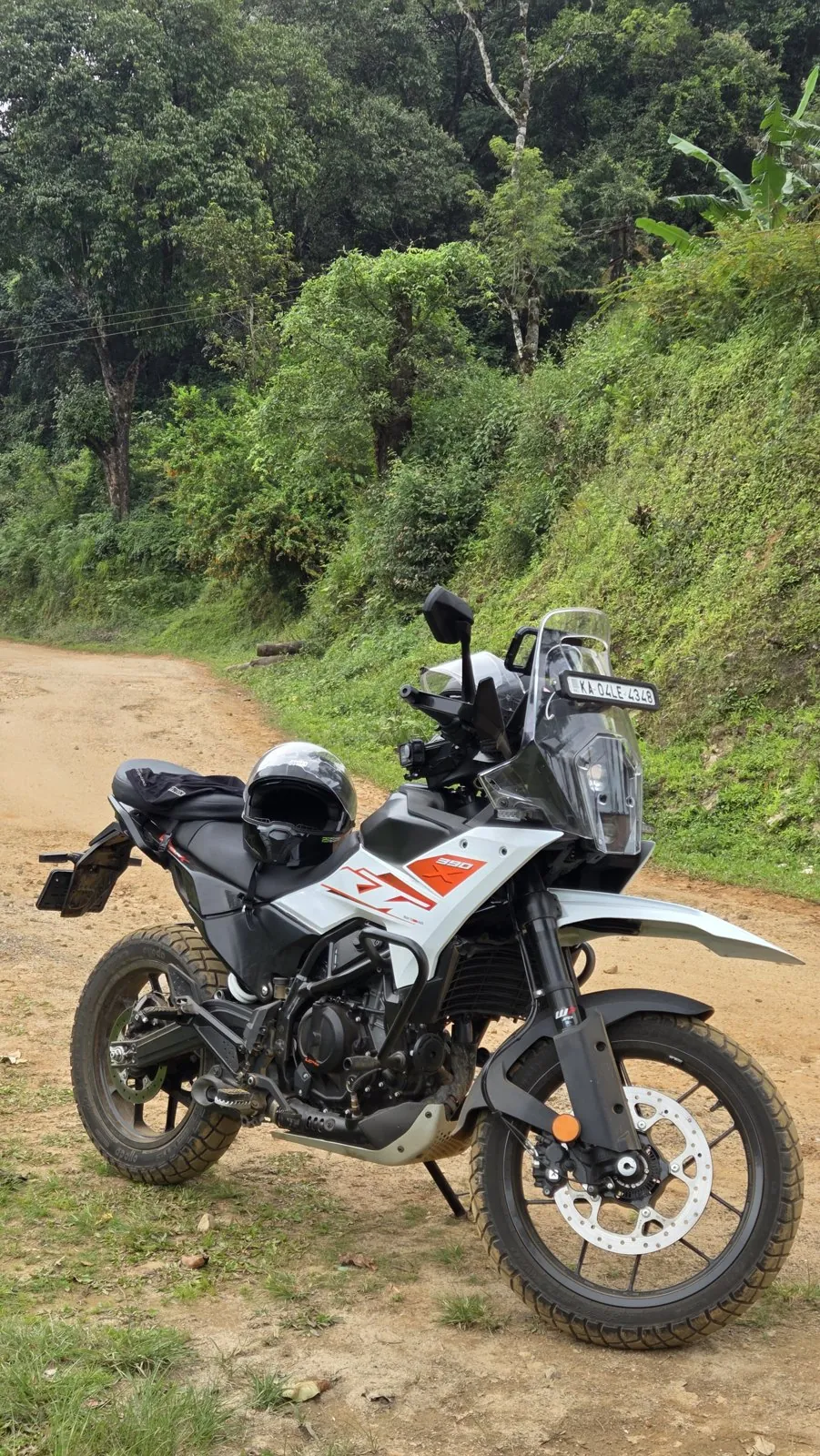
Three things could explain a real difference:
- Ethanol. V-Power tested at 15.08% ethanol against roughly 20% for XP95, so it carries a little more energy and a slightly different stoichiometric ratio, which a closed-loop ECU corrects but a rider may still feel in throttle response.
- Detergents. The additive package differs by brand.
- Conditions, the most likely. A cool morning highway run at steady speed will always feel smoother than city traffic.
The honest test is blind: two full tanks of each fuel, same route, same weather, someone else filling the tank, and a mileage log kept over enough tanks to average out wind and traffic.

When is premium petrol worth paying for?
Myth or fact: the claims made for premium petrol
| Claim | Myth or fact | What the evidence says |
|---|---|---|
| Premium gives more power on any bike | Myth | Rahmat's dyno test: higher octane added 2–2.4% only in the raised-compression engine, and slightly cut output at stock 9.6:1 |
| Premium gives better mileage | Mostly myth | Energy per litre follows ethanol share, not the badge; XP95 tested at 19.88% ethanol |
| Premium cleans the engine | Fact, but marginal | More detergent, but ethanol is itself a solvent; Autocar's experts call the benefit marginal |
| Premium protects a high-compression engine | Fact only on sub-spec fuel | The 12.59:1 KTM 390 asks for 95 RON, which the law now makes the minimum |
| Premium can damage a commuter | Myth | It burns normally; Rahmat measured only a few per cent less output at low compression |
| XP95 is ethanol-free | Myth | IndianOil says it is E20; only 100-octane grades such as XP100 are ethanol-free |
With regular E20 measured at 98.2 RON against XP95's 98.8, and a legal floor of 95 RON since April 2026, premium petrol gives no extra power to an engine that asks for 91 or 95. It is a fact only in the narrow cases below: a tuned or high-compression engine, audible knock, or a need for ethanol-free fuel.
Premium petrol is worth paying for in four narrow cases, and an average commuter or 350 cc tourer fits none of them.
- The manual asks for 95 RON and your region's regular is below it. Since April 2026 the law says it cannot be, but on a remote highway pump with doubtful stock, filling premium is cheap insurance for a 12.6:1 engine.
- The engine has been tuned. A remap that advances timing, or a skimmed head that raises compression, changes the octane need. The Rahmat study shows octane only pays once compression goes up.
- You hear knock. Pinging under load at low rpm, on a hot day, is the engine telling you its margin is gone. Higher octane treats the symptom; carbon build-up or a lean mixture is often the cause.
- You want ethanol-free fuel for storage. Only 100-octane fuel qualifies, and only for a bike parked for months. XP95 is E20.
For how ethanol changes fuelling, mileage and rubber parts in more depth, read what E20 petrol does to a motorcycle engine. If mileage is the real goal, the bikes in India's most fuel-efficient motorcycles gain more from gearing and weight than any fuel. And for why compression ratio sets power, see how engine power and torque work and fuel injection vs carburettor. My own bikes and kit are on the gear page.
What's new
- Government orders E20 petrol with a 95 RON minimum at every pump from 1 April 2026 Autocar Professional, Feb 2026
- IndianOil raises XP95 by ₹2 a litre while freezing regular petrol prices Autocar Professional, Mar 2026
- Autocar India: How much ethanol is in your petrol? (ASTM D4815 test) (2025)
- Autocar's experts rate XP95's additives as marginal now that both grades are E20 Autocar India, Oct 2026
- Lab test finds Shell and Jio-bp petrol at 15-19% ethanol and 97-98.5 RON Autocar India, Oct 2025
Questions people ask
Will premium petrol damage a normal commuter bike?
No. A higher-octane fuel burns normally in a low-compression engine; it is not "too strong". The Rahmat dyno study did see a small output drop when higher-octane fuel was used in a 9.6:1 engine, which the authors put down to slower ignition, but the effect was a few percent and harmless. The real cost is to your wallet.
My manual says 91 RON. Is regular E20 petrol enough?
Yes, with room to spare. Regular E20 has a legal floor of 95 RON and tested at 98.2 RON in Autocar's sample. What matters more for an older bike is whether its rubber fuel parts and carburettor jetting were designed for 20% ethanol.
Is XP95 ethanol-free?
No. IndianOil says XP95 is an E20 blend, and Autocar's lab found 19.88% ethanol in its sample. In India only 100-octane grades such as XP100 are sold without ethanol.
Does premium petrol clean the engine?
Premium grades carry more detergent, which can slow deposit build-up on injectors and intake valves. With E20, ethanol's own solvent action already does part of that job, which is why the benefit is now described as marginal. One tank of premium every few thousand kilometres gets you most of whatever cleaning effect exists.
Should I use premium petrol during running-in?
No manual I checked asks for it. Running-in is about load and rpm, not fuel. See the running-in rules that still matter.
Sources
- Autocar India: E20 fuel gets big jump in octane rating (ASTM D2699 test) (2025)
- Autocar India: Do Shell and Jio-bp petrol contain less ethanol? Tested in a lab (2025)
- Autocar India: Should XP95 be used, or is standard petrol sufficient? (2026)
- Autocar Professional: Govt mandates nationwide sale of E20 petrol with minimum RON 95 (2026)
- Autocar Professional: IndianOil draws the line at XP-95 (2026)
- Drivespark: Premium petrol prices hiked, past ₹112 in Bengaluru (2026)
- Sunday Guardian: Fuel prices on 5 April 2026, regular, XP95 and XP100 (2026)
- Dynamite News: XP95 blend explained, IndianOil on its 20% ethanol content (2026)
- Autocar India: How E20 petrol affects your bike and scooter (2025)
- Rahmat et al.: Otto engine performance with variations in compression ratio and gasoline octane, Otopro (2026)
- Wang et al.: Ethanol blends in spark ignition engines, Applied Energy (2017)
- US Department of Energy, Alternative Fuels Data Center: Fuel properties comparison
- KTM: 2024 390 Duke owner's manual (EU) (2023)
- Royal Enfield: Classic 350 BS6 owner's manual
- Bajaj Auto: Pulsar 125 owner's manual; Pulsar NS160; Pulsar RS200
- Hero MotoCorp: Splendor+ XTEC owner's manual (2024)
- Yamaha Motor India: R15 V4 specifications

Sapta (Saptarshi Sarkar) is a mechanical engineer turned marketer in Bengaluru and a solo touring rider. He writes the seven Saptaverse blogs. Work with him or read more of RoadHook Machines.


