
The highest mileage bikes in India by manufacturer-claimed fuel economy are the Hero HF Deluxe and Hero HF 100, both rated at 72 km/l on Hero's own specification pages in November 2026, followed by six bikes claimed at 70 km/l: the TVS Sport, Bajaj Platina 100, Bajaj CT 110X, Hero Splendor+, Honda Livo and Hero Passion+. Expect 10 to 20% less in real traffic, and about 3 to 4% less again on E20 petrol in an older engine.
- 72 km/l: the Hero HF Deluxe and HF 100 top the claimed figures; six more bikes claim 70.
- Expect 10 to 20% less on real roads than the lab claim.
- E20 petrol costs about 3 to 4% in two-wheelers calibrated for E10 (NITI Aayog).
- Between 72 and 70 km/l, the saving at 1,200 km a month is under ₹50.
- Measure tank to tank before blaming the fuel or the bike.
This list ranks by one number: the claimed fuel economy published by the manufacturer or, where the maker does not publish it, the claimed (ARAI-tested) figure listed by Zigwheels. Each row says which.
Ties are broken by lower ex-showroom price, because at equal mileage the cheaper bike saves more. I have not used road-test figures in the ranking, because no single outlet tests all ten bikes under the same conditions.
The numbers are close. Eight of the ten sit at 70 km/l or above, within 3% of each other. That tells you something useful: below 125 cc, mileage should not decide your purchase. Price, comfort, service network and resale should.
Which bike gives the highest mileage in India?
The Hero HF Deluxe and HF 100 claim the highest figure among bikes on sale, 72 km/l, from a 97.2 cc air-cooled single making 5.9 kW. The HF Deluxe weighs 112 kg at kerb and the HF 100 weighs 110 kg, according to Hero's specification pages.
The engine at the top of this list has been selling on mileage since 1985. That year Hero Honda, the joint venture of the Hero Group and Honda, launched the CD100, a 97.2 cc four-stroke, with a claimed 81.7 km per litre and a top speed of 87 km/h. Its television advertisement starred a young Salman Khan, three years before his first film, and its tagline told buyers to fill it, shut it and forget it. Brijmohan Lall Munjal, the Hero Group's founder, later told India Today that buying a product is one thing and running it for years is another, which is why the company chased low running costs. The CD100's 1994 successor, the Splendor, helped make Hero Honda India's largest two-wheeler maker by 2001.
ThePrint: Before Bollywood entry, Salman Khan did a Hero Honda ad, but the CD100 was its star (2022)Four decades on, the same basic 97.2 cc formula still heads the ranking.
See the data as a table
| Claimed km/l (km/l) | |
|---|---|
| Hero HF Deluxe | 72 |
| Hero HF 100 | 72 |
| TVS Sport | 70 |
| Bajaj Platina 100 | 70 |
| Bajaj CT 110X | 70 |
| Hero Splendor+ | 70 |
| Honda Livo | 70 |
| Hero Passion+ | 70 |
| Hero Super Splendor XTEC | 68 |
| TVS Raider 125 | 67 |
| Hero Xtreme 125R | 66 |
Source: Hero MotoCorp specification pages; Zigwheels claimed (ARAI) mileage listings for other makes · Claimed test-cycle figures, not road tests. Hero states its Splendor+ figure on E20 fuel.
| Rank | Bike | Claimed km/l | L/100 km | Source of claim | Ex-showroom from |
|---|---|---|---|---|---|
| 1 | Hero HF Deluxe | 72 | 1.39 | Hero spec page | ₹59,477 |
| 2 | Hero HF 100 | 72 | 1.39 | Hero spec page | ₹59,839 |
| 3 | TVS Sport | 70 | 1.43 | Zigwheels, claimed (ARAI) | ₹59,100 |
| 4 | Bajaj Platina 100 | 70 | 1.43 | Zigwheels, claimed (ARAI) | ₹70,511 |
| 5 | Bajaj CT 110X | 70 | 1.43 | Zigwheels, claimed (ARAI) | ₹74,930 |
| 6 | Hero Splendor+ | 70 (on E20) | 1.43 | Hero spec page | ₹78,912 |
| 7 | Honda Livo | 70 | 1.43 | Zigwheels, claimed (ARAI) | ₹80,330 |
| 8 | Hero Passion+ | 70 | 1.43 | Hero spec page | not listed |
| 9 | Hero Super Splendor XTEC | 68 | 1.47 | Zigwheels, claimed (ARAI) | ₹85,448 |
| 10 | TVS Raider 125 | 67 | 1.49 | Zigwheels, claimed (ARAI) | ₹84,460 |
Notes on the numbers
- Prices are Zigwheels' ex-showroom listings in November 2026 after the September 2025 GST cut; they vary by city.
- Hero's own figures win. The HF Deluxe and Splendor+ are listed on Zigwheels at 70 km/l, but Hero's own pages say 72 and 70 respectively, so I use Hero's.
- Splendor+ XTEC 2.0: Hero's page also shows 73 km/l in its FAQ; I use the 70 km/l in its specification table.
- Just outside: the Hero Xtreme 125R (66 km/l, Zigwheels) misses the top ten.
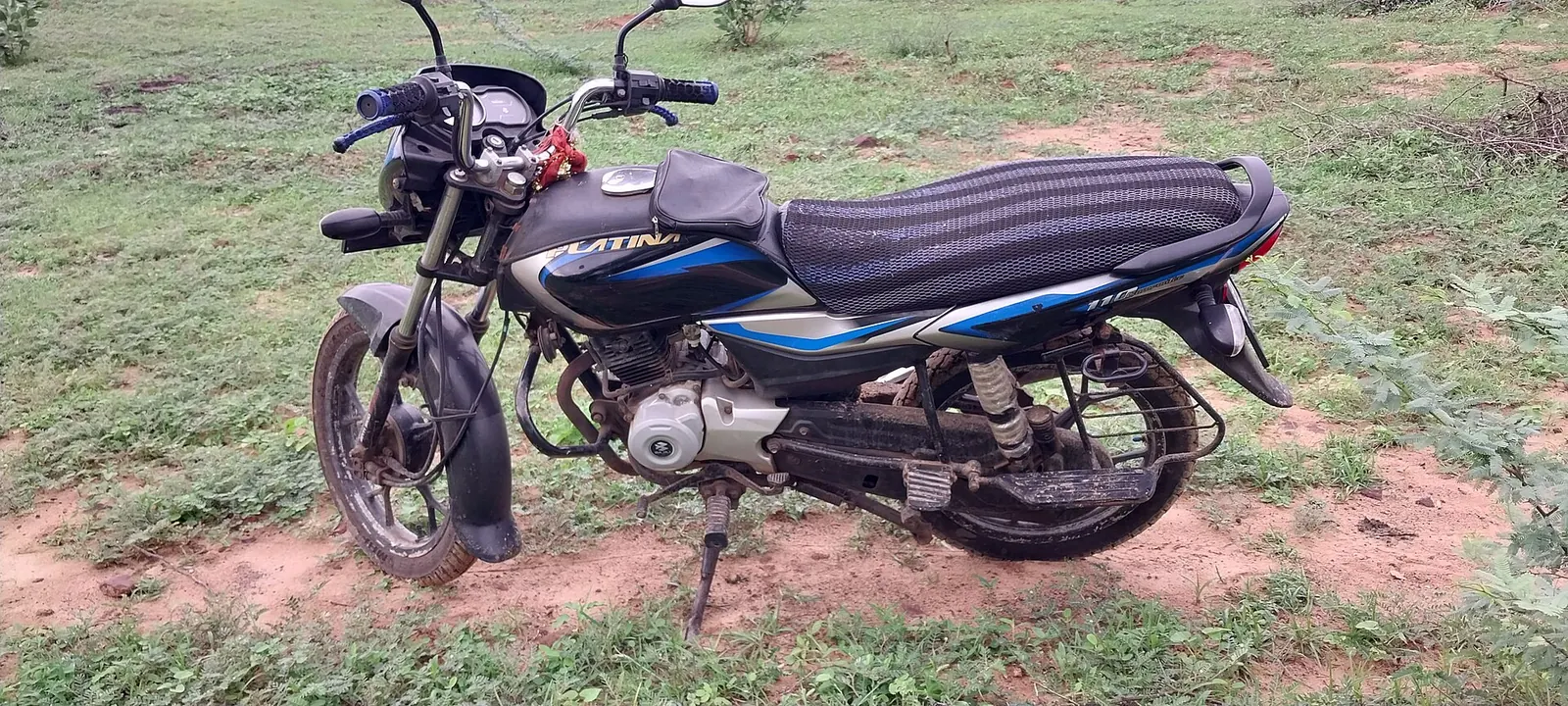
Where do claimed mileage figures come from?
Claimed figures come from a laboratory test on a chassis dynamometer, where the bike runs a fixed speed-and-time cycle and fuel use is measured, not from riding on roads. For type approval in India, two-wheelers are tested on the World Motorcycle Test Cycle (WMTC), and manufacturers have declared those results to SIAM.

What the ICCT found in SIAM's data
The ICCT built its baseline study of India's two-wheeler fleet from exactly those SIAM declarations. Its numbers give useful context for the list above:
- the sales-weighted average new two-wheeler in FY2017-18 used 1.74 L/100 km (57.5 km/l);
- the best model in that year's fleet was rated at 1.25 L/100 km, or 80 km/l.
Today's leaders at 72 km/l are good, but not record-breaking.
Two other points from the ICCT's work matter for buyers. Two-wheelers burn about 60% of all the petrol used on Indian roads, and unlike cars they have no fuel consumption standard to meet. So the claimed figure is the only number you get, and it is not policed against a target.
Why is real-world mileage lower than the claim?
Real-world mileage is lower because roads ask more of the engine than the test cycle does:
- harder acceleration and higher speeds;
- idling at signals;
- a rider, and often a pillion;
- tyres and chains that are not in lab condition.
The gap is typically 10 to 20%, which turns a 70 km/l claim into roughly 56 to 63 km/l.
The test cycle is gentle by design
India's original Indian Driving Cycle, used for decades of certification, ran six 108-second modes at an average of 21.9 km/h and never asked for more than 0.65 m/s² of acceleration, according to IIT Kanpur's 2021 review of Indian drive cycles. The WMTC that replaced it for two-wheelers is more realistic, but it is still a fixed lab cycle at controlled temperature.
Weight and drag
Weight and drag explain the rest. A 70 kg rider adds more than 60% to a 112 kg bike, and air drag rises with the square of speed, so the same bike at 70 km/h uses noticeably more fuel per kilometre than at 40 km/h.
My KTM 390 Adventure X Plus is a different class of bike, but the effect shows clearly: I measured 26.5 km/l at 100 to 120 km/h, with bursts of 140, on a ride to Mulbagal on Shell V-Power, and about 22 to 24 km/l when ridden hard.
- Measure tank to tank. Fill to the brim, zero the trip meter, ride normally, refill to the brim, and divide kilometres by litres. Dashboard averages can mislead.
- Check tyre pressure weekly. Low pressure increases rolling resistance.
- Keep the chain clean and correctly tensioned. A dry, tight chain wastes power; see chain cleaning and lubrication.
- Ride in the torque band. Short-shifting gently and holding a steady 40 to 50 km/h gets a small single closest to its claim.
How much does E20 petrol reduce mileage?
E20 petrol reduces mileage by about 3 to 4% in two-wheelers designed for E0 and calibrated for E10, according to NITI Aayog's 2021 Roadmap for Ethanol Blending in India.
| Vehicle (NITI Aayog roadmap) | Estimated mileage loss on E20 |
|---|---|
| Two-wheelers designed for E0, calibrated for E10 | 3 to 4% |
| Cars designed for E0, calibrated for E10 | 6 to 7% |
| Vehicles calibrated for E20 | 1 to 2% |
The reason is energy content. NITI Aayog's report puts the calorific value of an E10 blend about 4% below petrol, and doubling the ethanol share widens that gap, so the engine needs more litres for the same work.
The report also notes that SIAM told the committee engine changes in hardware and tuning can reduce the loss. New bikes sold from April 2025 were meant to be E20-tuned under the roadmap's timeline.
The 2026 complaints
E20 became the national standard for petrol from April 2026, and complaints followed. The South First reported in August 2026 that a fuel outlet manager in Bengaluru heard of 10 to 15% drops from some customers, while technicians pointed out that dashboard averages, traffic and idling distort these readings.
A 15% drop is far larger than the 3 to 4% the roadmap predicts for two-wheelers, so measure tank to tank before blaming the fuel.
I go deeper into the chemistry in what E20 does to a motorcycle engine, and into the premium-fuel question in is premium petrol worth it.
What will a high-mileage bike save me each month?
At Delhi's petrol price of ₹102.12 a litre (6 November 2026), a commuter riding 1,200 km a month spends about ₹1,750 on fuel at a real-world 70 km/l and about ₹2,450 at 50 km/l. Use the calculator with your own numbers.
Monthly fuel cost for your bike
The calculator shows why a few km/l rarely matters at the top of this list:
- 72 vs 70 km/l: the difference at 1,200 km a month is under ₹50.
- 70 vs 40 km/l (a 160 cc sporty commuter): more than ₹1,300 a month, or about ₹80,000 over five years at today's prices.
Calculated in this post from Delhi petrol at ₹102.12 a litre (HDFC Sky, 6 November 2026), with these example inputs (1,200 km a month, 70 and 40 km/l, 60 months): 30.0 l against 17.1 l a month is ₹1,313 more, or about ₹78,800 over five years.
Are 125 cc bikes much less efficient than 100 cc ones?
Only slightly. The TVS Raider 125 claims 67 km/l and the Hero Xtreme 125R 66 km/l, against 70 to 72 km/l for the 97 to 110 cc bikes, a gap of 4 to 8%. Honda's SP 125 is listed at 63 km/l (Zigwheels).
Calculated in this post from the claimed figures in the ranking table above, which come from Zigwheels and Hero's specification pages: 67 or 66 against 70 to 72 is a shortfall of 4.3% to 8.3%.

The bigger drop comes above 150 cc
| Bike | Claimed km/l (Zigwheels) |
|---|---|
| Yamaha FZ-S Fi | 60 |
| Honda Hornet 2.0 | 57.4 |
| Yamaha MT-15 | 56.9 |
| Royal Enfield Classic 350 | 41.55 |
Most of India's buying follows this logic; six of the ten best-selling bikes in FY26 were commuters of 125 cc or less. The full sales ranking is in India's best-selling bikes.
What does the research say about two-wheeler fuel use in India?
The authors combined Segment Y sales data with SIAM's declared fuel economy (WMTC) for FY2017-18 and FY2018-19 to build a model-by-model database covering 99% of new two-wheelers. They found a sales-weighted average of 1.74 L/100 km (about 57.5 km/l) and 41.2 g CO2/km, ranging from 1.25 to 5.43 L/100 km across models. Hero MotoCorp's fleet was the most efficient at 1.58 L/100 km, and Bajaj's second at 1.67. Models of similar weight and power varied widely, which the authors read as room for technology improvement. The limit: it predates BS-VI fuel injection (April 2020), so absolute numbers have moved.
Read the paper (free)A policy analysis using the ICCT India Emissions Model. It notes that two-wheelers were more than 80% of vehicle sales in FY2020-21 and about 60% of India's petrol use, emitted nearly 38 million tonnes of CO2 in 2020, and face no fuel consumption standard. It estimates that improving petrol engines is cost-effective up to about a 23% efficiency gain, beyond which electrification is cheaper per tonne saved, and that a 2030 standard near 20.5 g CO2/km would push electric share above 60%. The limit: it models policy scenarios; it does not test real bikes.
Read the briefing (free)The government roadmap that set E20 by 2025. Drawing on earlier E10 (2009-10) and E20 (2014-15) test projects, it estimates fuel-efficiency losses on E20 of 3 to 4% for two-wheelers designed for E0 and calibrated for E10, 6 to 7% for comparable cars, and 1 to 2% for cars calibrated for E20. Its emission table shows E20 two-wheelers with about 50% lower CO and 20% lower HC than on petrol, with NOx about 10% higher. The limit: the test vehicles in the E10 and E20 projects were different, and the efficiency figures are estimates, not a fleet-wide study.
Read the report (free)What's new
- Bengaluru riders report mileage drops after the April 2026 E20 switch; technicians urge tank-to-tank checks The South First, Aug 2026
- NITI Aayog's 2021 roadmap had already flagged E20 mileage and compatibility issues Business Today, Jul 2026
- Petrol at ₹102.12 in Delhi and ₹111.68 in Bengaluru, unchanged on 6 November HDFC Sky, Nov 2026
Questions people ask
Which bike has the highest mileage in India in 2026?
By manufacturer claim, the Hero HF Deluxe and Hero HF 100, both at 72 km/l. Six more bikes claim 70 km/l, so in practice the top of the list is a tie.
Is the ARAI mileage figure what I will get?
Usually not. Claimed figures come from a lab test cycle with gentle acceleration and no traffic. Expect 10 to 20% less in daily riding, and more if you carry a pillion or ride fast.
Does E20 petrol really reduce bike mileage?
Yes, by about 3 to 4% for two-wheelers calibrated for E10, according to NITI Aayog's 2021 roadmap, because ethanol has less energy per litre than petrol. Much larger drops reported by riders usually have other causes, so measure tank to tank.
Is a 125 cc bike worth it over a 100 cc bike for mileage?
The mileage penalty is small, about 4 to 8% on claimed figures (67 vs 70-72 km/l). If you ride with a pillion or on highways, the extra torque of a 125 cc engine can make that trade worth it.
Sources
- Hero MotoCorp: HF Deluxe specifications (accessed Nov 2026)
- Hero MotoCorp: HF 100 specifications (accessed Nov 2026)
- Hero MotoCorp: Splendor+ specifications (accessed Nov 2026)
- Hero MotoCorp: Passion+ specifications (accessed Nov 2026)
- Zigwheels: Bikes with 50-70 kmpl claimed mileage (accessed Nov 2026)
- ThePrint: Salman Khan's Hero Honda ad and the CD100 (1985 launch, 81.7 km/l claim, tagline) (Feb 2022)
- ICCT: New two-wheeler vehicle fleet in India for FY 2017-18 (Mar 2020)
- ICCT: Fuel consumption standards for the new two-wheeler fleet in India (Aug 2021)
- NITI Aayog: Roadmap for Ethanol Blending in India 2020-25 (Jun 2021)
- IIT Kanpur: Indian Drive Cycles and RDE Program for Effective Emission Norms (Oct 2021)
- The South First: Bengaluru's E20 shift and mileage complaints (14 Aug 2026)
- Business Today: NITI Aayog's 2021 roadmap flagged E20 issues (7 Jul 2026)
- HDFC Sky: Petrol and diesel prices, 6 November 2026

Sapta (Saptarshi Sarkar) is a mechanical engineer turned marketer in Bengaluru and a solo touring rider. He writes the seven Saptaverse blogs. Work with him or read more of RoadHook Machines.


