
To focus for 90 minutes, decide the single task before you start, move your phone to another room, answer messages before and after the block rather than during it, and work in two or three sprints of 25 to 50 minutes with short real breaks. End with a two-line note on where to restart. Interruption experiments show people work faster but with more stress and frustration when interrupted, so the routine's job is to keep interruptions out, not to make you try harder.
- 275 interruptions a day for the average Microsoft 365 user, roughly one every two minutes in core hours (2025).
- Interrupted people work faster but with more stress and frustration (Mark et al. 2008).
- The phone-on-the-desk "brain drain" effect failed a 2022 replication; using the phone mid-task is the cost that is clear.
- Blocking mobile internet for two weeks improved measured sustained attention; 91% improved on at least one outcome.
- Plan 2 to 3 sprints of 25 to 50 minutes, with real breaks and a shutdown note.
Most focus advice treats attention as a muscle you lack. The research reads differently: attention gets broken from outside, by pings, meetings and the phone on the desk, and from inside, by unfinished tasks still pulling at you.
Microsoft's 2025 Work Trend Index, built from Microsoft 365 signals and a survey of 31,000 workers in 31 countries, counted an average of 275 interruptions a day, roughly one every two minutes during core hours. A 90-minute block is a deliberate exception to that pattern. It is one of the practical guides in Manthan.
What does an interruption actually cost you?
An interruption costs less time than people think and more stress than they notice. In Gloria Mark's 2008 experiment at UC Irvine and Humboldt University, 48 people answered batches of 12 emails as an HR manager, either uninterrupted or interrupted by a phone call or chat message roughly every two minutes.
The surprise was speed: interrupted participants finished in about 20.3 to 20.6 minutes, against 22.8 minutes uninterrupted, with no drop in quality. They compensated by working faster. The price showed up in the questionnaire: stress, frustration, time pressure and effort all rose, after only about 20 minutes of interrupted work.
See the data as a table
| No interruption | Same-topic interruptions | Different-topic interruptions | |
|---|---|---|---|
| Stress | 6.92 | 9.46 | 9.13 |
| Frustration | 4.73 | 6.63 | 6.48 |
| Time pressure | 11.02 | 12.69 | 12.17 |
| Effort | 9.5 | 11.04 | 11.52 |
| Mental workload | 10.02 | 10.83 | 11.5 |
Source: Mark, Gudith and Klocke, CHI 2008 (Table 3, 48 participants) · Higher is worse. Stress, frustration, time pressure and effort differed significantly across conditions.
The case for a protected block is not mainly about minutes saved. The same output costs you less wear.
So the case for a protected block is not mainly about minutes saved. It is that the same output costs you less wear, and that the hard parts of thinking, the ones that need several ideas held at once, are exactly what a two-minute rhythm prevents. If you want the mechanism behind the "where was I?" feeling, read attention residue and task switching.
How do I set up a 90-minute focus block, step by step?
Charles Darwin ran his working life at Down House, in Kent, on a fixed morning. His son Francis described it after his death. Darwin took a short walk before breakfast, ate alone at about 7.45, and went straight to work, treating the hour and a half between 8 and 9.30 as one of his best working times.
At 9.30 he came to the drawing-room for his letters, glad when the post was light and sometimes much worried when it was not, and lay on the sofa while family letters and part of a novel were read aloud. At about 10.30 he went back to work until 12 or a quarter past. Then he considered the day's work done, often saying he had done a good day's work, and went out walking with his terrier Polly, wet or fine. Two protected blocks, the post batched in between: the routine below is the same shape.
Francis Darwin (ed.): The Life and Letters of Charles Darwin, vol. 1, "Reminiscences of my father's everyday life" (1887), Project Gutenberg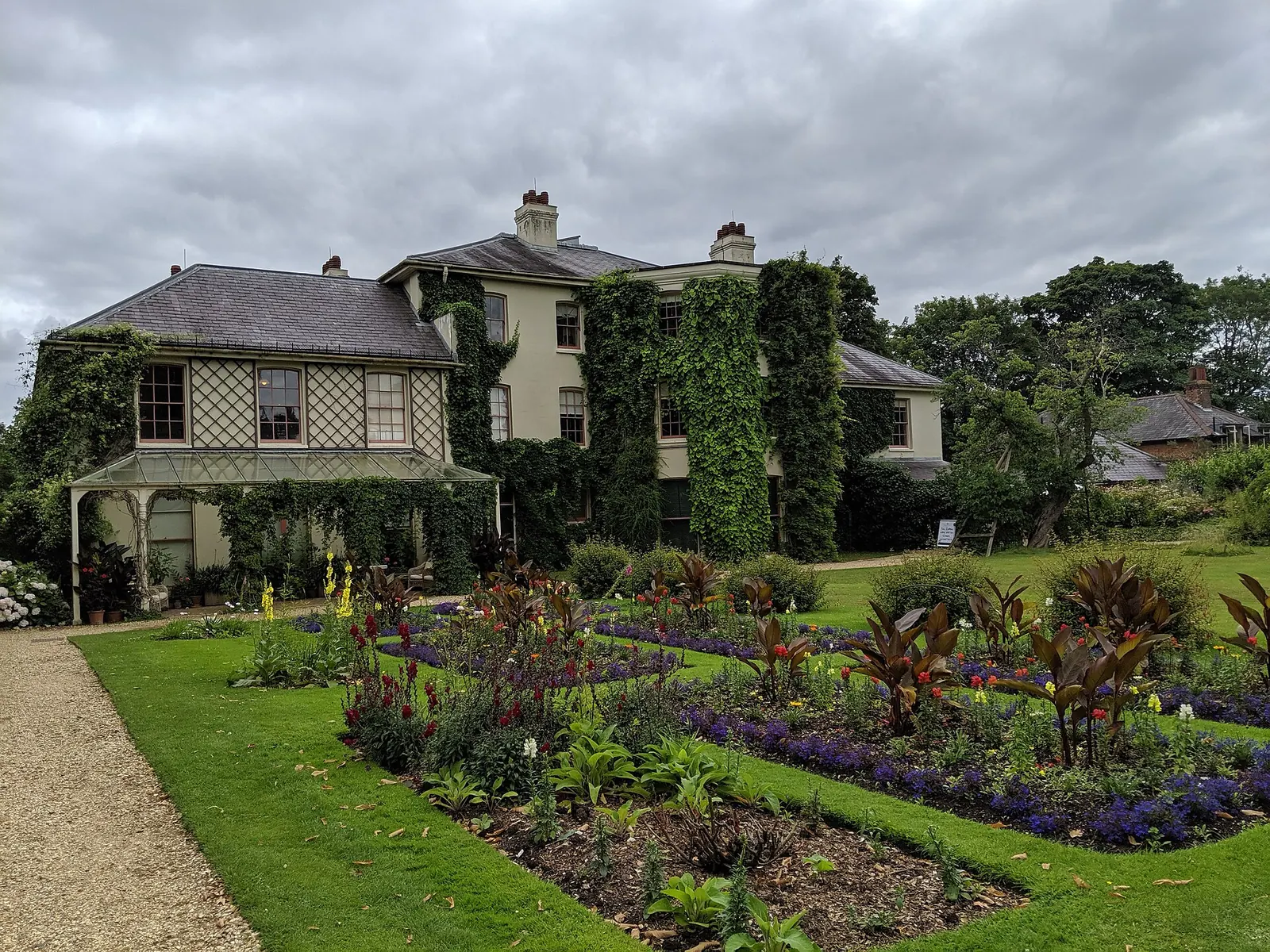
Here is the routine. It takes five minutes to set up and five minutes to close.
- Write the task as an outcome. "Draft sections 2 and 3 of the proposal", not "work on proposal". One task per block. If you cannot name it in one line, the first sprint is planning.
- Clear the decks first (5 minutes). Reply to anything that will nag you, and tell anyone who might need you that you will be back at a stated time. Unanswered loops are a common internal interruption.
- Move the phone out of the room. Not face down, not on silent on the desk. Another room. If you need it for two-factor login, put it across the room.
- Close every tab and app the task does not need. Turn off desktop notifications for the block. Leave email closed.
- Sprint 1 (25 to 50 minutes). Work on the task only. If an unrelated thought or to-do arrives, write it on a paper "later" list and return.
- Real break. Stand, walk, get water, look out of the window. Do not check the phone; that refills your head with new loops.
- Sprint 2, and if the energy holds, sprint 3. Same rules.
- Shutdown note (3 minutes). Write where you stopped and the next concrete step. Then check messages.
Does the phone on my desk really hurt focus?
Possibly, but the famous evidence is weaker than its fame. In 2017 Adrian Ward and colleagues at the University of Texas at Austin ran two experiments with 520 and 275 participants, randomly told to leave their phone on the desk face down, in a pocket or bag, or in another room.
Working-memory and fluid-intelligence scores rose in a linear trend from desk to pocket to other room, and in the second study the cost was largest for people most dependent on their phones. Strikingly, 75.9% of participants believed the phone's location had not affected them.
But in 2022, Ana Ruiz Pardo and John Paul Minda at Western University ran a preregistered direct replication of the second experiment and found no difference between phone locations on the same working-memory task.
| Study | Sample | Design | Result |
|---|---|---|---|
| Ward et al. 2017, experiment 1 | 520 smartphone users | Desk / pocket or bag / other room | Other room scored highest on working memory and fluid intelligence; desk lowest |
| Ward et al. 2017, experiment 2 | 275 | Location x phone on/off | Other room beat desk on working memory; effect largest for phone-dependent people |
| Ruiz Pardo and Minda 2022 | Preregistered direct replication | Same six conditions | No difference by location on working memory or go/no-go task |
| Castelo et al. 2025 | Randomised trial, 2 weeks | App blocked all mobile internet | Better objectively measured sustained attention, mood and well-being; 91% improved on at least one |
The defensible reading is this. The mere sight of a phone may or may not cost you a few points on a lab test. What clearly costs you is using it: every check is a self-interruption, and the 2025 trial by Noah Castelo, with Ward among the co-authors, found that blocking mobile internet for two weeks improved objectively measured sustained attention. Putting the phone in another room is cheap insurance against both.

How can the Gita help with performance anxiety?
Much procrastination is not distraction but fear of a bad result, and the Gita's idea of action without attachment to its fruit (Chapter 2, verse 47) addresses exactly that. You have a claim on the doing, not on the outcome, so you put your full attention on the next sentence rather than on how the finished piece will be judged.
In practice this changes how you define the block. "Write 600 words of the draft" is in your control; "write a brilliant draft" is not. A process goal lowers the stakes of starting, which is where most 90-minute blocks die. This is a practical reading, not a claim that the verse was written as productivity advice; the Stoicism and the Gita essay compares the idea with the Stoic dichotomy of control. It is also an idea that matters to me personally: doing the work properly and letting the result be what it is.
How long should each sprint be, and how should I rest?
There is no proven ideal sprint length; 25 to 50 minutes is a practical range, and what matters more is that breaks genuinely change the task. Atsunori Ariga and Alejandro Lleras at the University of Illinois showed in 2011, in Cognition, that vigilance on a long task declined steadily, but brief, rare switches to a different goal prevented the decline.

Their explanation is goal habituation: the brain stops registering a goal held active for too long, the way you stop noticing a ceiling fan. A short deliberate break re-activates it. Two rules follow:
- Break into something physical or empty. Walk, stretch, refill water. A phone check is another attention-heavy task and brings new loops with it.
- Re-enter with the note. Read your last line or the task statement before you restart, to re-activate the goal quickly.
How much focus time do I lose to switching? Use the calculator
Plug in your own numbers. The refocus time is an estimate you supply: how long it takes you to get back to full depth after a switch. Watch yourself for a day to set it honestly.
Focus time lost to switches in a working day
With six switches an hour and three minutes to recover from each, an eight-hour day loses 144 minutes, more than the whole 90-minute block. That is the arithmetic case for batching messages at fixed times.
What if I can scroll for hours but can't focus on work?
That is not an attention deficit in the usual sense; it is a difference in how the two tasks are cued and rewarded. Scrolling has instant, unpredictable rewards and no starting cost. Hard work has a delayed reward and a high starting cost.
The fix is to lower the starting cost of work and raise the starting cost of scrolling: a written outcome, the file already open, the phone in another room, apps logged out. Building the start of the block into a cue-based routine helps further; the habit guide shows how. Why the feed pulls so hard is the subject of India's screen-time problem, and the reward mechanism is in the dopamine post.
48 participants, mostly German university students, answered 12 emails per condition with no interruptions, same-topic interruptions or different-topic interruptions, by phone or chat, about every two minutes. Interrupted tasks were finished faster (about 20.3 to 20.6 minutes against 22.8) with no loss of quality, but stress rose from 6.9 to about 9.5 on a 20-point scale, and frustration, time pressure and effort also increased. Limit: a short lab task with a small student sample.
Read the paper (free)Two experiments (520 and 275 participants) randomly assigned phones to the desk, a pocket or bag, or another room. Available working memory and fluid intelligence rose from desk to other room, with larger costs for phone-dependent people, while 75.9% believed location made no difference. Limit: a preregistered direct replication of experiment 2 by Ruiz Pardo and Minda (Acta Psychologica, 2022) found no effect, so treat the size of the effect as uncertain.
Read the paper (free)A month-long randomised trial in which an app blocked all mobile internet for two weeks while calls and texts still worked, with compliance tracked objectively. Blocking improved mental health, well-being and an objective measure of sustained attention, and 91% of participants improved on at least one outcome. People spent more time socialising in person, exercising and outdoors. Limit: participants knew the study was about phone use, which can colour self-reported outcomes.
Read the paper (free)What's new
Questions people ask
Is 90 minutes the right length for deep work?
It is a sensible ceiling for one block, not a proven optimum. Break it into two or three sprints with real breaks; Ariga and Lleras's work suggests brief goal switches protect performance on long tasks. Many people manage two such blocks a day.
Should I use the Pomodoro technique?
Twenty-five-minute sprints are a fine starting point, especially if starting is hard. If you are in flow at minute 25, keep going and take the break later. The rule that matters is no phone and no inbox during sprints.
What about music while working?
The evidence is mixed and depends on the task and the music. If you use it, keep it familiar and instrumental for reading or writing tasks, and choose it before the block so you are not browsing for tracks mid-sprint.
Do I need to quit social media to focus?
No. You need it out of the block. Castelo's trial blocked mobile internet for two weeks and saw gains, but a daily 90-minute phone-free window gets you much of the practical benefit without a full detox; the dopamine detox post explains why.
Sources
- Mark G, Gudith D, Klocke U: The cost of interrupted work, more speed and stress, CHI (2008)
- Ward AF et al.: Brain drain, Journal of the Association for Consumer Research (2017)
- Ruiz Pardo AC, Minda JP: Reexamining the "brain drain" effect, a replication of Ward et al. (2017), Acta Psychologica (2022)
- Castelo N et al.: Blocking mobile internet on smartphones improves sustained attention, PNAS Nexus (2025)
- Ariga A, Lleras A: Brief and rare mental breaks keep you focused, Cognition (2011)
- Business Today: Microsoft report warns of the infinite workday (Work Trend Index 2025) (2025)
- Darwin F (ed.): The Life and Letters of Charles Darwin, vol. 1, Reminiscences of my father's everyday life, Project Gutenberg (Darwin's daily schedule) (1887)

Sapta (Saptarshi Sarkar) is a mechanical engineer turned marketer in Bengaluru and a solo touring rider. He writes the seven Saptaverse blogs. Work with him or read more of Mindblog.


