A helmet voice assistant DIY build is a chain of eight stages: the helmet microphone, a Bluetooth link, a wake-word detector, voice activity detection, speech-to-text, a language model, the tools it calls, and text-to-speech back to your speakers. The easiest build that works today uses your phone as the computer and your intercom as the mic and speaker, with small open models for each stage. Expect about 1.5 to 2 seconds from the end of your sentence to the first word of the answer, against a gap of about 0.2 seconds in human conversation.
- 8 stages, and the slowest are waiting for you to stop talking (about 0.5 s) and speech-to-text (about 0.5 s for Whisper tiny on a cheap ARM chip).
- HFP, not A2DP: the Bluetooth call profile is two-way with about 40 ms latency; music profile A2DP is one-way and about 150 ms.
- Llama 3.2 1B on a 2024 phone: first token in 0.3 s, then about 50 tokens a second (Meta).
- 90 to 109 dB(A) of wind noise at the ear at 80 to 113 km/h: the microphone, not the AI, is the first problem.
- In India, a handheld phone while riding counts as dangerous driving under Section 184 of the Motor Vehicles Act. Hands-free voice is the point.
Every part of this pipeline exists as a free, open model or a shipping product. What makes a helmet hard is the setting: wind roar at the microphone, a Bluetooth link built for phone calls, and a rider who cannot look at a screen to see whether the assistant heard them.
This guide walks the pipeline stage by stage, gives a sourced latency for each box, then lays out a build you can actually put together, with the parts and the safety rules.
Why do smart helmets fail, and what does that teach a DIY build?
The best-funded smart helmet of its decade never shipped, because it tried to do everything inside the shell at once. The lesson for a home build is to keep the helmet dumb and put the computing in your pocket.
In 2014 a San Francisco start-up called Skully asked Indiegogo backers for $250,000 to build the AR-1, an augmented-reality motorcycle helmet. It raised close to $2.5 million, with backers paying about $1,500 a helmet. Two years later, in August 2016, the company told backers it was ceasing operations and had filed for Chapter 7 bankruptcy. Its founders, brothers Marcus and Mitch Weller, had already been pushed out, and a lawsuit accused them of spending company money on cars and holidays. Backers got no helmet and no refund. The hardware was hard, but the business never reached the point of proving it.
SlashGear: Skully AR helmet creators go under, founders sued (Aug 2016)Ten years on, the pieces Skully had to invent are commodities. A ₹20,000-class helmet with an intercom built in now exists: Ultraviolette's UV Crossfade, made with Cardo and launched at EICMA 2025, carries the bike's radar alerts to the rider. The voice brain, though, still lives on a phone or a server.
What are the components of a helmet voice assistant?
Eight stages, in a fixed order, each feeding the next. The diagram below is the whole system; the numbers are the time each stage typically adds, from the sources in this post.
| Stage | Open option | Typical latency | Source |
|---|---|---|---|
| Mic and Bluetooth uplink | Intercom boom mic over HFP | About 40 ms | Bose patent US10705793 |
| Wake word | openWakeWord | Works on 80 ms frames | openWakeWord README |
| Voice activity detection | Silero VAD | Under 1 ms per 30 ms chunk; about 500 ms waiting for end of speech | Silero README; Braun 2026 |
| Speech to text | Whisper tiny, Moonshine Tiny, Vosk small | 500 ms floor for Whisper tiny.en on a low-cost ARM chip | Jeffries et al. 2024 |
| Brain | Llama 3.2 1B (quantised) | 0.3 s to first token, about 50 tokens/s | Meta model card |
| Text to speech | Kyutai TTS (server), Piper (local) | About 444 ms first word to first audio (server GPU) | Braun 2026 |
| Speaker downlink | HFP back to the helmet | About 40 ms (A2DP about 150 ms) | Bose patent US10705793 |
Which microphone works inside a helmet at speed?
A boom or flat mic close to the mouth, inside a well-sealed helmet, fed through an intercom's own noise processing. The phone's microphone in a pocket or tank bag will not hear you once you are moving.
The numbers explain why. In wind-tunnel tests at the University of Southampton, noise at a rider's ear measured roughly 90 to 109 dB(A) at air speeds of 80 to 113 km/h. On the road the range was 78 to 90 dB(A) at 48 km/h and 114 to 116 dB(A) at 193 km/h, with aerodynamic noise taking over above about 60 to 70 km/h.
- Seal the neck: the same study cut noise by up to 6 dB just by sealing the gap at the helmet base.
- Mind the screen: moving the head into the lee of the windscreen cut ear noise by 8 to 9 dB with some helmets.
- Fit matters: a loose helmet buffets, and buffeting is broadband noise sitting right on top of speech.
RiderNav's support notes say the same thing in practical terms: with the engine off a phone may catch "Hey Google" from a jacket pocket, but once riding, wind and engine noise drown it, so the headset mic has to carry your voice.
The team measured noise with miniature microphones at a rider's ears, in a 2.1 m × 1.7 m wind tunnel on two BMW motorcycles and on the open road up to 193 km/h. Wind-tunnel levels ran from about 90 to 109 dB(A) at 80 to 113 km/h, with a 7 to 10 dB spread between helmets at the same speed. Simple fixes such as neck seals cut up to 8 dB. The limit: old helmets and only a handful of riders, so treat the numbers as a range, not a spec for your helmet.
Read the paper (free)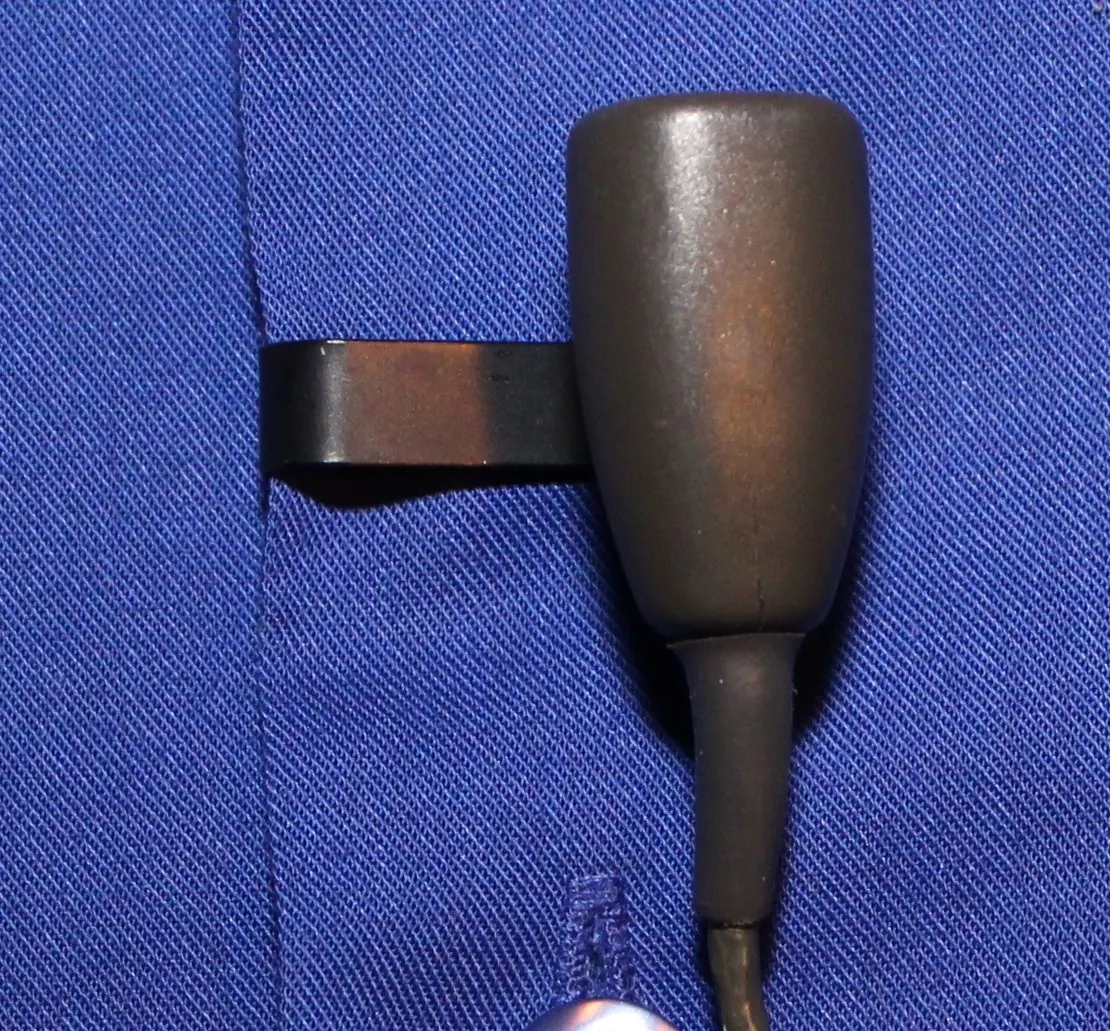
HFP or A2DP: which Bluetooth profile does a helmet assistant use?
HFP, the hands-free call profile, because it is the only common Bluetooth audio profile that carries your voice up and the answer down at the same time. A2DP, the music profile, streams one way only.
- CVSD is HFP's mandatory narrowband codec: phone-call quality.
- mSBC (HFP 1.6 onwards) carries 16 kHz wideband speech. That matters because openWakeWord expects 16 kHz audio and Silero VAD runs at 8 or 16 kHz.
- LC3-SWB arrived in HFP 1.9 for super-wideband voice, part of the LE Audio era.
The catch you will hear on every ride: when the assistant opens the mic, your intercom drops from A2DP music to HFP, and the music stops or turns tinny. A Bose patent puts HFP latency at about 40 ms and typical high-quality A2DP output at around 150 ms. For a voice assistant, the call profile is both the only two-way option and the faster one.
How does the wake word and voice activity detection work?
A tiny always-on model listens for one phrase, then a second model decides when you have finished speaking. Neither needs the big language model, which stays asleep until it has a full sentence.
Wake word
openWakeWord, an Apache-licensed open project, processes 16 kHz audio in 80 ms frames. Its README says a single Raspberry Pi 3 core can run 15 to 20 wake-word models at once, and the bundled models target under 5% false rejects and under 0.5 false accepts an hour. They were trained entirely on synthetic speech from text-to-speech engines, which is how you train your own phrase too.
On a bike, the false-reject number is the one to watch. RiderNav's troubleshooting advice is telling: if the assistant answers only when parked, look at how the headset starts it and what it hears, not at the wake word itself. Same model, very different results depending on the mic and its noise handling.
Voice activity detection
Silero VAD, an MIT-licensed model of about 2 MB, processes a 30 ms audio chunk in under 1 ms on one CPU thread. Speed is not its cost. The cost is the pause it must wait for before deciding you are done: in Braun's 2026 voice-agent study, the median from final VAD signal to endpoint commitment was 502 ms. Cut that wait and the assistant interrupts you mid-sentence; stretch it and every answer feels late.
Which speech-to-text model should run in the pipeline?
Whisper for accuracy across languages, Moonshine for speed on small chips, Vosk for the smallest offline footprint. On a phone or a Pi, the choice is a trade between latency and how well it handles Indian accents and Hindi.
| Model | Size | What the source says |
|---|---|---|
| Whisper tiny.en | 37.8M parameters | 500 ms lower latency bound on a low-cost ARM processor, because it always works on a 30-second window |
| Moonshine Tiny | 27.1M parameters | 5x less compute than Whisper tiny.en for a 10-second clip, average WER 12.66% vs 12.81% |
| Vosk small en-in | 36 MB | Indian English model; WER 49.05 on NPTEL lecture audio |
| Vosk small Hindi | 42 MB | WER 20.89 on the IITM challenge set; small models need about 300 MB RAM |
Whisper was trained on 680,000 hours of multilingual audio, which is why it copes with accents and mixed speech better than small single-language models. Its fixed 30-second input window is also why Moonshine's authors built a model that scales its compute with the clip length instead.
The team built small speech models whose compute scales with the length of the audio instead of Whisper's fixed 30-second window. Moonshine Tiny (27.1M parameters) needed 5x less compute than Whisper tiny.en for a 10-second clip, with an average word error rate of 12.66% against 12.81% across standard English test sets. They note Whisper tiny.en has a firm 500 ms latency floor on a low-cost ARM chip. The limit: English-only results, measured on clean benchmark audio, not a helmet at 100 km/h.
Read the paper (free)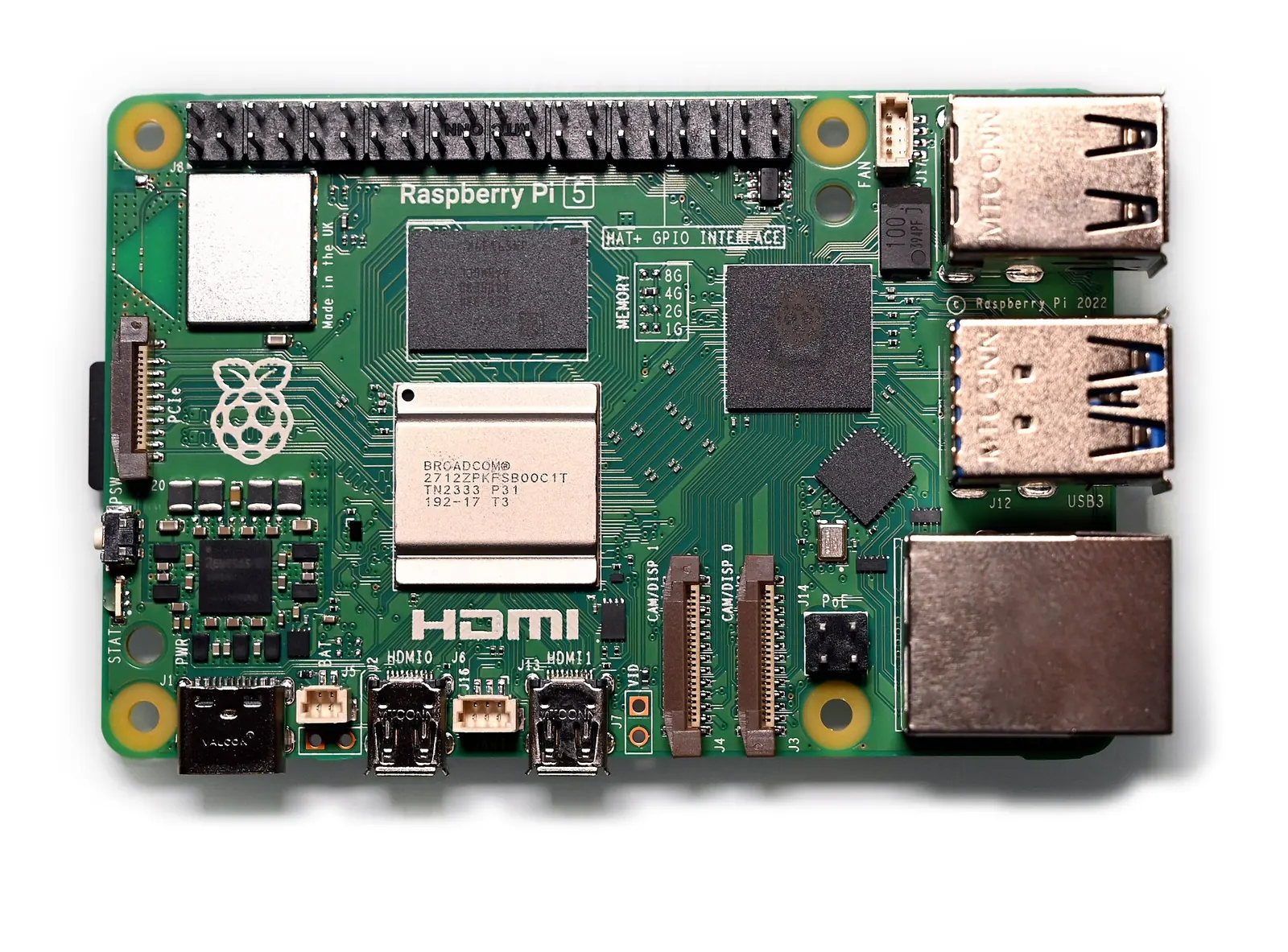
Should the brain run on the phone or in the cloud?
Run a small model on the phone for commands that must work offline, and fall back to the cloud for open questions when there is signal. On a ride through the hills, the offline path is the one that matters.
Meta's model card for Llama 3.2 1B, quantised with SpinQuant, reports 50.2 tokens a second and 0.3 s to first token on a OnePlus 12, in about 1.9 GB of memory. The 3B model managed 19.7 tokens a second and 0.7 s to first token. A spoken reply of 20 words is roughly 25 to 30 tokens, so the 1B model finishes it in well under a second.
The cloud is not automatically faster. In Braun's 2026 system on data-centre GPUs, the language model's first word came 336 ms after generation started, and that excludes the mobile network round trip. I go deeper on model sizes, memory and heat in running a small language model on a motorcycle.
Tools: what the brain should be allowed to do
- Navigation: "next fuel stop" or "how far to Siliguri". Route engines such as OSRM claim continental-scale routes in milliseconds; an offline map on the phone avoids the network entirely.
- Fuel and range: a simple calculation from the tank level and your recent km/l, no model needed.
- Weather: needs signal; cache the forecast before you leave.
- Messages: read incoming texts aloud and send canned replies ("riding, call you at the next stop"). Never let the model compose free text to a contact without a spoken confirmation.
Keep the tool list short and deterministic. The language model's job is to choose a tool and fill in its arguments, not to make up the answer.
How fast can a helmet assistant answer, end to end?
About 1.5 to 2 seconds from the end of your sentence to the first word of the reply, with today's open parts, if stages run one after another. Human conversation is far quicker, which is why every serious system overlaps the stages.
The researchers coded 350 consecutive yes/no questions and their answers in each of 10 languages, from Danish and English to Lao and Tzeltal, using 101 videotaped conversations. The cross-language mean gap between a question ending and its answer starting was 208 ms, with a mode of 0 ms; language means ranged from 7 ms (Japanese) to 469 ms (Danish). This is the target any voice assistant is judged against. The limit: it measured short yes/no answers between people who could see each other, not a rider asking a machine.
Read the paper (free)See the data as a table
| Latency (ms) | |
|---|---|
| Bluetooth up (HFP) | 40 |
| Wake-word frame | 80 |
| End-of-speech wait (VAD) | 502 |
| Speech to text (Whisper tiny, ARM floor) | 500 |
| First token, Llama 3.2 1B on phone | 300 |
| Text to speech, first audio | 444 |
| Bluetooth down (HFP) | 40 |
Source: Bose US10705793; openWakeWord; Braun 2026 (arXiv 2609.20995); Jeffries et al. 2024; Meta Llama 3.2 model card · Values come from different hardware and are a budget, not one measured system. Stages can overlap when they stream.
Add those up in series and you get about 1.9 seconds. Braun's whole system, which streams and overlaps stages, reached a median of 758 ms from the final VAD endpoint to first audio across 36 turns, with 21 of them under 800 ms. Use this to check what you just read with your own numbers:
Your helmet assistant latency budget
A cascaded voice agent built from Nemotron streaming speech recognition, Qwen3-4B as the language model and Kyutai TTS, running on paired A10 GPUs. Across 36 measured turns, the median from final VAD endpoint to first server audio was 758 ms. In 13 fully traced turns, endpoint commitment took a median 502 ms, the model's first word came 336 ms after generation began, and TTS took 444 ms from first word to first audio. The limit: the author calls it an instrumented case study of three sessions, not a controlled user test, and the stage times overlap.
Read the paper (free)What parts do you need to build one?
A phone, an intercom with a good mic, and four free models. A separate computer on the bike is optional and mostly adds wiring and heat.
| Part | Real example | Why |
|---|---|---|
| Intercom with boom mic | Cardo Spirit, Sena 50S | Mic and speakers; Cardo and the Sena 50S often support "Hey Google" directly (RiderNav) |
| Computer | An Android phone with 8 GB+ RAM | Runs speech-to-text, the model and TTS; already on the bike |
| Optional on-bike box | Raspberry Pi 5 (up to 16 GB), 5 V / 5 A USB-C | For a fully separate system; needs real power and cooling |
| Wake word and VAD | openWakeWord, Silero VAD | Free, small, run on a CPU |
| Speech to text | Moonshine Tiny or Whisper; Vosk for Hindi | Pick by language and chip |
| Brain | Llama 3.2 1B quantised, Gemma 3n E2B | Offline answers and tool choice |
| Text to speech | Phone's built-in TTS, Piper | Built-in TTS is the simplest and works offline |
For what it's worth, my own helmet runs a Cardo Spirit, which I use for music and the occasional chat with a pillion or another rider. It is the kind of headset this build plugs into, not a voice assistant by itself.
How do you build it, step by step?
- Fix the audio first. Pair the intercom to the phone, make a test call at 80 km/h to a friend, and ask how you sound. If they cannot understand you, no model will.
- Prototype on a laptop. Chain openWakeWord, Silero VAD, a speech-to-text model and a quantised Llama 3.2 1B through a Bluetooth headset at your desk. Log the time at each stage.
- Write the tools before the prompt. Fuel range, next fuel stop from an offline map, read the last message, start navigation. Each is a plain function with fixed arguments.
- Let the model only route. Prompt it to answer with a tool name and arguments, or with one short spoken sentence. Cap replies at about 25 words.
- Move it to the phone. Use an on-device runtime (ExecuTorch, llama.cpp or MediaPipe) and the phone's own TTS. Keep the screen off.
- Add a confirmation rule. Anything that sends a message or calls someone reads back and waits for a spoken "yes".
- Test parked, then on an empty road, then in traffic. Log false wakes per hour and misheard commands.
What should a rider expect from shipping products instead?
Shipping helmets and intercoms pass your voice to the phone's assistant; they do not run their own model yet. The next step is voice AI inside the headset, and makers are only showing concepts so far.
- Ultraviolette UV Crossfade (launched Nov 2025, Rs 19,900): Cardo mesh comms and radar alerts from the bike, certified to ECE 22.06, ISI and DoT.
- Ultraviolette with SoundHound (EICMA 2026): voice control planned to run through the helmet headset; the Fang 01 and two other helmets shown are concepts with no specs or launch date.
- Ather lists "Voice on Ather" on the Rizta Z and plays pothole alerts through its Halo helmet or a Bluetooth headset.
For the bigger picture of which "AI" on bikes is real, see AI in motorcycles: what is real in 2026. For the helmet itself, fit and noise matter more than any feature; my KYT R2R Pro review covers what buffeting at 120 km/h does.
The first problem in a helmet voice assistant is not the AI. It is hearing you over 100 dB of wind.This post, from Lower, Hurst and Thomas
What's new
- Ultraviolette shows three concept helmets and expands its SoundHound voice AI partnership Motorcycles.News, Nov 2026
- Voice-Light measures a 758 ms median voice-agent response with streaming stages arXiv, Sep 2026
- Ather adds fleet-data pothole alerts, spoken through the helmet or a Bluetooth headset Autocar India, Jul 2026
- Ultraviolette launches the UV Crossfade helmet with Cardo comms and radar alerts Rushlane, Nov 2025
More on the bike side: the CHIGEE AIO-6 Max display is where navigation lives on my KTM, and helmets and two-wheeler deaths in India is the reminder that the helmet's first job is not electronics. The wider thinking on applied AI is on Applied AI.
Questions people ask
Can I use Google Assistant or Siri through my helmet intercom?
Yes, with most current intercoms, through the HFP link. Cardo units and the Sena 50S and 50R often support the wake phrase directly; others, like the Sena SRL, need a button press. If it works only when parked, the problem is usually how the headset starts the assistant, not the phone.
Why does my music cut out when the voice assistant listens?
Because the headset switches from A2DP, the one-way music profile, to HFP, the two-way call profile, so the microphone can send audio. A2DP officially carries audio in one direction only.
Can a voice assistant work with no mobile signal?
Yes, if every stage runs on the phone: a local wake word, Silero VAD, an offline speech model such as Vosk or Moonshine, a quantised 1B model and the phone's offline TTS. Weather and live traffic will not work; offline maps, fuel maths and stored messages will.
Is talking to a voice assistant while riding legal in India?
Section 184 targets handheld devices, and the 2020 rule change allows holding a device only for navigation. Hands-free voice through a helmet is not named as an offence, but anything that distracts you can still count as riding dangerously. Keep it short, and pull over for anything complex.
Sources
- SlashGear: Skully AR helmet creators go under, founders sued (2016) (source for the story)
- Lower, Hurst and Thomas: Noise levels and noise reduction under motorcycle helmets, ISVR Southampton (c. 1996) (helmet noise levels)
- Bose Corp: US10705793B1, Low latency mode for wireless communication between devices (2020) (HFP about 40 ms, A2DP about 150 ms)
- Wikipedia: List of Bluetooth profiles (HFP, A2DP) (HFP codecs and versions)
- Collabora: PipeWire Bluetooth support status update (CVSD, mSBC, A2DP one-way)
- openWakeWord on GitHub (80 ms frames, Pi 3 performance, accuracy targets)
- Silero VAD on GitHub (under 1 ms per chunk, 2 MB model)
- Jeffries et al.: Moonshine, arXiv (2024)
- Radford et al.: Robust Speech Recognition via Large-Scale Weak Supervision (Whisper), arXiv (2022)
- Alpha Cephei: Vosk models (model sizes and WER)
- Meta: Llama 3.2 1B model card (2024) (on-phone speed and memory)
- Braun: Voice-Light, arXiv (2026) (stage latencies)
- Stivers et al.: Universals and cultural variation in turn-taking in conversation, PNAS (2009)
- Project OSRM (route computation speed claim)
- RiderNav: Using Google Assistant with Bluetooth headsets (headset wake-word support)
- Motor Vehicles Act 1988, Section 184 (as amended 2019)
- India Today NE: Mobile phones while driving allowed only for navigation (2020) (CMVR amendment)
- Rushlane: Ultraviolette Crossfade smart helmet (2025)
- Ather Energy: Rizta specifications

Sapta (Saptarshi Sarkar) is a mechanical engineer turned marketer in Bengaluru and a solo touring rider. He writes the seven Saptaverse blogs. Work with him or read more of RoadHook Machines.