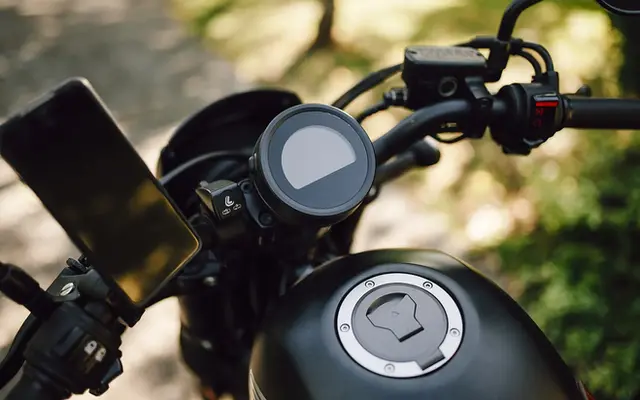
The CHIGEE AIO-6 Max is a 6-inch, 1280 × 720 handlebar screen, rated at 2,300 nits and IP69K. It mirrors your phone through wireless Apple CarPlay or Android Auto, and with CHIGEE's optional 1080p, 60 fps front and rear cameras it doubles as a two-channel dashcam. My verdict, at about ₹70,000 with cameras: if money is tight, it is not worth it; use a phone on a good mount. If you have money to spare, it is the best option I know of. It is not a standalone sat-nav: the maps live on your phone, so a dead phone means a dumb screen.
- 6 in, 1280 × 720, 2,300 nits, IP69K: CHIGEE's own figures for the AIO-6 Max display.
- 9.18 W while riding and 0.005 W parked, by CHIGEE's manual; BikeSocial measured 734 mA with the bike running.
- 1080p at 60 fps, HDR, IP68 cameras, with a 105 cm front and 260 cm rear cable.
- Hardwired: with cameras fitted it must be wired to the battery with a 3 A fuse and an ignition (ACC) feed.
- No SIM, no 4G: the Max can never be upgraded to the AIO-6 LTE's live tracking and SOS.
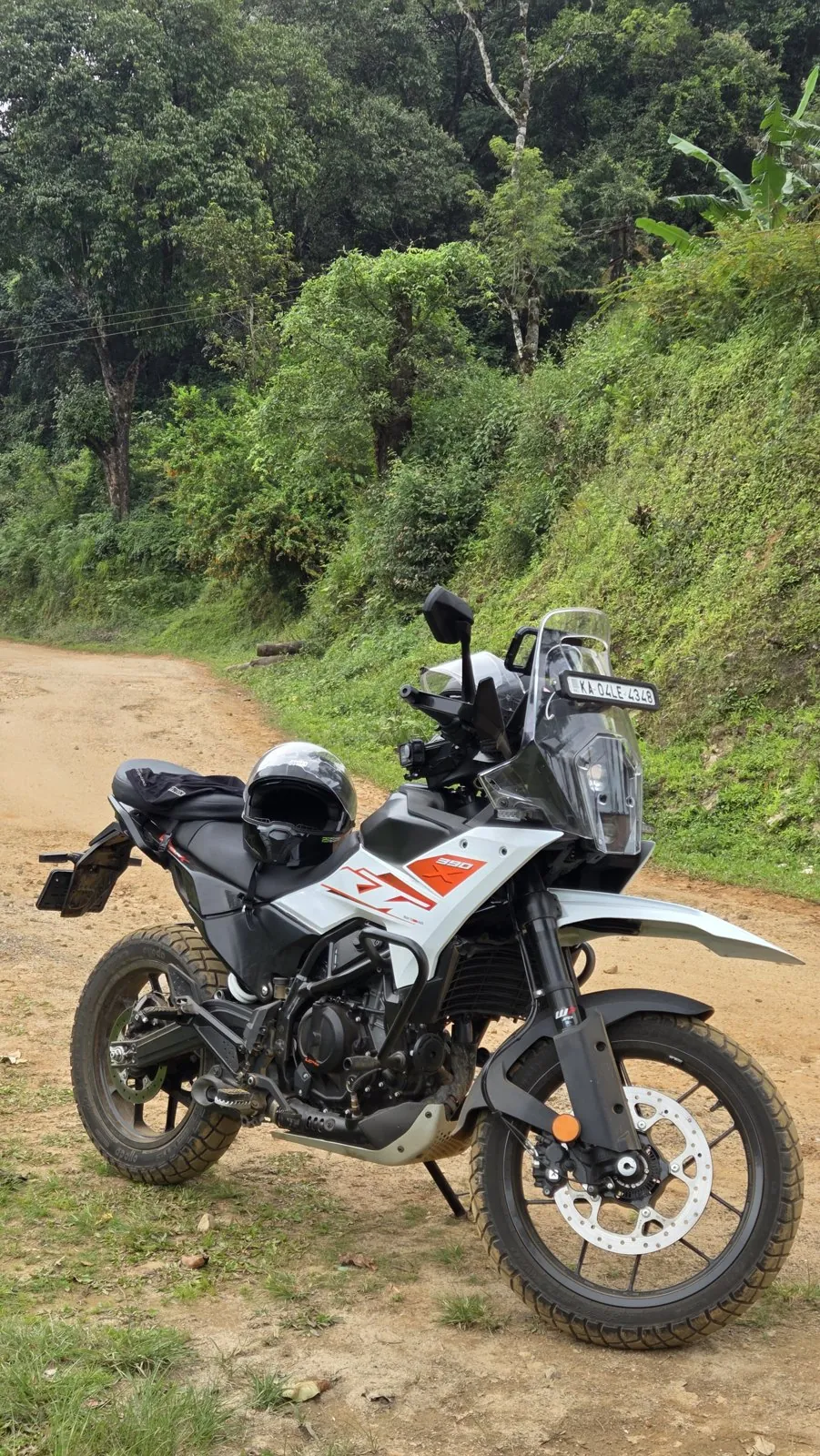
I run an AIO-6 Max with CHIGEE's front and rear cameras on my 2026 KTM 390 Adventure X Plus, which was delivered on 21 August 2026 and which I plan to use about 80% for touring. This post answers the questions a buyer actually asks: what it is, what it needs, what it draws from the battery, and where a phone on a mount is still the better answer.
My verdict so far: not worth the money if money is tight. It isn't as smooth as you'd hope at this price, and you have to buy a lot of extras before it makes sense. If you have money to spare, CHIGEE is the best. A full long-term review will follow.
In 2022 I rode my carburetted Pulsar NS200 from Bengaluru to North Sikkim and up to Gurudongmar Lake, the highest I have ridden. I meant to reach Zuluk the same day on the way back down. I was riding without my phone or maps, missed a left turn, and ended up in Rangpo instead. I carried on to Siliguri, which from Gurudongmar is a ride of about six to seven hours.
Nothing went badly wrong, but it cost me a day's plan. That is the problem a handlebar navigation screen solves: the route sits in front of you, at a glance, whatever the phone is doing in your pocket.
Sapta: Gurudongmar by bike, what thin air did to my carb NS200What is the CHIGEE AIO-6 Max, exactly?
The AIO-6 Max is a phone-mirroring display, not a sat-nav. Your phone runs Google Maps, Apple Maps, Waze or any other CarPlay or Android Auto app, and streams the picture over Wi-Fi to the CHIGEE. BikeSocial's October 2025 review put it plainly: the phone does all the processing.
The unit itself adds three things a phone can't: a screen built for the handlebar (sunlight, rain, vibration), a dashcam recorder for up to two cameras, and inputs for optional sensors such as CHIGEE's tyre-pressure sensors, an OBD module and the SR-1 radar. It runs CHIGEE OS 2 on a dual-core A53 processor with 4 GB RAM and 32 GB of storage.

The spec sheet, from CHIGEE
| Item | AIO-6 Max | What it means for you |
|---|---|---|
| Screen | 6 in IPS, 1280 × 720 | About 130 × 74 mm of picture, per BikeSocial's measurement |
| Brightness | 2,300 nits peak (1,600 nits in the power test mode) | Readable in direct sun; most phones dim themselves when hot |
| Sealing | IP69K unit, IP68 cameras | Rated for high-pressure jets and immersion |
| Size and weight | 161 × 90.5 × 22 mm, 365 g | Heavier than most phones, so the mount matters |
| Brain | Dual-core A53, 4 GB RAM, 32 GB, microSD to 256 GB | Use a U3-class card, as CHIGEE asks |
| Wireless | Bluetooth 5.0, Wi-Fi 2.4/5 GHz | CarPlay, Android Auto and HiCar over Wi-Fi |
| Power | 12–18 V DC; 9.184 W riding, 0.005 W parked | Needs a fused battery feed and an ignition signal |
| 4G | None, no SIM slot | Cannot be upgraded to the AIO-6 LTE |
Max or LTE: which AIO-6 should you buy?
Buy the Max unless you need the bike to report its own location. CHIGEE's support page says the LTE adds built-in 4G, live video over mobile data, weather, SOS text alerts and LTE security notifications, and that the Max has no SIM slot and cannot be modified to take one.
In the UK, BikeSocial listed the Max at £449.95 and the LTE at £539.95 in October 2025, with the front and rear camera pair at £174.99. The LTE's data also costs money every year after the bundled allowance. In India I paid about ₹52,000 for the Max and about ₹18,000 for the front and rear cameras, roughly ₹70,000 together. Import costs likely inflate that; I feel a unit like this should cost nearer ₹20,000.
- Choose the Max if you already track the bike another way. I use an Onelap LocoShield GPS tracker and a Samsung SmartTag2 on the KTM, so the LTE's tracking would duplicate them.
- Choose the LTE if you want remote tracking, live dashcam viewing and SOS from one box with no other tracker.
- Skip both if you only want navigation on short city rides; a phone on a damped mount does that for a fraction of the money.
How do the front and rear cameras work as a dashcam?
CHIGEE's camera kit records 1920 × 1080 at 60 fps with HDR from each camera, in IP68 housings of 39.6 × 35.98 × 47 mm. The front cable is 105 cm and the rear 260 cm, which on a mid-size adventure bike is enough to reach a tail-light area without extensions. BikeSocial's tester called the footage decent for a dashcam but below a good action camera.
The recorder settings are where the value is. CHIGEE lists:
- Loop recording in 1, 2 or 3 minute files, at 1080p or 720p and 30 or 60 fps;
- Collision lock with high, medium or low sensitivity, so a crash clip is not overwritten;
- Parking monitor that saves a 30 second clip when it senses a knock, drawing about 2.02 mA, and switches off below 12 V;
- Picture-in-picture export of front and rear together, with time, speed and GPS position stamped on the video.
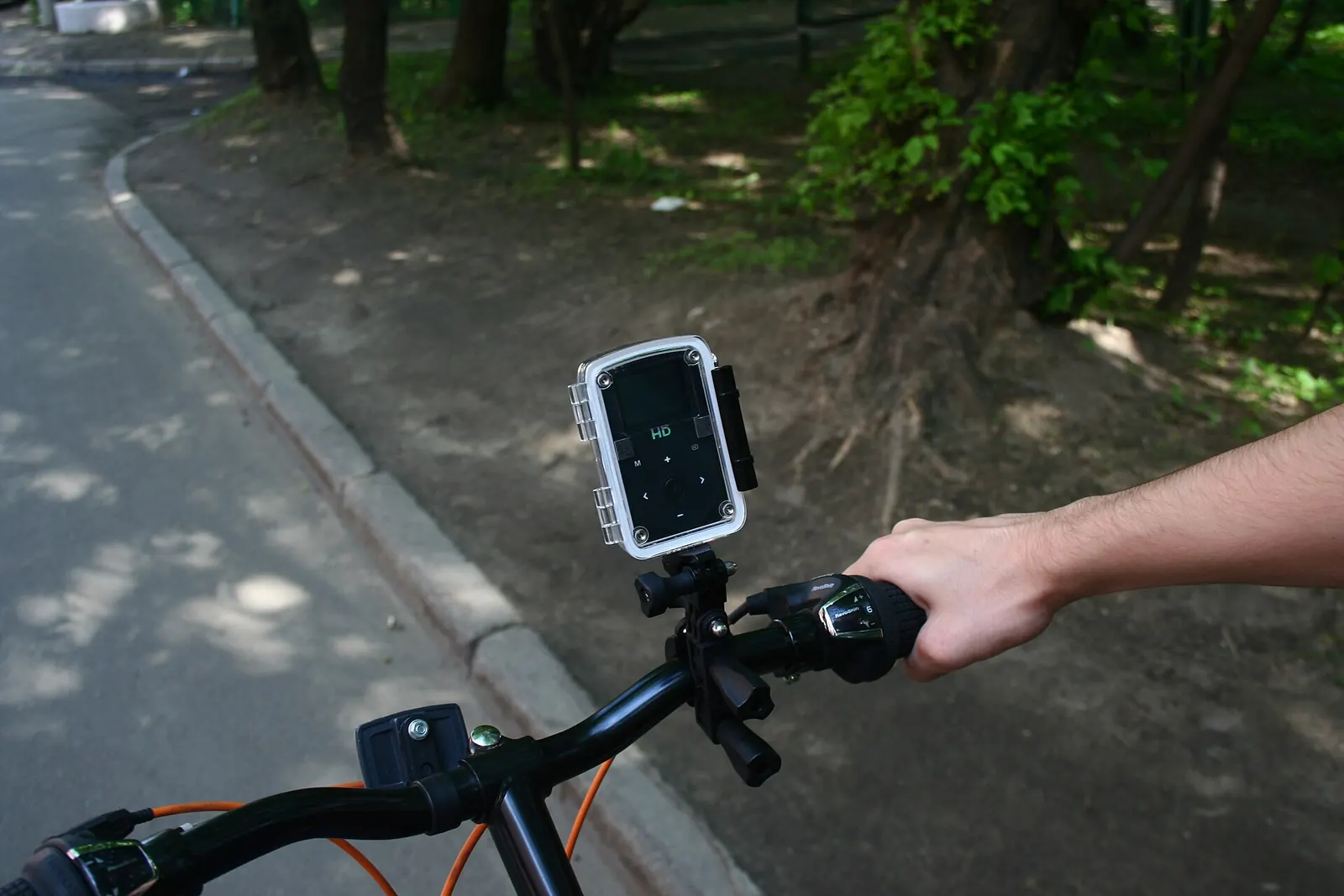
On my KTM the front camera sits on the right side of the front of the bike, and the rear camera is centred on the rear fender, just above the number plate. Both spots are on solid bodywork with a clear view, and the rear one is well inside the 260 cm cable's reach.
How hard is the wiring on a motorcycle?
Once cameras are fitted, the AIO-6 must be hardwired. CHIGEE's AIO-6 guide says a USB-C supply only works without cameras. The harness has three leads: red to battery positive, black to battery negative and yellow to an ignition-switched (ACC) feed, with a 3 A fuse box in the line.
- Fit the memory card first. A U3 microSD, then press the rubber plug fully flush; CHIGEE warns that a proud plug breaks the waterproofing.
- Find a true ignition-live wire. Use a fuse-box add-a-circuit or a plug-in accessory feed rather than the supplied Scotchlock; BikeSocial's tester warned that crimp taps can let water into the loom.
- Route both camera cables before tightening anything. Turn the bars lock to lock with the cables tied, and check nothing pulls.
- Use only CHIGEE's harness. The manual says not to use third-party cables.
- Never cut power during a firmware update. CHIGEE says a power loss mid-update can leave the unit unable to start.
Will it drain my battery if the bike sits for a week?
Not by itself. CHIGEE rates parking mode at 0.005 W, and BikeSocial measured 5 mA in standby on its test bike, rising to 734 mA with the bike running. The risk is in adding loads: parking-mode video, a GPS tracker and an alarm together can flatten a small battery in days.
See the data as a table
| Current draw (mA) | |
|---|---|
| Standby | 5 |
| Remote dashboard access (for a few seconds) | 28 |
| Remote dashcam access | 544 |
| Bike running | 734 |
Source: Bennetts BikeSocial: CHIGEE AIO-6 review, October 2025 · Measured on an AIO-6 LTE; the remote-access modes need the LTE's 4G and do not apply to the Max.
A useful cross-check: 734 mA at a running voltage of about 12.5 V is roughly 9.2 W, which matches the 9.184 W CHIGEE prints in its manual. Use this to check what you just read against your own battery and accessories.
How long can the bike stand before the battery is too low?
Is a handlebar screen safer than a phone on a mount?
It is likely no worse, and better in the ways that matter, but the research is thin. The best evidence compares head-down screens with head-up displays, and it says any screen you look down at costs you something.
Thirty-five experienced riders rode the same simulated route twice, once with navigation, speed and the limit on a handlebar smartphone (head-down) and once on a helmet head-up display. In 50 km/h curves, mean speed was 78.8 km/h head-down against 69.2 km/h head-up, and lane-position wobble was 351 mm against 301 mm; both differences were significant. There were 15 losses of control head-down and 10 head-up, a gap that was not significant.
The limit: a simulator, a small and tech-friendly sample, and no test of a bright 6-inch screen like the AIO-6. It does support one practical rule: put the screen as high and close to your line of sight as the mount allows, and set the route before you move.
Read the paper (free)The AIO-6's real safety gain is that it removes fiddling. CHIGEE's optional remote handles video lock, screen switching, photos and calls with the left thumb, and the phone is no longer clamped where a pothole can throw it. The phone-mount side of that argument is in my ViaTerra GPS mount and BOBO BM11H review.
Do CarPlay and Android Auto work properly on it?
Yes, both run wirelessly: you pair the phone with the CHIGEE over Bluetooth, and the picture then streams over Wi-Fi. CHIGEE's manual adds two traps. On Android, keep the Android Auto app updated and don't pair through the low-energy (LE) connection, which is for iOS notifications only. And video apps such as YouTube are blocked on the screen.
BikeSocial's test found the phone reconnects automatically when the ignition comes on, once you choose Apple or Android mode at setup. CHIGEE also says navigation has been tested with the ten most-used apps on its support page.
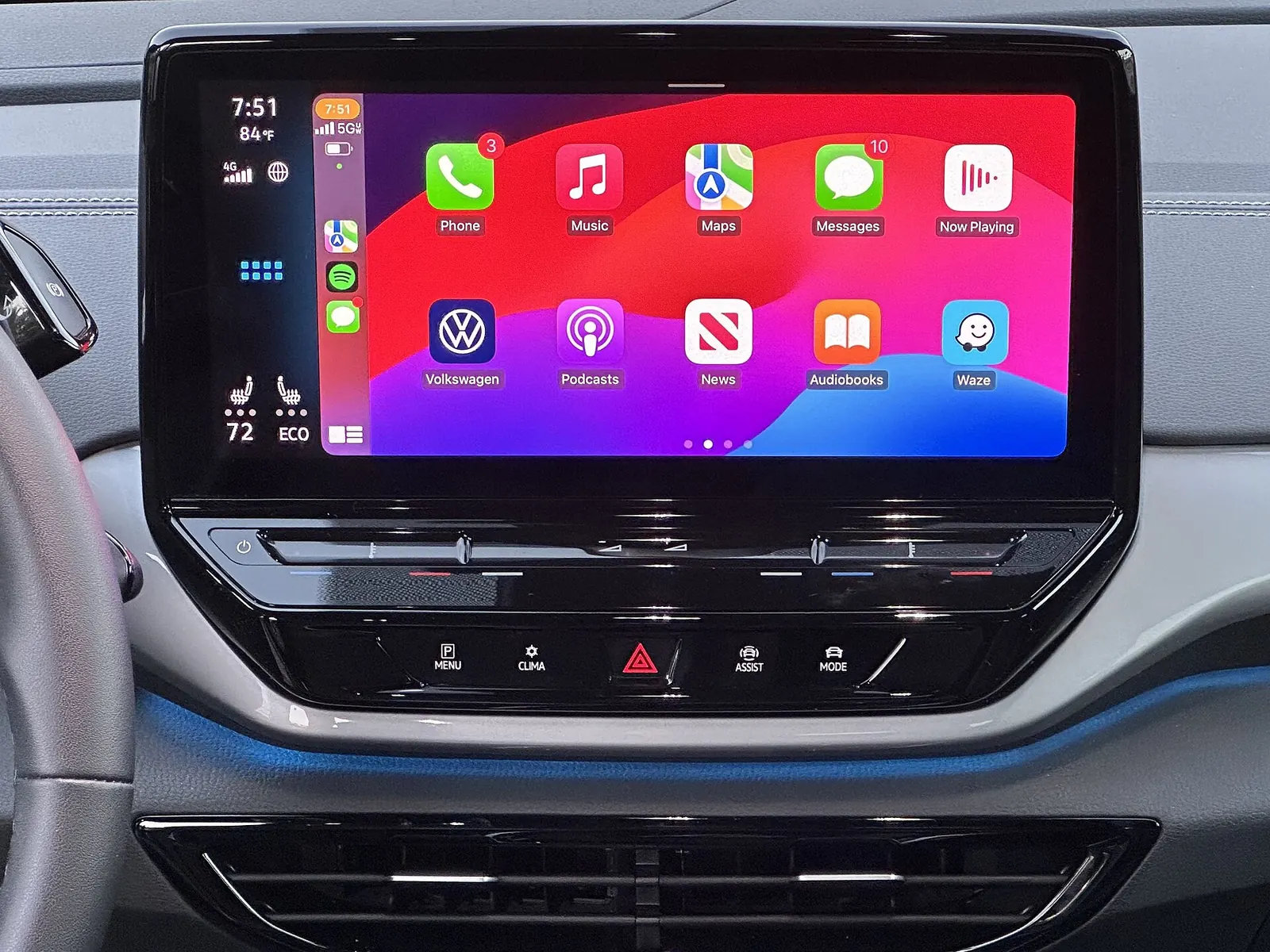
My phone is a Samsung Galaxy S25+, and I run Android Auto on the CHIGEE. The picture on the screen is very fluid. The audio side, music and calls, goes from the phone to my Cardo Spirit-series intercom, which I use for music and occasional talk with a pillion or another rider.
The AIO-6 Max against the alternatives
| Option | Navigation | Dashcam | Phone exposed to vibration? | Works if phone dies? |
|---|---|---|---|---|
| AIO-6 Max + cameras | Phone apps via CarPlay/AA | Front and rear, 1080p60 | No, phone stays off the bar | Cameras yes, maps no |
| AIO-6 LTE + cameras | Same, plus 4G features | Same, plus live view over 4G | No | Cameras and tracking yes, maps no |
| Phone on a damped mount | Phone apps directly | None | Yes, damper reduces it | No |
| Dedicated sat-nav | Maps on the device | Usually none | No | Yes |
Why does the dashcam matter on Indian roads?
Because most conflicts come from other road users, and video is the only neutral witness. A 2025 naturalistic study that put cameras on 79 riders' bikes found other road users were the main cause of near-misses in half of the cities studied.
Seventy-nine riders used their own bikes for normal commutes and trips in six Indonesian cities while a 170-degree camera on the mirror recorded 1,036 km and about 39.7 hours. Trained analysts and post-ride interviews classified safety-critical events. Other road users were the leading cause in three of six cities, and the commonest event types included wrong-side traffic (19% in one city), sudden lane changes in front of the rider (19%) and near-misses while overtaking (29.5%).
The limit: a preliminary study, sunny weather, video only and partly subjective coding. Indonesian traffic is close enough to India's mixed traffic to be relevant, but it is not Indian data.
Read the paper (free)For the dashcam to help after an incident, the clip has to exist. Set collision lock to medium, use a fresh U3 card, and copy any important clip off the card the same day, because loop recording overwrites old files. The wider road-safety numbers are in helmets and two-wheeler deaths in India.
What are the real downsides?
- Phone dependence. No phone, no maps. Carry a power bank and offline maps for the Northeast and Himalayan stretches where signal drops.
- Cost adds up. In the UK the Max plus cameras is about £625 before a quick-release, TPMS or radar.
- Hardwiring. It is a proper electrical job, and a poor tap is a monsoon fault waiting to happen; see the monsoon maintenance guide.
- Weight on the mount. 365 g on a stalk vibrates more than a phone. CHIGEE's floating, vibration-damped mount helps; a flimsy third-party arm won't.
- Firmware. CHIGEE pushes frequent updates. Do them parked, on a charged battery, with the ignition held on.
What I dislike, as an owner:
- The price. About ₹70,000 with cameras is a lot. I feel it should cost about ₹20,000, plus ₹1,000–5,000 for vibration damping.
- It needs extras to make sense. The screen alone is a phone mirror; the cameras, mount and wiring are what make it worth having.
- It isn't as smooth as you'd hope. Android Auto itself looks fluid, but the whole experience is not as polished as the price suggests.
- It should do more. At this price I want more from the box itself, such as built-in AI.
If you want the screen for enjoyment on a smaller budget, look at AlienRider, a rival brand of CarPlay and Android Auto riding displays. I haven't used one; I mention it because it is easier to find. Check the exact model's specs and Indian warranty before buying.
The AIO-6 Max is a screen and a recorder. Your phone is still the computer, so plan for the day the phone gives up.
Who should buy the AIO-6 Max?
Buy it if you have money to spare, tour long distances, already use phone navigation and want a dashcam: one box does both, and the phone stops taking the vibration. That is my use, on a bike planned for 80% touring. Skip it if money is tight, if you mostly ride in town, or if you want a navigator that works with no phone at all; a phone on a good damped mount does most of the job for a fraction of the cost.
The rest of my KTM's kit is on the gear page, and my phone-mount setup is in the mount review. If you are planning a long day with it, my notes on a solo touring safety plan cover backups for when the screen goes dark.
What's new
- CHIGEE launches the SR-1, a 77 GHz rear radar with a 110-degree field and 70 m claimed range, that feeds alerts to AIO-5 and AIO-6 screens Visordown, Jun 2026
- Cycle News tests the AIO-6 LTE, listing the Max at $460 and its as-tested LTE at just over $1,000 Cycle News, Oct 2025
- BikeSocial measures the AIO-6's current draw and rates its 2,300-nit screen clear in strong sun Bennetts BikeSocial, Oct 2025
Questions people ask
Does the CHIGEE AIO-6 Max have built-in maps?
No. It mirrors navigation apps from your phone through CarPlay or Android Auto, and Cycle News lists no internal GPS among its drawbacks. CHIGEE says recordings can be stamped with speed and GPS coordinates, but routing always comes from the phone.
Can I power the AIO-6 Max from a USB socket?
Only without cameras. CHIGEE says that once cameras are connected the unit must be hardwired to the battery with its fused harness and an ignition (ACC) lead.
Are the cameras included with the AIO-6 Max?
No. The front and rear 60 fps HDR camera kit is a separate purchase; BikeSocial listed the pair at £174.99 in October 2025.
Will it fit my handlebar?
The box includes a 17 mm ball head, a 22–32 mm clamp and reducer rings for 22, 25 and 28 mm bars. CHIGEE also sells crossbar, fork-stem and mirror-bolt (M8/M10) mounts.
Can I upgrade a Max to the LTE later?
No. CHIGEE's support page says the Max has no SIM slot and cannot be modified to take one.
Sources
- CHIGEE: AIO-6 Max manual and specifications (2025; screen, power, wiring, mounting)
- CHIGEE support: AIO-6 LTE vs Max feature differences
- CHIGEE: Know your AIO-6 (dashcam settings, parking monitor, mounts, hardwiring)
- CHIGEE: AIO-6 camera manual (1080p 60 fps, IP68, cable lengths, mounting)
- Bennetts BikeSocial: CHIGEE AIO-6 review, LTE and Max (Oct 2025; prices, current draw)
- Cycle News: CHIGEE AIO-6 LTE 4G smart riding display review (Oct 2025)
- Visordown: CHIGEE SR-1 radar system (Jun 2026)
- Boets et al.: Impact of a Head-Up Display on motorcycle riding, IFZ International Motorcycle Conference (2020)
- Halim et al.: Understanding motorcycle rider behavior in Indonesia using naturalistic driving study, Heliyon (2025)
- Cycle News: 2025 KTM 390 Adventure R and X specs (12 V 8 Ah battery) (Jan 2025)
- KTM: 390 Adventure X technical specifications
- Sapta: Gurudongmar by bike, what thin air did to my carb NS200 (2022; source for the story)

Sapta (Saptarshi Sarkar) is a mechanical engineer turned marketer in Bengaluru and a solo touring rider. He writes the seven Saptaverse blogs. Work with him or read more of RoadHook Machines.