AI in motorcycles in 2026 is real in three places: radar rider aids such as adaptive cruise control and blind-spot warning, sold since 2020; automatic crash detection that calls for help; and fleet data that teaches scooters where the potholes are. Most of what runs on the bike itself is sensor fusion and fixed control logic, not a learning system. The bikes that read your emotions, chat with you or ride themselves are still concepts, and the clearest test is simple: is there a model year, a price and an owner's manual that describes the feature?
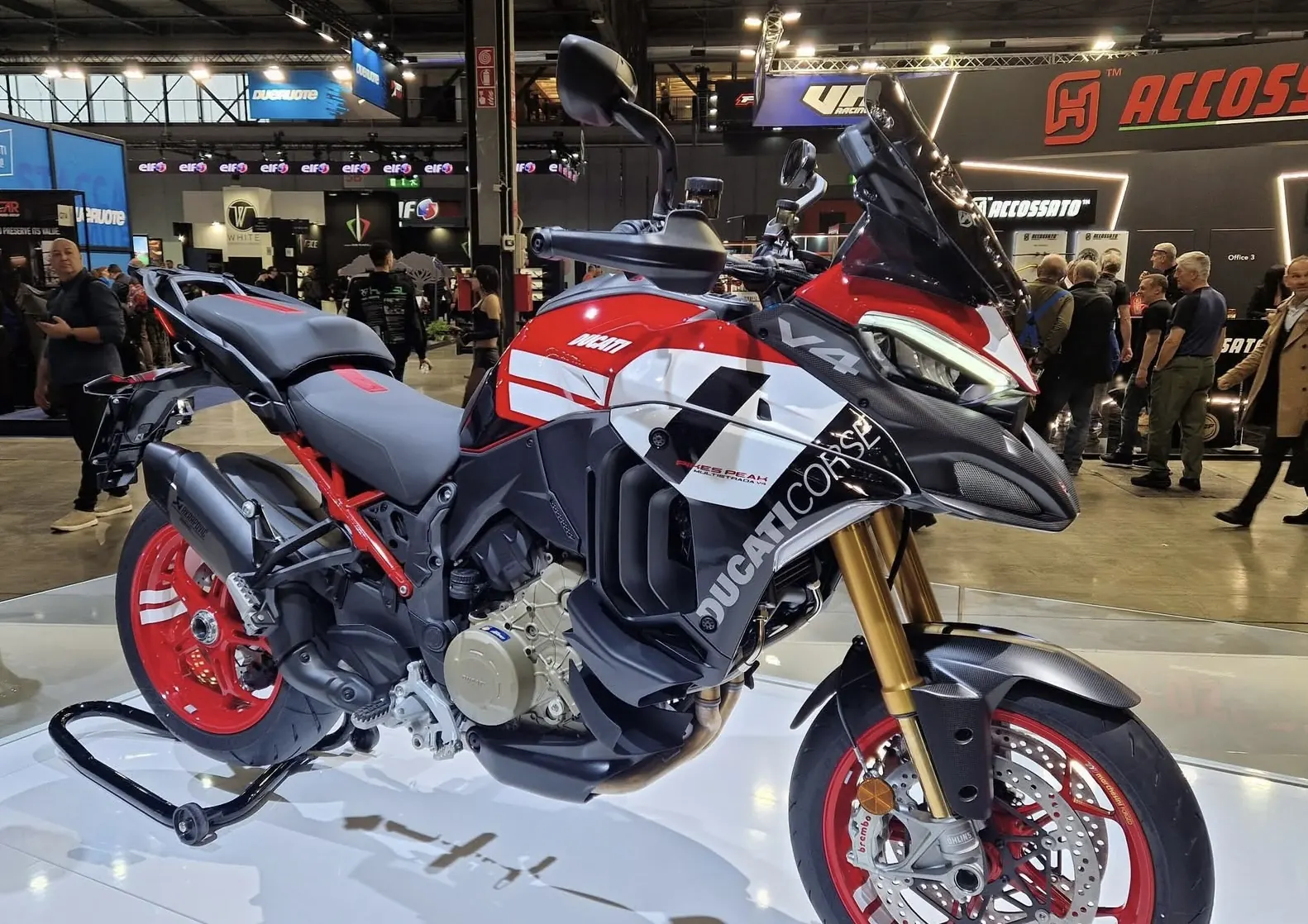
- 2020: the Ducati Multistrada V4 put front and rear radar into production, with adaptive cruise from 30 to 160 km/h.
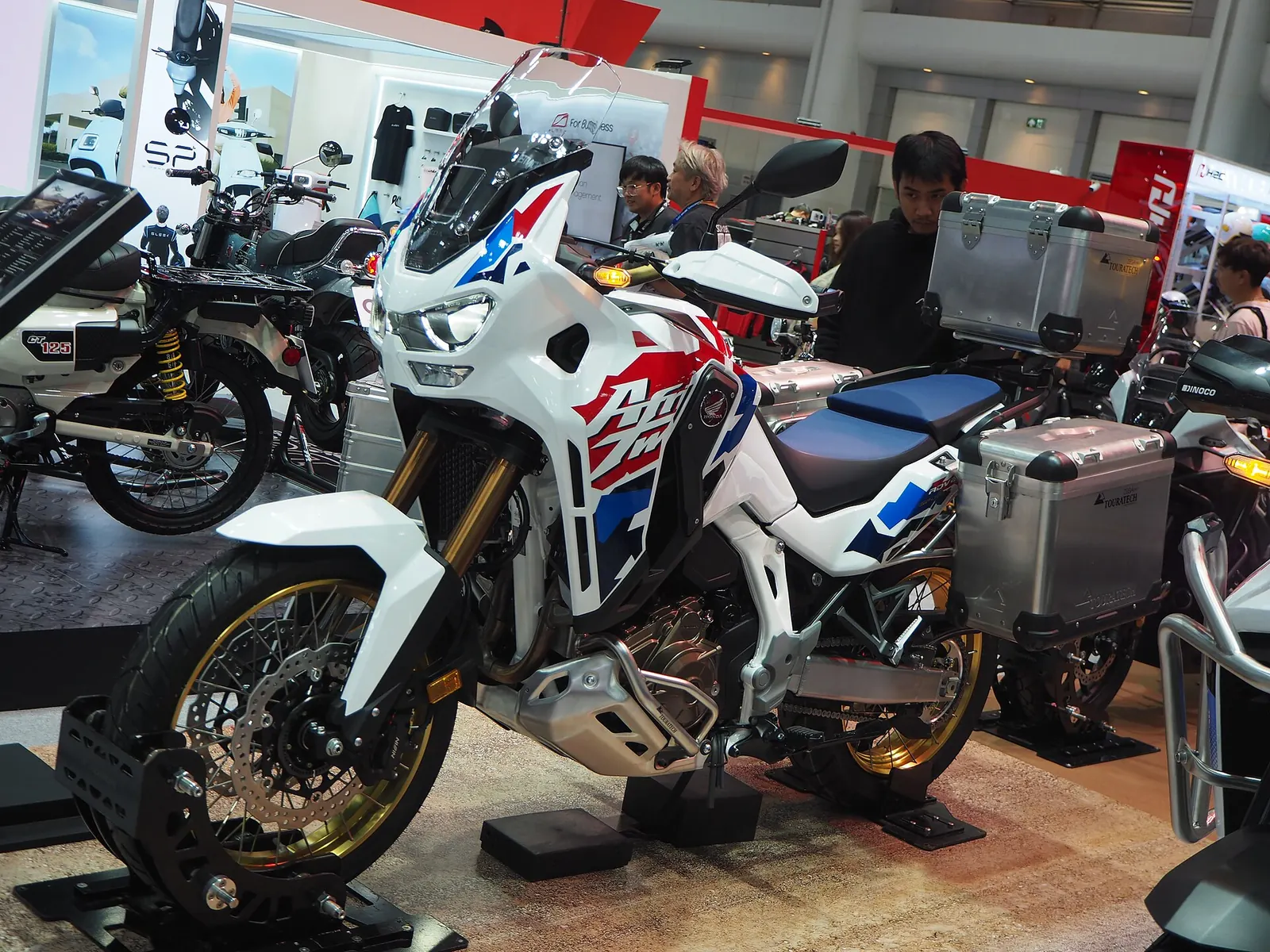
- Nov 2026: Honda Sensing Ride, with 10 radar functions, debuts on the 2027 Africa Twin Adventure Sports.
- 61.5% of 390 real crashes had at least one rider-assistance system that could have played a role (Heliyon, 2024).
- 25 seconds: BMW's eCall delay for a light crash before it calls for help on its own.
- 2016: Kawasaki announced an emotion-reading AI bike. None has gone on sale.
"AI" on a spec sheet now covers everything from a radar module to a voice that says hello. For a rider deciding what to pay for, the useful question is narrower: what does this system sense, what does it decide, and has it been shipped to customers or only shown on a stand?
This post sorts the field by that test, maker by maker, with the research that says what each system is worth.
What counts as AI on a motorcycle?
Three different things get the label: fixed rules on sensor data, model-based control, and systems that learn from data. Only the third is machine learning in the strict sense, and it is the rarest on a bike.
None of this makes the first two levels less useful. Cornering ABS is model-based control, not machine learning, and it is one of the most valuable safety systems a bike can have. I explain the sensors and the physics in traction control and cornering ABS explained, and the basics in how motorcycle ABS works.
On 31 October 2016, Kawasaki Heavy Industries announced that it would develop motorcycles with artificial intelligence and a personality. The plan used an "Emotion Generation Engine" and a natural-language dialogue system from cocoro SB, a SoftBank group company, which would read the rider's intent and emotion from their voice. The bike would draw on cloud data to give riding advice, adjust its settings to the rider's skill, and over time grow a personality of its own. The announcement gave no dates and no prototype. Ten years on, no Kawasaki that does this has gone on sale.
Cycle News: Kawasaki to start developing motorcycles with AI technologies (Oct 2016)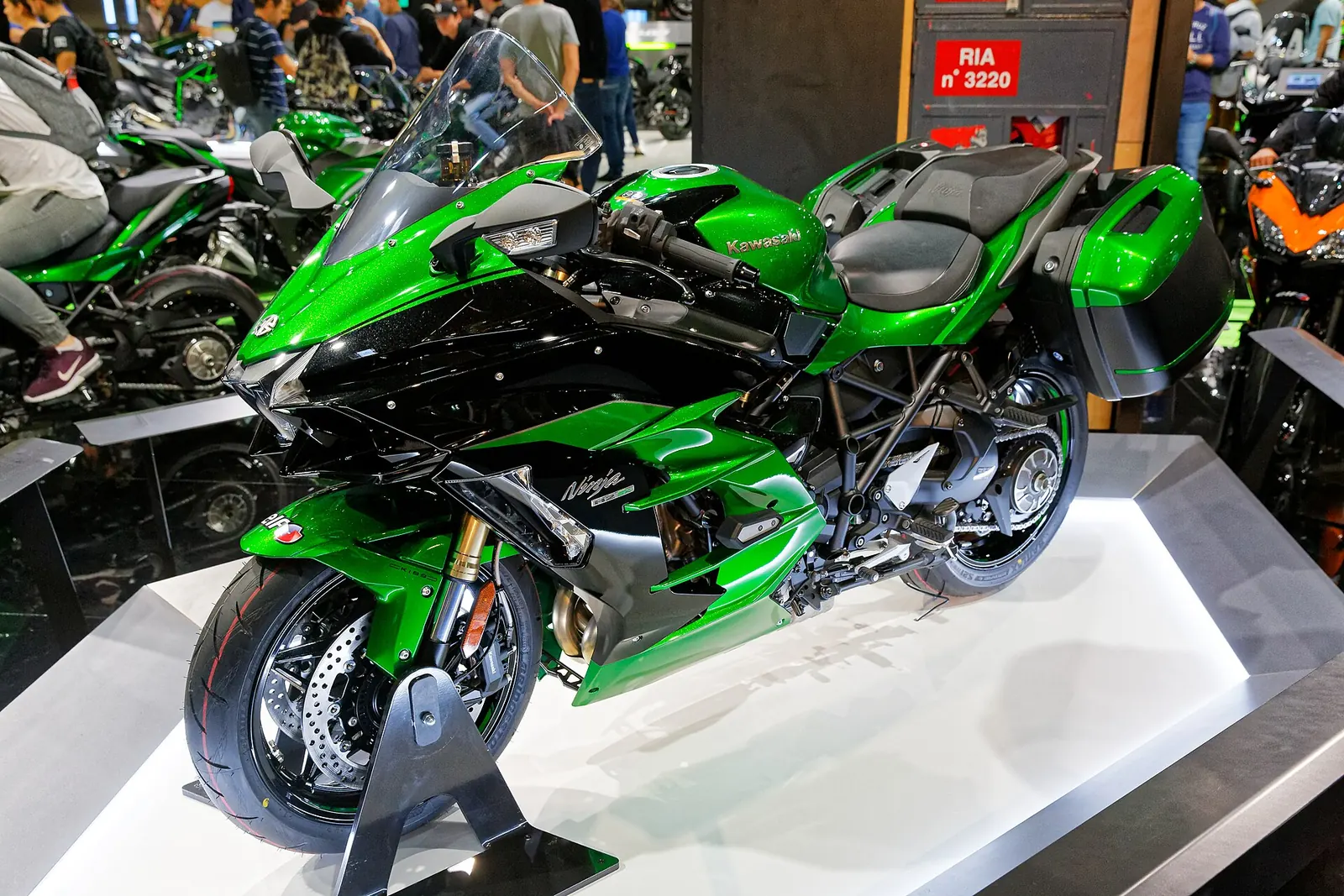
The lesson is not that Kawasaki was foolish. It is that an announcement is not a product, however good the press release, and the word "AI" travels further than the hardware does.
Which radar rider aids actually ship?
Adaptive cruise control, blind-spot detection, forward and rear collision warning, and emergency brake assist are all in production, on bikes from Ducati, Honda and India's Ultraviolette among others. They are built mostly on Bosch's radar platform and similar millimetre-wave units.
| Bike or system | Status | Radar | What it does |
|---|---|---|---|
| Ducati Multistrada V4 | In production since 2020 | Front and rear, with Bosch | Adaptive cruise at 30 to 160 km/h with four distance settings; blind-spot and fast-approach warning |
| Ultraviolette X47 (India) | Launched Sep 2025, Rs 2.74 lakh | 77 GHz rear, standard; 150° wide, 200 m range | Blind-spot alerts in the mirrors, rear collision warning with hazard lights; dual dashcam |
| Honda Sensing Ride | Shown Nov 2026 on the 2027 Africa Twin Adventure Sports | Millimetre-wave, front and rear | 10 functions, including stop-and-go cruise with the DCT gearbox, emergency brake assist and group ride assist |
| Bosch ARAS (supplier) | Sold to makers | Front and rear units | ACC, forward collision warning, blind-spot detection, emergency brake assist, rear collision warning |
Ducati's own timeline shows how long "real" takes: work began in 2016, the control algorithms were patented in 2017, testing on bikes started in April 2018, and production began in 2020. Honda, meanwhile, describes its new system plainly as aids with limited recognition and control, which is the right way to read all of them.
How much could radar aids prevent?
Bosch's accident research estimates that radar-based assistance could prevent one in six motorcycle accidents. That is the supplier's own estimate. The independent number comes from a French study of real crashes.
See the data as a table
| Share of crashes (%) | |
|---|---|
| ABS | 34.4 |
| Collision warning | 30.8 |
| Autonomous emergency braking | 27.9 |
| Adaptive cruise control | 17.4 |
Source: Ait-Moula, Riahi and Serre, Heliyon 2024 (EDA and IGLAD crash databases) · A crash can count under several systems. At least one of 14 systems could have played a role in 61.5% of crashes.
The authors coded 390 real two-wheeler crashes, 249 from a French in-depth database and 141 from the international IGLAD database, and judged which of 14 rider-assistance systems could have affected each one. At least one system could have played a role in 61.5% of crashes. ABS led at 34.4%, then collision warning at 30.8%, emergency braking at 27.9% and adaptive cruise at 17.4%. Weighted to French national data, about 35% of crashes still had no system that would help. The limit, which the authors state: this is a qualitative case-by-case judgement, not a simulation of how riders would react.
Read the paper (free)Is the Honda E-Clutch or cornering ABS "AI"?
No. Both are electronic control systems that read sensors and act on fixed logic in milliseconds, and their makers do not claim they learn.
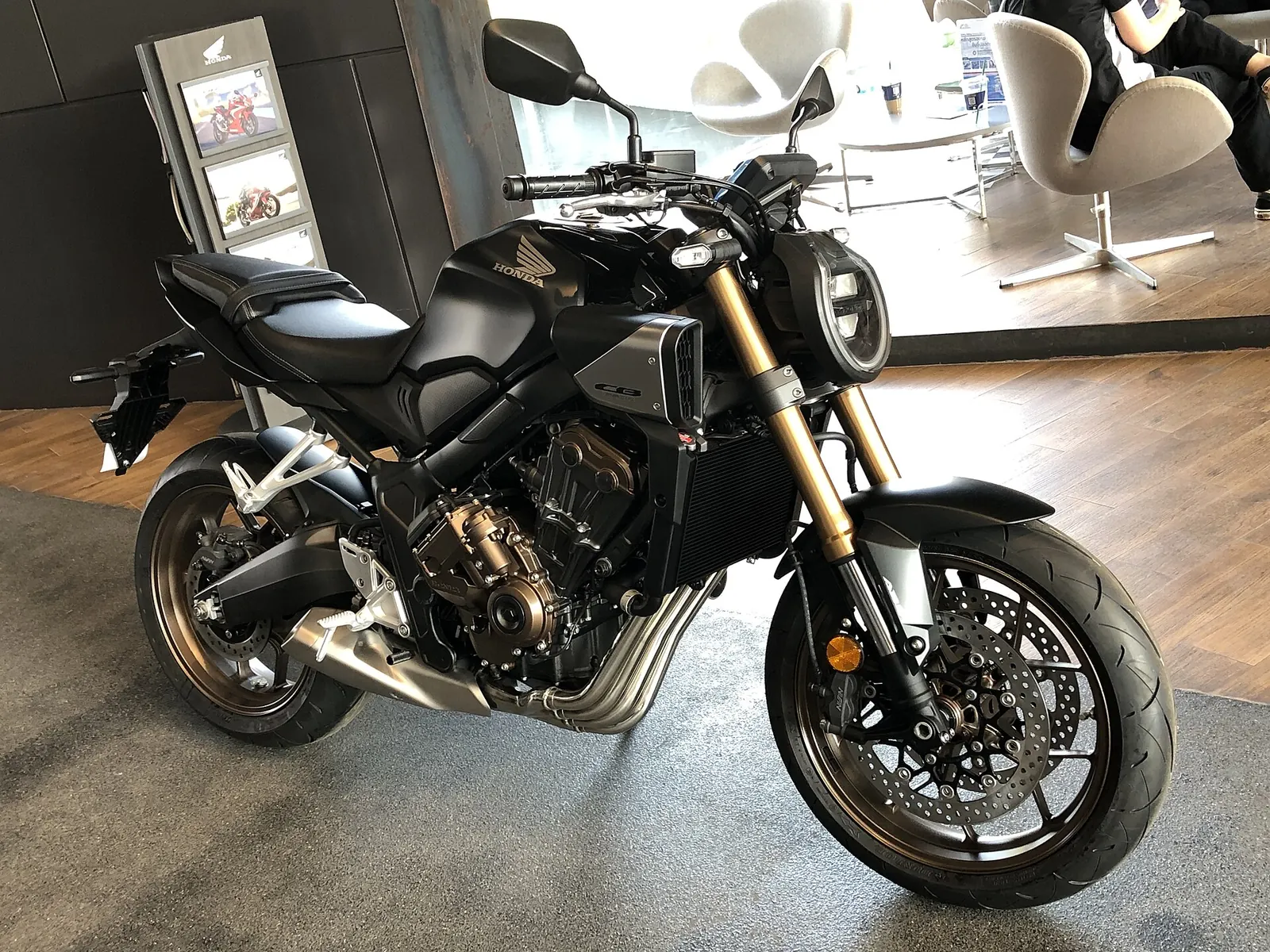
Honda's E-Clutch, standard on the 2024 CB650R and CBR650R, uses an actuator with two motors inside the right-hand engine cover. Honda lists what it reads: vehicle speed, throttle opening, engine rpm, shift-pedal pressure, clutch-motor gear angle, countershaft speed and gear position. It also trims ignition and fuel during engagement, adds under 4.5 lb, and leaves the clutch lever working if you want it.
That is excellent engineering, and it is the honest model for most "smart" features: many sensors, fast fixed logic, no learning. When a brochure calls this AI, it is marketing a control system.
Can a motorcycle detect a crash and call for help?
Yes, and this is shipping today. BMW Motorrad's intelligent emergency call, announced in 2016, uses a crash sensor and a lean-angle sensor to tell a serious crash from a tip-over.
- Severe crash: BMW's system calls its emergency centre at once, and the rider cannot cancel it.
- Light crash: it waits 25 seconds, so a rider who is fine can stop it with a button.
- Manual SOS: a handlebar button works only at zero speed with the ignition on.
- Ather Rizta Z lists Crash Alert, and every Rizta lists FallSafe, on Ather's own spec sheet.
Your phone is not a substitute. Apple says its Crash Detection is designed for severe crashes in passenger cars such as sedans, SUVs and pickups, and its support page does not mention motorcycles.
Using only a five-degrees-of-freedom IMU, the team recorded more than 80 hours of riding by ten professional riders on track, including seven real crashes. A simple threshold rule (acceleration under 0.5 g plus a high rotation rate) produced false alarms during normal riding before the real crash. Their method looks instead at how the signals' frequency content changes over a 10-second window: tuned on the crashes, it caught all seven and raised no false alarm across the 80-plus hours of validation riding, in one example within 3.64 seconds. The limit: track riding by professionals and only seven crashes, so road performance is unproven.
Read the paper (free)Can a motorcycle learn how you ride?
In research, partly; in products, mostly through fleet data rather than on the bike. The sensor is already there: any bike with cornering ABS carries an IMU.
Two riders of similar experience rode two similar motorcycles on a fixed route, logging IMU data at 50 Hz. The team labelled five behaviours (cruising, traffic, fun riding, overtaking and waiting) and trained an XGBoost classifier. Four classes were recognised with about 80% accuracy; overtakes, which last only 2 to 3 seconds against 10-second segments for the rest, could not be identified reliably. The limit: two riders is a tiny sample, and the authors note that production bikes do not let owners record their IMU data.
Read the paper (free)The product version of "learning" is happening in India. In July 2026 Ather rolled out pothole and speed-breaker alerts to its Gen 2 scooters, built from anonymised data collected across its connected fleet, and spoken through the scooter, an Ather Halo helmet or a Bluetooth headset. Ather says it needed enough fleet data before the alerts were reliable. That is machine learning doing a real job, just not inside one bike.

What about voice assistants and AI helmets?
Voice through the phone is real; voice AI built into helmets is at the concept stage. The pattern repeats: the shipping version passes your words to a phone assistant, while the next version is shown at a show without a date.
- Shipping: Ather lists "Voice on Ather" on the Rizta Z. Ultraviolette's UV Crossfade helmet (Nov 2025, Rs 19,900) carries Cardo comms and the X47's radar alerts.
- Concept: at EICMA 2026 Ultraviolette expanded a partnership with SoundHound AI to put voice control into helmet headsets, and showed three helmets, including the Fang 01, with no specs, prices or launch dates.
- Research: small language models now run offline on phones; I cover what fits in running a small language model on a motorcycle, and the full pipeline in how to build a voice assistant for your helmet.
How do you tell a shipped feature from a concept?
Look for a model year, a price and a manual page. If any of the three is missing, treat the feature as a concept, however polished the video.
- Model year and market. "2027 Africa Twin Adventure Sports" is a product. "Future models" is not.
- Price on the configurator. Standard or optional, with a number.
- Owner's manual wording. Real systems come with limits: speed ranges, conditions where they switch off, warnings.
- What it senses. Radar, IMU, wheel speed or fleet data. If nobody can say, it is probably a slogan.
- Who decides. Does it warn you, help you, or act alone? Today, almost everything warns or helps.
Where is AI on motorcycles going next?
More radar on cheaper bikes, more fleet learning, and voice moving into the helmet. Full self-riding is not on any maker's production plan I could find.
The bottleneck is physics as much as software: a bike that brakes hard on its own can throw its rider. I work through that limit in what if a motorcycle had real AI on board. For riders in India, the more immediate gain is the cheapest one, ABS on every two-wheeler, which I cover in India's ABS mandate. More on how I think about AI in products is on Applied AI.
The honest AI on a motorcycle today warns and assists. It does not decide for you.This post, summarising Bosch, Ducati and Honda's own descriptions
What's new
- Honda Sensing Ride brings 10 radar functions to the 2027 Africa Twin Automotive World, Nov 2026
- Ultraviolette shows concept helmets and expands its SoundHound voice AI deal Motorcycles.News, Nov 2026
- Ather rolls out fleet-data pothole alerts for Gen 2 scooters Autocar India, Jul 2026
- Ultraviolette X47 launched with standard rear radar Autocar India, Sep 2025
Questions people ask
Which motorcycles have radar in India?
The Ultraviolette X47 ships a 77 GHz rear radar as standard, with blind-spot and rear-collision warnings. Imported premium models such as the Ducati Multistrada V4 offer front and rear radar; check the Indian specification before buying.
Is cornering ABS artificial intelligence?
No. It uses an IMU to estimate lean angle and limits brake pressure by fixed control logic. It is sensor fusion and model-based control, not a learning system, and that is a strength: it behaves the same way every time.
Can a motorcycle brake automatically like a car?
Not fully. Shipping systems add brake pressure when the rider is already braking too gently (emergency brake assist) or slow the bike gently in adaptive cruise. A full automatic emergency stop from cruise is still a research topic because of the risk to the rider.
Does my phone's crash detection work on a motorcycle?
Apple says its Crash Detection is designed for severe crashes in passenger cars and does not mention motorcycles. For riding, a bike's own eCall or a dedicated crash-alert feature, such as BMW's or Ather's, is designed for the job.
Will AI make motorcycles safer?
The best evidence says assistance systems could have played a role in 61.5% of 390 real crashes, with ABS the single most useful. Warnings and braking help are proven ideas; how riders react to them is the open question.
Sources
- Cycle News: Kawasaki to start developing motorcycles with AI technologies (2016) (source for the story)
- Bosch Mobility: Advanced rider assistance systems for two-wheelers (ARAS functions; one-in-six estimate)
- Autocar Professional: Ducati begins production of radar-equipped Multistrada V4 (2020)
- Autocar India: Ultraviolette X47 Crossover launched at Rs 2.74 lakh (2025)
- Automotive World: Honda brings car-derived sensing tech to motorcycles (2026)
- Ait-Moula, Riahi and Serre: Effect of advanced rider assistance system on powered two wheelers crashes, Heliyon (2024)
- American Honda: 2024 Honda E-Clutch (2024)
- eeNews Europe: BMW Motorrad equips motorbikes with smart eCall system (2016)
- Apple Support: Use Crash Detection on iPhone or Apple Watch
- Ather Energy: Rizta specifications (Crash Alert, FallSafe, Voice on Ather)
- Gelmini, Panzani and Savaresi: Automatic eCall for motorcycles, a one-class cepstrum approach, arXiv (2019)
- Navratil and Giannopoulos: Classifying Motorcyclist Behaviour with XGBoost Based on IMU Data, Sensors (2024)
- Autocar India: Ather rolls out pothole alerts for Gen 2 scooters (2026)
- Rushlane: Ultraviolette Crossfade smart helmet with real-time radar (2025)
- Motorcycles.News: Ultraviolette Fang 01 helmet at EICMA 2026 (2026)

Sapta (Saptarshi Sarkar) is a mechanical engineer turned marketer in Bengaluru and a solo touring rider. He writes the seven Saptaverse blogs. Work with him or read more of RoadHook Machines.