
Predictive processing is the theory that the brain constantly predicts its sensory input from an internal model and perceives its best-supported guess, using the mismatch (prediction error) to update the guess; Andy Clark's 2013 Behavioral and Brain Sciences paper made it the leading candidate for a unified account of perception and action. It overlaps with Shankara's idea of superimposition (adhyasa), where memory of past experience is projected onto what is in front of us, and with Yogacara's claim that we only ever meet appearances. It does not prove maya.
- Prediction error: the brain sends guesses down and only the mismatch comes back up.
- Precision decides who wins: a strong prior beats weak evidence, as with a rope at dusk.
- Science, 2017: conditioned tones made people "hear" sounds that were not there.
- Adhyasa: Shankara's superimposition of remembered experience onto the present is the closest match.
- Not proof of maya: the theory needs a real world that sends error signals.
Predictive processing assumes a real world that sends error signals, which is close to Advaita's empirical realism and far from saying the world is unreal.
"Science has proved the world is maya" is a line that circulates on WhatsApp and in some satsangs. It usually rests on a half-remembered fact about perception being constructed by the brain.
This post sets out:
- exactly what predictive processing claims;
- what Shankara and Vasubandhu claimed;
- where the comparison works as an analogy, and where it breaks.
Philosophy is presented as philosophy, with its own arguments.
What is predictive processing?
Predictive processing holds that perception runs top-down as much as bottom-up: higher brain levels send predictions of the expected input to lower levels, and lower levels send back only the error, the part the prediction failed to explain. Clark's 2013 target article describes brains as prediction machines that match incoming signals against expectations generated by a hierarchical generative model, and argues that this offers the best current clue to a unified science of mind and action.
A long pedigree
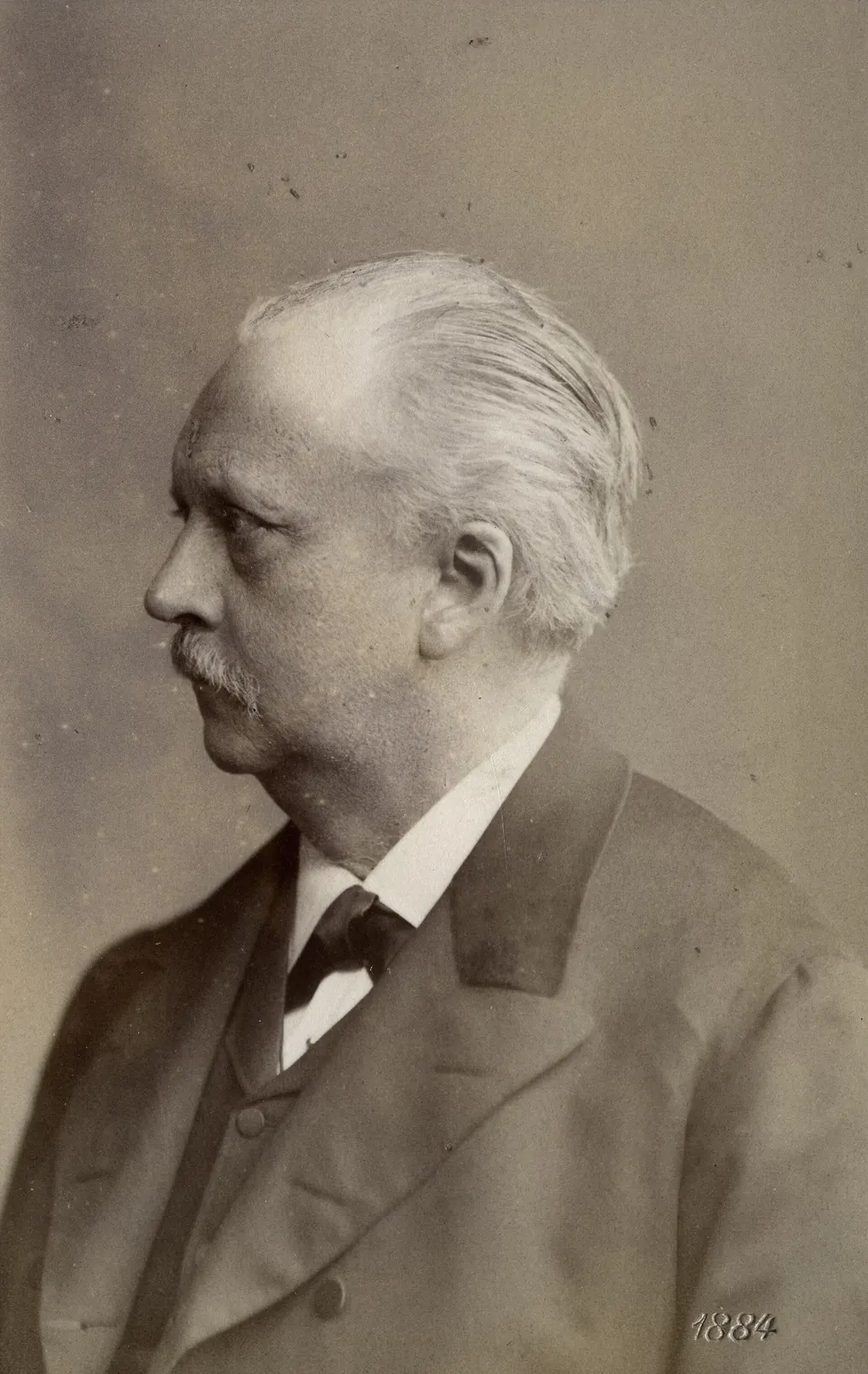
- 1860s: Hermann von Helmholtz described perception as "unconscious inference".
- 1999: Rao and Ballard's model showed that a network sending predictions down and errors up reproduced odd receptive-field effects in visual cortex.
- 2010: Karl Friston's free-energy principle (Nature Reviews Neuroscience) recast the brain's job as minimising surprise, and folded action in: you can reduce prediction error either by changing your model or by moving so the world matches it.
Precision
The key extra ingredient is precision, the brain's estimate of how reliable each signal is. Errors from a reliable channel (clear daylight vision) get high weight and update the model; errors from a noisy one (vision at dusk) get low weight, and the prior dominates.
Friston proposed that this weighting is essentially attention. Perception, on this view, is a precision-weighted compromise between what you expected and what arrived.
Is perception really a controlled guess?
In part, and the evidence is strongest where expectations visibly override the input.
In February 2015, Cecilia Bleasdale photographed a dress at a shopping outlet near Chester, England, to show her daughter what she planned to wear to the daughter's wedding. The photo went on Facebook, and on 26 February 2015 a guest, Caitlin McNeill, reposted it on Tumblr asking what colour it was. Within 24 hours it had drawn 4.4 million tweets; at its peak the Tumblr page was getting 14,000 views a second.
The dress was royal blue with black lace. Yet in a survey of 1,400 people by Lafer-Sousa and colleagues in Current Biology, 57% saw blue and black and 30% saw white and gold. Same pixels, different percepts. The leading explanations all turn on what each brain assumed about the light falling on the dress, which is exactly what a prior is.
Wikipedia: The dress (with Lafer-Sousa et al., Current Biology 2015, and Wallisch, Journal of Vision 2017)
Hallucinations made in the lab
The cleanest demonstrations are lab-induced hallucinations. Powers, Mathys and Corlett (Science, 2017) paired a visual cue with a faint tone until people came to expect the tone, then tested what they reported when the tone was absent. Participants began to "hear" tones that were not there, a conditioned hallucination, and people who hear voices in daily life were significantly more susceptible.
Used a light-tone conditioning task in four groups that differed in whether they heard voices and whether they sought treatment. Voice-hearers reported significantly more conditioned hallucinations. A computational model showed the effect came from giving too much weight to prior expectations relative to sensory evidence, and brain imaging identified a circuit that tracked the hallucinations. Limit: small clinical groups, and a lab task with tones near the detection threshold, so it shows how priors can create percepts, not that all perception is hallucination.
Read the paper (free)Corlett and colleagues' 2019 review in Trends in Cognitive Sciences draws the wider conclusion: strong, overly precise priors can produce hallucinations in healthy people, and those who hallucinate in daily life are more prone to the lab effects.
They place normal perception, illusion and hallucination on a continuum. That is the scientific core of the "perception is a guess" slogan, and it is a claim about how percepts are built, not about whether the world exists.
Use the calculator to see the arithmetic. In the simplest Bayesian version, the percept is a precision-weighted average of what you expected and what your senses report.
Precision-weighted perception: prior vs evidence
What did Shankara mean by maya and superimposition?
For Shankara (c. 700 to 750 CE on Nakamura's dating, per the SEP), the root error is superimposition (adhyasa): taking the qualities of one thing to belong to another, above all confusing the self with the body-mind and the body-mind with the self.
The introduction to his commentary on the Brahma Sutras, in George Thibaut's 1890 translation (Sacred Books of the East, vol. 34), defines it as the apparent presentation, in the form of memory, of something previously observed in some other thing. His everyday examples: mother-of-pearl that looks like silver, and one moon that looks double.
Something stored from past experience is projected onto present input and taken for what is there. That is adhyasa, and it is also a prior.
That definition is the closest point of contact with predictive processing. Shankara even uses a behavioural example a cognitive scientist would recognise: a cow moves away from a man raising a stick and walks towards a man holding fresh grass, acting on the meaning it projects, and humans, he says, are no different in this respect.
The rest of his account goes far beyond perception. He calls this superimposition nescience (avidya) and says all ordinary means of knowledge, perception, inference and scripture alike, operate within it, because they need a knower who has already identified with a body and senses.
Two points the WhatsApp version misses
Neil Dalal's SEP entry stresses them:
- Empirical realism. Shankara is an epistemic realist about empirical objects: the world is a lower order of reality (vyavaharika), "not wholly unreal", with its own rules.
- The real target. Liberation is about the self's misidentification, not the existence of tables and trees.
Maya, a word Shankara used less than his successors, names the cosmic power through which brahman appears as the world.


How is Yogacara's "mind-only" different?
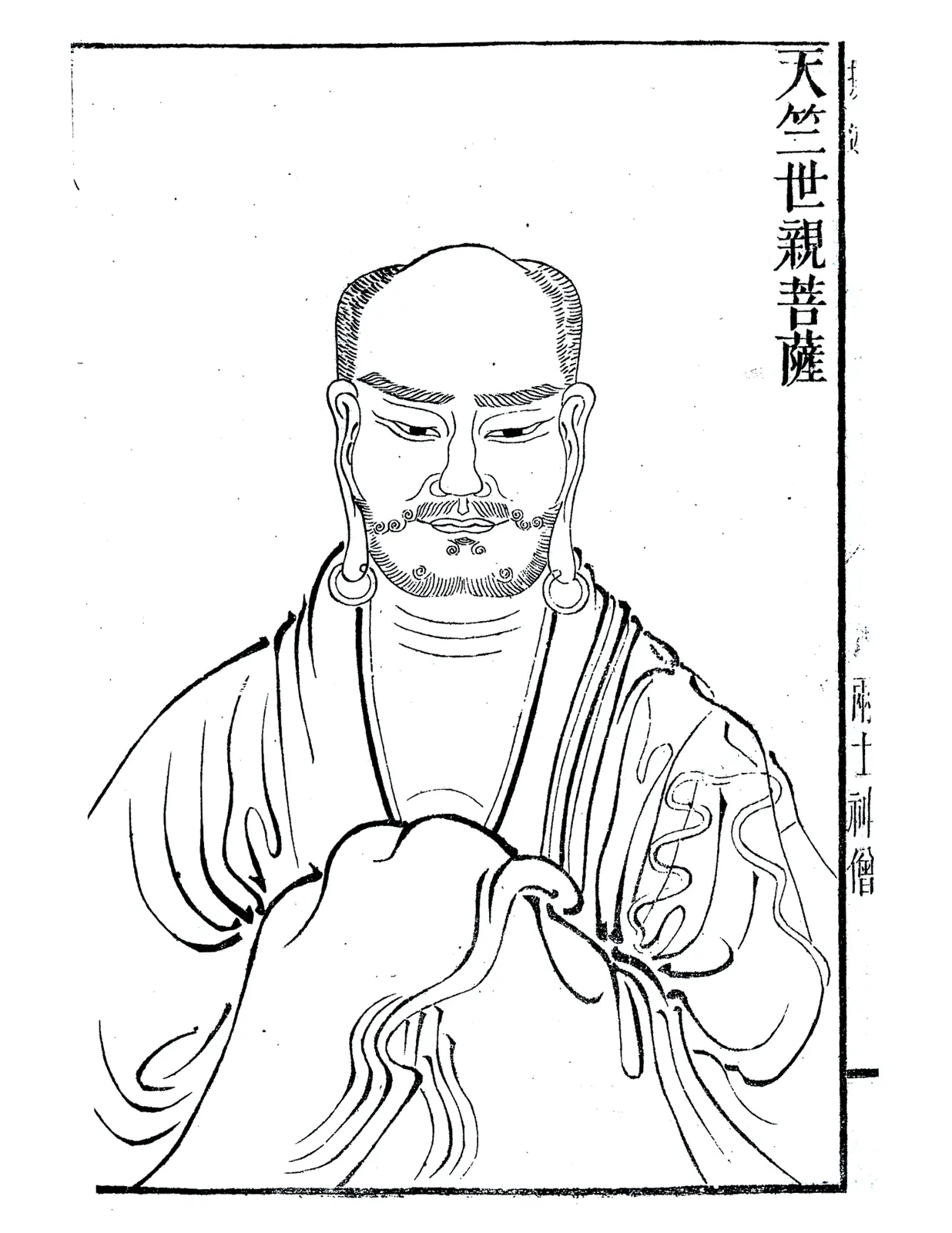
Yogacara Buddhism goes further than Advaita on perception: Vasubandhu's Twenty Verses opens with the claim that everything in the three realms is only appearance (vijnaptimatra). The SEP entry on Vasubandhu sets out how he answers four objections, that real objects explain why perceptions are fixed in place, fixed in time, shared by many people and causally effective, mostly by pointing to dreams, where all four features occur without external objects.
His other argument is about atoms: partless atoms could not combine into extended objects, and objects with parts are not ultimately real, so external objects as we picture them fail. The causal story behind appearances is itself mental, the storehouse consciousness (alaya-vijnana) with its seeds. The SEP notes that whether this is idealism is contested: Thomas Kochumuttom argued in 1982 that Vasubandhu should not be called an idealist, and at the ultimate level Vasubandhu points to an ineffable "thusness".
Yogacara's three natures map neatly onto the predictive picture, as an analogy:
- the fabricated nature (parikalpita) is the object as it appears;
- the dependent nature (paratantra) is the causal process that produces the appearance;
- the perfected nature (parinishpanna) is seeing that the appearance does not exist as it seems.
Vasubandhu's own image is a magician's elephant conjured from a piece of wood.
Where does the comparison hold, and where does it break?
The table lines up the three vocabularies. The middle columns are close; the last column is where they part.
| Predictive processing | Advaita (Shankara) | Yogacara (Vasubandhu) | Where they differ |
|---|---|---|---|
| Prior, generative model | Memory of something previously observed, superimposed (adhyasa) | Seeds in the storehouse consciousness | PP priors are learned from a real world; seeds are mental all the way down |
| Percept = best guess | Rope seen as snake, shell as silver | Fabricated nature (parikalpita) | All three agree the content is constructed |
| Prediction error from the world | The rope is really there; correction is possible | No external source; dream argument | PP needs an external cause; Yogacara denies it; Advaita grants it at the empirical level |
| Hallucination = priors over-weighted | Error within the empirical order | All waking experience is like a dream | PP treats hallucination as a malfunction, not the norm |
| Self-model as a prediction | Ego (ahamkara) superimposed on the witness | Self is a fabrication | Advaita keeps a real witness-consciousness; PP and Yogacara do not need one |
| Goal: minimise prediction error | Goal: knowledge that ends misidentification | Goal: seeing appearances as empty | A biological objective vs a soteriological one |
Three conclusions follow:
- Shared ground. Predictive processing supports a claim all three traditions made: what we perceive is shaped by what we already carry, and errors are built into the process.
- No proof of unreality. It does not support the further claim that the world is unreal; its whole machinery depends on signals from a world that can surprise you.
- The self. It fits Yogacara and Buddhist no-self better than Advaita, because it treats the sense of self as one more prediction and has no place for an unchanging witness.
So the honest summary is that predictive processing is closest to Advaita's account of empirical error, the rope and the snake, and silent on Advaita's metaphysics. The Samkhya side of this debate, where matter is fully real, is in Samkhya's 25 tattvas; the Advaita-Dvaita dispute about whether the world and the self are distinct is in Advaita vs Dvaita explained.
Is predictive processing proven?
No. It is a leading framework with strong support in some areas and open problems in others, which is another reason not to hang a metaphysics on it.
Critics have asked whether it is precise enough to be tested: the same brain signal has been read as prediction error in some studies and as a simple response to changing input in others. There is also no agreement on how neurons compute error signals, since a firing rate cannot be negative.
The field is responding with large, shared experiments. In April 2025 a group of 50 researchers posted a review on arXiv setting out where predictive-coding models agree (top-down inputs and inhibitory interneurons shape mismatch signals) and where they conflict (how the hierarchy differs between species and cortical layers), and proposed shared experiments in mice and primates.
The Allen Institute's OpenScope programme then ran a community-designed experiment, with pilot recordings from April 2025, to test whether the brain uses different prediction strategies in different contexts, a "bag of models" rather than one mechanism.
A community review of predictive processing in sensory cortex that identifies its computational ingredients (stimulus adaptation, dendritic computation, excitation-inhibition balance, hierarchy), lists where findings agree and conflict, and proposes in-vivo two-photon imaging and electrophysiology in mice and primates to test whether temporal, motor and omission mismatches share mechanisms. Data are to be shared openly through OpenScope. Limit: a review and proposal, not yet the results.
Read the paper (free)If you came here from the brain side, the resting network that keeps generating predictions about the self when you are not doing anything is covered in the default mode network. The famous 1930 conversation where Tagore argued truth depends on the human mind and Einstein disagreed is in when Tagore met Einstein. More essays on the mind sit on Manthan.
What's new
- A community-designed experiment tests open questions in predictive processing The Transmitter, Nov 2025
- Fifty-author review of predictive-processing mechanisms updated with a second version arXiv, Apr 2026
- Neil Dalal's SEP entry on Shankara, on superimposition and the levels of reality Stanford Encyclopedia of Philosophy, 2021
Questions people ask
Does predictive processing prove that the world is maya?
No. It shows that perception is constructed from predictions corrected by sensory error. That requires a world that produces the errors. Shankara himself treated the empirical world as real at its own level; the theory supports his account of perceptual error, not his claims about brahman.
What is the difference between top-down and bottom-up processing?
Bottom-up processing builds a percept from sensory signals upward; top-down processing uses expectations and knowledge to shape it. Predictive processing says both run all the time: predictions go down, errors come up, and precision decides which side wins.
How is the prediction error signal computed in the brain?
Nobody knows for sure. Models propose dedicated error neurons, or dendritic computations within single neurons, because a firing rate cannot go below zero. The 2025 OpenScope collaboration lists this among the open disagreements its experiments are designed to settle.
Can Advaita and Dvaita both be correct?
Not on the same question, since one says self and brahman are ultimately identical and the other says they are eternally distinct. That is a metaphysical disagreement no neuroscience can decide. When the question was put to the Advaita-L mailing list in 2003, the reply pointed to readings on several schools rather than a verdict.
Sources
- Clark: Whatever next? Predictive brains, situated agents, and the future of cognitive science, Behavioral and Brain Sciences 36(3) (2013)
- Friston: The free-energy principle: a unified brain theory? Nature Reviews Neuroscience 11 (2010)
- Powers, Mathys & Corlett: Pavlovian conditioning-induced hallucinations result from overweighting of perceptual priors, Science (2017)
- Corlett et al.: Hallucinations and Strong Priors, Trends in Cognitive Sciences (2019)
- Aizenbud et al.: Neural mechanisms of predictive processing: a collaborative community experiment through the OpenScope program, arXiv (2025)
- Lecoq, The Transmitter: A community-designed experiment tests open questions in predictive processing (2025)
- Wikipedia: Predictive coding (history from Helmholtz to Rao and Ballard; criticisms)
- Wikipedia: The dress, the 2015 viral photograph, with Lafer-Sousa et al. (Current Biology 2015) and Wallisch (Journal of Vision 2017) (accessed 2026)
- Shankara, Commentary on the Vedanta Sutras, Part I, translated by George Thibaut, Sacred Books of the East vol. 34 (1890)
- Dalal, Stanford Encyclopedia of Philosophy: Shankara (2021)
- Stanford Encyclopedia of Philosophy: Vasubandhu (2011, revised 2021)
- Advaita-L mailing list: Dvaita and Advaita (2003)

Sapta (Saptarshi Sarkar) is a mechanical engineer turned marketer in Bengaluru and a solo touring rider. He writes the seven Saptaverse blogs. Work with him or read more of Mindblog.


