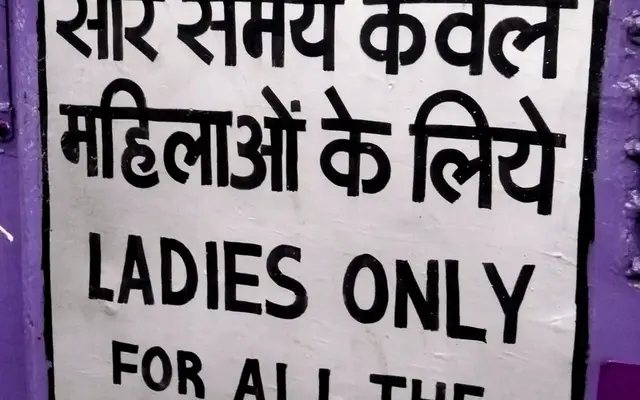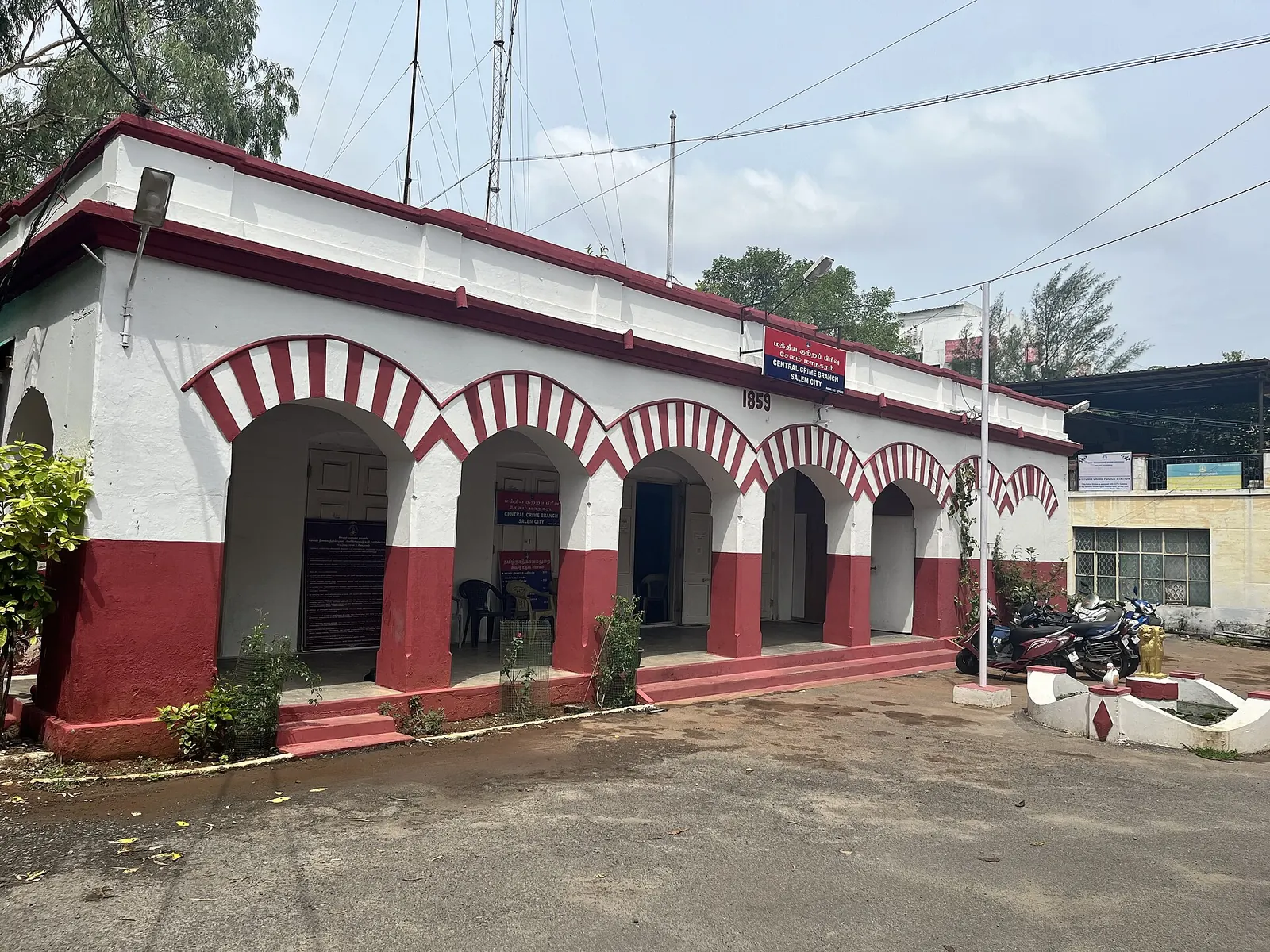
A Zero FIR is a First Information Report recorded at any police station in India, whatever the place where the crime happened. Since 1 July 2024, Section 173(1) of the Bharatiya Nagarik Suraksha Sanhita (BNSS), which replaced Section 154 of the CrPC, says information about a cognizable offence may be given "irrespective of the area where the offence is committed", orally or electronically. The station records it, gives you a free copy and sends it to the station that has jurisdiction; if it refuses, you can write to the Superintendent of Police under s.173(4) and then go to a magistrate under s.175(3).
- BNSS s.173(1) puts the Zero FIR into statute for the first time; before 2024 it rested on court rulings and advisories.
- An e-FIR counts only once you sign it within 3 days, under s.173(1)(ii).
- Your FIR copy is free and must be given "forthwith", under s.173(2) (old CrPC s.154(2)).
- Refused? Post a written complaint to the SP under s.173(4), then apply to a magistrate under s.175(3) (old CrPC s.154(3) and s.156(3)).
- 12,000+ e-Zero FIRs for cyber fraud were registered in a year across 18 states and UTs (Lok Sabha reply, July 2026).
Every year lakhs of visitors move across India faster than the crimes against them can be reported. A phone lifted on a Goa beach, a wallet taken on an overnight train, a UPI fraud traced to a call centre three states away: the victim is usually somewhere else by the time they want to report it.
The old excuse at the desk was "yeh hamara area nahi hai", this is not our area. The law now answers that excuse in its first sentence. This is general information, not legal advice; for a live case, talk to a lawyer or your State Legal Services Authority.
What is a Zero FIR, and why is it called "zero"?
A Zero FIR is an FIR registered by a station that has no territorial jurisdiction over the crime. It gets the number zero in that station's register instead of a serial number, because the station will not investigate it. It is forwarded to the station where the offence happened, which registers it under its own number and starts the investigation.
The idea came from the courts, not from Parliament. Judges kept holding that a police officer cannot refuse to record a cognizable offence just because it happened outside his limits. The 2023 code turned that into text.
- Cognizable offences only. Theft, robbery, assault, cheating, sexual offences and cyber fraud are cognizable. Most minor disputes are non-cognizable and go into a different register under BNSS s.174.
- Any station. Including a railway station's GRP post, an airport police post or a women's police station.
- Any mode. Spoken, written, or "by electronic communication", which is how e-FIR portals and the cyber helpline fit in.
Satvinder Kaur married in Delhi on 9 December 1990 and moved to her husband's home in Patiala. In January 1992, she said, she was turned out with her infant daughter, and she went back to her parents in Delhi. In 1993 the Paschim Vihar police station in Delhi registered her FIR for criminal breach of trust and cruelty under IPC sections 406 and 498A. The husband argued that the dowry had been handed over in Patiala, so Delhi police had no jurisdiction, and the Delhi High Court quashed the FIR. On 5 October 1999 the Supreme Court reversed that. It held that a station house officer cannot be stopped from investigating on territorial grounds at the start, and that if the place turns out to be elsewhere, the officer forwards the case. That reasoning is the backbone of every Zero FIR.
Indian Kanoon: Satvinder Kaur vs State (Govt. of NCT of Delhi), Supreme Court, 5 October 1999What does BNSS Section 173 actually say?
Section 173 is the FIR section of the new code, the successor to CrPC s.154, and it is longer and more specific than the old one. Its parts, in plain words:
| BNSS 2023 | Old CrPC 1973 | What it gives you |
|---|---|---|
| s.173(1) | s.154(1) | Report a cognizable offence anywhere, orally or electronically; oral reports are written down, read back and signed |
| s.173(1)(ii) | none | e-FIR taken on record once you sign within 3 days |
| s.173(1) provisos | s.154(1) provisos | Woman officer records specified sexual offences; disabled victims at home, with an interpreter, on video |
| s.173(2) | s.154(2) | Free copy of the FIR, forthwith, to the informant or victim |
| s.173(3) | none (court-made rule) | Preliminary enquiry for offences of 3 to under 7 years, DSP approval, 14 days |
| s.173(4) | s.154(3) | If refused, send the substance in writing by post to the SP |
| s.175(3) | s.156(3) | Magistrate can order the police to investigate |
The comparison above follows the Bureau of Police Research and Development's CrPC-to-BNSS analysis circulated through PIB in May 2024. It also notes that s.173(4) now spells out the last step: if the SP fails you, "such aggrieved person may make an application to the Magistrate".
Can police refuse to file an FIR?
No, not for a cognizable offence. A five-judge bench of the Supreme Court held in Lalita Kumari v. Government of Uttar Pradesh (12 November 2013) that registering an FIR is mandatory when the information discloses a cognizable offence, and that the officer cannot refuse because he doubts the story.
The same bench allowed a short preliminary inquiry in a few kinds of case: matrimonial and family disputes, commercial offences, medical negligence, corruption, and complaints delayed by more than three months without explanation. It capped that inquiry at 7 days and said that if the complaint is closed, the informant gets a copy of the closure entry within a week.
What changed with BNSS
- A statutory enquiry window. Section 173(3) now lets the station hold a preliminary enquiry for offences punishable with 3 years or more but under 7 years, only with the prior permission of a DSP-rank officer, and within 14 days.
- Serious crimes skip it. Offences carrying 7 years or more, such as robbery or rape, get no preliminary enquiry window at all.
- Penalty for not recording. BNS s.199(c), formerly IPC s.166A(c), punishes a public servant who fails to record information about specified sexual offences against women with rigorous imprisonment of 6 months to 2 years and a fine.
Why do stations still say "go to your own area"?
Because registration is counted as crime. An FIR raises a station's crime figures and its workload, and a Zero FIR adds paperwork with no credit, since another station will solve it.
Researchers have measured how often this goes wrong. In a randomised trial across 162 police stations in Rajasthan, Abhijit Banerjee, Esther Duflo and co-authors sent trained "decoys" to try to register cases. Only about 48% of decoy visits ended with a case registered. Each extra decoy visit raised the chance of registration at the next one by 22 percentage points, a sign that registration depends heavily on whether officers think they are being watched.
Two randomised experiments with the Rajasthan Police covered 162 stations serving almost 8 million people. Of five reforms tested, only on-duty training and unannounced "decoy" visits had robust effects. Decoys posing as complainants got a case registered in about 48% of visits, and each decoy visit raised the registration rate at the next visit by 22 percentage points (a 46% increase). Limit: one state, around 2006–2008, before e-FIRs existed.
Read the paper (free)Using administrative crime data and the staggered opening of women police stations across Indian cities, the authors find that opening a women's station is followed by a 29% rise in police reports of crimes against women, driven by domestic violence. Femicide and survey-reported violence did not change, so the rise reflects more reporting, not more crime. Limit: city-level data, and a separate Haryana study found no rise, so the effect may depend on how stations are run.
Read the paper (free)Both papers point the same way: the cost of walking into a station decides how much crime gets recorded. The Zero FIR and the e-FIR are attempts to cut that cost.
How do you file a Zero FIR, step by step?
Go to the nearest station with a written complaint and the key facts; a written note is harder to wave away than a conversation.
- Write it down. Date, time, exact place, what was taken or done, descriptions, phone IMEI or transaction IDs, witnesses. Sign and date it, and keep a copy.
- Ask for a Zero FIR by name. Say the crime happened in another district or state and that BNSS s.173(1) lets them record it "irrespective of the area". Stay calm and specific.
- Check what they write. If you speak, the officer must write it, read it back to you and have you sign it (s.173(1)(i)). Correct errors before signing.
- Take your free copy. Section 173(2) says forthwith and free of cost. No one may charge a "copy fee".
- Note the forwarding. Ask which station it is going to and get a phone number or email for that station's duty officer.
- Follow up with the new number. The receiving station registers it afresh; quote that number to insurers, your bank or the telecom operator.

How do e-FIRs and the e-Zero FIR work?
An e-FIR is information sent electronically that becomes an FIR once you sign it within 3 days, under s.173(1)(ii). States run their own citizen portals, and Delhi was among the first to allow e-FIRs for motor vehicle and property theft from 2019.
The bigger change came for cyber fraud. On 19 May 2025 the Home Ministry launched the e-Zero FIR pilot in Delhi: complaints of financial cyber fraud above ₹10 lakh made on the National Cybercrime Reporting Portal or the 1930 helpline are converted automatically into Zero FIRs, built by the Indian Cyber Crime Coordination Centre (I4C) with Delhi Police and NCRB's CCTNS network. The victim then has 3 days to reach the cyber police station to convert it into a regular FIR.
See the data as a table
| e-Zero FIRs (FIRs) | |
|---|---|
| Delhi | 6115 |
| Chandigarh | 4174 |
| Uttarakhand | 552 |
| Goa | 446 |
| Rajasthan | 251 |
Source: MHA written reply in Lok Sabha, reported by ThePrint, 28 July 2026 · Start dates differ: Delhi from May 2025, Chandigarh from November 2025, Goa and Rajasthan from January 2026, Uttarakhand from March 2026. ThePrint also prints 4,174 for Delhi in one place; 6,115 fits its total.
By July 2026 the system ran in 18 states and UTs and had produced more than 12,000 e-Zero FIRs, over 10,000 of them in Delhi and Chandigarh alone. Thresholds vary by state, so a smaller loss may still need a normal complaint or e-FIR.
- Cyber fraud: call 1930 within the first hour if you can, then file on the NCRP portal.
- Lost or stolen phone: file the FIR or e-FIR first; the complaint number is what the telecom blocking process asks for.
- Signature: diary the 3-day deadline. Lawyers argue the rule should be read as directory, but do not rely on a court agreeing.
What if the station still refuses?
Climb the ladder in writing. Each step leaves a paper trail that the next authority can act on.
- Superintendent of Police (or DCP in commissionerate cities). Send the substance of your complaint by post, as s.173(4) says, and keep the receipt. Email as well if the district lists an address. The SP can investigate or order a subordinate to.
- Magistrate. If the SP route fails, apply to the Judicial Magistrate under s.175(3) with your SP letter attached. The magistrate can order the police to register and investigate.
- Accountability. Lalita Kumari said action must be taken against officers who fail to register an FIR, and BNS s.199 adds jail for refusals in sexual-offence cases.
A written complaint and a postal receipt turn "we can't help you" into a record that an SP or magistrate has to answer.
Where else does this help visitors and residents?
Most visitor crimes are reported away from where they happened, so the Zero FIR is the default tool, not an edge case.
| Situation | Where to report | Tool |
|---|---|---|
| Bag stolen on an overnight train | GRP at the next major station or your destination | Zero FIR |
| Theft found after leaving a hill town | Any station in the city you are in | Zero FIR or state e-FIR portal |
| Online fraud, large amount | 1930 helpline and cybercrime portal | e-Zero FIR where available |
| Sexual offence or harassment | Any station; ask for a woman officer | Zero FIR, with BNS s.199 protection |
| Police impersonators demanding money | Nearest station and 1930 | Zero FIR |
Read next: your rights if police arrest you, how the "digital arrest" scam works, the pattern behind fake police scams on foreigners, and the data on crimes against foreign tourists.
What's new
- More than 12,000 e-Zero FIRs in a year across 18 states and UTs; Delhi leads ThePrint, Jul 2026
- How the e-Zero FIR for cyber fraud above ₹10 lakh works ThePrint, May 2025
- Should an unsigned e-FIR lapse after three days? A legal analysis Vidhi Centre for Legal Policy, Nov 2025
Questions people ask
Can police refuse to file an FIR?
Not for a cognizable offence. Registration is mandatory under BNSS s.173 (old CrPC s.154), as the Supreme Court held in Lalita Kumari (2013). The only exception is a short preliminary enquiry, now limited by s.173(3) to offences of 3 to under 7 years, with DSP approval and a 14-day limit.
How do I file an FIR online in India?
Use your state police's citizen portal for an e-FIR, or the national cybercrime portal and 1930 for online fraud. Under s.173(1)(ii) the e-FIR goes on record only after you sign it within 3 days, usually at the police station.
Can I file a Zero FIR for a non-cognizable offence?
No. Non-cognizable matters, such as most simple hurt or minor cheating complaints, are entered in a separate register under BNSS s.174, and the police need a magistrate's order to investigate them.
Does a foreigner have the same right?
Yes. Section 173 speaks of "every information", with no condition on nationality. Foreign visitors can also use the 1363 tourist helpline and ask their consulate for help.
Sources
- PIB / BPR&D: CrPC and BNSS, a comparative analysis (text of s.173 and CrPC mapping) (2024)
- Vidhi Judicial: Section 173 of the Bharatiya Nagarik Suraksha Sanhita, 2023 (2024)
- Indian Kanoon: Lalita Kumari vs Govt. of U.P., Supreme Court Constitution Bench (2013)
- Indian Kanoon: Satvinder Kaur vs State (Govt. of NCT of Delhi) (1999)
- Vidhi Judicial: Section 199 of the Bharatiya Nyaya Sanhita, 2023 (formerly IPC 166A) (2024)
- NBER: Banerjee et al., Improving Police Performance in Rajasthan, India (2012)
- J-PAL: Police performance and public perception in Rajasthan (decoy visit results)
- IZA: Amaral, Bhalotra and Prakash, Gender, Crime and Punishment: Evidence from Women Police Stations in India (2021)
- Vidhi Centre for Legal Policy: Access, Procedure, and the e-FIR (2025)
- ThePrint: How the new e-Zero FIRs to solve cyber crime will work (2025)
- ThePrint: Over 12,000 e-Zero FIRs registered in a year in 18 states and UTs (2026)

Sapta (Saptarshi Sarkar) is a mechanical engineer turned marketer in Bengaluru and a solo touring rider. He writes the seven Saptaverse blogs. Work with him or read more of Whyblog.