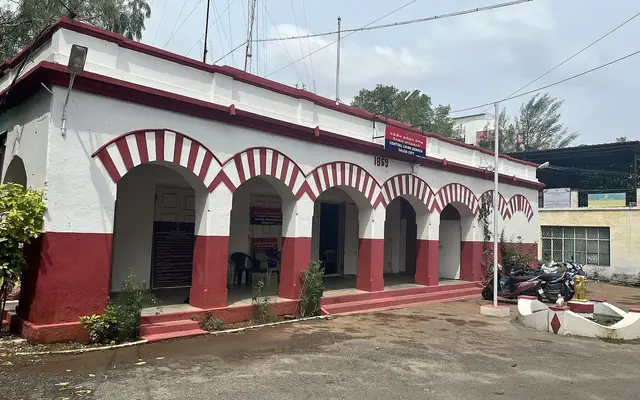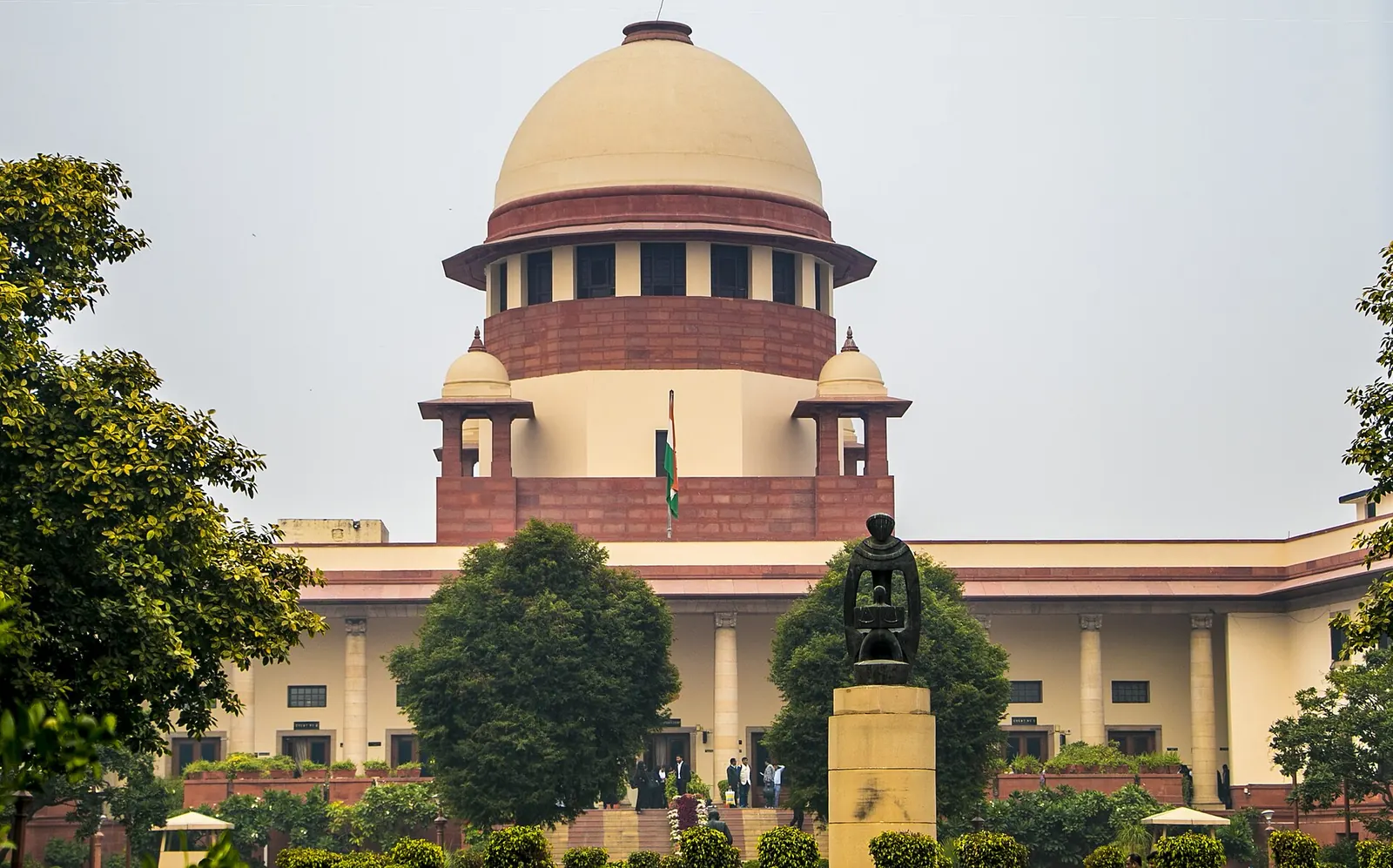
If you are arrested in India, Indian or foreign, the police must tell you the grounds of arrest (in writing, the Supreme Court said in November 2025), let a relative or friend be told where you are held, allow you to meet a lawyer, have you medically examined, prepare a signed arrest memo, and produce you before a magistrate within 24 hours. These rights come from Article 22 of the Constitution and the 1996 D.K. Basu guidelines; since 1 July 2024 most sit in the BNSS (ss.35 to 38, 43, 47, 48, 53, 58), replacing CrPC ss.41 to 41D, 46, 50, 50A, 54 and 57.
- Article 22(1): you must be told the grounds of arrest and may consult a lawyer of your choice.
- 24 hours: the outer limit before you see a magistrate, under Article 22(2) and BNSS s.58 (old CrPC s.57).
- Written grounds, 2 hours before remand: the rule for every offence after Mihir Rajesh Shah (6 November 2025).
- Up to 7 years: for offences with this maximum, police should usually issue a notice to appear, not arrest (BNSS s.35, old CrPC s.41A; Arnesh Kumar, 2014).
- Foreigners can ask that their consulate be informed "without delay" (Vienna Convention on Consular Relations, Art. 36).
Arrest in India is a moment when people lose track of what is legal. Calls go unanswered, a "come to the station for some questions" becomes a night in the lock-up, and families learn about it hours later.
The law is in fact detailed. The gap is in knowing it at 11 pm in a police jeep. This is general information, not legal advice. If you or someone close is arrested, get a lawyer; anyone in custody is entitled to free legal aid under section 12 of the Legal Services Authorities Act, 1987.
Where do your rights on arrest come from?
Three layers of law protect an arrested person: the Constitution, Supreme Court guidelines, and the procedure code that turned many of those guidelines into sections.
- Constitution. Article 22(1): told the grounds "as soon as may be", and the right to consult and be defended by a lawyer of your choice. Article 22(2): produced before the nearest magistrate within 24 hours, excluding travel time. Article 20(3): no accused can be compelled to be a witness against themselves. Article 21: life and personal liberty.
- Court-made rules. D.K. Basu v. State of West Bengal (18 December 1996) laid down 11 requirements; Arnesh Kumar v. State of Bihar (2 July 2014) limited arrests for offences up to 7 years.
- Statute. The CrPC amendments of 2009 wrote the D.K. Basu rules into sections 41B, 41D and 50A; the BNSS carried them over in 2024.
Article 22(3) has one big exception: the protections in clauses (1) and (2) do not apply to preventive detention laws or to an "enemy alien". This guide is about ordinary criminal arrests.
On 26 August 1986, the executive chairman of Legal Aid Services, West Bengal, D.K. Basu, wrote a letter to the Chief Justice of India. He attached news reports from The Telegraph, The Statesman and Indian Express about people dying in police lock-ups, and asked the Court to treat the letter as a petition.
A year later, on 29 July 1987, Ashok Kumar Johri wrote about the death of Mahesh Bihari in police custody at Pilkhana, Aligarh. The Court joined the two letters, sent notices to every state and the Law Commission, and on 18 December 1996 a bench of Justices Kuldip Singh and A.S. Anand issued 11 requirements for every arrest. Officials who ignored them, it said, faced departmental action and contempt of court.
Indian Kanoon: D.K. Basu vs State of West Bengal, Supreme Court, 18 December 1996
What are the D.K. Basu guidelines, and where are they now in the BNSS?
Most of the 11 D.K. Basu requirements are now statutory sections, so breaking them breaks a law, not only a court order. The table maps each right to its old and new section, following the BPR&D comparison of the two codes released through PIB in 2024.
| Your right | BNSS 2023 | Old CrPC | D.K. Basu |
|---|---|---|---|
| Arrest only when necessary; notice to appear for offences up to 7 years | s.35 | s.41, 41A | No |
| Officer's name tag visible; arrest memo witnessed and countersigned | s.36 | s.41B | Rules 1, 2 |
| Arrest details displayed by a designated police officer | s.37 | s.41C | Rule 11 |
| Meet a lawyer during interrogation (not throughout) | s.38 | s.41D | Rule 10 |
| Rules for arresting women; limits on handcuffs | s.43 | s.46 | No |
| Told the grounds, and the right to bail if bailable | s.47 | s.50 | No (Art. 22) |
| A relative or friend told, and the district's designated officer | s.48 | s.50A | Rules 3, 4, 5 |
| Medical examination; a woman examined by a woman doctor | s.53 | s.54 | Rules 7, 8 |
| Produced before a magistrate within 24 hours | s.58 | s.57 | No (Art. 22) |
| Police custody, at most 15 days in total | s.187 | s.167 | No |
What the new code added
- Older and infirm people. Under s.35(7), no arrest for an offence punishable with under 3 years, if the person is infirm or over 60, without a DSP-rank officer's permission.
- Any magistrate will do. Section 58 now says production before a magistrate's court "whether having jurisdiction or not", so distance is no excuse.
- Handcuffs by list. Section 43(3) allows handcuffs only for named categories such as habitual offenders, escapees, terror, organised crime, murder and rape accused.
- Two names, not one. Section 48 adds the district's designated police officer to the people who must be told of your arrest.
Can police arrest without a warrant in India?
Yes, for cognizable offences, but not freely. BNSS s.35 (old CrPC s.41) lets police arrest without a warrant when an offence is cognizable. For offences punishable with up to 7 years, the officer must also have reason to believe arrest is necessary: to prevent another offence, for a proper investigation, to stop evidence tampering or threats to witnesses, or to ensure the person appears in court. The reasons must be recorded.
If none of those apply, the officer issues a notice of appearance. As long as you comply, you should not be arrested unless the officer records fresh reasons.
The Supreme Court turned this into a checklist in Arnesh Kumar. It used NCRB data for 2012: 1,97,762 people arrested under IPC s.498A (cruelty by husband or relatives, now BNS ss.85 and 86), with a charge-sheet rate of 93.6% but a conviction rate of only 15%. The Court ordered police to fill a checklist before every such arrest, magistrates to read it before ordering detention, and notices of appearance to be served within two weeks.
See the data as a table
| Share of cases (%) | |
|---|---|
| Charge-sheeting rate | 93.6 |
| Conviction rate | 15 |
Source: NCRB Crime in India 2012, as cited by the Supreme Court in Arnesh Kumar v. State of Bihar (2014) · 1,97,762 people were arrested under s.498A in 2012. The gap between arrest and conviction is why the Court restricted automatic arrests.
What exactly must happen at the moment of arrest?
The arrest memo is the single most useful document, because it fixes the time and place of arrest and the names of the officers. Here is the sequence the law expects.
- Identification. Officers wear clear name tags with designations (BNSS s.36(a), D.K. Basu rule 1).
- Arrest memo. Dated and timed, attested by a family member or a respectable local person, and countersigned by you (s.36(b)). Read it before signing.
- Grounds. You are told the full grounds and, if the offence is bailable, that you can get bail (s.47). After November 2025, those grounds must also reach you in writing.
- Phone call by proxy. Police inform a person you nominate about the arrest and where you are held, and record whom they told (s.48). D.K. Basu set 8 to 12 hours for relatives outside the district.
- Medical check. A doctor examines you and records injuries; a woman is examined by or under a woman medical officer (s.53).
- Lawyer. You may meet a lawyer during interrogation, though not for the whole of it (s.38).
- Magistrate. You are produced within 24 hours (s.58). The magistrate decides on police or judicial custody under s.187.
Do the police have to give the grounds of arrest in writing?
Yes, for every offence, since November 2025. In Vihaan Kumar v. State of Haryana (7 February 2025) the Supreme Court held that failing to tell an arrested person the grounds breaks Article 22(1) and makes the arrest and the remand illegal; telling someone only that they are arrested is not enough. The police, not the accused, must prove they complied. The same judgment condemned the Haryana Police for chaining the accused to a hospital bed.
Then, on 6 November 2025, in Mihir Rajesh Shah v. State of Maharashtra, the Court ruled that grounds must be given in writing, in a language the person understands, under any law. Where that is impractical at the moment of arrest, oral grounds can come first, but the written copy must reach the person at least two hours before they are produced for remand. Miss that, and the arrest and remand become illegal.
So the practical line to remember is short: ask for the grounds of arrest in writing, and do not sign a blank or unread memo.
Is the system living up to these rules?
Not consistently. The Status of Policing in India Report 2019 by Common Cause and Lokniti-CSDS surveyed close to 12,000 police personnel in 21 states. Its numbers explain why the guidelines exist.
A survey of nearly 12,000 police personnel across 21 states, plus more than 10,000 family members. About four in five officers agreed there is "nothing wrong" in police beating criminals to extract confessions, and 74% agreed fully or partly that a violent attitude towards criminals is acceptable for the greater good. Only about 6% had received in-service training in the previous five years. Limit: attitudes, not observed behaviour; reported in Scroll's analysis of the survey.
Read the report (free)The primary source for the 11 arrest requirements. The Court reviewed a decade of reports from every state and the Law Commission on custodial deaths and torture, held that compensation for proven violations of Article 21 is a public law remedy based on strict liability (sovereign immunity does not apply), and made non-compliance a ground for departmental action and contempt in any High Court. Limit: the guidelines depend on magistrates and senior officers actually checking memos and diaries.
Read the judgment (free)The other measure of the system is how long people stay in custody before trial. On 31 December 2024 India held 5,11,542 prisoners, and 72.6% of them were pre-trial or remand prisoners, according to NCRB data compiled by the World Prison Brief.
See the data as a table
| Share of prisoners (%) | |
|---|---|
| Pre-trial / remand | 72.6 |
| Convicted and others | 27.4 |
Source: World Prison Brief, India (NCRB data) · Total prison population 5,11,542. Most undertrials have not been convicted of anything.

What should you say and do if police come for you?
Stay calm, be polite and be precise. Resisting arrest is a separate offence; insisting on paperwork is not.
- "Am I under arrest, or is this a notice?" If it is a notice to appear, you go at the stated time; you are not under arrest.
- "May I see your identity and the grounds in writing?" Note names and badge numbers.
- "Please inform [name] at [number]." Give one person you trust. Ask that it be written in the memo.
- "I would like to speak to my lawyer." If you have none, ask for the legal aid lawyer; custody makes you eligible.
- Say little else. Article 20(3) means you cannot be forced to incriminate yourself, and a confession to a police officer is generally not admissible in court.
- At the magistrate: tell the magistrate about any injury or ill treatment, and whether the written grounds reached you in time.
What rights does a foreigner have when arrested in India?
All of the above, plus consular access. The constitutional rights in Article 22 apply to "any person", and the BNSS makes no distinction by nationality.
- Consulate told. Under Article 36(1)(b) of the Vienna Convention on Consular Relations, if you request it, authorities must inform your consulate "without delay" and forward your letters, and must tell you about this right.
- Consular visits. Article 36(1)(c) lets consular officers visit, talk to you and arrange legal representation, unless you expressly object.
- Interpreter. Written grounds must be in a language you understand, per Mihir Rajesh Shah.
- Passport and visa. Expect the passport to be seized and the FRRO to be informed; overstays caused by a case need regularising. See what the 2025 immigration law says about overstay.
If you were the victim rather than the accused, the other half of this law is your right to have a complaint recorded anywhere: read how a Zero FIR works. For the bigger picture of how India explains itself, see Kyun.
What's new
- Supreme Court: grounds of arrest must be in writing, in the accused’s language, under any law Bar & Bench, Nov 2025
- Vihaan Kumar: failure to give grounds of arrest vitiates arrest and remand Supreme Court Observer, Feb 2025
- India’s prison population at 5,11,542, with 72.6% on remand (31 Dec 2024 data) World Prison Brief, 2026
Questions people ask
Can police keep me overnight without telling my family?
No. Under BNSS s.48 (old CrPC s.50A) the police must inform a relative, friend or other person you nominate about the arrest and the place of detention, and record it in a book. D.K. Basu required this within 8 to 12 hours where the relative lives outside the district.
Can I have a lawyer during police questioning?
Yes, during interrogation but not necessarily throughout it, under BNSS s.38 (old CrPC s.41D). Article 22(1) also gives the right to consult a lawyer of your choice, and free legal aid is available to anyone in custody.
How long can police keep me in their custody?
Up to 24 hours before a magistrate must see you (Art. 22(2), BNSS s.58). After that, a magistrate can authorise police custody of up to 15 days in all under BNSS s.187 (old CrPC s.167); the rest of the time is judicial custody.
Sources
- Indian Kanoon: D.K. Basu vs State of West Bengal, Supreme Court (1996)
- Indian Kanoon: Arnesh Kumar vs State of Bihar, Supreme Court (498A data for 2012) (2014)
- PIB / BPR&D: CrPC and BNSS, a comparative analysis (arrest chapter) (2024)
- Supreme Court of India: Vihaan Kumar v. State of Haryana, judgment (2025)
- Bar & Bench: Mihir Rajesh Shah v. State of Maharashtra, written grounds of arrest (2025)
- Scroll.in: High approval for police violence in India, 80% among police (SPIR 2019 data) (2019)
- Common Cause and Lokniti-CSDS: Status of Policing in India Report 2019 (2019)
- World Prison Brief: India (NCRB data, 31 December 2024)
- United Nations: Vienna Convention on Consular Relations, 1963, Article 36
- Supreme Court Observer: Vihaan Kumar v. State of Haryana (2025)

Sapta (Saptarshi Sarkar) is a mechanical engineer turned marketer in Bengaluru and a solo touring rider. He writes the seven Saptaverse blogs. Work with him or read more of Whyblog.