An Inner Line Permit (ILP) is a travel document that Indian citizens from outside the state need to enter Arunachal Pradesh, Nagaland, Mizoram and Manipur. It comes from the Bengal Eastern Frontier Regulation, 1873, a British law that drew an "Inner Line" to keep plains traders and colonial subjects out of the hills, mainly to protect the Raj's tea, timber and trade interests. Independent India kept it to protect tribal land and identity; Manipur was added on 11 December 2019, and the permit is now applied for online in each state for about ₹100 to ₹200 for a tourist.
- 1873: the Bengal Eastern Frontier Regulation (BEFR) created the Inner Line; it came into force on 1 November 1873.
- 4 states need an ILP today: Arunachal Pradesh, Nagaland, Mizoram and, since 11 December 2019, Manipur.
- Dimapur, Nagaland's commercial hub, was brought under the ILP in December 2019, with a residence cut-off of 21 November 1979.
- ₹200 for 30 days in Nagaland and ₹100 for 30 days in Manipur are the domestic tourist permits on the official portals.
- The Gauhati High Court upheld the 1873 regulation and Nagaland's ILP extensions in July 2026.
Visitors from the rest of India are often startled at the gates of the Northeast. A Bengaluru driver's licence and an Aadhaar card are not enough at Bhalukpong, Dimapur or Lengpui airport; a separate pass is.
The rule is not a modern security measure. It is one of the oldest colonial laws still enforced in India, rewritten in 1950 and again in 2019, and defended today by the people it was once used to wall off. This is general information, not legal advice; check the state portal before you travel.
What is an Inner Line Permit?
An ILP is official permission to cross the "Inner Line", a boundary drawn under section 2 of the BEFR. The regulation lets the government prohibit citizens, or any class of them, from going beyond the line without a pass, and lets it set the form of the pass, its conditions and its fee (section 4).
- Who needs it: Indian citizens who are not residents or indigenous inhabitants of the state, whether tourists, workers, traders or students.
- Who issues it: each state government, through online portals, liaison offices and gate counters.
- What it is not: it is not the Protected Area Permit (PAP) that foreigners need for some border areas. That is a separate order of 1958; see our guide to the Protected Area Permit for foreigners.
The penalty is old but real. Under section 3, as the regulation reads today, crossing without a pass can bring up to one year in prison, a fine of up to ₹1,000, or both, and section 4 applies the same to anyone who breaks a pass's conditions.
Why did the British draw the Inner Line in 1873?
To protect commerce, not tribes. The regulation was dated 27 August 1873 and took effect on 1 November 1873. In the Brahmaputra valley the East India Company and British planters had pushed tea gardens, timber and rubber trade into the foothills. Raids by hill communities on gardens and trading posts meant costly punitive expeditions.
The Inner Line was the cheaper answer. It fixed where British administration stopped, barred "British subjects" from wandering beyond without a pass, and so prevented private traders from starting quarrels the government would have to finish.
- Section 5 shows the commercial mind behind it: rubber, wax, ivory and other jungle products found with a convicted person could be confiscated.
- Hills left alone: beyond the line, the British largely did not administer or tax, which is part of why customary law survived there.
Why did independent India keep a colonial permit?
Because the hill states asked for it. After 1947 the reasoning flipped. A tool built to keep plains people from disturbing British commerce became a tool to keep land, jobs and politics in the hands of small tribal populations. Nagaland's ILP page frames it as protection for tribal populations and customary laws.
The constitutional basis is Article 372, which keeps pre-1950 laws alive until changed. The Adaptation of Laws Order, 1950 removed the words "British subject", and that is how a Victorian regulation became a law about Indian citizens.
A critical review of colonial regulations, the 2015 Manipur ILP bills and press records. It dates the BEFR to 27 August 1873 and its commencement to 1 November 1873, and sets out why the demand split Manipur: the Meitei hold about 10% of the state's area and 64.9% of its population, while Naga and Zo communities hold about 90% of the area and 35.1% of the people. Three bills passed in August 2015 sparked protests in which nine people died. Limit: a short qualitative paper based on secondary sources.
Read the paper (free)How did Manipur get the ILP in 2019?
Through a presidential order signed in the same week Parliament passed the Citizenship (Amendment) Bill. The CAA excluded areas under the Inner Line from its citizenship provisions, so being inside the line became valuable overnight.
On 9 December 2019 the Lok Sabha passed the Citizenship (Amendment) Bill, and the Home Minister announced that Manipur would come under the Inner Line. The same day, Nagaland notified that the whole of Dimapur district, until then outside the line, now needed an ILP, with non-indigenous people who settled after 21 November 1979 given 90 days to get one. On 11 December, as the Rajya Sabha passed the bill, the President signed the Adaptation of Laws (Amendment) Order, 2019 under Article 372(2). It rewrote the 1873 regulation's preamble to cover "States of Arunachal Pradesh, Manipur, Mizoram and area of districts of State of Nagaland as notified from time to time". A 146-year-old law grew by a whole state in three days.
SCC Online: The Adaptation of Laws (Amendment) Order, 2019 notified by PresidentPRS's summary records that the bill's citizenship provisions do not apply to Sixth Schedule tribal areas of Assam, Meghalaya, Mizoram and Tripura, or to areas under the Inner Line of the BEFR. It passed the Lok Sabha on 9 December and the Rajya Sabha on 11 December 2019. PRS questions the logic: once a migrant there became a citizen, they would face the same ILP restrictions as any other Indian. Limit: a legislative brief, not an impact study.
Read the brief (free)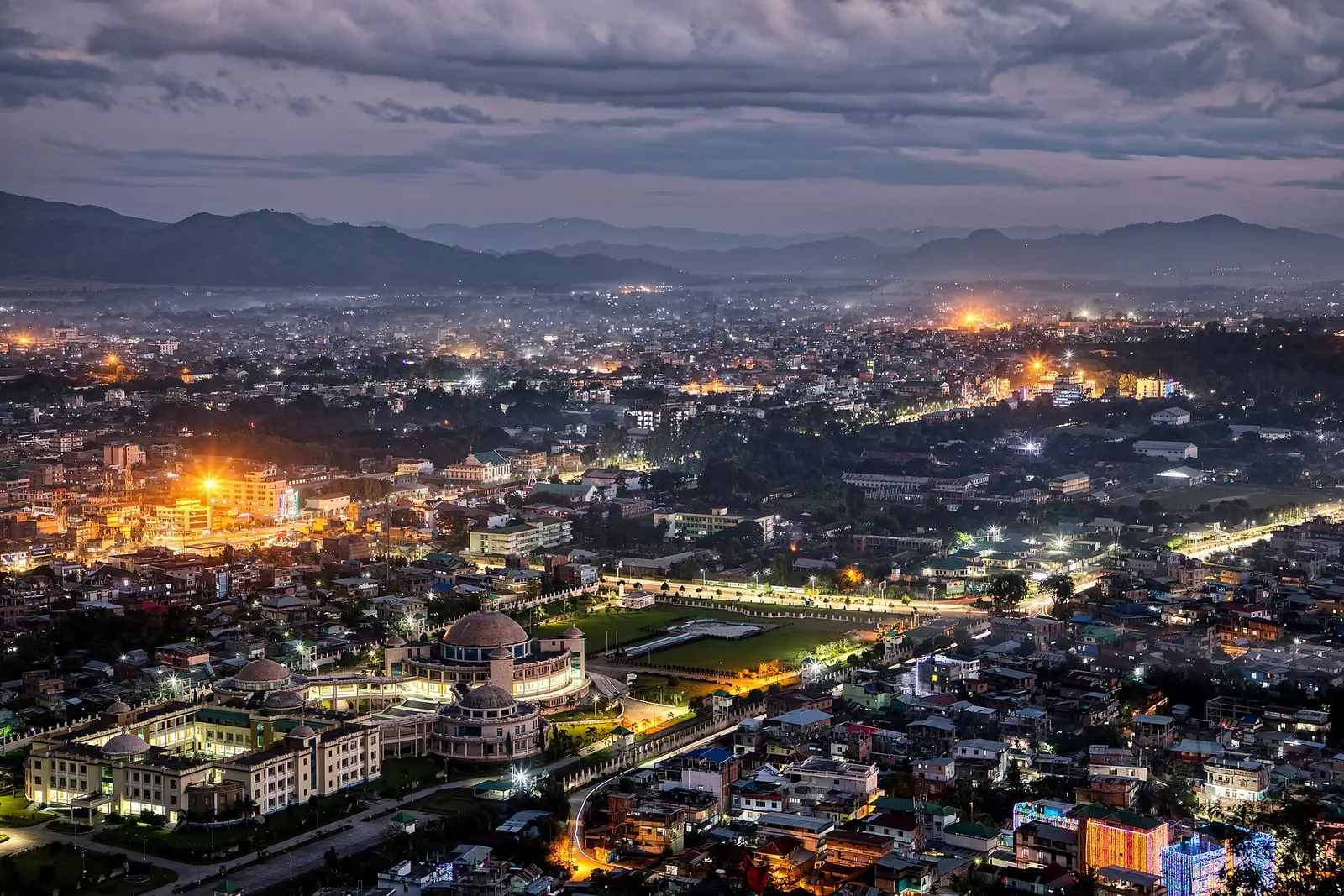
Is the Inner Line Permit constitutional?
So far, the courts have let it stand. Critics argue it breaks Article 19(1)(d), the right of every citizen to move freely throughout India, as well as Articles 14 and 21. Supporters point to Article 19(5), which allows reasonable restrictions in the interests of the general public or to protect Scheduled Tribes.
- January 2022: the Supreme Court issued notice to the Union and Manipur governments on a challenge to Manipur's ILP, as reported by The Hindu.
- July 2026: a Gauhati High Court bench of Chief Justice Ashutosh Kumar and Justice Arun Dev Choudhury dismissed three petitions and upheld Nagaland's notifications of 20 September 2024 and 27 May 2025 extending the ILP to Dimapur, Chümoukedima and Niuland.
- The reasoning: the BEFR is valid law under Article 372; the permit is "regulatory rather than prohibitory"; and security and migration concerns fall within "general public interest" under Article 19(5).
The same line that once kept Indians out for the sake of British tea now keeps outsiders from buying tribal land. The law did not change much; who it serves did.
How do you get an ILP, state by state?
Apply online a few days before travel, carry a printout or the digital copy, and keep your ID matching the application. The figures below are from the official portals where they publish them.
| State | Tourist permit | Fee | Where |
|---|---|---|---|
| Nagaland | Domestic, 30 days | ₹200 (foreigner ₹500) | ilp.nagaland.gov.in |
| Manipur | Temporary, 30 days, non-renewable | ₹100 | Online portal; kiosks at Imphal airport, Mao Gate, Jiribam |
| Mizoram | Temporary, 15 days, extendable by 15 | see portal | ilp.mizoram.gov.in; Lengpui airport counter |
| Arunachal Pradesh | Tourist, 15 days, extendable | see portal | eilp.arunachal.gov.in (Tourist eILP since Nov 2022) |
See the data as a table
| Validity (days) | |
|---|---|
| Nagaland | 30 |
| Manipur | 30 |
| Mizoram | 15 |
| Arunachal Pradesh | 15 |
Source: Nagaland and Manipur ILP portals; Wikipedia summary of Mizoram and Arunachal rules · Mizoram and Arunachal permits can be extended. Longer permits exist for workers, traders and students.
- Pick the right permit. Tourist or temporary for a holiday; work, trade or student permits need a sponsor or employer.
- Upload ID and a photo. Use the same ID you will carry. Manipur asks for a valid ID and a passport photo; long-stay permits need address proof and sponsor details.
- Pay online and download the permit. Manipur's portal says most are processed within minutes to hours.
- Carry it at every gate. Checks happen at state entry gates, airports and railheads, and sometimes inside towns.
- Renew before expiry, or leave. Overstaying a pass breaks its conditions under BEFR s.4.
Which other places need permits for Indians?
The ILP is the only whole-state permit, but several border areas have their own passes. Sikkim's Nathu La and Gurudongmar, parts of Ladakh such as Pangong and Nubra, Lakshadweep, and high routes in Himachal and Uttarakhand all need area permits, according to a Business Today round-up in October 2026. Ladakh dropped its ILP for Indians in 2021.
Planning the trip? Read Manipur's safety status in 2026, the Hornbill Festival guide, and why Nagaland and Mizoram are among India's dry states. More India questions live on Kyun.
What's new
- Gauhati High Court upholds entry permits for Dimapur, Chümoukedima and Niuland LiveLaw, Jul 2026
- Why Indian citizens need permits to visit parts of India Business Today, Oct 2026
- Manipur’s ILP portal and self-service kiosks issue permits on arrival Government of Manipur, 2026
Questions people ask
Do I need an ILP for Nagaland if I am Indian?
Yes, unless you are an indigenous inhabitant or resident covered by an exemption. A domestic tourist ILP costs ₹200 for 30 days on the state portal, and since 2019 it applies in Dimapur too. Transit passengers with valid tickets are exempt in Dimapur.
How do I apply for a Manipur ILP online?
Register on the Manipur ILP portal, upload your ID and photo, pay ₹100 for a 30-day temporary permit and download it. Self-service kiosks at Imphal airport, Mao Gate and Jiribam can also issue one on arrival.
Is the ILP required for Assam or Meghalaya?
No. Assam has no ILP, and Meghalaya does not have one either, though groups there have demanded it. Meghalaya's tribal areas fall under the Sixth Schedule instead.
Can a foreigner get an ILP?
Foreigners deal mainly with the Protected Area Permit regime, but some states also charge them for an ILP: Nagaland's portal lists a ₹500 foreigner ILP for 30 days. Check both before travel.
Sources
- BNB Legal: Bengal Eastern Frontier Regulation, 1873 (bare act, sections 2 to 6)
- SCC Online: The Adaptation of Laws (Amendment) Order, 2019, S.O. 4433(E) (2019)
- Wikipedia: Inner Line Permit (history, Mizoram and Arunachal rules, 2022 Supreme Court notice)
- Gualnam and Babu: Revisiting the Inner Line Permit System, IJDTSA (2018)
- PRS Legislative Research: The Citizenship (Amendment) Bill, 2019 (2019)
- Morung Express: Nagaland govt expands ILP to cover Dimapur district (21/11/1979 cut-off) (2019)
- EastMojo: Nagaland extends Inner Line Permit to Dimapur amid CAB uproar (transit exemption) (2019)
- LiveLaw: Gauhati High Court upholds entry permits to Nagaland districts (2026)
- Government of Nagaland: ILP fees and validity
- Government of Manipur: ILP online portal
- Government of Arunachal Pradesh: Tourist eILP portal
- Business Today: From colonial lines to protected zones (2026)

Sapta (Saptarshi Sarkar) is a mechanical engineer turned marketer in Bengaluru and a solo touring rider. He writes the seven Saptaverse blogs. Work with him or read more of Whyblog.