About one Indian man in five drinks alcohol, and about one woman in a hundred. The sixth National Family Health Survey (NFHS-6, 2023-24) found that 18.9% of men and 1.1% of women aged 15 and over drink, a ratio of roughly 17 to 1. The gap comes from a stigma that falls on women who drink, from women's own long campaign against liquor (because men's drinking costs households money and safety), and from the fact that the main exceptions are tribal communities in the Northeast, where about a fifth of women in Arunachal Pradesh and Sikkim drink.
- 18.9% of men and 1.1% of women aged 15+ drink alcohol (NFHS-6, 2023-24).
- Among men aged 15-49, drinking fell from 29% (NFHS-4) to 22% (NFHS-5), so the trend is down, not up.
- Arunachal Pradesh (23.2%) and Sikkim (19.9%) are the only states where drinking among women is common.
- Indians who do drink average about 14 litres of pure alcohol a year, close to the UK and US (WHO, 2020).
- Women whose husbands are often drunk report violence at 70.6%, against 22.5% when the husband does not drink (NFHS-5).
This post answers three questions people actually ask: how many Indians drink, whether Indian women drink, and why alcohol carries such a weight of taboo. It uses the government's own household survey, WHO's global alcohol database and two peer-reviewed studies, and it says where each number is weak.
One warning before the numbers. Every figure here is self-reported to a survey interviewer, often with family members nearby. For a behaviour carrying this much stigma, the true share of women who drink is almost certainly higher than what they tell the survey.
How many Indians drink alcohol?
According to NFHS-6, 18.9% of Indian men and 1.1% of women aged 15 and over drink alcohol, almost unchanged from NFHS-5 (18.7% and 1.3%). The survey asks whether the respondent drinks, so it measures current drinkers, not people who tried a glass once.
You will also see 22% of men quoted. That is NFHS-5's figure for men aged 15-49 only, published in 2022. The two numbers are not a contradiction: the 15+ figure includes men over 50, many of whom have stopped, and teenagers, most of whom have not started.
The cleanest trend uses the same age band across rounds. Among men aged 15-49, drinking fell from 29% in NFHS-4 (2015-16) to 22% in NFHS-5 (2019-21), while women stayed at about 1%. NFHS-5 interviewed 7,24,115 women and 1,01,839 men in 707 districts, so these are among the largest alcohol samples anywhere.
See the data as a table
| Men (%) | Women (%) | |
|---|---|---|
| NFHS-4, age 15-49 | 29 | |
| NFHS-5, age 15-49 | 22 | 1 |
| NFHS-5, age 15+ | 18.7 | 1.3 |
| NFHS-6, age 15+ | 18.9 | 1.1 |
Source: NFHS-4/5 via ThePrint (May 2022); NFHS-5/6 15+ via The South First (May 2026) · Compare bars only within the same age band. ThePrint reports women unchanged between NFHS-4 and NFHS-5 without giving the NFHS-4 figure.
Do Indian women drink?
Very few say they do: 1.1% of women aged 15+ in NFHS-6, against 18.9% of men. In most large states the figure is below 1%, for example Karnataka 0.5%, Bihar 0.4% and Kerala, Tamil Nadu, Maharashtra and Gujarat 0.3% each.
The exceptions cluster in the Northeast and in states with large tribal populations. Arunachal Pradesh (23.2%) and Sikkim (19.9%) stand far above everyone else, followed by Telangana (7.1%), Tripura (6.0%), Assam (5.8%), Chhattisgarh (5.7%) and Jharkhand (5.5%). In NFHS-5, women from Scheduled Tribes had the highest drinking rate of any caste or tribe group, at 4%.
See the data as a table
| Women who drink (%) | |
|---|---|
| Arunachal Pradesh | 23.2 |
| Sikkim | 19.9 |
| Telangana | 7.1 |
| Tripura | 6.0 |
| Assam | 5.8 |
| Chhattisgarh | 5.7 |
| Jharkhand | 5.5 |
| Goa | 2.1 |
| Andhra Pradesh | 0.6 |
| Karnataka | 0.5 |
| Bihar | 0.4 |
| Kerala | 0.3 |
| Tamil Nadu | 0.3 |
| Maharashtra | 0.3 |
| Gujarat | 0.3 |
Source: NFHS-6 state figures reported by The South First (May 2026) · States not reported in the article are left out. National figure: 1.1%.
Women who drink are not, on average, light drinkers. NFHS-5 found that 17% of women who drink do so almost every day, slightly more than the 15% of male drinkers who drink daily. Low prevalence does not mean low harm for the women who do drink.
Why is the gap between men and women so wide?
No survey can measure stigma directly, but the data point to three forces that push in the same direction. Each has evidence behind it; how much weight each carries is still argued over by researchers.
- A double standard on respectability. Drinking by men is tolerated or expected in many communities; drinking by women is read as a sign of bad character. That keeps actual drinking low and reported drinking even lower.
- Women bear the cost of men's drinking. Household money and safety are on the line, which turns many women into organised opponents of liquor rather than consumers of it.
- Culture, not modernity, predicts women's drinking. The states where women drink most are not the richest or most urban. They are the ones where brewing is part of tribal custom.
Why does men's drinking turn women against alcohol?
Because the survey data link it directly to violence at home. In NFHS-5, 22.5% of married women whose husbands do not drink reported physical or sexual violence from him. The share rose to 33.0% when the husband drinks without getting drunk, 46.4% when he sometimes gets drunk and 70.6% when he often gets drunk.
That is a correlation, not proof that alcohol causes the violence, and the study below tests exactly that. But it explains why, across decades, women's groups in India have been the loudest voices for closing liquor shops.
In April 2016 Bihar banned the sale, consumption and possession of alcohol. The ban followed campaigns by women's groups angry that poor workers were spending their small wages on drink. Six years later, in December 2022, men in two villages of Saran district, about 60 km north of Patna, began vomiting after drinking illicit liquor. Some lost their sight; at least 31 were dead within days, and the final toll was reported as 73. Many did not seek help at first because they feared arrest under the ban. Opposition parties demanded that the law be scrapped. Chief Minister Nitish Kumar refused, saying the prohibition was the answer to the appeals of Bihar's women, not his personal choice.
Al Jazeera: At least 31 dead in India's Bihar after drinking toxic alcohol (Dec 2022)The episode captures the whole gender gap in one place: men drinking, women organising against it, and a state choosing women voters over its excise revenue. The detail of how each state handles liquor is in which Indian states drink the most, and the poisoned-liquor side in why hooch tragedies keep happening.
The authors pooled NFHS-4 and NFHS-5 data on about 1.2 lakh currently married women. Compared with women whose husbands did not drink, those whose husbands were frequently drunk had 4.82 times the odds of reporting violence against them, and 14.12 times the odds of violence going both ways. They then compared Bihar, after its 2016 ban, with neighbouring Jharkhand: the ban produced no statistically significant fall in violence. The limit: the Bihar and Jharkhand sample was only about 12,000 women, too small to detect modest effects, and enforcement of the ban was uneven.
Read the paper (free)Does prohibition change who drinks?
For men, surprisingly little; for women, it seems to matter. The largest early study on this, using NFHS-2 (1998-99), found no significant difference in men's drinking between states with and without prohibition, but women in non-prohibition states were about three times as likely to drink.
A multilevel analysis of 3,01,984 adults in 92,447 households across 26 states (NFHS-2, 1998-99). Men with no schooling were 2.28 times as likely to drink as men with a postgraduate degree, and men in the poorest fifth of households 1.92 times as likely as the richest fifth. For women the poorest fifth had 2.72 times the odds, and education showed a U-shape: the least and the most educated drank more. Prohibition made no clear difference for men (odds ratio 1.36, not significant) but women in non-prohibition states had 3.04 times the odds. The limit: the data are more than 25 years old and self-reported.
Read the paper (free)The pattern makes sense if men who want a drink will find one across a state border or from a bootlegger, while women, who face far more risk in buying from an illegal seller, simply stop. It also means that the people most touched by prohibition are the people who drank least to begin with.
Who drinks among men?
Drinking among Indian men is not a habit of the rich. NFHS-5 found the highest rates among men of "other religions" (49%), Christians (36%), men from Scheduled Tribes (34%) and men with fewer than five years of schooling (33%). Men aged 35-49 drank more (30%) than younger men.
| Group (NFHS-5, men 15-49) | Share who drink | What it suggests |
|---|---|---|
| Other religions | 49% | Includes many Northeast and tribal faiths |
| Christians | 36% | Concentrated in the Northeast and Kerala |
| Scheduled Tribes | 34% | Brewing as tradition |
| Fewer than 5 years of schooling | 33% | Drinking falls with education among men |
| Aged 35-49 | 30% | Peak drinking age band |
| All men 15-49 | 22% | National average |
This is why the stereotype of the urban professional with a whisky glass is misleading. The heavy-drinking India is rural, poorer and often tribal, and its drink of choice is spirits, not beer.
Do Indians who drink, drink a lot?
Yes. WHO estimates that Indian drinkers aged 15+ consume about 14.0 litres of pure alcohol a year each (2020, three-year average), almost the same as drinkers in the UK (13.8) and the US (13.9), and nearly double China's 7.6. India looks like a low-drinking country only because so many people, especially women, do not drink at all.
The drink is mostly hard liquor. Spirits made up 92.9% of India's recorded alcohol in 2024, beer 7.0% and wine 0.1%, according to WHO's Global Health Observatory. Spirits make heavy sessions easier: WHO estimates that 39% of Indian drinkers had a heavy drinking episode in the past 30 days in 2020 (44.6% of male drinkers).
| Country | Litres per drinker, 2020 | Male drinkers | Female drinkers | Heavy episode in past 30 days (drinkers) |
|---|---|---|---|---|
| India | 14.0 | 17.5 | 6.7 | 39.0% |
| United States | 13.9 | 19.8 | 6.9 | 42.1% |
| United Kingdom | 13.8 | 19.8 | 6.9 | 37.8% |
| Sri Lanka | 7.8 | 10.2 | 3.9 | 32.2% |
| China | 7.6 | 10.1 | 3.8 | 22.2% |
| Nepal | 4.1 | 5.3 | 2.1 | 37.9% |
These WHO figures are modelled estimates that combine sales data, unrecorded alcohol and surveys, so they do not line up exactly with NFHS. WHO estimates that about 39% of Indian men drank in the past year, double the 18.9% NFHS counts as current drinkers, partly because the two ask different questions. Treat the table as a comparison of drinking styles, not of headcounts.
Is drinking in India rising or falling?
By the survey measure, falling or flat. Men aged 15-49 went from 29% to 22% between NFHS-4 and NFHS-5, and the 15+ figure barely moved from 18.7% to 18.9% between NFHS-5 and NFHS-6. Women's reported drinking slipped from 1.3% to 1.1%.
By the sales measure, slowly rising. WHO's recorded consumption for India went from 3.08 litres per adult in 2018 to 3.35 litres in 2024, after a dip to 2.43 in the lockdown year 2020. The two measures can both be right if fewer people drink but those who drink buy more legal liquor, or if more drinking moves from illicit to licensed outlets.
- Goa showed the biggest fall among men, from 36.8% to 22.4% between NFHS-5 and NFHS-6, and women there dropped from 5.5% to 2.1%.
- Uttar Pradesh rose from 14.5% to 18.7% among men, and Kerala from 19.9% to 22.7%.
- Sikkim's women rose from 16.2% to 19.9%.
State-level changes of a few points can be sampling noise, so treat single-state swings with caution until the full NFHS-6 state reports are out.
What should a visitor or new resident know?
For someone arriving from a country where most women drink, the practical picture is simple: drinking is legal in most of India, but rules and social comfort vary sharply by place.
- Dry states exist. Bihar, Gujarat, Nagaland and Mizoram restrict or ban liquor; Gujarat runs a permit system for visitors. See dry states and liquor permits.
- The legal age differs by state. Check before you order: legal drinking age by state.
- Public drinking is usually an offence, even where buying is legal: drinking in public and the law.
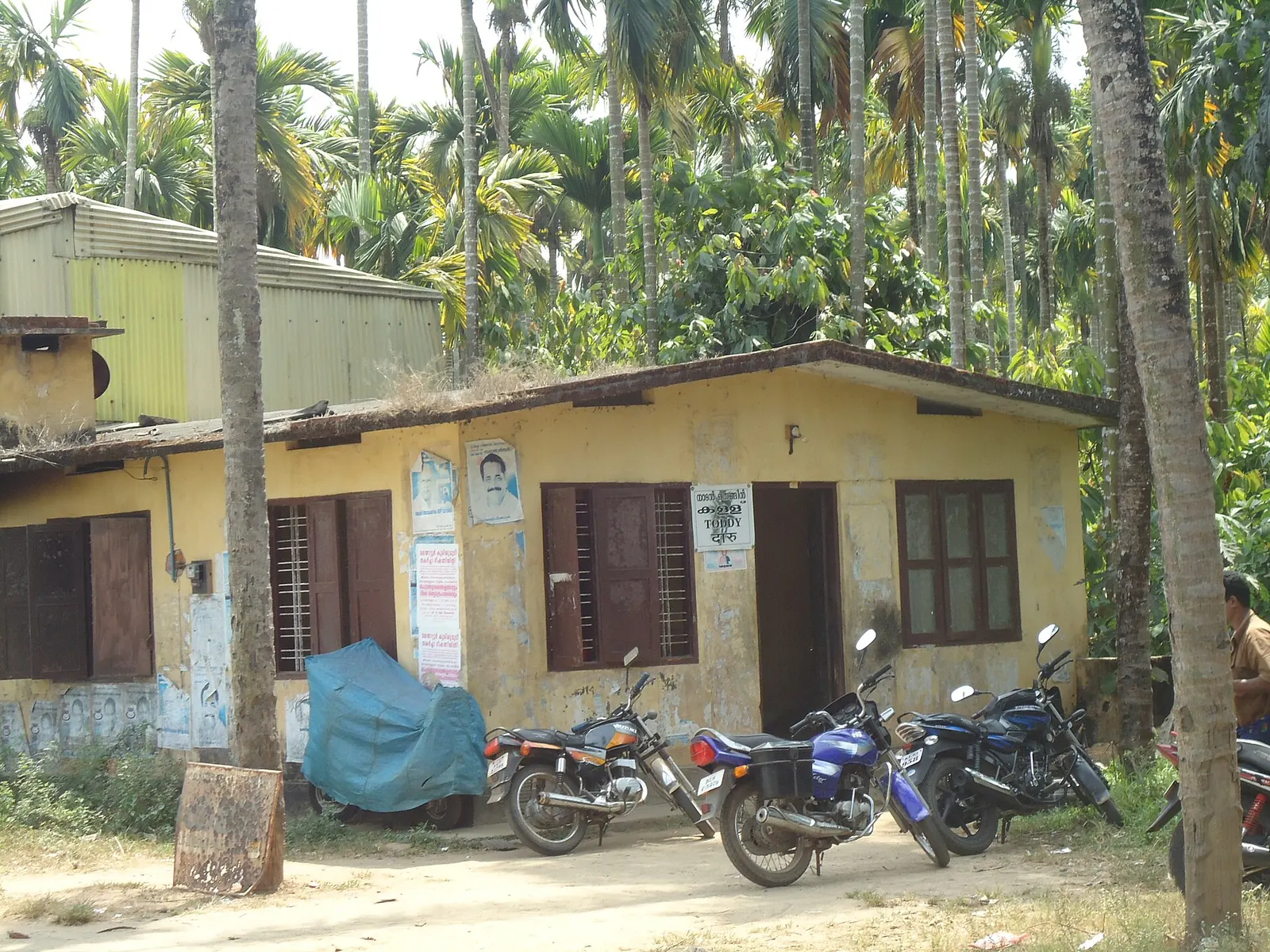
- Women drinking in a hotel bar or a city pub in Bengaluru, Mumbai, Goa or Delhi is ordinary. A woman drinking in a small-town liquor shop or a village toddy shop is not, and will draw attention.
- Never drive after drinking. Penalties are heavy: drunk driving law in India.
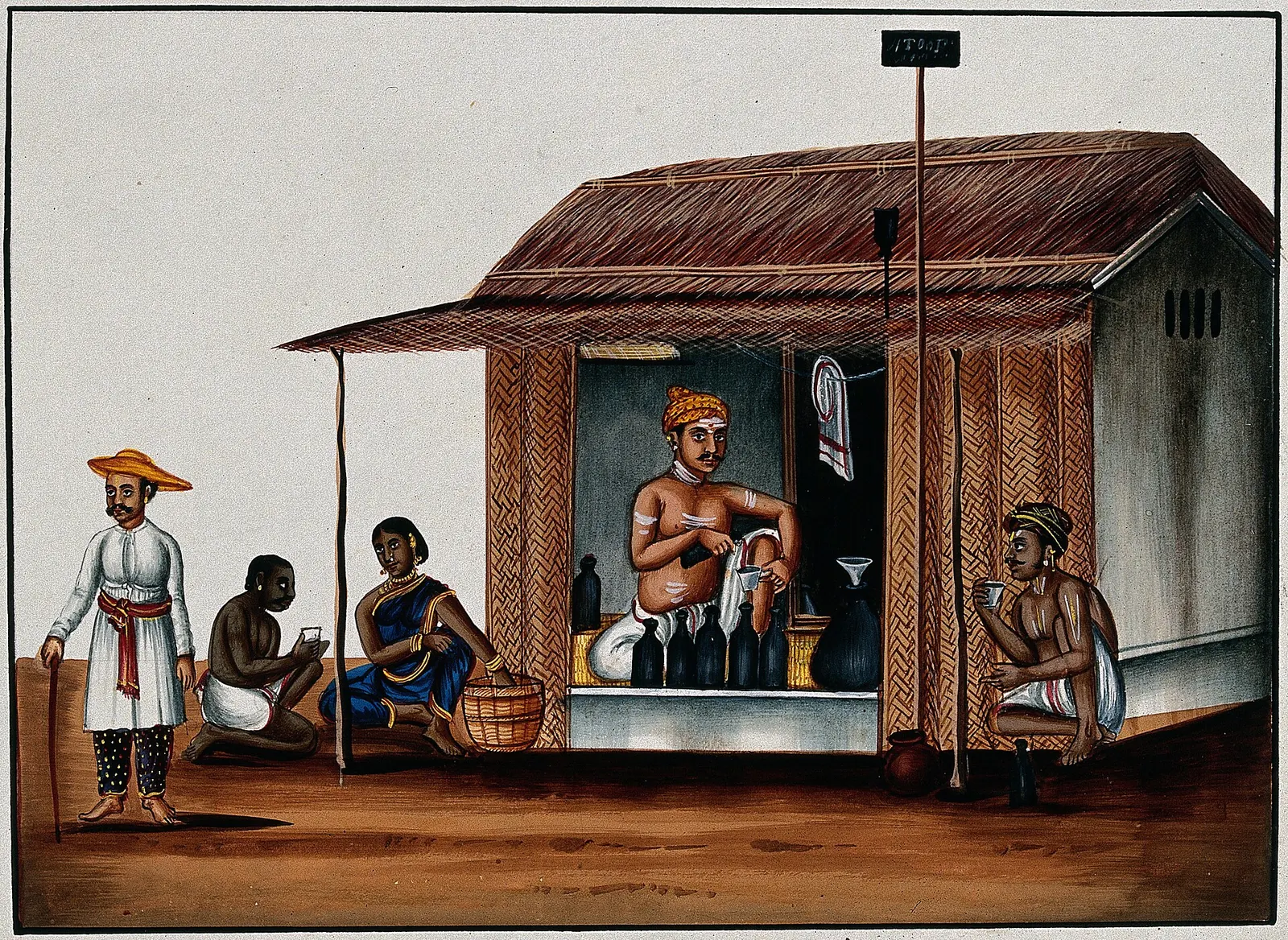
India is not a nation of light drinkers. It is a nation of non-drinkers and heavy drinkers living side by side.
That split explains the politics. A party that bans liquor wins the gratitude of the women who pay for men's drinking and loses little from drinkers who will buy across the border anyway. The excise money it gives up is the subject of the companion post on state-by-state drinking. For more on how gender rules shape everyday behaviour, see why women smoking is still taboo, and for the wider Kyun series, the Kyun world page.
What's new
- NFHS-6 puts men's drinking at 18.9% and women's at 1.1%, with Telangana top among large states The South First, May 2026
- Study finds Bihar's liquor ban did not significantly cut domestic violence compared with Jharkhand Alcohol and Alcoholism, Aug 2025
Questions people ask
What percentage of Indians drink alcohol?
About 18.9% of men and 1.1% of women aged 15 and over, according to NFHS-6 (2023-24). That works out to roughly one adult in ten overall. Among men aged 15-49, the figure was 22% in NFHS-5 (2019-21).
Do Indian women drink alcohol?
Very few report it: 1.1% nationally. The big exceptions are Arunachal Pradesh (23.2%) and Sikkim (19.9%), with smaller pockets in Telangana, Tripura, Assam, Chhattisgarh and Jharkhand. Because drinking by women is stigmatised, the true share is probably higher than reported.
Why is alcohol taboo in India?
For women, because drinking is tied to ideas of respectability. More broadly, because men's drinking is linked to household violence and lost wages: in NFHS-5, 70.6% of women whose husbands were often drunk reported violence, against 22.5% when he did not drink. Article 47 of the Constitution also asks the state to work towards prohibiting intoxicating drinks, except for medicinal use.
Which Indian state drinks the most?
Among men, Arunachal Pradesh (50.5%), Telangana (43.9%) and Sikkim (42.2%) lead in NFHS-6. Among large states, Telangana is first for both men and women. The full ranking is in the companion post on drinking by state.
Sources
- The South First: Only 18.9% of Indian men drink alcohol, but Telangana tops major states (NFHS-6) (2026, source for all NFHS-6 figures)
- ThePrint: Only 1% of women drink alcohol compared with 22% of men, NFHS-5 (2022, source for NFHS-4/5 15-49 figures, frequency and group breakdowns)
- Wagman J A et al.: Alcohol use, prohibition policies, and bidirectional intimate partner violence in India, Alcohol and Alcoholism (2025)
- Subramanian S V et al.: Role of socioeconomic markers and state prohibition policy in predicting alcohol consumption among men and women in India, Bulletin of the WHO (2005)
- Pati S et al.: Weaved into the cultural fabric: alcohol consumption during pregnancy among tribal women in Odisha, Substance Abuse Treatment, Prevention, and Policy (2018, source for alcohol as everyday custom in tribal communities)
- WHO Global Health Observatory: alcohol consumption per drinker, by sex (indicator SA_0000001404) (2020 estimates)
- WHO Global Health Observatory: heavy episodic drinking among drinkers (indicator SA_0000001416) (2020 estimates)
- WHO Global Health Observatory: recorded alcohol per capita by beverage type (indicator SA_0000001400) (2018-2024)
- Al Jazeera: At least 31 dead in India's Bihar after drinking toxic alcohol (2022)
- Wikipedia: 2022 Bihar alcohol poisoning (final toll of 73 and victims' fear of arrest)
- Wikipedia: Alcohol prohibition in India (dates of state bans and Article 47)

Sapta (Saptarshi Sarkar) is a mechanical engineer turned marketer in Bengaluru and a solo touring rider. He writes the seven Saptaverse blogs. Work with him or read more of Whyblog.