Arunachal Pradesh drinks the most alcohol in India: 50.5% of men aged 15 and over drink there, according to NFHS-6 (2023-24). Among the large states, Telangana leads at 43.9% of men, ahead of Sikkim (42.2%), Chhattisgarh (38.3%) and Jharkhand (33.6%). Goa, India's party state, is only 22.4%, and dry Gujarat reports 5.2%, though people in a state where drinking is a crime have every reason to under-report it.
- Arunachal Pradesh tops India at 50.5% of men; Telangana leads the big states at 43.9%.
- Goa fell from 36.8% to 22.4% between NFHS-5 and NFHS-6, the biggest drop.
- Dry Bihar still reports 16.5% of men drinking, more than Karnataka's 15.6%.
- Liquor excise is about 19-21% of own tax revenue in Telangana, Karnataka and UP, against 0.16% in Gujarat (2025-26 budgets).
- Prohibition showed no clear effect on men's drinking in a 3-lakh-person study, but women drank less.
The ranking below uses one criterion: the share of men aged 15 and over who say they drink alcohol, from the sixth National Family Health Survey (NFHS-6, 2023-24). Men are the right yardstick because only 1.1% of Indian women report drinking; the women's story is in why Indian men drink and women mostly don't.
A limit to state up front. The state figures come from The South First's report on the NFHS-6 fact sheets, released in May 2026, which gave numbers for 20 states and union territories. States it did not report, including Punjab, Odisha, West Bengal, Assam (for men), Manipur, Mizoram, Nagaland and Delhi, are left out rather than guessed.
Which Indian states drink the most? The NFHS-6 ranking
The top of the list is the Northeast and the tribal belt of central India, plus Telangana. The bottom is the dry west and the Muslim-majority islands and valley.
See the data as a table
| Men who drink (%) | |
|---|---|
| Arunachal Pradesh | 50.5 |
| Telangana | 43.9 |
| Sikkim | 42.2 |
| Chhattisgarh | 38.3 |
| Jharkhand | 33.6 |
| Himachal Pradesh | 30.2 |
| Tripura | 29.5 |
| Meghalaya | 28.3 |
| Uttarakhand | 27.2 |
| Tamil Nadu | 23.5 |
| Andhra Pradesh | 23.3 |
| Kerala | 22.7 |
| Goa | 22.4 |
| Uttar Pradesh | 18.7 |
| Bihar | 16.5 |
| Karnataka | 15.6 |
| Rajasthan | 10.7 |
| Jammu and Kashmir | 7.3 |
| Gujarat | 5.2 |
| Lakshadweep | 0.6 |
Source: NFHS-6 state fact sheets as reported by The South First (May 2026) · Only the 20 states and UTs reported in the source. National average: 18.9%.
1. Arunachal Pradesh
Half of all men in Arunachal Pradesh drink, the highest share in India, and so do 23.2% of women, also the highest. Its population is overwhelmingly tribal, and studies of tribal communities elsewhere in India describe home-made alcohol as part of daily custom and ritual rather than a vice, which is the likeliest reason women here drink at twenty times the national rate.
- Men: 50.5% (NFHS-5, men 15-49: 57%)
- Women: 23.2%
- Pattern: traditional home brew, not shop liquor
2. Telangana
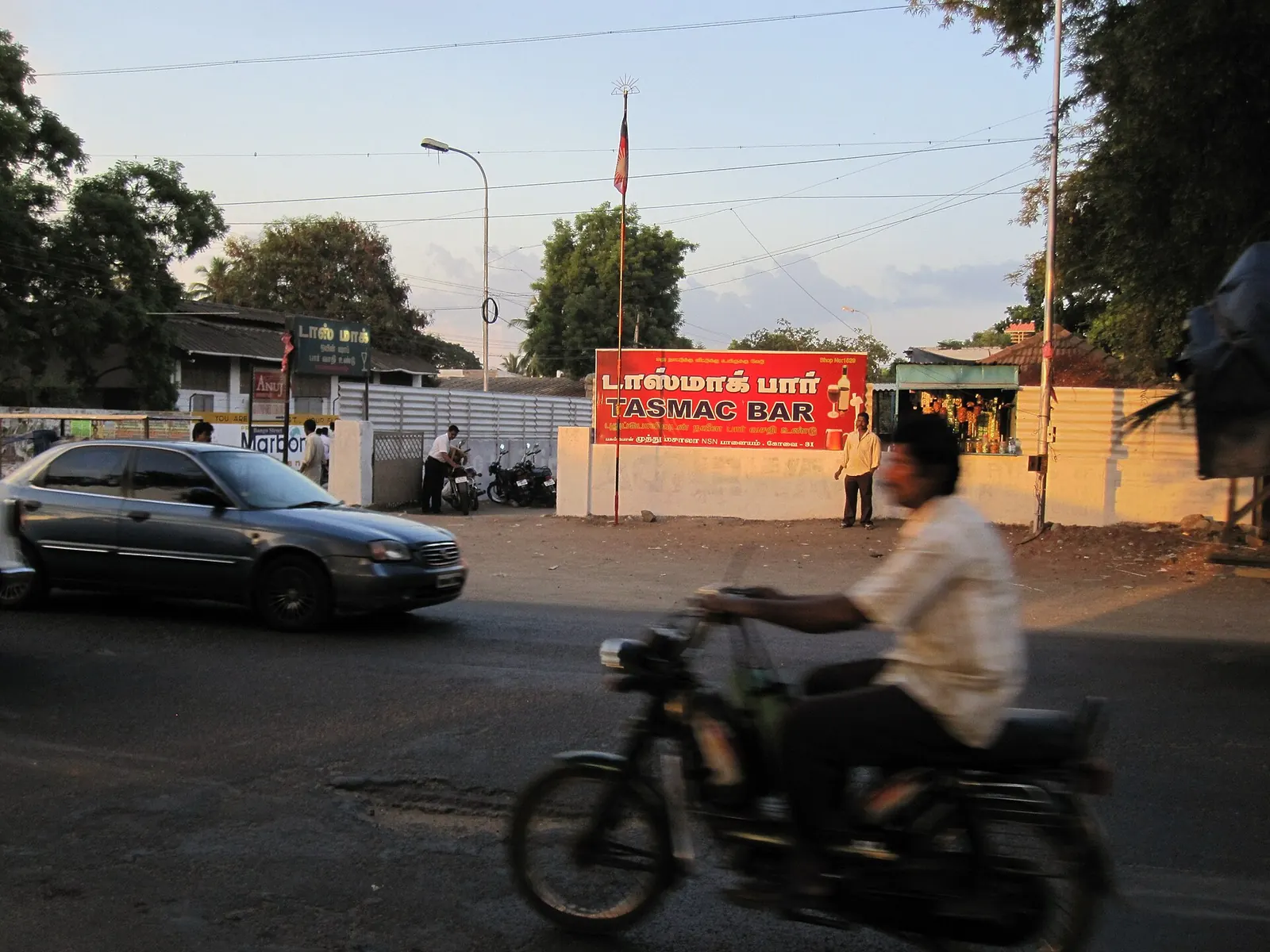
Telangana is the heaviest-drinking large state: 43.9% of men and 7.1% of women drink, both the highest among big states. Rural men drink more (46.6%) than urban men (36.3%), and the same is true for women (8.6% rural, 2.8% urban), which is the opposite of the stereotype that drinking is an urban habit.
- Men: 43.9% (NFHS-5: 43.4%)
- Women: 7.1%
- State excise, 2025-26 BE: ₹27,623 crore, 19.0% of own tax revenue
3. Sikkim
42.2% of men and 19.9% of women drink in Sikkim, and the women's figure rose from 16.2% in NFHS-5. Like Arunachal, Sikkim has a brewing tradition and none of the stigma that keeps women's drinking near zero in the plains.
- Men: 42.2%
- Women: 19.9% (NFHS-5: 16.2%)
4. Chhattisgarh
38.3% of men drink in Chhattisgarh, up 3.6 points, and 5.7% of women. Its large Adivasi population matters here: in NFHS-5, men from Scheduled Tribes drank at 34% nationally, against 22% for all men aged 15-49.
- Men: 38.3% (+3.6 points)
- Women: 5.7%
5. Jharkhand
33.6% of men and 5.5% of women drink in Jharkhand, which was carved out of Bihar in 2000. Researchers use Jharkhand as the "control" when they measure what Bihar's ban did, because the two share so much history and culture.
- Men: 33.6%
- Women: 5.5%
6 to 10. Himachal, Tripura, Meghalaya, Uttarakhand and Tamil Nadu
The rest of the top ten mixes Himalayan states with a southern one. Himachal Pradesh (30.2%) and Uttarakhand (27.2%, up 1.7 points) are cold hill states; Tripura (29.5%) and Meghalaya (28.3%) are in the Northeast, and Tripura's women drink at 6.0%. Tamil Nadu (23.5%) rounds out the list.
- Himachal Pradesh: 30.2%
- Tripura: 29.5% (women 6.0%)
- Meghalaya: 28.3%
- Uttarakhand: 27.2%
- Tamil Nadu: 23.5% (women 0.3%)
Which states drink the least?
The lowest figures come from places where religion, law or both discourage drinking. Lakshadweep (0.6%), a Muslim-majority island territory, is virtually dry in practice. Gujarat (5.2%) has banned liquor since 1960, Jammu and Kashmir reports 7.3% and Rajasthan 10.7%.
| State or UT | Men who drink (NFHS-6) | Women who drink | Liquor law |
|---|---|---|---|
| Lakshadweep | 0.6% | "virtually absent" | Total ban lifted in 2021 |
| Gujarat | 5.2% | 0.3% | Prohibition since 1960; permits for visitors |
| Jammu and Kashmir | 7.3% | not reported | Not dry |
| Rajasthan | 10.7% | not reported | Not dry |
| Karnataka | 15.6% | 0.5% | Not dry |
| Bihar | 16.5% | 0.4% | Total prohibition since April 2016 |
Does Gujarat really not drink?
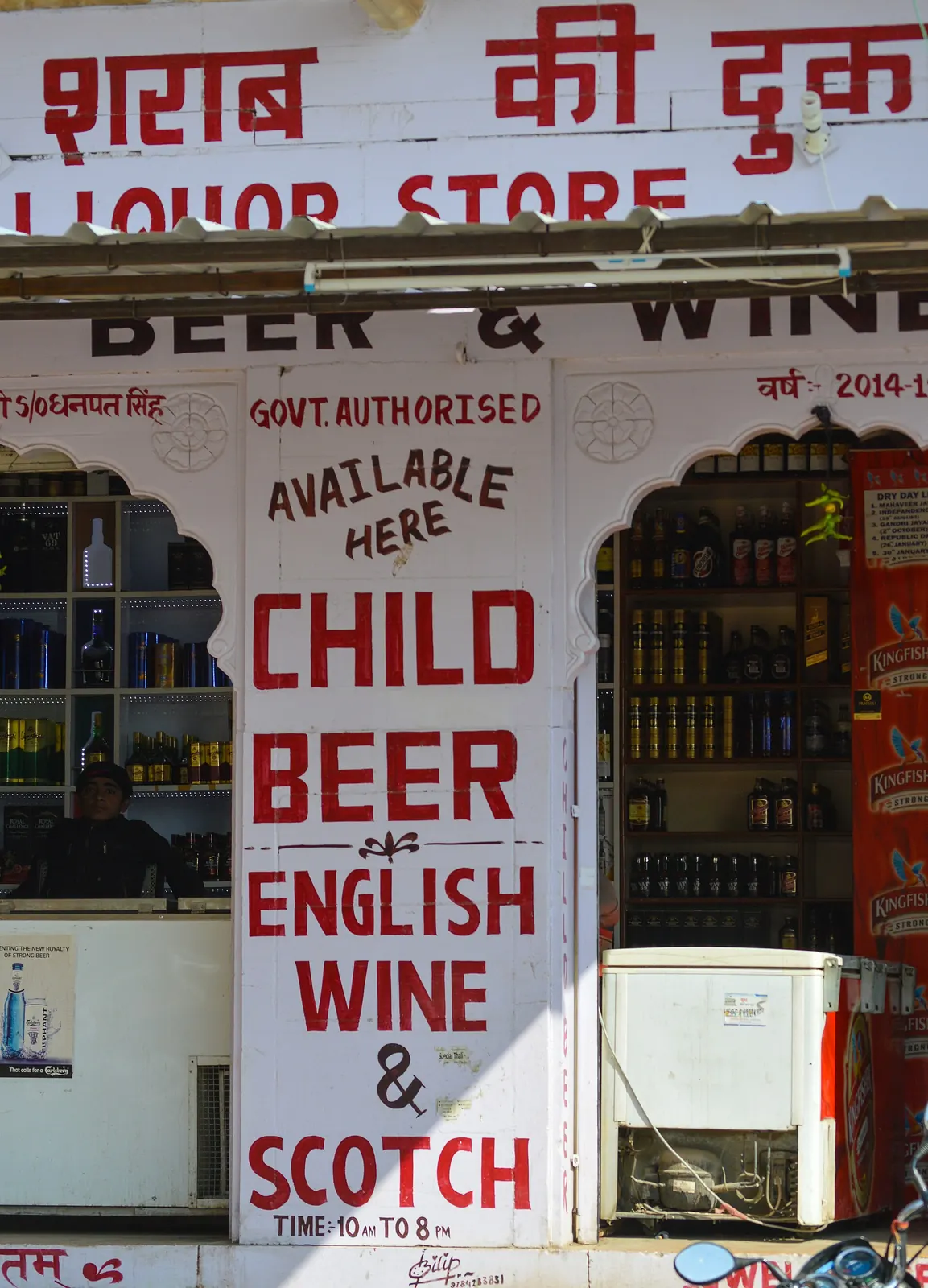
Officially, 5.2% of men drink, a quarter of the national rate. In practice, a dry state is also the place where admitting to drinking means admitting to a crime, so this is the number most likely to be too low. Gujarat itself has carved out legal channels: visitors and foreigners can apply for permits, and since December 2023 approved employees and visitors may drink in GIFT City, the finance hub near Gandhinagar.
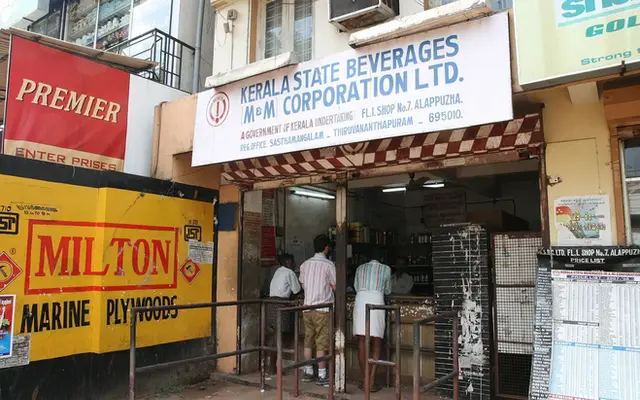
Gujarat's budget tells the same story from the other side. Its state excise is budgeted at just ₹250 crore for 2025-26, about 0.16% of its ₹1,58,482 crore own tax revenue, according to PRS Legislative Research. For comparison, Karnataka expects ₹40,000 crore.
Why does Bihar still drink after its ban?
Because prohibition, or sharabbandi as it is called in Hindi, reduces sales, not demand. 16.5% of Bihar's men told NFHS-6 interviewers that they drink, eight years into a total ban, which is more than in legal Karnataka (15.6%) or Rajasthan (10.7%). By February 2022 the state had seized about 2.1 crore litres of liquor and arrested around 4.5 lakh people under the law.
Bihar's ban survived a constitutional knockout within its first six months. On 30 September 2016 the Patna High Court struck down the prohibition notification, calling it "illegal, impractical and unconstitutional". Two days later, on Gandhi Jayanti, 2 October, the state brought into force a new and harsher law, the Bihar Prohibition and Excise Act, with non-bailable offences and long minimum jail terms. On 7 October the Supreme Court stayed the High Court's order, and the ban has stood since. On 21 January 2017 the state organised a human chain in support of the ban that it said involved more than 3 crore people.
Wikipedia: Alcohol prohibition in India (Bihar section, citing BBC, Times of India and Indian Express)The research on what the ban achieved is mixed, and it is worth reading the three studies together.
Using NFHS-2 (1998-99) data on 3,01,984 adults in 26 states, the authors tested whether living in a prohibition state changed the odds of drinking. For men it made no statistically significant difference (odds ratio 1.36, 95% CI 0.69-2.03). For women, living in a state without prohibition raised the odds of drinking about threefold (odds ratio 3.04). Poverty and low schooling predicted men's drinking far more strongly. The limit: an old survey and only a handful of dry states at the time.
Read the paper (free)A difference-in-differences test comparing Bihar with Jharkhand before (NFHS-4, 2015-16) and after (NFHS-5, 2019-21) the April 2016 ban, using 11,984 married women from the domestic violence module. The ban produced no significant fall in violence against women, even though a husband who was often drunk raised the odds of violence nearly fivefold in the national data. The authors point to uneven enforcement, home brewing and liquor from neighbouring states, and warn that the sample may be too small to detect modest effects.
Read the paper (free)Psychiatrists interviewed 372 patients with substance use disorders at tertiary hospitals in Bihar, 93% of them men with an average age of 38.5. After prohibition, patients reported significantly more opioid use (p = 0.008) and cannabis use (p = 0.021), and more daily and weekly substance use, while tobacco use stayed stable. The limit: hospital patients with existing disorders are not the general population, and past use was recalled rather than measured at the time.
Read the paper (free)Why do some states depend on liquor money?
Because liquor is one of the few big taxes a state still sets for itself. In the 2025-26 budgets analysed by PRS Legislative Research, state excise, which is mostly levied on liquor, makes up about a fifth of own tax revenue in three large states.
See the data as a table
| Excise share (%) | |
|---|---|
| Uttar Pradesh | 21.4 |
| Karnataka | 19.2 |
| Telangana | 19.0 |
| Gujarat | 0.16 |
Source: PRS Legislative Research, State Budget Analyses 2025-26 (my calculation: excise divided by own tax revenue) · UP: Rs 63,000 cr of Rs 2,95,000 cr. Karnataka: Rs 40,000 cr of Rs 2,08,100 cr. Telangana: Rs 27,623 cr of Rs 1,45,420 cr. Gujarat: Rs 250 cr of Rs 1,58,482 cr. Bihar lists no excise line among its major taxes.
That dependence works in both directions. It makes most governments reluctant to ban liquor, and it makes the few that do ban it, like Bihar in 2016, pay a visible price. It also explains why a state such as Tamil Nadu runs its own retail chain: a state that sells liquor directly earns both the tax and the margin.
Excise on liquor earns Karnataka 160 times what it earns Gujarat. That gap, more than any survey, is the real measure of a dry state.
Which states changed most since NFHS-5?
Goa dropped the most and Uttar Pradesh rose the most. Small samples mean that a few points either way can be noise, but these shifts are large.
- Goa: men 36.8% to 22.4% (down 14.4 points); women 5.5% to 2.1%.
- Uttar Pradesh: men 14.5% to 18.7% (up 4.2 points).
- Chhattisgarh: up 3.6 points to 38.3%.
- Kerala: men 19.9% to 22.7% (up 2.8 points).
- Nagaland and Chandigarh: up about 3 points each, though their levels were not reported.
- Telangana: stable, 43.4% to 43.9%.
Tap a state on the map to see its figure.
Map: Men who drink alcohol, by state (NFHS-6)
- Arunachal Pradesh: 50.5 % of men
- Telangana: 43.9 % of men
- Sikkim: 42.2 % of men
- Chhattisgarh: 38.3 % of men
- Jharkhand: 33.6 % of men
- Himachal Pradesh: 30.2 % of men
- Tripura: 29.5 % of men
- Meghalaya: 28.3 % of men
- Uttarakhand: 27.2 % of men
- Tamil Nadu: 23.5 % of men
- Andhra Pradesh: 23.3 % of men
- Kerala: 22.7 % of men
- Goa: 22.4 % of men
- Uttar Pradesh: 18.7 % of men
- Bihar: 16.5 % of men
- Karnataka: 15.6 % of men
- Rajasthan: 10.7 % of men
- Jammu & Kashmir: 7.3 % of men
- Gujarat: 5.2 % of men
- Lakshadweep: 0.6 % of men
One practical point for travellers: rules on where you may buy and drink change at state borders, and so does the legal age. Read dry states and liquor permits, legal drinking age by state and drinking in public and the law before a road trip. If you are riding through, the drunk driving law applies everywhere, and so does common sense. For more Kyun questions, start at the Kyun world page.
What's new
- NFHS-6: Telangana tops large states for drinking among both men and women The South First, May 2026
- Telangana budgets Rs 27,623 crore from state excise for 2025-26, up 8% PRS Legislative Research, Mar 2025
- Bihar's ban did not significantly reduce domestic violence compared with Jharkhand, study finds Alcohol and Alcoholism, 2025
Questions people ask
Which Indian state drinks the most alcohol?
Arunachal Pradesh, where 50.5% of men and 23.2% of women aged 15+ drink (NFHS-6, 2023-24). Among large states, Telangana leads with 43.9% of men and 7.1% of women.
Which states are dry in India?
Gujarat (since 1960), Nagaland (since 1989), Bihar (since 2016) and Mizoram (re-imposed in 2019) have state-wide prohibition, with permits or local exceptions in some. Manipur and Madhya Pradesh have partial bans by district or town. Lakshadweep lifted its ban in 2021.
Does Gujarat really not drink?
Gujarat reports the lowest drinking among large states, 5.2% of men, but it is self-reported in a state where drinking without a permit is illegal, so the real figure is probably higher. Its tiny excise take, about ₹250 crore budgeted for 2025-26, confirms that little liquor is sold legally.
Is Goa the biggest drinking state?
No. Only 22.4% of Goan men drink in NFHS-6, down from 36.8% in NFHS-5, which puts Goa near the national middle. Its reputation rests on tourists' drinking, which a household survey of residents does not capture.
Sources
- The South First: Only 18.9% of Indian men drink alcohol, but Telangana tops major states (NFHS-6) (2026, source for every NFHS-6 state figure)
- ThePrint: Only 1% of women drink alcohol compared with 22% of men, NFHS-5 (2022, NFHS-5 state peaks and group figures)
- Subramanian S V et al.: Role of socioeconomic markers and state prohibition policy, Bulletin of the WHO (2005)
- Wagman J A et al.: Alcohol use, prohibition policies, and bidirectional intimate partner violence in India, Alcohol and Alcoholism (2025)
- Prasad S et al.: Changing trends in substance use after liquor prohibition in Bihar, Cureus (2024)
- PRS Legislative Research: Telangana Budget Analysis 2025-26 (2025, excise and own tax revenue)
- PRS Legislative Research: Karnataka Budget Analysis 2025-26 (2025)
- PRS Legislative Research: Uttar Pradesh Budget Analysis 2025-26 (2025)
- PRS Legislative Research: Gujarat Budget Analysis 2025-26 (2025)
- PRS Legislative Research: Bihar Budget Analysis 2025-26 (2025, no excise line among major taxes)
- Pati S et al.: Weaved into the cultural fabric: alcohol among tribal women in Odisha, Substance Abuse Treatment, Prevention, and Policy (2018, alcohol as daily custom in tribal communities)
- Wikipedia: Alcohol prohibition in India (dates of state bans, Bihar court sequence, Gujarat permits and GIFT City)
- Wikipedia: 2022 Bihar alcohol poisoning (73 deaths, seizures and arrests to February 2022)

Sapta (Saptarshi Sarkar) is a mechanical engineer turned marketer in Bengaluru and a solo touring rider. He writes the seven Saptaverse blogs. Work with him or read more of Whyblog.