To start pranayama safely, begin with slow, gentle techniques (diaphragmatic belly breathing, anulom vilom alternate-nostril breathing and bhramari humming breath) for 5 to 10 minutes a day, seated, on an empty stomach, and build to about 15 to 20 minutes over four weeks. Leave forceful techniques such as kapalbhati and bhastrika for later and learn them from a qualified teacher: the US National Center for Complementary and Integrative Health (NCCIH) advises beginners to avoid forceful breathing, and the adverse events reported in trials cluster around fast techniques.
- Start with slow techniques only: belly breathing, anulom vilom and bhramari.
- 5 to 10 minutes a day to begin, building to 15 to 20 minutes by week four.
- Under 10 breaths a minute counts as slow breathing; 4 s in and 6 s out gives exactly 6.
- Breathwork lowered stress by g = −0.35 across 12 randomised trials (Fincham 2023): real, but modest.
- Kapalbhati and bhastrika carry most reported side effects; learn them later, in person, from a qualified teacher.
This guide is built on what the research supports, not on claims about curing disease. Slow breathing, which a 2018 systematic review defined as fewer than 10 breaths a minute, is linked to higher heart rate variability and reports of relaxation and lower anxiety.
- Stress: a 2023 meta-analysis of 12 randomised trials with 785 adults found breathwork lowered self-reported stress by a small-to-medium amount.
- Mental disorders: a 2025 meta-analysis of pranayama for diagnosed conditions found small short-term benefits over no treatment, but no advantage over standard care.
That is the honest frame: a useful daily practice, not a replacement for treatment.
Is pranayama safe for beginners?
Slow, gentle pranayama is generally low risk for healthy adults; forceful and fast techniques carry most of the reported problems. NCCIH calls yoga generally safe for healthy people when practised properly under a qualified instructor, but lists forceful breathing among the extreme practices beginners should avoid.
What the trials recorded
The trial evidence points the same way. In the 2025 Frontiers in Psychiatry meta-analysis by Christian Mütze, Dietmar Mitzinger and Heidemarie Haller, the one study that reported adverse events in detail recorded 15 pranayama participants with minor problems such as dizziness, headache, anxiety and breathlessness, most likely linked to kapalabhati, and some dropped out.
The authors judged safety reporting across the trials to be inadequate, so the true rate of problems is unknown.
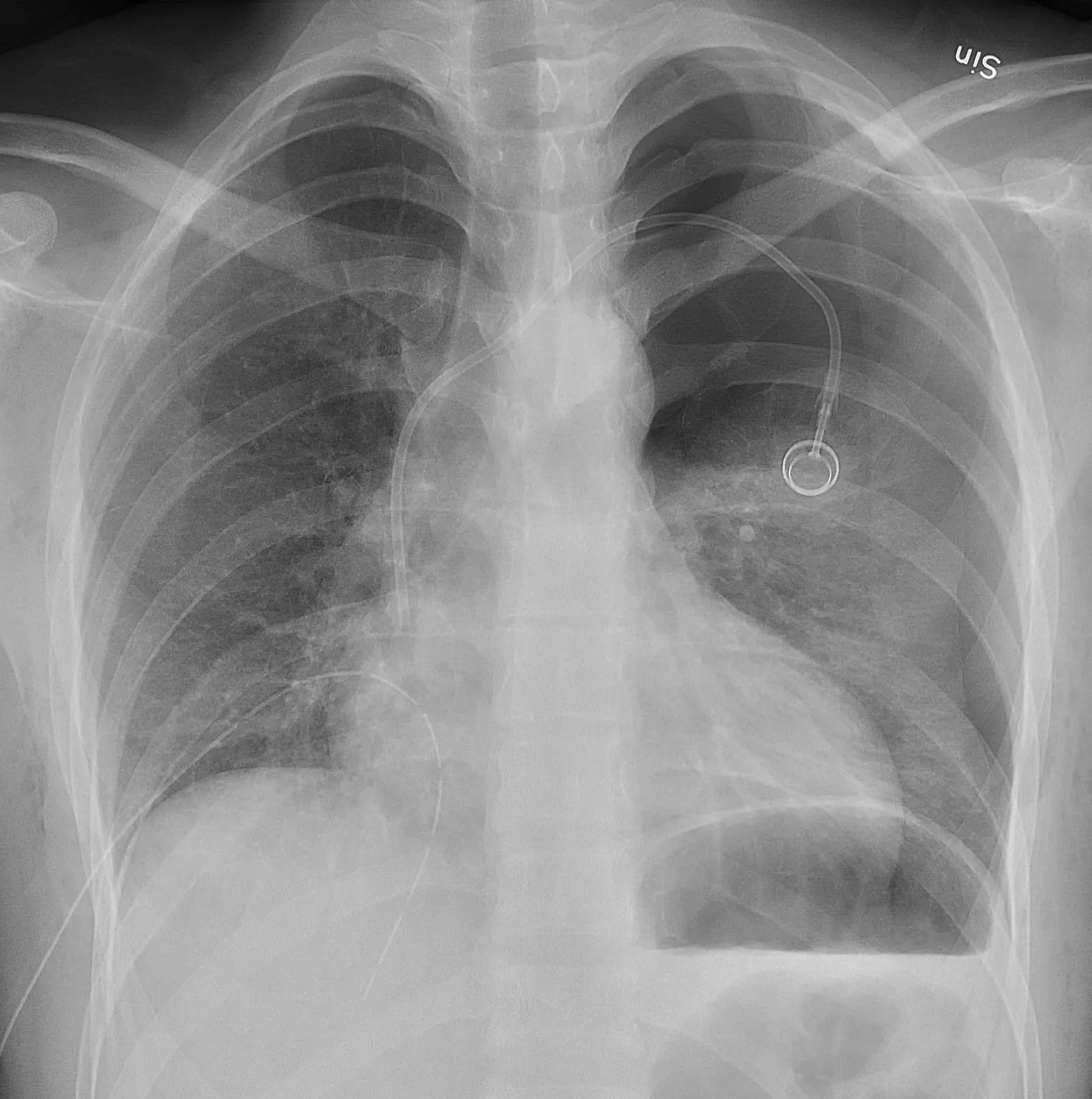
In 2004, three doctors from the surgery department of Berkshire Medical Center in Pittsfield, Massachusetts, wrote up an unusual patient for the chest-medicine journal Chest. A healthy 29-year-old woman had come to their emergency department with a spontaneous pneumothorax: air had leaked into the chest cavity around a lung, the condition usually called a collapsed lung.
Spontaneous pneumothorax is the most common kind, but the cause here was not. The doctors traced it to kapalabhati pranayama, the rapid, forceful exhalations known in English as "breath of fire". They knew of no other report of a pneumothorax caused by pranayama. Their lesson was not that yoga is dangerous; it was that side effects can follow when someone pushes the body to physiological extremes.
Johnson DB, Tierney MJ, Sadighi PJ: Kapalabhati pranayama: breath of fire or cause of pneumothorax? A case report, Chest 125(5):1951-2 (2004)One case is not a rate, and its authors knew of no other. It does show why the forceful techniques sit at the end of a beginner's plan, not the start.
| Technique | Pace | Beginner? | What the sources say |
|---|---|---|---|
| Diaphragmatic (belly) breathing | Slow | Yes, week 1 | The NHS stress-breathing exercise: count of 5 in, 5 out, at least 5 minutes, without forcing |
| Anulom vilom (alternate nostril) | Slow | Yes, week 2 | Slow breathing under 10 breaths/min is linked to higher heart rate variability (Zaccaro 2018) |
| Bhramari (humming bee breath) | Slow, long exhale | Yes, week 3 | Exhale-focused practice; cyclic sighing, also exhale-led, improved mood in Balban 2023 |
| Kapalbhati (forceful exhalations) | Fast | No, learn with a teacher | Linked to most minor adverse events in the 2025 meta-analysis; one pneumothorax case report |
| Bhastrika (bellows breath) | Fast, forceful | No, learn with a teacher | Forceful breathing is listed for beginners to avoid by NCCIH |
What does the research say pranayama actually does?
Slow breathing shifts the autonomic nervous system toward its calming branch and is associated with lower self-reported stress and anxiety; the effects are real but modest. The mechanism is covered in depth in how slow breathing works on the vagus nerve.
The healthy-volunteer studies
Andrea Zaccaro's team at the University of Pisa screened 2,461 abstracts and kept 15 studies of healthy people practising slow breathing. They found:
- increased heart rate variability and respiratory sinus arrhythmia;
- more alpha and less theta in EEG recordings;
- reports of comfort, relaxation, vigour and alertness, with less anxiety, depression, anger and confusion.
A 2020 randomised trial by Novaes and colleagues in Frontiers in Psychiatry gave 30 young adults either four weeks of bhastrika practice or unrelated group activities. The pranayama group reported lower anxiety and negative mood, with changes in emotion-related brain activity, which the authors called preliminary and exploratory.
A PRISMA systematic review of slow-breathing techniques (under 10 breaths a minute) in healthy people. From 2,461 abstracts, 15 studies met the criteria. Slow breathing raised heart rate variability and respiratory sinus arrhythmia, increased EEG alpha and reduced theta power, and was linked to more relaxation and alertness and less anxiety, anger and confusion. Limit: 15 small, varied studies with only one fMRI study, so the mechanism is a hypothesis, not a settled finding.
Read the paper (free)Six randomised trials with 517 patients with PTSD, depression or mixed non-psychotic disorders. Against passive controls, pranayama reduced symptom severity slightly (SMD -0.27 by intention to treat); against standard care such as therapy or antidepressants, there was no significant difference. The effect lost significance when high-risk-of-bias studies were removed. Most trials used Sudarshan Kriya Yoga, which mixes slow and fast breathing, and minor adverse events were mostly linked to kapalabhati. Limit: few, small, mostly male samples; the authors say pranayama may help as an add-on, not a replacement.
Read the paper (free)Twelve randomised trials with 785 adults compared breathwork with non-breathwork controls. Self-reported stress fell with a small-to-medium effect (g = -0.35); anxiety (g = -0.32, 20 trials) and depressive symptoms (g = -0.40, 18 trials) showed similar effects. Limit: most studies had moderate risk of bias, and the authors warn against hype outrunning evidence.
Read the paper (free)How do you do the three beginner techniques?
Sit upright on a chair or the floor with the spine tall and shoulders loose, on an empty or light stomach, in a ventilated room. Breathe through the nose unless a step says otherwise, and never strain.
- Diaphragmatic breathing. One hand on the chest, one on the belly. Breathe in gently so the belly hand rises more than the chest hand. Breathe out slowly. The NHS version breathes in through the nose and out through the mouth, counting 1 to 5 each way, and says you may not reach 5 at first. Do not force it.
- Anulom vilom. Rest the right thumb on the right nostril and the ring finger near the left. Close the right nostril and inhale through the left; close the left and exhale through the right; inhale through the right; close it and exhale through the left. That is one round. Keep the breath silent and even, with no holding.
- Bhramari. Inhale through the nose. As you exhale slowly, make a steady, low humming sound like a bee, with the lips closed. Let the exhale be longer than the inhale. Some practitioners gently close the ears with the index fingers; keep pressure light.
What is a good 4-week pranayama plan for beginners?
Add one technique a week and a few minutes at a time, so that by week four you have a 15 to 20 minute routine of slow techniques only.
The doses are within the ranges the trials used: Balban's 2023 Stanford trial used 5 minutes a day for a month, and the trials in the 2025 meta-analysis ran 1 to 6 weeks, about 17.5 sessions on average. The authors said the evidence could not yet support a precise dose.
| Week | Daily routine | Total time | Target pace |
|---|---|---|---|
| 1 | Diaphragmatic breathing | 5 minutes | Comfortable; about 5 s in, 5 s out if easy |
| 2 | Diaphragmatic 3 min + anulom vilom 5 min | 8 minutes | Under 10 breaths a minute |
| 3 | Diaphragmatic 3 min + anulom vilom 7 min + bhramari 3 min | 13 minutes | Exhale a little longer than inhale |
| 4 | Diaphragmatic 3 min + anulom vilom 10 min + bhramari 5 min + 2 min quiet sitting | 20 minutes | Slow and even, never strained |
See the data as a table
| Diaphragmatic breathing (min) | Anulom vilom (min) | Bhramari (min) | Quiet sitting (min) | |
|---|---|---|---|---|
| Week 1 | 5 | 0 | 0 | 0 |
| Week 2 | 3 | 5 | 0 | 0 |
| Week 3 | 3 | 7 | 3 | 0 |
| Week 4 | 3 | 10 | 5 | 2 |
Source: The weekly plan in the table above (totals 5, 8, 13 and 20 minutes)
Check your pace
Use the calculator to check your pace. Enter your counts in seconds; the output tells you your breaths per minute. Anything under 10 counts as slow breathing in the Zaccaro review. A 4-second inhale and 6-second exhale, for example, gives exactly 6 breaths a minute.
Your breathing rate
When should you not do kapalbhati or bhastrika?
As a beginner, not at all on your own; and at any stage, not without medical advice if you are pregnant or have a heart, lung, eye or other medical condition. These techniques use rapid, forceful breathing, which NCCIH lists among the practices beginners should avoid, and which the 2025 meta-analysis linked to most of the reported adverse effects.
The evidence for fast techniques is thinner
The evidence base for fast techniques is also thinner for the claims made about them. In the 2025 meta-analysis, six of seven publications used Sudarshan Kriya Yoga, a package that mixes slow and fast breathing, so the trials cannot separate the effect of the fast part.
The 2023 Stanford trial compared three breathing patterns and found that the slow, exhale-focused "cyclic sighing" produced the clearest gains in mood and the largest drop in breathing rate, beating mindfulness meditation.
If your goal is calm, slow breathing already has the stronger case.From the evidence above
For a ranking of the techniques by research, see pranayama techniques ranked by research.
How does pranayama fit with meditation and yoga?

In Patanjali's eightfold scheme, pranayama is the fourth limb, after posture and before the withdrawal of the senses and concentration, so it was always meant as a bridge to meditation. The history is in the history of the Yoga Sutras, and the first laboratory studies of yogic breathing in India are covered in Kuvalayananda and the science of yoga.
A practical sequence is pranayama first, then a few minutes of sitting. Week 4's two minutes of quiet sitting is the doorway; the full routine is in how to start meditating. More on the Indian traditions of mind is on the Manthan page.
What's new
- Ministry of Ayush releases yoga protocols for non-communicable diseases and target groups, including hypertension and asthma The Week, Apr 2026
- Meta-analysis: pranayama gives small short-term benefits in mental disorders, not better than standard care Frontiers in Psychiatry, Aug 2025
- Review of 24 trials finds yoga reduces depression severity compared with passive controls Depression and Anxiety, Dec 2024
Questions people ask
How long should a beginner do pranayama each day?
Five to ten minutes is enough to start. A Stanford trial found 5 minutes a day of slow, exhale-focused breathing for a month improved mood. Build towards 15 to 20 minutes over four weeks if it feels comfortable.
Is it better to do pranayama in the morning?
The trials did not test timing. Practise when your stomach is empty and you can sit undisturbed; for most people that is early morning or before dinner. Consistency matters more than the hour.
Can pranayama cure anxiety or high blood pressure?
No trial supports "cure". Breathwork reduced self-reported anxiety slightly in meta-analyses, and pranayama did not beat standard care for diagnosed mental disorders. If you have a diagnosed condition, use it alongside treatment, and discuss it with your doctor.
I feel dizzy during pranayama. What should I do?
Stop and breathe normally. Dizziness was among the minor adverse events reported in trials, mostly with fast techniques. Slow down, shorten the session, and if it recurs, check with a doctor.
Is anulom vilom the same as nadi shodhana?
Both are alternate-nostril breathing. Many teachers use the names interchangeably; some reserve nadi shodhana for a version with breath retention. This beginner plan uses no retention.
Sources
- Zaccaro A. et al.: How Breath-Control Can Change Your Life, Frontiers in Human Neuroscience 12:353 (2018)
- Mütze C., Mitzinger D. and Haller H.: Effectiveness of pranayama for mental disorders, Frontiers in Psychiatry 16 (2025)
- Fincham G.W. et al.: Effect of breathwork on stress and mental health, Scientific Reports 13:432 (2023)
- Balban M.Y. et al.: Brief structured respiration practices enhance mood and reduce physiological arousal, Cell Reports Medicine 4(1) (2023)
- Johnson D.B., Tierney M.J. and Sadighi P.J.: Kapalabhati pranayama: breath of fire or cause of pneumothorax? Chest 125(5):1951-1952 (2004); PubMed abstract
- Ministry of Health and Family Welfare: Tele-MANAS
- NCCIH: Yoga: What You Need To Know (2023)
- NHS: Breathing exercises for stress
- PsyPost: Four weeks of pranayama reduces anxiety (on Novaes et al., Frontiers in Psychiatry 2020) (2020)
- Moosburner A. et al.: Yoga for Depressive Disorder: A Systematic Review and Meta-Analysis, Depression and Anxiety (2024)
- The Week: Will India's new yoga protocols help fight lifestyle diseases? (2026)

Sapta (Saptarshi Sarkar) is a mechanical engineer turned marketer in Bengaluru and a solo touring rider. He writes the seven Saptaverse blogs. Work with him or read more of Mindblog.