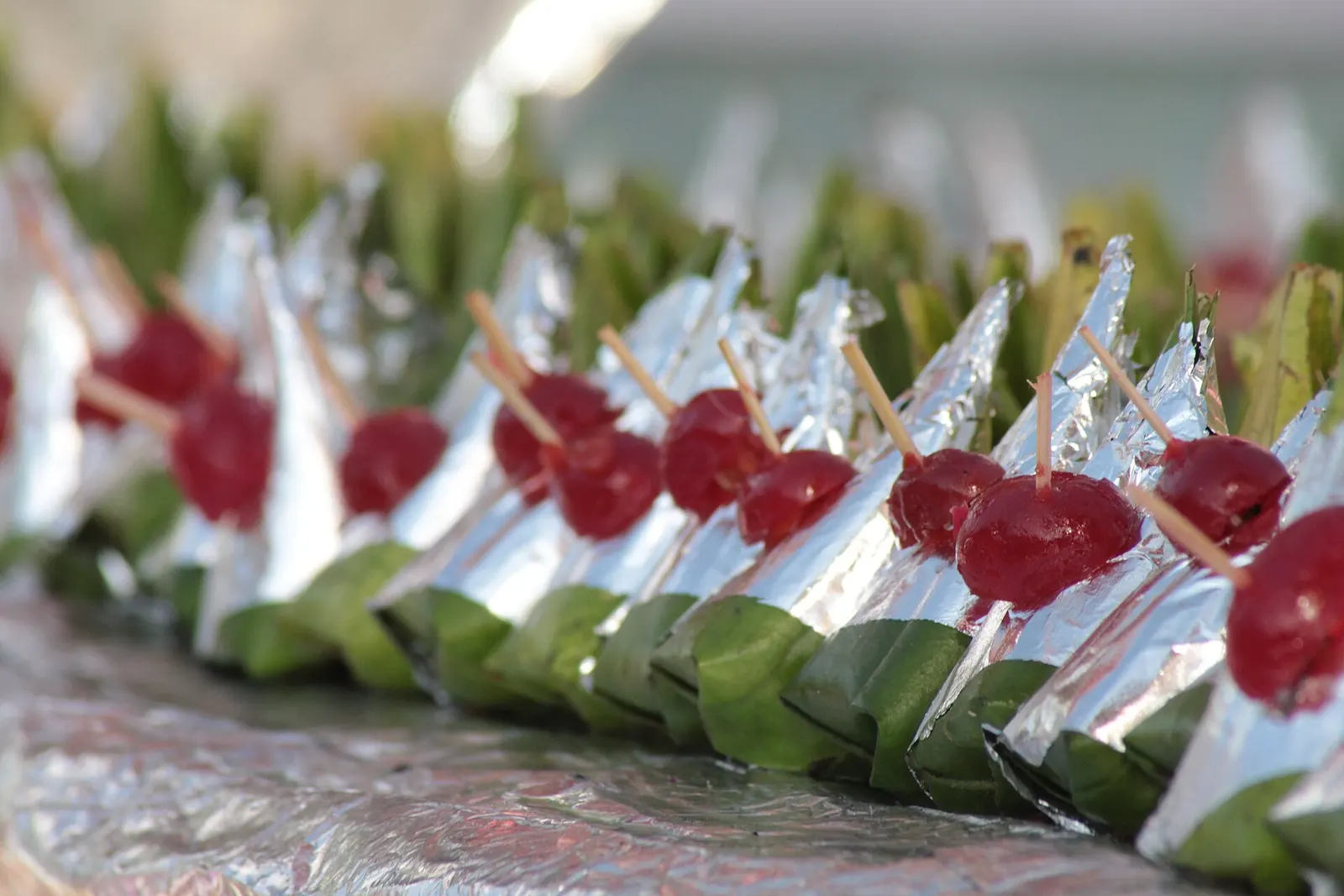
Indians who spit in public are mostly chewing something: paan, gutkha, khaini or another smokeless tobacco mix that turns saliva red and is spat out rather than swallowed. The often-quoted claim that Indian Railways spends Rs 1,200 crore a year cleaning those stains comes from 2021 media reports with no official document behind it. The hard numbers are smaller: the railways fined about 3.3 lakh people and collected about Rs 5.13 crore for spitting and littering in 2022-23 and 2023-24, and the maximum on-the-spot fine was doubled to Rs 1,000 in 2026.
- 21.4% of Indian adults used smokeless tobacco in GATS-2 (2016-17), down from 25.9% in GATS-1.
- The Rs 1,200 crore yearly cleaning bill is an unsourced estimate from 2021, not a railway figure.
- Parliament's number: 3,30,132 people fined and Rs 5.13 crore collected over two years (spitting and littering together).
- The railway maximum fine went from Rs 500 to Rs 1,000 in August 2026; non-payers can face up to Rs 2,000 in court.
- Western Railway logged 12,265 spitting cases at 34 suburban stations in just four months of 2026.
This is one of the habits visitors notice first, and one that many Indians are embarrassed by. The useful question is not "why are people like this" but what product causes it, how many people use it, and what the system does about it. Each of those has a number.
Why do people in India spit so much in public?
Most public spitting in India is chewing-related, not a cold or a habit of clearing the throat. A quid of paan or gutkha mixes with saliva and has to go somewhere; the user spits the juice out.
- What is in the mix: gutkha is crushed areca nut, tobacco, slaked lime, catechu and flavouring; paan typically wraps areca nut, lime, spices and often tobacco in a betel leaf (Niaz et al., 2017).
- Why it stains: the mix turns saliva deep red within moments, and the stain resists weathering, which is why it survives on walls and stairs for years.
- Why it is spat, not swallowed: users chew and hold the quid for a long time, and the juice builds up. Spitting is part of how the product is used.
So the volume of spitting tracks the volume of chewing. That makes the national tobacco surveys the best evidence for the scale of the problem.
In 2011, engineers from the Kolkata Port Trust inspected the Howrah Bridge, the cantilever bridge over the Hooghly that carries a huge flow of pedestrians every day. They found that steel hoods protecting the base of the pillars had thinned from 6 mm to under 3 mm since 2007. The cause was not traffic or river spray. It was spit: lime-laced gutkha and paan, spat at the same spots by walkers for years. The hoods keep water away from the joints between hangers and cross-girders, so this was a structural risk. The Port Trust's answer was to spend about Rs 20 lakh wrapping the pillar bases in fibreglass that spit could not eat through.
Wikipedia: Howrah Bridge (citing The Telegraph, 14 Nov 2011, and BBC News, 23 Nov 2011)
How many Indians chew tobacco or paan?
About one in five Indian adults used smokeless tobacco in the second Global Adult Tobacco Survey (GATS-2, 2016-17), a national household survey by the Ministry of Health. That is about twice the share who smoked (10.7%).
The split matters for understanding who spits. Use is heavier among men (29.6%) than women (12.8%), and in rural areas (24.6%) than urban ones (15.2%).
See the data as a table
| Share using smokeless tobacco (%) | |
|---|---|
| Men | 29.6 |
| Women | 12.8 |
| Urban | 15.2 |
| Rural | 24.6 |
| All adults (GATS-2, 2016-17) | 21.4 |
| All adults (GATS-1, 2009-10) | 25.9 |
Source: Ministry of Health and Family Welfare: GATS-2 India Fact Sheet 2016-17 · Current use of any smokeless product (khaini, gutkha, betel quid with tobacco and others).
The trend is down. Smokeless use fell from 25.9% to 21.4% between the two survey rounds, and most states banned gutkha as a food product between 2012 and 2013. But gutkha is often marketed as pan masala, and other chewing tobacco stayed on sale, so the habit survived the ban.
A nationally representative household survey of adults aged 15 and over. It found 28.6% of adults used some form of tobacco and 21.4% used smokeless tobacco, against 25.9% in the first round (2009-10). Daily smokeless use was 18.2%. A third of smokeless users (33.2%) had tried to quit in the previous year, and 95.6% of adults believed smokeless tobacco causes serious illness. The limit: it is a decade old; GATS-3 data were not available to me, so the current share may be lower.
Read the fact sheet (free)A narrative review of about 100 studies on paan and gutkha across South Asia, Taiwan and migrant communities. It lists what is in each product, notes about 28 carcinogens in smokeless tobacco (mostly nitrosamines), and reports that oral cancer makes up 30 to 40% of cancer cases in India. The limit: it is a narrative review without a formal quality appraisal, and some figures are old. It explains what people are chewing, not why they spit where they do.
Read the paper (free)How much does Indian Railways spend cleaning paan stains?
Nobody has published an official annual figure for the cost of cleaning spit stains on Indian Railways. The number you see everywhere, Rs 1,200 crore a year, traces back to October 2021 reporting on pocket spittoons, where it appeared as an estimate with no named source or document.
When the railway minister was asked about spitting and gutkha campaigns in the Rajya Sabha in July 2024, the reply said that no specific details about gutkha-related campaigns are maintained. What the government did give was the enforcement count.
| Claim | Number | Source | Status |
|---|---|---|---|
| Yearly cost of cleaning spit stains | Rs 1,200 crore | ETV Bharat, Oct 2021 | Unsourced estimate |
| People fined for spitting and littering, 2022-23 plus 2023-24 | 3,30,132 | Rajya Sabha reply, July 2024 | Official |
| Fines collected, same two years | Rs 5.13 crore | Rajya Sabha reply, July 2024 | Official |
| Spitting cases, Western Railway suburban, Apr to Jul 2026 | 12,265 (Rs 27.18 lakh) | Western Railway via Free Press Journal | Official, one zone |
| Nano-coating pilot at Matunga Road | About Rs 5 lakh | Free Press Journal, Aug 2026 | Reported cost |
Two things follow from the table. First, the average penalty in the national data works out to about Rs 155 per person (Rs 5.13 crore over 3.3 lakh people). Second, the fines are tiny next to the viral cost figure, which is one reason the estimate gets repeated: it makes the habit look expensive, even though nobody has shown the bill.
What is the fine for spitting at a railway station?
From August 2026, the maximum penalty for spitting, littering or creating unhygienic conditions on railway premises is Rs 1,000, up from Rs 500. The change came through the Railway Premises (Penalty for Activities Affecting Cleanliness) Amendment Rules, 2026.
- On the spot: up to Rs 1,000.
- If you refuse to pay: you can be produced before a court, which can fine up to Rs 2,000.
- Outside railway premises: city bylaws apply. Mumbai's BMC fine for spitting in public is Rs 250 from February 2026.
- Fallback in criminal law: public nuisance is BNS Section 270 (old IPC 268), punishable under Section 292 (old IPC 290) with a fine of up to Rs 1,000.
See the data as a table
| Maximum fine (Rs) | |
|---|---|
| Railway premises, before 2026 | 500 |
| Railway premises, 2026 rules | 1000 |
| Court fine if railway penalty unpaid | 2000 |
| Mumbai BMC bylaw, Feb 2026 | 250 |
| BNS s.292 public nuisance | 1000 |
Source: Free Press Journal (29 Aug 2026; 2 Feb 2026); BNS 2023 s.292
Passenger groups were blunt about the limit of a higher fine. The secretary of the Railway Passengers Association told the Free Press Journal that doubling the amount alone will not fix the problem; enforcement at stations with lakhs of people is the hard part.
Does fining spitters actually work?
Fines work only when the chance of being caught is high, and on Indian stations it is low. Here is a rough check you can run yourself.
Use this to check what you just read: how many fines would it take to pay the viral cleaning bill?
Could fines pay the viral cleaning bill?
At the default settings, fines would need to reach 1.2 crore people a year, about 73 times the current count, even if everyone paid the full Rs 1,000. The point is not that the bill is real; it is that fines alone cannot be the main tool.
What the railways are trying instead
- Coatings: Western Railway applied a German nano-coating (wall and metal versions) at Dadar and Mumbai Central, with a pilot at Matunga Road costing about Rs 5 lakh and expected to last about five years.
- Pocket spittoons: in 2021, Western, Northern and Central Railway zones gave contracts to the Nagpur startup EzySpit for biodegradable spit pouches priced at Rs 5 to Rs 10, sold from kiosks at 42 stations.
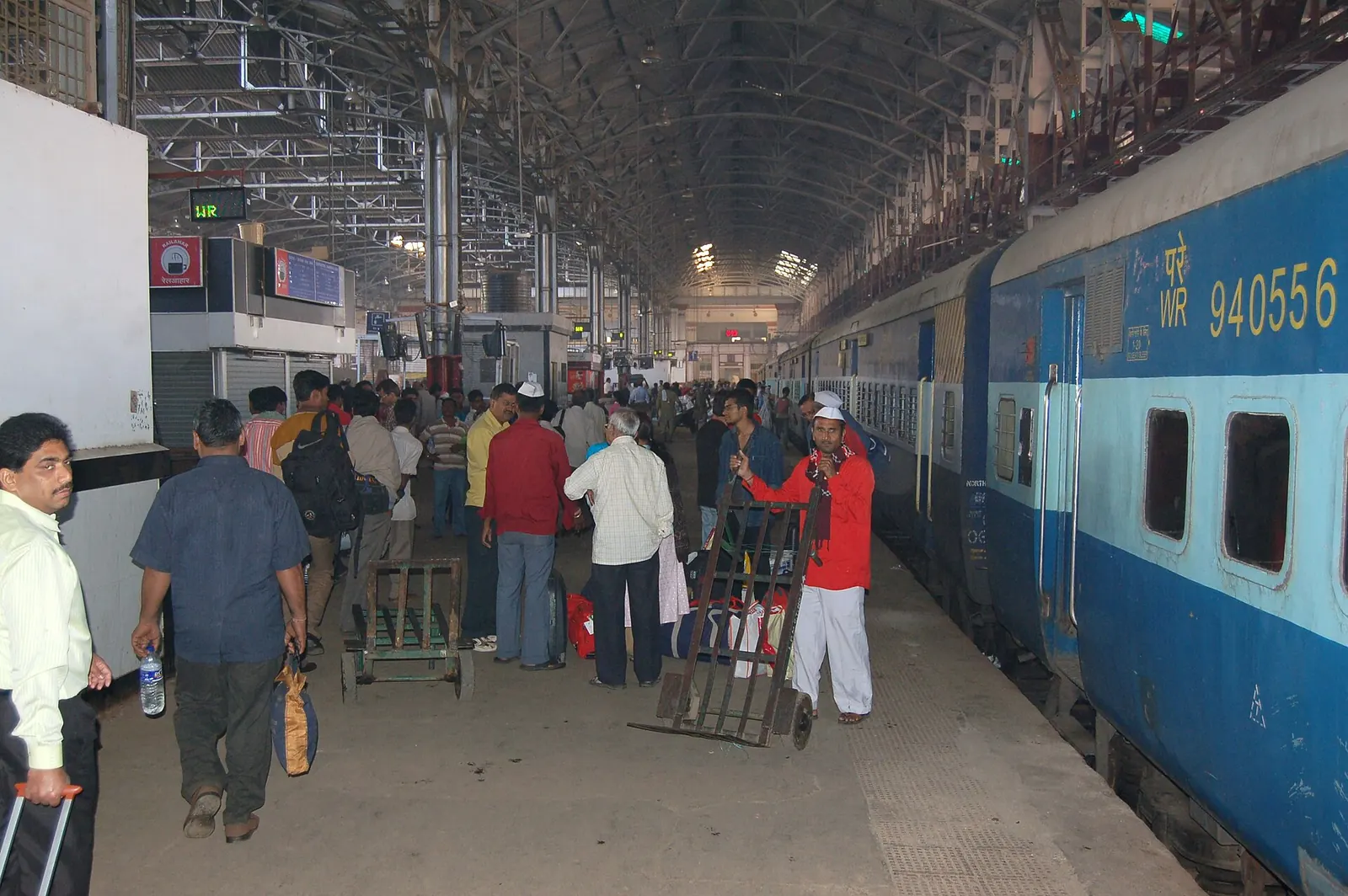
- Targeted drives: in 2026 Western Railway's busiest spitting stations were Virar (1,242 cases), Borivali (1,016), Dadar (806) and Andheri (756).
Why hasn't decades of campaigning stopped it?
Because the behaviour is tied to an addiction, not just manners. Nicotine and areca nut keep users chewing many times a day, and each quid produces juice that has to be spat.
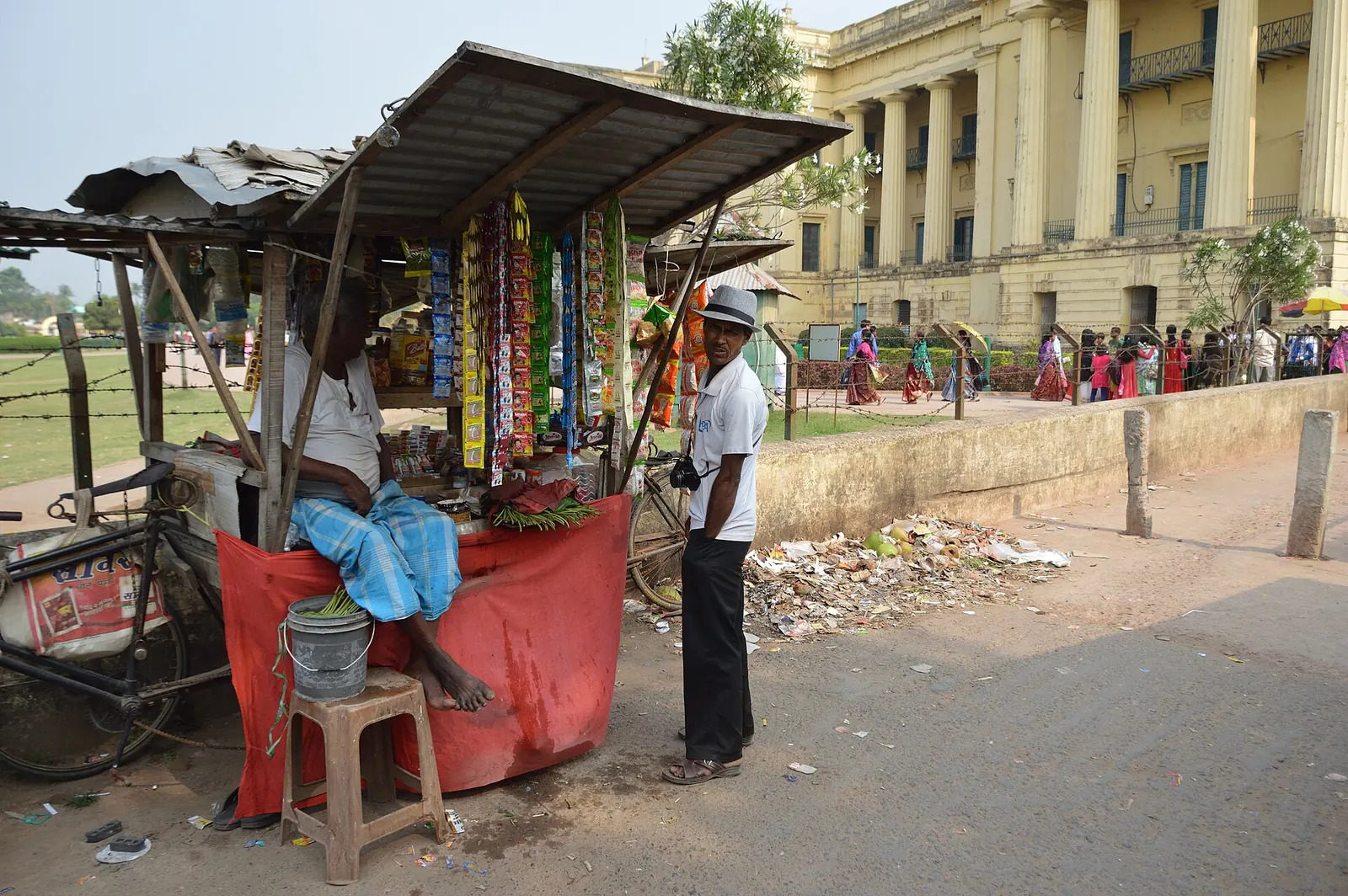
- Access: gutkha bans did not remove pan masala, khaini or other chewing tobacco from shops.
- Few bins for spit: stations have dustbins but almost nowhere designed for spitting, so corners and stair edges become the default.
- Low risk: about 1.65 lakh fines a year across a network used by crores of passengers means most offenders are never stopped.
- Social tolerance: a Plymouth University sociologist has described public spitting as socially acceptable in India, unlike in Britain.
A stain is the visible end of an addiction. Fix the chewing and the walls fix themselves.Sapta, on the data above
What should you do if you see someone spitting on a train or station?
Do not confront an aggressive stranger. Report it, and let the staff with powers to fine handle it.
- Note the place. Station, platform number, or train number and coach.
- Report on Rail Madad. The official portal takes station and train complaints and gives you a reference number to track.
- Tell staff on the spot. Railway staff and RPF at the station can act on the cleanliness rules.
- For security or medical help, call 139, the railway helpline. For any emergency, 112.
Spitting sits alongside other public-space habits the data can explain: see why so many Indians chew tobacco, why men urinate in public and what the fine is, and how Indore became the cleanest city. The crowds that make enforcement hard are in India's busiest railway stations. For the whole series, start at Kyun, the Why India world.
What's new
- Centre doubles the railway spitting and littering fine to Rs 1,000 Free Press Journal, Aug 2026
- Western Railway turns to nano-coating after 12,265 spitting cases Free Press Journal, Aug 2026
- BMC sets a Rs 250 spitting fine under new sanitation bylaws Free Press Journal, Feb 2026
Questions people ask
Is spitting illegal in India?
There is no single national law against spitting, but it is penalised in many places. Railway premises carry a fine of up to Rs 1,000 (2026), cities set their own bylaw fines (Rs 250 in Mumbai), and public nuisance under BNS Section 292 can draw a fine of up to Rs 1,000.
Is the Rs 1,200 crore spit cleaning figure true?
It has not been shown to be. It appeared in 2021 reports as an estimate without a named source, and no railway budget document or audit was found that confirms it. The verified figures are the enforcement numbers: about 3.3 lakh people fined and Rs 5.13 crore collected over two years.
Why are the stains red?
The mix of areca nut, slaked lime and catechu in paan and gutkha turns saliva deep red as it is chewed. The dye soaks into porous stone, concrete and paint, which is why stains outlast rain.
Has gutkha been banned in India?
Most states banned gutkha as a food product in 2012 and 2013. Other chewing tobacco and pan masala stayed on sale, and smokeless tobacco use was still 21.4% in GATS-2.
Where do I report spitting on Indian Railways?
Use the Rail Madad portal for station or train complaints, tell the station staff or RPF, and call 139 if you need security or medical help.
Sources
- Siasat (PTI): Rs 5.13 crore collected as fine for littering, spitting on railway premises in two fiscals (July 2024)
- Free Press Journal: Railway spitting, littering fine doubled to Rs 1,000 under new 2026 rules (2026)
- Free Press Journal: Western Railway turns to nano-coating after 12,265 spitting cases (2026)
- ETV Bharat: Railways push for pocket-sized biodegradable spittoons (source of the Rs 1,200 crore estimate) (2021)
- Ministry of Health and Family Welfare: GATS-2 India Fact Sheet 2016-17 (2017)
- Niaz K. et al.: Smokeless tobacco (paan and gutkha) consumption, prevalence, and contribution to oral cancer, Epidemiology and Health (2017)
- Wikipedia: Howrah Bridge (spit damage and fibreglass casing)
- Wikipedia: Spitting (social acceptance in India, citing BBC News 2013)
- Wikipedia: Gutka (composition, staining, state bans)
- Free Press Journal: BMC hikes fines under new bylaws (2026)
- Bharatiya Nyaya Sanhita 2023, Section 292 (public nuisance fine)
- Indian Railways: Rail Madad complaint portal

Sapta (Saptarshi Sarkar) is a mechanical engineer turned marketer in Bengaluru and a solo touring rider. He writes the seven Saptaverse blogs. Work with him or read more of Whyblog.


