India has the world's largest rabies burden because it combines tens of millions of free-roaming dogs, about 9 million animal bites a year and patchy treatment after bites. An ICMR study in The Lancet Infectious Diseases (2024) estimated 5,726 rabies deaths a year, and found that one in five dog-bite victims got no vaccine at all. Official surveillance, which misses deaths at home, recorded only 54 suspected deaths in 2024.
- 5,726 deaths a year (range 3,967 to 7,350) is the best recent estimate, from an ICMR survey of 3,37,808 people.
- 20.5% of dog-bite victims in that survey received no anti-rabies vaccine; nearly half who started did not finish.
- India recorded about 37 lakh dog bites in 2024, up from about 30.5 lakh in 2023.
- Rabies is virtually 100% fatal once symptoms appear and almost entirely preventable with prompt wound washing and vaccine.
- After any bite or bleeding scratch: wash 15 minutes with soap and water, then get vaccine the same day.
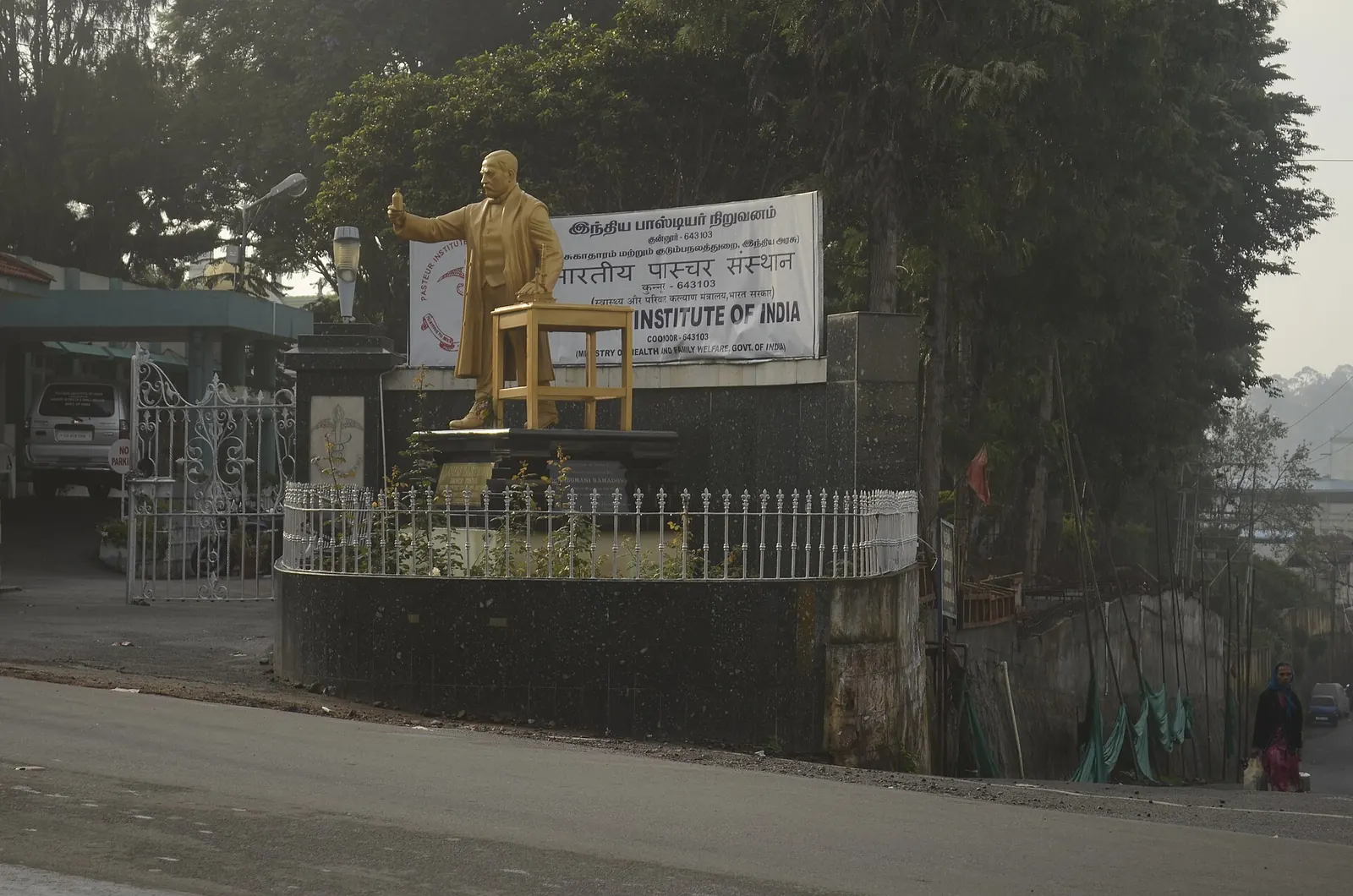
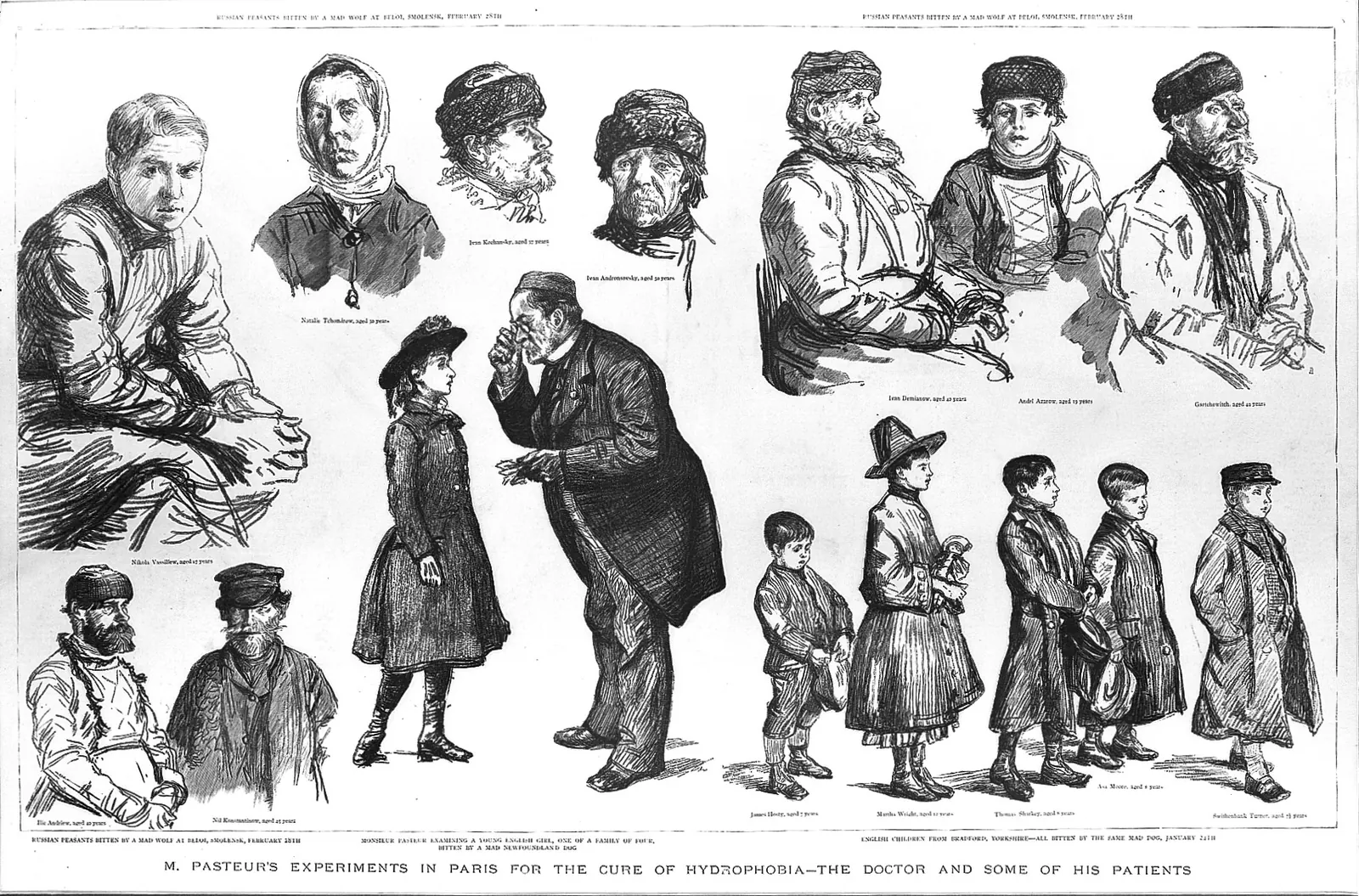
Rabies holds two facts that do not fit together. The disease kills almost everyone who develops symptoms, yet the vaccine that prevents it has existed since Pasteur's work in the 1880s and is stocked by government hospitals across India. The gap between those facts is the story of rabies in India: not a failure of science, but of the last few metres between a bite and a syringe.
This post explains why the numbers disagree, why deaths continue, and exactly what a resident or visitor should do after a bite, a scratch or a lick on broken skin.
How many people die of rabies in India each year?
The honest answer is a range: about 4,000 to 7,350 by the best recent survey, far more than official counts and far fewer than the old 20,000 estimate. Each number measures something different.
See the data as a table
| Deaths (deaths) | |
|---|---|
| APCRI national survey (2003) | 20565 |
| ICMR-NIE survey estimate (2022-23) | 5726 |
| Medically certified deaths, MCCD (2023) | 271 |
| Surveillance, IDSP-IHIP suspected deaths (2024) | 54 |
Source: Sudarshan et al., Int J Infect Dis 2007; Thangaraj et al., Lancet Infect Dis 2024; The Hindu (Oct 2026) via SuperKalam · Survey estimates include deaths at home; MCCD covers only a fraction of registered deaths; IDSP counts what reaches the surveillance system.
| Source | What it counts | Number |
|---|---|---|
| APCRI survey, 2003 (published 2007) | Community survey of 10.8 million people, plus 20% for atypical rabies | 20,565 a year (about 2 per lakh) |
| WHO-era estimate | Model built on pre-2010 data | 18,000 to 20,000 a year |
| ICMR-NIE, 2022-23 (published 2024) | Household survey of 78,807 homes, decision-tree model | 5,726 a year (3,967 to 7,350) |
| MCCD | Medically certified causes of death | 66 (2022), 271 (2023) |
| IDSP-IHIP | Suspected deaths reported by health facilities | 21 (2022), 50 (2023), 54 (2024) |
The ICMR authors call the fall since 2003 a substantial decline over two decades. In 2003, about 10% of victims had taken a partial course of either the old nerve-tissue Semple vaccine or a modern cell-culture vaccine. Their study also warns its own figure may be low, because many rabies deaths happen at home, in villages, without a diagnosis.
In July 2025, a two-judge bench of the Supreme Court took up a newspaper report about a child in Delhi who had died after a dog bite, on its own motion, under the title In Re: City Hounded By Strays, Kids Pay Price. In August 2025 the bench ordered all stray dogs in the National Capital Region picked up and kept in shelters. After public outrage, a three-judge bench took over, changed the order so sterilised and vaccinated dogs would be released, and widened the case to all of India. In November 2025 it ordered dogs removed from schools, hospitals, bus stands and railway stations. On 19 May 2026 it refused to undo that order, told every district to run an animal birth control centre and every state to stock vaccine and immunoglobulin, and allowed euthanasia of rabid or dangerous dogs.
LiveLaw: Supreme Court refuses to modify directions to remove stray dogs from public places (May 2026)
Why does India have so many rabies deaths?
Because every link in the chain from bite to protection has a weak point. The ICMR survey and the earlier APCRI survey point to the same five.
- Exposure is enormous. The ICMR survey found an animal-bite incidence of 6.6 per 1,000 people a year, about 9.1 million bites nationally, and a dog-bite incidence of 5.6 per 1,000.
- Many victims never start treatment. Among people bitten by a dog, 20.5% got no vaccine at all.
- Many never finish it. Only 66.2% received at least three doses, and 49.1% of those who got a first dose did not complete the course.
- Immunoglobulin is scarce. Severe bites need rabies immunoglobulin (RIG) in the wound; an ICMR facility study found RIG in only about 20% of public-sector hospitals.
- The dogs themselves are rarely vaccinated. WHO calls mass dog vaccination the most cost-effective way to stop human rabies, and the Supreme Court in 2026 described implementation of India's birth-control rules as sporadic and underfunded.
The 2003 survey adds the human side: most victims were adult men and children from villages, about half never went to a hospital, and many tried indigenous treatments first. The pattern holds today. The bite looks small, the dog looks healthy, the clinic is far, and the second dose falls on a working day.
Are dog bites rising in India?
Recorded bites are. Government figures reported by ThePrint show 30,52,521 dog bites in 2023 and 37,15,713 in 2024, and 2024 was nearly 70% above 2022. Better reporting explains part of the rise; the state data in the Supreme Court record suggest real growth too.
| State | Period | Dog bites | Deaths reported |
|---|---|---|---|
| Tamil Nadu | 2025 (full year) | 6.25 lakh | 34 |
| Tamil Nadu | Jan to Apr 2026 | 2.63 lakh | 17 |
| Karnataka | 2023 | about 2.3 lakh | not given |
| Karnataka | 2025 | nearly 5 lakh | not given |
| Karnataka | Jan to Apr 2026 | over 2 lakh | at least 25 (rabies) |
The court record also counted at least 31 bites inside Delhi's Indira Gandhi International Airport terminals between 1 January and mid-May 2026, a reminder that visitors meet free-roaming dogs from the moment they land.
What should you do if a street dog bites you in India?
Wash the wound for 15 minutes with soap and running water, then get to a hospital or anti-rabies clinic the same day. Do not wait to see whether the dog falls ill, and do not let anyone apply chilli, turmeric, oil or lime to the wound.
- Wash. Soap and running water for 15 minutes, flushing deep into punctures. WHO and Canada's travel advice both give this step first. Use povidone iodine afterwards if you have it.
- Classify the exposure. Use the WHO categories below. Anything that broke the skin is at least Category II.
- Get vaccinated. Go to a government hospital or an established private hospital the same day. Ask for the full schedule in writing.
- Ask about RIG for any Category III exposure if you have never been vaccinated. If the first hospital has none, go to a district hospital or medical college the same day.
- Finish the course. Put every dose date in your phone. A partial course is how many Indian rabies deaths start.
- Keep records. Photograph the vaccine vial label and batch number and keep the vaccination card.
Do I need a rabies vaccine before travelling to India?
It is worth discussing with a travel clinic if you will be in rural areas, trekking, cycling or riding, working with animals, or travelling with children. Pre-exposure vaccination does not remove the need for treatment after a bite, but it makes that treatment simpler and less dependent on finding immunoglobulin.
| Your situation | After a bite (CDC schedule) | Immunoglobulin? |
|---|---|---|
| Had 2-dose pre-exposure course (days 0 and 7) | 2 doses, days 0 and 3 | Not needed |
| Never vaccinated | 4 doses, days 0, 3, 7 and 14 (5th on day 28 if immunocompromised) | Yes, into and around the wound, within 7 days of the first dose |
Indian clinics often use WHO-approved intradermal schedules, which use a fraction of a vial per dose; WHO says the intradermal route cuts costs by 60 to 80% without losing protection. Follow the schedule the clinic gives you and record it.
- Children are at higher risk: WHO says 40% of rabies deaths worldwide are in children under 15, often with bites to the face.
- Monkeys at temples and forts bite tourists often. CDC advises post-exposure treatment for monkey bites, and not to carry food near them.
- Bats: any direct contact counts as Category III.
Why is rabies so deadly once symptoms begin?
Because the virus travels along nerves to the brain, where vaccines and antibodies can no longer reach it in time. WHO puts the usual incubation at 2 to 3 months, ranging from a week to a year, which is why a bite from months ago still needs treatment.
Treatment works in that silent window. Wound washing removes virus at the site, immunoglobulin neutralises what is left in the tissue, and the vaccine trains the body to make its own antibodies before the virus enters the nerves. Once hydrophobia, agitation or paralysis begin, the disease is virtually always fatal. The 2003 survey found hydrophobia, the fear of swallowing water, was the commonest sign.
Rabies is not a disease you survive; it is a disease you prevent, in the first hours after a bite.
What is India doing to eliminate rabies by 2030?
India has a National Action Plan for Dog-Mediated Rabies Elimination by 2030, in line with the global "Zero by 30" target. The ICMR authors say it needs to fast-track three things: joined-up human and animal surveillance, full-course treatment for every bite, and dog vaccination across the country.
- Courts: the Supreme Court's 2025 and 2026 orders require an animal birth control centre in every district and adequate vaccine and immunoglobulin stocks in every state.
- Islands: the 2003 survey found Andaman and Nicobar and Lakshadweep free of rabies, proof that the disease is not inevitable.
- Gaps: RIG availability and dose completion, not vaccine invention, are the bottlenecks.
For other health risks visitors underestimate, see traveller's diarrhoea in India and snakebite deaths; for the legal fight over street dogs, see the Supreme Court's stray dog orders. If you are planning a longer trip, read what foreign travel advisories flag; Canada's includes the counterfeit-vaccine warning. More of the series is on the Kyun world page.
What do the research papers say?
The team surveyed 78,807 households (3,37,808 people) in 60 districts of 15 states between March 2022 and August 2023. Animal-bite incidence was 6.6 per 1,000 a year (about 9.1 million bites); 76.8% of bites were from dogs. Of dog-bite victims, 20.5% got no vaccine and 66.2% got three or more doses. A decision-tree model using lab data on rabid dogs gave 5,726 deaths a year (3,967 to 7,350). Limit: deaths are modelled, not counted, and the authors say the true figure may be higher.
Read the abstract (free)Twenty-one medical schools surveyed a representative 10.8 million people in 2003 and gathered hospital data from 22 infectious-disease hospitals. They estimated 17,137 deaths a year, raised to 20,565 (about 2 per lakh) to include paralytic rabies. Dogs caused 96.2% of bites, mostly strays; about half of victims never sought hospital care and about 10% had a partial vaccine course. Limit: the 20% uplift for atypical rabies was expert judgement, and the data predate modern vaccine coverage.
Read the abstract (free)What's new
- Supreme Court refuses to undo its order removing stray dogs from public institutions LiveLaw, May 2026
- Over 2 lakh dog bites each in Tamil Nadu and Karnataka in four months of 2026 LiveLaw, May 2026
- Why official rabies deaths differ so sharply from estimates (summary of The Hindu) SuperKalam, Oct 2026
- Canada warns travellers of counterfeit rabies vaccine in Indian cities Government of Canada, Nov 2026
Questions people ask
Do I need a rabies vaccine for India?
Not routinely, but a pre-exposure course (two doses, days 0 and 7) is worth discussing for rural travel, trekking, cycling, animal work and children. It simplifies treatment after a bite and removes the need for immunoglobulin.
What should I do if a street dog bites me in India?
Wash the wound with soap and running water for 15 minutes, then get anti-rabies vaccine the same day at a government hospital or reputable private hospital. Ask about immunoglobulin for any bite or scratch that broke the skin, and complete every dose.
Can a vaccinated pet dog give you rabies?
The risk is much lower, but not zero, because a pet's vaccination can lapse or fail. WHO classifies exposures by the wound, not the owner, so let a doctor decide after any bite that breaks skin.
Where do I get rabies treatment in India?
Start at a government hospital or a reputable private hospital. Vaccine availability across public facilities ranged from 60% to 93% by region in an ICMR study, and immunoglobulin is scarcer, so severe bites may need a district hospital or medical college.
Sources
- Thangaraj et al.: Burden of human rabies deaths and animal bites in India, 2022-23, Lancet Infect Dis (2024)
- Sudarshan et al.: Assessing the burden of human rabies in India, Int J Infect Dis (2007)
- WHO: Rabies fact sheet (2024), source for categories, 15-minute washing, child share, incubation
- CDC Yellow Book: Rabies (2025), source for pre- and post-exposure schedules
- Government of Canada: Travel advice for India, health section (Nov 2026)
- ThePrint: Dog bites and poor post-exposure coverage drive India's rabies crisis (2025)
- SuperKalam summary of The Hindu: Mismatch in rabies death data (2026)
- LiveLaw: Supreme Court on stray dogs, 19 May 2026 judgment (2026)
- LiveLaw: Dog-bite statistics cited by the Supreme Court (2026)
- The South First: ICMR dog-bite study (2024)

Sapta (Saptarshi Sarkar) is a mechanical engineer turned marketer in Bengaluru and a solo touring rider. He writes the seven Saptaverse blogs. Work with him or read more of Whyblog.