
BS6 two-wheeler emission norms, in force for every new two-wheeler sold in India since 1 April 2020, cap a petrol motorcycle at 1.0 g/km of carbon monoxide, 0.10 g/km of hydrocarbons and 0.06 g/km of nitrogen oxides on the WMTC test cycle. India's first mass limits in 1991 allowed 12 to 30 g/km of CO. Each tightening in between retired a technology: the 1996 and 2000 limits ended the mass-market two-stroke, and BS6 ended the carburettor.
- 12–30 g/km of CO was allowed in 1991; BS6 allows 1.0 g/km, on a much tougher test.
- 1996 and 2000 limits on HC+NOx (3.6, then 2.0 g/km) ended the mass-market carburetted two-stroke.
- 6,71,305 unsold BS-III two-wheelers were stranded when the Supreme Court stopped their sale from 1 April 2017.
- BS6 (April 2020) made fuel injection with an oxygen sensor, or an e-carb, the norm.
- OBD-2B became mandatory on 1 April 2025; BS7 starts with cars in April 2029.
The story is worth knowing if you own an old bike, are thinking of buying one, or just wonder why the RX100 and the Yezdi vanished in the same year.
The rules did not ban any technology by name. They set a number, and engineers found that some designs could not reach it at a price Indians would pay.
What are the Bharat Stage emission norms for two-wheelers?
Bharat Stage (BS) norms are India's legal limits on tailpipe pollutants for new vehicles, set by the Ministry of Road Transport and Highways and measured on a chassis dynamometer over a fixed drive cycle. For petrol two-wheelers they limit carbon monoxide (CO), unburnt hydrocarbons (HC) and nitrogen oxides (NOx), in grams per kilometre.
The ladder looks like this, using the figures compiled by DieselNet from the official notifications. Two test cycles matter:
- Indian Driving Cycle (IDC): a short urban cycle, used until BS-III.
- World Motorcycle Test Cycle (WMTC): longer, faster and with a cold start, used from BS-IV onwards, so the later numbers are harder to meet than they look.
| Stage | From | CO (g/km) | HC (g/km) | HC+NOx (g/km) | Test cycle |
|---|---|---|---|---|---|
| First mass limits | 1991 | 12–30 | 8–12 | – | IDC |
| 1996 norms | 1996 | 4.50 | – | 3.60 | IDC |
| BS-I (India 2000) | 2000 | 2.00 | – | 2.00 | IDC |
| BS-II | April 2005 | 1.5 | – | 1.5 | IDC |
| BS-III | April 2010 | 1.0 | – | 1.0 | IDC |
| BS-IV (Class 1 and 2-1) | April 2016 new types, April 2017 all | 1.403 | – | 0.79 | WMTC |
| BS-IV (Class 3, above 130 km/h) | same | 1.970 | – | 0.40 | WMTC |
| BS6 | 1 April 2020 | 1.0 | 0.10 | 0.16 (0.10 HC + 0.06 NOx) | WMTC |
Two details explain most of the history:
- The 1996 cliff. The 1991 range of 12 to 30 g/km depended on vehicle weight, and the limit dropped by roughly a factor of three to seven in a single step in 1996.
- The BS-IV paradox. BS-IV raised the CO number on paper (1.403 against 1.0) because the WMTC cold start is so much tougher than the old IDC; the real tightening was in hydrocarbons and NOx.
See the data as a table
| CO limit (g/km) | HC+NOx limit (g/km) | |
|---|---|---|
| 1991 | 30 | |
| 1996 | 4.5 | 3.6 |
| 2000 | 2.0 | 2.0 |
| 2005 | 1.5 | 1.5 |
| 2010 | 1.0 | 1.0 |
| 2017 | 1.403 | 0.79 |
| 2020 | 1.0 | 0.16 |
Source: DieselNet, India 2- and 3-wheel emission standards · 1991 CO shown at the top of the 12–30 g/km range. 2017 and 2020 values are on the tougher WMTC cycle (BS-IV Class 1 and 2-1 shown), so they are not directly comparable with the IDC years.
What a step looks like on the ground
On 29 March 2017, two days before BS-IV took over, a Supreme Court bench of Justices Madan B. Lokur and Deepak Gupta barred the sale and registration of BS-III vehicles from 1 April. The industry had asked for a year to clear its stock; the court refused, holding that public health outweighed the makers' commercial interest. Industry data showed 8,24,275 unsold BS-III vehicles, and 6,71,305 of them were two-wheelers. What followed was a 48-hour fire sale. Honda in Chennai offered ₹18,500 off motorcycles for one day only. Kothari Wheels in Pune sold more than 500 BS-III two-wheelers on 30 March, with discounts of ₹10,000 to ₹15,000. In Mumbai, a Hero dealer had to call the police to manage the crowd. Vehicles sold on or before 31 March 2017 could still be registered.
Autocar Professional: BS III two-wheeler stocks dry up riding on huge discounts (31 March 2017)How did the 1996 and 2000 limits end the two-stroke?
The two-stroke died because of hydrocarbons, not CO alone. In a carburetted two-stroke, the fresh fuel-air charge enters the cylinder while the exhaust port is still open, so some of it goes straight out unburnt.
The engine also burns its lubricating oil, which is mixed with the fuel or pumped in by a separate oil system. That is why old two-strokes leave a blue haze and an oily smell.
The numbers that did it
A typical Indian two-stroke of the 1980s could live with 1991's 8–12 g/km of HC. The 1996 rule capped HC and NOx together at 3.6 g/km, and the 2000 rule at 2.0 g/km.
Meeting those numbers needed one of three costly fixes, on bikes that sold on price:
- catalytic converters;
- better port timing;
- direct injection.
Escorts Yamaha stopped the RX100 in March 1996, and Ideal Jawa closed its Mysore factory the same year; both cases are told in the RX100 story and the Jawa and Yezdi history.
The market moved with the rules
The shift shows up in the market mix. Paolo Aversa's 2024 WIPO study of the industry records that motorcycles, mostly four-stroke commuters from the Indo-Japanese joint ventures, rose from 21% of two-wheeler sales in 1994 to 43% in 2000 and about 77% by the mid-2000s. Two-stroke scooters and mopeds lost share in the same years; the scooter history covers how the gearless four-stroke Activa took their place.

The Paul Scherrer Institute team ran two-stroke scooter exhaust through a smog chamber and measured primary organic aerosol, aromatic hydrocarbons and the secondary aerosol that forms as the exhaust ages in sunlight. Their headline finding is that two-stroke emission factors for organic aerosol and aromatics can be up to thousands of times higher than those of other vehicle classes. Scaled to Bangkok, the institute estimated that two-stroke mopeds made up about 60% of primary organic aerosol from traffic while burning only about 10% of the fuel. The limit: the vehicles tested were European mopeds, so the Asian numbers are an extrapolation, and the authors say they are likely an underestimate.
Read the summary (free)Why did India jump from BS-IV straight to BS6?
India skipped BS-V because the gap between BS-III and BS-IV had dragged on, and in 2016 the government decided to leapfrog to BS6 by April 2020. The draft BS6 notification for two- and three-wheelers came out on 19 February 2016.
The fuel had to change first, since a catalyst-heavy engine needs low-sulphur petrol. Delhi got BS6 fuel early, on 1 April 2018.
| Stage | Petrol sulphur limit (mg/kg) |
|---|---|
| BS-III | 150 |
| BS-IV | 50 |
| BS6 | 10 |
The BS-IV changeover itself ended in a courtroom, with the 29 March 2017 Supreme Court order told in the story above: no BS-III sales or registrations from 1 April 2017, and 6,71,305 two-wheelers left to clear in two days.
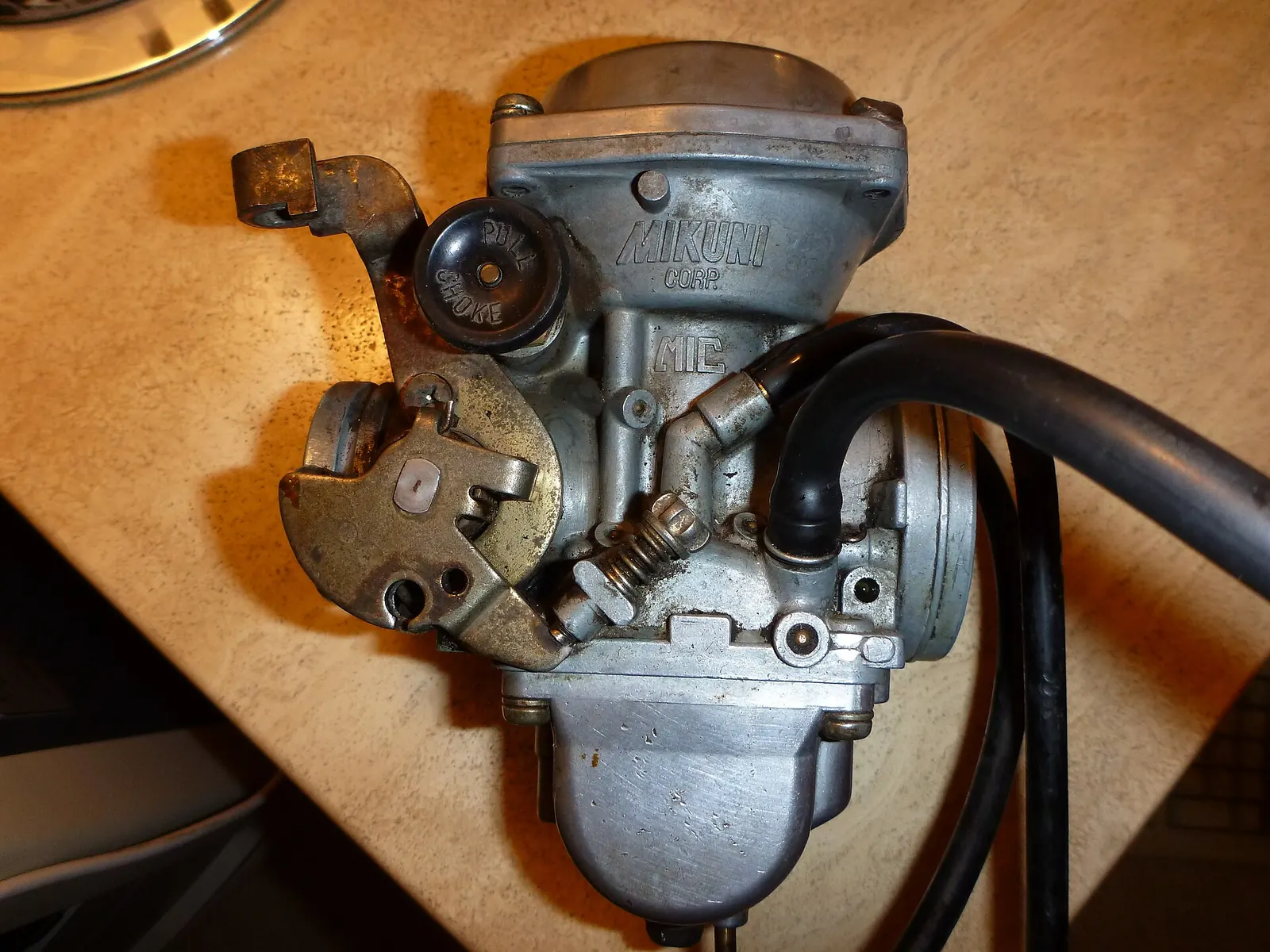
Why did BS6 end the carburettor?
BS6 needed fuelling precise enough that a catalytic converter works at its best on every cycle, and a carburettor cannot hold the air-fuel ratio that tightly.
A fuel-injection system uses an oxygen sensor in the exhaust to trim the mixture in closed loop, many times a second, keeping it near the chemically ideal ratio where a three-way catalyst cuts CO, HC and NOx together.
How makers answered
Autocar India's BS6 explainer of March 2020 reported two routes:
| Maker | BS6 fuelling route |
|---|---|
| Hero and the Japanese makers | Fuel injection across the whole range |
| TVS and Bajaj | Electronically controlled carburettor on some sub-125 cc models |
BS6 engines also needed considerably more catalyst material, which is precious metal and cost. Affordable bikes rose about 10% in price, and many engines lost a little peak power as makers moved their tuning lower in the rev range. The fuel injection vs carburettor post explains the hardware in detail.
Did the newer norms actually cut real-world emissions?
Yes for CO and hydrocarbons, by a large margin, according to on-road measurements from Varanasi. The catch is that a cleaner-burning engine can emit more CO2 and NOx, because more of the fuel is fully burnt.
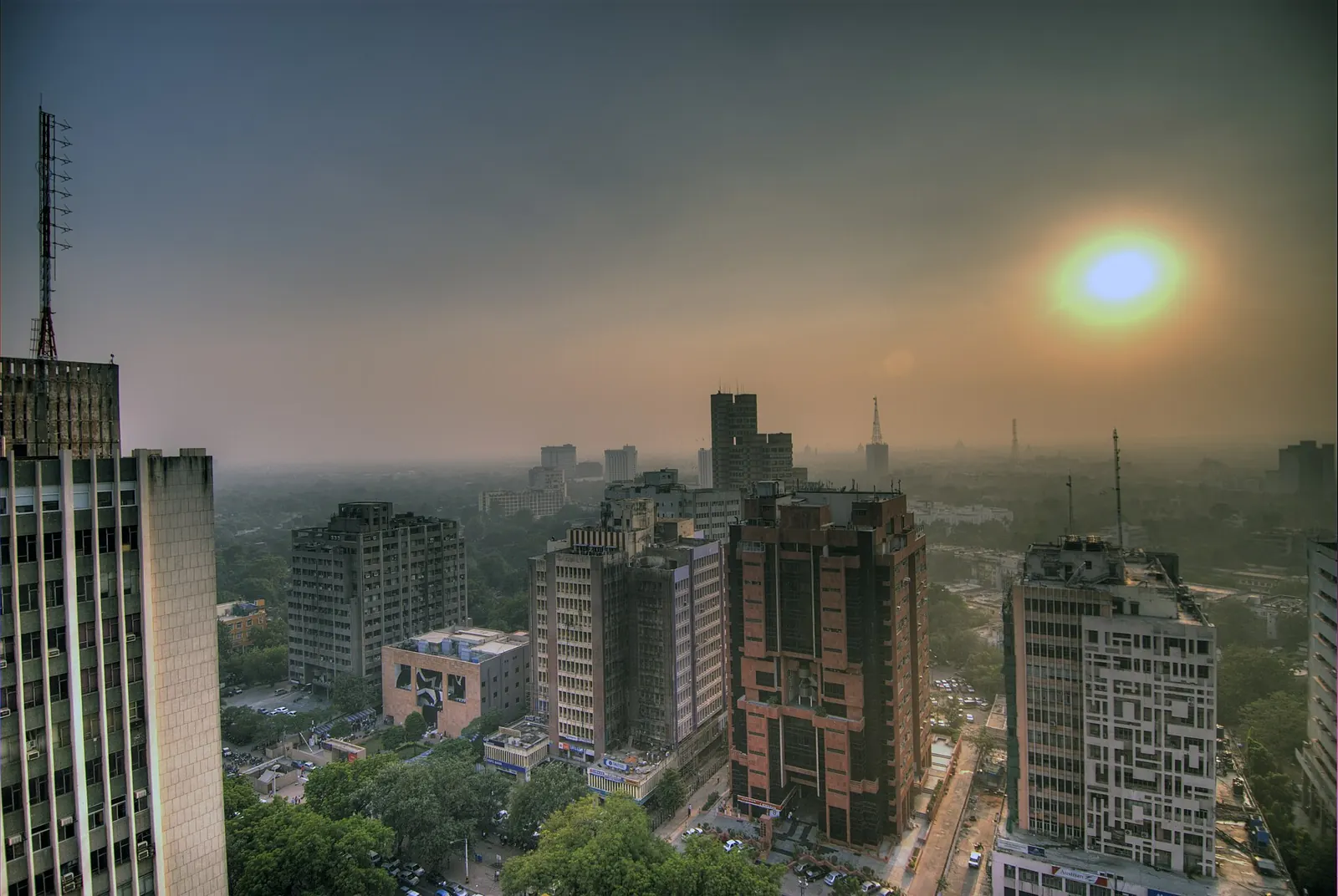
The BS-III bike's hydrocarbon emission factor was 25.69 times the BS-VI bike's.Singh and Mudgal, IIT BHU, on-road test in Varanasi
The authors fitted an on-board gas analyser and GPS to one BS-III and one BS-VI motorcycle and rode both on Varanasi roads at peak and off-peak hours. Real traffic had far less idling than the Indian Driving Cycle assumes. The BS-III bike's CO and HC emission factors were 9.68 and 25.69 times those of the BS-VI bike, which works out to cuts of 89.7% in CO and 96.6% in HC. The BS-VI bike emitted 3.57 times the CO2 and 2.22 times the NOx. The limit is the sample: two motorcycles, so treat the ratios as an illustration rather than a fleet average.
Read the abstract (free)The JRC tested 30 European two-, three- and four-wheelers from Euro 1 to Euro 4 on chassis dynamometers over the WMTC and older cycles, measuring particle mass and particle number. Two-stroke mopeds were among the worst emitters, at about 14 times the 4.5 mg/km Euro 5 particulate limit and about 11 times the car particle-number limit. Four-stroke mopeds and motorcycles were roughly an order of magnitude lower on mass, though many still exceeded the car particle-number limit, and cold starts pushed some to 2.2 times that limit. The limit: European vehicles, 30 units, and no on-road tests.
Read the paper (free)What did BS6 phase 2 and OBD-2B change in 2023 and 2025?
BS6 arrived in two steps for two-wheelers:
- April 2020. On-board diagnostics (OBD) arrive on Indian motorcycles for the first time.
- 1 April 2025. The second stage of OBD-2, called OBD-2B, becomes mandatory after the Ministry deferred it from April 2023. Sensors check the catalytic converter and engine in real time and log faults.
The 2025 changeover
Makers spent early 2025 re-certifying their ranges. TVS began dispatching an OBD-2B Jupiter in March 2025 and said its whole two- and three-wheeler range would switch before the end of that month; Hero, Honda and Suzuki updated their line-ups too.
SIAM figures showed domestic two-wheeler sales falling 16.7% to 14,58,784 units in April 2025, the first month of OBD-2B. SIAM's director general put it down mainly to a high base in April 2024, and industry sources pointed to inventory correction at Hero.
Fuel is part of the same story: the second phase of BS6 in April 2023 aligned vehicles with E20 petrol, which the E20 post covers.
Which technologies did each stage end?
Each stage made one design uneconomic for mass-market bikes. The table is my reading of the dates against the products that disappeared.
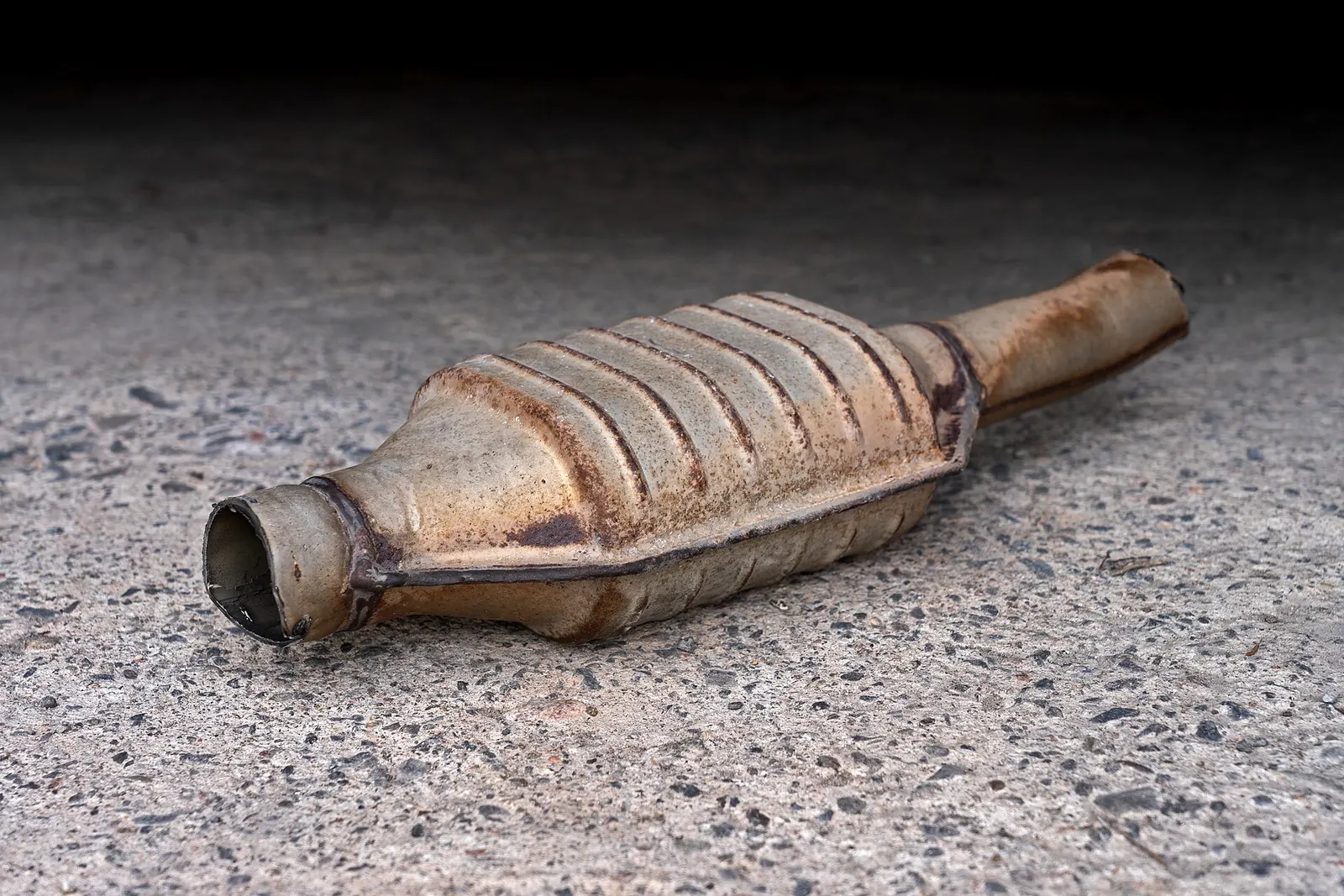
| Stage | What got harder | What faded out | What replaced it |
|---|---|---|---|
| 1996 and BS-I (2000) | HC+NOx of 3.6, then 2.0 g/km | Carburetted two-stroke motorcycles (RX100 in 1996, Ideal Jawa in 1996) | Four-stroke 100cc commuters, two-strokes with catalysts for a while |
| BS-II (2005) and BS-III (2010) | HC+NOx of 1.5, then 1.0 g/km | Remaining two-stroke scooters and mopeds; Bajaj ended Chetak production in 2005 | Gearless four-stroke scooters |
| BS-IV (2016–17) | WMTC cold-start test, evaporative emission control | Bikes without fuel-vapour canisters | Evaporative canisters on every bike |
| BS6 (2020) | HC 0.10 and NOx 0.06 g/km, OBD | Plain carburettors on most bikes; Royal Enfield's 500cc engine | Fuel injection with O2 sensor, or e-carb |
| OBD-2B (2025) | Live catalyst and sensor monitoring | Non-OBD-2B electronics | Extra sensors, updated ECUs |
The 500cc Bullet is a good example of the last step. Royal Enfield dropped its 500cc engine in India from 31 March 2020 because BS6 compliance made it unviable, which the Bullet history follows.
What comes after BS6?
BS7 is next, and two-wheelers will get their own dates. Autocar Professional reported in October 2026, citing The Economic Times, that the Ministry has approved a phased BS7 roadmap:
- April 2029: new cars;
- 2030: light commercial vehicles;
- April 2031: heavy vehicles;
- Two-wheelers: timelines to be notified separately.
The first phase counts particles down to 10 nanometres instead of 23, adds real-world driving checks and market surveillance, and introduces limits on brake and tyre wear.
The Kontses paper above is a fair guide to why: particle number, not particle mass, is where small engines still fail car-grade tests.
If you ride a pre-2020 carburetted bike, as I do with a carburetted BS4 2017 NS200, none of this forces you off the road. The rules apply to new vehicles. What changes is the fuel at the pump and the parts on the shelf. More on both of my bikes is in Yantra.
What's new
- India plans phased BS7 rollout from April 2029; two-wheeler dates to follow separately Autocar Professional, Oct 2026
- Two-wheeler sales drop 16.7% in April 2025, the month OBD-2B took effect Autocar Professional, May 2025
- TVS starts dispatching OBD-2B compliant two-wheelers with the Jupiter 110 Rushlane, Mar 2025
Questions people ask
What changed for bikes under BS6?
Limits fell to 1.0 g/km CO, 0.10 g/km HC and 0.06 g/km NOx on the WMTC cycle, on-board diagnostics arrived, and petrol sulphur dropped to 10 mg/kg. In practice that meant fuel injection or electronic carburettors, bigger catalytic converters and prices about 10% higher on affordable bikes.
Can I still ride a BS3 or BS4 bike in India?
Yes. Emission norms apply to new vehicles at the time of sale. A bike that was legally registered keeps its registration for its validity period, subject to a valid pollution certificate. Some cities restrict older vehicles by age, which is a separate rule.
Were two-stroke bikes banned in India?
No law named them. The 1996 and 2000 limits on hydrocarbons and NOx made carburetted two-strokes too costly to certify, so makers stopped building them. Existing two-strokes stayed on the road.
What is OBD-2B on a motorcycle?
It is the second stage of on-board diagnostics, mandatory for new two-wheelers from 1 April 2025. Sensors monitor the catalytic converter and key engine parameters in real time and store faults, so a failing catalyst shows up instead of silently raising emissions.
Sources
- DieselNet: India, 2- and 3-wheel vehicle emission standards (2016 revision)
- Wikipedia: Bharat stage emission standards (fuel sulphur tables and dates)
- Paul Scherrer Institute: Unassuming rampant polluters on two wheels (summary of Platt et al., Nature Communications 5:3749) (2014)
- Singh and Mudgal: Comparison of Vehicular Emissions from BS-III and BS-VI Motorized Two-Wheelers, IIT BHU repository (2023)
- Kontses et al.: Particulate emissions from L-Category vehicles towards Euro 5, Environmental Research (2020)
- Paolo Aversa: The Evolution of the Two-Wheeler Industry, WIPO Economic Research Working Paper 83 (2024)
- Centre for Science and Environment: on the Supreme Court judgment on BS-III vehicles, with inventory figures (2017)
- Autocar India: BS6 norms special, part 4, BS6 and bikes (2020)
- Rushlane: 2025 TVS Jupiter updated with OBD-2B compliance (2025)
- Autocar Professional: Indian passenger vehicle sales hit April record while two-wheelers decline (2025)
- Autocar Professional: BS-VII phased rollout from April 2029 (2026)
- Wikipedia: Royal Enfield Bullet (500cc discontinuation under BS6)
- Autocar Professional: BS III two-wheeler stocks dry up riding on huge discounts (source for the fire-sale story) (2017)

Sapta (Saptarshi Sarkar) is a mechanical engineer turned marketer in Bengaluru and a solo touring rider. He writes the seven Saptaverse blogs. Work with him or read more of RoadHook Machines.


