
Your attention and a pressure cooker do release the same way in one important sense: both work best with small, regular vents rather than one big blow-off. A Hawkins cooker holds 121°C because a weighted valve lets out puffs of steam whenever pressure reaches 15 psi, and a 2025 classroom study found that a 90-second break every 10 minutes kept students' quiz scores about 9 points higher than a single 10-minute break at 45 minutes. The analogy breaks on mechanism, though: attention does not store up pressure that must escape; it drifts away from a goal that a short switch renews.
- 121°C at 15 psi: a Hawkins weight valve vents in small puffs to hold that point.
- About 74 g is the vent weight needed for an assumed 3 mm hole (an estimate; Hawkins publishes the pressure, not the hole).
- 65.1% vs 56.4%: quiz scores with a 90-second break every 10 minutes vs one 10-minute break (Sharpe 2025).
- d = -0.09: micro-breaks did nothing for demanding cognitive work in the Albulescu meta-analysis.
- Reset, not release: attention fades as a goal habituates; a brief switch renews it (Ariga and Lleras 2011).
This is a "collision" post: two unrelated things, a kitchen appliance and the psychology of focus, tested for a real link. First the cooker physics, solved properly; then the attention research; then a verdict on how far the comparison actually holds.
During the Second World War the Royal Air Force had a problem with its radar operators: they were missing targets. It recruited the psychologist Norman Mackworth to study their efficiency. His laboratory stand-in, later called the Mackworth Clock, was a pointer that stepped round a blank dial and now and then jumped twice; the watcher's only job was to press a button at each double jump.
Detection held up at first and then fell away: after about the first half hour, operators had lost around 10 to 15% of their efficiency. Urging people to be more attentive did nothing. An interruption such as a telephone call, a half-hour rest or feedback on how they were doing cut the decline, and his findings led to radar duty shifts being sharply shortened.
Wikipedia: Norman Mackworth (citing Warm, Parasuraman and Matthews, Human Factors 2008)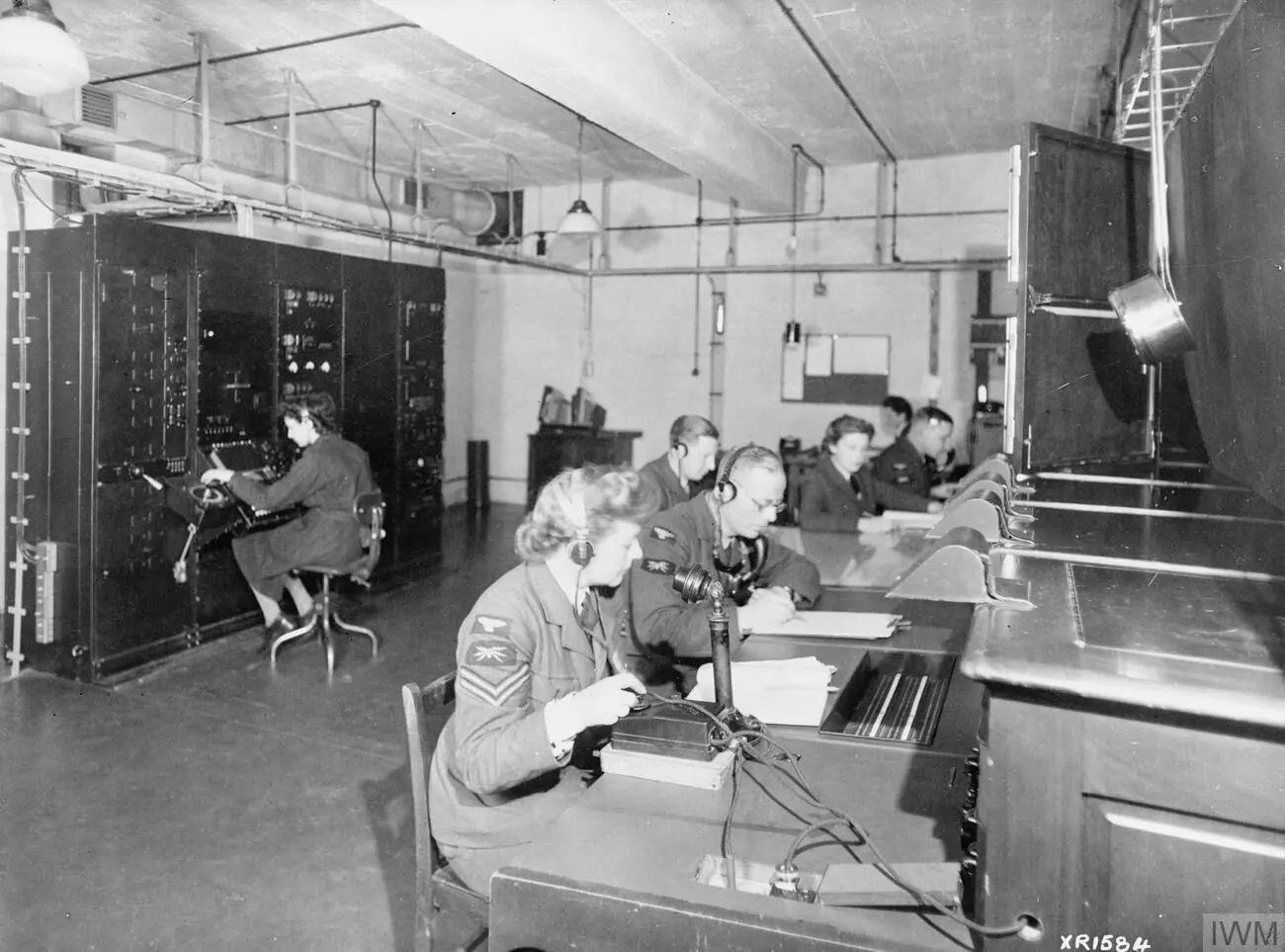
How does a pressure cooker release its pressure?
A pressure cooker releases pressure through a weight that sits on a narrow vent tube and lifts whenever the steam pushes harder than gravity pulls it down. Hawkins says its cookers run at 15 psi and 121°C with "the standard 15 lb vent weight", and the regulator lifts with a whistle at full pressure.
The force balance. The weight lifts when the gauge pressure \( P_g \) times the vent area \( A \) equals the weight's force \( mg \):
Assumptions. 15 psi gauge = 103.4 kPa; a vent hole 3 mm across (my assumption, since Hawkins does not publish it), so \( A = \pi (1.5\times10^{-3})^2 = 7.07\times10^{-6}\ \text{m}^2 \).
- Force needed. \( F = 103{,}400 \times 7.07\times10^{-6} = 0.73\ \text{N} \)
- Mass of the weight. \( m = 0.73/9.81 = 0.074\ \text{kg} \), about 74 g. The "15 lb" in the name refers to the pressure it holds (15 pounds per square inch), not to the mass of the weight.
- Sensitivity. A 2.5 mm hole would need about 52 g; a 3.5 mm hole about 101 g. Mass scales with the square of the hole diameter.
The elegance is that the valve is self-regulating:
- Below 15 psi it seals.
- Above 15 psi it lifts, steam escapes and pressure drops a little.
- Then it reseats, so pressure never climbs far beyond the set point, the cooker's version of a steady state.
Why does that pressure cook food faster?
Because higher pressure raises water's boiling point, and the Clausius-Clapeyron relation tells you by how much. At 15 psi gauge, water boils at about 121°C, matching Hawkins' figure.
The theory, in plain words. The Clausius-Clapeyron equation links a liquid's vapour pressure to its temperature through its latent heat of vaporisation. Push the pressure above the steam up, and the water must get hotter before its molecules can escape as vapour.
- Absolute pressure. \( P_2 = 101.3 + 103.4 = 204.7\ \text{kPa} \), so \( P_2/P_1 = 2.02 \) and \( \ln 2.02 = 0.703 \).
- Constants. \( L = 40.7\ \text{kJ/mol} \) for water at its normal boiling point, \( R = 8.314\ \text{J/(mol·K)} \), \( T_1 = 373.15\ \text{K} \).
- Solve for T2. \[ \frac{1}{T_2} = \frac{1}{373.15} - \frac{8.314 \times 0.703}{40{,}700} = 0.0026799 - 0.0001436 = 0.0025363\ \text{K}^{-1} \]so \( T_2 = 394.3\ \text{K} = 121.1^\circ\text{C} \).
Calculated in this post from the Clausius-Clapeyron relation with water's latent heat of 40.7 kJ/mol (Wikipedia) and Hawkins' 15 psi working pressure (Hawkins FAQ).
The answer lands on Hawkins' 121°C. The latent heat falls slightly as temperature rises, which this simple form ignores, but the error is a fraction of a degree here. The food science of the whistle and the counting habit is covered on our food blog in the science of the pressure cooker whistle.

Does attention really build up and need releasing?
Attention does decline with time on a monotonous task, but the best current evidence says it is not "pressure" building up; it is the task goal fading.
Psychologists call the decline the vigilance decrement, first measured by Norman Mackworth in 1948 with a clock-like display whose pointer occasionally jumped twice, the clock in the story above. Watchers' detection became noticeably worse after about 30 minutes on task.
Eighty-four participants did a repetitive 50-minute computer task in four groups. Most groups' performance fell significantly over time. The "switch" group, which had memorised four digits and responded to them on the two occasions they appeared during the task, showed no decline at all. The authors argue the decrement comes from the brain habituating to a constant goal, not from a limited attention "resource" being used up, and that two brief diversions were enough to reset the goal. Limit: a single lab study with a dull computer task.
Read the study summary (free)This is where the cooker metaphor needs care. A cooker's pressure is stored energy that must go somewhere. Ariga and Lleras' result suggests attention is closer to a habituating sensor: keep it on one constant signal and it stops responding, briefly switch it to something else and it fires again.
The release is a reset, not a discharge.
The same drift explains why switching back and forth too often costs you, as described in attention residue and task switching.
Do short breaks actually restore focus?
They restore energy reliably and performance modestly. A 2022 meta-analysis found clear effects on feeling fresh but only a small, uncertain effect on work output.
Twenty-two study samples with 2,335 participants, testing breaks of 10 minutes or less. Micro-breaks raised vigour (d = 0.36) and reduced fatigue (d = 0.35), both significant. The effect on performance was small and not significant (d = 0.16). Longer breaks predicted bigger performance gains (b = 0.07 per minute). By task type, creative work improved (d = 0.38), clerical work improved more (d = 0.56, only two studies) and cognitively demanding tasks did not (d = -0.09). Limit: few studies per outcome, many self-reports and possible publication bias for performance.
Read the paper (free)See the data as a table
| Effect size d | |
|---|---|
| Clerical task performance | 0.56 |
| Creative task performance | 0.38 |
| Vigour | 0.36 |
| Less fatigue | 0.35 |
| All performance (not significant) | 0.16 |
| Cognitive task performance (not significant) | -0.09 |
Source: Albulescu et al., PLOS ONE (2022) · Clerical estimate rests on two studies. 0.2 is conventionally small, 0.5 medium.
253 psychology undergraduates across two cohorts attended ten 90-minute seminars. Each week some groups got a 90-second break every 10 minutes and others a single 10-minute break at 45 minutes; quizzes measured retention through the session. The micro-break groups averaged 65.1% against 56.4%. Scores in the single-break groups fell to 39.6% just before the break, jumped to 71.2% right after it, then dropped to 54.8%. Limit: quasi-experimental, one tutor, and the unit of analysis is unclear from the reported statistics.
Read the paper (free)That 39.6 to 71.2 jump is the most cooker-like number in the literature: let it build for 45 minutes, release once, and you get a big but short-lived recovery.
The micro-break schedule is the weighted valve: small, frequent releases that keep the system near its working point.
Can we model attention like a vented cooker?
Roughly, with a toy model that captures the timing argument. It is my own construction for illustration, not a published model.
The toy model, step by step
Assumptions. Attention starts at 100% of its fresh level and decays exponentially with a time constant \( \tau \); a break fully resets it; no work is done during the break.
I take \( \tau \approx 60 \) minutes, a rough fit to Sharpe's single-break groups, which fell from 82.5% to 39.6% in about 45 minutes (ratio 0.48, so \( \tau = 45/\ln(2.08) \approx 61 \) min). This lumps material difficulty into "attention", so it is an estimate only.
- Average attention during a work block of length T. \[ \bar A = \frac{1}{T}\int_0^T e^{-t/\tau}\,dt = \frac{\tau}{T}\left(1 - e^{-T/\tau}\right) \]
- Share of time spent working with breaks of length \( b \): \( T/(T+b) \).
- Effective output per hour: \( \bar A \times T/(T+b) \).
- Micro-break schedule (T = 10, b = 1.5): \( \bar A = 6(1-e^{-1/6}) = 0.92 \); time share 0.87; output 0.80.
- Single big break (T = 45, b = 10): \( \bar A = 1.33(1-e^{-0.75}) = 0.70 \); time share 0.82; output 0.57.
Use this to check what you just read. Try your own work and break lengths.
Vent your attention: find a work-break rhythm
Sensitivity check
- Longer attention (\( \tau = 120 \) min): the gap shrinks; output becomes 0.83 for micro-breaks and 0.68 for the single break.
- Half resets: if a break only half resets attention, the micro-break advantage falls further, because each reset is smaller.
And for deep, demanding work, the meta-analysis found no performance benefit at all, which is why long uninterrupted blocks are the core of a deep work focus routine.
Where does the analogy break down?
It breaks on what is being released. The table maps each part honestly.
| Pressure cooker | Attention | Does the link hold? |
|---|---|---|
| Steam pressure builds as heat is added | Performance drifts down with time on task | Partly: both change steadily with time, but attention declines rather than builds |
| Weight valve lifts at 15 psi | A short break or switch | Yes for timing: small, frequent releases work best (Sharpe 2025) |
| Release discharges stored energy | Break renews a habituated goal (Ariga and Lleras 2011) | No: nothing stored escapes; the goal is refreshed |
| Safety valve fuses if the vent blocks | Burnout after long overload | Loosely: a metaphor, not a measured mechanism |
| More than 4 whistles a minute wastes fuel | Breaking too often fragments work | Yes: over-venting costs output in both |
| 121°C cooks faster | Focused, slightly stressed work feels productive | Weak: no evidence that "pressure" improves attention |
Your working memory limit also caps how much any rhythm can help.

The cooker's weight valve holds 121°C by venting at 15 psi in small, frequent puffs, and the attention data favour the same rhythm: students with a 90-second break every 10 minutes averaged 65.1% against 56.4% for one 10-minute break, and two brief switches abolished the vigilance decrement in Ariga and Lleras' 50-minute task. But attention does not store pressure that must escape; a break resets a fading goal. The analogy is a good rule of thumb for routine, clerical and creative work, and a poor guide for deep cognitive work, where micro-breaks showed no gain (d = -0.09).
What's new
- Classroom study finds 90-second breaks every 10 minutes beat one 10-minute break for retention Frontiers in Psychology, Aug 2025
- A 75-year review of the vigilance decrement argues the drop mixes real sensitivity loss with more cautious responding Frontiers in Cognition, Nov 2025
- Hawkins' FAQ advises timing from full pressure rather than counting whistles Hawkins Cookers, accessed Nov 2026
What if next?
- Chanakya would have understood your clutch Another valve problem: engage too fast and you stall, too slow and you burn the plates.
- A traffic signal is a meditation timer A forced 90-second break, every few hundred metres, whether you want it or not.
- Why worry and rust are the same process What happens to the parts you never vent at all.
Questions people ask
How often should you take a break when studying?
For routine study and review, short and frequent works well: Sharpe's students did better with 90 seconds every 10 minutes than one 10-minute break. For demanding problem-solving, the meta-analysis found no performance gain from micro-breaks, so longer blocks may suit you better.
Why does my focus drop after 30 minutes?
The vigilance decrement. Since Mackworth's 1948 clock studies, detection on monotonous tasks has been seen to worsen after about half an hour. Ariga and Lleras argue the brain habituates to an unchanging goal, so briefly switching tasks restores it.
Why does a pressure cooker cook faster?
At 15 psi above atmospheric pressure, water boils at about 121°C (Hawkins FAQ) instead of 100°C, so food sits in hotter water and steam. The Clausius-Clapeyron equation gives 121.1°C, matching Hawkins' figure.
Is the Pomodoro technique backed by research?
Not directly as a named method. The research supports the general idea of short breaks for vigour and fatigue (Albulescu 2022), but the exact 25 and 5 minutes is a convention; use the calculator to test other rhythms.
Sources
- Hawkins Cookers: Frequently asked questions (source for 15 psi, 121°C, 15 lb vent weight, 4 whistles a minute, pressure-locked lid)
- University of Illinois: Brief diversions vastly improve focus (Ariga and Lleras, Cognition) (2011) (source for 84 participants, 50 minutes, switch group result)
- Ariga A., Lleras A.: Brief and rare mental breaks keep you focused, Cognition 118(3) (2011) (goal habituation account)
- Albulescu P. et al.: Give me a break!, PLOS ONE (2022) (source for d values, 2,335 participants, b = 0.07)
- Sharpe B.T. et al.: Sustaining student concentration, Frontiers in Psychology (2025) (source for 65.1% vs 56.4%, 39.6%, 71.2%, 54.8%)
- Wikipedia: Norman Mackworth (source for the story: RAF recruitment, the 10 to 15% loss after 30 minutes and shortened shifts, citing Warm, Parasuraman and Matthews, Human Factors 2008)
- Wikipedia: Mackworth Clock (source for the 1948 task and the 30-minute decrement)
- Wikipedia: Clausius-Clapeyron relation (equation and latent heat of water)
- Klein R.M., Feltmate B.B.T.: The vigilance decrement, its first 75 years, Frontiers in Cognition (2025) (source for a telephone call, a half-hour rest or feedback reducing the decrement, and urging having no effect)
More on the science of the mind on the Manthan world page.

Sapta (Saptarshi Sarkar) is a mechanical engineer turned marketer in Bengaluru and a solo touring rider. He writes the seven Saptaverse blogs. Work with him or read more of Mindblog.


