The cheapest route to therapy in India is public: Tele-MANAS, the government's free 24x7 tele-mental-health service, gives counselling in 20 languages and refers you onward, and government psychiatry outpatient departments charge a token registration fee (₹10 per card at IHBAS Delhi). The Mental Healthcare Act 2017 entitles people below the poverty line, the homeless and the destitute to free treatment at government facilities. If you go private, compare fees, ask about reduced-fee slots, and check the clinical psychologist's RCI registration.
- Tele-MANAS is free, 24x7 and in 20 languages; it had handled over 32.84 lakh calls by February 2026.
- ₹10 per OPD card is the registration fee at IHBAS Delhi; essential psychiatric medicines are free at government facilities.
- Section 18 of the Mental Healthcare Act 2017 gives free treatment to people below the poverty line, the homeless and the destitute.
- ₹350 to ₹10,000 per private session in 2026 listings, so ask about reduced-fee slots.
- RCI registration is the check for a clinical psychologist; ask for the number.
Cost is the reason most people give for not starting. The National Mental Health Survey (NMHS) 2015–16, run by NIMHANS across 12 states with 39,532 adults, is the reason the cost question matters: depending on the condition, between 70% and 92% of people living with mental illness in India were found to receive no formal treatment.
This guide walks through the options from free to paid, with the fees that official and published sources actually state. Other guides on the mind sit under Manthan.
What are the affordable therapy options in India?
There are five tiers, and the cost rises roughly a hundredfold from bottom to top. Most people should start at the first tier and move up only if they need to.
Start at the free tier and move up only if you need to. The cost rises about a hundredfold from bottom to top.The rule this guide is built on
| Option | What you get | Typical cost | How to access |
|---|---|---|---|
| Tele-MANAS | Phone counselling, referral to psychiatrists, video consults through linked services | Free | Helpline or app listed on the official site; 24x7, 20 languages |
| Government psychiatry OPD (medical college, district hospital, institute) | Psychiatrist assessment, medicines, referral to clinical psychology | Token fee; ₹10 per OPD card at IHBAS Delhi | Walk in with ID during registration hours |
| NIMHANS, Bengaluru | Psychiatry, clinical psychology, specialty clinics | Nominal; confirm at the counter (payment counter 8 am to 5 pm, cash, card and UPI) | In person, or tele-screening appointment through the NIMHANS tele-facility |
| District Mental Health Programme clinics | Psychiatric care and counselling at district level | Free or token at government facilities | Ask at the district hospital |
| Private psychologist or psychiatrist | Weekly or fortnightly sessions, more choice of therapist | ₹350 to ₹10,000 per consultation, by city and practitioner (2026 listings) | Directories, referrals; ask for reduced-fee slots |
How do I use Tele-MANAS, and what does it cover?
Tele-MANAS is a free, round-the-clock national helpline launched on 10 October 2022 and coordinated by NIMHANS. A trained counsellor takes the first call and can escalate you to a psychiatrist or a local service, which makes it a triage desk as much as a support line.
On 1 February 2022, presenting the Union Budget, Finance Minister Nirmala Sitharaman announced, against the backdrop of the pandemic's toll on mental health, a National Tele Mental Health Programme: 23 tele-mental health centres of excellence, with NIMHANS as the nodal centre and IIIT-Bangalore providing the technology.
Eight months later, on World Mental Health Day, 10 October 2022, Karnataka's Governor Thawar Chand Gehlot launched it virtually at NIMHANS in Bengaluru under the name Tele-MANAS. ThePrint reported that NIMHANS had already trained about 900 counsellors from most states, and that the service would start with basic counselling through a central voice-response line. The design was two tiers: trained counsellors in state cells first, then specialists at district programmes and medical colleges, with video consults through e-Sanjeevani. That is the system you reach today when you call.
ThePrint: Tele-MANAS initiative launched on occasion of World Mental Health Day (Oct 2022)How big it has become
By 2 February 2026, a government reply in the Lok Sabha put the total at more than 32.84 lakh calls, handled by 53 cells across 36 states and union territories, in 20 languages.
A July 2026 programme review in the British Journal of Psychiatry by NIMHANS authors counted more than 3.43 million calls and described most callers as presenting with anxiety, depression or life stressors.
- Use it for: a first conversation, deciding what kind of help you need, getting the name of the nearest government service, and support between appointments.
- Do not expect: long-term weekly psychotherapy with the same therapist. It is a stepped-care service that routes you onward.
- Language: ask for your language; state cells answer in regional languages.
Get the current numbers and app links from the official Tele-MANAS page rather than from forwards, which sometimes carry outdated or fake numbers.

How much do government psychiatry OPDs charge?
Very little: government mental health OPDs charge a token registration fee, and medicines on the Essential Drug List are legally free at government-run mental health establishments.
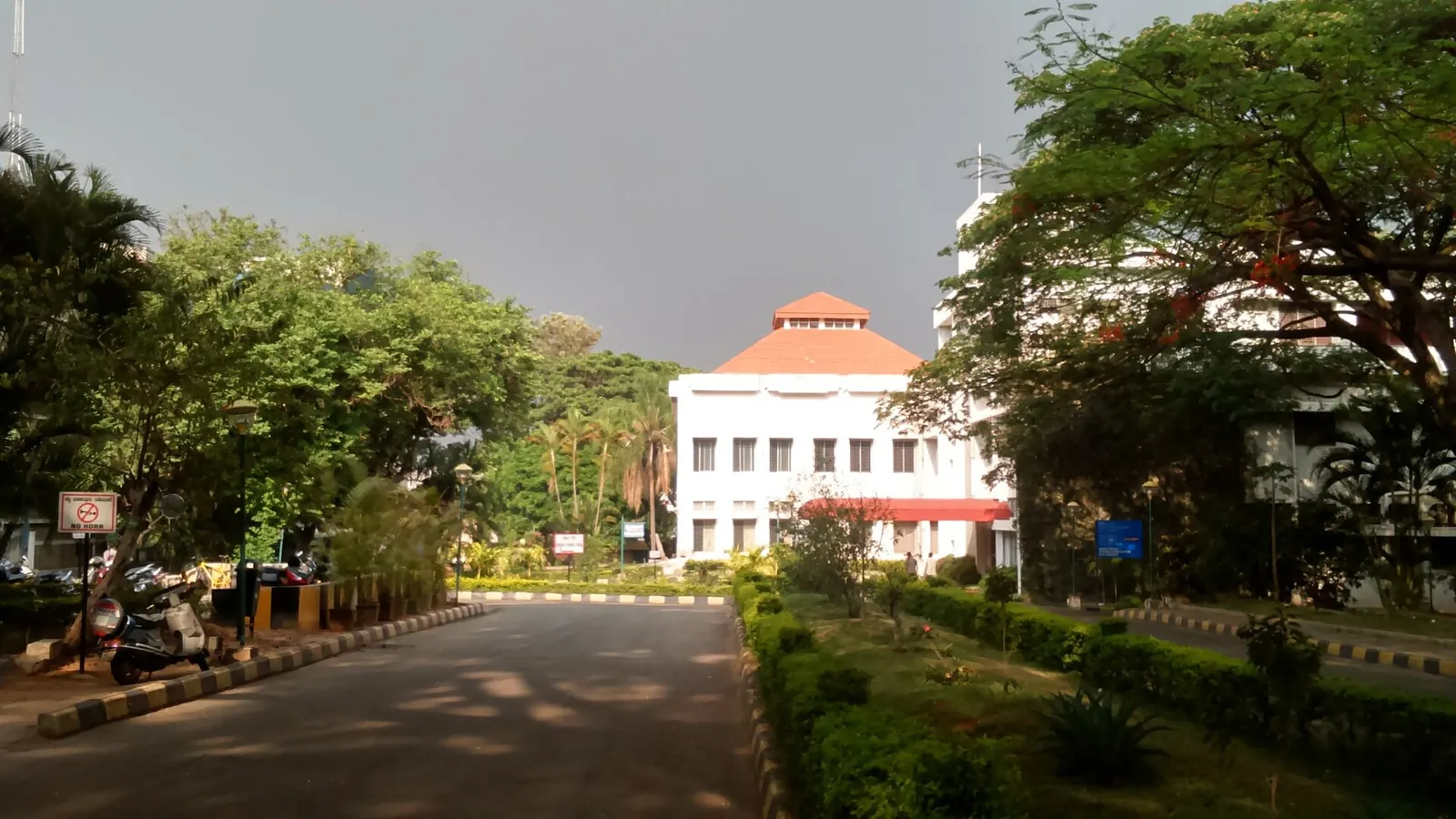
IHBAS and NIMHANS
IHBAS, Delhi's government mental health institute, lists OPD registration at ₹10 per card on its official tariff page (updated November 2026), and waives investigation and ward charges for families earning under ₹3,000 a month.
For NIMHANS, its official pages give the OPD payment counter hours (8 am to 5 pm on working days, cash, card and UPI) and a tele-screening appointment link, but not the screening fee itself. A November 2026 cost guide by TherapyRoute, citing NIMHANS instructions, put the walk-in screening slip at ₹100. Confirm at the counter before you travel.
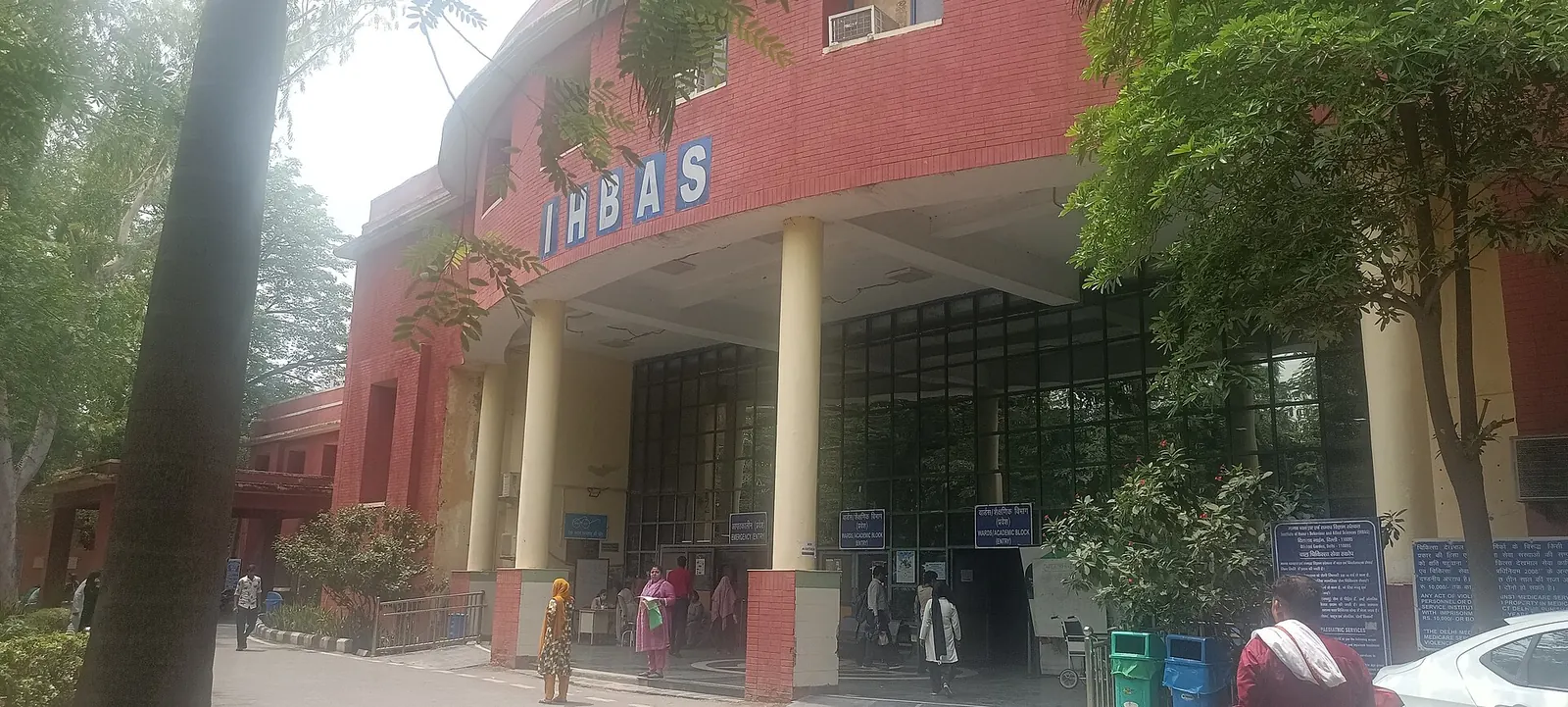
What a first OPD visit usually looks like:
- Register early. Large institutes see heavy footfall. Carry a photo ID and any old prescriptions or reports.
- Screening. A resident doctor takes a history and decides which unit or clinic you go to.
- Assessment. A psychiatrist assesses you. Medicines, if needed, come from the hospital pharmacy.
- Psychology referral. If talking therapy is indicated, you may be referred to the clinical psychology department. Waiting lists vary; ask how long, and ask whether group sessions are available sooner.
- Follow-up card. Keep it. Follow-up visits are usually quicker than the first.
What does the Mental Healthcare Act 2017 entitle me to?
Section 18 of the Mental Healthcare Act 2017 gives every person a right to access mental healthcare from services run or funded by the government. Three provisions matter for cost:
- Free treatment for those in need (Section 18(7)): people with mental illness who live below the poverty line, whether or not they hold a BPL card, and people who are destitute or homeless, are entitled to free treatment at government-run or government-funded facilities.
- Free essential medicines (Section 18(10)): medicines on the Essential Drug List must be provided free to all persons with mental illness at government-run or funded mental health establishments.
- Range of services (Section 18(4)): the right covers outpatient and inpatient acute care, half-way homes, rehabilitation, family support, and child and old-age mental health services.
The same Act requires insurers to treat mental illness on the same basis as physical illness. In practice, outpatient therapy is covered only if your policy covers outpatient care at all, so read the OPD section of your policy before assuming.
How much does a private therapist cost in Indian cities?
Private fees vary more within a city than between cities. TherapyRoute's November 2026 analysis of 902 booking-site listings found psychologist consultations from ₹450 to ₹4,000 in Bengaluru and from ₹699 to ₹6,000 in Delhi, with Hyderabad stretching to ₹10,000.
See the data as a table
| Lowest listed (₹) | Highest listed (₹) | |
|---|---|---|
| Bengaluru | 450 | 4000 |
| Chennai | 600 | 3540 |
| Hyderabad | 400 | 10000 |
| Kolkata | 800 | 3000 |
| Delhi | 699 | 6000 |
| Mumbai | 1000 | 5250 |
Source: TherapyRoute: How much does therapy cost in India in 2026 (902 booking-site listings) · Listings labelled psychologist by one booking site; labels do not confirm qualifications, and session length was not stated.
Two numbers help you judge what is reasonable. An analysis of NMHS data on women aged 18 to 49 with depression or anxiety found a median treatment spend of ₹2,000 a month. Four weekly sessions at ₹1,500 already cost three times that, so most people need one of these:
- fewer sessions;
- a cheaper tier;
- a reduced-fee arrangement.
Use this to check what a plan would cost you before you commit.
What will a course of private therapy cost you?
How do I check that a therapist is qualified?
Ask for their registration number and check it. In India, clinical psychologists must be registered with the Rehabilitation Council of India (RCI), which keeps a searchable Central Rehabilitation Register; psychiatrists are registered with a medical council.
- Clinical psychologist: search the name on the RCI Central Rehabilitation Register. RCI licenses clinical psychologists, so a clinical psychologist without a register entry is a red flag.
- Counselling psychologist or psychotherapist: India has no single licensing body for these titles, as users on r/indiatherapy point out. Ask about degree, supervised training and the approach they use (for example CBT), and how they handle risk.
- Psychiatrist: a medical doctor (MBBS plus MD or DNB in psychiatry) who can diagnose and prescribe. Many people need both a psychiatrist and a therapist.
What should I ask in the first session?
A first session is also your interview of the therapist. Ask five things, and note whether the answers are clear:
- Qualification and registration. "What is your RCI number?" (for clinical psychologists)
- Method. "What approach do you use for problems like mine, and what is the evidence for it?"
- Plan. "Roughly how many sessions, and how will we know it is working?"
- Money. "Do you keep reduced-fee places? Is an online session cheaper?"
- Safety. "What happens if I am in crisis between sessions?"
If the fee is the obstacle, say so plainly. Many private practitioners hold a few sliding-scale slots, and university psychology departments with training clinics sometimes see clients at lower rates under supervision. Ask; nobody advertises these widely.
Why is the treatment gap so wide?
The gap is a mix of cost, distance, stigma and a thin workforce. An analysis in the Indian Journal of Psychiatry in 2025 describes the drop-off as a "care cascade". People are lost at each step:
- recognising the problem;
- seeking help;
- reaching a service;
- starting treatment;
- staying on it.
Among NMHS women aged 18 to 49 with common mental disorders, 82.1% were not on treatment, and the gap was highest in urban non-metro areas (86%).
The same review notes the District Mental Health Programme now runs in more than 700 districts and Tele-MANAS has added a phone-based entry point, but the services remain uneven. If cost is what stops you, start with the free tier today and see a doctor if symptoms last.
If you want the history of how India built (and neglected) this system, read the history of mental health care in India, and for state-wise numbers see mental health prevalence by state. A public example of someone seeking help is covered in Deepika Padukone's depression story.
A programme review of the national tele-mental-health service launched in October 2022. It reports more than 3.43 million calls across all states and union territories, a stepped-care design in which counsellors escalate complex cases to psychiatrists or local services, and a caller mix dominated by anxiety, depression and psychosocial stress, with a critical minority in suicidal distress. Limit: written by the programme's own team, so it describes reach and design rather than measuring clinical outcomes against a control.
Read the paperSecondary analysis of the 39,532-adult NMHS. Among 13,119 women aged 18 to 49, 5.83% had a current depressive or anxiety disorder; 82.1% of them were not in treatment (86% in urban non-metro areas), nearly 70% reported disability, and median treatment spend was ₹2,000 a month. Limit: 2015–16 data, before Tele-MANAS existed, and self-reported spending.
Read the paper (free)A policy analysis by AIIMS and Maulana Azad authors that maps where people drop out of care across seven stages, from awareness to recovery. It cites the NMHS finding that 70% to 92% of people with mental illness get no formal treatment, notes the District Mental Health Programme in 700+ districts, and argues for task-sharing and cascade indicators. Limit: a framework paper, not new data; some figures are given without citations.
Read the paper (free)What's new
- Tele-MANAS passes 32.84 lakh calls across 53 cells, per a Lok Sabha reply The Policy Edge, Feb 2026
- NIMHANS team reviews Tele-MANAS at 3.43 million calls British Journal of Psychiatry, Jul 2026
- Insurer-backed survey of 3,583 urban adults finds most hesitate to seek therapy Business Today, Oct 2026
- Perspective argues India should route care through Tele-MANAS, the DMHP and ABDM rather than new pilots Frontiers in Digital Health, Aug 2026
Questions people ask
Is Tele-MANAS really free and confidential?
It is free, and the British Journal of Psychiatry review lists anonymity among the features that drove its uptake. As with any phone service, share what you are comfortable with, and ask the counsellor how your information is recorded if that worries you.
Can I get psychotherapy, not just medicines, at a government hospital?
Yes, at institutes and medical colleges with clinical psychology departments, but usually after a psychiatrist refers you, and waiting lists can be long. Ask about group therapy, which often starts sooner.
Is online therapy cheaper than in person?
Sometimes. Practitioners set their own fees, and some charge less for video sessions because there is no room cost. It is worth asking directly; the qualification check is the same either way.
Does health insurance pay for therapy in India?
The 2017 Act requires parity between mental and physical illness, but outpatient sessions are paid only if your policy has outpatient cover. Inpatient psychiatric treatment is more commonly covered. Read the OPD clause or ask your insurer in writing.
How do I know if I need a psychiatrist or a psychologist?
If symptoms are severe, long-lasting, affect sleep and daily function, or involve thoughts of self-harm, start with a psychiatrist, who can assess and prescribe. For milder, situational problems, a registered clinical psychologist is often the right first step. Tele-MANAS can help you decide.
Sources
- Ministry of Health and Family Welfare: Tele-MANAS official site
- The Policy Edge: Lok Sabha Q&A, Tele-MANAS surpasses 32.84 lakh calls (2026)
- Suhas S et al.: India's Tele-MANAS, British Journal of Psychiatry (2026)
- IHBAS, Government of NCT of Delhi: User charges for patient care services (page updated 2026)
- NIMHANS: Outpatient services and payment and charges
- Nyaaya (Vidhi Centre for Legal Policy): Right to access mental healthcare under the Mental Healthcare Act 2017
- TherapyRoute: How much does therapy cost in India in 2026? (2026)
- Annajigowda HH et al.: Common mental disorders among women of reproductive age, NMHS 2016, Indian Journal of Psychiatry (2023)
- Debnath A, Sagar R, Salve HR: Bridging the mental health treatment gap in India, Indian Journal of Psychiatry (2025)
- ThePrint: Tele-MANAS initiative launched on occasion of World Mental Health Day (Oct 2022)
- Rehabilitation Council of India: Central Rehabilitation Register
- Business Today: Why nearly 80% hesitate to seek therapy (2026)
- Sriram S: Converging India's national assets to close the mental health treatment gap, Frontiers in Digital Health (2026)

Sapta (Saptarshi Sarkar) is a mechanical engineer turned marketer in Bengaluru and a solo touring rider. He writes the seven Saptaverse blogs. Work with him or read more of Mindblog.


