Chilli heat works by chemistry, not temperature: capsaicin binds TRPV1, an ion channel on pain nerves that normally opens at temperatures above about 43°C, so your brain reads a cool chilli as a burn. Capsaicin is made in the chilli's white placenta, not the seeds, it barely dissolves in water, and milk cools the burn best, while water and fizzy drinks do the least.
- TRPV1, the nerve's heat sensor, opens above about 43°C, and capsaicin opens it too.
- The heat is made in the placenta (the white ribs), not the seeds.
- SHU = ppm × 16: pure capsaicin sits at 16 million Scoville units.
- 1,001,304 SHU: bhut jolokia from Assam in the 2005 New Mexico trial (Bosland and Baral 2007).
- Milk, skim or whole, cut the burn most in a 72-person trial; fizzy drinks did poorly.
- Cooking removes only 18–36% of capsaicin (Suresh et al. 2007).
India grows, eats and exports more chilli than almost anyone, and the North East grows one of the hottest peppers ever measured. Yet the basic questions still get folk answers: "drink water", "remove the seeds", "Kashmiri is hot".
This post explains the receptor, the molecule, how heat is measured, and what the experiments say about putting the fire out. The numbers come from three studies:
- the New Mexico bhut jolokia trial (2007);
- the Penn State drink study (2019);
- a 21-cultivar analysis of where the heat sits inside the fruit (2021).
Why does capsaicin feel hot when it isn't?
Capsaicin feels hot because it opens TRPV1, the same receptor that sensory nerves use to detect painful heat, so the nerve sends a "burning" signal whether the trigger is a 50°C cup of chai or a chilli at room temperature.
TRPV1 is a non-selective cation channel: when it opens, sodium and calcium ions rush into the nerve ending, the nerve fires, and the brain labels the signal as heat and pain. Your tongue is not hot; your nerve has been told it is.
How the receptor was found
David Julius's group at the University of California, San Francisco cloned the receptor in 1997 by hunting for the gene that made cells respond to capsaicin. It turned out the same channel opens above about 43°C and in acidic conditions. Julius shared the 2021 Nobel Prize in Physiology or Medicine for the discovery.
Michael Caterina had joined Julius's lab to find a different receptor, and someone else published it first. He was left with a calcium-imaging assay and a gene library. Julius pointed him at capsaicin, a receptor others had hunted for and missed. With Tony Brake, Caterina built a library of transcripts from pain-sensing neurons, split it into 120 pools and put each into cells that ignore capsaicin. Pool number 11, holding about 16,000 genes, lit up. Working what a lab member remembered as 18 to 20 hour days, he split and re-split it for about three weeks until one gene remained: the channel now called TRPV1.
ASBMB Today: How Michael Caterina found the capsaicin receptor (Jan 2022)The same channel also responds to allyl isothiocyanate, the sharp compound in raw mustard and wasabi.
Two features of TRPV1 explain everyday experience:
- The burn makes you sweat and flush. The nerves report "heat", so the body triggers its cooling reflexes, even though your temperature has not changed.
- Tolerance is real. Prolonged capsaicin exposure desensitises TRPV1, a process that depends on calcium entering the nerve. Regular chilli eaters dull their own receptors, and doctors use the same effect in high-dose capsaicin patches for nerve pain.
Where is the heat in a chilli: seeds or placenta?
The heat is made in the placenta, the pale ribs that hold the seeds, and the seeds are hot mostly because they touch it. A 2021 study in Scientific Reports by Zamljen and colleagues measured capsaicinoids in the pericarp (flesh), placenta and seeds of 21 cultivars from four Capsicum species, and found the placenta richest by a wide margin.
In the 12 C. chinense cultivars (the habanero species, which includes Indian naga types), the placenta held an average 2,600 mg of capsaicinoids per 100 g dry weight against 1,738 in the flesh and 749 in the seeds. In 'Bhut Jolokia', classed in that study as a C. chinense × C. frutescens hybrid, the figures were 3,004, 1,809 and 1,135.
The authors state plainly that the placenta is the main site of capsaicinoid synthesis, where the compound collects in oil cells.
See the data as a table
| C. chinense (12 cultivars, mean) (mg/100 g DW) | Bhut Jolokia (mg/100 g DW) | |
|---|---|---|
| Flesh (pericarp) | 1738 | 1809.2 |
| Placenta | 2600 | 3004.3 |
| Seeds | 748.7 | 1135.4 |
Source: Zamljen et al., Scientific Reports 2021 · Sum of five capsaicinoids, dry weight
Three practical points follow:
- Scrape the ribs. Removing the white placenta cuts heat far more than picking out seeds.
- The flesh still burns. Very hot types carry plenty of capsaicin in the pericarp, so de-seeding a bhut jolokia does not make it mild.
- Read the powder. Dried flakes and powders that include a lot of placenta are hotter than ones made mostly from skin.
The team grew 21 cultivars from four species (12 C. chinense, 5 C. annuum, 3 C. baccatum and one hybrid, 'Bhut Jolokia') and analysed pericarp, placenta and seeds separately by HPLC-MS. C. chinense and the hybrid carried 3.5 to 5 times more capsaicinoids than the other species, with 'Carolina Reaper' highest at 7,334 mg/100 g DW. The placenta had the most capsaicinoids and 23.5 times the phenolics of the seeds. Limits: one growing site and season, and dry-weight figures are higher than what you would measure in fresh chillies.
Read the paper (free)How is the Scoville scale measured today?
The Scoville scale is now measured by high-performance liquid chromatography (HPLC): a lab extracts the capsaicinoids, measures them in parts per million, and multiplies by 16 to get Scoville Heat Units.
| Method | How it works | Weakness |
|---|---|---|
| Scoville's 1912 taste test | Dried chilli extracted in alcohol, diluted in sugar water until most of a five-person panel feels no heat; the dilution is the score | Varies with the tasters |
| HPLC (today) | Capsaicinoids measured in ppm, then multiplied by 16 | Labs use 16 or 15, and some count only capsaicin |
The ×16 factor, used by Bosland and Baral and most chilli researchers, is why pure capsaicin sits at 16 million SHU: one million parts per million times 16. (The spice trade's ASTA convention uses 15, so expect small mismatches between labs.)
From Scoville rating to milligrams of capsaicin
The New Mexico trial that made bhut jolokia famous used exactly this method. Paul Bosland and Jit Baral at New Mexico State University grew bhut jolokia from Assamese seed next to 'Red Savina' and orange habanero in replicated plots at Las Cruces in 2005, bulked fruit from at least 10 plants per plot, and ran HPLC.
Bhut jolokia averaged 1,001,304 SHU, against 357,729 for orange habanero and 248,556 for Red Savina (Bosland and Baral 2007). Two commercial labs confirmed it at 927,199 and 879,953 SHU.
See the data as a table
| Scoville Heat Units (SHU) | |
|---|---|
| Bhut Jolokia (NMSU HPLC) | 1001304 |
| Bhut Jolokia (Southwest Bio-Labs) | 927199 |
| Bhut Jolokia (Ag-Biotech) | 879953 |
| Orange habanero | 357729 |
| Red Savina | 248556 |
Source: Bosland and Baral, HortScience 42(2):222-224, 2007 · Same field, same season; Red Savina was the Guinness record holder at 577,000 SHU before this
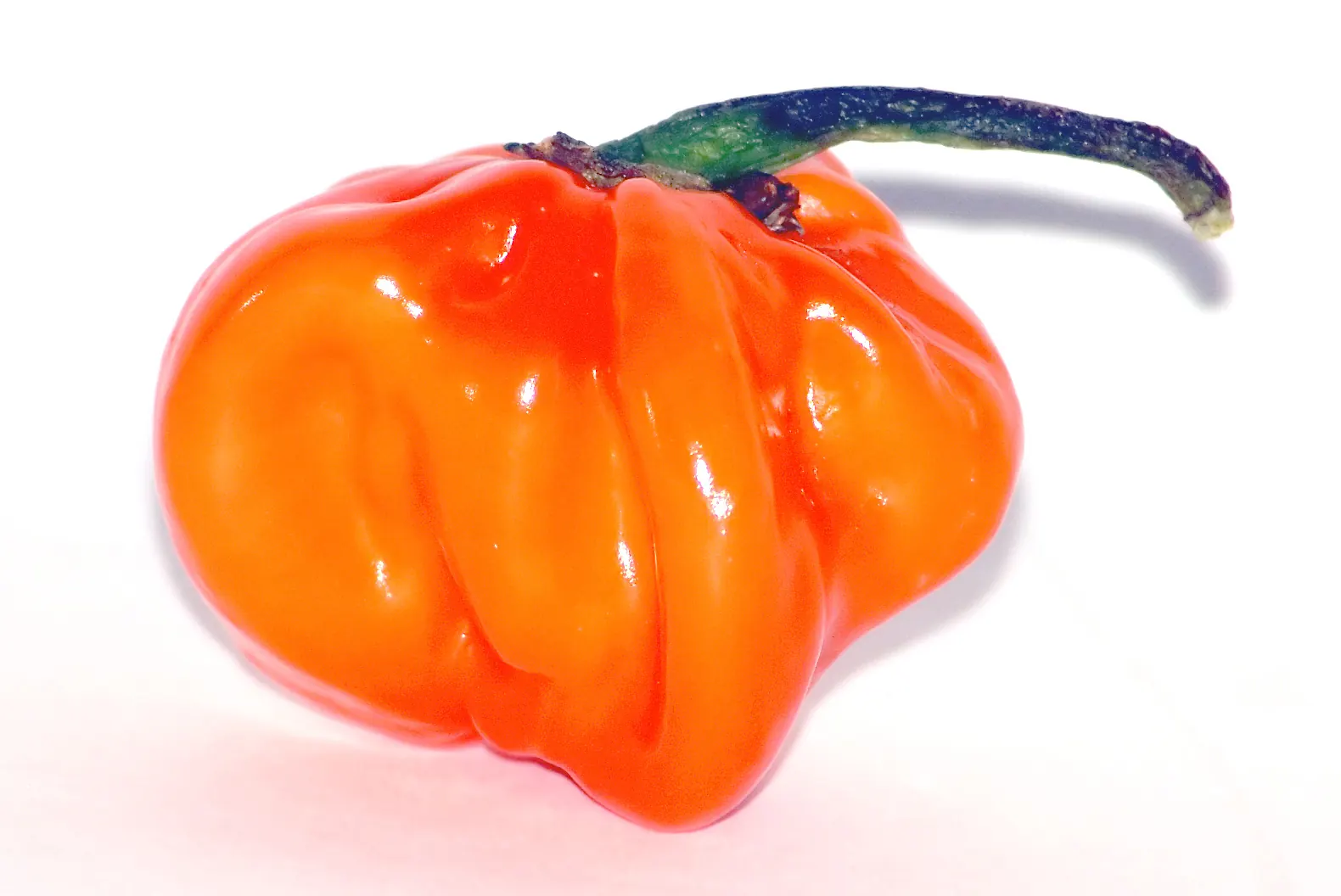
The authors compared bhut jolokia, Red Savina and a standard orange habanero in a replicated field trial at Las Cruces, New Mexico, and measured capsaicinoids by HPLC, converting ppm to SHU by multiplying by 16. Bhut jolokia reached 1,001,304 SHU, nearly twice the previous Guinness figure for Red Savina. Plant traits placed it in C. chinense, while DNA markers suggested genes from C. frutescens, so they called it a natural hybrid. Limits: one location and season, and heat depends heavily on growing conditions, so Indian-grown fruit can test higher or lower.
Read the paper (free)
How hot are common chillies, measured the same way?
When cultivars are measured side by side with the same HPLC method, the spread is enormous: a 2026 UC Davis study found 4,778 mg/kg of capsaicin in habanero against under 1 mg/kg in Anaheim, a factor of nearly 5,000. Converted with the ×16 rule, that is about 76,000 SHU against about 16.
| Chilli (study) | Capsaicin or capsaicinoids | Approx. SHU |
|---|---|---|
| Pure capsaicin | 1,000,000 ppm | 16,000,000 |
| Bhut jolokia, Las Cruces (Bosland and Baral 2007) | about 62,600 ppm (dry) | 1,001,304 |
| Orange habanero, Las Cruces (same trial) | about 22,400 ppm | 357,729 |
| Habanero (Pandey et al. 2026) | 4,778 mg/kg DW (capsaicin only) | about 76,400 |
| Thai chilli (Pandey et al. 2026) | 1,845 mg/kg DW | about 29,500 |
| Serrano (Pandey et al. 2026) | 1,069 mg/kg DW | about 17,100 |
| Jalapeño (Pandey et al. 2026) | 16.4 mg/kg DW | about 263 |
| Anaheim (Pandey et al. 2026) | 0.98 mg/kg DW | about 16 |
The two studies disagree on habanero by a factor of five, which is the honest lesson: heat varies by seed line, climate, stress, ripeness and whether only capsaicin or all capsaicinoids are counted. Indian trade varieties such as Guntur Sannam, Teja and Byadgi are graded by commercial labs and quoted in wide ranges; a ranked comparison is in the hottest Indian chillies by Scoville rating.
Why does milk help and water doesn't?
Milk helps most because it washes capsaicin off the tongue more effectively than water, and the Penn State trial found skim milk worked about as well as whole milk, which points to milk protein rather than fat. Capsaicin is an oily molecule that barely dissolves in water, so water spreads it around the mouth rather than removing it.
Seventy-two adults (42 women, 30 men) drank 30 ml of spicy tomato juice, then 40 ml of a test drink, rating the burn every 10 seconds for 2 minutes on a labelled magnitude scale. Drinks: whole milk, skim milk, cherry Kool-Aid, seltzer, non-alcoholic beer, cola and water, plus a no-drink trial. Every drink reduced burn, but the biggest reductions in area-under-curve were for whole milk, skim milk and Kool-Aid; carbonated drinks did poorly. Since skim and whole milk worked alike, the authors suggest protein (casein) matters more than fat, and sugar may help too. Limits: one moderate dose of capsaicin in tomato juice, mostly American participants, and chilled drinks against room-temperature water.
Read the paper (free)For Indian tables that means chaas, lassi, curd and raita are chemically the right side dishes for a hot curry, and a sweet lassi may do double duty. Fizzy drinks and non-alcoholic beer were among the weakest options in the trial.

Does cooking reduce chilli heat?
Cooking reduces capsaicin modestly: CSIR-CFTRI scientists measured 18 to 36% losses of capsaicin when red pepper was boiled for 10 or 20 minutes or pressure-cooked for 10 minutes, with the biggest loss in the pressure cooker. Adding red gram or tamarind did not change the loss.
Fat changes how heat is experienced more than it changes the amount. Capsaicin is oil-soluble, so chilli fried in a tadka spreads evenly through the dish and lingers, while chilli simmered in water stays patchier. That is why a dal with chilli in the tadka can feel hotter than one with the same chilli boiled in, a point covered in tadka chemistry.
Is eating chilli good or bad for health?
The evidence is observational and mixed: large cohort studies link regular chilli eating to lower overall mortality, while meta-analyses link very high intake to higher oesophageal cancer risk, and neither proves cause and effect.
The two directions in the data
A 2026 SciTechDaily report on a Chinese biobank study cited overall mortality of 21.6% among people who ate hot red chilli peppers against 33.6% among those who did not, while warning that the data cannot show chilli caused the difference.
A July 2026 ScienceDaily summary of a review found the heaviest chilli eaters had a substantially higher risk of oesophageal cancer, with no clear link to stomach or colorectal cancer. Both directions share the same weakness: people who eat a lot of chilli also differ in diet, smoking, alcohol and food temperature. Moderate chilli eating has no clear harm in these data.
What's new
- Review links very heavy chilli intake to higher oesophageal cancer risk, with no clear link for stomach or colon ScienceDaily, Jul 2026
- Biobank data tie regular hot chilli eating to lower overall mortality, an association not proof SciTechDaily, Apr 2026
- UC Davis optimises HPLC capsaicin profiling across seven chilli cultivars Frontiers in Plant Science, May 2026
Read on: the history of chilli in India explains how a New World plant took over Indian kitchens in a few centuries, and why Indian food uses so many spices weighs the theories. For the extreme case, see what happens if you eat the world's hottest chilli. More is on the Rasa world page.
Questions people ask
Why does chilli make my nose run and eyes water?
Capsaicin activates TRPV1 on nerves in the mouth and nose, triggering the same protective reflexes as heat or an irritant: tears, mucus and sweating. Inhaled chilli dust from frying or grinding does it most strongly.
Does removing the seeds make a chilli less hot?
A little. Most of the capsaicin is in the white placenta and the flesh; the seeds are hot mainly where they touched the placenta. Remove the ribs for a real reduction.
Is Kashmiri chilli hot?
Kashmiri chilli is grown and sold mainly for its deep red colour and is one of the milder Indian varieties. Colour comes from carotenoids and heat from capsaicinoids, which is why a dish can be red without being very hot.
Can you build up tolerance to spicy food?
Yes. Repeated capsaicin exposure desensitises TRPV1, so habitual chilli eaters feel less burn from the same dose. The effect fades if you stop eating chilli for a while.
What is the best drink after very spicy food?
Milk, skim or whole, performed best in the Penn State trial, with a sweet drink close behind. Water helped least among the drinks tested, and carbonated drinks did poorly.
Sources
- Bosland P.W. and Baral J.B., HortScience 42(2): 'Bhut Jolokia', the world's hottest known chile pepper (2007; SHU values, ppm × 16 method)
- Nolden A.A., Lenart G. and Hayes J.E., Physiology and Behavior: Putting out the fire (2019; beverage trial)
- Penn State News: Milk is the best drink to reduce burn from chili peppers (2019)
- ASBMB Today: Caterina and the capsaicin receptor (2022; the 120-pool screen, pool 11 of about 16,000 genes, three weeks to one gene)
- Zamljen T. et al., Scientific Reports: Influence of intra and inter species variation in chilies on metabolite composition of three fruit segments (2021; placenta vs seeds)
- Pandey P., Huo J. and Zhang Q., Frontiers in Plant Science: Quantitative profiling of capsaicin content in seven chili pepper cultivars using optimized HPLC (2026)
- Suresh D., Manjunatha H. and Srinivasan K., Journal of Food Composition and Analysis: Effect of heat processing of spices on their bioactive principles (2007; capsaicin losses)
- Wikipedia: Scoville scale (1912 organoleptic test, ASTA ×15 convention; accessed 2026)
- Wikipedia: TRPV1 (activation above 43°C, 1997 cloning, desensitisation; accessed 2026)
- ScienceDaily: Eating chili peppers may raise the risk of one deadly cancer (2026)
- SciTechDaily: Eating chili peppers linked to longer life (2026)

Sapta (Saptarshi Sarkar) is a mechanical engineer turned marketer in Bengaluru and a solo touring rider. He writes the seven Saptaverse blogs. Work with him or read more of Foodblog.